Handling extra-long pallets safely requires precise fork engineering, correctly specified attachments, and compatible support equipment. This article explains how to lift extra long pallet loads by calculating load centre, setting fork insertion depth, and aligning forks to pallet design. It then examines fork technologies and attachments for long loads, followed by conveyor and auxiliary equipment selection for long-pallet flows. Finally, it summarises how integrated engineering, training, and maintenance deliver safer, leaner handling of extra-long pallets across modern facilities.
Engineering The Right Fork Position And Load Centre
Engineering the correct fork position and load centre is the core control lever when deciding how to lift extra long pallet loads safely and efficiently. Poor fork placement or miscalculated load centres rapidly erode the rated capacity of trucks and attachments, increasing tip‑over risk and structural damage. This section explains how to quantify load centres, apply the 80% fork insertion rule, adapt to pallet entry patterns, and embed visual and digital aids into operator practice.
Calculating Load Centre For Extra-Long Pallets
When planning how to lift extra long pallet loads, engineers must start from the rated load centre of the truck or loader-mounted forks. Typical counterbalance forklifts used in warehouses had capacity plates based on a 600 mm load centre, while long-load or high-mast units sometimes used 700–1,200 mm. The effective load centre equals the horizontal distance from the fork face to the combined centre of gravity of pallet plus product. For extra-long pallets, that centre usually shifts forward because the forks rarely reach the full pallet depth, which derates the safe capacity according to the manufacturer’s load chart.
As a practical method, treat the pallet length as L and the fork insertion depth as D. For a uniformly distributed load, the nominal pallet centre lies at L/2 from the pallet end. If forks enter D from the near end, the distance from the fork face to the load centre becomes (L/2 − D) plus any offset caused by overhang or load asymmetry. Engineers should recalculate this value whenever changing pallet length, overhang, or fork length, then compare it to the capacity plate. If the effective load centre exceeds the rated value, the operator must reduce load mass, extend fork engagement, or select equipment designed for long loads.
Fork Insertion Depth: 80% Rule And Failure Modes
The 80% insertion rule provides a baseline for deciding how to lift extra long pallet loads without overstressing decks or stringers. Industry guidance recommended inserting forks to the full depth whenever possible, or at least 80% of pallet depth, for example 900–1,165 mm on a 1,165 mm Australian pallet. Insufficient insertion shifted the load centre forward, forced the fork tips to carry a disproportionate share of bending moment, and increased the chance of forward tip-over. It also concentrated contact pressure at the leading boards, which raised the risk of deck cracking or penetration.
Typical failure modes when operators ignored the 80% rule included fork tips punching through top boards, lower deck boards splitting, and stringers or blocks crushing under eccentric loading. These failures often coincided with rocking or tilting loads, especially during mast tilt or travel over uneven floors. Engineers should define minimum insertion depths in standard work instructions for each pallet family and fork length combination. They should also specify maximum permitted pallet overhang beyond fork tips, generally targeting zero overhang for extra-long or high-value loads. Periodic audits of fork-stop positions, fork wear, and pallet condition help verify that field practice still aligns with the engineered assumptions.
Aligning Forks For Two-Way Vs Four-Way Pallets
Fork alignment strategy changes significantly between two-way and four-way pallets, especially for long loads where aisle clearance is tight. Two-way pallets only allowed entry from two opposite sides, so operators had to align forks precisely with the entry openings and approach square to the face. Misalignment in this case increased the chance of striking stringers, shaving timber, or riding up onto the pallet rather than entering cleanly. For extra-long pallets, such impacts could propagate along the deck and degrade stiffness over time.
Four-way or block pallets provided more flexibility, allowing entry from all sides and often at multiple fork heights. However, engineers still needed to match fork spacing to the load-bearing elements under the deck. When deciding how to lift extra long pallet loads, spacing forks directly under stringers or blocks minimized deck deflection and torsion. On notched stringer pallets, forks had to stay within the notched zones to avoid splitting the stringer webs. Standard work should define fork spread settings for each pallet design and mark mast carriages with reference positions. Where facilities handled mixed pallet types, visual pallet ID and clear diagrams at pickup points reduced alignment errors and collision damage.
Visual Aids, Sensors, And Operator Training
Visual and sensor-based aids turned the engineered rules for how to lift extra long pallet loads into repeatable daily practice. Simple painted fork-tip markings indicating 80% and full insertion depths helped operators judge whether they had engaged a pallet deeply enough before lifting. Some sites added mast-mounted cameras or laser lines that projected fork height and position relative to pallet pockets, which reduced trial-and-error approaches and shortened cycle times. Distribution centres that implemented visual fork positioning guides reported several seconds saved per pallet touch, which compounded into significant labour savings per shift.
Sensors and telematics extended this control further. Proximity sensors could detect pallet faces and slow travel automatically as forks approached, while load sensors monitored weight and centre-of-gravity shifts against safe envelopes. However, these technologies only performed well when integrated with robust operator training. Training programs should explain why load centre matters, demonstrate failure modes from shallow fork insertion, and show correct techniques for two-way and four-way pallets. Refresher courses, performance dashboards, and near-miss reviews kept attention on long-load handling discipline. Combining engineered limits, visual cues, and continuous training created a closed loop that improved safety, reduced pallet and product damage, and increased handling productivity for extra-long pallets.
Attachments And Fork Technologies For Long Loads
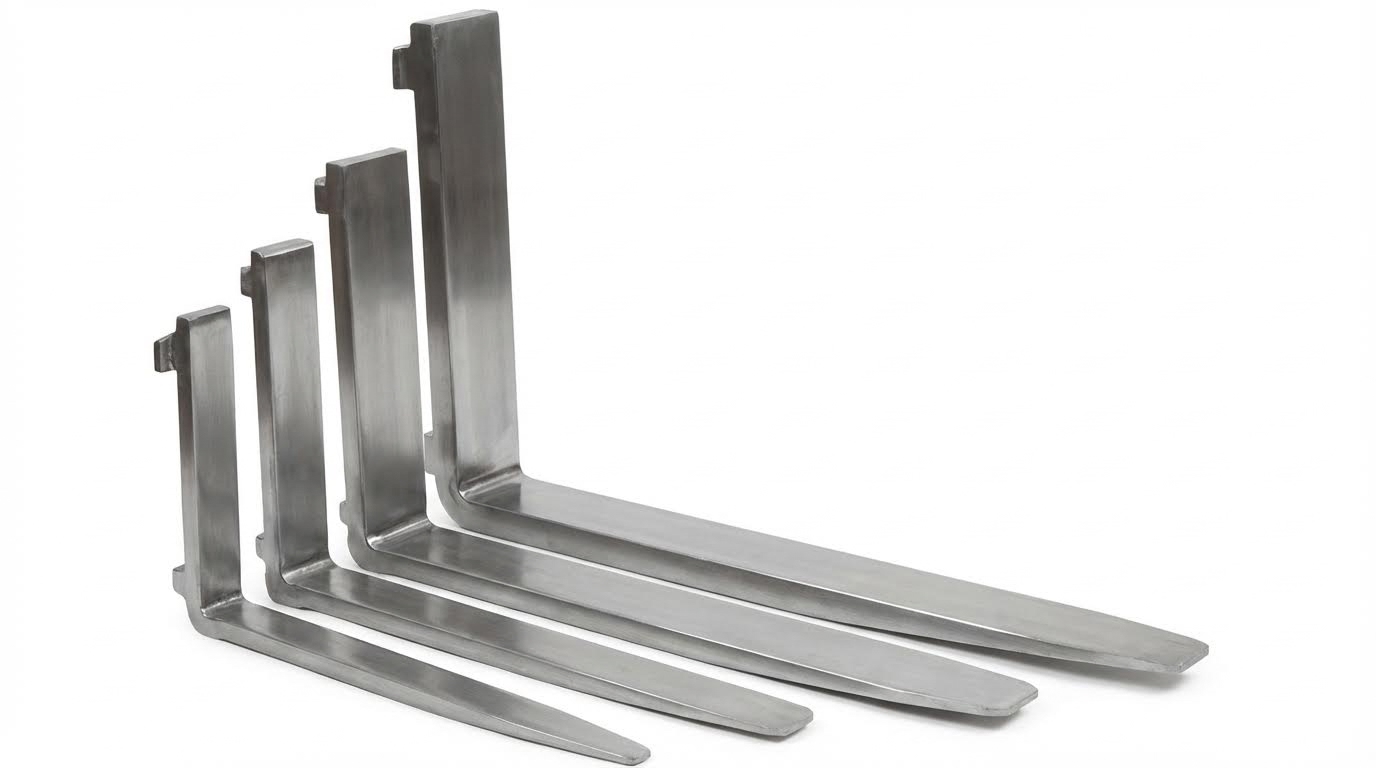
Attachments and fork technologies determine how to lift extra long pallet loads without overstressing trucks, pallets, or operators. Engineering the right combination of fork positioners, extendable forks, and specialty carriers controls load centre, improves visibility, and reduces damage. Multi-directional trucks and loader-mounted forks expand where and how long pallets move, from tight aisles to rough yards. Integration with existing fleets requires structured trials, data logging, and operator training to keep utilisation and safety within regulatory limits.
Hydraulic Fork Positioners And Extendable Forks
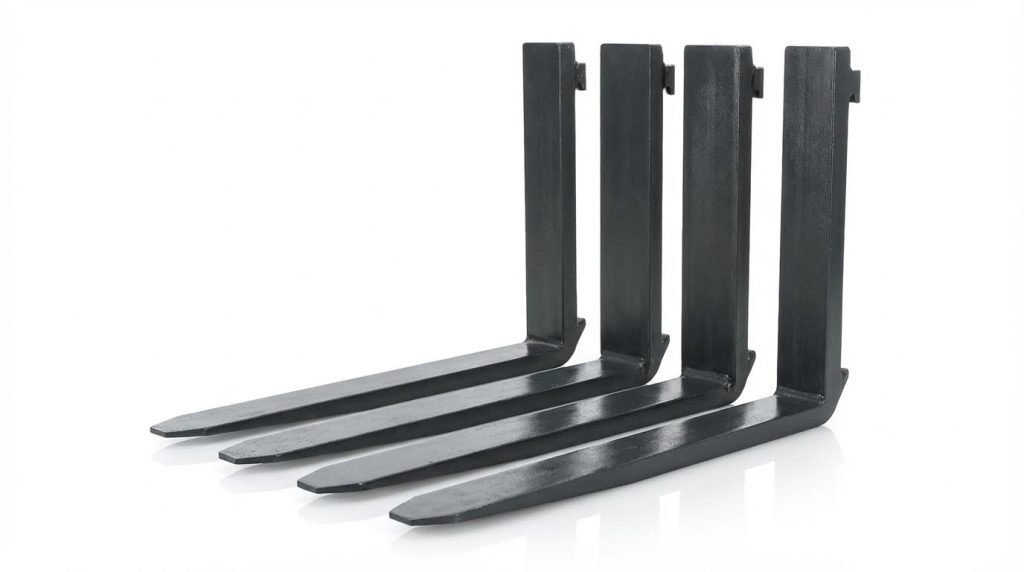
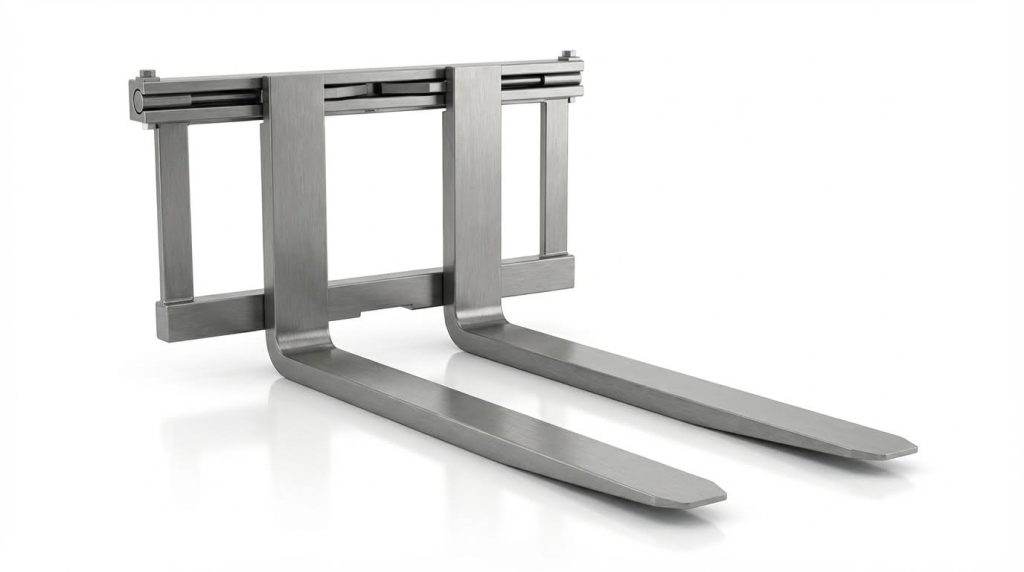
Hydraulic fork positioners let operators adjust fork spacing from the cab, which is essential for extra-long pallets with varying widths or asymmetrical packaging. Correct spacing keeps each fork under a structural line such as a stringer or block, distributing load and keeping the effective load centre within the truck rating. Extendable forks solve how to lift extra long pallet loads that exceed standard fork lengths by telescoping from typical 800 mm up to around 1,200 mm or more, matching pallet depth and the 80% insertion guideline. When fully extended, operators must recalculate the load centre and verify that the truck’s de-rated capacity still exceeds the pallet mass plus wrapping and dunnage. Engineers should specify positioners and telescopic forks with integrated side-shift only where mast and carriage capacity allow, because combined attachments increase front overhang and reduce residual capacity.
Multi-Directional Forklifts For Long And Wide Loads
Multi-directional forklifts move longitudinally, laterally, and diagonally, which directly addresses how to lift extra long pallet loads in narrow aisles. By carrying the pallet lengthwise along the truck side, these machines reduce required aisle width compared with conventional counterbalance trucks. Typical capacities ranged from about 1,800 kg to over 25,000 kg, with lift heights exceeding 4 m, so engineers could match truck class to actual pallet weights and rack heights. Side-carrying improved forward visibility, but it shifted the hazard envelope to the pallet ends, which could sweep near pedestrians or racking during crab steering. For safe deployment, layouts needed clearly marked pedestrian exclusion zones, low-speed limits in mixed-traffic aisles, and use of visual alerts such as blue lights, without assuming those replaced operator vigilance or licencing requirements.
Loader-Mounted Pallet Forks And Swinging Tines
Loader-mounted pallet forks answered how to lift extra long pallet loads in yards, construction sites, and unpaved areas where conventional forklifts struggled. These forks attached to wheel loaders or tool carriers via pin-on or quick-coupler interfaces, allowing rapid changeover from buckets to forks. Tine lengths from roughly 1,200 mm to 2,400 mm and carriage widths above 1,800 mm supported long pallets, pipe bundles, and fabricated sections, but the higher boom pivot meant a higher effective load centre than a mast truck at the same horizontal reach. Non-swinging forged tines provided predictable geometry for palletised loads, while optional swinging tines suited irregular loads that needed some articulation to sit flat. Engineers had to check loader stability charts for fork use, confirm that rated capacities applied at the intended boom height and reach, and ensure operators understood visibility limits even with see-through carriages.
Integrating Atomoving Attachments With Existing Fleets
Integrating semi electric order picker attachments into an existing fleet required a structured engineering and change-management process, especially when the goal was how to lift extra long pallet loads with minimal capital spend. First, engineers needed to calculate de-rated capacities for each truck and attachment combination, accounting for attachment mass, thickness, and any shift in the load centre. Second, they had to standardise fork lengths and section sizes for the target pallet family, aligning with the 80% insertion rule and avoiding mixed fork sets that confused operators. Pilot trials using real pallets, including worst-case load dimensions and weights, helped validate stability, cycle time, and damage rates before large-scale rollout. Finally, sites needed updated risk assessments, revised traffic plans, and targeted operator training covering new hydraulic functions, visibility changes, and inspection routines, supported by maintenance schedules that kept attachments within design tolerances and regulatory requirements. Additionally, integrating tools like the walkie pallet truck and manual pallet jack ensured versatility across various material handling scenarios.
Choosing Conveyors And Support Equipment For Long Pallets
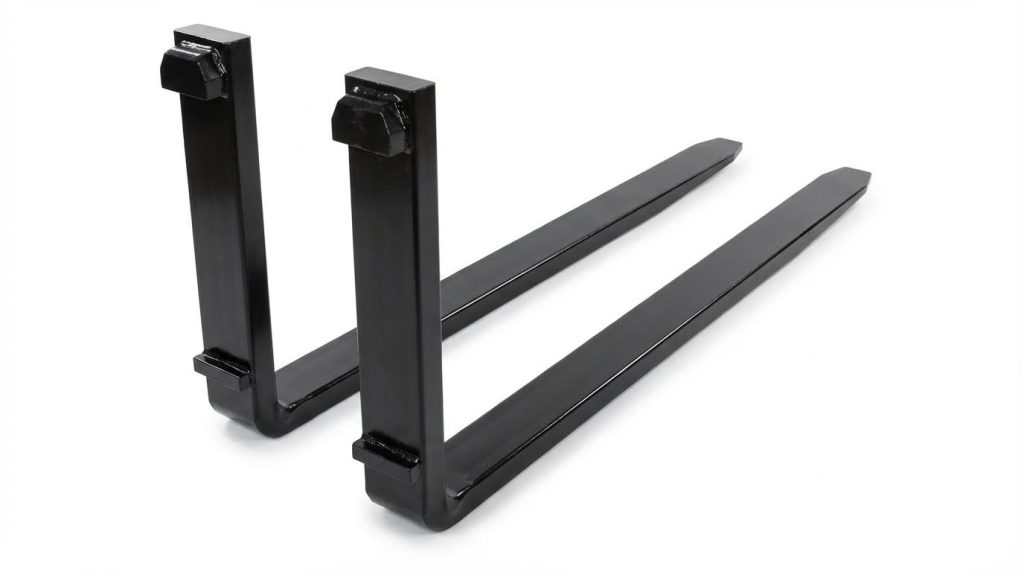
Designing equipment for how to lift extra long pallet loads required a system view. Conveyors, forklifts, AGVs, and lift trolleys had to work as one integrated flow. Engineers evaluated pallet geometry, load stiffness, and traffic patterns before specifying any component. Correct choices reduced damage, increased throughput, and improved operator safety.
Roller Conveyor Sizing For Extra-Long Pallets
Roller conveyors for extra-long pallets had to support higher bending moments and dynamic loads. Engineers sized conveyor width to exceed the widest pallet by 100–150 mm, which allowed tracking tolerances and side clearances. For a 1,200 mm long pallet carried lengthwise, a conveyor width of 1,350 mm typically provided adequate margin. Roller pitch had to keep at least three rollers under each pallet runner at all times, so designers used 75–100 mm pitch for stringer pallets and could extend to 100–150 mm for full-bottom pallets. For long loads, support span between conveyor supports stayed within the pallet’s allowable deflection limits, often below L/200. Throughput requirements dictated conveyor speed, typically 0.15–0.3 m/s for powered units, with soft starts to limit impact at transfers. Chain-driven live rollers handled 500–2,500 kg pallets reliably, while motorized roller zones suited lighter long loads needing accumulation and tighter control. Low-profile frames at 300–600 mm top-of-roller height interfaced more cleanly with forklifts and AGVs handling extra-long pallets.
Interface With Forklifts, AGVs, And Lift Trolleys
When defining how to lift extra long pallet loads onto conveyors, interface design became critical. Conveyor infeed and outfeed heights matched forklift mast geometry, AGV deck heights, or lift trolley stroke, typically within ±10 mm tolerance. Engineers used tapered entry plates and 3–5 mm vertical gaps to avoid wheel impact and pallet hang-ups. For AGVs, low-profile conveyors with 300–400 mm top-of-roller height enabled level transfers without excessive ramping. Forklift approaches required 1,500–3,000 mm clear apron zones so operators could square the pallet and avoid skewed placement. Wheel stops and visual floor markings helped drivers align long pallets parallel to the rollers. Lift trolleys used smooth, chamfered conveyor ends and brakes to prevent unintended rolling during transfer. In automated systems, photo-eyes or laser scanners confirmed pallet position before AGVs or forklifts disengaged, reducing tip and jam risks for long loads.
Controls, Accumulation, And Safety For Long Loads
Control strategies for long pallets prioritized zone management, impact reduction, and personnel safety. Zero-pressure accumulation divided the conveyor into zones slightly longer than the longest pallet, typically pallet length plus 200–300 mm. Sensors stopped upstream zones before contact, which protected product on flexible or overhanging loads. Low-pressure accumulation with limited contact force worked only for rigid pallets rated for line pressure. Programmable logic controllers coordinated starts, stops, and speed ramps to prevent sudden acceleration that could shift tall or long loads. Safety design followed regulations similar to OSHA guidance, including emergency stop pull-cords along the conveyor length, fixed guards around drives, and 100–150 mm finger guards near nip points. Side guides of 100–150 mm height prevented long pallets from drifting off the rollers, especially in curves or decline sections. Audible and visual alarms warned operators when long loads entered shared aisles or crossings. Periodic inspections checked roller alignment, sensor function, and stop performance, because minor misalignments amplified over extra-long pallet lengths.
Digital Twins, Metrics, And Predictive Maintenance
Digital twins for long-pallet handling modeled conveyors, vehicles, and load behavior under realistic demand patterns. Engineers imported layout geometry, pallet dimensions, and equipment performance data to simulate how to lift extra long pallet loads, queue them, and route them through the system. This allowed verification of roller spacing, zone lengths, and buffer capacities before installation. Operations tracked metrics such as pallets per hour, average transfer time, accumulation dwell time, and jam frequency. Dashboards visible to supervisors and engineers revealed bottlenecks and misaligned interfaces between conveyors and walkie pallet truck or AGVs. Predictive maintenance used motor current, vibration on critical rollers, and cycle counts on lift tables or trolleys to forecast wear. Maintenance teams scheduled bearing replacements, chain tensioning, and sensor recalibration during low-volume windows, which reduced unplanned downtime and product damage. Over time, feedback from these metrics refined conveyor sizing rules, control parameters, and equipment selection for future extra-long pallet projects.
Summary: Safer, Leaner Handling Of Extra-Long Pallets
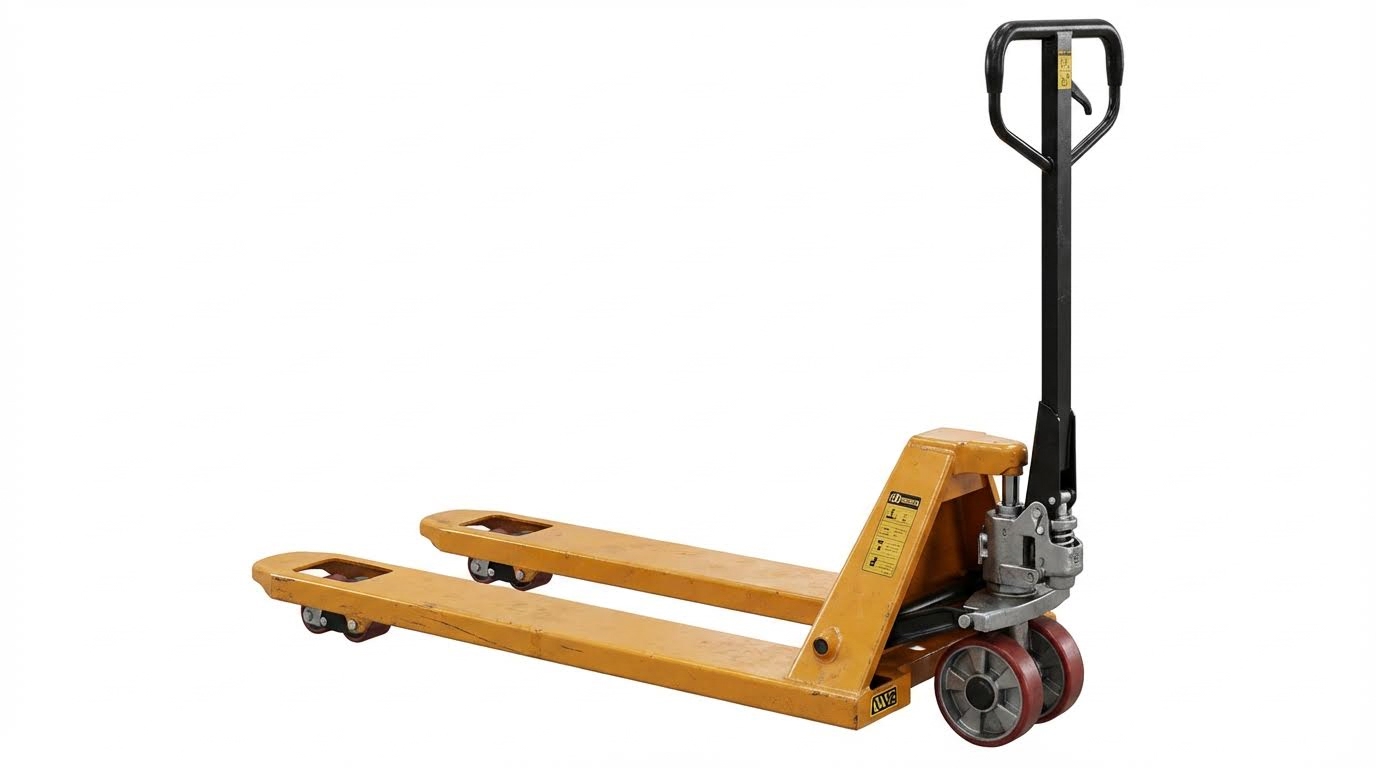
Knowing how to lift extra long pallet loads safely required a combined focus on fork geometry, attachments, and support equipment. Operations that engineered correct fork length, insertion depth, and load centre control reduced tip‑over risk and pallet failures. Purpose‑designed attachments, multi‑directional trucks, and loader‑mounted forks expanded handling options where standard forklifts reached their limits. Correctly sized roller conveyors, manual pallet jack, and interfaces to AGVs completed a continuous, stable material flow path.
From a technical standpoint, the core principle for how to lift extra long pallet loads was full or at least 80% fork engagement while keeping the effective load centre within the truck’s rated diagram. Visual guides, sensors, and structured operator training cut fork misalignment, improved approach angles for two‑way and four‑way pallets, and reduced damage rates. Attachments such as hydraulic fork positioners, extendable forks, and swinging tines allowed operators to maintain support under long loads without oversizing the base truck. Multi‑directional forklifts and properly configured conveyors enabled long loads to move in tighter aisles with controlled acceleration, deceleration, and accumulation.
Industry data showed that sites applying these practices did not only lift extra long pallets more safely; they also lowered handling time per pallet, reduced product damage, and freed reserve capacity through lower downtime. Future trends pointed toward broader use of digital twins, predictive maintenance, and real‑time performance dashboards that monitored fork engagement quality, impact events, and equipment utilisation. In practice, a phased implementation worked best: start with fork positioning standards, pallet quality control, and operator metrics; then optimise slotting, putaway routing, and conveyor interfaces; finally, refine fleet mix, battery strategies, and advanced automation. This balanced approach let facilities handle extra‑long pallets with higher safety margins while still driving leaner, data‑driven operations. Additionally, integrating tools like the long pallet truck and hydraulic pallet truck further enhanced efficiency.