Electric forklifts with dead batteries created complex handling and safety challenges in warehouses and yards. This article outlined how to control risk before any movement, how to tow disabled electric forklifts mechanically, and how to apply temporary power or battery-handling options without breaching equipment limits. It also addressed compliant transport using trailers or flatbeds and the constraints set by OEM guidance and industry associations. The final section integrated these practices into a reliability strategy that reduced breakdown frequency and the need for emergency tows.
Safety And Risk Controls Before Any Movement
Moving or towing an electric forklift with a dead battery required structured risk controls before any physical intervention. Supervisors needed to treat the task as non‑routine work, apply formal procedures, and verify that all personnel understood their roles. Proper preparation reduced the likelihood of runaways, crush injuries, and equipment damage. The following controls framed safe execution across industrial sites.
Lockout, communication, and site control
Technicians first isolated the forklift by turning the key switch off and removing it, then disconnecting or opening the main battery connector where accessible. They applied lockout/tagout devices according to the facility energy control procedure, including tags that described the fault and authorized person. Supervisors established a controlled work zone using cones, barriers, and signage, keeping pedestrians and unrelated vehicles outside the towing or lifting path. Clear radio or verbal communication protocols between the towing operator, spotter, and supervisor prevented conflicting commands and unexpected movements.
OEM manuals, ratings, and regulatory limits
Operators consulted the forklift OEM manual before towing or lifting to identify approved tow points, brake release methods, and maximum tow speeds. The manual also specified truck weight, center of gravity, and any prohibition on towing over gradients or uneven surfaces. Safety managers cross‑checked the chosen method with local regulations and standards, which typically limited towing to low speeds and short on‑site distances. They ensured the towing vehicle met or exceeded the disabled truck’s weight and had sufficient braking capacity for the combined mass on the intended route.
Hazard assessment: slopes, floors, and surroundings
Before movement, a competent person performed a task‑specific risk assessment of the area. They identified slopes, dock edges, drains, and floor defects that could destabilize the disabled forklift or towing vehicle. The team evaluated lighting, visibility at intersections, and potential conflicts with production traffic or pedestrians. Where risks exceeded acceptable limits, they modified the plan, for example by changing the route, adding wheel chocks, or scheduling the move during a plant shutdown window.
Required tools, PPE, and auxiliary equipment
Safe moves depended on correctly rated hardware and personal protection. Teams selected tow chains, straps, or bars with a working load limit above the combined vehicle mass, inspected them for wear, and rejected damaged items. They prepared wheel chocks, blocks, and, where necessary, ramps or dock plates to control movement and transitions. Operators and spotters wore high‑visibility clothing, safety shoes, gloves, and eye protection; electrical work around batteries required insulated gloves and face shields. A pre‑job check confirmed that all tools and auxiliary equipment, including radios and lighting, functioned correctly before the towing or lifting operation began.
Mechanical Towing Of A Disabled Electric Forklift
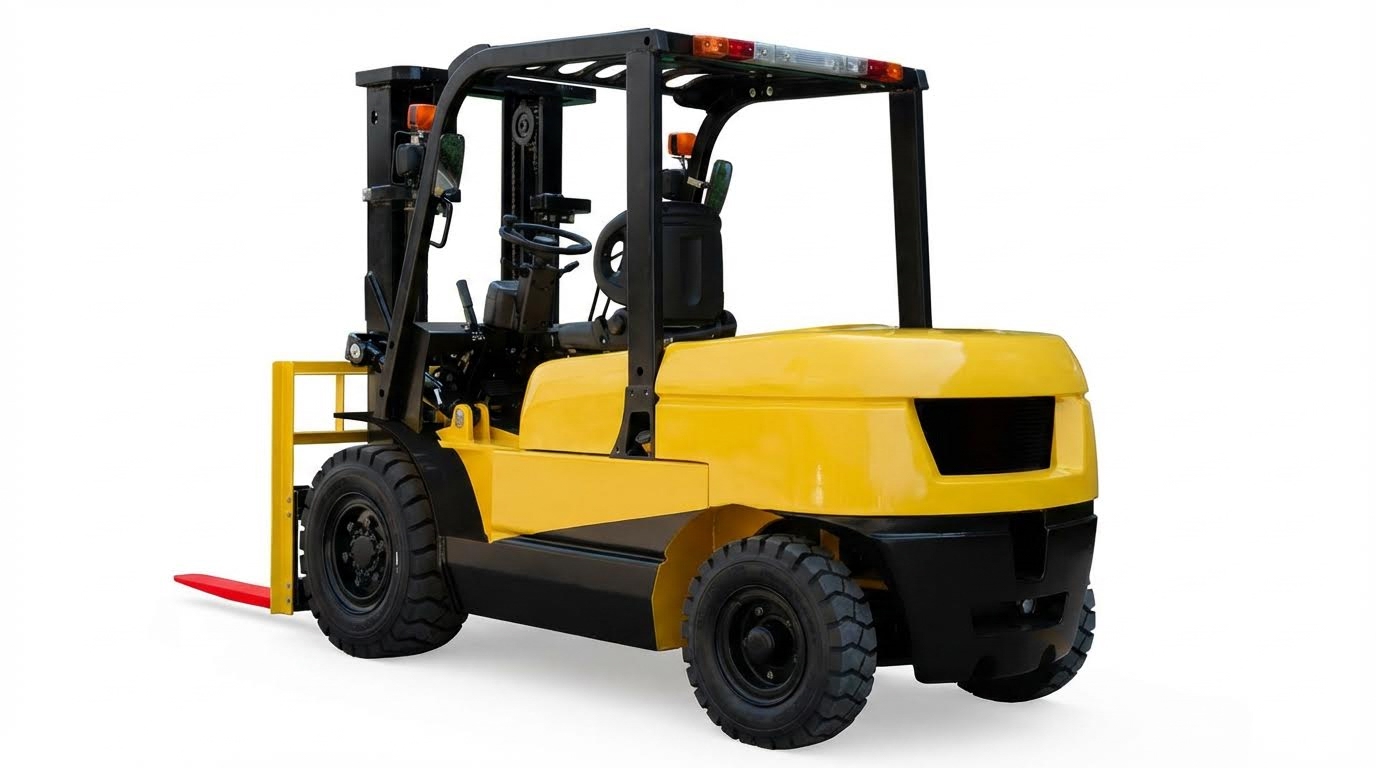
Mechanical towing of a disabled electric forklift required strict control of forces, speed, and operator roles. The objective was to move the unit only to a safe repair or loading location, never for routine repositioning. Proper selection of the towing method, coupled with correct attachment and brake management, minimized structural damage and collision risks.
Selecting and sizing the towing vehicle
The towing vehicle needed sufficient mass, brake capacity, and traction to control the combined weight. Industry guidance specified that the towing forklift should be at least as large as, and typically heavier than, the disabled unit. Engineers and supervisors checked the nameplate of the disabled truck to confirm truck weight, not just rated load capacity. Planners then compared this to the towing truck’s rated capacity, brake performance, and site gradients to ensure adequate control on the intended route. A risk assessment also considered surface conditions, required stopping distances, and whether a powered tug or tractor provided better stability than a standard lift stacker.
Tow points, chains, and bars: proper attachment
Operators attached tow chains or bars only to manufacturer-approved tow or anchor points on the forklift frame. Connecting to forks, mast structures, or guard panels increased the risk of deformation or structural failure under tension. Tow devices required verified working load limits that exceeded the expected towing forces with a safety factor, and personnel inspected them for wear, cracks, or deformation before use. Best practice kept the tow connection as low as practicable on the disabled truck and limited the tow bar or chain angle to less than 30 degrees from the longitudinal axis. Crews used the OEM-supplied tow pin where specified and double-checked all connections before removing wheel chocks.
Brake release, steering control, and tow speed limits
Before towing, technicians followed OEM instructions to release electric or spring-applied parking brakes and confirm the service brake pedal was not applied. They ensured the key switch remained off and the direction selector in neutral, preventing unintended drive engagement. Wheel chocks stayed in place until brake release and tow connection checks were complete, then were removed immediately before motion. During towing, operators maintained very low speeds, typically not exceeding 2 km/h on level surfaces, to limit dynamic loads and stopping distances. A trained operator on the disabled forklift only participated when steering or supplemental braking control was necessary and clearly coordinated. Smooth, gradual acceleration and deceleration avoided shock loading that could overload chains or bars.
When to use trailers, flatbeds, or tilt trays
When the route involved longer distances, public roads, or non-level surfaces, loading the disabled forklift onto a trailer or flatbed provided safer control than direct towing. Tilt tray trucks allowed winching the forklift onto the deck at low speed, reducing the need for powered movement of the disabled unit. Flatbed and lowboy trailers offered higher payload capacity and better weight distribution for heavier electric forklifts, provided the trailer’s rated capacity exceeded the truck weight with margin. Operators centered the forklift, lowered and tilted forks forward, chocked all wheels, and secured the unit using chains or straps at four anchor points. For multiple forklifts or constrained access sites, planners evaluated specialized trailers and loading aids, such as ramps and dock plates, while complying with transport regulations on axle loads, tie-down strength, and height limits.
Temporary Power And Battery Handling Options

Temporary power solutions allowed operators to move a disabled electric forklift to a safe area or charging point without resorting to mechanical towing. These methods relied on controlled, short-duration power supply and strict adherence to manufacturer limits. They never replaced a correctly specified traction battery under normal service conditions.
Using larger forklifts to relocate a dead unit
Using a larger forklift to move a dead electric unit required careful capacity verification. The towing or lifting forklift needed a rated capacity higher than the dead truck’s actual weight, not just its nominal load rating. Typical 1.5–3.0 tonne capacity electric forklifts weighed approximately 2.5–5.0 tonnes, so the assisting truck often needed a significantly higher rating. Operators either lifted from approved lifting points or pushed/pulled at low speed on level ground, following OEM instructions and avoiding contact with mast, overhead guard, or battery compartment. This method suited short internal transfers, such as repositioning a dead unit to a charger bay or maintenance area.
Remote battery packs, jump-starts, and car batteries
Remote battery packs and car-battery arrays provided only enough energy to power traction and steering long enough to reach a charger. Technicians matched the forklift system voltage, typically 24 V, 36 V, or 48 V, and wired 12 V batteries in series, confirming total voltage with a calibrated meter before connection. They positioned the temporary pack securely on a pallet or cart, restrained it against movement, and used correctly sized cables with proper polarity and insulated terminals. Jump-starts and booster packs required isolation of both systems before connection, correct sequence when clamping leads, and continuous PPE use because of arc flash and hydrogen gas ignition risks. These methods did not support sustained operation and were limited to no-load, short-distance relocation.
Safe battery swaps and extractor systems
Battery swapping was often the cleanest solution when compatible spare batteries and handling equipment were available. Maintenance teams verified battery voltage, ampere-hour rating, mass, and connector type against the data plate and OEM documentation before any exchange. Side-extraction systems used dedicated battery extractors or roller beds, while overhead removal relied on cranes or forklifts with approved lifting beams and rated slings. Operators isolated the truck, applied parking brakes and chocks, and disconnected the battery using the main connector or isolator before lifting. They then secured the replacement battery against movement, reconnected, and performed functional checks, including steering, braking, and warning devices, before releasing the truck back to service.
Limits of temporary power: no load handling
Temporary power solutions imposed strict functional limits to maintain safety and protect components. Industry guidance restricted their use to moving an unloaded forklift to a safe location, explicitly prohibiting lifting or transporting loads. Under-voltage operation increased current draw, which elevated cable and contact temperatures and accelerated insulation and contactor wear. Steering, braking, and safety interlocks could also respond unpredictably at marginal voltages, raising collision and tipping risk. Supervisors therefore defined clear procedures: forks fully lowered, no payload, reduced speed, level routes, and continuous supervision until the truck reached a proper charger or workshop. Once relocated, technicians diagnosed the root cause and restored the original battery system before normal operation resumed.
Summary And Best Practices For Future Reliability
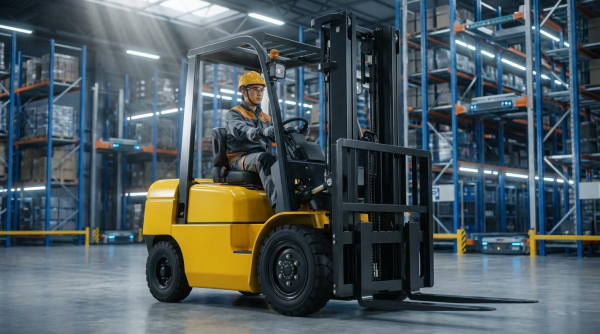
Safe movement of an electric forklift with a dead battery relied on structured risk control, correct towing techniques, and disciplined battery handling. The core objective was always the same: relocate the disabled truck at low speed to a safe repair or transport position, not to keep it working under load. Operators minimized incident risk by applying lockout, clear communication, and site control before any movement, and by following OEM towing instructions and applicable standards for industrial trucks. Proper hazard assessment of slopes, floor conditions, and congestion levels determined whether manual relocation, towing, or full lifting and transport on a trailer or flatbed was acceptable.
Industry guidance showed that mechanical towing had to respect strict limits on tow speed, tow-bar angle, and anchorage height, while using a towing vehicle with sufficient mass, braking capacity, and rated capability. Correct tow points, intact chains or bars with known working load limits, and verified brake release on the disabled truck were essential to avoid uncontrolled motion or structural damage. Where distance, terrain, or risk factors were unfavorable, loading the forklift onto a tilt tray, lowboy, or flatbed trailer provided a more controlled solution, provided the truck was properly centered, chocked, blocked, and secured with chains or straps to rated anchor points.
Temporary power solutions such as remote battery packs, car-battery arrays, or jump-start procedures were suitable only for short, unloaded repositioning to a charger or maintenance bay. Technicians had to match system voltage, verify polarity, and use appropriate PPE to control electrical and arc-flash hazards. Battery swaps and extractor systems reduced downtime but introduced their own mechanical and crush risks, which required trained personnel, rated lifting devices, and adherence to OEM battery-handling procedures.
Looking forward, predictive maintenance, connected battery monitoring, and operator training programs will reduce the frequency of dead-battery events and emergency tows. Fleets that standardize procedures for towing, transport, and temporary power, document them in site-specific work instructions, and audit compliance will see fewer incidents and lower lifecycle costs. A balanced approach combined conservative movement methods, rigorous maintenance, and continuous education, recognizing that the lowest-risk option was often to wait for qualified technicians and purpose-built equipment rather than improvising with marginal tools or untrained staff.