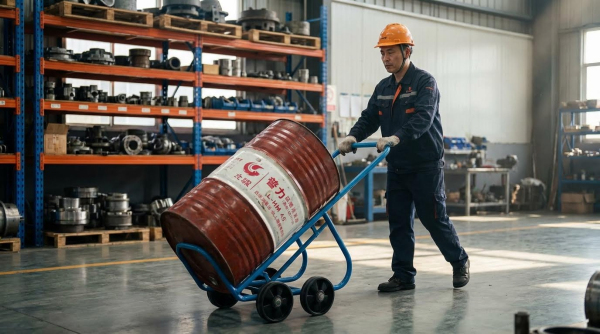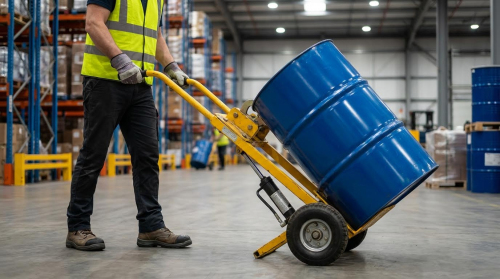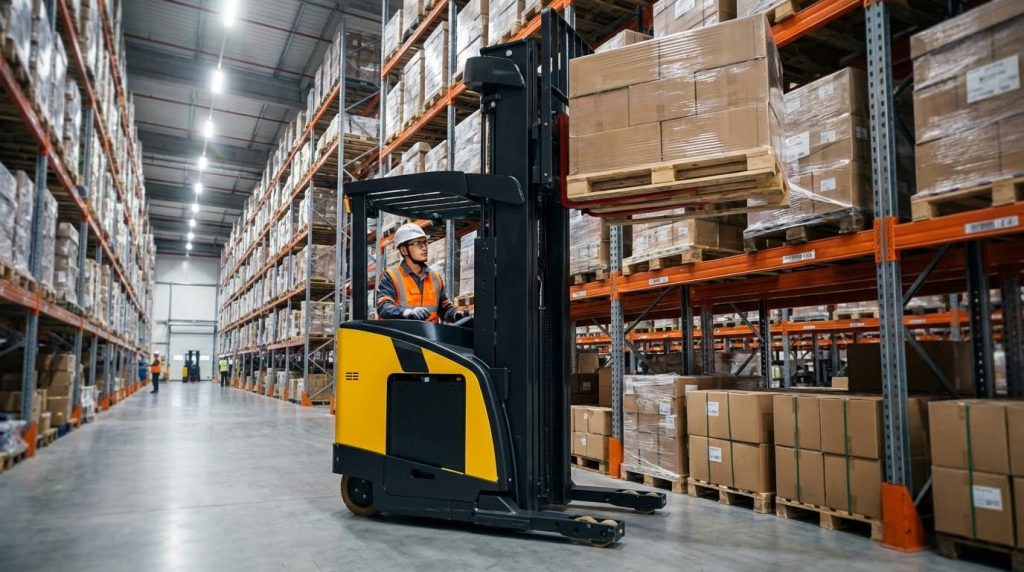
Safe, repeatable technique for how to lift a pallet with a forklift depends on disciplined pre‑checks, precise truck positioning, and controlled maneuvering under load. This guide walks through operator qualifications, OSHA‑driven inspections, ground and racking assessments, and verification of pallet and load characteristics before lifting.
You then move step by step through approaching the pallet, setting fork spacing and load center, lifting and traveling with clear visibility, and handling challenging high or unbalanced loads. Finally, the article covers safe placement on floors, docks, conveyors, and racking systems, plus shutdown and post‑operation checks, so operations teams can standardize forklift pallet handling procedures and reduce incident risk.
Pre‑Lift Checks: Truck, Load, And Work Area
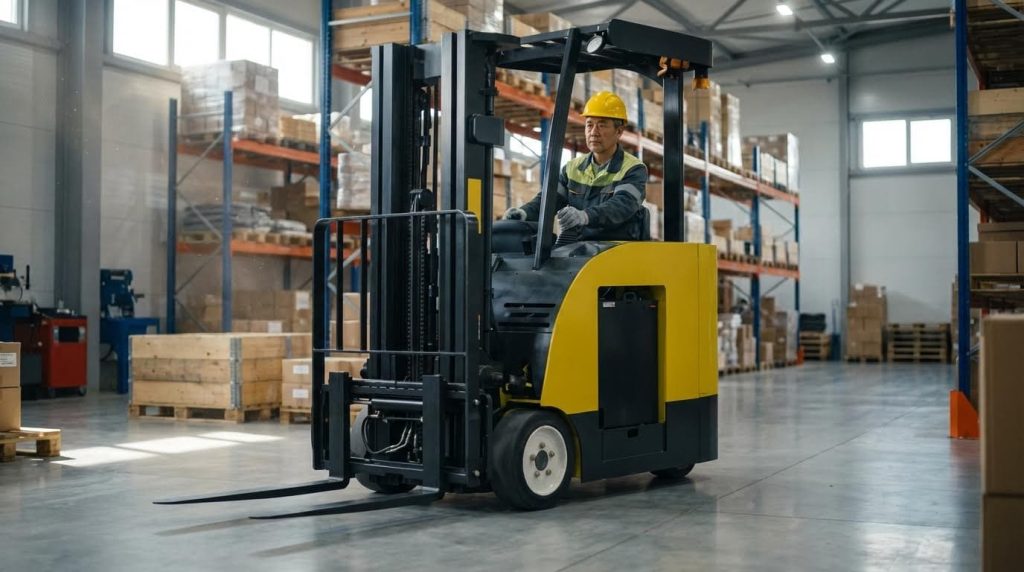
Pre‑lift checks define whether you can safely execute any step of how to lift a pallet with a forklift. Before moving the truck or touching a pallet, you must confirm the operator, machine, load, and work area all meet regulatory and technical requirements.
Operator qualification and regulatory compliance
Only trained and certified personnel may operate forklifts under OSHA and equivalent international regulations. Formal training had to include theory, practical evaluation, and site‑specific instruction on loads, racking, and traffic patterns. Operators must understand the truck’s rated capacity, load center, and any derating due to attachments or elevated work. Supervisors should verify license validity, refresher training intervals, and medical fitness, especially for vision, hearing, and reaction time. When working at elevation or near dock edges, operators and spotters must follow applicable fall‑protection and edge‑protection rules. Documented compliance supports both legal requirements and internal safety audits.
Daily OSHA pre‑operation inspection steps
OSHA required a documented inspection at least once per day, or once per shift for continuous use. The pre‑start visual check covered forks, mast, chains, and carriage for cracks, bends, wear, or missing pins, plus the load backrest, guards, nameplates, and safety decals. Operators then inspected tires, overhead guard, frame, hydraulic hoses, and visible leaks, and confirmed that the operator manual was present and legible. Fluid levels for engine oil, coolant, brake fluid, and hydraulic oil, or battery electrolyte on electric trucks, had to be within specified ranges. With the engine running, the operator tested steering, service and parking brakes, inching control, lift and tilt functions, horn, lights, alarms, and any attachments. Any defect affecting safe operation meant the truck was removed from service until repaired by authorized personnel.
Assessing ground, aisle, and racking conditions
Before lifting a pallet with a walkie pallet truck, the operator must verify that floor conditions support the truck and its maximum loaded weight. Check for cracks, potholes, dock plate gaps, wet or oily patches, and transitions between surfaces that could destabilize the truck. Aisles need adequate width for the truck’s turning radius with the load, including clearance for counterweight swing and mast tilt. Overhead, confirm there is no risk of striking doors, sprinklers, mezzanines, or low beams; maintain at least the required safety gap between truck height and door or structure. Inspect racking for bent uprights, damaged beams, missing beam locks, or loose anchors, and remove any compromised locations from service. Plan travel routes in advance, identifying slopes, blind corners, pedestrian crossings, and high‑traffic intersections, and establish signaling or spotter use where visibility is limited.
Verifying load weight, center, and pallet integrity
Safe pallet lifting starts with confirming the load mass and center of gravity against the forklift’s rated capacity at the specified load center. Use shipping documents, manifests, or scale data where available; never guess when the weight approaches the truck rating. Inspect the pallet for broken deck boards, split stringers, pulled nails, or rot, and transfer the load to a sound pallet if any structural damage appears. Ensure the load is evenly distributed, not top‑heavy, and securely wrapped, banded, or contained so it cannot shift during lift or travel. Place the heaviest side of the load toward the heel of the forks and ensure the forks can be spread wide enough to support the load footprint. Reject pallets with protruding objects or unstable stacking patterns, and restack or rewrap them before attempting to lift or transport.
Positioning The Forklift And Engaging The Pallet
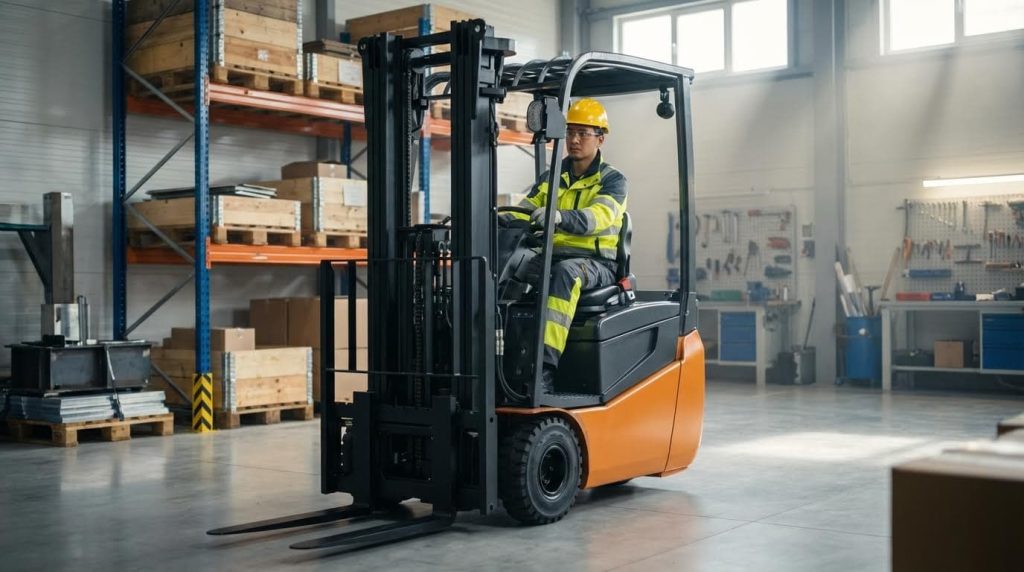
Knowing how to lift a pallet with a forklift starts with precise positioning and controlled engagement of the load. The goal is to keep the truck within its rated capacity, maintain the combined center of gravity inside the stability triangle, and avoid shock loading of the mast and forks.
Approaching, aligning, and setting fork spacing
Approach the pallet slowly, in a straight line, and square the forklift to the pallet face. Keep the mast vertical and the forks just high enough to clear the floor, typically 50–100 millimeters. Stop a short distance from the pallet, then align the truck so both forks enter parallel to the pallet stringers or deck boards. Adjust fork spacing before entry so each fork sits under the strongest pallet members and supports the load symmetrically about its center of gravity.
Set the forks as wide as the pallet design allows while remaining fully inside the fork pockets or deck opening. This wider stance reduces torsional loading and improves lateral stability during travel and turning. Verify there is sufficient clearance beneath the pallet to avoid striking boards or runners when you move forward. Never attempt to pick up two loaded pallets at once, and do not use a single fork under a load that was designed for two‑fork support.
Inserting forks, setting load center, and mast tilt
Drive forward at creep speed until the forks contact the pallet, then continue slowly until the heel of the forks is close to the pallet’s leading edge. Fully insert both forks so the pallet sits against the fork carriage or load backrest. Partial fork entry increases bending stress on the forks and can cause pallet failure. Confirm that the load distributes evenly across both forks, with no significant overhang that would shift the center of gravity forward or to one side.
Position the load center at or behind the rated load center on the data plate, commonly 500 millimeters for standard counterbalance trucks. Keep the heaviest side of an asymmetric load against the fork heel and carriage. Once the forks are fully engaged, lift the pallet 50–100 millimeters off the ground and apply slight rearward mast tilt. This rear tilt pulls the load against the carriage, shortens the effective load center, and improves longitudinal stability, but avoid excessive tilt that could destabilize tall or segmented loads.
Lifting, traveling, and visibility management
Lift the pallet smoothly using the hydraulic control, avoiding abrupt lever movements that could shock load the mast or destabilize stacked goods. Maintain the load at a low travel height, typically 100–150 millimeters above the floor, to keep the combined center of gravity as low as practical. Travel with the mast slightly tilted back so the load remains firmly against the carriage and cannot slide forward under braking. Respect the rated capacity at the actual load center; do not rely on counterweight mass to compensate for overloads.
Drive at a controlled speed appropriate to aisle width, floor condition, and traffic, usually below 2–3 meters per second indoors. Maintain clear visibility of the travel path; if the pallet blocks forward vision, travel in reverse while keeping the load upgrade on slopes. Use a trained spotter when operating near pedestrians, blind corners, or racking where sight lines are restricted. Avoid turning with the load raised or crossing uneven surfaces at speed, as these actions increase lateral tipping risk.
Special cases: high, large, and unbalanced loads
For high or segmented loads, use a load backrest extension to prevent product from falling backward toward the operator. Lift vertically with the mast centered and avoid sudden tilt changes that could cause the stack to sway. Keep the load as low as possible during travel and raise it to rack height only when positioned directly in front of the storage location. When placing or retrieving from elevated levels, raise the load just clear of obstructions, position accurately, then lower to transfer weight before withdrawing the forks.
Large loads that extend beyond the fork tips or truck width require special attention to clearance, swing radius, and visibility. Travel slowly, widen turning paths, and consider engineered attachments if the geometry exceeds standard fork capability. For unbalanced loads, always place the heavier end against the carriage and within the truck’s rated capacity at the resulting load center. If the pallet or packaging is unstable, re‑stack, re‑wrap, or secure the load with straps before lifting. If stability cannot be achieved within the forklift’s rated envelope, treat the load as non‑conforming and do not move it until an engineered handling method is defined.
Placing, Stacking, And Working With Racking
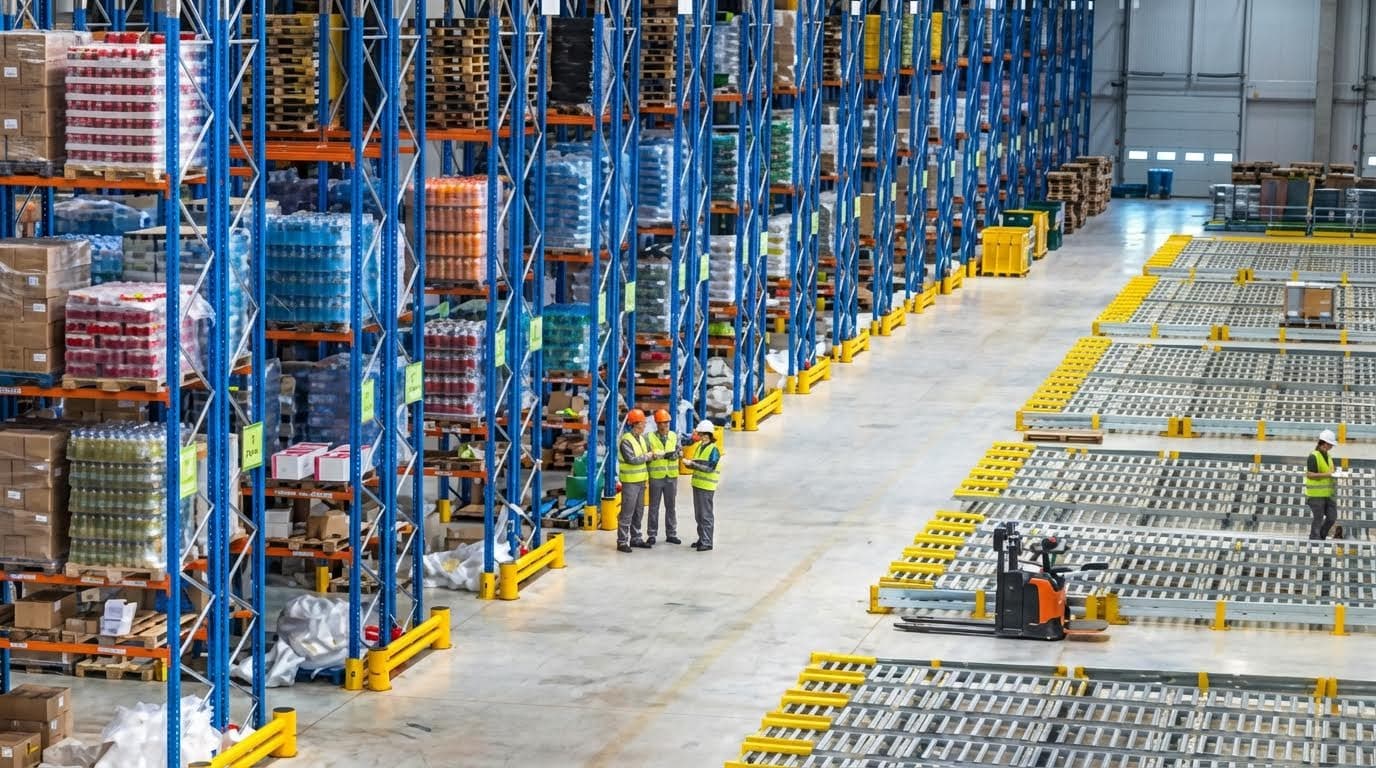
Knowing how to lift a pallet with a forklift is only half of safe materials handling. Equally critical is how you place, stack, and interface with floor storage, docks, conveyors, and racking systems without compromising truck stability or rack integrity. This section explains best‑practice techniques for controlled placement, stable stacking, and compliant shutdown, building directly on correct load pickup and travel methods.
Placing loads on floor, docks, and conveyors
Position the forklift square to the final placement point before raising the load. Apply the parking brake, then raise the forks only to the minimum height needed for placement. Keep the mast vertical or slightly forward when setting down to avoid dragging the pallet. Lower the load slowly until the pallet or base fully contacts the floor, dock, or conveyor supports.
Maintain a typical ground clearance of about 100 mm while approaching, then stop before the target and inch forward with the load already at placement height. Ensure the pallet is fully supported and not bridging gaps between dock plates, conveyor rollers, or expansion joints. Verify the heaviest side of the load sits closest to the supporting structure, not hanging off an edge. Once the load is stable, lower the forks fully, neutralize hydraulic controls, then reverse straight back until the forks clear.
Loading and unloading pallet flow and drive‑in racks
For pallet flow racks, square the forklift to the lane opening and center the pallet on the forks before entering the bay. Lift the pallet approximately 75–100 mm above the flow rails, just enough to clear the front beam without striking upper loads. Keep the pallet level and aligned with the lane while moving slowly into position. Set the pallet down centered in the lane, then lower it gently onto the rails before backing out in a straight line.
During unloading from flow racks, again square to the pick face and raise the pallet 75–100 mm to clear the front beam. Never push or drag pallets along the rails; always fully re‑engage and re‑center a misaligned pallet with the forks. In drive‑in racks, always load from the deepest floor position outward and from lower levels to higher levels to preserve rack stability. Use only pallets of uniform size and adequate condition, and ensure forks are fully clear of uprights and rails before turning in the aisle.
Stacking, unstacking, and maintaining stability
When stacking pallets on the floor, verify the bottom pallet is sound and on flat, unobstructed ground. Plan the stack height based on pallet strength, load type, and local regulations, keeping the combined mass within the floor’s rated capacity. Bagged or loose goods above about 1.5 m should be cross‑stacked and stepped back to form a stable pyramid. Keep vertical alignment tight so the center of gravity remains inside the footprint of the bottom pallet.
Approach stacks squarely, raise the load to just above the target level, then move forward slowly until the pallet is fully supported. Tilt the mast forward to level, lower the pallet to transfer weight, then release fork pressure before reversing. For unstacking, reverse the sequence: align, insert forks fully, lift 75–100 mm, and tilt back slightly before backing away. Avoid carrying more than one loaded pallet at a time and never turn with the mast elevated, which reduces the stability margin.
Parking, shutdown, and post‑operation checks
Park the forklift in a designated area away from aisles, doors, and emergency routes. Bring the truck to a complete stop, shift to neutral, apply the parking brake, and fully lower the forks until they rest flat on the floor. Tilt the mast slightly forward so the carriage and backrest sit in a neutral, unloaded position. This reduces trip hazards and prevents unintended movement of residual loads.
Turn off the engine or traction power and remove the key to prevent unauthorized use. Conduct a brief post‑operation walk‑around, checking for new leaks, damaged forks, or contact with racking or building structures during the shift. Record any defects and remove the truck from service if safety‑critical issues appear. Leave the work area tidy, with manual pallet jack squarely placed and no partial loads or protruding forks that could endanger the next operator.
Summary: Key Steps And Safety Controls
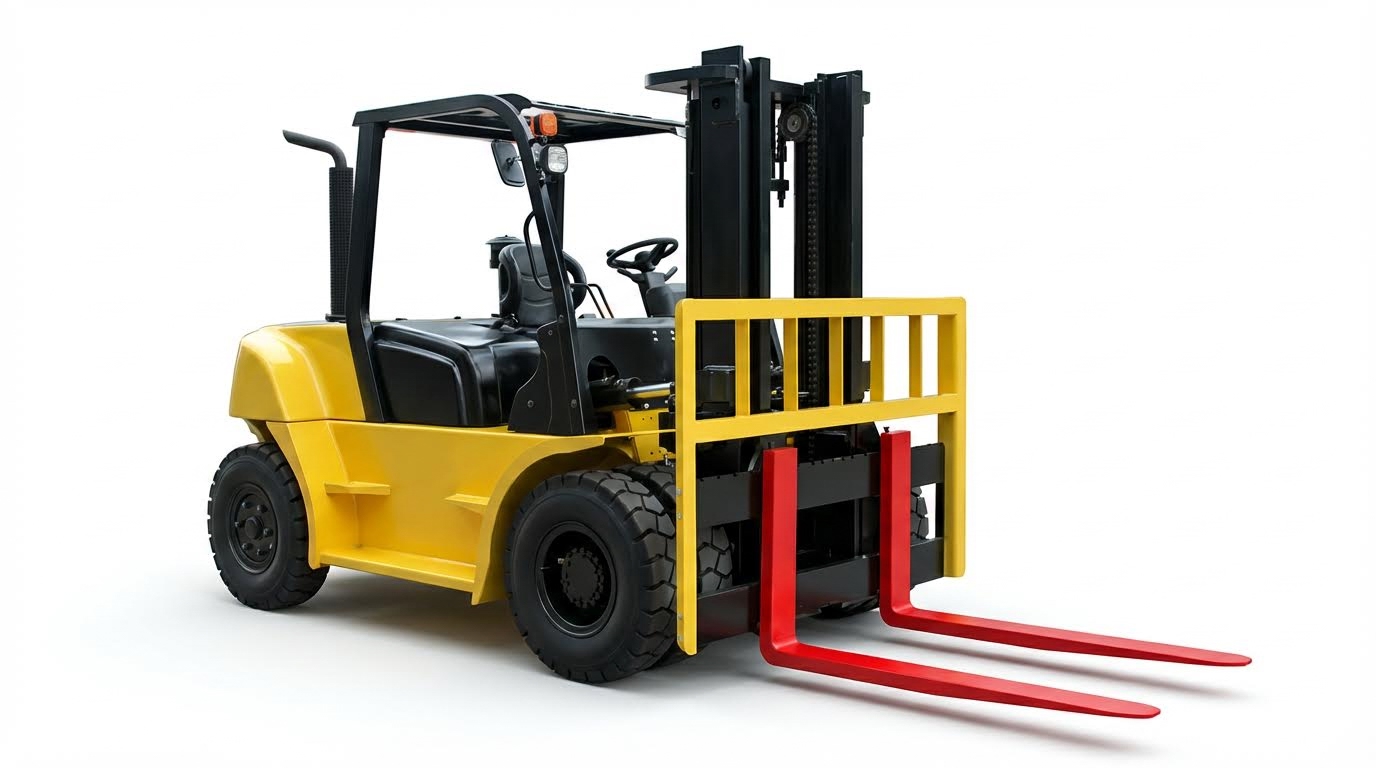
Knowing how to lift a pallet with a forklift safely required a disciplined, repeatable process. Operators first verified training, completed OSHA‑compliant pre‑operation inspections, and checked the work area, pallet, and load against truck capacity and stability limits. During pickup, they squared the truck to the pallet, set fork spacing, fully inserted the forks, controlled mast tilt, and lifted only enough for safe travel while keeping visibility and route hazards in mind. For placement, stacking, and racking work, they positioned carefully, controlled mast and travel speed, and followed rack‑system rules to avoid structural overloads and impact damage.
From a technical perspective, the critical safety controls centered on capacity adherence, load center management, and ground or rack condition. Operators kept the heaviest side of the load against the fork heel, ensured even distribution on both forks, and used back tilt to stabilize the pallet against the carriage. They avoided damaged pallets, unrestrained top‑heavy loads, and multiple‑pallet lifts, and they used spotters or reverse travel when the load blocked forward visibility. Consistent parking and post‑operation checks, combined with scheduled maintenance and regulatory‑compliant training, formed the backbone of a robust program for anyone focused on how to lift a pallet with a manual pallet jack or hydraulic pallet truck without compromising safety or productivity. Additionally, using equipment like a walkie pallet truck can further enhance efficiency in material handling operations.