Stand-up forklifts played a central role in high-density warehousing, manufacturing, and logistics where tight aisles and rapid cycle times were common. This article examined their core design and operating principles, contrasted them with sit-down trucks, and explained how rear-wheel steering, load centers, grades, and ergonomics affected stability and control. It then detailed safe driving techniques, including mounting and dismounting, speed management, visibility, pedestrian interaction, turning, reversing, and rules for ramps, docks, parking, and unattended trucks. Finally, it covered inspection and maintenance programs, from daily OSHA pre-shift checks to 250–500 hour preventive maintenance, and outlined training, recertification, and skills assessment requirements to keep operations compliant and incident rates low.
Core Design And Operating Principles Of Stand-Up Trucks
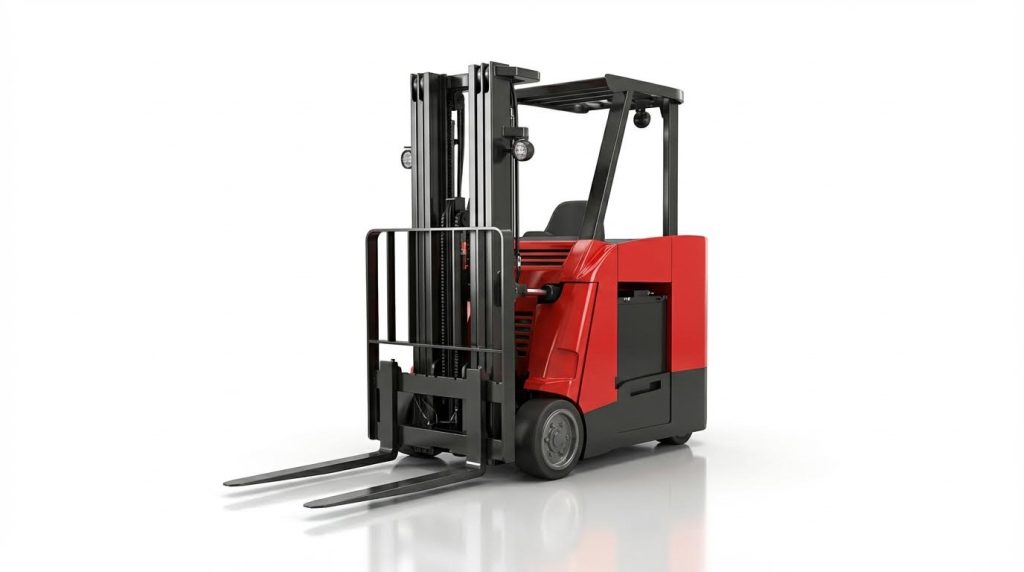
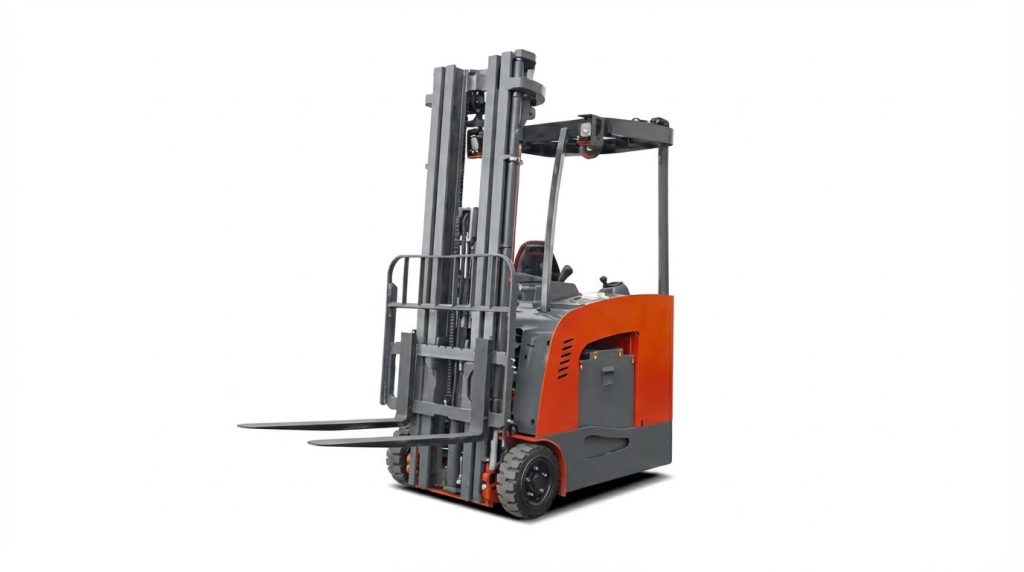
Stand-up forklifts used in warehouses and manufacturing plants relied on compact architecture and tight turning capability. Their design supported frequent mounting, dismounting, and precise pallet handling in constrained aisles. Understanding their stability limits, steering geometry, and ergonomic layout helped engineers and safety managers specify the right truck for each task and environment.
Stand-Up Vs. Sit-Down: Stability And Use Cases
Stand-up trucks used a shorter wheelbase and narrower chassis than sit-down counterbalance trucks. This geometry favored tight aisle operation but reduced the static stability envelope, especially with elevated loads. Sit-down trucks provided a larger stability triangle and better comfort for long horizontal transport. Stand-up models suited high-frequency picking, shuttle work at docks, and environments with frequent direction changes. Engineers selected stand-up designs where visibility, rapid egress, and maneuverability outweighed seated comfort and long-haul efficiency.
Rear-Wheel Steering, Tail Swing, And Maneuverability
Stand-up trucks typically used rear-wheel steering to minimize turning radius in narrow aisles. Rear steering caused the counterweight and chassis rear to swing outward during turns, creating an exaggerated tail swing. Operators therefore needed to start turns close to the inside corner and reduce speed before steering input. Design engineers considered tail swing envelopes when laying out rack aisles, intersections, and pedestrian walkways. Clear marking of travel paths and training on rear-steer dynamics significantly reduced side-impact collisions and infrastructure damage.
Load Center, CG, And Grade Operation Fundamentals
The rated capacity of a stand-up forklift depended on load center distance and the combined center of gravity of truck and load. Off-center or loosely stacked loads shifted the combined CG forward or laterally, increasing tipover risk and mast deflection. Operators had to keep forks low during travel, place forks fully under the pallet, and avoid tilting except directly over the deposit position. On grades above approximately 10%, safe practice required traveling with the load upgrade and never turning on the slope. These rules maintained the combined CG within the stability triangle defined by the wheel contact points.
Ergonomics And Operator Compartment Design
Stand-up operator compartments incorporated padded backrests, hip restraints, and non-slip platforms to stabilize the operator during acceleration and braking. Control placement aimed to keep wrists neutral and minimize reach, reducing fatigue in multi-shift operations. Designers specified clear sight lines through the mast, overhead guard, and load backrest to reduce neck rotation and improve hazard detection. Adjustable controls, step height, and grab handle positioning supported operators with different statures and reduced mounting strain. Proper compartment design, combined with training on posture and micro-breaks, lowered the incidence of musculoskeletal disorders and improved long-term productivity.
Safe Driving Techniques For Stand-Up Forklifts
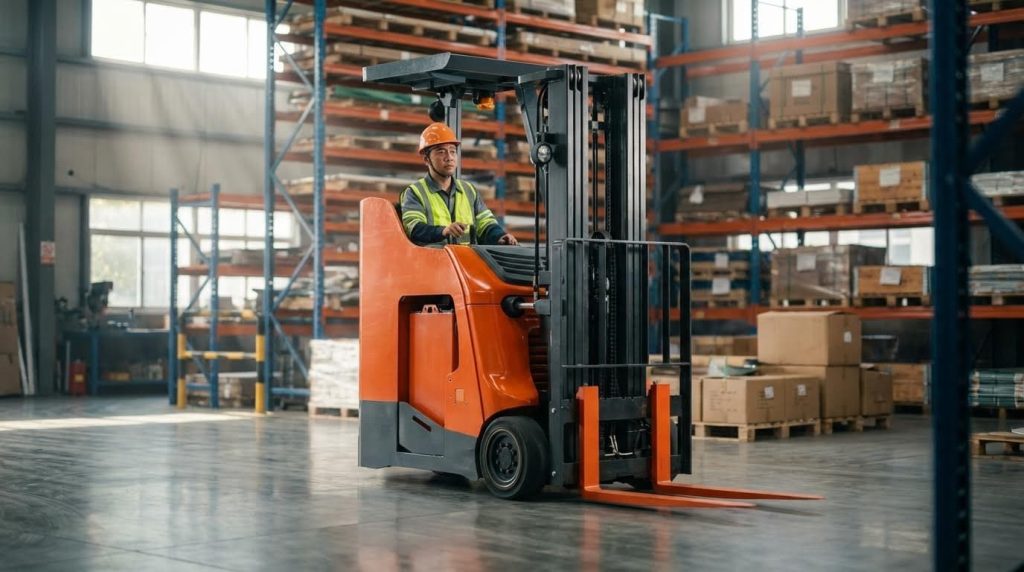
Safe driving techniques for stand-up forklifts relied on structured rules, engineered controls, and disciplined operator behavior. Effective practice combined correct body positioning, controlled speed, clear visibility, and strict adherence to facility traffic plans. Operators minimized risk by treating every movement as potentially hazardous, especially in mixed forklift–pedestrian environments.
Mounting, Dismounting, And Operator Positioning
Operators mounted stand-up forklifts using designated steps and handholds, never the steering or control handles. They checked hands and footwear for grease or moisture to prevent slips while entering or exiting. The operator stepped in carefully, avoided jumping, and maintained three points of contact until stable. Once inside, they positioned feet fully within the compartment, braced against the backrest, and kept knees and hips aligned to reduce impact loads during sudden stops. Arms and legs stayed inside the operator envelope at all times to avoid contact with racking, dock edges, or passing structures.
Speed Control, Visibility, And Pedestrian Safety
Operators controlled speed to match floor conditions, congestion, and visibility, not the truck’s maximum capability. Guidance from institutional safety programs recommended approximately 3 mph with pedestrians present and 8 mph without. Drivers maintained a clear view in the direction of travel and used spotters, mirrors, and lights where sight lines were restricted. They slowed and sounded the horn at intersections, cross aisles, doorways, and blind corners. Facilities separated forklift and pedestrian routes with marked walkways, barriers, and signage, while operators never assumed pedestrians heard alarms or understood their path of travel.
Turning, Reversing, And Aisle Navigation Tactics
Stand-up forklifts used rear-wheel steering, which created pronounced tail swing that operators had to anticipate. They initiated turns close to the inside corner and reduced speed before steering input to prevent lateral instability. Turning with elevated forks or on grades significantly increased tipover risk and was prohibited by safety standards. When reversing, operators stopped completely first, checked behind, and used horns, warning lights, or spotters in high-risk areas. They kept hands off the overhead guard while backing to avoid crush injuries and maintained sufficient clearance from racking, columns, and stored loads in narrow aisles.
Ramps, Docks, Parking, And Unattended Truck Rules
On ramps and grades, operators kept the load upgrade: driving forward uphill with a load and in reverse downhill with a load. Unloaded trucks traveled with forks downgrade, but drivers never traveled with the load downgrade or turned on a grade due to tipover risk. At docks, they verified trailer brakes were set, wheels chocked, and dockboards or plates secured and within rated capacity for both truck and load. When parking, operators chose hard, level surfaces, fully lowered the forks, neutralized controls, set the parking brake, and shut off power. A truck became “unattended” when the operator was 25 m or more away or out of view; in that case, they also blocked wheels on inclines and removed the key.
Inspection, Maintenance, And Training Requirements
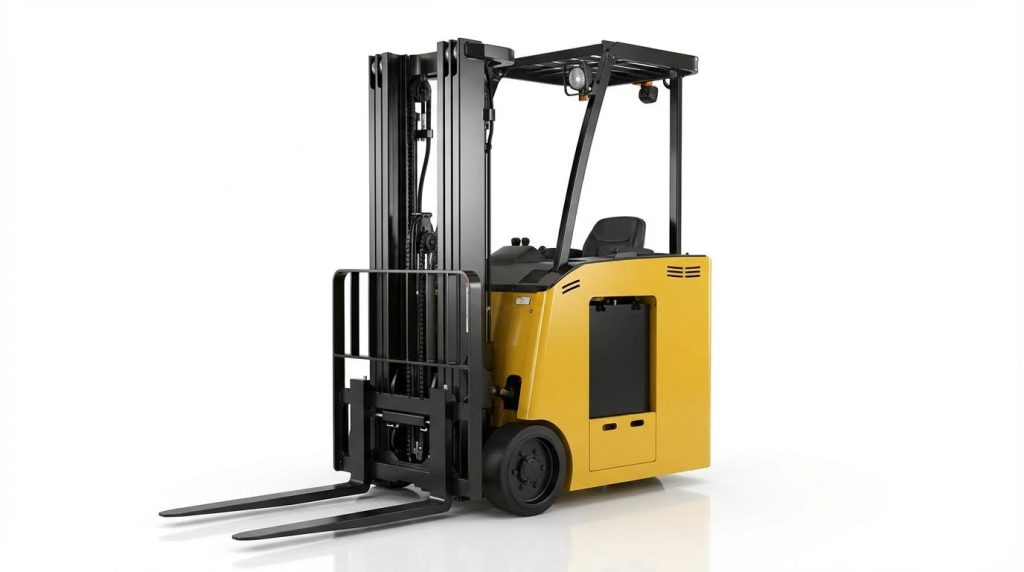
Inspection, maintenance, and training defined the safety baseline for stand-up forklift fleets. Structured programs reduced unplanned downtime, stabilized handling performance, and supported regulatory compliance. This section explained how to align daily checks, preventive maintenance, safety technologies, and operator qualification into a coherent system.
Daily Checks, OSHA Pre-Shift, And Checklists
Daily pre-shift inspections were mandatory for powered industrial trucks under OSHA rules. Operators started with a walk-around, checking the truck body, mast, forks, hoses, and overhead guard for visible damage or deformation. They inspected tyres for cuts, chunking, embedded debris, and verified inflation or wear limits according to the manufacturer’s specification. Fluid leaks under the truck or around the mast, hydraulic lines, and engine compartment indicated defects that required removal from service until corrected.
Functional checks followed after startup. Operators verified service and parking brakes, steering response, horn, lights, alarms, and any proximity or speed-control devices. On electric units, they checked battery charge level, cable condition, connectors, and, where applicable, electrolyte or water level. For internal-combustion models, they confirmed fuel line integrity and engine oil level. Checklists, whether paper or electronic, documented each item and ensured consistent coverage of safety-critical systems. Supervisors needed to review defect reports promptly and lock out unsafe trucks.
Weekly, Monthly, And 250–500 Hour PM Programs
Weekly and monthly inspections complemented daily checks by focusing on wear trends and hidden defects. Technicians inspected forks for cracks, bent blades, or heel wear against rejection criteria, and ensured locking pins engaged correctly. They examined mast rails, chains, and rollers for damage, corrosion, or slack, measuring chain elongation where specified. Hydraulic hoses and fittings were checked for abrasion, bulging, or seepage, and cylinder rods for scoring or pitting. Steering linkages and drive components were assessed for play and secure fasteners.
Preventive maintenance at 250–500 operating hours typically included fluid and filter replacement, full lubrication, and more detailed diagnostics. Tasks covered engine oil and filter changes, hydraulic oil condition checks, and, where required, coolant service. Electric trucks received battery terminal cleaning, cable inspection, and, if specified, equalization charges. Technicians performed load tests, verified lift and tilt speeds, and confirmed that safety interlocks, brakes, and alarms met performance criteria. Documented PM programs aligned with manufacturer schedules reduced breakdowns and supported warranty and audit requirements.
Electronic Speed Control And Safety Technologies
Electronic speed control systems limited travel speed to values appropriate for the environment, such as approximately 3 m/s without pedestrians and about 1.3 m/s when pedestrians were present. Controllers could cap maximum speed, ramp acceleration, and adjust regenerative braking to maintain predictable behavior. Some systems integrated with operator access cards, enforcing site-specific profiles for different skill levels or work zones. Speed-limiting logic also supported compliance with internal traffic rules and reduced the severity of impacts.
Additional technologies enhanced situational awareness and collision avoidance. These included travel and load-handling alarms, blue or red proximity lights, and directional indicators. In low-illumination areas, headlamps ensured at least the equivalent of two lumens per square foot on travel paths. Advanced fleets adopted sensors, cameras, or wireless proximity systems to detect pedestrians or obstacles in blind spots. However, procedures still required operators to maintain line-of-sight, sound the horn at intersections, and use spotters where visibility remained restricted.
Training, Recertification, And Skills Assessment
Stand-up forklift operators required formal instruction, practical training, and evaluation of competence, consistent with powered industrial truck regulations. Training covered truck types, controls, load stability, travel rules, ramp and dock procedures, and site-specific hazards. Courses typically lasted several hours and combined classroom content with hands-on exercises in maneuvering, stacking, and emergency responses. Successful participants demonstrated mastery through written tests, skills assessments, and completion of all required activities.
Certification remained valid for a defined period, often three years, after which refresher training and reevaluation were necessary. Early recertification was required after incidents, near misses, observed unsafe behavior, or significant changes in equipment or layout. Training programs addressed both new and experienced operators, emphasizing hazard recognition, pedestrian interaction, and adherence to checklists. Issued credentials, sometimes with digital identification features, documented authorization to operate specific stand-up truck classes and supported compliance audits.
Summary: Key Practices For Safe Stand-Up Operation
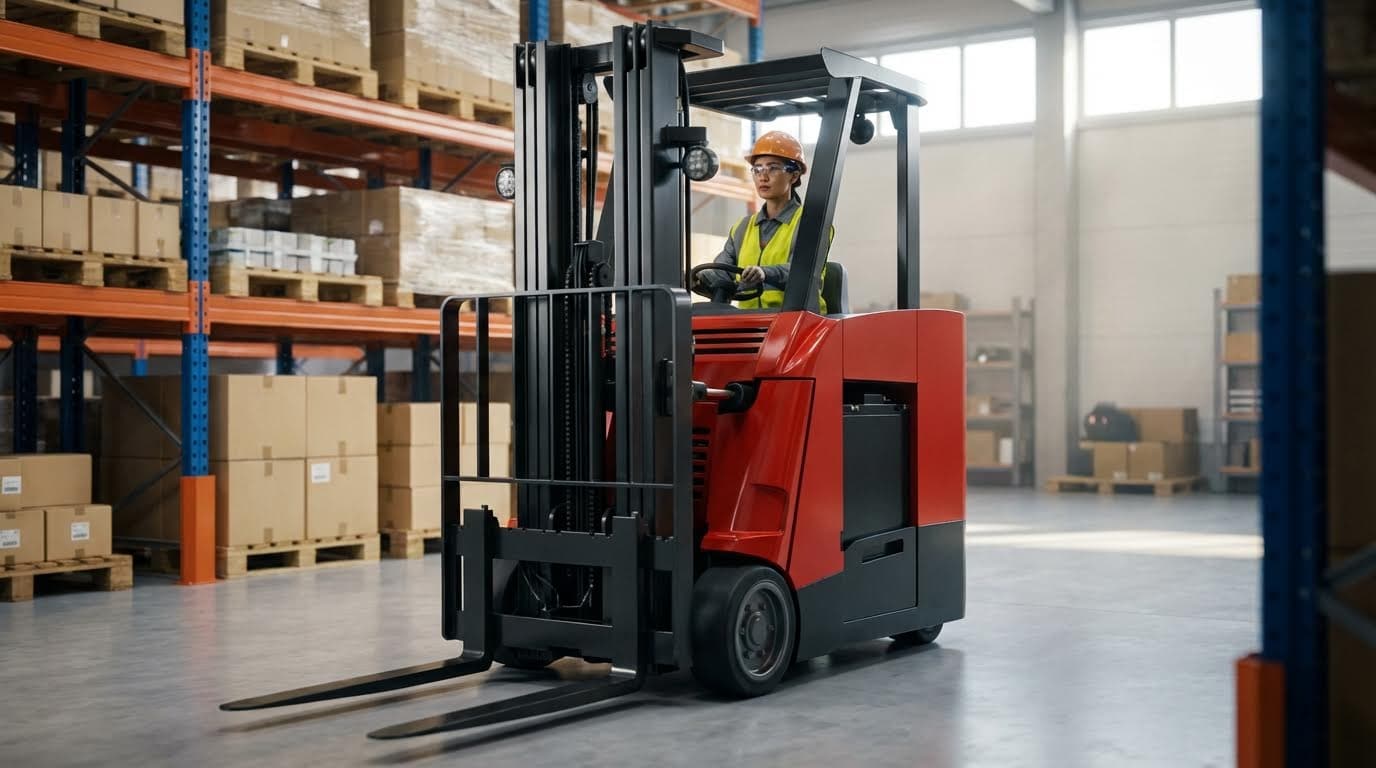
Safe stand-up forklift operation relied on three pillars: sound vehicle design, disciplined driving behaviors, and structured training with maintenance. Operators needed to understand rear-wheel steering, tail swing, and load-center effects on stability, especially on grades and in confined aisles. Consistent use of pre-shift inspections, speed management, and visibility aids reduced collision and tipover risks, while ergonomic positioning in the compartment helped prevent fatigue and control errors.
From an industry perspective, regulators and safety bodies emphasized formal instruction, hands-on evaluation, and periodic refresher training, typically on a three-year cycle or after incidents or workplace changes. Facilities that enforced traffic separation, low travel speeds near pedestrians, and strict parking and unattended-truck rules achieved lower incident rates and better uptime. Preventive maintenance at defined intervals, such as 250–500 operating hours, limited unplanned failures and kept braking, hydraulics, and steering within design performance.
In practice, companies should embed checklists into every shift, verify that operators follow mounting, dismounting, and reversing protocols, and monitor adherence to rated capacity and dock-plate limits. Integrating electronic speed control, warning lights, and alarms with clear floor markings and physical barriers created layered protection. Looking ahead, wider use of telematics, access control, and automated stability systems will likely tighten compliance and provide data-driven insights, but these technologies will still depend on well-trained operators who apply fundamental safe-driving techniques on every task.