
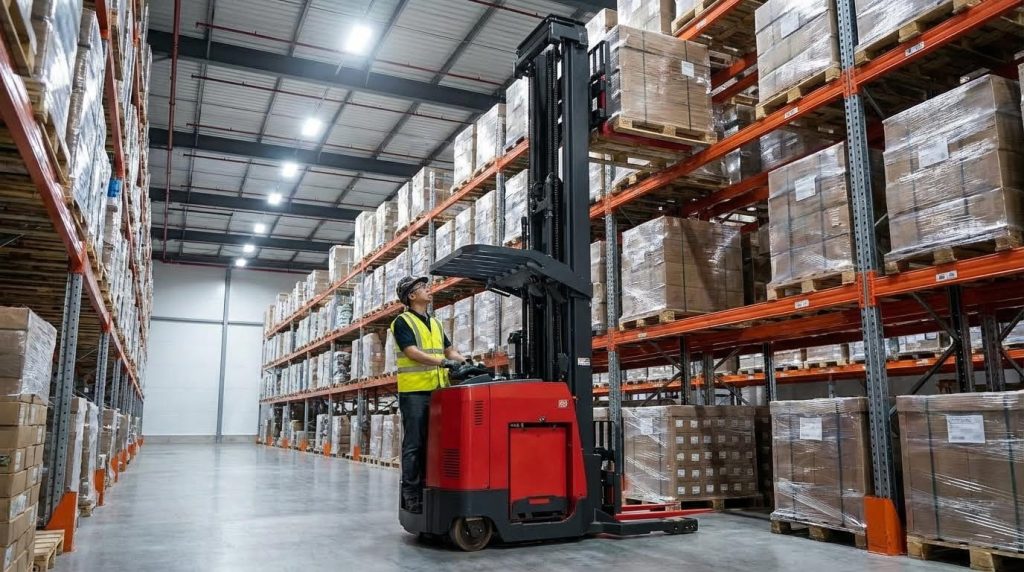
If you’re asking “are forklifts diesel or electric or something else?”, this guide breaks down every major power source in clear engineering terms. You’ll see how diesel, LPG, gas, and electric forklifts compare on torque, energy use, maintenance, and total cost of ownership. We will also connect these power choices to real-world applications, safety and emissions limits, and upcoming regulations that affect long-term fleet planning. Use this as a data-driven reference to match the right powertrain to your site, shift pattern, and budget—without guesswork.
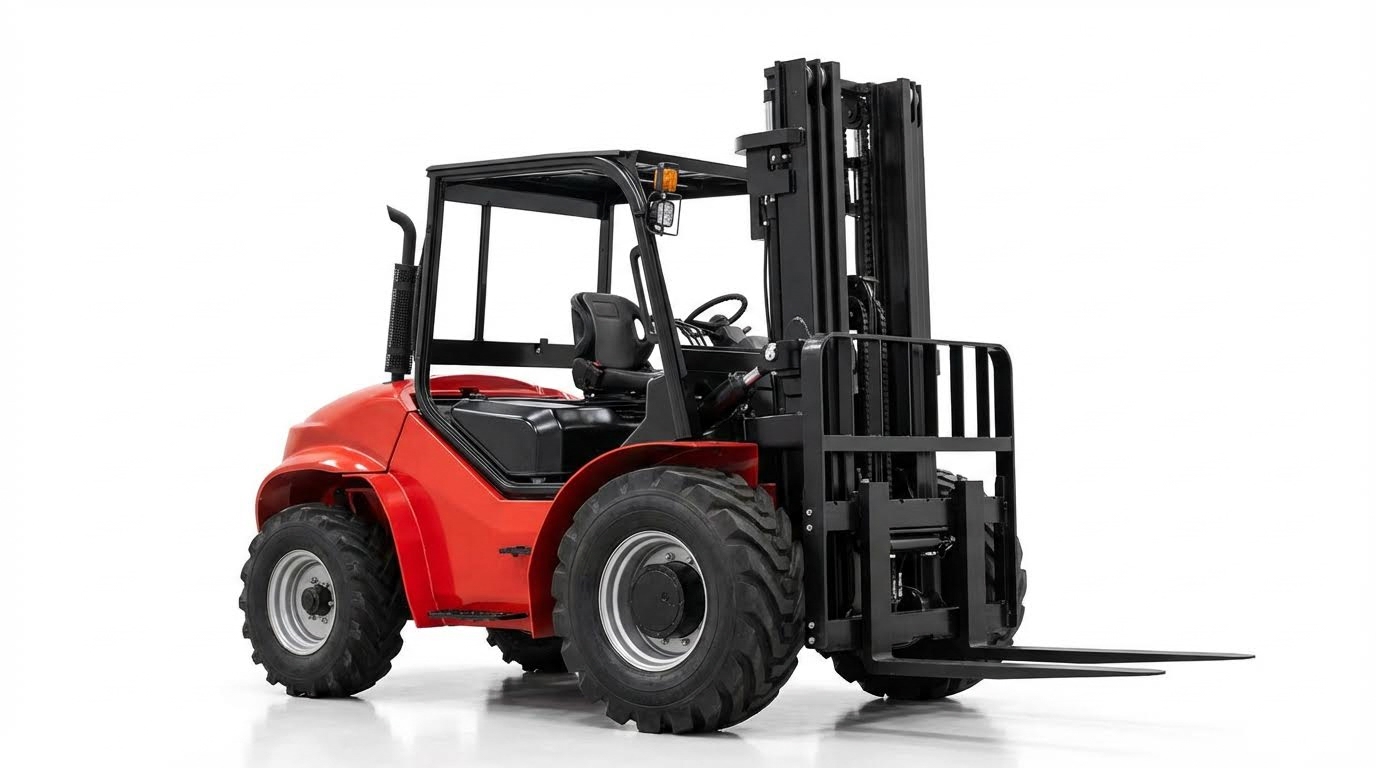
Understanding Forklift Power Options And Basics
Are Forklifts Diesel, Gas, LPG, Or Electric?
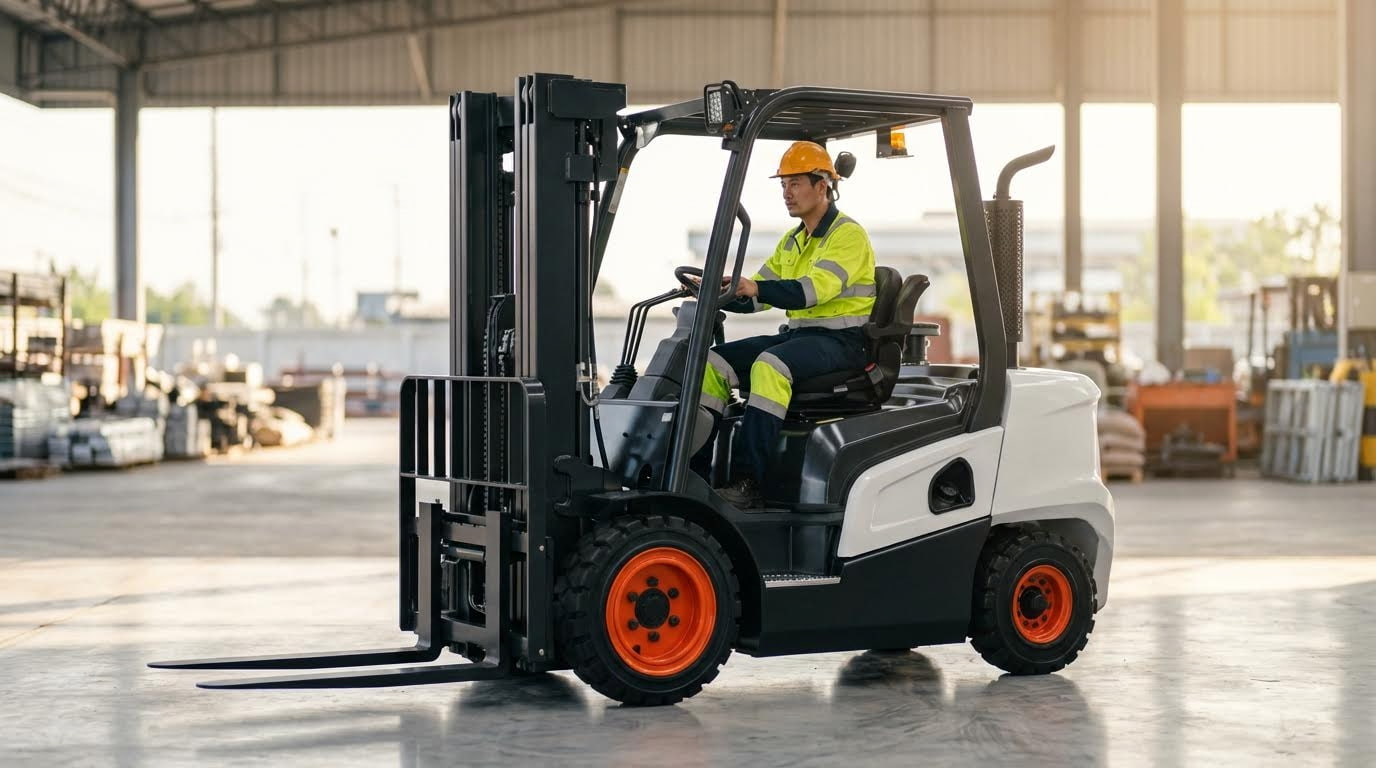
When people ask “are forklifts diesel,” they are really asking what power options exist and where each makes sense. Modern fleets use four main energy sources: diesel, gasoline, LPG (propane), and electric battery. Each option changes how long the truck can run, how much it costs per hour, and where it can safely operate.
- Diesel forklifts – High energy density fuel and strong performance, typically used outdoors and in heavy-duty, high-capacity roles. Diesel fuel contains about 36 MJ per liter, equal to roughly 9,900 Wh of chemical energy per liter, with about 45% of that converted to useful work. Energy density & efficiency data
- Gasoline forklifts – Less common in modern warehousing but still used in some outdoor or mixed-use sites. Gasoline offers around 34 MJ per liter at about 30% engine efficiency. Delivered energy comparison
- LPG (propane) forklifts – Very common “IC” (internal combustion) option for mixed indoor–outdoor work, because exhaust is cleaner than diesel and refueling is fast. LPG provides about 25 MJ per liter at roughly 35% efficiency. LPG energy figures
- Electric forklifts – Use lead‑acid or lithium batteries instead of fuel. They dominate indoor warehousing because of zero tailpipe emissions, lower energy per‑pallet use, and low noise. Typical lead‑acid packs provide 30–35 Wh/kg, while lithium iron phosphate batteries offer 110–130 Wh/kg. Battery energy density ranges
Energy use per pallet moved is lower for electric forklifts than for LPG or diesel. On a standardized duty cycle, electric lithium-ion trucks use about 0.28 kWh per pallet move, versus 0.42 kWh for LPG and 0.55 kWh for diesel, even after accounting for charging and engine losses. ISO 23308-1 VDI cycle data
From a cost perspective, electric forklifts usually have the lowest hourly “fuel” spend, followed by LPG, gasoline, then diesel. Typical fuel costs range around $1.50–$2.50 per hour for electric, $3.00–$4.00 per hour for propane, $3.25–$4.75 per hour for gasoline, and $3.50–$5.00 per hour for diesel. Fuel cost comparison
Quick pros and cons by power source
Use this as a fast filter before you dive deeper into engineering comparisons later in the article.
| Power source | Main strengths | Main limits | Typical use |
|---|---|---|---|
| Diesel | Very high usable energy per tank, strong torque, best for heavy loads and rough yards | High emissions, noise and vibration; indoor use often restricted | Outdoor yards, ports, timber, construction |
| LPG (propane) | Fast refuel, cleaner exhaust than diesel, flexible indoor–outdoor use where allowed | Higher fuel cost than electric, cylinder logistics and storage rules | General warehousing, cross-dock, mixed sites |
| Gasoline | Good power, easy fuel access | Emissions and safety concerns indoors; declining use versus LPG | Legacy fleets, outdoor or well-ventilated areas |
| Electric (lead‑acid or Li‑ion) | Lowest energy per pallet, zero tailpipe emissions, low noise, fewer moving parts | Requires charging infrastructure; runtime tied to battery capacity | Indoor warehouses, food, pharma, high‑throughput DCs |
Regulations are also pushing fleets toward electric options over time. Some regions have already set timelines to phase down internal combustion forklifts under certain capacities in favor of zero‑emission trucks. Policy trend overview
Core Components Of Each Powertrain
Each forklift power source uses a different set of core components to convert stored energy into traction and hydraulic power. Understanding these blocks helps you compare reliability, maintenance, and total cost of ownership. The big split is between internal combustion (diesel, gasoline, LPG) and electric (battery-powered) drivetrains.
| Powertrain type | Energy storage | Prime mover | Drive & hydraulics | Typical maintenance focus |
|---|---|---|---|---|
| Diesel | Diesel tank (e.g., 40–80 L) | Compression-ignition engine with after-treatment (DPF/SCR) | Torque converter or hydrostatic drive; engine-driven hydraulic pump | Engine oil, filters, injectors, DPF cleaning, fuel system, cooling |
| LPG / Gasoline | LPG cylinder or fuel tank | Spark-ignition engine | Similar to diesel: mechanical transmission and hydraulic pump | Ignition components, vaporizers/regulators, filters, hoses |
| Electric – Lead‑acid | Flooded or sealed lead‑acid traction battery | Electric traction motor(s) | Electronic inverter, fixed‑displacement hydraulic pump | Battery watering, terminals, contactors, chargers |
| Electric – Lithium (LFP / NMC) | Li‑ion pack with Battery Management System (BMS) | High‑efficiency AC traction motor(s) | Inverters and electro‑hydraulic pump | BMS diagnostics, cooling, high‑voltage checks |
Internal combustion forklifts have far more moving parts in the drivetrain than electric models. One industry analysis showed electric trucks using around 20 drivetrain parts versus about 2,000 in comparable IC machines, which translated into roughly half the repair cost over life. Drivetrain simplicity data
- IC forklifts (diesel, LPG, gasoline)
- Fuel system: tank or cylinder, pump, filters, injectors/carburetor, vaporizers and regulators (for LPG).
- Engine: block, pistons, crankshaft, camshaft, valves, turbo (often on diesel), cooling system.
- After‑treatment: diesel particulate filters and selective catalytic reduction on many diesel units.
- Transmission: torque converter or hydrostatic drive, differential, drive axles.
- Hydraulics: engine‑driven variable or fixed‑displacement pump, valves, hoses, mast cylinders.
- Electric forklifts
- Battery: lead‑acid or lithium cells, case, cabling, connectors, and (for Li‑ion) integrated BMS.
- Power electronics: inverters, controllers, contactors, DC‑DC converters.
- Traction system: AC or DC motor(s), reduction gearbox, differential, drive axle.
- Hydraulic system: electric motor driving a gear or piston pump, control valves and cylinders.
These component differences drive the maintenance profile. Fleet data showed mean time between failure around 1,050 hours for electric lithium forklifts, versus about 620 hours for diesel and 710 hours for LPG, with diesel downtime dominated by engine after‑treatment issues. MTBF comparison
Maintenance cost and labor comparison by powertrain
Use this to see how component complexity translates into yearly spend and technician time.
| Power source | Typical annual maintenance cost band | Labor hours per 1,000 operating hours | Key cost drivers |
|---|---|---|---|
| Electric | ≈ $750–$1,200 for light‑duty use around 1,200 h/yr | ≈ 4.2 h | Battery health, connectors, electronics; periodic battery replacement every 3–5 years at about $2,000–$5,000 |
| LPG | ≈ $1,200–$2,000 for mid‑duty around 1,500 h/yr | ≈ 7.4 h | Engine tune, vaporizers, hoses, filters, cylinder hardware |
| Diesel | ≈ $2,000–$3,500+ for heavy‑duty over 2,000 h/yr | ≈ 9.8 h | Oil and filter changes, injectors, DPF/SCR service, higher parts count |
Cost and labor figures are based on survey and industry breakdowns of fuel and maintenance costs across different forklift classes and duty levels. Operating cost survey Maintenance comparison
From an engineering standpoint, the fewer moving parts in electric forklifts help reduce unplanned downtime, but battery health becomes the critical component. For IC forklifts, the engine, after‑treatment, and fuel system dominate both planned and unplanned maintenance. Matching your power source to your duty cycle, environment, and support capability is therefore as important as answering whether your next units “are forklifts diesel” or electric on the spec sheet.
“”
Matching Power Source To Application And Site
Indoor, Outdoor, And Cold-Climate Use Cases
Choosing between diesel, LPG, gas, and electric is mainly about where the truck runs, how long it runs, and how cold it gets. When people ask “are forklifts diesel or electric?”, the correct answer is that each power source fits a different operating envelope. Use the matrix below as a fast filter before you commit to infrastructure or fleet changes.
| Use Case / Condition | Best Primary Power Source | Why It Fits | Key Limits / Watchpoints |
|---|---|---|---|
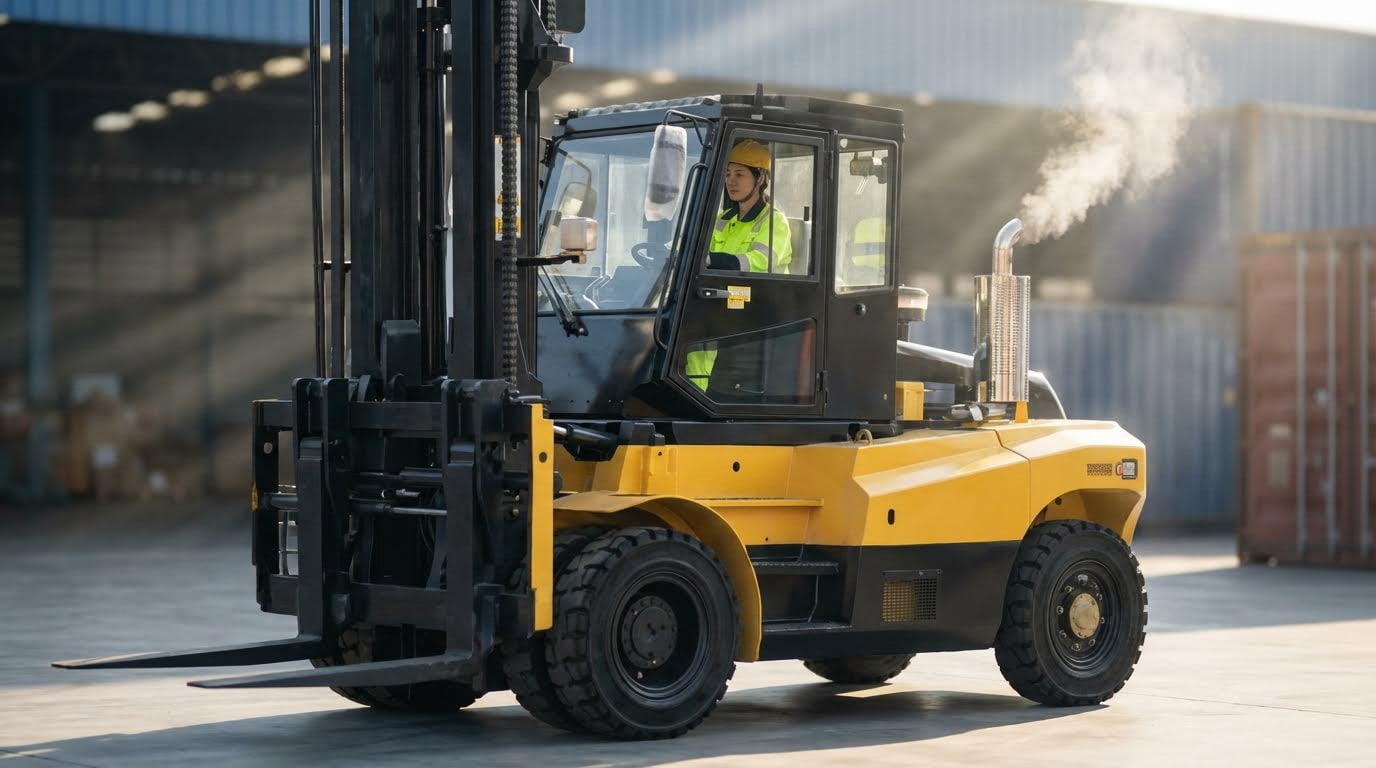
| Heavy outdoor yard, long shifts | Diesel | Very high onboard energy and fast refuel; a 2.5‑ton diesel with a 60 L tank carries ≈267 kWh usable energy (≈2,400 kg LFP equivalent) | Exhaust emissions, higher noise and vibration, tightening regulations, not suited to confined spaces |
| Mixed indoor–outdoor, frequent refuels | LPG / gas | Cylinder swap in ≈2 minutes with moderate emissions per pallet move versus diesel (≈685 g CO₂ vs 1,452 g for diesel) | Still produces exhaust; outdoor storage rules for cylinders; fuel price volatility |
| Indoor warehouse, high pallet volume | Electric (Li‑ion) | Lowest energy per pallet move (≈0.28 kWh vs 0.42 kWh LPG and 0.55 kWh diesel) and zero point‑of‑use emissions on the VDI duty cycle | Needs charging infrastructure and power capacity; battery sizing and shift pattern must match |
| Cold store docks (0 to −10 °C), light–medium duty | Electric with heated battery | Battery heaters (≈300 W) can restore ≈90% capacity at −10 °C with ≈2.2 kWh per shift overhead while keeping zero exhaust indoors | Heater control and charger sizing are critical; poor setup causes unexpected range loss |
| Very low‑temperature yards (below −18 °C) | Diesel (winter‑grade) | Less sensitive to cold than batteries if correct winter fuel or additives are used; avoids large battery oversizing | Fuel gelling risk without additives; higher CO₂ and local pollutants, potential future restrictions |
For sites asking “are forklifts diesel by default for outdoor work?”, modern electrics now cover many outdoor roles, but energy and charging windows must be checked carefully. Indoors, electric is usually the engineering default unless a legacy LPG or gas fleet and infrastructure already exist.
Key indoor vs outdoor selection rules
- If operators share air with the truck for hours, favor electric first, LPG second, diesel last.
- If the truck spends most of its time on rough yards or long ramps, diesel or high‑capacity Li‑ion make more sense.
- If refueling windows are short but frequent, LPG/gas or fast‑charge Li‑ion are strong candidates.
- If regulations push toward zero emissions, design the site around electric from day one.
Fleet Planning, Infrastructure, And Future Regulations
Fleet decisions now must consider not only “are forklifts diesel, LPG, gas, or electric today?” but also what will still be legal and economical in 5–10 years. Infrastructure, grid capacity, and local air‑quality rules often decide the winning power source more than the truck spec sheet.
| Planning Factor | Diesel / LPG / Gas Forklifts | Electric Forklifts |
|---|---|---|
| Energy & running cost | Fuel cost typically ≈$3.00–$5.00 per operating hour for diesel and ≈$3.00–$4.00 for LPG/gas depending on duty | Energy cost ≈$1.50–$2.50 per hour, with lower kWh per pallet and higher efficiency than IC trucks and VDI cycle data |
| Maintenance load | More moving parts and fluids; diesel fleets show ≈620 h MTBF with higher labor hours per 1,000 h than electric, LPG ≈710 h MTBF with fuel‑system issues dominant on fleet surveys | Fewer drivetrain parts (tens vs thousands) and lower labor hours per 1,000 h; MTBF around 1,050 h with most downtime tied to batteries or connectors in recent data |
| Infrastructure | Needs fuel storage: tanks for diesel or compliant LPG cages ≥7.5 m from openings, plus spill and fire‑safety systems under LPG codes | Requires chargers, distribution boards, and sometimes layout changes to create charging zones; large fleets may need upgraded 3‑phase service for fast‑charging and opportunity charging |
| Regulatory trajectory | In some regions, new internal‑combustion forklifts under defined capacities face phase‑out dates starting around 2026, with complete IC sales bans targeted around the mid‑2030s to drive zero‑emission fleets | Aligns with zero‑emission policies; incentives and grants often favor electric adoption, especially for indoor fleets and large operators |
| Total cost of ownership (5‑year, single shift) | Higher TCO in indoor duty when fuel and maintenance are included; modeled net present value around the mid‑$70k range for typical 3‑ton units under standard cost assumptions | Electric Li‑ion often wins by ≈6–14% TCO in indoor single‑shift work, with modeled NPV several thousand dollars lower than IC alternatives for similar capacity trucks |
Before locking in a power source, map your fleet by hours per year, environment, and expected regulation horizon. Then size infrastructure so it can support a future shift toward more electric units, even if you still need diesel or LPG for specific heavy or remote tasks today.
- Right‑size the mix: Use diesel only where high energy density and rough outdoor work demand it; convert indoor and medium‑duty lanes to electric as infrastructure allows.
- Stage infrastructure: Start with enough chargers or fuel storage for today’s fleet, but design cable routing, switchgear, and yard layouts so you can double electric capacity later without major rework.
- Train for the future: Plan operator and technician training for electric systems and battery safety early, so your team is ready as regulations and economics push more of the fleet away from internal combustion.
Summary: Choosing The Right Forklift Power Source
Power source choice shapes safety, uptime, and long‑term cost more than almost any other forklift decision. Diesel, LPG, gas, and electric each deliver energy in a different way, with clear trade‑offs in torque, runtime, emissions, and maintenance. Electric trucks use energy more efficiently, have far fewer moving parts, and usually cut both fuel spend and unplanned downtime, especially in indoor and high‑throughput sites. IC trucks still win where you need very high onboard energy, rough‑yard performance, or reliable work in extreme cold with limited infrastructure.
Engineering teams should treat fuel type, duty cycle, and environment as one integrated system. Map hours, load profiles, and temperature, then check them against infrastructure, grid or fuel capacity, and local air‑quality rules. In most warehouses, electric becomes the default, with diesel and LPG kept for heavy outdoor or legacy roles. Plan charging or fuel systems so you can scale electric share over time without major rework.
The best practice is clear: right‑size a mixed fleet, design infrastructure with future regulations in mind, and train operators and technicians early. That approach lets you improve safety and compliance today while keeping options open for higher‑efficiency electric solutions from Atomoving tomorrow.
Frequently Asked Questions
Are forklifts diesel-powered?
Yes, some forklifts are powered by diesel engines. Diesel forklifts are typically used in outdoor environments or where heavy lifting capacity is required. They are known for their durability and ability to handle rough terrain. For example, a diesel forklift with a 10,000-pound lifting capacity can reach heights of up to 4.9 meters, making it suitable for demanding material handling tasks. Forklift Guide.
What are the advantages of diesel forklifts?
Diesel forklifts offer several advantages:
- High Lifting Capacity: Diesel forklifts can handle heavier loads compared to electric models, often exceeding 10,000 kg.
- Outdoor Use: They are ideal for outdoor applications due to their robust engines and ability to operate in various weather conditions.
- Longer Runtime: Diesel engines provide extended operation time without needing frequent refueling.
However, they tend to be noisier and emit more fumes, making them less suitable for indoor use. Lift Equipment Comparison.
What are the disadvantages of diesel forklifts?
While diesel forklifts are powerful, they do have some drawbacks:
- Noise and Emissions: Diesel forklifts produce higher noise levels and exhaust fumes, which can be problematic in enclosed spaces.
- Maintenance Costs: Diesel engines require more frequent maintenance, such as oil changes and filter replacements, compared to electric forklifts.
- Higher Initial Cost: The purchase price of diesel forklifts is generally higher than electric models.
These factors make them better suited for outdoor or industrial settings rather than warehouses. Material Handling Insights.
How do diesel forklifts compare to other types?
Diesel forklifts are part of the broader classification of internal combustion engine trucks. Specifically, they fall under Class V forklifts, which are designed for use with pneumatic tires and outdoor applications. In contrast, electric forklifts (Class I and II) are quieter and more environmentally friendly but may lack the power and runtime of diesel models. If your operations involve heavy loads or rough terrain, a diesel forklift might be the best choice. OSHA Forklift Classification.