
Understanding how high can a pallet truck lift is critical because lift height directly affects safety, aisle design, racking layout, and total handling cost. This guide compares manual, high-lift, and electric pallet trucks, explains the engineering limits behind their lift ranges, and shows how to match lift height to your actual application so you avoid instability, damage, and wasted investment.
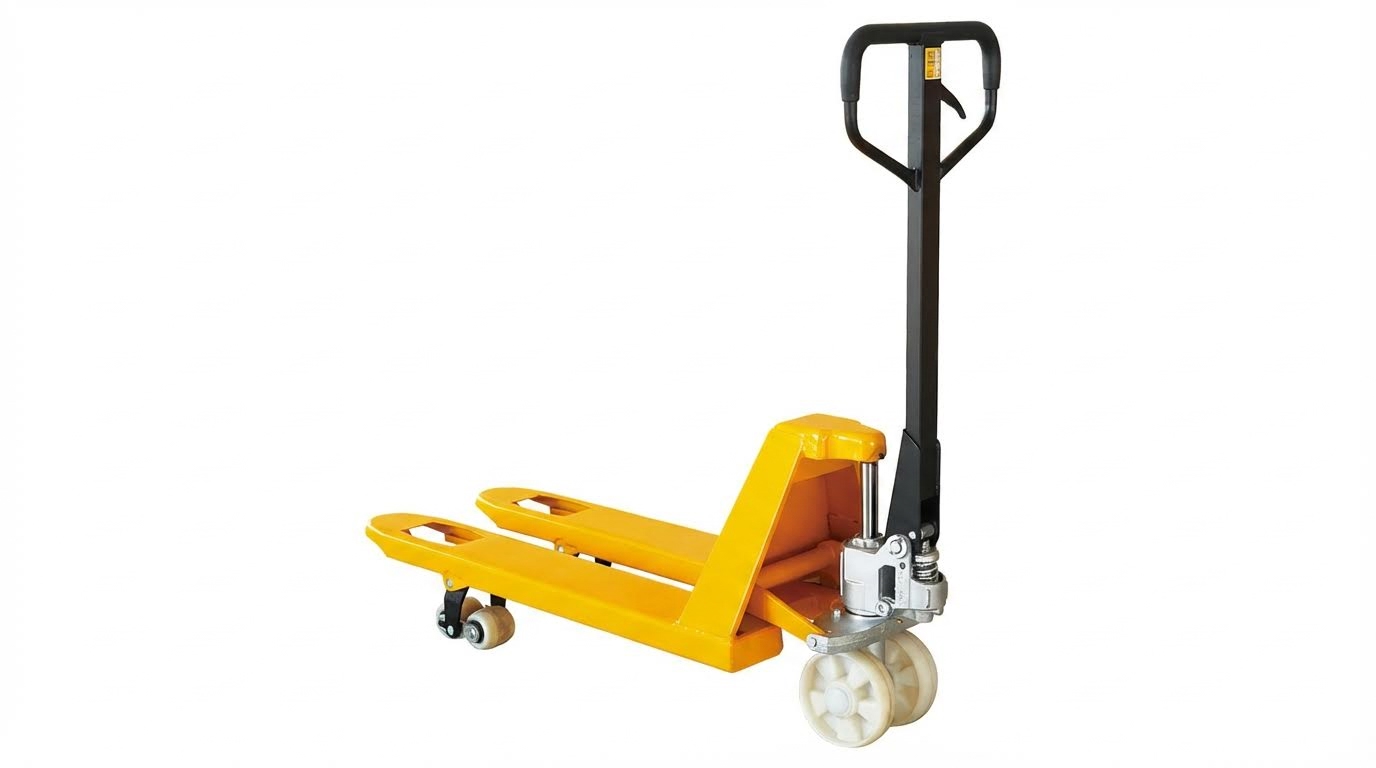
Defining Lift Heights Across Pallet Truck Types
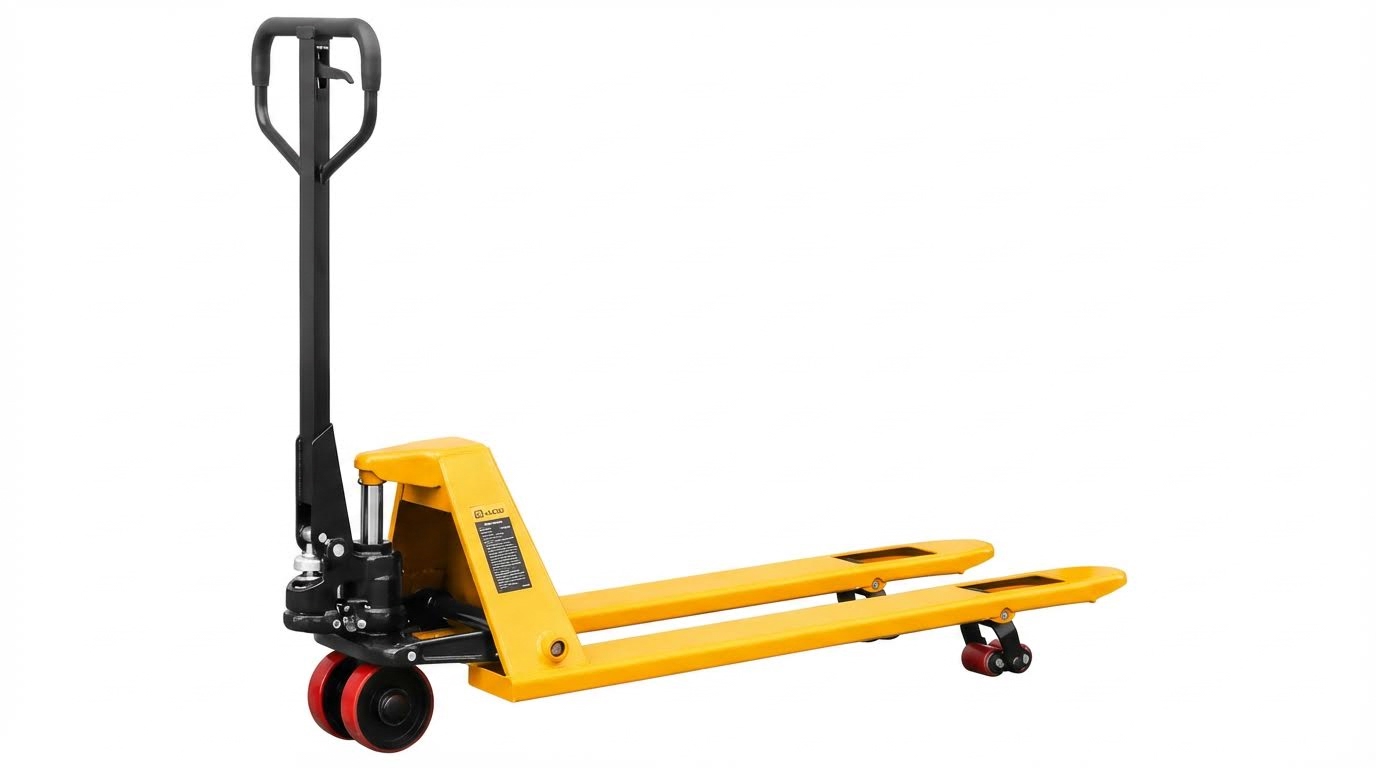
This section explains how high a high lift pallet truck can lift for each truck type, so you can match lift height to your application instead of guessing from catalogue numbers or marketing terms.
When people ask how high can a pallet truck lift, the real answer depends on truck type, mast design, and whether the unit is manual or electric. Low-lift pallet trucks typically stop below 300 mm, while high-lift and stacker designs can reach several metres with the right structure and hydraulics. Reference data also shows that specialized stackers can go far beyond 3.0 m in controlled conditions.
Typical Lift Ranges: 100 mm To 3.0 m+
Typical pallet truck lift ranges run from about 100–300 mm for basic low-lift units, up to around 3.0 m and beyond for high-lift pallet stackers, with capacity usually dropping as lift height increases.
To understand how high can a pallet truck lift, you must separate low-lift pallet jacks, high-lift/scissor units, and pallet stackers. Each group is built around a different structure and hydraulic geometry, which fixes its practical lift band.
| Truck Type | Typical Max Lift Height (m) | Typical Capacity Range (kg) | Main Purpose | Operational Impact / Best For… |
|---|---|---|---|---|
| Low-lift hand pallet truck | 0.11–0.30 m source | Up to about 2,000–2,500 kg (typical range) | Horizontal transport, loading/unloading, dock work | Keeps pallet just clear of floor; ideal for moving loads, not stacking. |
| Manual / electric low-lift powered pallet truck | ≈0.20–0.30 m source | Up to around 2,500 kg | Powered horizontal transport, order staging | Same low lift as manual, but faster and less fatigue over long runs. |
| Scissor-lift pallet jack (high-lift platform) | 0.80–1.00 m source | ≈500–1,500 kg (typical range) | Ergonomic work positioning, light lifting | Raises pallet to waist height; excellent for picking/packing, not for travel when elevated. |
| Manual high-lift pallet stacker | ≈1.6–3.0 m source | ≈500–1,500 kg | Light stacking, occasional racking | Suited to low-throughput warehouses with limited stack heights. |
| Electric pallet stacker (standard) | Up to about 3.0 m source | ≈1,000–1,500 kg (typical light/medium duty) | Regular stacking in low–medium racking | Good for 1–3 level racking; improves productivity and reduces operator fatigue. |
| Heavy-duty pallet stacker (specialized) | 0.10–11.00 m depending on model source | Up to 5,000 kg source | High-bay storage, heavy industrial loads | Engineered solutions; require excellent floors, trained operators, and strict inspections. |
From this, a practical rule-of-thumb answer to how high can a pallet truck lift is:
- Standard pallet jacks: Around 100–300 mm lift, only to clear the floor.
- Scissor / high-lift jacks: Around 800–1,000 mm working height.
- Stackers (manual/electric): About 1.6–3.0 m in common warehouse use, up to 11.0 m on specialized stacker trucks.
Why racking height is not the same as truck lift height
Racking beam height is not your required truck lift height. You must add pallet height (often 120–150 mm), fork thickness, and a safety clearance (typically 100–150 mm) above the beam. A 2.7 m beam often needs ≈3.0 m of truck lift.
💡 Field Engineer’s Note: Once you go above about 3.0 m with a pallet stacker, tiny floor slopes and soft spots in the concrete become a real stability risk. Always verify slab flatness and load rating before specifying tall stackers.
Key Components That Limit Lift Height
Lift height is limited by the mast, frame, hydraulics, and wheel–floor interface; each component defines how high a pallet truck can safely lift before stability or structural limits are exceeded.
Even if a hydraulic cylinder can theoretically push higher, the truck’s structure, load chart, and stability envelope set the real ceiling. Engineers balance cylinder stroke, mast section strength, and wheelbase geometry to keep the combined centre of gravity inside a safe support polygon. Reference
| Component / Factor | How It Limits Lift Height | Typical Design Characteristics | Operational Impact |
|---|---|---|---|
| Mast design and height | Sets the maximum vertical travel path of forks and resists bending. | Reinforced steel masts and fork carriages required for lifts up to ≈3.0 m. source | Taller masts increase deflection and sway; operators feel more “whip” at height and must slow down. |
| Frame and fork structure | Must carry load without excessive deflection or permanent deformation. | Low-lift trucks use short, rigid frames lifting only 110–300 mm. source | Forces engineers to keep low-lift heights small, trading vertical reach for robustness and low cost. |
| Hydraulic cylinder bore and stroke | Stroke directly caps lift; bore and pressure set capacity at that height. | Single-acting cylinders; pump displacement and cylinder area define mm of lift per stroke. source | Longer stroke and larger bore increase height and capacity, but add cost, weight, and slower manual pumping. |
| Hydraulic pressure and valve design | Maximum safe pressure limits load at height; valve sizing controls lowering speed. | Check valves and lowering valves maintain one-way flow and controlled descent. source | Over-pressurizing to gain height risks burst hoses or seal failure; standards require overload protection valves. |
| Wheelbase, track width, and COG | Geometric stability envelope shrinks as COG rises with lift height. | Three-point support system; pallet COG should sit between load wheels, near centreline. source | Higher lifts demand wider track and longer wheelbase; otherwise the truck becomes tippy, especially when turning. |
| Wheel material and floor condition | Traction and rolling resistance affect stability as height and COG increase. | Polyurethane wheels for smooth indoor concrete; nylon/steel for durability but less grip on wet/uneven floors. source | Poor traction plus high COG can cause sliding or tipping at height; floor levelness and friction must be checked for tall stackers. |
| Control interface and modulation | Operator must be able to raise/lower smoothly, especially near full height. | Three-position control (lift/neutral/lower) with metered lowering valve. source | Poorly tuned valves make loads bounce or drop too fast, becoming dangerous above about 1.5–2.0 m. |
| Regulatory stability and inspection rules | Standards cap rated lift and load to ensure the truck passes stability tests. | High-lift units over 300 mm fall under stricter regulations and ISO 22915 stability tests. source | Even if the hardware could lift higher, the rated lift height may be derated to comply with overturn and load chart requirements. |
- Mast & frame strength: These dictate how much bending and torsion the truck can survive at full height – they prevent permanent deformation and sudden structural failure.
- Hydraulic sizing: Cylinder bore, stroke, and pump design set the lift height and speed – they stop you from over-pressurizing seals and hoses to chase more height.
- Stability geometry: Wheelbase, track width, and load centre control the stability triangle – they prevent tip-over when the centre of gravity climbs with height.
- Wheel–floor match: Correct wheel material on the right floor keeps friction high – it stops a tall loaded stacker from sliding or rocking on imperfect slabs.
- Regulations & inspections: Stability standards and LOLER-type rules cap rated height – they align “can lift” with “may safely lift” in real operations.
Why low-lift pallet jacks stop around 200–300 mm
Low-lift jacks use a compact, single-acting cylinder and short lever linkage sized only to clear pallet skids. More stroke would need a taller frame, longer links, and more pump volume per stroke, all of which add cost and reduce rigidity for no benefit in horizontal transport.
💡 Field Engineer’s Note: When troubleshooting “won’t reach top beam” complaints, I first check for hydraulic creep and trapped air. A jack that is theoretically rated for the height can lose 20–40 mm of effective lift if seals leak or air pockets compress under load.
Engineering Constraints: Stability, Hydraulics, And Power
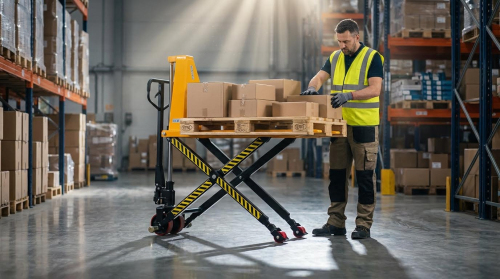
Engineering constraints define how high can a pallet truck lift safely by limiting lift height through stability, structure, hydraulics, and power. Ignoring these limits does not just reduce performance; it directly increases tip‑over and component failure risk.
| Constraint Area | What It Physically Limits | Typical Effect On Lift Height | Operational Impact |
|---|---|---|---|
| Stability & load center | Maximum safe height at rated load | Low-lift: 110–300 mm; stackers: 1.6–3.0 m typical data | Defines how high you can stack before tip‑over risk dominates |
| Mast & frame strength | Structural deflection and fatigue | Reinforced masts needed above ~1.6–3.0 m data | Weak frames force lower rated heights or reduced capacity |
| Hydraulic sizing | Lift speed and maximum stroke | Typical lift speeds ~40–50 mm/s on electric pallet trucks data | Too small cylinders or pumps make high lifts painfully slow |
| Power & duty cycle | How often and how long you can lift | 24 V / 240 Ah batteries and 2.2–2.5 kW motors support frequent lifts data | Undersized power causes overheating and slowdowns on busy shifts |
💡 Field Engineer’s Note: When you push lift heights beyond about 3.0 m, stability and mast stiffness usually become the bottleneck long before hydraulics or motor power run out.
Load Center, COG, And Stability Envelope
Load center, combined center of gravity (COG), and the stability envelope ultimately cap how high can a pallet truck lift at its rated capacity. As height increases, even small COG shifts can push the truck outside its safe support triangle.
| Stability Factor | Engineering Meaning | Effect As Lift Height Increases | Operational Impact |
|---|---|---|---|
| Load center | Horizontal distance from fork heel to load COG | Longer pallets or overhang increase overturning moment | Rated capacity falls at the same height if load center is larger |
| Support polygon | Triangle between steer wheel and load wheels | Resultant COG must stay inside this polygon | Turning or braking at height can shift COG outside and tip the truck |
| Truck + load COG | Combined mass center of pallet and truck | COG rises with lift height, shrinking stability margin | Side slopes or floor defects that were harmless at 200 mm become critical at 2.5 m |
| Frame torsional stiffness | Resistance to twisting under asymmetric loads | Twist moves wheel contact points and shifts effective support polygon | One fork under‑loaded or off‑center pallets can trigger side‑tipping |
- Correct pallet positioning: Keep the pallet fully on the forks – this keeps the load COG close to the jack centerline and maximizes the stability envelope.
- Rated capacity vs. height: Use the truck’s load chart – capacity at 3.0 m is lower than at 1.0 m even for the same pallet.
- Avoid dynamic moves at height: No sharp steering or braking when elevated – dynamic forces can push the resultant COG outside the support triangle.
- Symmetric loading: Center the heaviest side between the forks – this reduces torsional stress and side‑tipping risk.
How engineers visualize the stability envelope
Engineers treat the pallet truck as a three‑point support system. As long as the vertical line through the combined COG falls within the triangle formed by the two load wheels and the steer wheel, the truck stays upright. Higher lift heights move that COG line up, so smaller lateral forces are needed to move it outside the triangle.
💡 Field Engineer’s Note: If your operators ask “how high can a pallet truck lift this pallet?”, the safe answer depends more on load center and floor slope than the brochure’s maximum lift height.
Mast, Frame Strength, And Wheel–Floor Interface
Mast strength, frame stiffness, and the wheel–floor interface mechanically limit how high can a pallet truck lift before deflection, oscillation, or loss of traction make operation unsafe. Taller lifts demand stiffer steel, better wheels, and better floors.
| Component Area | Typical Design Features | Impact On Lift Height | Operational Impact |
|---|---|---|---|
| Low-lift hand pallet truck | Short, rigid frame; no mast; 110–300 mm lift data | Frame is stiff but geometry only supports low lift | Ideal for horizontal moves and dock work, not racking |
| High-lift / stacker mast | Reinforced steel mast and fork carriage data | Enables ~1.6–3.0 m lifts at 500–1,500 kg | Allows racking but needs flat, strong floors |
| Heavy stackers | Capacities up to 5,000 kg; heights up to 11.0 m depending on model data | Require very stiff masts and robust chassis | Suited to engineered slabs and controlled environments |
| Wheel material | Polyurethane vs nylon vs steel treads data | Traction and rolling resistance change with floor and load | Poor match can cause sliding or point loading at high lift |
| Floor condition | Levelness, friction, and slab capacity data | Limits usable height even if mast can go higher | Cracks, slopes, and joints can destabilize tall loads |
- Mast deflection control: Use reinforced channels and cross‑bracing – this reduces “mast sway” at 2.5–3.0 m, improving operator confidence and placement accuracy.
- Frame torsion resistance: Design a closed, welded frame – this keeps both load wheels in firm contact even over small floor unevenness.
- Wheel–floor matching: Select polyurethane on smooth indoor concrete, nylon/steel for heavy loads and tougher floors – wrong wheels either damage floors or lose grip, especially at height.
- Floor verification: Check slab thickness and levelness in racking aisles – engineered floors are mandatory when you combine high lift heights with heavy pallets.
Why floor quality matters more as lift height grows
At 200 mm lift, a 2 mm floor step barely shifts the COG. At 3.0 m, the same 2 mm step creates a much larger angular tilt at the load, moving the COG closer to the edge of the support polygon. That is why high‑lift stackers are unforgiving on poor floors.
💡 Field Engineer’s Note: In real warehouses, the limiting factor on “how high can a pallet truck lift” is often a bad expansion joint or a sloped loading bay, not the mast rating printed on the nameplate.
Hydraulic Sizing, Lift Speed, And Duty Cycle
Hydraulic sizing, lift speed, and duty cycle determine how high can a pallet truck lift repeatedly without overheating, slowing down, or losing pressure. Correct cylinder, pump, and motor selection is as important as mast design for real throughput.
| Hydraulic / Power Parameter | Typical Value (Example Electric Truck) | Effect On Lift Performance | Operational Impact |
|---|---|---|---|
| Battery voltage / capacity | 24 V / 240 Ah data | Defines available energy per shift | Undersized batteries cause slow lifts late in the shift |
| Drive motor power | 2.2 kW AC motor data | Supports travel speed under load | Important for moving between lift locations, less for vertical lift itself |
| Lift motor power | 2.5 kW data | Controls how quickly the pump builds pressure | Higher power maintains lift speed near capacity and at full height |
| Lift speed (laden / unladen) | 40 mm/s laden, 50 mm/s unladen data | Determines time to reach target height | At 3.0 m, a laden lift takes ~75 s at 40 mm/s, affecting cycle time |
| Lowering speed (laden / unladen) | 50 mm/s laden, 20 mm/s unladen data | Controls descent energy and safety | Too fast risks product damage; too slow reduces productivity |
| Hydraulic circuit health | Sealed, air‑free, correct oil grade data | Affects stiffness and maximum achievable height under load | Air or leaks cause “spongy” lift and creeping down at height |
- Cylinder bore and stroke sizing: Choose bore for pressure and stroke for height – too small a bore needs higher pressure; too short a stroke needs complex linkages to reach target height.
- Pump displacement vs effort: In manuals, larger pump volume per stroke lifts faster – but increases handle force; engineers balance operator effort with acceptable stroke count.
- Duty cycle control: Electric units need rest intervals – continuous lifting at maximum load overheats motors and oil, reducing component life.
- Hydraulic maintenance: Bleed air, change oil, and replace seals on schedule – this keeps full rated lift height available and prevents mid‑air sink during staging.
How hydraulic faults quietly reduce usable lift height
When check valves leak or seals wear, pressure bleeds off as you approach full height. The truck may still reach 1.0 m but stall or creep at 2.5 m under the same load. Operators think “the truck is weak,” but the real problem is internal leakage and air in the circuit.
💡 Field Engineer’s Note: If a truck “won’t quite reach the top beam anymore,” check hydraulic oil level, air in the system, and seal condition before blaming the mast. Hydraulics usually fail before steel does.
Matching Lift Height To Application And Truck Type
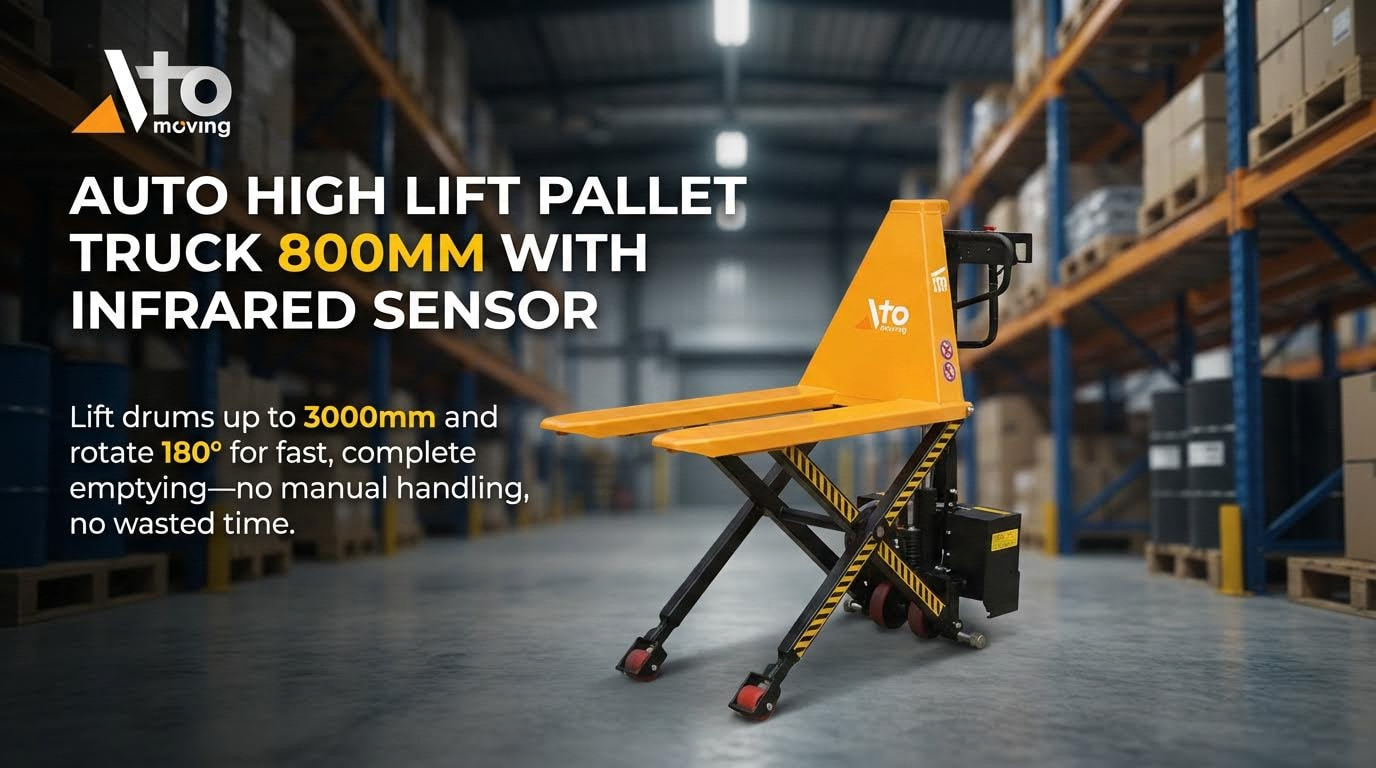
The right answer to “how high can a pallet truck lift” depends on what you actually do with pallets: ground moves, feeding machines, or racking up to several meters. This section links lift height, truck type, and real applications so you don’t over‑ or under‑spec your equipment.
| Application Type | Typical Needed Lift Height | Suitable Truck Types | Typical Capacity Range | Operational Impact |
|---|---|---|---|---|
| Dock loading / unloading, internal transfer | 110–300 mm | Low-lift manual or electric pallet trucks | Up to about 2,500 kg | Only raises pallet clear of floor; fastest and cheapest for horizontal moves. |
| Ergonomic picking / workstations | 800–1,000 mm | Scissor-lift pallet jacks | Approx. 500–1,500 kg (source) | Brings load to waist height, reducing bending and strain at packing or assembly stations. |
| Floor-level stacking / low shelving | Up to 1.6 m | Manual high-lift pallet trucks and compact stackers | Approx. 500–1,500 kg (source) | Loads can be stacked two-high or fed into low-level machinery safely. |
| Standard pallet racking (1–3 beam levels) | 2.5–3.0 m | Manual and electric pallet stackers | Typically 1,000–1,500 kg at rated lift height (source) | Covers most low-bay warehouse racking without needing a full counterbalance forklift. |
| High-bay storage / specialized systems | 3.0–11.0 m | Heavy-duty pallet stacker trucks | Up to about 5,000 kg with some models (source) | Reaches upper racking in dense warehouses; requires strict stability and floor checks. |
💡 Field Engineer’s Note: Before asking “how high can a pallet truck lift,” map your top pallet position in millimeters, then subtract 150–200 mm clearance for fork entry and mast deflection. That number should drive your truck selection.
Low-Lift, High-Lift, And Stacker Use Cases
Low-lift pallet trucks handle ground-level transport, high-lift units target ergonomic or low stacking, and stackers cover vertical storage up to several meters. Matching these to your process flow is more critical than chasing maximum lift height.
| Truck Type | Typical Lift Height Range | Core Use Case | Best Environment | Operational Impact |
|---|---|---|---|---|
| Low-lift manual pallet truck | 110–300 mm (source) | Move pallets horizontally, load/unload trucks, feed dock levelers. | Short to medium distance, smooth concrete floors. | Lowest cost, minimal training, but zero vertical storage capability. |
| Low-lift electric pallet truck | Approx. 110–200 mm | High-throughput horizontal transport with powered drive. | Medium to large warehouses, long runs. | Reduces operator fatigue and increases cycles per hour, still ground-level only. |
| Scissor-lift pallet jack | 800–1,000 mm working height (source) | Ergonomic picking, packing, assembly at bench height. | Production lines, packing stations, light manufacturing. | Cuts bending and twisting; not for driving with load raised. |
| Manual high-lift pallet truck | Up to about 1.6 m (source) | Low-level stacking, feeding low machines or conveyors. | Low-volume operations where electric power is not justified. | Good for occasional stacking; pumping effort and slower cycles limit throughput. |
| Electric pallet stacker (walk-behind) | Approx. 1.6–3.0 m common; some up to 11.0 m (source) | Regular stacking in low to medium racking. | Warehouses with defined aisles and good floors. | Combines lift and drive power; ideal when you frequently store above 1.6 m. |
| Rider or heavy-duty stacker | Up to 11.0 m with some models (source) | High-bay storage, intensive multi-shift work. | Large DCs and manufacturing with engineered floors. | Replaces or complements forklifts; requires trained operators and strict inspections. |
- Ground-only flows: Use low-lift manual or electric trucks – extra lift height adds cost with no benefit.
- People at the pallet: Choose scissor or high-lift – keeps work at 800–1,000 mm and reduces musculoskeletal injuries.
- Storage above 1.6 m: Go to electric stackers – manual high-lift becomes too slow and tiring at volume.
- Very high racking (4–10 m): Specify heavy-duty stackers – but verify floor capacity and stability per ISO 22915.
How to map your process to a truck type
Walk your flow from goods-in to dispatch. Mark every point where a pallet leaves the floor and measure that height in mm. Group these into bands: <300 mm, 800–1,000 mm, 1.6 m, 2.5–3.0 m, >3.0 m. The highest regular band, not the absolute rarest lift, should drive your primary truck choice.
💡 Field Engineer’s Note: If fewer than 10% of your pallets ever go above 1.6 m, it is often cheaper to keep mostly low-lift trucks and one shared stacker rather than making every unit high-lift.
Selection Criteria: Aisles, Floors, And TCO
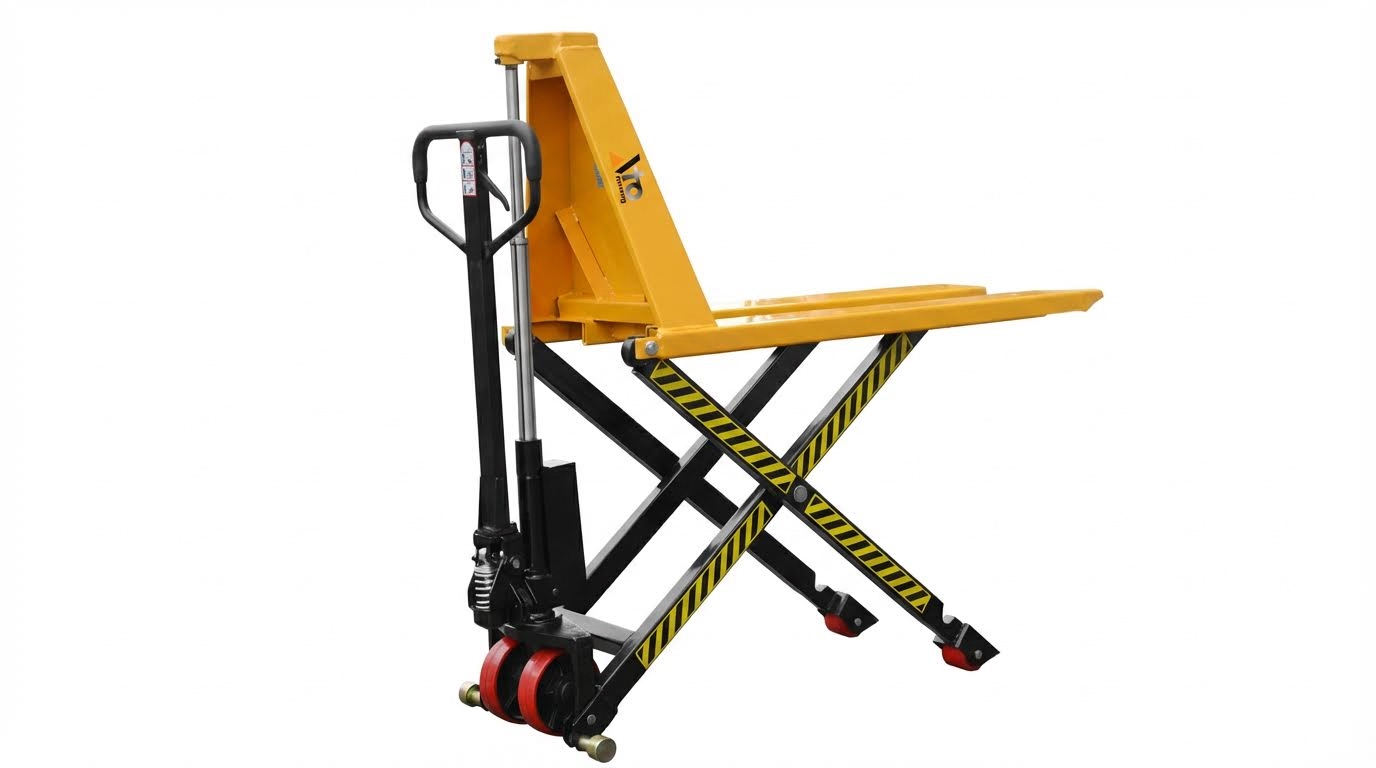
Once you know how high a pallet truck must lift for your operation, aisle width, floor quality, and total cost of ownership decide which specific model class is viable. Ignoring these constraints turns a “high-lift” purchase into a daily problem.
| Selection Factor | Typical Values / Ranges | Design Relevance | Operational Impact |
|---|---|---|---|
| Aisle width vs. turning radius | Example stacker turning radius: 1,625–1,890 mm (source) and 1,890 mm (source) | Aisle must exceed turning radius plus pallet length. Example minimum aisle for 1,000×1,200 mm pallet: ~2,332 mm (source). | Too-narrow aisles force multi-point turns, damage racking, and slow every lift cycle. |
| Floor flatness and capacity | Minimum ground clearance example: 30 mm (source) | High-lift stackers amplify small floor dips or slopes; check slab thickness and levelness. | Poor floors reduce safe usable lift height and increase risk of mast sway or tipping. |
| Wheel and tire choice | Polyurethane vs nylon or steel load wheels (source) | Poly wheels grip smooth floors; nylon/steel roll easier but can slip on wet or rough surfaces. | At high lift, any loss of traction while turning or braking is a serious stability hazard. |
| Gradeability | Example: 8% laden, 20% unladen for an electric pallet jack (source) | Ramps and dock slopes reduce effective safe lift; avoid lifting high on slopes. | Operating near grade limits increases stalling risk and load-shift events. |
| Lift speed and duty cycle | Example lift speed: 40 mm/s laden, 50 mm/s unladen (source) | Higher racks mean more seconds per lift; electric units offset this with motor power. | Slow manual lifting at 2–3 m quickly becomes the bottleneck in busy operations. |
| Power system and maintenance | Typical electric stacker: 24 V, ~240 Ah battery; 2.2 kW drive, 2.5 kW lift motor (source) | Bigger batteries and motors support higher lift heights and more cycles per shift. | Capex is higher, but cost per pallet moved usually drops in multi-shift use. |
| Regulatory and inspection load | Stricter rules once lift height >300 mm (source) | High-lift units need LOLER-type inspections and ISO 22915 stability checks. | Adds scheduled downtime and inspection cost but is non-negotiable for safety. |
- Aisles first, height second: Measure aisle widths and compare with truck turning radius and minimum aisle specs – if it cannot turn, it cannot reach your theoretical lift height safely.
- Floor and wheel match: Specify polyurethane on smooth indoor slabs, nylon/steel only where surfaces and slopes are controlled – slip risk grows with mast height.
- Duty cycle vs. power: Manual high-lift is fine for tens of lifts per day; electric becomes cheaper per pallet when you do hundreds.
- TCO view: Add purchase price, battery or seal replacements, inspections, and expected life. The cheapest truck on day one is often the most expensive per pallet moved.
Quick TCO comparison method
Estimate pallets moved per year and average lift height. Divide total ownership cost over 5–7 years (purchase, maintenance, batteries, inspections)
Final Thoughts On Choosing The Right Lift Height
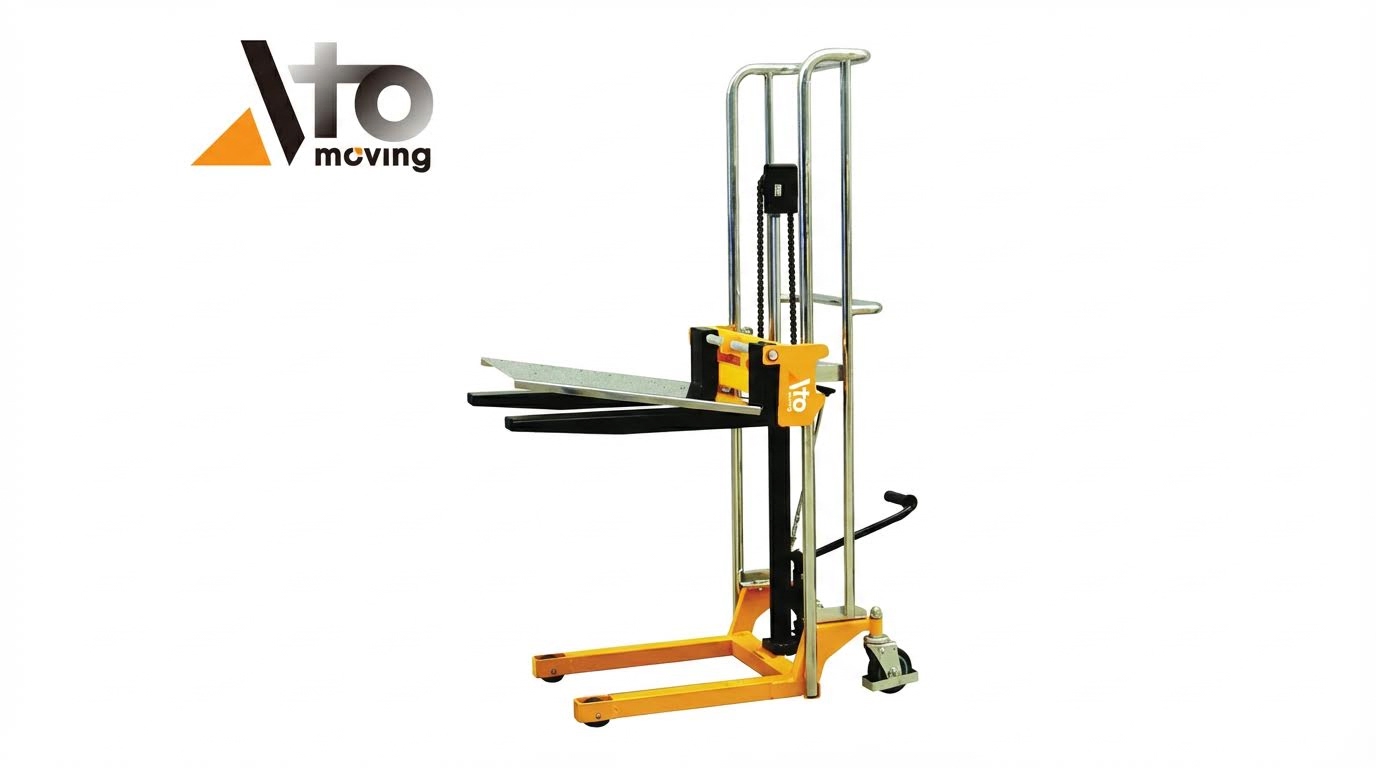
The practical answer to “how high can a high lift pallet truck lift” is: anywhere from about 100 mm to over 3.0 m, but you should only buy the height your application, floor, and operators can safely control and justify.
Choosing the right lift height is about matching truck type to task, not chasing the biggest number on a datasheet. Use low-lift trucks for ground moves, high-lift and scissor types for ergonomic work heights, and stackers when you truly need vertical storage.
| Question | Practical Guideline | Typical Spec Range | Operational Impact |
|---|---|---|---|
| how high can a pallet truck lift for simple transport? | Stay with low-lift pallet trucks. | 110–300 mm lift height reference | Ideal for loading docks and horizontal moves; lowest cost and simplest training. |
| how high can a pallet truck lift for ergonomic picking? | Use scissor or high-lift pallet jacks. | 800–1,000 mm working height for scissor; up to ~1.6 m for manual high-lift reference | Reduces bending and lifting injuries at benches and packing stations. |
| how high can a pallet truck lift for racking? | Select manual or electric stackers. | Commonly 1.6–3.0 m; some designs up to 11.0 m depending on model reference | Enables vertical storage; requires flat floors, trained operators, and stricter inspections. |
| What if my floor is uneven or sloped? | Limit lift height and use wider, more stable trucks. | Gradeability often only 8% laden for electric pallet trucks reference | Higher lifts magnify small floor defects; keep loads low when travelling. |
| How do regulations affect “usable” lift height? | Over 300 mm, treat it as lifting equipment under stricter rules. | High-lift and stackers need LOLER‑style inspections and ISO 22915 stability checks reference | Adds inspection cost and admin; factor into total cost of ownership. |
When you decide how high a pallet truck should lift in your site, balance five factors: task, load, floor, traffic, and compliance. Chasing extra metres without this analysis usually increases risk faster than it increases productivity.
- Define the real task: Move at floor level, feed a machine, or stack in racking – this alone narrows your lift band from 300 mm to 3.0 m+.
- Match capacity to height: Higher masts often mean lower rated kg at maximum height – overspec height with underspec capacity and you will under‑utilise the truck.
- Audit your floor: Check slopes, joints, drains, and slab capacity – tall stackers on poor floors are a common root cause of near‑misses.
- Factor in travel patterns: Long pushes or multi‑shift use favour powered stackers – they keep lift speeds (40–50 mm/s) and travel speeds (up to 10 km/h unladen) consistent with less fatigue reference.
- Include inspection and training: Above 300 mm, budget for documented inspections and operator training – this is part of the real cost of “extra height.”
💡 Field Engineer’s Note: In many warehouses, a 1.6–2.5 m battery-powered stacker is the sweet spot: it clears most racking beams, keeps the centre of gravity inside a safe stability envelope on typical concrete floors, and avoids the extreme mast flex and tight tolerance requirements that appear once you push towards 3.0 m and beyond. Before you ask “how high can a pallet truck lift,” ask “how high can my floor, racking, and operators safely work every day?”

Pallet truck lift height is never just a catalogue number. It is the outcome of mast geometry, frame stiffness, hydraulic sizing, stability envelope, wheel choice, and floor quality working together. If any one of these is wrong, the theoretical height on the nameplate becomes unsafe in real use.
Operations teams should start from the task, not the truck. Map real lift points, then select low-lift, high-lift, or stacker designs that cover those heights with margin. Check the load center and racking geometry, confirm floor flatness and slab capacity, and compare aisle widths with the truck’s turning radius before signing off a specification.
Engineering and safety teams must treat 300 mm as a key threshold. Above this, stability tests, formal inspections, and operator training move from “good practice” to “essential control measures.” Hydraulics, batteries, and motors must also match duty cycle so lift speed and control stay consistent at the end of the shift.
The best practice is simple: buy the lowest lift height that safely does the job, then ensure the truck, floor, and procedures form one system. Atomoving can then fine-tune mast, hydraulics, and power around your real working envelope, instead of chasing headline lift numbers that add risk and cost without adding value.
Frequently Asked Questions
How High Can a Pallet Truck Lift?
A standard pallet truck typically lifts to a height of around 6 inches, similar to manual pallet jacks. However, specialized electric models can lift significantly higher, reaching up to 20 inches or more. For heavy-duty applications, some scissor-lift pallet trucks can achieve maximum heights of approximately 1630mm (about 64 inches). Pallet Jack Guide.
What Are the Factors That Determine Pallet Truck Lift Height?
The lift height of a pallet truck depends on its design and intended use. Standard models are designed for basic lifting needs, while specialized equipment like scissor-lift pallet trucks caters to higher elevation requirements. Key factors include the type of mechanism (manual vs. electric), load capacity, and the specific application in material handling. Scissor Lift Specifications.