
Buying a used electric scissor lift can cut capital cost dramatically, but only if you control safety, compliance, and lifecycle risk. This guide walks through engineering checks, inspection points, and sourcing strategy so you can match a lift’s height, capacity, and duty cycle to your application. You will learn what to inspect structurally and electrically, which certifications to verify, and how to evaluate sellers and documentation. Use it as a practical framework to balance price, performance, and legal obligations on every purchase.
Key Benefits And Risks Of Used Electric Scissor Lifts
Cost, Depreciation And Total Cost Of Ownership
Buying a used electric scissor lift typically reduces capital expenditure because used units often cost around one‑third to one‑half less than new machines. This lower purchase price directly improves cash flow and can also reduce financed monthly payments if you spread the cost over time. You also avoid the steep early depreciation that new equipment experiences, where machines often lose a significant portion of value in the first year of service. Instead, a used lift tends to sit on a flatter part of the depreciation curve, which helps you preserve asset value over the holding period. Depreciation patterns and value loss comparisons mean the percentage you may recover at resale is often higher for a well-maintained used unit than for a comparable new unit over the same time span.
From a total cost of ownership perspective, you must balance lower capital cost against potentially higher maintenance and repair risk. A used electric scissor lift may be out of its original warranty period, so you carry more exposure to unplanned component failures unless you buy with some form of limited coverage. You should therefore factor in the cost of a thorough pre‑purchase inspection, including checks on hydraulic systems, structural components, and batteries, as well as a review of service records and usage logs. Inspection of wear items and maintenance history is especially important on used equipment because it directly affects downtime, repair spend, and safety performance over the life of the machine.
There are also operating cost implications. Older units may lack the latest energy‑efficiency or diagnostic features, but for moderate duty cycles this is often offset by the savings you gain at purchase. Insurance costs are usually lower because the replacement value of a used electric scissor lift is less than that of a new one, which can reduce annual premiums. Lower insurance and ownership expenses for older machines contribute to a competitive life‑cycle cost when the unit is correctly matched to the application. In many regions, both new and used lifts may also qualify for the same tax treatment, so you can still leverage accelerated depreciation or similar schemes to improve after‑tax economics. Tax deductions and depreciation options for used equipment further strengthen the business case when you evaluate total cost instead of only the sticker price.
Compliance, Certifications And Legal Obligations
When you buy a used electric scissor lift, you inherit legal duties around standards and workplace safety, even if you were not the original purchaser. In the United States, mobile elevating work platforms must comply with applicable ANSI A92 design and use standards, while employers must meet OSHA requirements for safe operation, training, and inspection. ANSI/SIA A92 standards and OSHA rules define expectations for machine configuration, labeling, and operator protection, and regulators generally hold the current owner or employer responsible for compliance. In Canada, similar obligations exist under the CSA B354 series, which sets design and usage requirements for elevating work platforms. CSA B354 standards for Canadian users mean you must confirm that any used unit you import or redeploy meets the correct national specification.
In the European Union and other markets that adopt similar frameworks, scissor lifts must carry valid conformity markings that show they were built to essential health and safety requirements. A used electric scissor lift should therefore have evidence that it met the relevant directives at the time of manufacture, such as documentation of conformity assessment and risk evaluation. Certification processes and conformity documentation help you verify that the machine was originally designed and tested to appropriate safety levels. In addition, many manufacturers operated under quality management systems aligned with international standards, which supports consistent build quality across units and production years. Quality management certification for production processes is not specific to scissor lifts but still indicates a structured approach to design and manufacturing.
Your compliance responsibilities extend beyond design certificates. You must keep up‑to‑date inspection records from competent persons and ensure that the unit’s safety systems remain functional throughout its life. This includes platform guardrails, emergency stop controls, warning devices, and overload protection, which are all critical to safe operation. Inspection documentation and safety feature checks provide evidence that you have met your obligations if an incident is investigated. If a used lift has been modified, you also need to confirm that any changes did not invalidate its original certification or create new hazards, and you may need engineering approval before putting such a machine into service.
Technical Inspection Checklist For Used Electric Scissor Lifts
Structural Frame, Scissor Arms And Platform
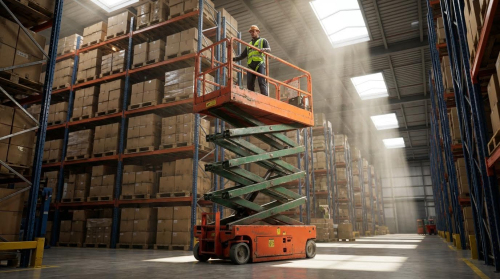
Start by checking the overall condition of the used electric scissor lift structure. The main chassis, scissor arms, centering links, and welds should be straight, free from cracks, distortion, or visible repairs, and must operate smoothly through the full stroke without binding or abnormal noise scissor arms and centering links should be free from defects and function correctly during extension. Inspect the platform deck for corrosion, deflection, or soft spots, and confirm that any toe boards or kick plates are intact. Verify that the platform gate closes positively and that guard rails are complete, rigid, and at consistent height around the platform the lift platform should be in good condition with a foot gate, guard rail, and anti-slippery surface.
- Check that the anti-slip surface on the platform is present and not worn smooth, especially at entry points and frequent standing areas anti-slippery surface.
- Confirm the safe working load label is present, legible, and appropriate for your intended use, and that there are no signs of overloading such as bent rails or deformed scissor arms the safe working load (SWL) should be marked at a proper place and visible.
- Inspect wheels and tires for cuts, flat spots, uneven wear, and proper inflation pressure, since poor running gear often indicates hard service or poor maintenance history wheels and tires of the scissor lift should be free from defects, wear, and tear.
What good structural condition looks like
In a well-maintained unit, paint damage is local and superficial, pins and bushings show limited play, and scissor arms track centrally without rubbing. There should be no oil-soaked areas on the structure and no evidence of welded-on patches or drilled holes that are not factory original.
Hydraulics, Electricals And Battery Systems
Hydraulic health is critical for a used electric scissor lift. Inspect all cylinders, hoses, and fittings for leaks, abrasion, or bulging, and run the lift through multiple full up/down cycles to confirm smooth, consistent motion with no jerks or drift. Fluid level and cleanliness should meet the manufacturer’s guidelines, with no milky appearance or metal particles visible on the dipstick or in the tank hydraulic fluid levels and cleanliness should be checked daily. Check for any protective devices in the hydraulic circuit, such as hose burst valves and relief valves, and verify that they are present and correctly plumbed, as these limit uncontrolled descent and overloading risk a hose burst safety valve prevents the lift from descending in case of hose failure.
- Inspect wiring harnesses, connectors, and junction boxes for damaged insulation, loose terminations, and non-factory modifications; all electrical components should be mechanically secure and properly insulated electric components, wiring, and cables should be free from defects.
- Evaluate the battery pack by checking age markings, case condition, electrolyte levels (for flooded types), and cleanliness of terminals, then request or perform a load or amp-draw test to confirm capacity under realistic demand an amp-draw test should be conducted using a high-quality digital battery tester.
- Verify the charger rating matches the battery system voltage and that charge cables and plugs are undamaged; a mismatched or improvised charger is a red flag for future reliability issues the mobile battery-powered scissor lift is equipped with a 24V 200Ah replaceable battery.
Minimum hydraulic and electrical tests before purchase
As a baseline, insist on a cold start test, three full lift/lower cycles, steering and brake checks, and operation of drive at full speed. Monitor for low-voltage alarms, sluggish lift near full height, or audible pump strain, which can indicate weak batteries or hydraulic wear.
Controls, Safety Devices And Emergency Systems
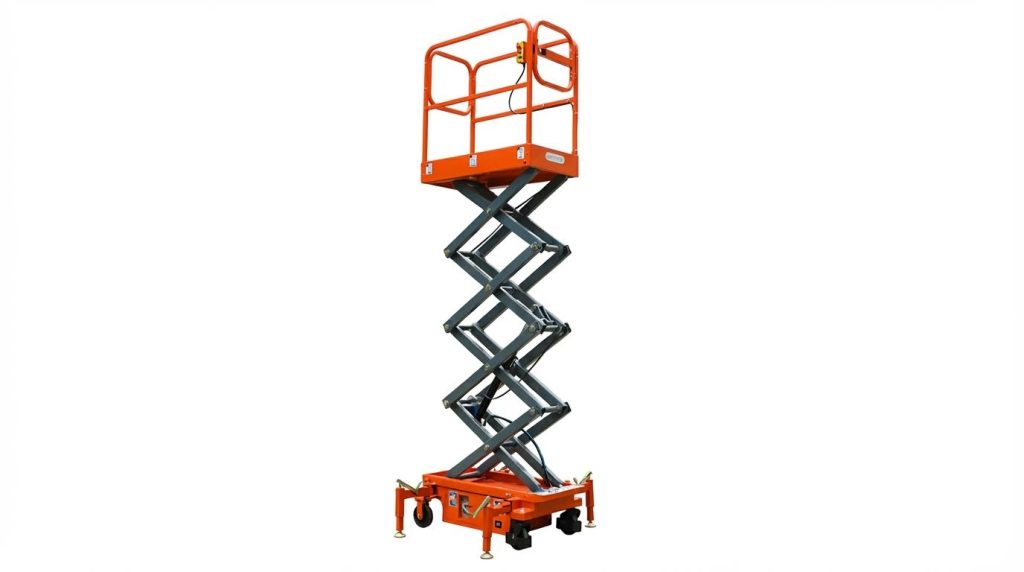
Controls and safety circuits determine whether a used electric scissor lift is still fit for safe operation. Test ground controls and platform controls in all directions and functions; responses should be immediate but proportional, with clear labeling and no sticking buttons or damaged joysticks ground station control, platform control, and remote control stations should be working properly. Confirm that lower-level controls can override upper controls, which is important for recovering the machine if the operator is incapacitated or controls fail at height. Check that the emergency stop buttons at all stations latch positively and immediately cut power to motion circuits when pressed the scissor lift features a 24V control box with UP and DOWN buttons and an emergency stop function.
- Verify all warning devices, including motion alarms, beacons, and indicator lights, function correctly during drive, lift, and lowering operations warning devices such as alarms and lights should be functional.
- Test the emergency lowering system from the ground position to ensure the platform can be safely brought down in case of power or control failure emergency lowering functionality should also be verified.
- Confirm that safety interlocks such as platform gates, auto-locking doors, and load or tilt protection systems operate as intended, preventing unsafe motion when any safeguard is not in the correct state the scissor lift includes several safety systems such as automatic hole protection, platform auto-locking doors, emergency descent systems, and an emergency stop button.
Documentation and records to request
Ask for periodic inspection records signed by a competent person and check that any defects were closed out before the last use inspection records by a competent person as per legal requirements should be available. Combine these record checks with your physical inspection to decide whether the unit can safely enter your fleet or needs refurbishment before use.
Matching The Used Lift To Your Application And Source
Duty Cycle, Height, Capacity And Environment
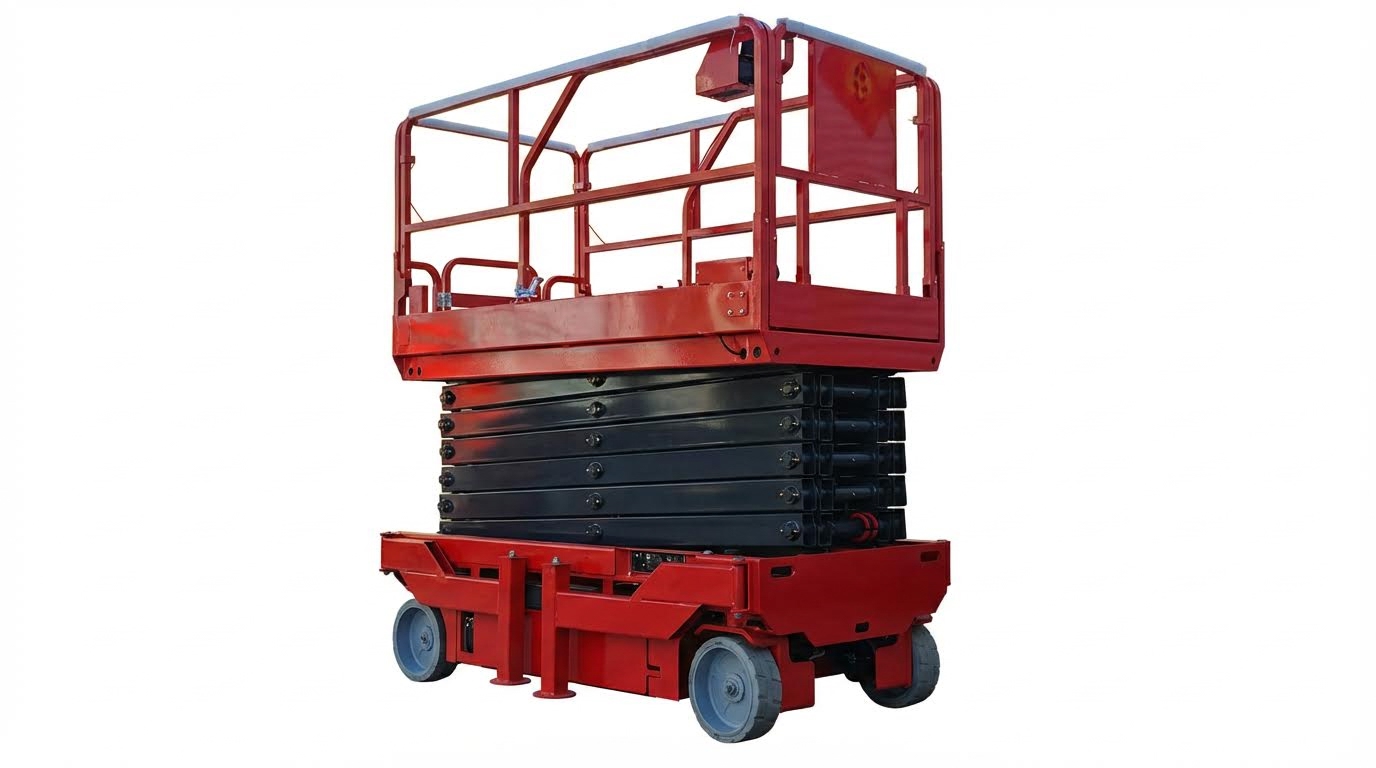
Start by defining how often and how long you will use the used electric scissor lift. Light-duty use (occasional maintenance) can tolerate older machines, while multi-shift industrial use needs newer units with stronger components and better service history. Check that the platform working height, not just lift height, meets your highest task point with enough clearance for tools and PPE. Always keep a margin of at least 1–2 m between maximum platform height and the highest obstruction to allow safe maneuvering.
Match rated capacity to your heaviest realistic load, including people, tools, and materials. The safe working load should be clearly marked and easy to read on the machine with the load kept within that limit during operation. In many facilities, 230–450 kg capacity is common for one or two operators with tools, while construction or warehousing may require higher capacities. If you work on uneven or sensitive floors, also assess total machine weight and wheel load to avoid floor damage.
Environment strongly affects electric scissor selection. For indoor work, low-emission, low-noise operation and non-marking tires are key, while outdoor work needs higher ground clearance, better traction, and protection from water and dust. Verify that the platform has guardrails, a self-closing gate, and a non-slip floor surface to maintain safe footing in the actual work environment. Also confirm that warning alarms and lights function correctly so operators stay visible in busy areas.
For a used electric scissor lift, battery and electrical condition are critical to duty cycle. Check that the battery bank is clean, properly charged, and has been tested with a digital battery tester using an amp-draw or similar method. Inspect wiring and cables for damage and confirm good insulation so the lift can withstand your operating environment. In high-utilization fleets, consider keeping spare batteries or fast chargers to maintain availability.
Where To Buy Used Lifts And How To Vet Sellers
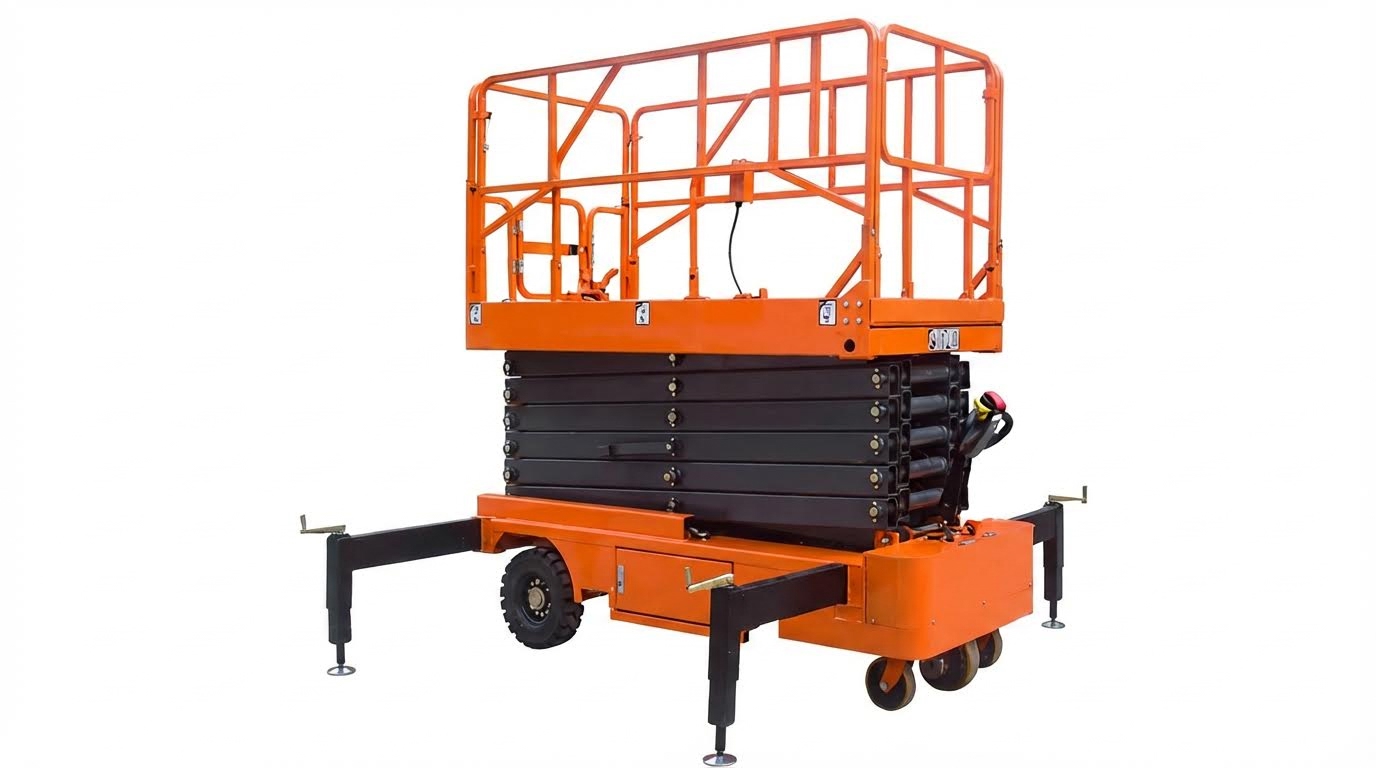
You can source a used electric scissor lift from dealers, rental fleets, auctions, or direct from end users. Dealers and ex-rental units often cost more but usually come with better documentation, recent inspections, and sometimes limited warranties. Auction and private sales may be cheaper but shift more technical and legal risk to the buyer. Whichever route you choose, insist on seeing inspection records signed by a competent person confirming the lift was safe to use at the last inspection.
When vetting sellers, evaluate both their technical practices and transparency. Ask for maintenance logs covering hydraulic fluid checks, leak repairs, and structural inspections including scissor arms, centering links, and hydraulic systems. Confirm that all control stations work correctly and that lower controls can override upper controls to meet standard safety expectations. A seller who cannot provide basic service history or test the lift in front of you is a red flag.
Also verify that key safety and emergency systems operate as designed. Test emergency stop, emergency lowering, horns, and backup alarms to ensure the machine can be controlled under fault conditions. Check that the platform structure, guardrails, and gate are intact and functional with no deformation or missing components. A reputable seller will allow a full functional test, including raising the platform under rated load and driving over a safe, obstacle-free test path to verify steering and braking.
Finally, align commercial terms with the technical risk level. For higher-risk channels like auctions, factor in the potential cost of new batteries, hydraulic repairs, or structural work when comparing prices. For dealer or fleet purchases, negotiate conditional acceptance based on an independent inspection using a structured checklist that covers structural integrity, hydraulics, controls, and safety systems so the used electric scissor lift you buy is fit for purpose on day one.
“”
Final Engineering And Procurement Recommendations
A used electric scissor lift only delivers value when engineering, safety, and sourcing decisions align. Structural integrity, hydraulics, electrics, and controls must all work together as one system; a weakness in any area increases accident risk and downtime. That is why teams must treat pre‑purchase inspection as a formal engineering review, not a quick visual check.
Compliance duties do not reset when a machine changes owner. Your company carries responsibility for standards, inspection records, and safe operation. If documentation is incomplete, budget for third‑party inspection or refurbishment before release to service. Never trade missing records for a lower price.
Selection must start from the job, not the machine on offer. Define duty cycle, height, capacity, and environment, then confirm that each candidate lift meets these needs with margin. Check battery and charger sizing against real shift patterns, especially for indoor fleets.
On the sourcing side, favor sellers who accept transparent testing, share service history, and support independent inspection. Use Atomoving’s technical data and checklists as a baseline for these reviews. In the end, the best used lift is not the cheapest unit, but the one that is structurally sound, compliant, correctly sized for the work, and supported by clear evidence of past care.
Frequently Asked Questions
What is the use of an electric scissor lift?
An electric scissor lift is commonly used in industries such as manufacturing, material handling, construction, and maintenance. It provides a stable platform for lifting personnel and equipment to elevated work areas. These lifts are ideal for indoor use due to their quiet operation and zero emissions.
- Industrial manufacturing and assembly lines
- Warehousing and material handling
- Maintenance and installation tasks
- Construction sites with flat surfaces
How is a scissor lift powered?
Scissor lifts are typically powered by electric motors, which drive hydraulic systems to raise and lower the platform. Electric models are preferred for indoor applications because they produce no fumes and operate quietly. For outdoor use or rough terrain, some models may include a combination of electric and diesel power. Elevator Basics.
Do lifts use a lot of electricity?
The electricity consumption of lifts depends on factors like type, height of operation, and frequency of use. On average, an elevator system accounts for approximately 5% to 10% of a building’s total electricity usage. Electric scissor lifts consume less energy compared to larger elevators or hydraulic lifts. Lift Energy Usage.