

If you have ever wondered what hydraulic oil does a pallet jack use, the answer depends on viscosity grade, temperature, and duty cycle—not guesswork. This guide walks through how pallet jack hydraulics work, how to read ISO and “jack oil” labels, and how to match oil grade to climate and workload. You will also see how additives, biodegradable options, and basic maintenance affect safety, seal life, and lifting performance. Use it as a practical engineering checklist for specifying, purchasing, and maintaining hydraulic oil in pallet jacks across your fleet.
Understanding Pallet Jack Hydraulic Oil Basics

How pallet jack hydraulics actually work
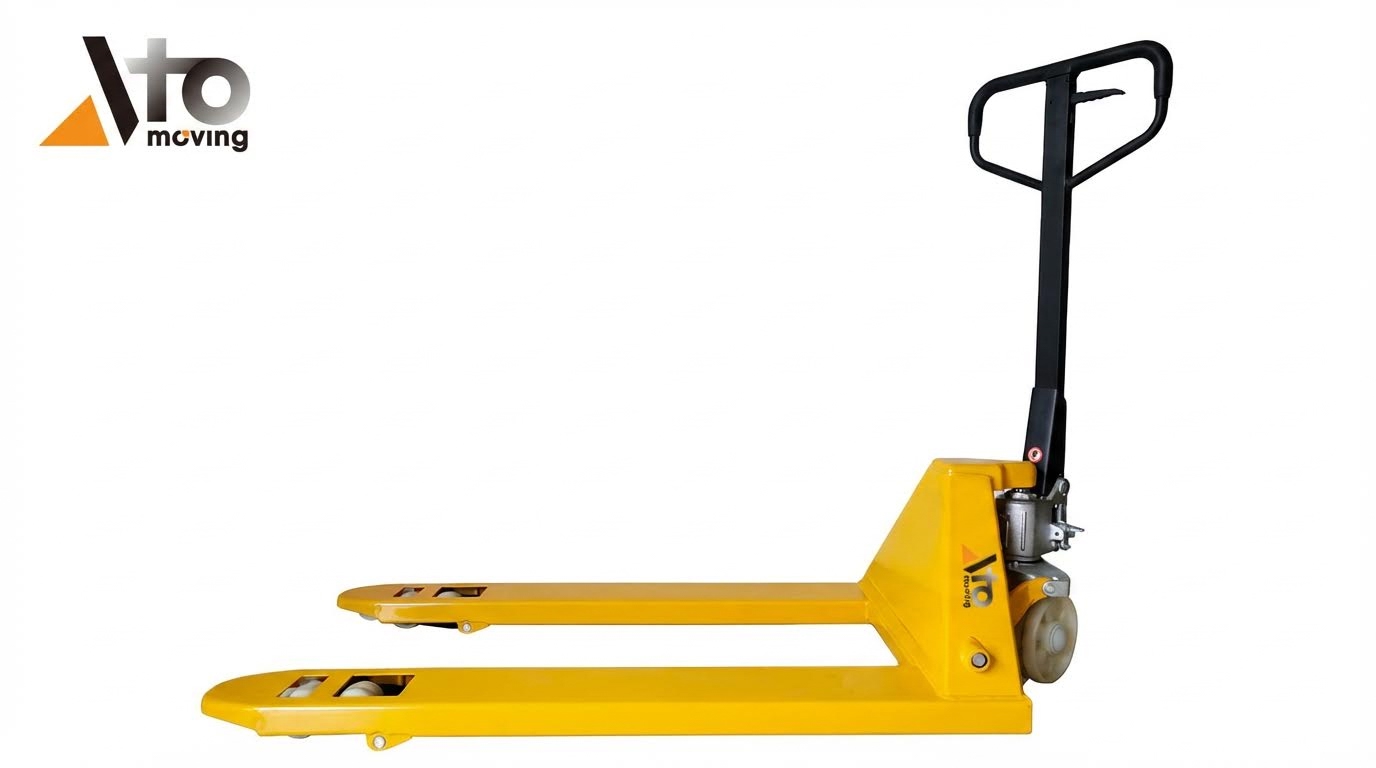
A manual pallet jack uses a simple closed hydraulic circuit to convert hand force on the handle into lifting force at the forks. When you pump the handle, a small piston pressurizes hydraulic oil, which pushes a larger ram or cylinder and raises the fork frame. A return spring and check valves keep the pressurized oil trapped so the load stays in the air until you move the control lever to LOWER. The hydraulic oil is the working medium and the lubricant: it must flow easily through narrow ports, seal clearances between metal parts, and protect against wear, rust, and internal corrosion. This is why the question “what hydraulic oil does a pallet jack use” is more than a label issue; the wrong viscosity or chemistry can cause spongy lifting, slow lowering, or internal damage over time.
- Too thin an oil can bypass seals and cause jerky or weak lifting.
- Too thick an oil can make pumping hard and slow in cold weather.
- Contaminated oil (water, dirt, metal) accelerates wear and seal failure.
Why the system needs the correct oil level
If the oil level is low, the pump draws air, which compresses and causes a bouncy or incomplete lift. This is why manufacturers recommended checking hydraulic oil levels regularly and topping up to the fill-plug height for pallet jacks and similar equipment. Checking and topping to the fill opening is a common procedure.
What “jack oil” and ISO grades really mean
In most workshop conversations, “jack oil” means a light hydraulic oil formulated for jacks and small lifting devices. Many pallet jacks are designed around a standard 10W industrial hydraulic oil, which is roughly comparable in viscosity to lower ISO VG grades used in hydraulic systems. Guidance for similar equipment often specifies “standard 10W industrial hydraulic oil” for topping up. One reference describes 10W hydraulic oil as the recommended type for pallet jack hydraulic circuits. This is directly relevant when you ask what hydraulic oil does a pallet jack use.
ISO viscosity grades (ISO VG) classify hydraulic oils by their kinematic viscosity at 40°C. For example, ISO VG 22, 32, and 46 oils have nominal viscosities of about 22, 32, and 46 mm²/s at 40°C respectively. Typical ISO 22/32/46 hydraulic oils are defined by their viscosity at 40°C. In practice:
- ISO 22–32 behave like “thinner” jack oils, better for cold starts and light-duty use.
- ISO 32–46 are common in general hydraulic machinery and warmer conditions.
Some “jack oils” are sold as low-zinc or anti-wear (AW) hydraulic fluids that also control rust, oxidation, and foaming. These fluids are designed to be compatible with typical jack components and to separate water effectively. Specialized jack oils are formulated to resist wear, rust, oxidation, and foaming while remaining compatible with seals and metals. When selecting what hydraulic oil does a pallet jack use in your facility, you mainly match the manufacturer’s recommendation (often 10W or an equivalent ISO grade) and ensure the product is a hydraulic oil, not engine oil or brake fluid.
How ISO grades relate to climate and performance
Lower viscosity grades like ISO 32 flow faster and suit colder environments, while higher grades like ISO 46 provide better film strength in warmer or high-load conditions. ISO 32 is often favored for cold climates, and ISO 46 for moderate to warm conditions. Choosing the wrong grade can lead to leaks, sluggish response, or excess wear in hydraulic equipment. Using oil that is too thin or too thick for the design can cause seal damage, jerky motion, or failure to hold load.
Key Technical Criteria for Hydraulic Oil Selection

Viscosity grades (ISO 22/32/46 vs 10W jack oil)
When people ask what hydraulic oil does a pallet jack use, they are usually choosing between ISO VG 22/32/46 hydraulic oils and 10W “jack oil.” Viscosity is the key property here because it controls how fast the oil flows through the small clearances in the pump, valve, and cylinder. ISO grades are defined by kinematic viscosity at 40°C: ISO 22 is about 22 mm²/s, ISO 32 about 32 mm²/s, and ISO 46 about 46 mm²/s at 40°C (ISO 22/32/46 kinematic viscosity values). 10W jack oil typically sits in the same general viscosity range as ISO 22–32 at typical warehouse temperatures, which is why many pallet jacks specify “10W hydraulic jack oil” or “ISO 32” in the manual.
- ISO 22: Thinner oil, better for very cold conditions but can feel “soft” under heavy loads.
- ISO 32: Common all‑round choice for indoor pallet jacks in cool to moderate climates; flows well in cold starts and still gives stable lifting.
- ISO 46: Thicker oil that gives better film strength and leakage control in warmer environments, but can make pumping stiff in the cold (ISO 32 vs 46 characteristics).
If the viscosity is too low for the jack design and load, you can see internal leakage, slow lifting, or difficulty holding a load. If it is too high, the handle force increases, operation becomes jerky, and cavitation risk rises because the pump struggles to draw thick oil through small ports. For most manual pallet jacks used indoors, a high‑quality ISO 32 or 10W jack oil that meets standard hydraulic oil requirements is usually the safest answer to what hydraulic oil does a pallet jack use, unless the manufacturer specifies otherwise.
Temperature range, duty cycle, and load profile
Temperature is the second major factor after viscosity when choosing what hydraulic oil does a pallet jack use. Hydraulic oils have recommended ambient temperature windows: ISO 22 is typically suited to about −25°C to 20°C, ISO 32 to about −20°C to 35°C, and ISO 46 to about −15°C to 45°C, while the oil itself should not run above roughly 80°C in service (typical ISO grade temperature ranges). Manual pallet jacks rarely reach high oil temperatures, but cold starts in unheated docks or freezers can make thick oil behave like grease, causing slow or incomplete lifting.
- Cold environments (outdoor yards, coolers, freezers): A thinner grade such as ISO 22–32 helps the pump prime and reduces handle effort.
- Warm warehouses or high ambient heat: ISO 32–46 gives better film strength and helps the jack hold loads without drift as the oil thins with temperature.
- Light, intermittent use: A broad‑use ISO 32 or 10W jack oil is usually sufficient because the oil does not heat significantly.
- Heavy, frequent lifting near capacity: A slightly higher viscosity grade (for example ISO 46 in a warm climate) can better resist internal leakage and wear, provided cold‑start performance stays acceptable.
Duty cycle and load profile matter because they drive internal pressure and shear. Repeated near‑capacity lifts increase stress on the pump, valves, and seals; in those cases, you want an oil with good shear stability, oxidation resistance, and anti‑wear performance, not just the right viscosity (key hydraulic oil characteristics). Choosing an oil grade that matches your climate and usage pattern reduces issues like jerky motion, loss of lift, and premature seal failure that often appear when the wrong viscosity is used (effects of incorrect hydraulic fluid).
Additives: anti‑wear, anti‑foam, and zinc content
Beyond viscosity, the additive package determines how well the oil protects the pallet jack over time. A suitable hydraulic jack oil should provide good lubrication, oxidation resistance, rust and corrosion protection, shear stability, water separation, and foam resistance, and it must be compatible with the jack’s sealing materials (hydraulic oil performance requirements). Many “AW” hydraulic oils (AW‑32, AW‑46) include anti‑wear additives that reduce metal‑to‑metal contact and extend component life compared with plain ISO oils that have minimal additives (benefits of AW additives).
- Anti‑wear (AW) additives: Protect pump gears and valve spools from scuffing during high‑load lifts and when the oil film is thin.
- Anti‑foam agents: Limit air entrainment, which otherwise causes spongy, jerky lifting and accelerates oxidation.
- Rust and oxidation inhibitors: Help prevent internal rusting and sludge formation, especially where moisture or condensation is present (formulation for rust, wear, and foam control).
Many hydraulic jack oils use zinc‑based anti‑wear chemistry; a typical low‑zinc ISO 46 hydraulic oil might contain around 0.03% zinc by mass and meet common hydraulic specifications such as DIN 51524‑2 HLP and ISO 6743‑4 HM (low‑zinc hydraulic oil example). For standard warehouse pallet jacks, a conventional zinc‑containing AW hydraulic oil is usually acceptable, but in environmentally sensitive areas or where water contamination is likely, low‑zinc or ashless formulations can reduce environmental impact and compatibility issues. In every case, the safest way to answer what hydraulic oil does a pallet jack use is to combine the manufacturer’s viscosity recommendation (often 10W or ISO 32) with an AW hydraulic oil that includes anti‑wear, anti‑foam, and corrosion‑control additives suitable for the operating environment.
Practical Oil Choices, Maintenance, and Compliance
Matching oil type to climate and environment
When teams ask what hydraulic oil does a pallet jack use, the practical answer depends strongly on climate, duty, and storage conditions. In cold warehouses or refrigerated areas, a thinner oil such as ISO 22–32 or a 10W “jack oil” helps the pump prime quickly and reduces sluggish lifting. In warmer ambient conditions, ISO 32–46 hydraulic oils are more stable and maintain film strength under higher operating temperatures and loads. ISO 32 typically has a kinematic viscosity of about 32 mm²/s at 40°C, while ISO 46 is around 46 mm²/s at 40°C, giving better protection at higher temperatures ISO 22/32/46 viscosity data.
- Cold climate / chilled storage: favor ISO 22–32, or a labeled jack oil equivalent, to avoid slow or jerky lifting.
- Moderate indoor warehouse: ISO 32 or ISO 46 works well; ISO 46 is more robust for heavier loads and longer runs.
- Hot environments or near heat sources: ISO 46 is usually safer because it holds viscosity better at elevated temperatures ISO 32 vs 46 performance.
Ambient temperature also sets the safe operating window. As a rule of thumb, ISO VG 22 suits roughly -25°C to 20°C, ISO VG 32 about -20°C to 35°C, and ISO VG 46 about -15°C to 45°C recommended ambient ranges. For dusty or wet environments, prioritize hydraulic oils with good rust, oxidation, and anti-foam properties to protect internal surfaces and maintain consistent lift behavior anti-rust and anti-foam performance.
Checklist: matching oil to your site
- Indoor ambient temperature band (min/max).
- Exposure to cold loading docks or freezers.
- Average load vs rated capacity and duty cycle.
- Risk of water ingress or washdown cleaning.
- Any local rules on spill control or environmental impact.
Biodegradable and low-toxicity oil options
Where spills can reach soil, drains, or food-handling areas, the question what hydraulic oil does a pallet jack use becomes an environmental decision as much as a technical one. Biodegradable hydraulic oils are available in ISO 15, 32, and 46 grades, with viscosities around 15, 32, and 46 mm²/s at 40°C and more than 60% biodegradation within 28 days under OECD 301 B testing biodegradability data. Some fluids are also classified as non-harmful to freshwater and marine organisms when tested as water-accommodated fractions, and can have biobased content above 80% by ASTM D 6866 ecotoxicity and biobased content.
| Oil type | Typical ISO grades | Main benefit | Typical use case |
|---|---|---|---|
| Standard mineral hydraulic / jack oil | ISO 22, 32, 46 | Low cost, widely available | General indoor warehousing |
| Biodegradable hydraulic oil | ISO 15, 32, 46 | Faster breakdown if spilled, lower environmental load | Food, pharma, outdoor yards, near drains |
| Low-toxicity / high biobased content oil | ISO 32, 46 | Reduced impact on aquatic life, high renewable content | Sites with strict environmental permits |
When switching from conventional to biodegradable oil in pallet jacks, plan for a controlled drain and refill so additive packages do not conflict. The new oil should still meet core hydraulic requirements: correct viscosity, oxidation stability, anti-wear performance, rust and corrosion protection, and seal compatibility hydraulic oil characteristics. For mixed fleets, standardizing on one biodegradable ISO grade per climate zone simplifies storage and reduces the risk of using the wrong fluid during top-ups.
When are biodegradable oils worth the premium?
- Operations above food or pharma production areas.
- Outdoor yards with unsealed ground or storm drains.
- Sites under ISO 14001 or similar environmental management systems.
- Customers requiring documented low-toxicity fluids in contracts.
Inspection, oil change intervals, and contamination
Even when you select the perfect grade, what hydraulic oil does a pallet jack use only delivers full benefit if you maintain it. Oil level in pallet jack hydraulic units should be checked at least monthly, or more often in heavy use, with immediate inspection if you see seepage or damaged seals inspection frequency. To check level, lower the forks fully, set the handle vertical, access the pump at the base, remove the fill plug, and confirm the oil is at or near the plug opening checking procedure. Milky or cloudy appearance indicates water contamination and requires a full change rather than a top-up contamination indicator.
- Top-up interval: at least yearly for frequently used pallet jacks annual top-up guidance.
- Full change: if oil is milky, if the unit sat unused for over a year, or during overhaul/restoration replacement triggers.
For an oil change, place the truck on level ground with forks fully lowered, open the filler, access and remove the lowering valve, and drain into a suitable container, taking care to avoid spills oil change procedure. Inspect the lowering valve O-ring for cracks or damage and replace if needed before reassembly O-ring inspection. When refilling, bring the level to roughly the lower edge of the drain or filler opening (about 1–2 cm below), avoid overfilling, then bleed air by pumping the tow bar 10–15 times and confirming normal lift refill and bleeding steps.
Simple contamination control practices
- Store oil containers sealed and off the floor.
- Use clean funnels and dedicated jugs for hydraulic oil.
- Wipe around the filler plug before opening.
- Address leaking seals promptly to limit dirt and water ingress.
Final Recommendations for Procurement and Maintenance
Choosing hydraulic oil for pallet jacks is a design decision, not a guess. Viscosity, temperature range, and additives must work together so the pump primes easily, the jack holds load, and seals last. A well-matched ISO or 10W jack oil keeps lifting smooth, reduces handle effort, and limits internal leakage.
For indoor pallet jacks in moderate climates, standardize on a quality ISO 32 or equivalent 10W jack oil with anti-wear, anti-foam, and corrosion inhibitors. Move to ISO 22 for freezer or cold-dock use, and to ISO 46 only where ambient temperatures and duty justify the thicker film. In sensitive areas, specify biodegradable or low-toxicity grades that still meet core hydraulic performance and seal compatibility.
Back the oil choice with disciplined maintenance. Set fleet-wide rules for monthly level checks, yearly top-ups, and immediate oil changes when fluid looks milky or dirty. Train technicians to keep dirt and water out during filling and to replace damaged seals early. Procurement, maintenance, and HSE teams should agree one approved grade per climate zone and document it in site procedures and on each jack. This simple standardization approach gives Atomoving pallet jacks predictable lifting behavior, longer component life, and lower risk of leaks, downtime, and environmental incidents.
Frequently Asked Questions
What type of hydraulic oil does a pallet jack use?
Pallet jacks typically use ISO 32 or ISO 46 hydraulic oil, which provides the right viscosity for smooth operation of the hydraulic system. The exact specification may vary depending on the manufacturer and operating conditions like temperature. Always refer to the equipment manual for the best results. For more details, check Pallet Jack Types.
How does a hydraulic pallet jack work?
A hydraulic pallet jack uses a hydraulic pump system to lift loads. When you operate the handle, it activates the pump, pushing hydraulic oil into the cylinder to raise the forks. Releasing the handle opens a valve, allowing the forks to lower. This mechanism relies on hydraulic pressure to move heavy loads efficiently. Learn more about this process at Pallet Truck Mechanics.