
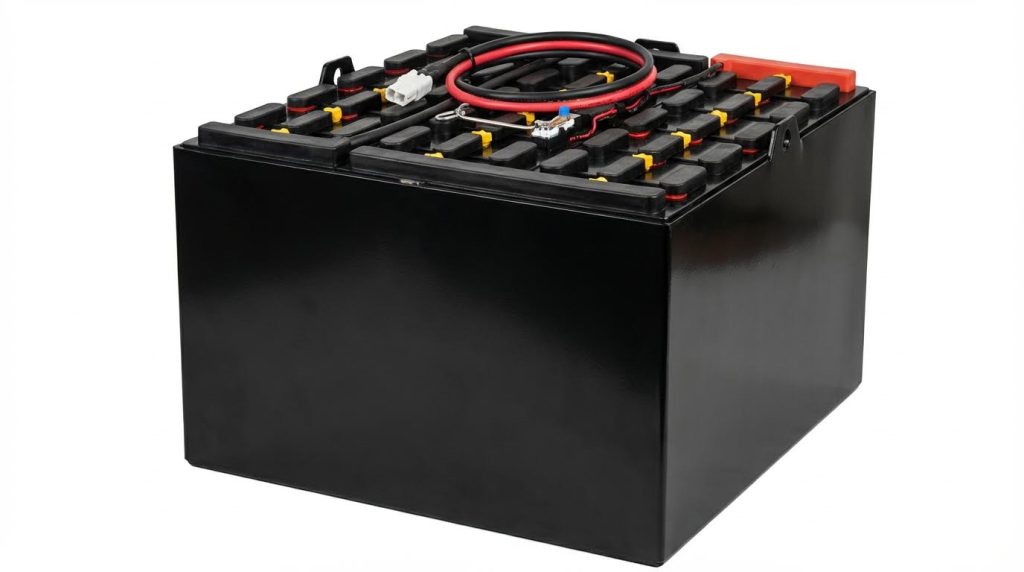
Choosing the right battery size and chemistry for an electric scissor lift comes down to voltage, amp‑hour capacity, duty cycle, and lifetime cost. This guide explains typical battery sizes, compares chemistries, and shows how to right‑size a pack for safe, efficient operation. If you are wondering what size battery in an upright electric scissor platform lift will support a full shift, you will find clear ranges and selection steps here.
Understanding Scissor Lift Battery Requirements
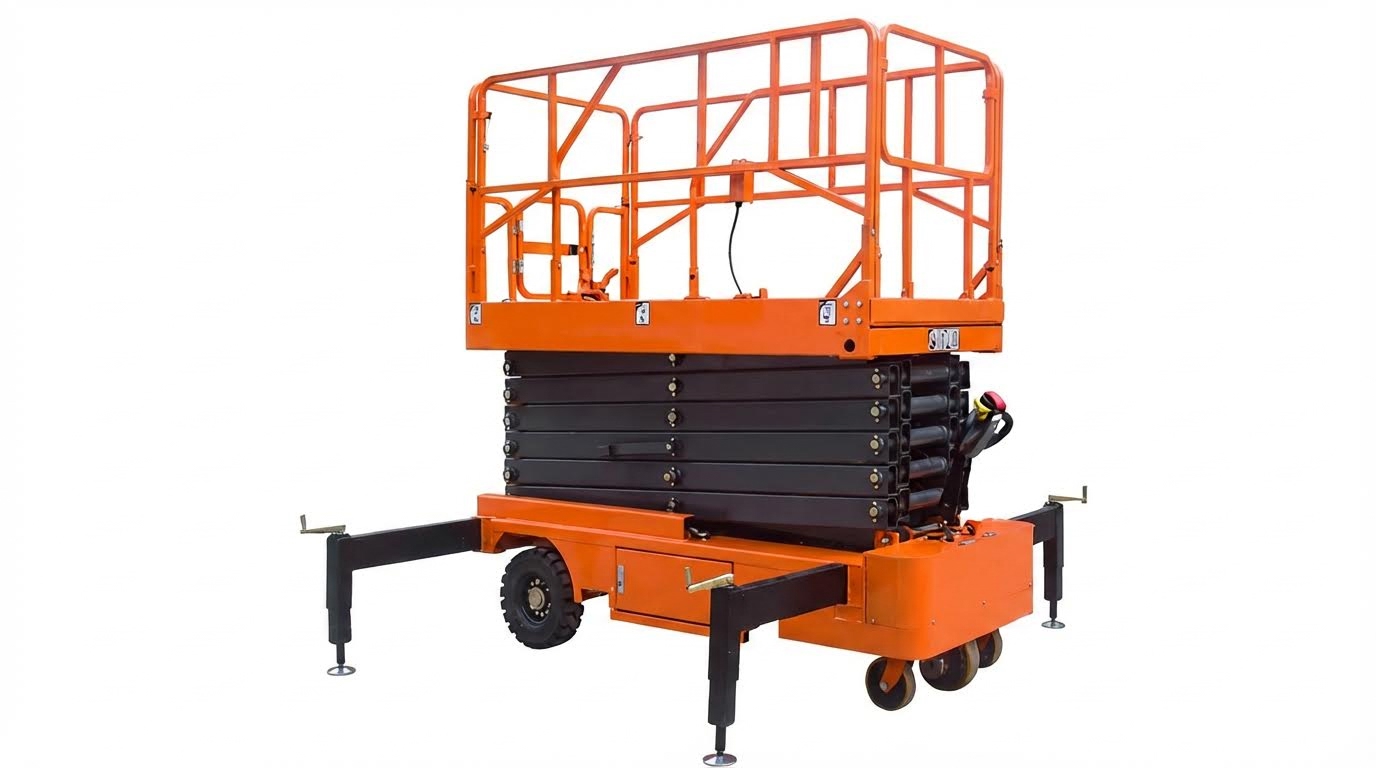
Scissor lift battery requirements are defined by system voltage (24–48 V), amp‑hour capacity (about 50–400 Ah), and how many hours you need between charges. Once you know your duty cycle, you can answer “what size battery in an upright electric scissor platform” with confidence.
Typical voltages and Ah ranges by lift class
Typical battery sizes for upright electric scissor lifts range from about 24 V / 50 Ah for compact indoor units up to 48 V / 400 Ah for large outdoor models. The right size depends on platform height, motor size, and expected shift length. This is the core of answering what size battery in an upright electric scissor platform lift for your site.
| Lift Class / Use Case | Typical System Voltage | Typical Capacity Range | Typical Battery Type | Operational Impact / Best For… |
|---|---|---|---|---|
| Compact indoor scissor lift (low height, light duty) | 24 V | 50–150 Ah capacity range | Deep‑cycle lead‑acid (flooded, AGM, or gel) battery types | Short, intermittent tasks on smooth floors; easy overnight charging; minimal travel distances. |
| Standard indoor / light outdoor scissor lift | 24–36 V | 150–250 Ah | Deep‑cycle flooded or AGM | Typical warehouse and facility maintenance; supports most single‑shift operations without deep discharge. |
| Mid‑size outdoor / rough‑terrain electric scissor lift | 36–48 V | 200–300 Ah capacity range | Deep‑cycle flooded, AGM, or lithium‑ion | Heavier loads and more drive time; outdoor slabs; reduced current draw at higher voltage improves cable and contactor life. |
| Large outdoor / high‑duty electric scissor lift | 48 V | 300–400+ Ah capacity range | Lithium‑ion or high‑capacity lead‑acid | All‑day outdoor work, frequent driving and lifting; best where uptime and gradient performance are critical. |
| High‑utilization multi‑shift fleet (any size) | 24–48 V (application‑dependent) | Capacity sized to avoid >80% depth of discharge per shift DoD guidance | AGM or lithium‑ion | Fast turn‑around and opportunity charging; minimizes battery swaps and extends cycle life. |
Engineers usually select the lowest voltage that still keeps current reasonable and components cool. Higher system voltages (36–48 V) cut current for the same power, which reduces cable heating and improves efficiency. Voltage sizing
Amp‑hour (Ah) capacity is then sized so the lift can run a full planned shift without discharging beyond about 80% depth of discharge, which significantly improves battery life and reduces unplanned downtime. Runtime vs Ah
💡 Field Engineer’s Note: When you ask “what size battery in an upright electric aerial platform,” always check tray dimensions and maximum battery weight in the service manual. Oversized Ah packs that physically fit can still overload the chassis and compromise stability margins.
Duty cycle, load, and runtime expectations
Duty cycle, load, and runtime expectations determine the real battery size you need in an upright electric scissor lift. The more you drive, lift, and overload platforms, the higher your Ah requirement to avoid deep discharge and premature battery failure.
| Usage Pattern / Duty Cycle | Typical Platform Load & Behavior | Runtime Expectation Between Charges | Recommended Capacity Strategy | Operational Impact |
|---|---|---|---|---|
| Light duty, occasional use | Low to moderate loads; mostly stationary work; few lift cycles | 3–5 hours of actual run time over a shift | Lower end of capacity range for class (e.g., 50–150 Ah for small lifts) capacity range | Minimizes purchase cost; acceptable where lifts can sit on charge for long periods. |
| Standard single‑shift operation | Mixed loads; regular lifting and driving across the site | Full 8‑hour shift with lunch and breaks | Size so typical shift uses no more than 60–80% of rated Ah to protect cycle life DoD vs life | Reduces risk of mid‑shift dead batteries and steeply extends lead‑acid life. |
| Heavy duty, high travel | Near full rated load; frequent driving between work areas; many lift cycles | 8–10+ hours with minimal charging opportunities | Choose upper end of Ah range (200–400 Ah depending on lift size) and consider lithium‑ion for higher usable DoD | Supports long days without swapping; ideal for construction and large facilities. |
| Multi‑shift or 24/7 operation | High utilization; short breaks; often near capacity | 16–24 hours with opportunity charging | Lithium‑ion pack with fast charging and high cycle life (2,000–4,000 cycles) cycle life | Maximizes uptime; avoids maintaining multiple spare lead‑acid sets and reduces labor. |
| Seasonal or intermittent fleet | Irregular use; long storage periods | Several hours when needed, weeks or months idle | AGM or lithium‑ion to reduce self‑discharge and maintenance during storage AGM benefits | Ensures lifts are ready to go after storage without extensive battery service. |
Deep‑cycle batteries are designed to deliver sustained current over long duty cycles, but their life drops sharply if you repeatedly discharge them too deeply. Keeping daily depth of discharge below about 80% is a common engineering target to extend service life. Deep‑cycle behavior
Smaller lifts doing light‑duty work can operate reliably with 50–150 Ah batteries, while larger, heavy‑duty units often need 200–400 Ah or more to support long runtimes at higher loads without abusive deep discharges. Capacity vs size
How duty cycle really affects “what size battery in an upright electric scissor lift”
Engineers break duty cycle into: time spent driving, time lifting/lowering, and time idling with controls powered. Driving at full speed and lifting near rated capacity draw the highest current, so fleets that do a lot of travel or work at maximum platform load need significantly more Ah than “same model” lifts that mostly stay in one bay. When in doubt, log a week of typical use and size the battery so your worst day still stays above 20–30% state of charge at shift end.
💡 Field Engineer’s Note: If operators complain that lifts “slow down after lunch,” that is a classic sign the pack is undersized for the duty cycle. Either increase Ah, move to lithium‑ion for higher usable DoD, or enforce charging breaks to keep state of charge above the damage zone.
Comparing Battery Chemistries for Scissor Lifts
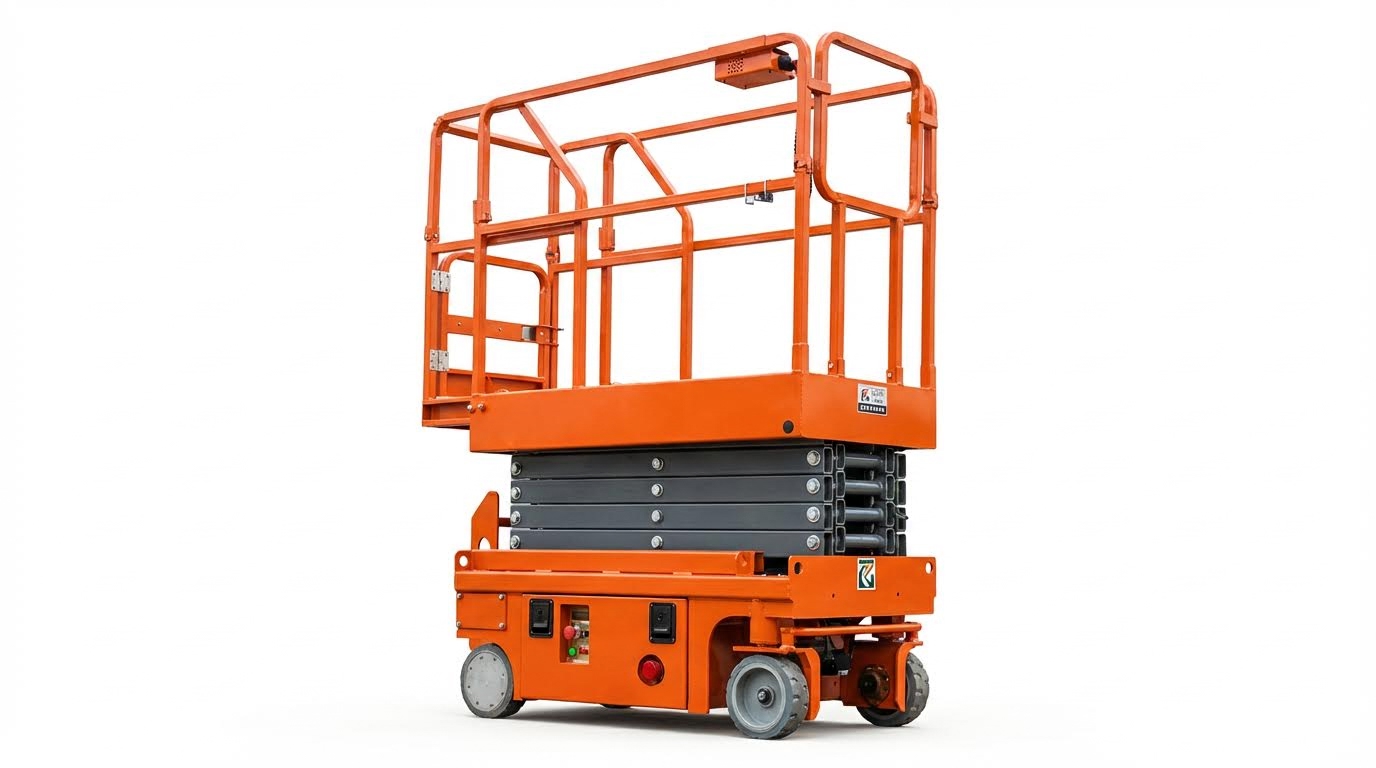
Choosing the right chemistry for what size battery in an upright electric scissor lift determines runtime, maintenance, and lifecycle cost far more than voltage alone. This section compares flooded, AGM, gel, and lithium so you can match chemistry to duty cycle and budget.
Flooded, AGM, gel, and lithium-ion overview
Flooded, AGM, gel, and lithium batteries all power scissor lifts, but they differ in maintenance, usable cycles, weight, and suitability for long shifts or harsh environments. The table below shows how each chemistry impacts real-world lift performance.
| Chemistry | Typical Use in Scissor Lifts | Key Characteristics | Maintenance Level | Best For… |
|---|---|---|---|---|
| Flooded lead-acid (wet) | Common in older or cost-sensitive lifts | Deep-cycle, lower upfront cost, heavier, vents gas during charge reference | High – regular watering, cleaning, equalization charges | Budget-focused, light-duty, single-shift work where manual maintenance is acceptable |
| AGM (Absorbent Glass Mat) | Modern indoor and rental fleets | Sealed, spill-proof, better cycle life than flooded, higher cost than flooded reference | Low – no watering, minimal cleaning | Indoor use, rental fleets, users wanting lead-acid cost with reduced maintenance |
| Gel lead-acid | Niche indoor or sensitive environments | Electrolyte gel, good deep-cycle behavior, tolerant of vibration, sealed | Low – similar to AGM, but needs correct charger profile | Applications needing sealed batteries but not ready to move to lithium |
| Lithium-ion (LiFePO4, etc.) | Premium and heavy-duty fleets | High energy density, fast charge, 2,000–4,000+ cycles, stable voltage, light weight reference | Very low – no watering, no acid, minimal inspection | Multi-shift, 24/7, or extreme temperatures where uptime and fast charging are critical |
Deep-cycle flooded, AGM, gel, and lithium packs are all suitable for the 24–48 V systems typical in upright electric scissor lifts, but their behavior under repeated deep discharge is very different. Lithium and AGM usually support higher usable depth of discharge and more cycles than basic flooded cells. reference
💡 Field Engineer’s Note: When you upgrade chemistry (for example, flooded to lithium), re-check counterweight and stability calculations. A lighter pack can change platform weight distribution and, in rare cases, affect rated wind and slope limits.
Cycle life, depth of discharge, and charging time
Cycle life, depth of discharge, and charging time directly control how many years a scissor lift battery lasts, how long each shift can run, and how often operators must stop to recharge. Chemistries trade low purchase price against long-term uptime.
| Chemistry | Typical Cycle Life* | Recommended Depth of Discharge (DoD) | Charging Time & Efficiency | Operational Impact |
|---|---|---|---|---|
| Flooded lead-acid | ≈300–500 cycles in deep-cycle use reference | Limit to ≈50–80% DoD to avoid early failure reference | Slow; sensitive to deep discharge; lower charging efficiency | Often needs overnight charging; risky for long, high-duty shifts without spare packs |
| AGM lead-acid | ≈800–1,200 cycles; 50%+ more than flooded in deep-cycle work reference | ≈60–80% DoD common in practice | Similar to or slightly better than flooded; still not “fast charge” | Better suited to daily use where flooded packs were failing early |
| Gel lead-acid | Comparable or slightly better than AGM in deep-cycle use | Often run at moderate to deep DoD with good life | Must use correct gel charger; moderate charge times | Useful where vibration or spill risk is high, with moderate runtime needs |
| Lithium-ion (LiFePO4) | ≈2,000–4,000 cycles or more reference | Regularly 80–90% DoD usable without major life penalty | Fast charging, supports opportunity charging, high efficiency, captures more regenerative energy reference | Ideal for multi-shift or 24/7 use; short breaks can recover significant runtime |
*Cycle life values are typical ranges from referenced sources; actual life depends on charging discipline, temperature, and how often operators exceed recommended depth of discharge.
For what size battery in an upright electric scissor lift, remember that a 200 Ah flooded pack at 50% DoD gives far less usable energy per shift than a 200 Ah lithium pack routinely taken to 80–90% DoD. This is why chemistry choice can outweigh nameplate amp-hours when you size for long duty cycles or multiple shifts.
How depth of discharge really affects scissor lift runtime
Depth of discharge is how much of the rated capacity you remove before recharge. Keeping lead-acid above roughly 20–30% state of charge greatly improves life, so engineers often oversize flooded or AGM packs to avoid going beyond 70–80% DoD during a normal shift. Lithium tolerates deeper regular discharge, so you can often match or beat runtime with a smaller Ah rating, as long as voltage and current limits meet the lift’s motor demands.
💡 Field Engineer’s Note: If operators routinely “run until it crawls,” assume real-world DoD is 80–90%. In that case, flooded packs will die early; spec lithium or high-quality AGM and size capacity for honest, worst-case behavior, not the ideal charging schedule.
Maintenance, safety, and environmental performance
Maintenance, safety, and environmental performance determine hidden costs and risks of each chemistry, from water top-ups and corrosion to gas emissions and disposal. Choosing the right type can cut labor hours and improve indoor air quality.
| Chemistry | Maintenance Tasks | Key Safety Considerations | Environmental & Operational Impact | Best For… |
|---|---|---|---|---|
| Flooded lead-acid | Regular watering, electrolyte checks, terminal cleaning, equalization charging reference | Hydrogen gas during charging, risk of acid spills and corrosion; needs ventilation | Lowest upfront cost but higher labor and more downtime; more hazardous waste at end-of-life | Sites with low labor cost, good ventilation, and strict watering routines |
| AGM lead-acid | No watering; periodic visual checks and terminal inspection reference | Sealed design eliminates acid spills and greatly reduces gas emissions | Less corrosion and cleanup; more uptime; slightly higher purchase price offset by lower service cost | Indoor warehouses, rentals, and users wanting “fit-and-forget” lead-acid |
| Gel lead-acid | Similar to AGM; no watering; ensure correct charger profile | Spill-proof; must avoid over-voltage charging to prevent gas pockets | Clean operation, suitable for sensitive areas; niche but effective where specified | Food, pharma, or clean environments not yet moving to lithium |
| Lithium-ion (LiFePO4) | No watering, no acid checks, minimal terminal cleaning; BMS handles protection reference | Sealed, no acid or hydrogen; integrated BMS for over-charge, over-discharge, and temperature protection | No fumes or CO₂ during charging, no acid spills; higher energy efficiency and less waste heat reference | Indoor fleets, tight charging rooms, and users focused on sustainability and uptime |
Lead-acid batteries, especially flooded types, demand regular attention and proper ventilation to avoid hydrogen buildup and acid-related corrosion or burns. Lithium and AGM remove watering and venting from the checklist, which is a major advantage for small teams or rental fleets that cannot control how every operator treats the lift. reference
From an environmental and lifecycle-cost angle, lithium’s long life and lack of acid or gas emissions reduce waste and cleanup, even though the initial purchase price is higher. AGM sits in the middle: more expensive than flooded but with fewer replacements and much lower maintenance labor, which often offsets the premium over a 4–7 year life. reference reference
💡 Field Engineer’s Note: On many sites, the “hidden” cost is not the battery itself but the 10–20 minutes of lost work every time someone has to water cells, clean acid, or move a lift to a ventilated charging bay. If labor is expensive, AGM or lithium usually win on total cost of ownership, even for smaller upright electric scissor lifts.
Final Considerations for Battery Selection
Correct battery selection for an upright electric scissor lift starts with voltage and amp‑hours, but it must end with real duty cycle, safety, and lifetime cost. Undersized or deeply cycled packs shorten life, cause mid‑shift shutdowns, and push operators to use equipment in unsafe low‑voltage conditions. Oversized or overweight packs can overload the chassis, change stability margins, and violate the lift’s design limits.
Engineers should first confirm tray dimensions, maximum battery weight, and approved voltages in the service manual. Then they should size capacity so the hardest shift still stays above about 20–30% state of charge. For light single‑shift work, well‑sized lead‑acid remains cost‑effective. For high utilization, limited charging windows, or fleets with weak maintenance discipline, AGM or lithium usually reduce downtime and hidden labor.
Always match the charger, cables, and protection system to the chemistry and pack size, especially when upgrading from flooded lead‑acid to lithium. Treat the battery as part of the lift’s structural and electrical system, not a consumable. When in doubt, log real usage, review total cost of ownership, and work with suppliers like Atomoving to validate that voltage, Ah, weight, and chemistry all support safe, reliable operation over the full life of the lift.
Frequently Asked Questions
What size battery is used in an upright electric scissor lift?
Most upright electric scissor lifts use a 24V system, which typically requires four 6V batteries with a minimum rating of 220 amp-hours. These batteries are commonly lead-acid, though lithium-ion options are becoming more popular due to their efficiency and maintenance-free nature. Battery Power Guide.
What types of batteries are available for scissor lifts?
Scissor lifts primarily use two types of batteries: lead-acid and lithium-ion. Lead-acid batteries are cost-effective and reliable but require regular maintenance. Lithium-ion batteries offer longer lifespans, faster charging, and no maintenance but come at a higher upfront cost. Battery Comparison.
How long do scissor lift batteries typically last?
The lifespan of scissor lift batteries generally ranges from 6 to 48 months, depending on usage frequency and maintenance quality. Proper care, such as regular charging and avoiding deep discharges, can extend battery life significantly. Battery Lifespan Tips.