
Knowing how to put a scissor lift in neutral for towing is critical for preventing damage, rollaways, and tip‑overs. This guide explains what “neutral” and freewheel really mean on different drive systems, when towing is appropriate, and how to stay within safety and regulatory limits. You will see step‑by‑step concepts, towing limits, and site-planning tips so you can move a lift safely without powered drive. Throughout, the focus stays on practical field decisions: stable ground, correct load, compliant procedures, and properly trained operators.
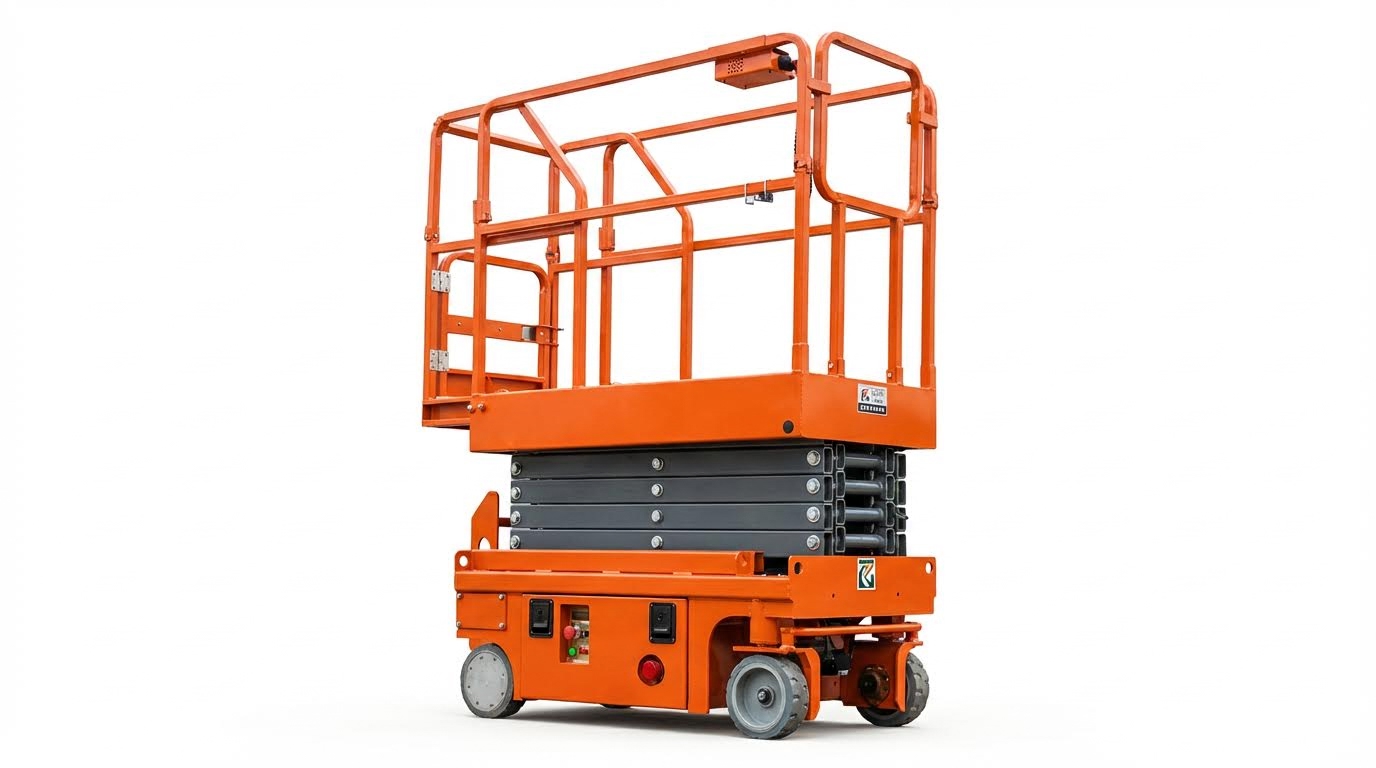
Understanding Neutral And Freewheel On Scissor Lifts
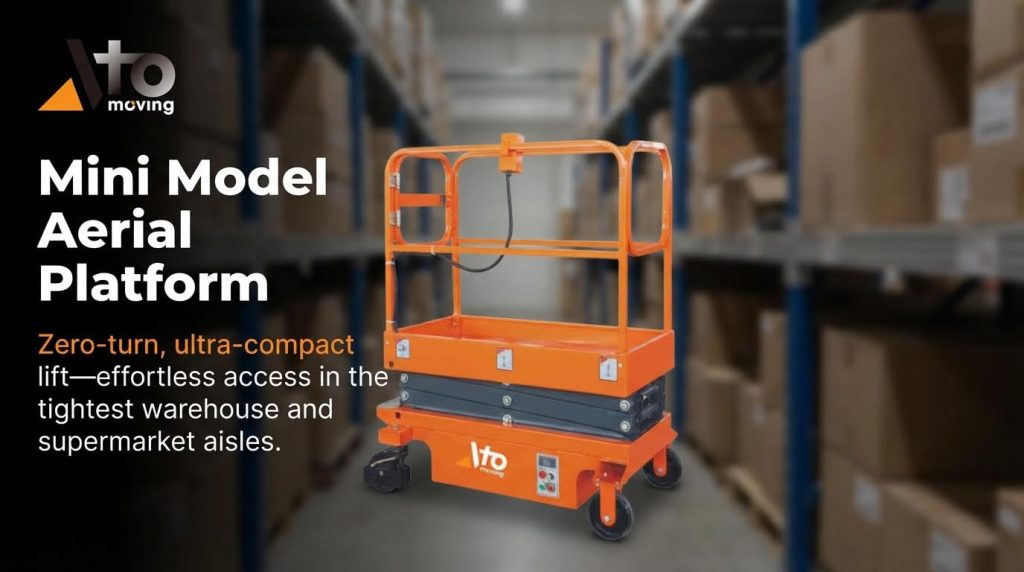
What “neutral” means on MEWPs and drive systems
On most scissor lifts and other MEWPs, “neutral” is not a gear like in a car. It is a condition where the drive system no longer transmits torque to the wheels and the spring‑applied drive brakes are released or mechanically overridden so the machine can roll freely. Knowing this is the foundation of understanding how to put a scissor platform in neutral for controlled towing or manual positioning.
Key points about neutral and freewheel on typical scissor lifts:
- Drive motors are normally “braked” when power is off; neutral requires a deliberate release device.
- The platform must be fully lowered and the unit stable before any neutral/freewheel action. Lifts are intended to be moved only from a safe, stable condition.
- Brakes may be released electrically (service mode), hydraulically, or via manual levers/pins at the drive wheels.
- Neutral/freewheel is for short, controlled repositioning, not for high‑speed or long‑distance transport.
Neutral vs. normal drive vs. parking – quick comparison
| Condition | Drive power | Wheel brakes | Typical use case |
|---|---|---|---|
| Normal drive | Engaged | Auto‑release while driving | Powered travel with operator at controls |
| Neutral / freewheel | Disconnected | Released or mechanically overridden | Short manual moves or controlled towing |
| Parked | Off | Fully applied | Storage, work at height, maintenance |
Because brakes are a primary stability control, any neutral or freewheel action must be treated as a non‑routine operation. Before attempting how to put a scissor platform lift in neutral, operators should already be trained and competent in basic lift safety, inspections, and work‑area hazard recognition. OSHA‑style training and periodic refreshers are expected for safe operation.
When and why you may tow or manually position a lift
Neutral or freewheel is only used in specific situations where powered drive is not practical or not available. The goal is to move the lift safely without compromising stability, braking, or control of the work area.
Typical reasons you might need to tow or manually position a scissor lift:
- Dead batteries or power loss – the unit cannot self‑propel to a charging point or service bay. Battery charging can take 6–8 hours, so short manual moves are often preferred.
- Fine positioning in tight spaces – small manual pushes with brakes released give millimetre‑level alignment near racks, machinery, or door frames, while maintaining awareness of crushing hazards. Operators must stay alert when moving near fixed objects and structures.
- Workshop or yard moves – relocating an out‑of‑service lift to maintenance areas when drive functions are locked out or defective. Any defects found in inspection must be reported and the unit kept out of service until repaired. Tag‑out and defect reporting are mandatory before further use.
- Short transfers between nearby work zones – for small sites, towing at walking speed over level, clear ground can be simpler than loading onto a trailer, provided all manufacturer limits and site rules are followed.
Before any towing or manual movement, the same basic safety principles for normal operation still apply. The lift must be on firm, level ground, away from holes, slopes, drop‑offs, and debris, and the platform must be fully lowered with no people or materials on board. Stability and load limits remain critical even when the lift is only being moved on the ground.
Using neutral or freewheel is never a shortcut around proper transport practices. For longer distances, slopes, public roads, or poor surfaces, the correct method is usually to load the scissor lift onto suitable transport instead of relying on how to put a aerial platform in neutral and tow it like a trailer.
Step-By-Step Freewheel Procedures And Safety Controls
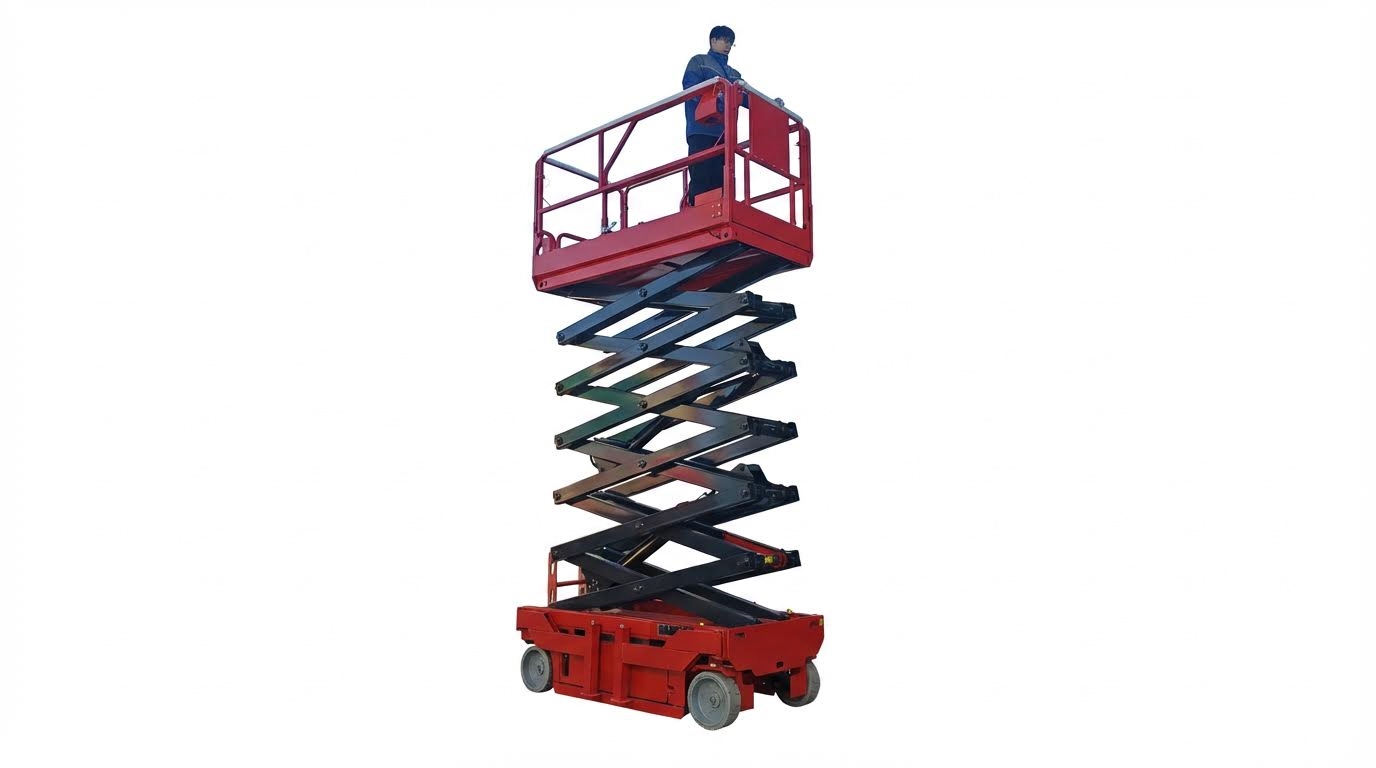
Pre-tow safety checks and ANSI/OSHA compliance
Before you even think about how to put a scissor platform in neutral for towing, you must treat the task as a full pre-operation and pre-movement inspection. The goal is simple: the lift must be stable, structurally sound, and within all OSHA/ANSI limits before the drive brakes are released.
- Confirm only trained and authorized personnel are involved in the towing and freewheel setup, in line with OSHA training expectations for scissor lift operators.
- Perform a full pre-operation inspection of the lift structure, steering, wheels, hydraulic lines, and controls to verify they function correctly per manufacturer guidance.
- Check for visible damage, leaks, loose components, or missing guardrails; tag the lift out of service if any defect affects safe travel as OSHA requires.
- Verify the platform is fully lowered and free of people, tools, and materials before towing or pushing the unit to avoid overloading and tip risk.
- Confirm the work surface is firm, level, and free of holes, slopes, drop-offs, or debris in the planned towing path to maintain stability.
- Maintain minimum approach distances to power lines and electrical sources (typically at least 10 ft for lines up to 50 kV) to control electrocution hazards.
- Ensure required PPE is worn: hard hat, eye protection, gloves, high-visibility vest, and appropriate footwear per common scissor lift safety practice.
- Check that brakes hold the lift securely before releasing any drive brake or freewheel device, and verify emergency stop operation as part of required maintenance checks.
- Set up traffic control (cones, barriers, spotters) along the towing route to prevent collisions with other vehicles or pedestrians as recommended for lift movements.
- Confirm no one will ride on the platform or chassis during towing or manual positioning per safe towing guidance.
Why these checks matter for ANSI/OSHA compliance
ANSI A92 and OSHA rules require that powered platforms be inspected, kept within rated load, and operated only by trained workers. When you put a scissor platform lift into freewheel or neutral, you temporarily remove a key safety layer (drive braking), so regulators expect stronger control of site conditions, path, and personnel exposure.
Typical methods to release drive brakes by design
Different manufacturers use different hardware to get a lift into a freewheel or “neutral-like” condition. The basic principle is always the same: hold the platform fully lowered, secure the area, then mechanically or hydraulically release the drive brakes so the unit can roll in a controlled way.
Below is a generalized overview of common brake-release methods you will see when learning how to put a scissor platform lift in neutral for towing or repositioning.
| Method type | Typical location | What the technician does | Key safety points |
|---|---|---|---|
| Manual brake release levers or knobs | Near drive wheels or on the chassis frame | Pull, push, or rotate levers to mechanically back off spring-applied brakes. | Only operate with platform fully lowered and wheels chocked; expect the lift to roll once levers are moved. |
| Hydraulic brake release valve | On hydraulic manifold or drive motor assembly | Open a dedicated valve (often using a tool) that allows pressure to release brakes or bypass drive. | Open slowly; keep people clear of wheels; close valve immediately after tow to restore normal braking. |
| Electric “tow mode” or “freewheel” switch | Control panel or service panel | Select a special mode that de-energizes drive and releases brakes under controlled conditions. | Follow manufacturer sequence; some systems require key switch plus code or button combination. |
| Axle or wheel disengage pins | At wheel hubs or drive axles | Remove or reposition pins to decouple drive motor from wheel, reducing drag. | Secure pins after towing; never drive the unit with pins in the “disengaged” position. |
- Always consult the specific operator’s or service manual for the exact brake-release procedure for your model.
- Confirm that the power switch is OFF and key removed before working near wheels or brake hardware, unless the manual explicitly requires power ON for an electronic tow mode for that specific design.
- Chock wheels on the downhill side before you release any brake, especially on slight grades where a “free” lift can accelerate quickly.
- Keep hands, feet, and tools out of the wheel path; once brakes are released, the lift can move with very little effort.
- After towing, reverse the exact sequence: re-engage levers, close valves, reset pins, and test drive and brake functions in a clear area before returning the lift to service as part of post-maintenance checks.
Interaction with towing equipment
If you use a tow bar or dedicated tow vehicle, make sure the vehicle’s parking brake is set and transmission is in park or neutral before connecting. If a PTO is installed on the tow vehicle, it should only be engaged while stationary and never during travel to avoid transmission damage.
Special cases: rough‑terrain, electric, and Li-ion models
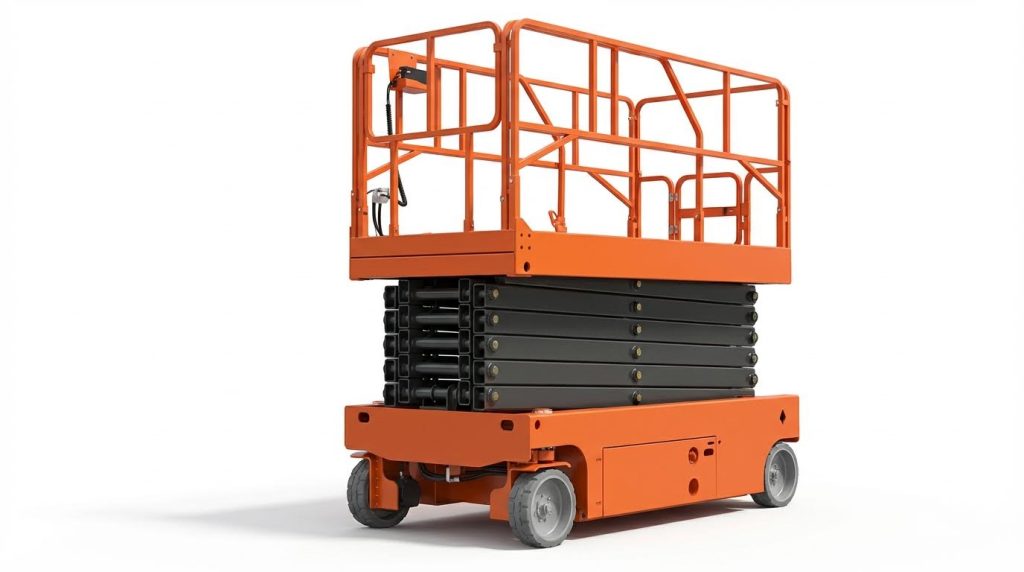
Rough-terrain and modern electric or Li-ion scissor lifts often add extra layers of control and interlocks. That changes how you approach freewheel and how to put a aerial platform in neutral safely without fighting the control logic.
| Lift type | Freewheel / neutral considerations | Typical extra checks |
|---|---|---|
| Rough-terrain (RT) with outriggers | These units are heavier and may sit on outriggers or stabilizers. They often have robust drive brakes sized for slopes. | Confirm outriggers are fully retracted and locked before towing per towing recommendations; verify ground is firm and free of soft spots before moving. |
| Indoor electric slab lifts | These typically have compact drive motors and electric brake coils. Many include electronic “tow” or “manual push” modes. | Check battery state and control panel status before selecting any tow mode as part of pre-use checks; avoid towing long distances if batteries are deeply discharged and steering assist is limited. |
| Li-ion powered models | Li-ion systems may integrate advanced BMS (battery management) and interlocks that inhibit certain functions when faults are present. | Never bypass electronic interlocks to force a neutral condition; follow the manual or call a qualified technician. Maintain proper charging routines (6–8 h cycles; monthly top-ups if idle) to keep electronics reliable. |
- Rough-terrain units usually have higher mass and sometimes higher centers of gravity; limit towing speed and avoid side slopes even when the unit is “just being pushed.”
- For electric and Li-ion lifts, verify that no fault codes are active before switching to any freewheel or tow mode, since faults can disable steering or braking unexpectedly.
- Where the manufacturer provides a dedicated tow bar or speed-control handle for manual movement, use it instead of improvised chains or straps to keep loads within design limits (often around 500 kg).
- If any part of the freewheel system, hydraulic circuit, or brake hardware appears damaged, tag the lift out of service and involve a qualified technician before attempting to tow as OSHA requires for defect reporting and repair.
Environmental and site-specific limits
Do not tow or manually move lifts in high winds above about 28 mph, on ice, or on slick surfaces to avoid loss of control. For outdoor RT models, reassess ground bearing capacity after rain or freeze-thaw cycles before releasing brakes.
Towing Limits, Site Conditions, And Equipment Selection
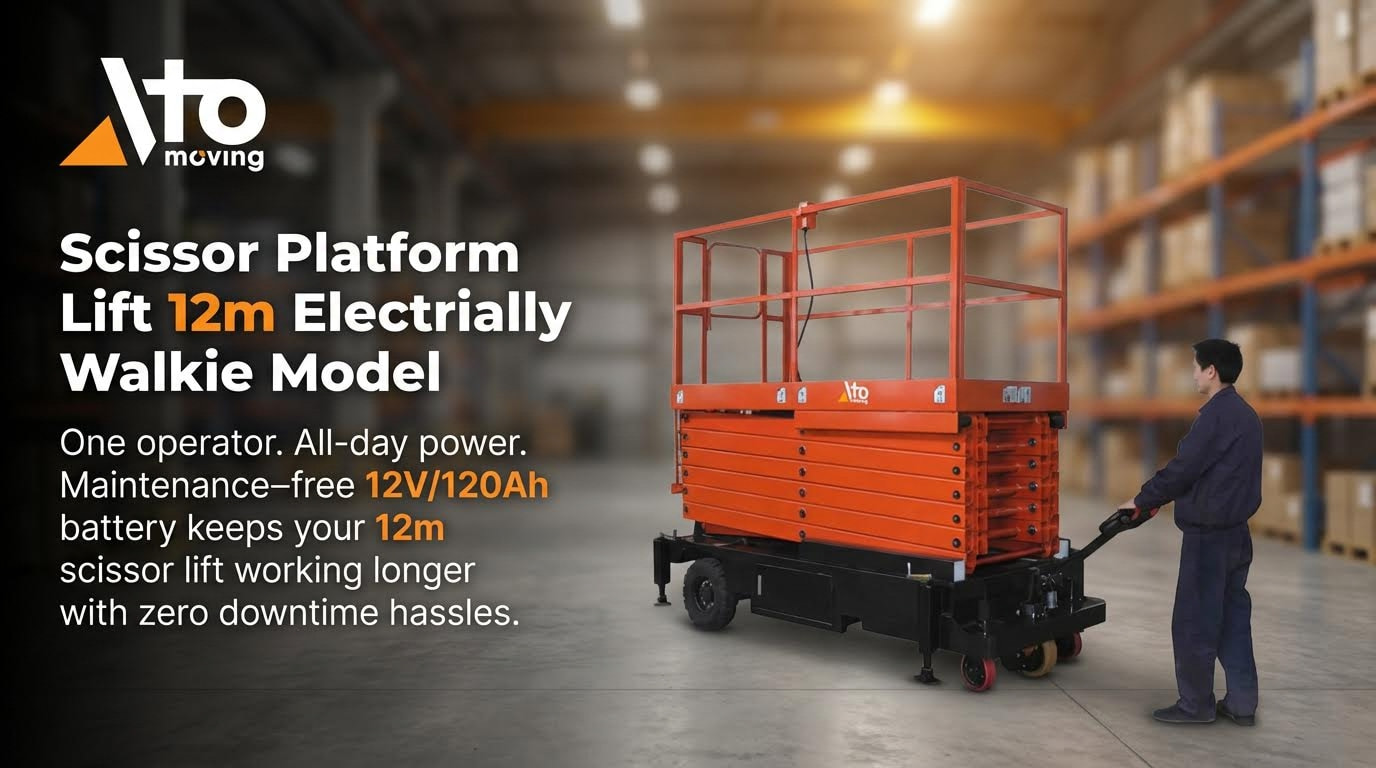
Safe towing speeds, distances, and load limits
When planning how to put a scissor platform in neutral and tow it, you must control speed, distance, and load. These limits protect the drive system, tires, and structure while keeping the lift stable.
| Parameter | Typical safe guideline (generic) | Engineering / safety notes |
|---|---|---|
| Towing speed (flat, smooth floor) | Walking pace (3–5 km/h or 2–3 mph) | Minimizes dynamic loads and tipping risk; aligns with slow movement guidance for lifts which should be moved slowly and deliberately |
| Towing distance (manual or short tow) | Short repositioning only (tens of meters, not long hauls) | Long distances increase heat in brakes, casters, and wheel hubs and can damage seals |
| Maximum towed weight | Never exceed manufacturer gross weight rating | Same principle as platform capacity limits where overloading is prohibited |
| Load on platform during tow | Zero – no people, no tools, no materials | Mirrors guidance that lifts must not move with people or materials when towed for stability and brake performance |
| Stopping distance | Keep very short; tow only where you can stop within a few meters | Unpowered brakes and casters can jackknife or skid if stopping is too abrupt |
Key towing‑limit rules to apply every time you set a scissor platform lift to freewheel:
- Keep the platform fully lowered and all outriggers retracted before any tow to maintain a low center of gravity.
- Never exceed the manufacturer’s rated gross weight, just as you would never exceed platform capacity during normal work to avoid structural or stability failure.
- Limit towing to short, controlled repositioning within the same site; use a trailer or truck for long transfers.
- Set the tow vehicle parking brake and transmission to park/neutral before connecting or disconnecting the lift to prevent unintended movement.
- Do not tow on slopes that exceed the lift’s rated gradeability; treat towing limits as stricter than self‑drive limits.
Why low speed matters when towing in neutral
When you choose how to put a scissor platform lift in neutral, you remove normal drive‑motor control and rely mainly on mechanical brakes and rolling resistance. High towing speeds multiply dynamic forces on the chassis, wheels, and platform, which can overload tires, reduce traction, and increase the risk of tip‑over if the tow vehicle turns or stops sharply.
Matching tow vehicles, surfaces, and gradients
Correct pairing of tow vehicle, ground conditions, and gradient is as important as the neutral/freewheel procedure itself. The tow system must control the lift in both traction and braking, not just pull it.
| Factor | Good practice | Engineering / safety rationale |
|---|---|---|
| Tow vehicle size | Vehicle weight ≥ 1.5–2× lift weight | Ensures the vehicle can brake and steer without being pushed by the lift mass |
| Tow connection | Use a rigid drawbar or approved tow point | Reduces snatch loads and jackknifing versus chains or slack straps |
| Surface type | Firm, level, free of holes, slopes, and debris as required for stable lift operation | Soft or uneven ground increases rolling resistance and side‑load on scissor structure |
| Gradient | Preferably 0%; keep well below rated slope limits | On slopes, the lift can overrun the tow vehicle if brakes or chocks fail |
| Environmental limits | Avoid high winds & slippery conditions which already restrict normal use | Reduced friction and side gusts increase the chance of sliding or tipping while being towed |
- Confirm the work area is clear of obstructions and traffic before towing as part of the pre‑operation inspection.
- Operate on firm, level surfaces and keep away from drop‑offs, holes, and slopes to maintain stability during movement.
- Use ground guides or spotters and traffic control where other vehicles operate nearby to prevent collisions.
- Never tow the lift under power lines or close to live electrical sources; maintain at least 10 ft clearance up to 50 kV to avoid electrical hazards.
Gradients and holding the lift when stopped
If you must stop on a mild slope, chock the wheels on the downhill side and set the tow vehicle’s parking brake and transmission to park or neutral before disconnecting so the lift cannot roll away. Avoid any gradient where chocks and the vehicle cannot clearly hold the combined mass.
When to choose powered repositioning or AGVs instead
Putting a aerial platform in neutral and towing it is not always the safest or most efficient option. For longer moves or complex sites, powered repositioning or automated guided vehicles (AGVs) may be better choices.
| Scenario | Preferred method | Reason to avoid neutral towing |
|---|---|---|
| Frequent short moves within a work zone | Use the lift’s own drive functions as designed | Drive system provides controlled acceleration, braking, and interlocks instead of passive rolling |
| Long distance transfers within a plant | Use a forklift, tug, or AGV with a purpose‑designed coupling | Manual towing over long distances increases wear and risk of uncontrolled movement |
| Congested or mixed‑traffic environments | AGV or escorted powered movement with traffic control | Neutral towing reduces maneuverability and fine control around obstacles |
| Sloped or uneven yards | Transport on a trailer or truck bed | Lift stability and braking are not designed for uncontrolled rolling on gradients |
- Use neutral/freewheel towing only for short, controlled repositioning where powered drive is unavailable or unsafe.
- For planned, repetitive routes, consider AGVs or tow‑tractors with engineered hitches to standardize forces and clearances.
- When surfaces are poor or weather is adverse, load the lift onto a transport vehicle instead of dragging it in neutral.
- Always integrate towing procedures into your site’s training and inspection program so operators understand both driving and towing hazards.
Linking neutral towing to your safety program
Any procedure that explains how to put a aerial platform in neutral should sit beside your standard pre‑operation inspections, defect reporting, and maintenance practices so that only safe, inspected lifts are towed. This keeps towing consistent with OSHA expectations for training, stability, and electrical and traffic hazard control.
Key Takeaways For Safe Scissor Lift Neutral Positioning
Putting a scissor lift into neutral or freewheel is a controlled engineering action, not a casual shortcut. You deliberately remove a key safety layer—the drive brakes—so every other control must tighten. Geometry, weight, and center of gravity all work together here. You keep the platform fully lowered, remove all load, and stay on firm, level ground to keep the overturning moment low and predictable.
Inspection and planning matter more than the brake‑release method itself. Teams must verify structural integrity, hydraulics, tires, and controls before they touch any lever, valve, pin, or tow mode. Tow speed stays at walking pace, distances stay short, and slopes stay well below rated limits. The tow vehicle must outweigh and out‑brake the lift, and you must manage traffic, visibility, and electrical clearances.
The best practice is simple: treat neutral towing as an exception for short repositioning when powered drive is not available or not safe. For long moves, poor ground, or complex sites, use proper transport, powered drive, or engineered solutions such as AGVs. When you build these rules into training, procedures, and supervision, your team can move Atomoving scissor lifts safely without powered drive while staying inside ANSI/OSHA expectations.
Frequently Asked Questions
How to Put a Scissor Lift in Neutral
To put a scissor lift in neutral, locate the lower-neutral-raise switch on the control panel. This switch allows you to lower or raise the platform and also has a “neutral” position. Keeping the switch in the neutral position disengages the lifting mechanism, enabling safe movement of the equipment. For more details, refer to this Scissor Lift Operation Guide.
How to Move a Scissor Lift Without Power
If your scissor lift has no power, you can still move it by using the manual override or placing the controls in neutral. Most models include a lower-neutral-raise switch that, when set to neutral, allows you to push the lift manually. Ensure the path is clear and use proper safety gear during the process. Learn more about moving lifts safely in this OSHA Safety Tips Guide.