Electric scissor lifts use a 24V battery powertrain, compact scissor structure, and electronic controls to raise people and tools safely to heights of about 6–14 m. If you have ever asked “how do electric scissor lifts work,” this guide walks through the mechanics, power systems, controls, and charging strategies that determine stability, runtime, and total cost of ownership in real job sites.
Core Mechanics Of Electric Scissor Lifts
Electric scissor lifts work by converting 24V battery power into vertical motion through a linked scissor structure that raises a guarded platform within strict load and stability limits. Understanding geometry, load, and duty cycle is key to safe, efficient use.
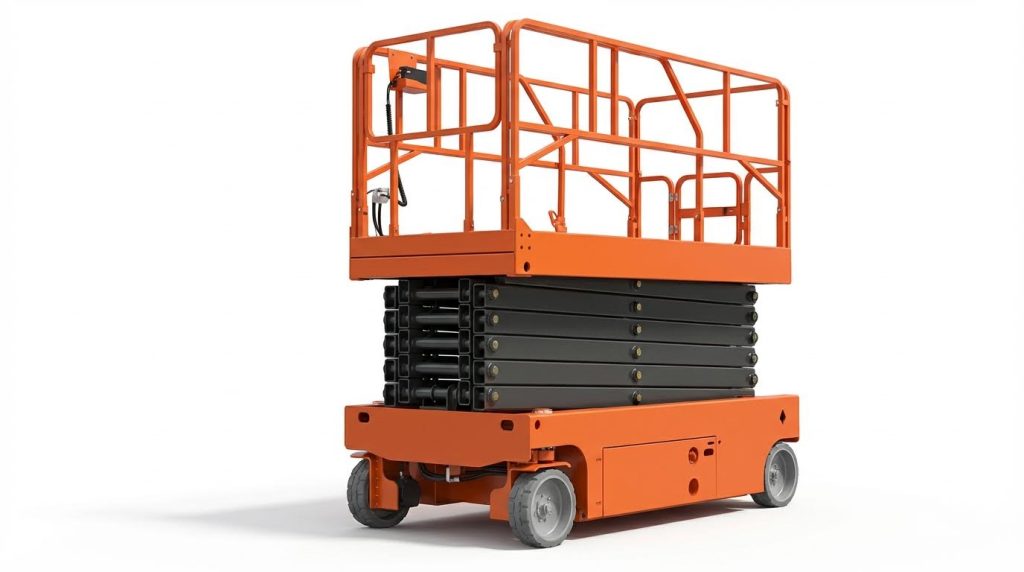
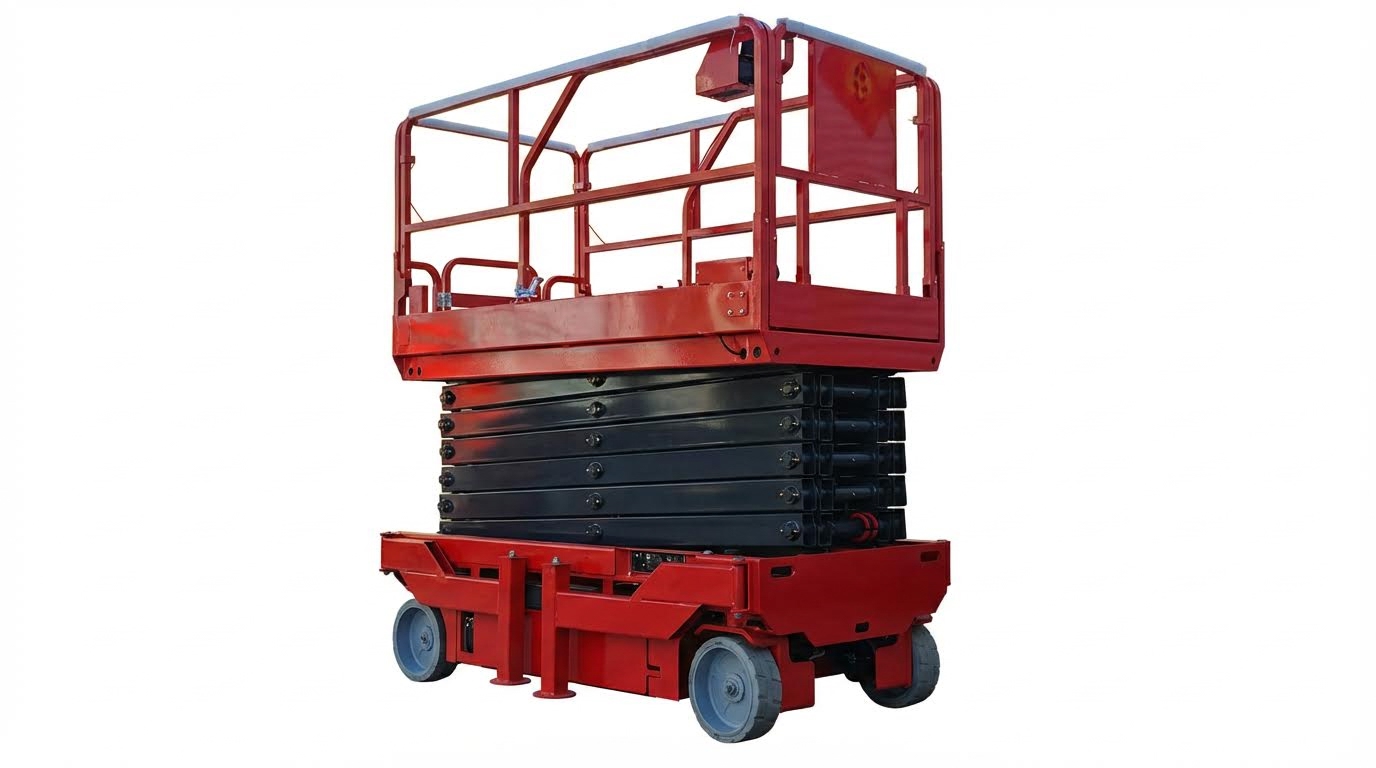
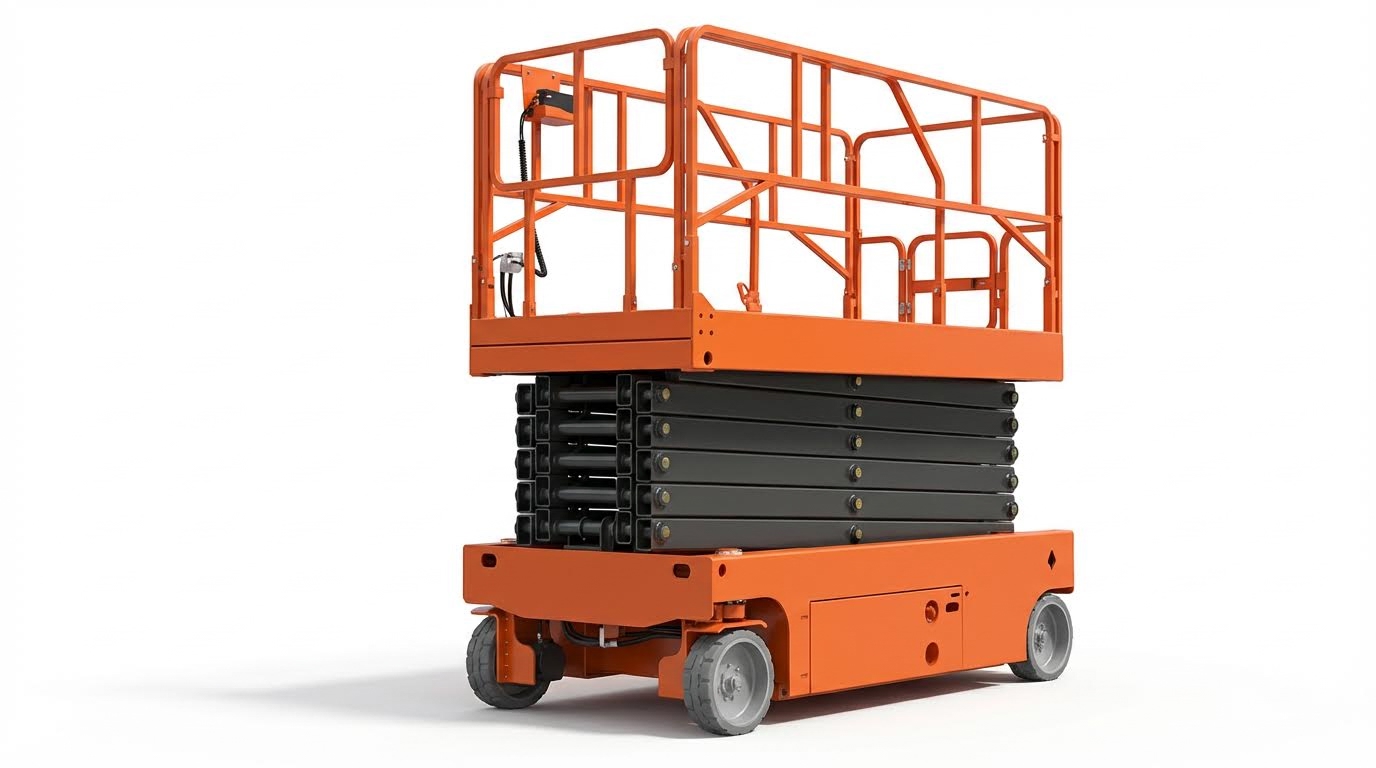
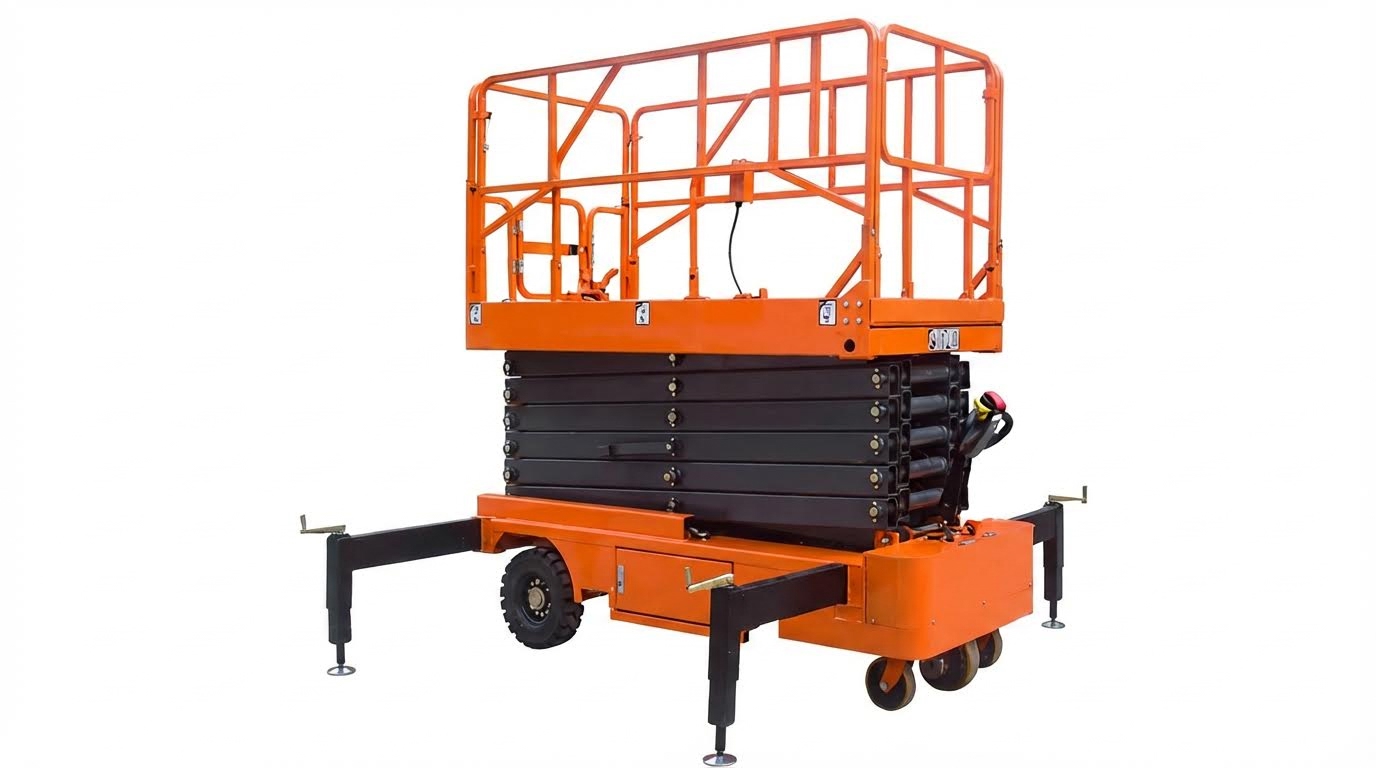
If you’re asking “how do electric scissor lifts work,” the core mechanics are three things working together: the scissor stack, the platform, and the base. The scissor arms guide motion, the platform carries people and tools, and the base manages weight, traction, and stability.
Core Mechanic
What It Does
Typical Values / Ranges
Operational Impact
Scissor structure
Guides vertical motion using crossed arms and pivots
Higher height usually means lower allowable load to stay stable
Duty cycle
Pattern of lift, drive, and idle over a shift
Typical effective work 4–8 hours per charge reference
Harsh duty cycles shorten runtime and battery life
💡 Field Engineer’s Note: When you evaluate “how do electric scissor lifts work” for your site, start with the geometry: aisle width, doorway height, and working height. If the chassis cannot physically reach the work zone, motor specs don’t matter.
Scissor structure, platform size, and stability
Scissor structures work by turning motor torque into smooth vertical motion through crossed arms, while platform size and weight distribution directly control lateral stability and tip resistance at height.
The scissor pack is a series of hinged, X-shaped arms that extend when pushed at the base and retract when pulled back. A 24V lift motor, typically 3.3–4.5 kW, drives a hydraulic or electromechanical actuator that forces the lower arms together, which multiplies into vertical lift at the platform. Motor power and voltage reference
Heavier units resist tipping but demand stronger floors and ramps
Overall dimensions
Up to 2,840×1,395×2,592 mm with guardrails unfolded size data
Storage and access
Determines if the unit fits into lifts, through doors, and along corridors
High-strength guardrails: Rigid perimeter barriers – Limit fall risk when operators work at 6–14 m heights.
Pothole protection: Mechanical devices that drop to widen the base – Increase stability margin on uneven floors.
Non-marking tyres: Solid, floor-friendly wheels – Protect finished concrete and indoor coatings while supporting high loads.
💡 Field Engineer’s Note: On smooth indoor floors, stability is usually limited by side loading and platform extension, not traction. Train operators to keep heavy materials close to the tower side, not on the extension edge.
Load, height, and duty-cycle performance
Load, height, and duty cycle work together to define how long an electric scissor lift can run per charge and how safely it can operate without overstressing the structure or batteries.
Most electric scissor lifts carry 227–550 kg on the platform, with higher-reaching models often rated at the lower end to keep the center of gravity inside the stability triangle. Capacity vs height reference This load includes people, tools, and materials, so two technicians plus parts can easily consume 200–250 kg before any bulky items are added.
Zero-emission indoor work in warehouses, hospitals, and terminals
Heavy loads: Increase current draw – Shorten runtime and accelerate wear on batteries and drive components.
High lift cycles: Frequent up/down movements – Generate heat in motors and controllers, reducing continuous-duty capability.
Long drive distances: High proportion of travel time – Shift energy use from lifting to traction, important in spread-out facilities.
Rough or sloped terrain: More traction effort and steering corrections – Cut runtime compared to smooth indoor floors.
How duty cycle ties back to “how do electric scissor lifts work”
From an engineering standpoint, “how do electric scissor lifts work” in a shift comes down to energy budgeting. The 24V battery has a fixed energy store; every lift, steer, and drive event pulls from that store. A harsh duty cycle with constant lifting at high load and long drives consumes amp-hours much faster than light, intermittent maintenance work.
💡 Field Engineer’s Note: When you size a lift, do not just match height and capacity. Map a real duty cycle: lifts per hour, average load, and drive distance. If your pattern is heavier than “typical,” step up a class or add units to avoid mid-shift dead machines.
“”
Charging Strategies, Runtime, And Fleet Optimization
This section explains how do electric scissor lifts work from a charging and runtime perspective by linking charger profiles, environment, and battery care to real-world hours on the floor and total cost per lift in a fleet.
Charging profiles, smart chargers, and opportunity charge
Charging profiles, smart chargers, and opportunity charging determine how efficiently electric scissor lift batteries convert grid power into usable work hours while protecting cycle life and safety in busy multi-shift operations. Understanding these directly improves uptime and TCO.
Shortens battery life and causes premature failures; often misdiagnosed as “bad batteries” instead of “bad charging policy.”
Defined charge windows: Set clear rules (e.g., plug in at end of shift) – Prevents chronic undercharging and protects lead-acid life.
Use smart chargers: Match charger profile to chemistry – Reduces heat, gassing, and extends usable cycles.
Control opportunity charging: For lead-acid, use it only to avoid deep discharge below ≈20% SOC – Balances runtime and cycle life.
Dedicated charging zones: Ventilated, dry, with power and signage – Improves safety and ensures lifts are actually plugged in.
How charging strategy ties into how do electric scissor lifts work
Electric scissor lifts convert 24V DC battery energy into lift and drive motion. The charging profile determines how fully and how often that 24V pack is restored, which directly sets daily available work hours and long-term battery health.
💡 Field Engineer’s Note: In mixed fleets, I see most failures where a “universal” charger is used on every lift. Always verify the charger’s voltage and profile match the battery label before plugging in, especially after battery replacements.
Runtime, environment, and terrain impacts
Runtime, environment, and terrain impacts explain why two identical electric scissor lifts can deliver 4 hours or 10 hours of work from the same charge depending on load, floor conditions, and temperature. These factors define real-world productivity.
Near 27°C: near-rated capacity; at 0°C: ≈65%; at −18°C: ≈40% of capacity.
Cold warehouses and outdoor winter work can almost halve runtime; plan extra lifts or mid-shift charges.
System efficiency
Permanent magnet drive motors with 20–30% efficiency gains over older designs
More work per kWh from the same battery, especially in drive-heavy duty cycles.
Newer high-efficiency lifts can cover more distance per charge than legacy units with same battery size.
Match lift to environment: Use compact, non-marking tire units indoors and higher-gradeability units for ramps – Minimizes wasted energy and improves runtime.
Stage tools and materials: Reduce unnecessary trips up/down and across site – Cuts lift cycles and drive time, directly extending hours per charge.
Temperature-aware planning: In cold storage or winter, schedule more frequent opportunity charges – Offsets reduced capacity and avoids mid-shift dead batteries.
Monitor usage patterns: Use telematics or logs to track average hours per charge – Helps right-size fleet and identify abusive duty cycles.
How runtime links to how do electric scissor lifts work
From an engineering view, how do electric scissor lifts work is: batteries supply DC power, motors convert it to motion, and every extra kilogram, slope, or lift cycle increases current draw. Runtime is simply how long the battery can sustain that current before reaching its discharge limit.
💡 Field Engineer’s Note: In cold warehouses, I often see operators blame “bad chargers” when runtime drops. The real issue is temperature. Parking lifts in slightly warmer staging areas between shifts can recover 10–20% runtime without changing hardware.
Battery lifecycle, maintenance, and TCO
Battery lifecycle, maintenance, and total cost of ownership (TCO) determine whether electric scissor lifts stay a low-cost, low-emission solution or become a recurring expense due to premature battery failures and unplanned downtime.
Battery Type / Practice
Typical Life / Behavior
Maintenance Needs
Best For…
Flooded lead-acid batteries
≈3–5 years in controlled fleets; heavy deep discharges can cut life to 2–3 years or less in harsh use
Regular watering, terminal cleaning, and proper full charging to avoid sulfation and plate exposure for longevity.
Cost-sensitive fleets with trained maintenance staff and predictable 1-shift operation.
AGM / Gel sealed lead-acid
Often longer service life than flooded when correctly charged in industrial use
No routine watering; still require correct charger profiles and terminal inspections.
Indoor facilities wanting lower maintenance and reduced acid exposure.
Lithium-ion packs
Cycle life typically 2–4× lead-acid with up to ≈10-year design life on some lifts when BMS-managed
No watering; rely on integrated BMS for protection and diagnostics and proper charging.
High-utilization or multi-shift fleets where uptime and reduced maintenance justify higher upfront costs.
Good charging discipline
Full recharge after each shift, avoid repeated deep discharges and chronic undercharge for lead-acid
Requires operator training and clear SOPs.
Any fleet targeting maximum battery life and predictable runtime.
Poor maintenance / neglect
Failures within 1–2 years possible in severe neglect scenarios in industrial fleets
Low electrolyte, dirty terminals, chronic undercharge, and overcharge all accelerate degradation.
“Accidental” outcome when no one owns the battery program; leads to high TCO.
Assign battery ownership: Make one role responsible for checks and record-keeping – Prevents the “everyone’s job is no one’s job” failure mode.
Standardize chemistries by area: Avoid mixing flooded, AGM, and lithium in one small site – Simplifies chargers, training, and spares.
Use BMS data where available: Modern lithium systems report charge, usage, and faults – Lets you shift from reactive to predictive maintenance.
Include battery cost in TCO: Amortize pack cost over expected life and cycles – Shows when higher upfront lithium actually lowers cost per operating hour.
How battery lifecycle ties into how do electric scissor lifts work
From a lifecycle view, how do electric scissor lifts work economically comes down to how many productive hours you get from each battery pack before replacement. Chemistry choice, maintenance discipline, and environment are the three biggest levers.
💡 Field Engineer’s Note: When comparing quotes, always ask for expected battery replacement interval and pack cost. A cheaper lift with weak batteries can cost more over 5 years than a premium unit
Final Engineering Considerations And Selection Tips
Final engineering selection for electric scissor lifts means matching platform size, load, height, and powertrain to your duty cycle, terrain, and charging reality, so the machine can safely deliver how do electric scissor lifts work in your specific operation.
Use this section as a checklist: confirm geometry, loads, runtime, and floor conditions before you lock in a model or a whole fleet.
Trade capital cost and maintenance for runtime, fast charge, and life; chemistry must match duty cycle and charging window.
Runtime per shift
Hours of active work needed?
≈4–8 hours effective runtime per full charge range
High‑utilization fleets may need higher Ah batteries, lithium‑ion, or formal opportunity charging rules.
Charging profile
How and when will you charge?
24 V / ≈20 A onboard chargers; overnight bulk + absorption + float typical specpractice
Misaligned charging windows cause mid‑shift dead machines and accelerate battery wear.
Floor and terrain
Indoor smooth vs outdoor rough?
Non‑marking tyres, pothole protection, 25% gradeability on some models featuresperformance
Soft or sloped ground increases power draw and may exceed stability/grade limits if not checked.
Safety systems
What built‑in protections?
Auto brakes, tilt alarms, emergency stop, pothole protection, guardrails, beacons list
Reduce tip‑over and collision risk, and simplify operator training and compliance.
Machine weight and footprint
Can your slab and doors handle it?
≈1500–3410 kg machine weight and up to 2840×1395×2592 mm overall size data
Impacts floor loading checks, transport planning, and whether the unit fits into lifts, corridors, and doorways.
From an engineering standpoint, “how do electric scissor lifts work” becomes a practical question of how their structure, motors, batteries, and controls interact with your real site conditions and usage patterns.
Practical Selection Checklist For Engineers And Fleet Managers
Use a structured checklist to select electric scissor lifts so you avoid underspecifying critical safety and runtime factors that only surface after deployment.
Define true working height: Measure floor to highest task point, then add at least 1 m clearance – prevents operators from standing on rails or using unsafe add‑ons.
Confirm platform loading: Sum people, tools, and materials with margin – avoids chronic overloads that stress scissor arms and lift motors.
Map travel paths: Walk typical routes with a tape measure – checks turning radius, aisle widths, and door clearances against machine footprint.
Profile duty cycle: Estimate lifts/hour, travel distance/shift, and average load – drives battery capacity, motor sizing, and cooling needs.
Classify terrain: Rate areas as smooth, jointed, ramped, or rough – prevents choosing indoor‑only models for demanding outdoor or ramp work.
Assess environment: Note temperature range and ventilation – cold cuts lead‑acid capacity, while heat accelerates aging and demands better cooling.
Align charging window: Define when machines sit idle long enough for full charge – ensures your charging profile matches actual operations, not wishful thinking.
Plan battery maintenance: Decide who will water, clean, and inspect batteries – without defined ownership, lead‑acid life drops sharply.
Check safety and compliance: Confirm tilt alarms, emergency stop, guardrails, and charging‑area safety rules – reduces incident risk and audit findings.
Consider digital diagnostics: Evaluate remote monitoring and fault logging – cuts troubleshooting time and supports data‑driven fleet right‑sizing.
How to quickly estimate if a model will fit your building
Compare the lift’s overall height with guardrails folded to your lowest doorway or overhead obstruction. Use the machine’s length and turning radius against your narrowest aisle and tightest corner. Always allow at least 100–150 mm clearance in both width and height to account for operator positioning and minor floor unevenness.
💡 Field Engineer’s Note: Before ordering multiple units, bring one candidate lift on site and physically drive every critical route: through doors, onto lifts, into tight aisles, and up any ramps. CAD drawings and brochures rarely capture small floor level changes, temporary obstructions, or real operator behaviour that can make or break day‑to‑day usability.
Battery, Charging, And TCO Decisions
Your choice of battery chemistry and charging strategy has more impact on total cost of ownership (TCO) than small differences in lift height or travel speed.
Flooded lead‑acid: Traditional, lowest upfront cost – but needs regular watering, cleaning, and proper full charging to avoid sulfation and early failure.Details on maintenance impact
AGM / gel: Sealed lead‑acid with no watering – reduces labour and acid exposure, often with better cold performance and cleaner indoor operation.Chemistry comparison
Lithium‑ion: High energy density, fast charge, long life – best for multi‑shift or high‑utilization fleets where opportunity charging and long cycle life justify higher capital cost.Li‑ion benefits
Runtime expectation: Design for 4–8 hours of effective work from a full charge, depending on drive vs lift intensity – undersizing leads to mid‑shift failures and emergency charging.Runtime ranges
Charging discipline: Follow proper multi‑stage charge profiles with smart chargers – stops chronic undercharge or overcharge that silently kills batteries and inflates TCO.Charging best practices
Opportunity charging rules: Use carefully for lead‑acid and more freely for lithium‑ion – keeps state of charge healthy in high‑duty fleets without accelerating plate damage.Opportunity charging guidance
Environment impact: Account for cold or hot storage – capacity drops sharply below 0°C and life shortens at high temperatures, so runtime and battery sizing must reflect reality.Temperature effects
💡 Field Engineer’s Note: When comparing quotes, normalise them to “cost per productive hour over 5 years,” not just purchase price. Include batteries, chargers, expected replacements, and typical downtime for battery‑related faults. High‑quality batteries and chargers often pay back quickly in fleets that run lifts daily.
Linking Back To How Electric Scissor Lifts Work
Understanding how do electric scissor lifts work at a system level helps you choose models whose internal design matches your risk profile, maintenance capability, and utilisation rate.
Structure and geometry: The scissor stack, platform size, and guardrails set your safe working envelope – decide these first based on tasks and clearances.
Motors and drive: Permanent‑magnet drive and lift motors offer higher efficiency and low service needs – ideal for fleets chasing maximum runtime per charge.Drive system reference
Controls and sensors: Distributed controllers with tilt sensing and automatic braking enforce safe limits – crucial where operators vary in experience.Control architecture
Lift actuation: Electromechanical actuators eliminate hydraulics in some designs – removing leak risk and reducing maintenance while enabling energy recovery on descent.Lift system details
Frequently Asked Questions
How Do Electric Scissor Lifts Work?
An electric scissor lift operates by using a power source to fill cylinders with hydraulic fluid or compressed air. This fluid or air is then pushed from one area to another, causing the cylinder to extend outward. The extension of the cylinder pushes the legs of the scissor mechanism apart, which raises the platform. Scissor Lift Working Principle.
What Powers an Electric Scissor Lift?
Electric scissor lifts are typically powered by rechargeable batteries that drive an electric motor. This motor initiates the movement of hydraulic fluid or compressed air into the system, enabling the lift to raise and lower. These lifts are preferred in indoor settings due to their quiet operation and zero emissions. Electric Scissor Lift Power Source.