
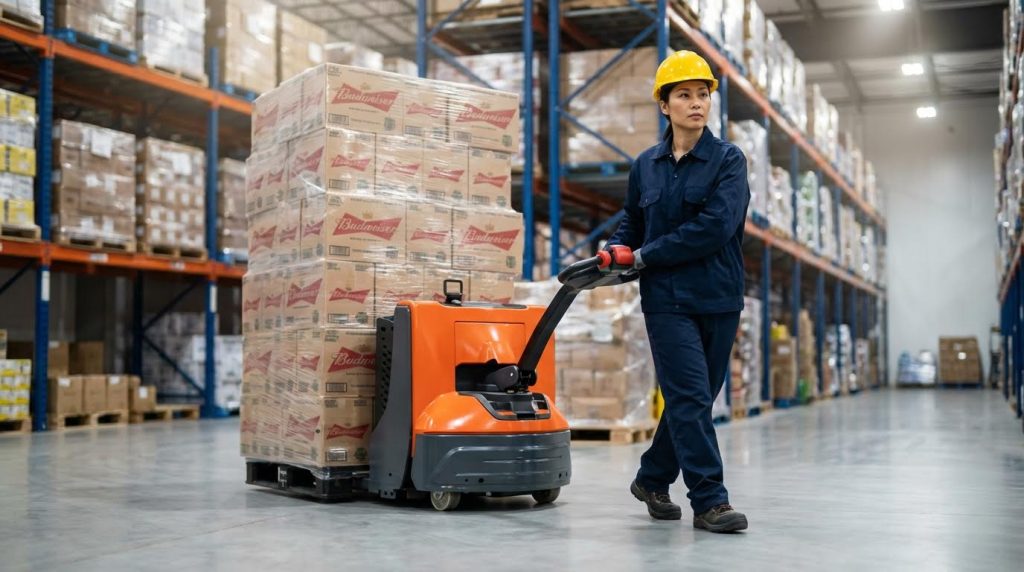
Knowing how much can a pallet jack lift is critical for avoiding bent forks, hydraulic failures, and load spills. This guide explains how manufacturers rate pallet jack capacity, typical ranges by type, and how real-world factors like fork length, hydraulics, and floor conditions affect safe limits. You will see practical ranges from around 2,200 lbs up to 11,000 lbs for different designs, plus how to match those numbers to your pallets and environment. Use it as an engineering-style reference to set safe policies, choose the right truck, and train operators not to exceed rated capacity.
Understanding Pallet Jack Capacity Ratings
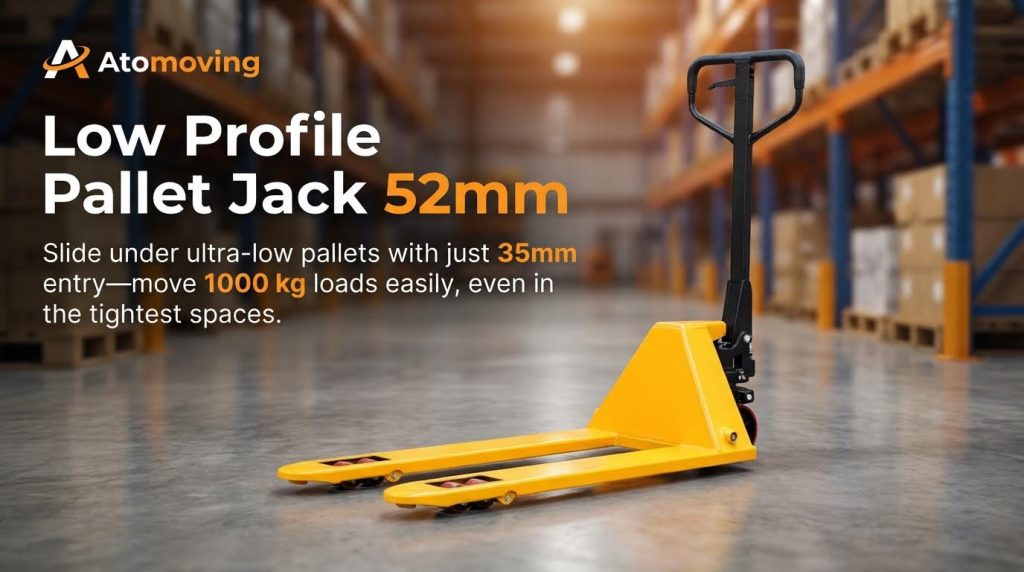
How Capacity Is Defined and Labeled
Capacity ratings answer the core question: how much can a pallet jack lift safely under ideal conditions. The rating is not just about total weight; it assumes the load is centered, stable, and on level, suitable flooring.
- Rated capacity (nameplate value): The maximum load the pallet jack can lift and move when the load is correctly positioned and the floor is suitable.
- Units used: Usually shown in pounds or kilograms (for example, 5,500 lb or 2,500 kg).
- Location of label: Typically stamped or printed on the frame or handle, near the hydraulic unit or data plate.
- Applies to full fork length: The rating assumes the load covers and is supported by the full effective fork length, not just the tips.
When you ask how much can a pallet jack lift, you must compare the actual load (including pallet and packaging) to this rated capacity. Exceeding the label rating overstresses the frame, forks, and hydraulics and can cause permanent damage or sudden failure.
How operators should read the capacity label
Always treat the labeled capacity as an upper limit, not a target. If the actual load weight is unknown, use scale data, shipping documents, or a conservative estimate and keep a safety margin below the rated value.
Typical Capacity Ranges by Pallet Jack Type
Different pallet jack types have different capacity bands, driven by frame strength, fork size, and hydraulic design. The table below summarizes typical ranges based on common models.
| Pallet jack type | Typical rated capacity range | Common “standard” capacity | Typical equipment weight |
|---|---|---|---|
| Standard manual pallet jack | 2,200–11,000 lb capacity range data | Around 5,500 lb for most warehouse work standard capacity | Approx. 165–200 lb for typical models weight range |
| Heavy‑duty manual pallet jack | Upper part of 6,600–11,000 lb band (used for dense, heavy pallets) | Often selected around 6,600–8,800 lb to add margin above standard loads | Higher end of 132–227 lb range due to stronger frame and forks equipment weight data |
| Electric walkie pallet jack | About 4,400–5,500 lb typical rating capacity range | Commonly around 4,400–5,500 lb for general warehouse use | Approx. 400–700 lb due to battery and drive unit equipment weight |
| High‑capacity / specialized electric pallet jack | Up to about 8,000 lb for some powered models high‑capacity data | Often specified when routine loads approach or exceed 5,500 lb | Heavier than standard electric units because of reinforced structure and larger batteries |
These ranges explain why many operations standardize on 5,500 lb manual units: they cover the majority of palletized loads while keeping equipment weight manageable. When deciding how much can a pallet jack lift for your site, you must also consider pallet dimensions, fork length, and floor conditions, not just the nameplate number.
- Standard warehouse pallets (48 in × 40 in) are usually handled with 48 in fork length and 27 in fork width, matched to common 5,500 lb jacks standard pallet compatibility.
- European‑size pallets (48 in × 32 in) often use narrower fork widths around 20.5 in with similar capacities EU pallet data.
- Where loads are close to the upper end of these ranges, a higher‑capacity or powered jack reduces strain on both equipment and operators ergonomics and productivity.
Why you should not run at 100% of rated capacity
Real‑world conditions rarely match the ideal test conditions used for rating. Floor slopes, rough surfaces, off‑center loads, and worn components all reduce the true safe limit, so engineers and safety managers usually keep a margin below the nameplate value.
Engineering Factors That Determine Safe Load Limits
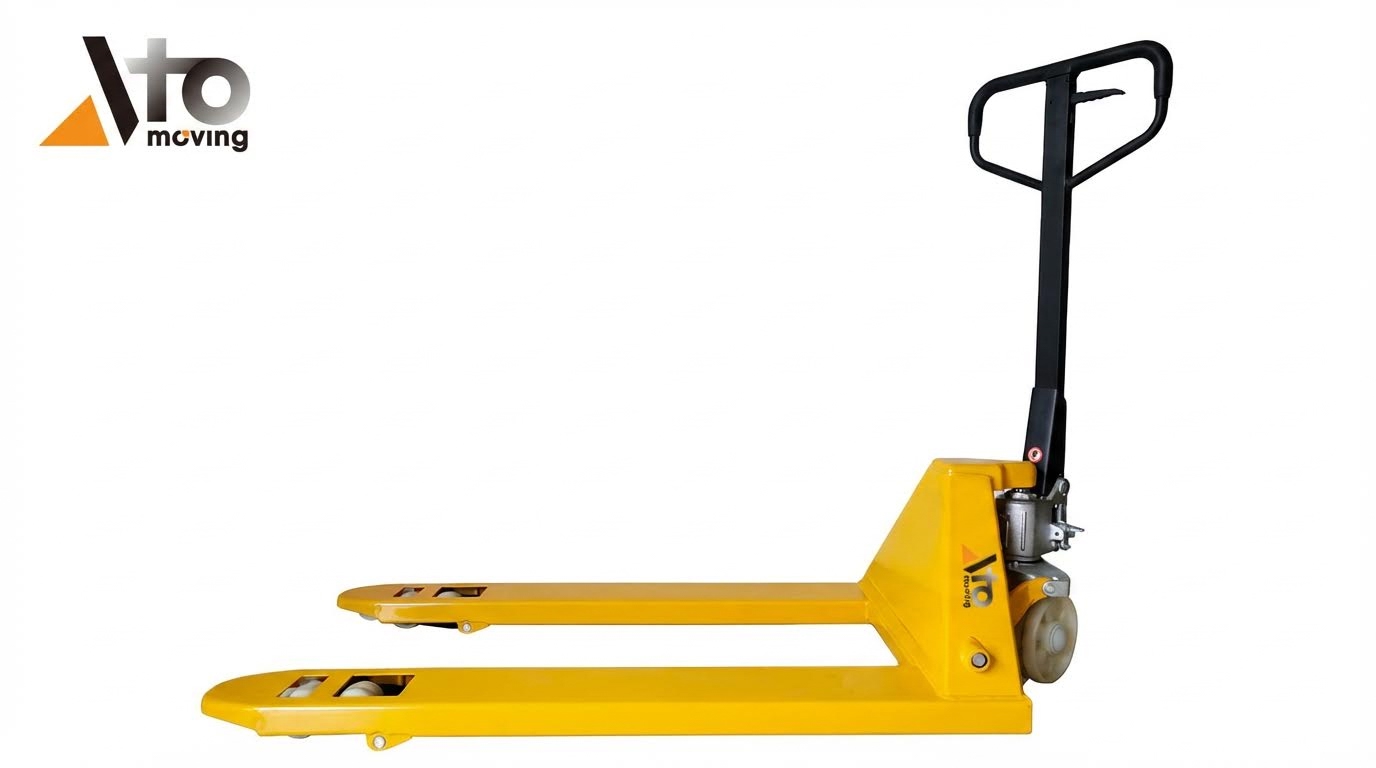
Engineering design, not guesswork, decides how much can a pallet jack lift safely. The frame, forks, hydraulics, wheels, and even batteries all share the load. If one element is under‑designed or damaged, the true safe capacity can drop far below the rating plate. The sections below break down the main components that control real‑world load limits.
Frame, fork design, and reinforcement
The frame and forks carry most of the stress when you load a pallet jack. On manual units, they account for over 70% of the total weight, so their geometry and thickness are the primary limiters of capacity. In typical manual jacks, this structure supports 2–3 tons (4,400–6,600 lbs), which aligns with common warehouse ratings around 5,500 lbs. Standard models span roughly 2,200–11,000 lbs capacity, depending on how heavily the frame and forks are built.
| Design element | Typical data / role | Impact on safe load limit |
|---|---|---|
| Fork length | Commonly 36–48 in; must exceed pallet depth for full support (36–48 in typical) (must exceed pallet depth) | Too‑short forks shift the load center forward and effectively reduce how much can a pallet jack lift safely. |
| Fork width (overall) | Typically 16–27 in; 27 in for 48×40 in US pallets, 20.5 in for 48×32 in Euro pallets (standard sizes) | Correct width keeps stringers fully supported and prevents twisting or local overload on one fork. |
| Fork section & thickness | Heavy plate with tapered tips; weight of entire jack ~132–227 lbs for standard models (132–227 lbs typical) | Thicker, deeper forks resist bending; allow higher rated capacity and tolerate off‑center loads better. |
| Reinforced fork tips | Fork tips commonly reinforced with ~15 in of steel for strength and durability (15 in reinforcement) | Reinforcement prevents tip deflection where impact and bending stresses peak, maintaining rated capacity at full fork length. |
| Main frame & welds | Carry >70% of manual jack weight along with forks (frame + forks >70% of weight) | Cracks, corrosion, or poor welds sharply reduce safe load, even if hydraulics can still lift the weight. |
Because the structure is usually the true limiting factor, a damaged fork or bent frame can make the original rating meaningless. Always treat visible deformation as a sign that actual safe capacity is now lower than the nameplate, and remove the unit from service until inspected.
Practical checks on frame and forks
- Check forks from the side for sagging or permanent bend under no load.
- Measure fork spread to confirm it matches original spec and fits pallets correctly.
- Inspect reinforcement zones at the fork tips for cracks or peeling welds.
- Look along the frame for twisted sections, rust pitting, or impact damage.
Hydraulics, overload valves, and lift height
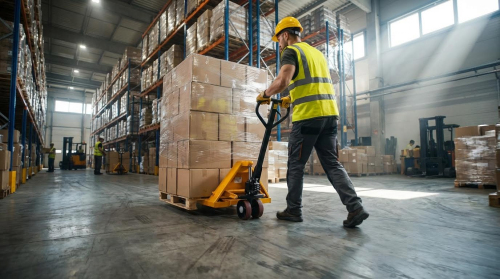
The hydraulic unit does not just answer how much can a pallet jack lift; it sets how much it can lift without overstressing the pump, seals, and handle. Most manual hydraulic pallet jacks use a compact cylinder and pump sized for 2–3 tons (4,400–6,600 lbs). This matches common 4,400–6,600 lb ratings, while many general‑purpose units in warehouses are labeled around 5,500 lbs. Standard models span from about 2,200 to 11,000 lbs, with larger cylinders and stronger linkages in higher‑capacity designs.
| Hydraulic / lift feature | Typical spec / behavior | Effect on safe load |
|---|---|---|
| Rated hydraulic capacity | Manual units: 2–3 tons (4,400–6,600 lbs) (2–3 ton range) | Defines the maximum pressure the pump and cylinder can sustain continuously without damage. |
| Overload bypass valve | Built‑in bypass to relieve pressure when load exceeds design limit (overload protection) | Prevents further lifting above rated load; protects components but does not make overloading safe. |
| Fork minimum height | Typically ~2.9 in; some heavy‑duty units around 3 in minimum (2.9–3 in min) | Lower minimum height reduces impact when entering pallets and helps keep loads stable during pickup. |
| Fork maximum height | Commonly up to about 7.6 in (up to ~7.6 in) | Higher lift increases lever arm between load and wheels; at full height, stability margin is lower. |
| Hydraulic seal condition | Requires leak‑resistant seals and correct fluid level; regular checks recommended (smooth, leak‑free lift) | Leaks or internal bypassing can cause slow sinking under load, turning a marginal overload into a sudden drop. |
- If the overload valve opens, the jack has already reached or exceeded its safe hydraulic limit; reduce the load, do not bypass the valve.
- Higher lift heights amplify any off‑center loading, so stay well below the nameplate rating when handling tall or unstable pallets at full stroke.
- Regular inspection for leaks, damaged hoses, or jerky lift is essential before trusting the rated capacity.
Inspection tips for hydraulic systems
- Cycle the lift from minimum to maximum height under a moderate load and check for smooth motion.
- Look for oil around the pump, cylinder, and fittings; any visible leakage means reduced reliability.
- Verify hydraulic fluid level meets the manufacturer’s spec and top up with the correct grade if needed. Regular fluid checks are a standard safety item.
Wheels, batteries, and floor conditions
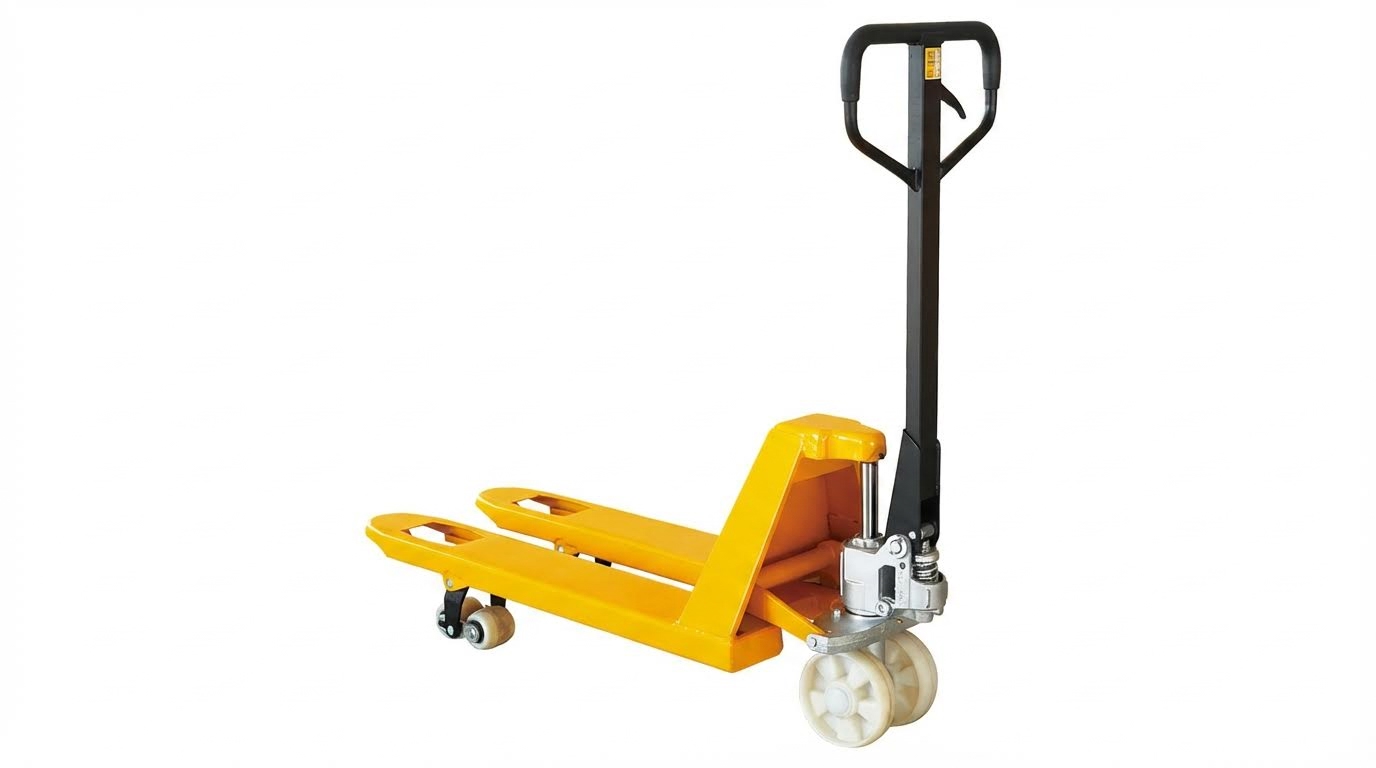
Even when the frame and hydraulics say how much can a pallet jack lift on paper, wheels, batteries, and the floor often decide what you can move in practice. Wheel material, bearing quality, and surface conditions all change rolling resistance and stability. For electric units, battery weight and output also influence traction and braking.
| Component / condition | Typical data | Influence on real‑world capacity |
|---|---|---|
| Wheel material (manual & electric) | Polyurethane recommended for smooth indoor floors; nylon better for rough or outdoor surfaces (wheel material guidance) | Wrong material increases rolling resistance or skidding, so operators may not control loads near rated capacity. |
| Wheel condition | Should be free of cracks, flat spots, and embedded debris (inspection recommendation) | Damaged wheels concentrate load at small contact points, raising floor stress and risking sudden failure or tipping. |
| Battery type (electric) | Lead‑acid batteries ~60–70 kg (130–150 lbs); lithium‑ion ~20–30 kg (45–65 lbs) (battery weights) | Battery mass contributes to total truck weight and traction; lighter batteries reduce pushing force but may lessen grip on slick floors. |
| Electric jack weight & rating | Electric units weigh ~400–700 lbs and typically carry 2–2.5 tons (4,400–5,500 lbs) (400–700 lb, 2–2.5 ton) | Heavier trucks with powered drive can safely move higher loads with less operator effort, but floor load and stopping distance increase. |
| Manual jack weight & rating | Manual jacks ~165–200 lbs and rated around 2–3 tons (4,400–6,600 lbs) (165–200 lb, 2–3 ton) | Operator must supply all tractive effort; on rough or sloped floors, practical safe load is often well below the rating. |
| Floor conditions | Smooth concrete vs. cracked, uneven, or sloped surfaces | Uneven floors shift the load between wheels, increasing tipping risk and wheel or fork overload at one point. |
- On polished indoor floors, polyurethane wheels roll quietly and protect the floor, but can slip if contaminated with oil or dust.
- On rough or outdoor surfaces, harder wheels and lower speeds are necessary to keep dynamic loads within safe limits.
- Electric pallet jacks can move loads up to about 8,000 lbs in some designs with far less strain on the operator, but only if the floor, wheels, and braking systems are in good condition. High‑capacity electric units are used in heavy warehouse service.
How floor and wheel choices change “usable” capacity
Step-by-step capacity selection checklist
Use this checklist whenever you specify a new pallet jack:
- List all pallet sizes in use (US, Euro, custom) and their maximum expected weights.
- Identify the heaviest regular load and add a margin (10–20%) for variation.
- Map typical travel paths: floor type, slopes, thresholds, and congestion.
- Decide manual vs electric based on distance, frequency, and ergonomics.
- Choose a rated capacity that comfortably exceeds your heaviest realistic load, while staying within safe operating practices and manufacturer limits.A 5,500 lb rated jack on a smooth, level floor may handle loads close to rating with good control
Matching Pallet Jack Capacity to Your Application
Calculating real-world load and center of gravity
Knowing the data on the nameplate is not enough. To answer “how much can a manual pallet jack lift” safely in your operation, you must calculate the real load, how it is distributed on the forks, and how far the center of gravity (COG) sits from the load wheel axle.
Quick rule before you start
Never plan to use more than 80–85% of the rated capacity in daily operation. This provides margin for weight variation, uneven loads, and dynamic forces such as starting, stopping, and bumps.
Use this simple step sequence on every job.
- Determine actual load weight
- Use a scale, shipping docs, or bill of lading whenever possible.
- If unknown, estimate conservatively and round up.
- Compare to typical pallet jack capacity ranges of about 2,200–11,000 lb for manual units, with 5,500 lb common in warehouses (standard capacity data).
- Identify pallet size and load footprint
- Check pallet length, width, and where the load actually sits.
- Confirm the forks fully support the pallet depth to avoid overhanging weight at the tips.
- Standard pallets are often 48″ × 40″ in the US and 48″ × 32″ in EU formats (pallet compatibility).
- Estimate center of gravity location
- For a uniform, shrink-wrapped pallet, assume the COG is near the geometric center of the load footprint.
- Measure or estimate the distance from the load wheel axle to this COG point along the fork length.
- If heavy items are stacked to one side, shift the assumed COG toward that side.
- Check fork engagement and support
- Insert forks fully whenever possible so the COG sits well inside the fork span, not near the tips.
- Ensure both forks carry the load evenly; avoid one-fork or partial-fork lifting.
- Keep the load centered left–right between the forks to prevent side tipping.
- Apply a safety factor
- Take the rated capacity from the nameplate (for example, 5,500 lb on many standard units (typical rating)).
- Multiply by 0.8 to get a practical working limit.
- If your calculated load is near or above this working limit, move to a higher-capacity pallet jack.
Why center of gravity matters more than just weight
The further the COG moves away from the load wheels, the more bending moment is applied to the forks and frame. A 4,000 lb load sitting far out on long forks can stress the jack as much as a heavier load positioned close to the axle. Uneven COG also increases steering effort and tipping risk on ramps or rough floors.
Selecting capacity for pallet sizes and environments
Once you know how much can a manual pallet jack lift in theory, you must choose a capacity that fits your pallet sizes, floor conditions, and duty cycle. Use the data below as a practical selection matrix.
Application scenario Typical pallet size Typical load range Recommended jack type Suggested capacity band Light retail / backroom Small or mixed pallets Up to ~2,200 lb Manual pallet jack 2,200–3,300 lb Standard warehouse, general goods 48″ × 40″ US pallet Up to ~4,000 lb Manual pallet jack 4,400–5,500 lb (common standard rating capacity reference) Heavy manufacturing / building products Long or oversize pallets 4,000–8,000 lb Heavy-duty manual or electric 5,500–8,000+ lb (check model limits up to 11,000 lb for some units high-capacity range) High-volume warehouse / long travel distances Standard pallets Up to ~5,500–8,000 lb Electric pallet jack 4,400–5,500 lb typical, some up to ~8,000 lb (electric performance) Cold storage / harsh floors Standard or Euro pallets Variable Electric with suitable wheels and cold-rated battery Match to heaviest regular load; avoid running near max rating continuously (environment adaptability) Capacity must also match pallet geometry and floor conditions, not just weight.
- Match forks to pallet size
- Use ~48″ fork length for standard 48″ pallets so the load is fully supported along its depth (fork length guidance).
- Choose fork width to suit US (about 27″) or Euro (about 20.5″) pallets for proper entry between bottom boards (pallet standards).
- For non-standard or extra-long pallets, consider higher capacity to account for the longer load moment arm.
- Consider floor and route conditions
- Rough, uneven, or sloped floors increase rolling resistance and dynamic loads on the frame and forks.
- Polyurethane wheels suit smooth indoor floors, while harder materials like nylon handle rougher surfaces better (wheel selection).
- On ramps, always derate your practical load limit and follow ramp-specific operating rules such as descending backward with manual jacks (slope guidance).
- Match capacity to duty cycle and ergonomics
- Manual pallet jacks with 2–3 ton (4,400–6,600 lb) capacity are suitable for lighter, less frequent moves (manual capacity band).
- Electric pallet jacks handle similar or higher loads with less strain and higher productivity, often up to around 8,000 lb in demanding warehouses (electric performance).
- For continuous shifts, long travel distances, or frequent heavy lifts, select electric models to control fatigue and injury risk.
- Determine actual load weight
Key Takeaways on Pallet Jack Load Capacity
Pallet jack capacity is an engineering limit, not a guess or a target. The frame, forks, hydraulics, wheels, and floor all interact to decide how much a unit can lift and move without damage or loss of control. When you push near the nameplate rating, any weakness in this chain becomes the failure point.
Correct fork length and width keep the load supported and the center of gravity close to the load wheels. Strong welds, reinforced tips, and healthy hydraulics then carry that load without bending or sudden sinking. Wheels, batteries, and floor conditions finally decide if operators can start, steer, and stop the pallet safely.
Operations teams should treat rated capacity as a hard ceiling and plan daily work at about 80–85% of that value. Always verify real load weight, match forks to pallet size, and derate for slopes, rough floors, tall stacks, or off‑center loads. Remove damaged trucks from service and keep a strict inspection routine.
The best practice is simple: specify pallet jacks with capacity and geometry that clearly exceed your heaviest realistic loads, choose designs suited to your floor and duty cycle, and train operators to respect the limits. That is how you keep both people and equipment safe while staying productive with Atomoving pallet jacks.
Frequently Asked Questions
How much weight can a pallet jack lift?
A standard pallet jack typically has a lifting capacity ranging from 5,000 to 5,500 pounds (approximately 2,268 to 2,495 kilograms). However, the exact capacity depends on the model and manufacturer. For more details, you can refer to this Pallet Jack Weight Guide.
Can a pallet jack lift a car?
No, a pallet jack is not designed to lift a car. Pallet jacks are built for lifting pallets and similar materials, with capacities typically up to 5,500 pounds (2,495 kilograms). Cars usually weigh significantly more and require specialized equipment like car lifts or jacks designed for automotive use. For more information on proper material handling equipment, check out this Forklift vs. Pallet Jack Guide.