
Understanding pallet jack lift heights is critical if you are asking how high can a pallet jack lift in real warehouse conditions. This guide explains what lift height really means, compares manual, electric, and high‑lift options, and links those specs to pallets, racking, docks, and aisles. You will see typical fork ranges, where each type of jack makes sense, and how to avoid clearance and safety problems. Use it as a practical reference when specifying new equipment or checking if your current jacks are fit for purpose.
What Lift Height Really Means For Pallet Jacks
Defining lift height, fork range, and clearance
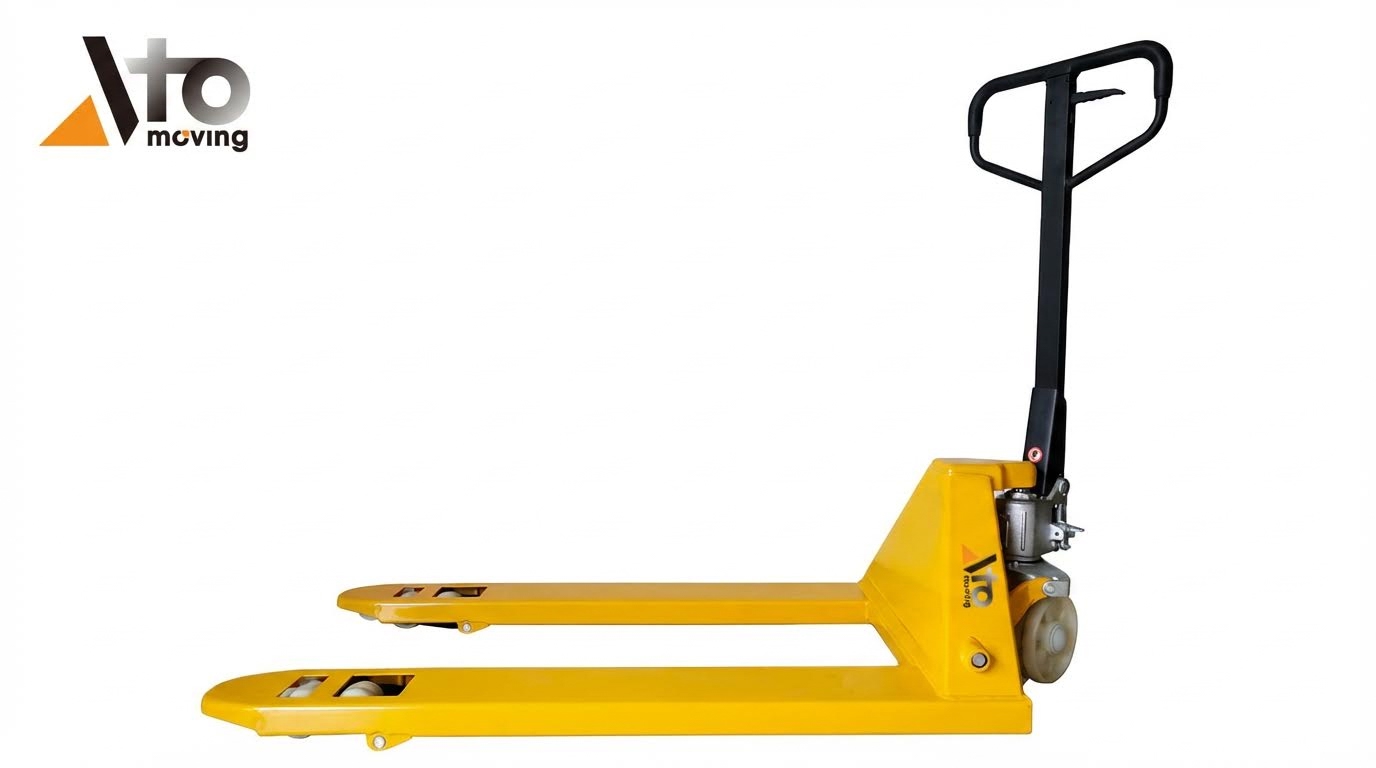
Lift height on a pallet jack is the vertical distance from the floor to the top of the forks when they are fully raised. Fork range is the full working span from the lowest fork position to the highest, for example from about 75–85 mm lowered to 185–195 mm raised on some manual units fork height ranges from 75 to 85 mm, while maximum fork height ranges from 185 to 195 mm. Clearance is the gap between the underside of the pallet and the floor once the pallet is lifted.
Clearance must be enough to roll over joints, dock plates, and minor floor defects, but not so high that the load becomes unstable. When you ask how high can a pallet jack lift, you are really asking how much vertical fork travel you have to safely clear your pallets in your actual floor conditions. That depends on both minimum lowered height and maximum raised height.
From an engineering point of view, you should always consider three related dimensions together: minimum fork height for entry, maximum fork height for travel, and the resulting net clearance under a typical pallet. These values also affect compatibility with racking beams, truck beds, and dock levelers, which is why most manufacturers publish lowered and raised fork heights as standard spec items measuring pallet jack dimensions.
Typical lift ranges for manual and electric units
Most standard manual pallet jacks answer the question “how high can a pallet jack lift” with a raised fork height around 7.5–8 inches (about 190–200 mm) above the floor maximum lift height of up to 7.95 inches. Their lowered height is typically 3–3.3 inches (about 75–85 mm), giving enough range to enter standard pallets and then create travel clearance minimum fork height ranges from 75 to 85 mm, while maximum fork height ranges from 185 to 195 mm. High-lift manual variants can go higher, around 12 inches, but they are specialty units for lifting pallets to work height rather than long-distance travel high-lift models reach heights of 12 inches.
Electric pallet jacks usually stay in a similar vertical band, with many models offering maximum lift heights between about 110 mm and 205 mm depending on design and capacity class maximum lifting heights ranging from 110 mm to 205 mm. The focus for electric units is less on how high they can lift and more on how quickly and consistently they reach that height under load, with typical lift speeds around 40–50 mm/s depending on whether the truck is laden or unladen lift speeds of 40 mm/s laden and 50 mm/s unladen.
Across both manual and electric designs, the practical outcome is similar: enough lift to clear a standard pallet safely and travel over typical warehouse floors, not to stack at height. For true vertical handling beyond 8–12 inches, you move into high-lift pallet jacks and pallet stackers, which use extended masts and different stability criteria to raise loads much higher than standard pallet trucks hand pallet stackers can carry multiple pallets stacked vertically.
Manual, Electric, And High-Lift: Height Specs Compared
Standard manual pallet jack lift heights
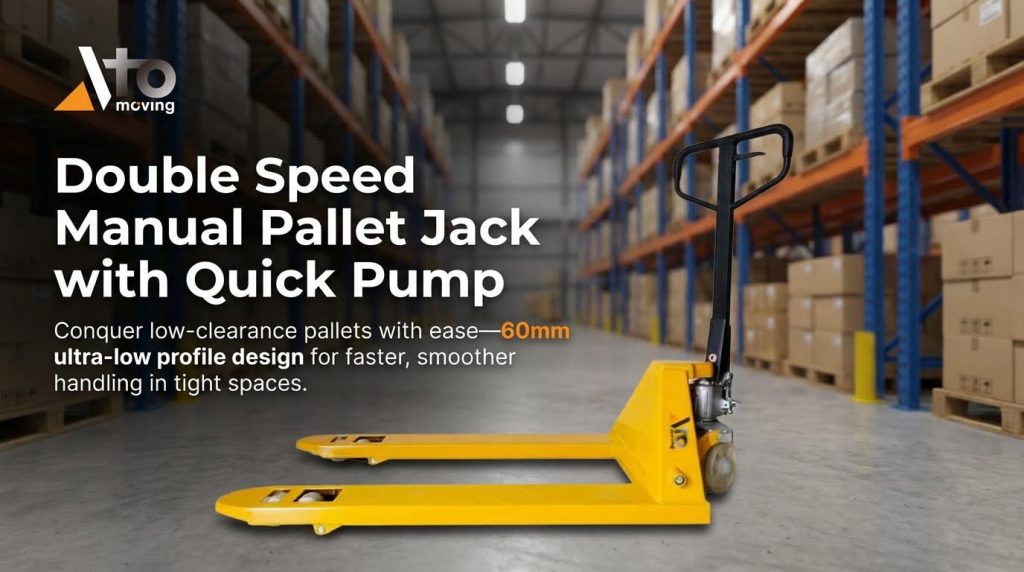
When people ask how high can a pallet jack lift, they usually mean a standard manual unit. Typical manual pallet jacks raise the forks from about 3–3.3 inches lowered to roughly 7.5–8 inches fully raised, which matches common pallet and dock conditions. One example lists a maximum lift height of 7.95 inches with fork lengths from 36 to 72 inches and overall widths between 15.8 and 27 inches. Standard dimensions and lift range
In metric terms, many manual pallet jacks offer a minimum fork height of about 75–85 mm and a maximum height of about 185–195 mm. Typical fork height range This is enough to clear standard pallets without lifting them so high that they become unstable during travel. Load capacities for these jacks are often in the 2,000–5,000 kg range, with many common units rated around 5,000 lb. Example 5,000 lb rating
Below is a typical manual pallet jack height snapshot:
| Parameter | Typical Value |
|---|---|
| Lowered fork height | 75–85 mm (≈3–3.3 in) |
| Raised fork height | 185–195 mm (≈7.3–7.7 in) |
| Common fork size | 27 in × 48 in for 48×40 pallets Standard pallet jack dimensions |
Electric pallet jack lift and travel performance
For electric units, how high can a pallet jack lift is usually similar to manual models, but with more focus on speed and travel. Many electric pallet jacks list maximum lift heights in the 110–205 mm range, depending on design and capacity. Typical electric lift heights This keeps the load low and stable while still clearing dock plates, thresholds, and floor irregularities.
Electric pallet jacks add powered lift and drive, so lift speed and travel speed matter as much as height. Typical lift speeds are around 40 mm/s with load and 50 mm/s without load. Example lift speeds Travel speeds are often about 5.2–5.5 km/h when loaded and up to 6–10 km/h when empty. Typical travel speeds
Electric models also cover a wide capacity range, from about 1,500 kg up to 10,000 kg, with fork lengths from 1,150 mm to 1,880 mm for heavy-duty versions. Capacity and fork data Batteries are commonly 24 V with 150–240 Ah capacity, supporting full-shift use in many warehouses. Battery configuration examples Gradeability typically ranges from about 8–15% loaded to around 20% unloaded, which is important for ramps and dock approaches. Typical gradeability
High-lift and stacker options for vertical handling
High-lift pallet jacks and manual or electric stackers answer a different version of how high can a pallet jack lift. Instead of just ground-level transport, these units support work positioning and light stacking. Some high-lift pallet jacks reach fork heights around 12 inches for ergonomic feeding of machines or workstations. Example high-lift height
Manual pallet stackers go much higher, using a similar hydraulic principle but on a mast, and can carry multiple pallets stacked vertically on fork rails. Stacking functionality These are best for low-volume applications because they move and lift slower than electric stackers. Speed and volume limits
Electric stackers and walkie reach units extend vertical capability even further, typically into full racking heights, but they move beyond the classic pallet jack category. Across all these options, safe use depends on staying within rated capacity, ensuring forks fully support the pallet, and avoiding unstable tall stacks. Key safety precautions Choosing between standard, high-lift, and stacker designs comes down to whether you only need floor-level transport or true vertical handling into racking or work heights.
Matching Lift Height To Pallets, Racking, And Aisles
Aligning fork height with pallet and floor conditions
Start by matching the pallet jack’s fork range to your pallet entry height and floor flatness. Standard pallet jacks usually lower to about 3–4 inches and raise to roughly 7.5–8 inches, which suits common 48×40 pallets and most warehouse slabs. Standard pallet jacks measure 27 inches wide and 48 inches long, with a lowered height of 3–4 inches and a raised height of 7.5–8 inches. If pallets are lighter-duty or use thinner deck boards, you may need low‑profile forks with a smaller minimum height to avoid snagging or breaking boards.
Floor conditions also affect how high you must lift to clear expansion joints, patch repairs, or dock plates. On worn or uneven slabs, aim for a pallet jack that gives a few extra millimeters of clearance above the highest defect once the pallet is fully raised. Typical maximum fork heights around 185–205 mm on manual and electric units are enough for simple horizontal transport on industrial floors. Some manual pallet jacks offer fork height ranges from 75–85 mm minimum to 185–195 mm maximum.
When teams ask how high can a pallet jack lift for their operation, the practical answer is “just high enough to clear pallet boards and floor defects without lifting so high that the load is unstable.” Keep loads as low as possible during travel, especially over ramps and transitions. Combine correct fork height with appropriate wheel material, such as polyurethane, to reduce vibration and protect floors on imperfect surfaces. Polyurethane wheels help with noise reduction, floor protection, and traction.
Selecting lift height for docks, trucks, and aisles
Dock and trailer work shifts the focus from “how high can a pallet jack lift” to “how well does it clear dock plates and trailer floors while staying stable.” Standard manual and electric pallet jacks with maximum heights in the 185–205 mm range handle most dock plates and truck beds used for ground‑level loading. Electric pallet jacks commonly reach maximum lifting heights between 110 mm and 205 mm. For steep dock plates or worn thresholds, verify that the raised fork tips will not bottom out when entering or exiting trailers.
In aisles, lift height must be considered together with pallet jack length, width, and turning radius. Standard 27×48 jacks are optimized for 48×40 pallets in general warehouse aisles, while narrow or low‑profile units help in tight or Euro‑pallet applications. Narrow‑aisle pallet jacks can be as slim as 20 inches wide, and low‑profile models are typically 21 inches wide and 42 inches long. Adequate vertical clearance above the raised load is also critical near sprinkler piping, mezzanines, and low door headers.
For racking interfaces and staging lanes, choose lift heights that allow you to present loads flush to the rack beams without dragging or striking cross‑members. High‑lift or stacker‑style pallet trucks are better suited when you must position pallets at working height or second‑level beams, while standard pallet jacks remain the right choice for floor‑level moves. If you routinely load 48×48 or oversized pallets into trailers, consider extended forks and verify both aisle width and turning space. Models with at least 54-inch fork length and 27–30-inch fork width are recommended for 48×48 pallets.
“”
Key Takeaways On Pallet Jack Lift Heights
Pallet jack lift height is not about reaching the ceiling. It is about clearing pallets and floor defects with a stable, low load. Manual and electric units both sit in a narrow band around 185–205 mm raised height. That band works because it balances entry into standard pallets with safe travel over joints, plates, and worn concrete. High-lift and stacker designs push higher but must trade speed and capacity for stability.
Engineering teams should always treat minimum fork height, maximum fork height, and net clearance as a matched set. Check these against pallet deck thickness, floor flatness, dock hardware, and racking geometry before buying or standardizing. Operations teams should then keep loads as low as possible during travel, especially on ramps and dock plates, and avoid using standard pallet jacks for true stacking work.
The best practice is simple. Use standard manual or electric pallet jacks for floor-level moves within their rated capacity and published fork range. Use low-profile or narrow units only where pallets or aisles demand them. Move to high-lift or stacker equipment when you must lift to work height or into racking. This approach keeps handling efficient, predictable, and safe across Atomoving pallet handling solutions.
Frequently Asked Questions
How high can a standard pallet jack lift?
A standard manual pallet jack can lift loads up to 8 inches off the ground. High-lift pallet jacks, on the other hand, can raise loads to heights of approximately 32 inches. For more details, you can refer to this Pallet Jack Lift Guide.
What is the maximum height for an electric pallet jack?
Electric pallet jacks typically lift to a height similar to manual ones, around 6 inches. However, specialized electric models can lift loads to over 20 inches. These machines are commonly used in warehouses and distribution centers where frequent lifting is required. Learn more from this Electric Pallet Jack Guide.
What is the maximum safe stacking height for pallets?
As a general rule, pallets should be stacked no higher than 60 inches to ensure safety during shipping and handling. Heavier boxes should be placed at the bottom, with lighter ones on top. This approach helps maintain stability and protects the shipment. More information can be found in this Pallet Shipping Guide.