

Safe pallet truck operation is about controlled movement, correct loading, and disciplined inspection, not just moving pallets from A to B. This guide explains how to use a pallet truck step by step, avoid common errors, and stay compliant with key safety regulations.
Whether you run a small warehouse or a large logistics hub, the same physics applies: overload a truck, ignore floor conditions, or rush in tight spaces and you increase risk sharply. Here you will find practical, metric-focused advice you can apply immediately on your site.

Fundamentals Of Safe Pallet Truck Use
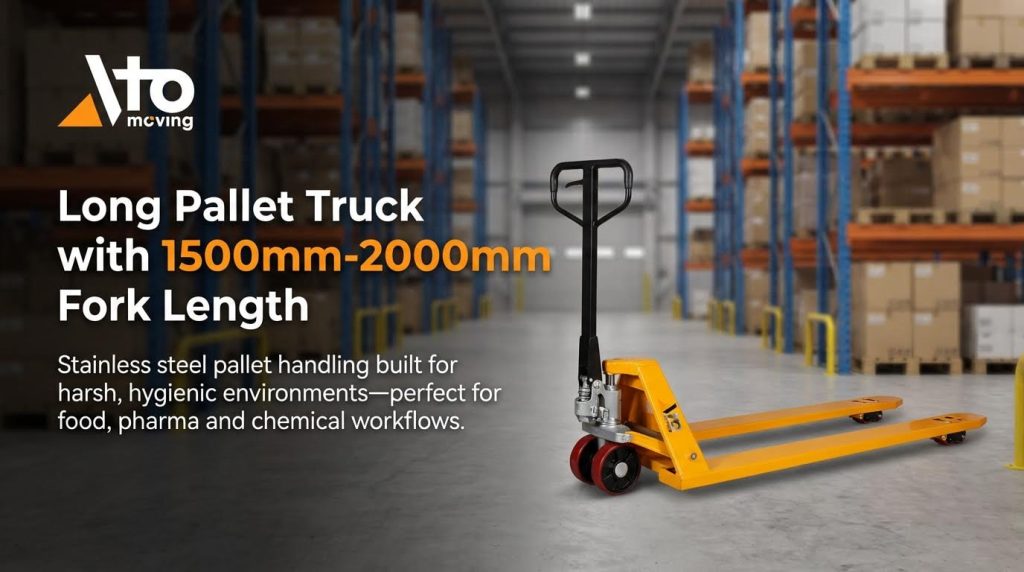
Fundamentals of safe pallet truck use explain how to use a pallet truck within its limits, under the right regulations, and without losing stability. This section builds the safety foundation before you move into detailed operating steps.
When you teach staff how to use a pallet truck, you must first choose the right type, understand which rules apply, and know what the rating plate really means in day‑to‑day work. The three topics below give you that baseline.
Manual vs powered pallet trucks
Manual and powered pallet trucks move the same pallets, but the risks and control methods are very different. Choosing the wrong type for the task is one of the fastest ways to create avoidable incidents.
| Feature | Manual pallet truck | Powered pallet truck | Operational impact |
|---|---|---|---|
| Typical capacity range | Up to about 2,000–3,000 kg (model‑dependent) | Often 2,000–5,000 kg (model‑dependent) Overloading ranges | Higher capacities demand stricter load checks and better floor conditions. |
| Drive and lift | Human push/pull, manual pump for lift Hydraulic pump description | Electric traction and usually electric lift | Powered units reduce strain but can cause higher‑energy impacts. |
| Typical use distance | Short internal moves, a few metres at a time | Longer runs and frequent shuttles | Use powered trucks where manual effort or gradients would cause fatigue. |
| Body strain risk | Higher if operators pull or twist incorrectly Body mechanics guidance | Lower handling strain, higher collision energy | Manual: focus training on pushing and posture. Powered: focus on speed and braking. |
| Speed control | Limited by human effort | Requires strict speed limits and horn use Safe speed advice | Powered trucks need marked speed zones and traffic rules. |
| Environment sensitivity | Still unsafe on wet, oily, or uneven floors Ground condition limits | More prone to skidding or loss of control on poor floors | Both types need clean, level, well‑lit routes. |
| Typical injury pattern | Back and shoulder strain, minor foot crush | More severe foot and impact injuries Injury statistics | Powered units require stricter pedestrian separation and footwear rules. |
- Manual trucks: Rely on correct body mechanics – training must focus on pushing, not pulling, and avoiding twists.
- Powered trucks: Rely on controls and electronics – training must focus on speed, visibility, and emergency stopping.
- Both types: Need pre‑use checks and clean floors – the physics of friction and stability do not change.
💡 Field Engineer’s Note: In real warehouses, I treat any aisle under about 2,500 mm as “tight” for powered pallet trucks. In these spaces, manual units often give better control and fewer foot injuries, provided loads stay below about 1,500–2,000 kg.
Where each type of pallet truck works best
Manual pallet trucks suit short, flat runs in small warehouses and shops. Powered pallet trucks suit long travel distances, frequent loading bay work, and heavier pallets where manual effort would cause fatigue and poor posture over a shift.
Key regulations: OSHA, PUWER, and LOLER
OSHA, PUWER, and LOLER set the legal framework for how to use a pallet truck safely, covering training, equipment condition, and lifting examinations. Which rules apply depends on your country and how the truck lifts.
Even if local law differs, the principles are the same: only trained people operate pallet trucks, the truck must be suitable and maintained, and any lifting function must be examined on a schedule.
| Regulation | Main focus for pallet trucks | Key practical requirements | Operational impact |
|---|---|---|---|
| OSHA (typical US framework) | Operator safety and training | Formal instruction, practical training, and evaluation at least every 3 years for powered equipment Training intervals | Documented training is not optional; refresher training follows incidents or unsafe use. |
| PUWER (UK) | Provision and use of work equipment | Truck must be suitable, maintained, inspected, and used by competent operators; pre‑use checks on rating plate, forks, chains, and hydraulics PUWER duties | Daily checks and planned maintenance become part of the work routine. |
| LOLER (UK) | Lifting operations and lifting equipment | Thorough examination every 12 months for equipment not lifting people, 6 months if lifting people or accessories LOLER intervals | Most hand pallet trucks lifting under 300 mm sit under PUWER, but high‑lift or ride‑on units may fall under LOLER. |
- Training: Operators need formal instruction, practice, and evaluation – this is mandatory for powered units and best practice for all.
- Inspection: Daily pre‑use checks plus periodic thorough examinations – catch cracks, leaks, and worn wheels before failure.
- Documentation: Keep records of checks, defects, and repairs – proves compliance and helps spot recurring issues.
These regulations also expect a safe environment around the pallet truck. Marked walkways, one‑way systems, and good lighting reduce collisions and near‑misses when trucks and pedestrians share space Site rules.
💡 Field Engineer’s Note: When I audit sites, the fastest compliance win is usually a simple pre‑use checklist fixed to the truck handle. Operators tick wheels, forks, hydraulics, and rating plate before moving. It satisfies PUWER‑style duties and cuts breakdowns.
How regulations link to your daily pallet truck checklist
OSHA‑style rules drive operator training and behaviour. PUWER‑style rules drive whether the truck is suitable, maintained, and inspected. LOLER‑style rules decide if you need formal lifting examinations. Your daily checklist ties all three together in one routine.
Rated capacity, load center, and stability
Rated capacity, load centre, and stability explain how much weight a pallet truck can carry safely and how that changes with pallet length and load position. Ignoring these basics is a common root cause of bent forks and tip‑overs.
The rating plate gives a maximum load in kilograms and an assumed load centre distance. If your pallet is longer or the weight sits further out than that assumption, the real safe capacity drops.
| Concept | What it means | Typical values / rules | Operational impact |
|---|---|---|---|
| Rated capacity | Maximum safe load the truck can handle on level ground | Often 2,000–5,000 kg depending on model Capacity ranges | Never plan work above the lowest rating you see on the plate or in the manual. |
| Load centre (e.g. 600 mm) | Horizontal distance from fork heel to the load’s centre of gravity | Many Euro‑pallet applications assume about 600 mm | Longer pallets or offset loads push the centre forward and reduce stability. |
| Load distribution | How evenly weight sits across the two forks | Loads must be centred and stable, not hanging off one side Even load guidance | Uneven loads twist forks and increase the risk of tipping when turning. |
| Floor and environment | Condition of ground under wheels | Only solid, level, dry floors; avoid wet, oily, or uneven surfaces Ground requirements | Poor friction or bumps can turn a marginally stable load into a tip‑over. |
- Read the rating plate: Treat it as the hard upper limit – never guess by “feel.”
- Centre the load: Forks fully under the pallet, weight between the forks – this keeps the combined centre of gravity inside the wheelbase.
- Keep lift height low: Only raise high enough to clear the floor – lower height means a lower centre of gravity and more stability.
Loads must not exceed the truck’s rated capacity and must be evenly distributed and stable, ideally wrapped or strapped to prevent shifting during transport Load handling requirements. Overloading or poor stacking is a major cause of accidents and damage to goods Overloading mistakes.
💡 Field Engineer’s Note: In practice, if a pallet looks tall, unstable, or longer than about 1,200 mm, I mentally “derate” the truck by at least 20–30%. That safety margin absorbs unknowns in load centre and floor conditions.
Quick stability checklist before you move a pallet
Ask four questions: Is the weight within the rating plate in kg? Are the forks fully inserted and the load centred? Is the stack stable and secured with wrap or straps? Is the floor level, clean, and dry along the whole route? If any answer is no, fix it before you move.
Step‑By‑Step Operating Instructions
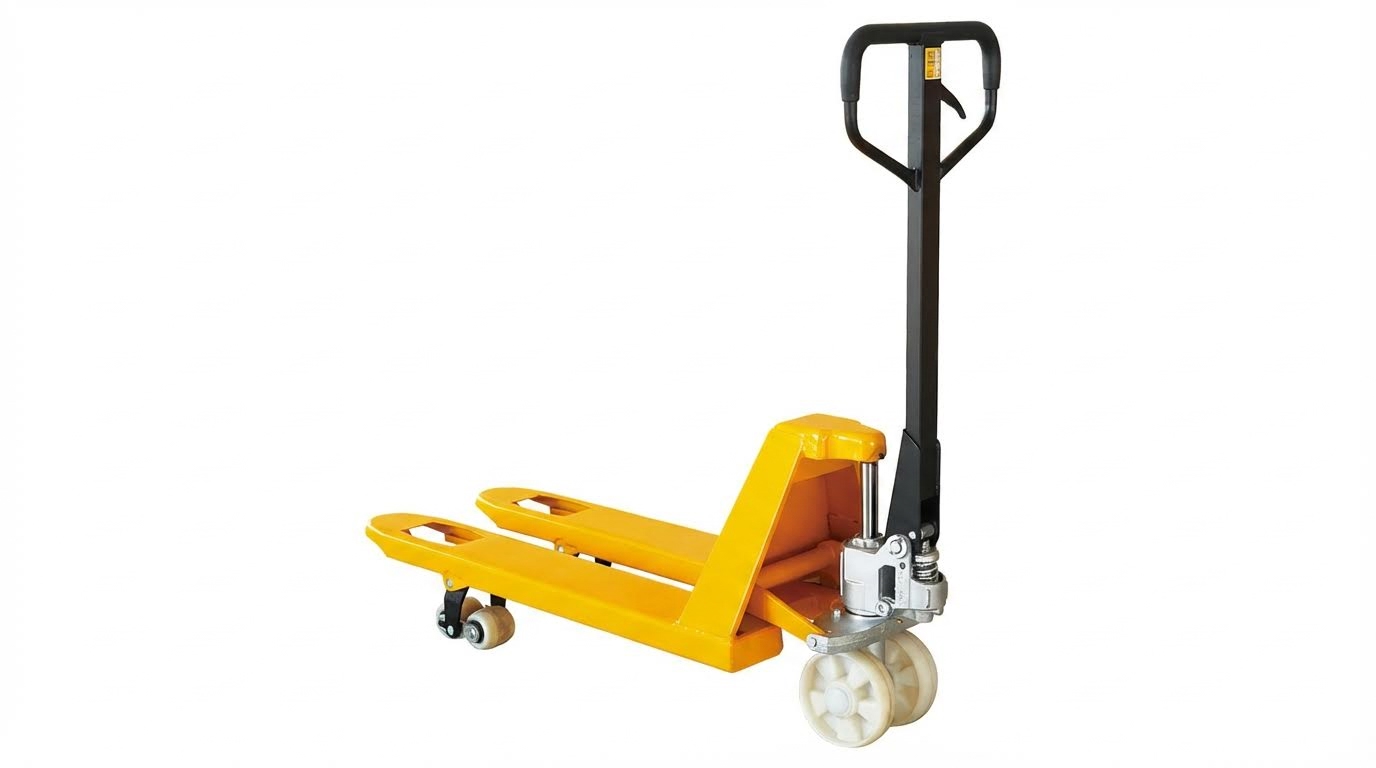
This section explains how to use a pallet truck step by step, from checks to parking, so operators stay safe, legal, and efficient on every move.
If you are training staff or writing SOPs on how to use a pallet truck, treat these instructions as the minimum safe standard and adapt details to your site rules and truck manual.
Pre‑use inspection and functional checks
Pre‑use checks ensure the pallet truck is mechanically sound before any load is moved, preventing failures under load and avoidable injuries.
- Rating plate and markings: Confirm capacity and truck ID are readable – avoids accidental overloading and supports PUWER record‑keeping.
- General condition: Walk around and check for obvious damage, bent forks, cracked welds, or missing parts – catches structural failures before they happen.
- Wheels and rollers: Inspect for flats, cracks, or embedded debris and spin them by hand – reduces steering effort and prevents sudden stops or skids.
- Hydraulic system: Check for oil leaks, damaged seals, or jerky lift – prevents sudden dropping of the load and long‑term cylinder damage.
- Handle and controls: Test lift, lower, and neutral positions for smooth operation – ensures you can control the load precisely.
- Brakes and deadman (powered): Test service brake and emergency stop before loading – confirms the truck can stop safely in an emergency.
- Battery and charger (powered): Check charge level, cable condition, and connectors – avoids mid‑shift failures and overheating.
- Noise and vibration: Note any abnormal noise during test movement – often the earliest sign of wheel, bearing, or hydraulic problems.
Daily inspections and pre‑operational checks are required good practice and should verify the truck is free from damage, controls work correctly, and hydraulic systems operate without leaks. Pre‑operational inspections and PUWER guidance both stress checking wheels, forks, and hydraulics before use. PUWER requirements also include ensuring equipment is suitable, maintained, and inspected.
Checklist: quick pre‑use inspection sequence
- Step 1: Check rating plate and visible damage – confirms you have the right truck and it is structurally sound.
- Step 2: Inspect wheels, rollers, and forks – ensures stable support and smooth rolling.
- Step 3: Pump handle to full height with no load – tests hydraulic lift and checks for leaks or jerky motion.
- Step 4: Lower forks fully and confirm controlled descent – verifies you can set loads down safely.
- Step 5: For powered trucks, test drive, brake, horn, and emergency stop – proves travel and stopping systems work.
💡 Field Engineer’s Note: If you see a light film of oil on the floor under the pump or notice the forks slowly sinking under a test load, tag the truck out. Small hydraulic leaks almost always worsen under full capacity, and “just one more run” is where most fork‑drop incidents start.
Correct load positioning and fork engagement

Correct fork engagement and load positioning keep the pallet stable, protect the forks, and maintain the truck’s rated capacity and stability margin.
- Use standard, sound pallets: Only handle undamaged pallets with intact boards and stringers – reduces risk of fork punch‑through and dropped loads.
- Approach square to the pallet: Line up the truck so the forks are straight and centered – prevents twisting loads and side‑loading the wheels.
- Insert forks fully: Drive or push until the fork heels are just clear of the far end of the pallet – gives full support and avoids tipping forward.
- Even load distribution: Center the weight over both forks and along the pallet – protects bearings and keeps steering predictable.
- Secure the load: Use wrap, straps, or banding where needed – stops cartons or drums shifting during cornering.
- Respect rated capacity: Never exceed the truck’s rated load, typically 2,000–5,000 kg depending on model – prevents structural and hydraulic overload.
Guidance on load handling stresses that the load must not exceed the rated capacity and should be evenly distributed and secured to prevent shifting during transport. Load handling requirements and manufacturer instructions also require use of standard pallets and prohibit overloading or uneven placement of goods. Standard pallet and load placement rules emphasise inserting forks into the pallet base with the load centered.
| Load Practice | Safe Method | Operational Impact |
|---|---|---|
| Fork insertion | Forks fully under the pallet, tips not protruding excessively | Reduces pallet breakage and nose‑down tipping when lifting |
| Load distribution | Weight centered between forks and along pallet length | Improves steering and reduces bearing and wheel wear |
| Securing load | Wrap or strap unstable or tall stacks | Prevents cartons falling off in turns or on minor floor defects |
| Capacity use | Stay within rated capacity (e.g. 2,000–5,000 kg) | Maintains design safety factor and avoids structural failure |
💡 Field Engineer’s Note: With block‑stacked, shrink‑wrapped loads, operators often stop with forks only halfway under the pallet to “save time.” In practice this shifts the centre of gravity forward, dramatically increasing pump and wheel loads and causing frequent front‑roller failures.
Lifting, travel speed, and safe maneuvering
Controlled lifting and conservative travel speed keep the centre of gravity low and stable, which is the core of safe pallet truck maneuvering.
- Step 1: Lift only as high as needed – Raise forks just enough to clear the floor, usually 30–100 mm. This keeps the load low and stable.
- Step 2: Push, don’t pull where possible – Stand behind the handle and push with your legs. Reduces back strain and improves control.
- Step 3: Control speed – Move at walking pace or slower, especially in congested areas. Gives you time to stop for pedestrians and obstacles.
- Step 4: Take wide, smooth turns – Avoid sharp steering inputs and sudden stops. Prevents side‑loading the wheels and tipping the pallet.
- Step 5: Maintain visibility – Keep the load within your sightline or use a guide when vision is blocked. Prevents collisions with racking and people.
- Step 6: Respect floor and environment limits – Only operate on solid, level, clean ground. Uneven, wet, or oily floors significantly increase accident risk.
Safe operation guidelines state that sudden stops, sharp turns, or rapid sliding must be avoided during transportation, and pallet trucks should be used only on solid, level ground, avoiding wet, oily, or uneven surfaces. Operating instructions and safety advice also emphasise operating at safe speeds, particularly in tight or congested areas, using horn signals, and avoiding sudden stops or sharp turns. Safe speed and maneuvering recommendations highlight maintaining visual contact with pedestrians and using horns in blind spots.
Speed and traffic control in busy aisles
Facilities have increasingly used speed control and traffic management to cut pallet truck incidents. Regulated travel speeds in congested or blind‑corner areas, combined with one‑way systems, mirrors at blind spots, and protected pedestrian crossings, significantly reduce near misses. Traffic and speed control measures and site rules such as marked walkways and clean, well‑lit floors contribute to safer operation. Site rules for incident prevention describe these controls.
💡 Field Engineer’s Note: On even a slight slope, a fully loaded pallet truck can easily exceed a walking pace without power applied. Always test the floor for gradient and grip before committing with a heavy load; if you feel the truck “running away,” the slope is already too steep for manual control.
Parking, isolation, and charging procedures
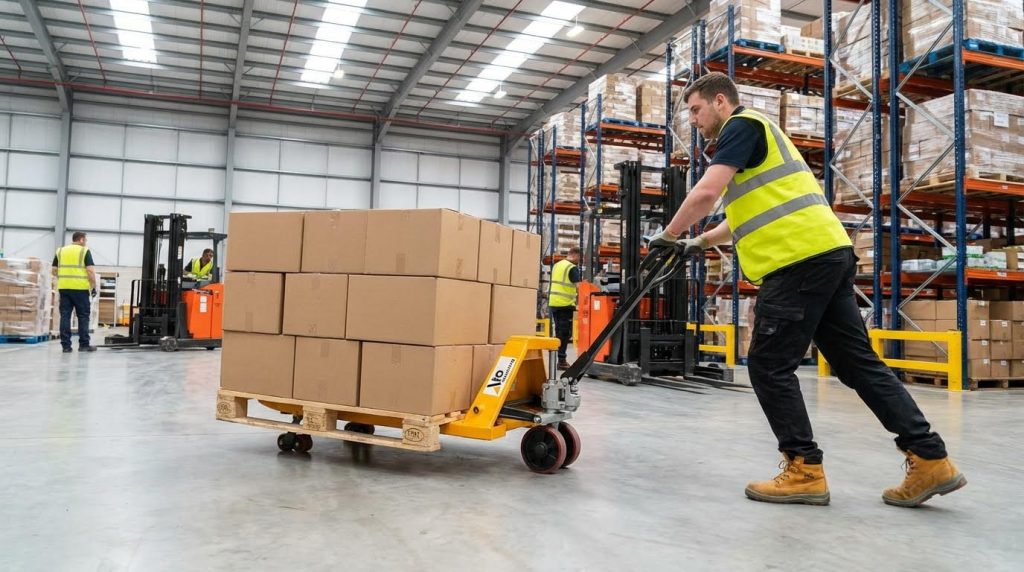
Safe parking and correct charging prevent run‑aways, trip hazards, and battery incidents when the pallet truck is not in active use.
- Lower forks fully: Always park with forks flat on the floor – removes stored energy and eliminates unexpected rolling under a pallet or foot.
- Neutral and brake: Set controls to neutral and apply parking brake (if fitted) – prevents unintentional movement.
- Designated parking areas: Use marked, low‑traffic zones away from doors, walkways, and emergency exits – keeps escape routes and aisles clear.
- Power isolation (powered): Turn off key or main switch and disconnect where required – stops unauthorised use and reduces fire risk.
- Charging in ventilated areas: Charge only in signed, ventilated charging points – controls gas build‑up and heat from batteries.
- Correct charger and tidy cables: Match charger to battery type and rating, route leads neatly – prevents overheating and trip hazards.
Parking instructions specify that after use the forks must be fully lowered and the pallet truck parked on a flat surface, with forks tucked in to prevent trip hazards. Parking guidance and wider safety protocols state that charging should occur in a ventilated, designated area, using the correct chargers, with tidy cables and no ignition sources nearby. Charging and parking protocols support this.
End‑of‑shift shutdown sequence
- Step 1: Move to the designated parking or charging area – keeps trucks out of emergency routes.
- Step 2: Lower forks fully to the floor – removes stored hydraulic energy.
- Step 3: Set controls to neutral and apply brake – prevents creep or movement.
- Step 4: Turn off and, for powered units, connect charger – prepares the truck for the next shift.
- Step 5: Visually check for leaks or damage and report defects – feeds maintenance and continuous improvement.
💡 Field Engineer’s Note: Most foot injuries I have investigated involved “parked” pallet trucks with forks left 50–80 mm in the air. That small gap is exactly ankle height. Make “forks fully down” a non‑negotiable rule in your site induction on how to use a pallet truck safely.
Common Mistakes And How To Prevent Them
This section explains the most common errors people make when learning how to use a manual pallet jack and gives simple, engineering‑based fixes to keep loads stable and operators safe.
- Goal: Turn typical “near misses” into clear rules – so pallet trucks move predictably, without surprises for operators or pedestrians.
- Focus Areas: Load, floor, posture, maintenance, and traffic – the five main sources of real‑world pallet truck incidents.
💡 Field Engineer’s Note: In most investigations I carried out, the pallet truck itself was fine. The root cause was usually a bad floor, a rushed operator, or a load stacked beyond what the rating plate and physics could tolerate.
Overloading and poor load distribution
Overloading and uneven loads are the fastest way to damage a hydraulic pallet truck and lose control of the load, especially in tight warehouse aisles.
- Overloading: Exceeding the truck’s rated capacity – can crack forks, blow seals, or cause sudden collapse.
- High stacking: Stacking too tall on a small base – raises the centre of gravity and makes tipping far more likely.
- Uneven distribution: Heavy side or heavy end – twists forks, stresses one wheel set, and drags the truck off‑line.
- Loose loads: No wrap, no straps – lets cartons shift in a corner, forcing emergency stops and sharp steering inputs.
| Mistake | Safe Practice | Operational Impact |
|---|---|---|
| Exceeding rated capacity | Keep total load at or below the rating plate (often 2,000–5,000 kg depending on model) as noted for typical pallet trucks. | Prevents fork bending and hydraulic failure mid‑lift. |
| Load too tall and unstable | Keep stack height within site rules and below eye level where possible. | Improves visibility and reduces tip‑over risk in corners. |
| Heavy side / end | Center weight over both forks and between wheels; use standard pallets and even stacking as recommended. | Truck tracks straight and steers with less effort. |
| Unsecured cartons | Use stretch wrap, straps, or corner boards to lock the load together to prevent shifting. | Reduces sudden shifts that can pull the operator off balance. |
How to check a pallet quickly before loading
Use only undamaged, standard pallets. Reject pallets with broken boards, missing blocks, or exposed nails. Make sure the deck boards run across both forks so the load shares evenly.
Ignoring floor, slope, and environment limits
Ignoring floor conditions and slope limits turns a controllable 2,000 kg load into an uncontrollable sliding mass, especially with manual pallet trucks.
- Slippery floors: Wet, oily, dusty, or debris‑covered surfaces – increase stopping distance and cause sideways skids.
- Uneven ground: Cracks, potholes, dock plates, thresholds – shock‑load the chassis and can stop one wheel dead.
- Slopes and ramps: Operating on gradients not allowed by the manufacturer – can let a loaded truck run away from the operator.
- Poor lighting: Dark aisles and blind corners – hide pedestrians, spills, and floor damage.
Manufacturers state that hand pallet trucks should only be used on solid, level ground and that operation on slopes is prohibited unless specifically approved in their instructions. Floors should be kept clean, level, and free of debris to minimise skidding and impacts during pallet truck movements.
- Ground rules for safe routes:
- Use only marked, well‑lit travel paths.
- Avoid wet or oily areas; get spills cleaned before moving loads.
- Do not take manual pallet trucks onto ramps unless a risk assessment and manufacturer guidance allow it.
- Repair or clearly mark floor defects that could stop or deflect a wheel.
💡 Field Engineer’s Note: Manual pallet trucks struggle on slopes above about 2–3%. The operator has to hold back the full rolling weight. On wet or painted ramps this is where most “runaway” incidents start.
Unsafe body mechanics and handling practices
Unsafe body mechanics turn routine pallet moves into long‑term back, shoulder, and wrist injuries, even when the truck itself is in good condition.
- Pulling instead of pushing: Walking backwards and dragging the load – twists the spine and hides trip hazards.
- Twisting while loaded: Rotating the upper body instead of moving the feet – stresses lumbar discs and knees.
- Jerky starts and stops: Snatching at the handle – creates shock loads into the shoulders and the load.
- Poor posture: Bent back, locked knees – concentrates force into the lower spine.
Correct body mechanics include maintaining a neutral posture, bending at the knees when lifting, and avoiding twisting movements; pushing rather than pulling heavy loads reduces strain on the back and lowers musculoskeletal injury risk according to ergonomic guidance.
- Step 1: Stand behind the handle, feet shoulder‑width apart – gives a stable base.
- Step 2: Push with your legs, not your arms – your legs are stronger and more tolerant of load.
- Step 3: Keep elbows close to your body – reduces shoulder strain.
- Step 4: Move your feet to turn; do not twist at the waist – protects the spine.
💡 Field Engineer’s Note: When training new staff on how to use a pallet truck, I always ban “backwards pulling” in narrow aisles. Nearly every foot strike and back tweak I have seen started with someone dragging the truck behind them.
Skipping maintenance and hydraulic checks
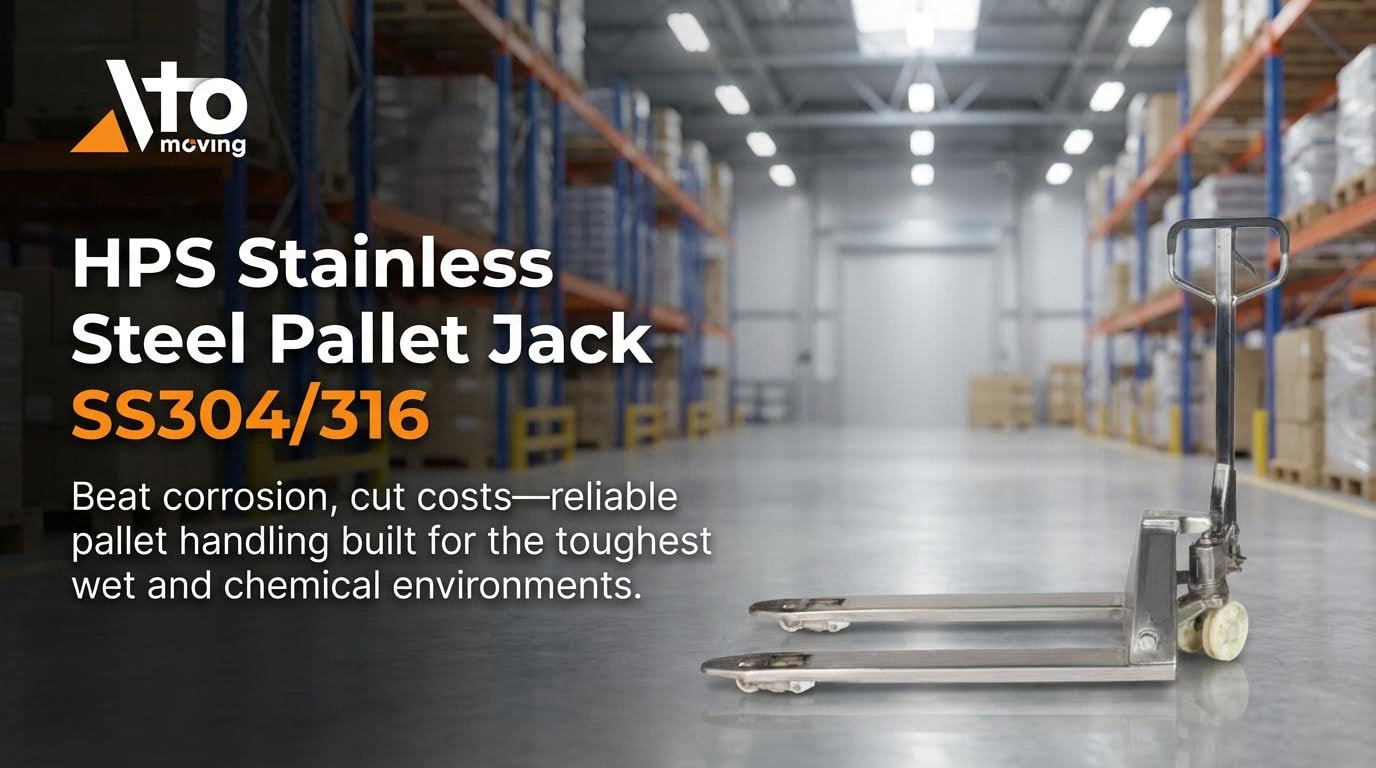
Skipping daily checks and hydraulic inspections quietly degrades a pallet truck until a wheel fails or a seal blows under load.
- No daily inspection: Ignoring wheels, forks, and hydraulics – lets small defects grow into sudden failures.
- Running with leaks: Continuing to use a truck with visible oil – risks total loss of lift and contaminates the floor.
- Dry or worn wheels: Flat spots and damaged bearings – increase push force and can jam in floor defects.
- Never lowering forks after use: Leaving the system pressurised – stresses seals and linkages.
Daily inspections should cover wheels, hydraulic systems, forks, and controls to catch cracks, leaks, or unusual noises before they cause accidents or downtime as emphasised in safety guidance. Hydraulic oil, wheels, and bearings must be inspected regularly and kept lubricated, and long‑term overloading should be avoided to prevent hydraulic damage per manufacturer instructions. Any hydraulic leakage or abnormal noise requires immediate cessation of use and repair before further operation to avoid sudden failure.
| Check Item | What To Look For | Operational Impact |
|---|---|---|
| Forks | Bent tips, cracks, or severe wear. | Weak forks can snap or drop the load unexpectedly. |
| Hydraulic unit | Oil on floor, slow lift, abnormal noise. | Indicates internal damage; must be repaired before use. |
| Wheels and bearings | Flat spots, broken edges, stiff rotation. | Increases push effort and risk of sudden stop. |
| Handle and controls | Sticking lowering valve, damaged grip. | Reduces fine control when placing loads. |
💡 Field Engineer’s Note: A tiny oil patch under the pump is not “normal seepage”; it is an early warning. If you ignore it, the next heavy lift can be the one that drops 1,000 kg back onto the floor.
Site traffic, pedestrian safety, and foot injuries
Poor traffic control and ignoring pedestrian separation make foot injuries and collisions the most common consequences of bad pallet truck use.
- No marked walkways: People and trucks share the same space – drivers have no predictable path to follow.
- High speeds in congested areas: Rushing to “save time” – removes the operator’s reaction margin.
- Feet under forks or pallets: Standing too close during lifting or lowering – leads to toe crush injuries.
- Blind corners: No mirrors or warning – hide pedestrians and other trucks.
Safe operation guidance recommends operating pallet trucks at controlled speeds, especially in tight or congested areas, using horn signals and maintaining visual contact with pedestrians to avoid sudden stops or sharp turns that can cause accidents in mixed‑traffic zones. Marked walkways, one‑way systems, mirrors at blind spots, and protected crossings help separate pedestrians and equipment and reduce incident risk on busy sites. Foot injuries, particularly toe crushes, have been identified as the most common pallet jack accidents, with powered units causing more severe injuries at higher speeds and in low‑light or high‑traffic areas without speed limiting according to injury data.
- Simple site controls to cut injuries:
- Paint and enforce pedestrian walkways with barriers where possible.
- Use mirrors at blind corners and one‑way systems in narrow aisles.
- Set and enforce speed limits for powered pallet trucks.
- Train operators never to move the truck when anyone is near the forks.
💡 Field Engineer’s Note: On sites where we added clear walkways, mirrors, and strict “no feet near forks” rules, pallet‑truck foot injuries dropped to almost zero within months, without buying any new equipment.
Linking this back to how to use a pallet truck correctly
Knowing how to use a pallet truck safely is not just about moving the handle. It means matching the load to the rating plate, respecting floor and slope limits, using good body mechanics, maintaining the hydraulics, and controlling site traffic so pedestrians stay clear.
Final Thoughts On Pallet Truck Safety And Compliance
Safe pallet truck use depends on one simple rule: respect the limits built into the equipment, the load, and the floor. Rated capacity, load centre, and fork engagement set the hard boundaries for every move. When operators keep loads within the rating plate, centred, low, and stable, the truck remains predictable and tip‑over risk stays low.
Regulations like OSHA‑, PUWER‑, and LOLER‑style frameworks turn these physics limits into daily habits. Structured training, pre‑use checks, and documented maintenance stop small faults, like oil weeps or flat‑spotted wheels, from turning into dropped loads or run‑aways. Clean, level routes, marked walkways, and speed control then protect pedestrians from the high energy stored in even a “simple” pallet move.
For operations and engineering teams, the best practice is clear. Choose the right manual or powered pallet truck for the distance, gradient, and load. Build a short, enforced checklist onto every handle. Standardise on safe body mechanics and “forks fully down” parking in all inductions. Finally, review incidents and near misses and feed the lessons back into routes, stacking rules, and truck selection. Do this well and pallet trucks become low‑risk, high‑reliability tools that support lean, compliant material flow across your Atomoving fleet.
Frequently Asked Questions
How does a hand pallet truck work?
A hand pallet truck uses a hydraulic pump system to lift pallets. The operator slides the forks underneath a pallet and pumps the handle to raise it off the ground. Once elevated, the user can push or pull the load to its destination. This process is efficient for moving heavy goods in warehouses. Hand Pallet Guide.
Do you need training to use a pallet truck?
Yes, proper training is essential to safely operate a pallet truck. Training typically covers practical skills, equipment knowledge, risk awareness, and safety protocols. Without training, operators may face hazards such as uneven surfaces, falling loads, or collisions. For more details on safe operation, refer to this Pallet Truck Safety Guide.
What are the hazards of using a pallet truck?
Using a pallet truck can pose several risks, including injuries from pushing or pulling over uneven surfaces, falling loads, and striking or being struck by the truck. Proper training and adherence to safety guidelines can help mitigate these hazards. Learn more about workplace safety with this Safety Hazards Guide.