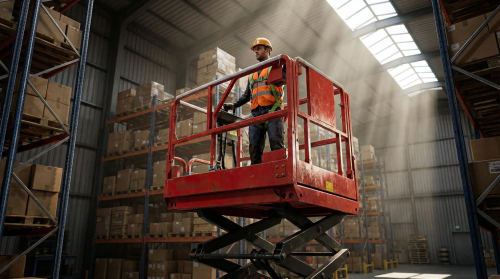
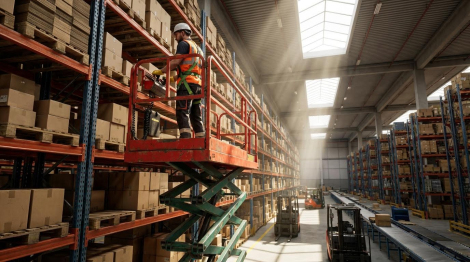
Safe use of elevated work platforms for people and materials means choosing, operating, and maintaining platforms so they lift workers and loads within rated limits while meeting OSHA, ANSI, LOLER, and EM385 requirements. This topic directly answers “is an elevated working platform for workers and material” by explaining that an elevated work platform is a purpose‑designed, rated structure for safely raising personnel and materials together, not just “a big ladder.” In this article, you’ll learn what aerial platforms are, how they’re rated for people and materials, how load limits and stability really work in the field, and how to select platforms and procedures for mixed use. You’ll also see how inspection, training, and maintenance practices reduce tip‑over risk, dropped objects, and downtime while keeping your operation compliant and efficient.
What Elevated Work Platforms Are And How They’re Rated
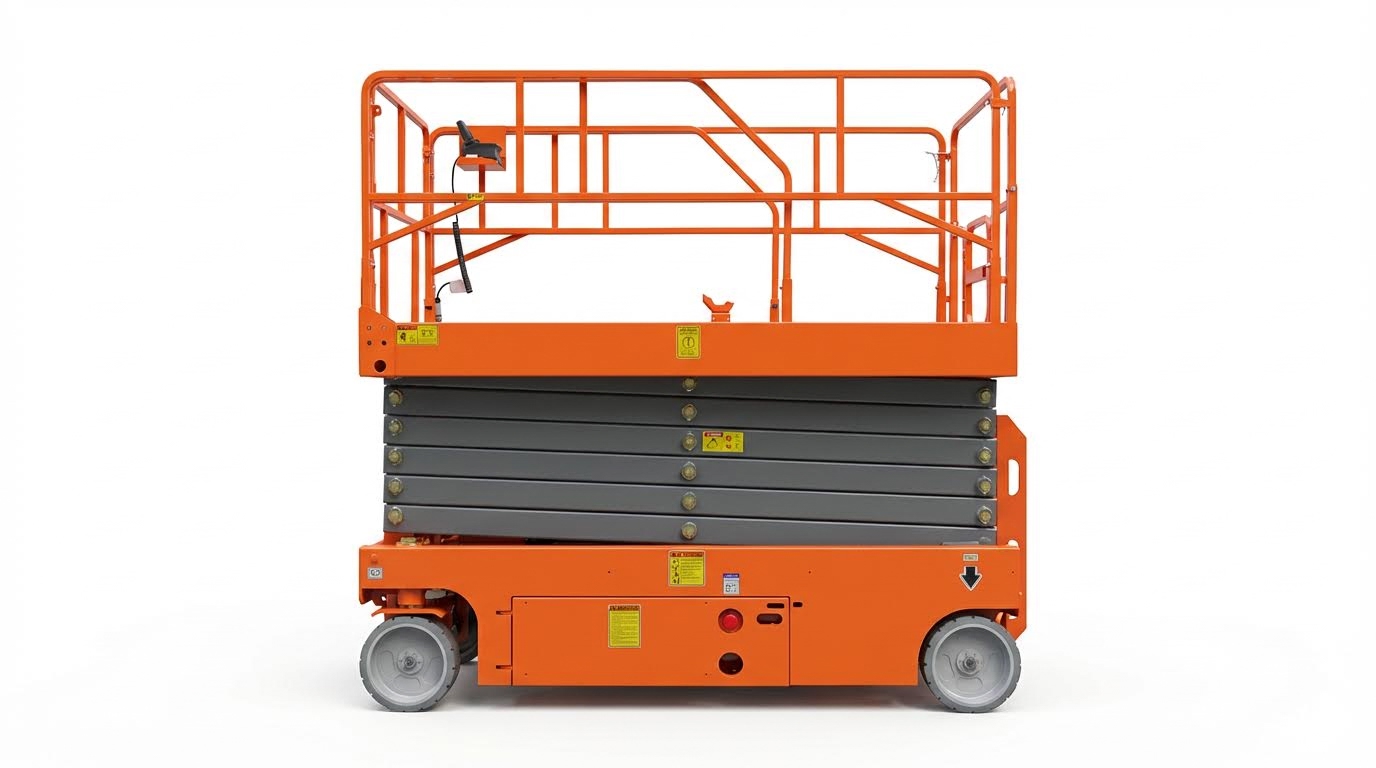
Elevated work platforms (EWPs) are engineered structures that safely raise workers and materials to height, and they are rated by capacity, height, and compliance with safety standards for people and load handling.
In practical terms, an EWP is an elevated working platform for workers and material that provides a guarded, stable surface at height so tasks can be done without relying on improvised ladders or unsafe makeshift stands. EWPs span simple rolling platforms through powered scissor and boom lifts, and each type carries specific ratings that limit the number of people, tools, and materials that can be safely supported. Understanding these definitions and rating systems is the foundation for choosing the right platform and staying compliant with OSHA, ANSI A92, LOLER, and EM385 requirements.
Definitions: EWP, aerial lifts, and material lifts
EWPs, aerial lifts, and material lifts are three overlapping categories of lifting equipment that differ mainly by whether they are designed to elevate people, materials, or both at the same time.
| Term / Type | Core Definition | Typical Capacity & Range | Primary Use (People / Materials) | Field Impact |
|---|---|---|---|---|
| Elevated Work Platform (EWP) | Any temporary or semi‑permanent platform that raises workers and often materials to perform tasks at height with guardrails and access. | From a few hundred kg on small aluminum lifts to several thousand kg on mast climbers (1,000–3,500 kg). | Mixed use – designed for workers plus tools and materials. | Defines the overall category you specify in risk assessments, training, and procedures. |
| Aerial Lift | Powered device that elevates personnel using extendable booms, aerial ladders, articulating booms, or vertical towers, whether or not it rotates around a vertical axis (OSHA definition). | Commonly 230–450 kg for scissor lifts and 250–400 kg for boom lifts, with heights from 3–30 m (typical ranges). | Primarily people; light materials and tools within basket/platform rating. | Triggers OSHA 29 CFR 1910.67 and ANSI A92 requirements for design, inspection, and operation. |
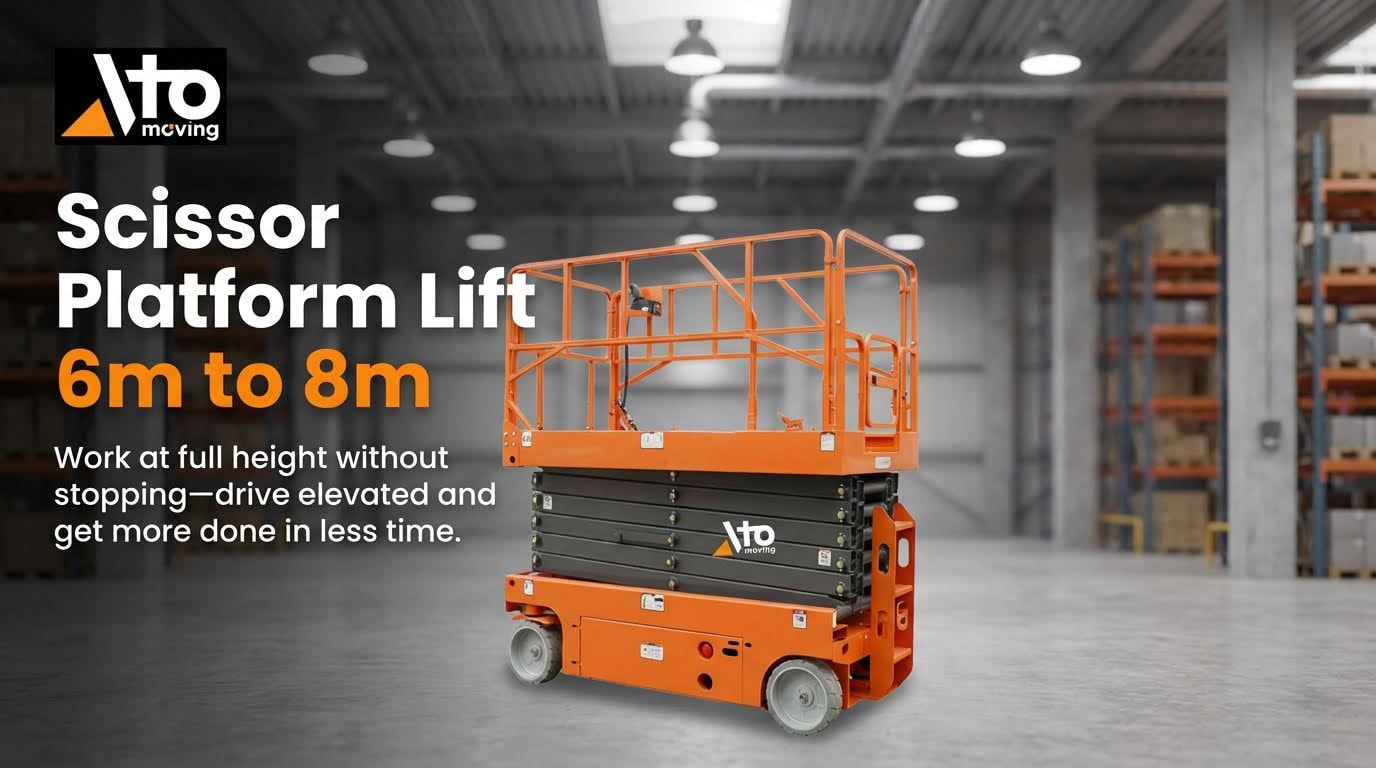
| Scissor Lift (Vertical Aerial Platform) | Aerial lift that elevates straight up using crossed “scissor” arms, with no horizontal outreach. | Lifting heights about 3–20 m, capacities roughly 230–450 kg (typical). | Workers on a guarded platform plus moderate tools and materials. | Stable footprint and vertical-only motion make it ideal for indoor maintenance and warehouse tasks. |
| Boom Lift (Articulating / Telescopic) | Aerial lift with a telescopic or articulating arm that provides outreach over obstacles. | Lifting heights about 9–30 m, capacities about 250–400 kg (typical). | Workers plus lighter materials where reach and positioning are critical. | Outreach introduces additional tipping risk, so load limits and wind conditions become critical. |
| Aluminum Personnel Lift | Lightweight vertical lift, often single‑person, built from aluminum for easy transport through doors and elevators. | Heights about 4,5–18 m; capacities about 240–380 kg (typical). | Primarily personnel with light tools or components. | Low self‑weight reduces floor loading but limits how much material can ride with the worker. |
| Mast Climber Work Platform | Motorized platform that climbs a mast or twin masts, providing a long, continuous work deck along building facades. | Medium range about 1,000–2,000 kg; heavy duty about 2,000–3,500 kg, with platform lengths 3,0–10,4 m and heights up to 200 m (example ranges). | Heavy mixed loads – multiple workers plus bricks, façade materials, and tools. | Replaces traditional scaffolding where high load capacity and continuous elevation are needed. |
| Rolling / Stationary Access Platform | Fixed-height or adjustable-height work platform with steps and guardrails, sometimes on casters. | Stationary platforms often support up to about 680 kg; rolling platforms about 454–771 kg, depending on model (typical ranges). | Access and work positioning for people with hand tools and small parts. | Ideal for repetitive tasks at fixed heights, with lower complexity than powered lifts. |
| Material Lift / Material Hoist | Equipment designed primarily to raise materials, not people, such as hoists, vacuum lifters, and dedicated material elevators. | Vacuum lifters may handle about 300–1,200 kg to heights around 3–12 m (typical); material hoists follow ANSI A10.5 design rules (standard). | Materials only; riding is prohibited unless specifically rated for personnel. | Misuse—such as riding a material hoist—creates severe fall and crush hazards and violates multiple standards. |
💡 Field Engineer’s Note: On jobsites, I often hear “it’s just a quick ride” when someone wants to use a material hoist for people. That shortcut bypasses guardrails, controls, and fall protection the equipment was never designed to provide.
How this ties to “is an elevated working platform for workers and material”
When you ask whether something “is an elevated working platform for workers and material,” you’re really asking if it is designed, rated, and guarded for people plus load. A true EWP has guardrails, a defined platform area, access (steps or gate), a stated capacity in kg, and documentation that it is intended for personnel. A material hoist or vacuum lifter may elevate a pallet or panel, but without those features and ratings, it is not an elevated working platform for workers and material.
Key standards: OSHA, ANSI A92, LOLER, EM385
OSHA, ANSI A92, LOLER, and EM385 are the core regulatory and consensus standards that define how elevated work platforms are designed, rated, inspected, and safely operated for both personnel and material lifting.
- OSHA Aerial Lift Rules (29 CFR 1910.67): OSHA requires that aerial lifts acquired after 1 July 1975 conform to ANSI A92.2‑1969 for vehicle‑mounted elevating and rotating work platforms, and older units must be modified to comply or removed from service (compliance requirement).
- OSHA Operating Requirements: OSHA mandates pre‑start inspections each shift, adherence to manufacturer boom and basket load limits, proper positioning of outriggers on solid surfaces, use of wheel chocks on inclines, and setting brakes during operation (operational rules).
- ANSI A92 Design & Safety Factors: ANSI A92.2 specifies hydraulic and pneumatic bursting safety factors, requiring critical components to meet defined margins and noncritical components to achieve at least a 2:1 bursting safety factor (safety factor guidance). It also points to AWS welding standards such as AWS B3.0‑41, D8.4‑61, D10.9‑69, and D2.0‑69 for structural weld quality.
- Fall Protection & Positioning: OSHA requires workers to stand firmly on the basket floor, prohibits climbing or leaning over guardrails, and mandates a personal fall arrest system with the lanyard attached to the boom or basket. Belting off to nearby structures is not allowed (fall protection rules).
- Electrical Clearance Requirements: For work near overhead power lines, OSHA requires maintaining at least 3 m (10 ft) of clearance unless the lines are de‑energized by the utility, even when using insulated aerial lifts, because insulation only protects if it is intact and uncontaminated (electrical safety).
- Control Systems and Emergency Overrides: Articulating and extensible boom platforms must have clearly marked upper and lower controls; lower controls can override upper ones but should only be used with the worker’s consent except in emergencies (control rules).
- LOLER Thorough Examinations (UK / EU Context): Under LOLER, lifting equipment such as cranes, hoists, forklift trucks, and lifting accessories must undergo thorough examinations every 6 or 12 months by a competent person to identify faults before they become dangerous (inspection requirement).
- LOLER & Safe Systems of Work: LOLER expects all lifting operations to be planned, supervised, and carried out safely, with risk assessments, lift plans for complex lifts, and clear exclusion zones so that loads are never moved over people (planning guidance).
- EM385 Material Handling Rules: EM385 (often used on federal and military projects) requires that material handling devices follow manufacturer instructions and that moving or suspending materials above personnel is prohibited unless protective measures against falling objects are in place (overhead load rules).
- EM385 on Hoists and Taglines: EM385 directs that material hoists comply with ANSI A10.5, that riding non‑personnel hoists is prohibited, and that taglines or nonconductive devices are used when moving loads near energized lines (hoisting protocols).
💡 Field Engineer’s Note: In practice, I treat these standards as a stack: ANSI and AWS tell me how the steel, hydraulics, and welds must be built; OSHA tells me how to inspect and operate day‑to‑day; LOLER and EM385 force me to formalize planning and examinations. When you can answer “yes, this is an elevated working platform for workers and material,” it’s because all four layers are covered.
Where these standards show up in your daily paperwork
On site, these rules translate into: documented pre‑use checklists (OSHA/LOLER), annual
Load Limits, Structural Design, And Stability
Load limits, structural design, and stability determine whether an elevated working platform for workers and material stays within its rated envelope or suddenly fails, tips, or deforms under real-world loads and floor conditions.
In this section we turn the theory of “is an elevated working platform for workers and material safe?” into hard engineering: rated capacity, material strength, weld quality, and how the center of gravity moves when people and pallets shift. Staying inside the manufacturer’s ratings and relevant standards (OSHA, ANSI, LOLER, EM385) is what separates controlled risk from uncontrolled collapse or tip-over.
💡 Field Engineer’s Note: Most incidents I investigate aren’t from a single huge overload; they come from small “just this once” overloads plus poor floor conditions that combine into a surprise tip or structural crack.
Platform capacity ratings for people and materials
Platform capacity ratings specify the maximum combined weight of people, tools, and materials that an elevated working platform for workers and material can safely support without overstressing its structure or destabilizing it.
| Platform Type / Spec | Typical Rated Capacity | What The Rating Includes | Field Impact |
|---|---|---|---|
| Stationary access / work platforms | Up to about 680 kg (1,500 lbs) total load capacity example | Workers + tools + stored materials on the deck | Good for fixed workstations; avoid stacking pallets or equipment that approach the full rating. |
| Rolling work platforms | Commonly up to 454–771 kg (1,000–1,700 lbs) capacity example | Workers + tools while the unit is stationary and brakes set | High capacity but only when wheels are locked and floor is level; never move while loaded unless manufacturer permits. |
| Scissor lifts (personnel EWPs) | Approx. 230–450 kg (often 1–3 persons + tools) capacity range | People + tools; usually not intended for dense pallet loads | Ideal for maintenance; keep materials light and spread out to avoid local floor overloading and guardrail impact. |
| Boom lifts (telescopic / articulating) | Approx. 250–400 kg capacity range | Basket occupants + tools and small parts | Designed for outreach, not heavy material; side loading from materials can cause dangerous boom deflection. |
| Aluminum vertical lifts | Approx. 240–380 kg capacity range | Single worker plus tools or light components | Excellent where floor loads are limited; do not attempt to carry dense materials like full drums or stone slabs. |
| Mast climber work platforms – medium range | About 1,000–2,000 kg capacity example | Multiple workers + bricks, blocks, façade materials | Good for façade work; must be planned as a lifting operation under LOLER/EM385 principles when heavily loaded. |
| Mast climber work platforms – heavy duty | About 2,000–3,500 kg capacity example | Large crews + pallets of materials | Behaves like a material hoist plus work deck; requires strict load control and competent supervision. |
For any elevated working platform for workers and material, the critical rule is that the manufacturer’s boom, basket, or platform load limit must never be exceeded, as required by OSHA aerial lift regulations on load limits.
How to think about “people + materials” as one load number
Add the heaviest realistic body weight for each worker, their tools, plus every box, component, or pallet on the deck. Compare that total to the rated capacity; if you’re guessing, you’re already too close.
💡 Field Engineer’s Note: Never “trade” people for pallets (e.g., “two people or one pallet”); unless the manual explicitly allows it, assume the rating is for people plus light tools, not concentrated pallet loads.
Structural design, safety factors, and welding standards
Structural design, safety factors, and welding standards ensure that every beam, weld, and hydraulic component in an elevated working platform for workers and material has extra strength beyond its rated load to absorb shocks, misuse, and fatigue.
| Design Element | Typical Requirement / Practice | Relevant Standard / Source | Field Impact |
|---|---|---|---|
| Hydraulic / pneumatic components | Bursting safety factors above working pressure, with critical components held to higher margins per OSHA/ANSI A92.2 | ANSI A92.2 Section 4.9; OSHA 1910.67 | Protects against sudden hose or cylinder failure; still depends on operators not overloading or shock-loading the platform. |
| Structural material (aluminum platforms) | Use of 6000-series aluminum for corrosion resistance and strength-to-weight ratio in many platforms | Manufacturer design practice | Lighter frames reduce floor loading and make rolling units easier to move but require correct welding and bracing to avoid flex. |
| Guardrails, toe boards, gates | OSHA-compliant handrails, optional toe boards, and configured gates for fall and object protection | OSHA fall protection rules | Prevents falls and dropped-object incidents when workers handle materials at height. |
| Welding quality | All welds on aerial lifts must comply with applicable AWS codes such as AWS B3.0, D8.4, D10.9, and D2.0 as referenced by OSHA | OSHA 1910.67; AWS codes | Prevents fatigue cracks at joints where platforms see repeated loading and movement. |
| Material handling devices on platforms | Must be used per manufacturer instructions, prioritizing engineered solutions and mechanical aids based on weight and path for material handling | EM385 / best practice | Prevents overloading a personnel-rated deck with ad‑hoc hoists, jibs, or winches. |
These safety factors are not “extra capacity” you are allowed to use; they are a buffer for dynamic effects such as braking, wind, sudden material drops, and uneven floors.
Why welds and small cracks matter more than you think
Most catastrophic failures start as tiny cracks at welded joints or gussets. Once a crack forms, every lift cycle grows it. That’s why thorough visual inspections and compliance with AWS welding codes are non‑negotiable for repair work.
💡 Field Engineer’s Note: If you see a cracked weld, bent guardrail post, or deformed deck, treat the platform as out of service until a qualified person inspects and repairs it to the applicable AWS and manufacturer standards—no exceptions.
Stability, tipping risks, and use of outriggers and casters
Stability, tipping risks, and the correct use of outriggers and casters control whether an elevated working platform for workers and material keeps its center of gravity safely inside the base or suddenly rotates past its tipping point.
| Stability Factor | Good Practice / Requirement | Relevant Guidance | Field Impact |
|---|---|---|---|
| Staying within load and reach limits | Never exceed boom or basket load limits; avoid side loading and overreaching per OSHA 1910.67 | OSHA aerial lift rules | Prevent the center of gravity from moving outside the wheel or outrigger footprint. |
| Outrigger use | Set outriggers on solid surfaces; use wheel chocks on inclines and set brakes as required | OSHA 1910.67 | Increases base width and resists tipping; soft ground or missing pads can negate the benefit. |
| Caster and wheel behavior | Rolling platforms often use casters around 150 mm (6 in) with swivel locks to act as rigid casters for straight runs on rolling platforms | Manufacturer design | Lock casters and engage brakes before anyone climbs; moving while elevated greatly increases tip risk. |
| Material movement above people | Do not move or suspend materials above personnel without protection from falling objects; use taglines or nonconductive devices near energized lines per EM385 guidance | EM385 / lifting best practice | Reduces both impact risk and sudden center‑of‑gravity shifts from swinging loads. |
| Travel configuration | Before travel, cradle booms and stow outriggers unless the unit is designed to move elevated per OSHA 1910.67 | OSHA aerial lift rules | Prevents tip‑overs caused by high centers of gravity and narrow wheel tracks during movement. |
- Keep loads centered: Place materials near the middle of the deck, not stacked against guardrails, to avoid shifting the center of gravity outward.
- Control dynamic effects: Avoid sudden starts, stops, or impacts (like dropping a heavy component) that can momentarily multiply effective load.
- Respect floor conditions: Check for slopes, potholes, soft spots, and floor load limits; a stable machine on paper can be unstable on a bad surface.
- Treat heavy materials as a lifting operation: When using the platform primarily as a material hoist, apply LOLER/EM385 lifting-operation controls, including planning, exclusion zones, and competent supervision.
Why small slopes and soft asphalt cause big stability problems
On a 3–5% slope, the whole machine leans, shifting its center of gravity toward the downhill wheels. Add a worker leaning out with materials, and you have almost no margin left. On soft asphalt, concentrated wheel loads can sink, creating a sudden “step” that mimics a much steeper slope.
💡 Field Engineer’s Note: If you need outriggers or wheel chocks to feel “more comfortable,” you’re already on the edge; re‑assess the task, surface, and load plan before anyone leaves the
Mixed-use elevated work platforms safely support both people and materials only when the platform type, capacity, and procedures are matched to the specific task, environment, and regulatory requirements.
💡 Field Engineer’s Note: The quickest way to get in trouble with mixed-use platforms is “load creep” – adding just one more box or tool chest. Always treat people + materials as a single combined live load.
Matching platform type to task and environment means selecting equipment whose height, reach, load rating, and mobility align with how and where people and materials will actually be handled.
When someone asks “what is an elevated working platform for workers and material,” they are really asking which platform type can safely lift both people and loads for a specific job. The right choice depends on height, outreach, surface conditions, and whether the work is static (maintenance) or dynamic (picking, installing, or feeding a line).
Platform Type Typical Height & Capacity (people + materials) Best Use Cases Key Selection Triggers Field Impact Rolling / Stationary Work Platforms Heights ~0,5–1,3 m, capacities ~450–770 kg based on models designed for 680–771 kg Low-level access, line-side work, picking from gravity racks, small parts handling Short reach, solid floor, frequent up/down, small tools and cartons Large deck and high capacity allow a worker plus bins, but overall height is limited. Scissor Lifts Heights ~3–20 m, capacities ~230–450 kg per typical models Indoor maintenance, stock picking, installation where vertical elevation is enough Straight vertical lift, no outreach needed, flat floors, moderate material loads Stable vertical lift keeps platform directly above the base, reducing tipping risk with palletized loads. Boom Lifts (Articulating / Telescopic) Heights ~9–30 m, capacities ~250–400 kg for typical units Facade work, overhead utilities, reaching over obstacles with small tool loads Need horizontal reach, obstacles below, outdoor or high-bay environments Excellent for people with tools; material loads must stay small and well within basket rating to avoid overload. Aluminum Vertical Lifts Heights ~4,5–18 m, capacities ~240–380 kg for common designs Indoor access via doors/elevators, light maintenance, low-weight parts Tight access routes, low floor loading, light material such as components or tools Lightweight structure reduces floor loading but limits how much material can be carried with the worker. Mast Climber Work Platforms Heights up to 150–200 m with loads from 1 000–3 500 kg depending on model Building facades, heavy masonry, cladding where workers and materials share one large deck High-rise work, heavy materials, long working face, need for continuous platform High capacity enables bulk materials and crews, but requires strict planning and supervision under lifting regulations. Vacuum Lifters (Material-Only Attachment) Heights ~3–12 m, capacities ~300–1 200 kg for fragile loads Glass, stone, panel handling alongside personnel platforms Fragile materials, need damage-free handling, often paired with a separate man-lift Improves material safety; people usually stand on a different platform, reducing crowding and impact risk. For warehouse and industrial work, rolling platforms with casters and handrails are often the most efficient low-level option. Typical rolling platforms use 6 in (≈150 mm) casters with swivel locks for controlled movement and support loads up to about 770 kg on certain models, which comfortably covers one person plus tools and cartons.
- Environment (indoor vs outdoor): Outdoor or uneven ground favors boom lifts and mast climbers; smooth indoor floors favor scissor lifts and rolling platforms.
- Required reach: If you must reach over conveyors, pipes, or racking, boom lifts or mast climbers outperform vertical-only platforms.
- Material type: Fragile panels justify vacuum lifters; dense, palletized goods may require separate material hoists per ANSI A10.5 and EM385 guidance on material hoists for load support and barricading.
- People vs material priority: If people need frequent repositioning and materials are light, a personnel EWP is primary; if materials are heavy, use a dedicated material lift and a separate man-lift.
- Regulatory framework: Where LOLER or similar rules apply, treat mixed-use platforms as lifting equipment, requiring formal planning, examinations, and documentation.
How to decide if a platform is suitable for both people and materials
To decide if a platform is an elevated working platform for workers and material, verify that: (1) it is designed and rated for personnel; (2) the total of people, tools, and materials is below the manufacturer’s platform capacity; and (3) the work method does not conflict with aerial lift rules such as OSHA 1910.67 and ANSI A92 for load limits, fall protection, and control systems on aerial lifts.
Best practices for inspections, training, and maintenance keep mixed-use elevated work platforms safe by catching defects early, ensuring competent operation, and maintaining compliance with OSHA, ANSI A92, and LOLER-style lifting rules.
- Perform a documented pre-use inspection every shift: Before each shift, check structural members, welds, guardrails, gates, casters, wheels, brakes, and hydraulic components, following OSHA aerial lift guidance on pre-start inspections for both vehicle and lift components.
- Verify load ratings for people and materials together: Confirm the manufacturer’s platform and boom/basket load limits and ensure the combined mass of workers, tools, and materials never exceeds these ratings, as required for aerial lifts on load limits and stability.
- Apply thorough periodic examinations: Treat EWPs used with materials as lifting equipment under LOLER-style regimes, arranging thorough examinations every 6–12 months by a competent person to catch wear, corrosion, or fatigue before they become dangerous as recommended for cranes and hoists.
- Train and authorize operators specifically for mixed-use: Ensure only trained and authorized personnel operate platforms, with training covering safe operating procedures, load limits, weight distribution, emergency stops, and daily checks, plus the extra risks of moving with loose materials as advised for lifting equipment.
- Plan lifting operations and define safe zones: For any job where materials are elevated with people, create a simple lift plan, designate exclusion zones, and ensure loads are never carried above people below, aligning with EM385 and LOLER expectations on safe systems of work and implementation of safe zones for material movement.
- Follow strict maintenance routines: Lubricate moving parts, replace worn components, and test safety devices and limit switches at defined intervals, keeping maintenance records available as part of your lifting-equipment file for routine maintenance.
- Control hydraulic and structural integrity: Ensure hydraulic and pneumatic components meet bursting safety factors and that any welding repairs comply with applicable AWS standards, reflecting OSHA’s reference to ANSI A92.2 bursting safety factors and welding standards for aerial lifts in aerial lift construction.
- Re-inspect after incidents or overloads: If a platform suffers impact, suspected overload, or abnormal movement, remove it from service and have a competent person re-inspect before returning it to operation, mirroring hoisting protocols that prohibit use of damaged gear and require checks after slack-line events for hoisting operations.
💡 Field Engineer’s Note: For mixed-use EWPs, I recommend adding a simple “people + material” load chart at the access gate. Operators think in boxes, not kilograms—visual cues cut overload incidents dramatically.
Extra checks when moving platforms with materials on deck
Before traveling with an elevated platform carrying materials, ensure booms are properly cradled or that the unit is specifically designed for movement while elevated, as required for aerial lifts before travel. Materials should be secured so they cannot slide or tip, and outriggers must be stowed unless the manufacturer allows movement with them deployed.
“”Final Thoughts On Safe, Efficient EWP Use
Safe elevated work with people and materials depends on one core idea: treat the platform as a single engineered system, not just “a place to stand.” Geometry, structure, hydraulics, and controls all work together to keep the center of gravity inside the base and stresses inside design limits.
Capacity ratings, safety factors, and welding standards give each platform a defined safe envelope. They do not create spare capacity you can “borrow” for extra pallets or one more worker. Stability rules, outrigger setup, and caster locking then keep that designed strength working for you on real floors, slopes, and weather.
Standards like OSHA, ANSI A92, LOLER, and EM385 turn these engineering limits into daily rules for inspection, operation, and planning. When teams follow them, elevated work platforms carry people and materials with low risk and high uptime.
The best practice is clear. Choose the right EWP type for the task and surface. Add up people and materials as one load number. Plan any heavy or complex lifts. Train operators to respect limits and stop when conditions change. When you apply these steps, your elevated platforms become reliable, compliant tools that raise both safety and productivity across your Atomoving fleet and wider operation.
Frequently Asked Questions
What is an elevated working platform for workers and material?
An elevated working platform, also known as a Mobile Elevated Work Platform (MEWP) or Aerial Work Platform (AWP), is a machine designed to lift workers and materials to various working positions. These platforms typically include a work area with controls, an extending structure, and a chassis. They are essential in construction, maintenance, and other tasks requiring access to heights. MEWP Safety Guidelines.
What is considered elevated work?
Elevated work refers to tasks performed at height, usually involving the use of equipment like elevating work platforms (EWPs). EWPs are mobile devices that lift or lower people and tools from a base support. This type of work requires strict adherence to safety standards to prevent accidents. EWP Safety Standards.
What safety considerations should be kept in mind when using elevated work platforms?
When using elevated work platforms, it’s crucial to follow safety protocols to protect workers. Key considerations include proper training for operators, regular equipment inspections, ensuring stability on various surfaces, and adherence to manufacturer guidelines. Additionally, always use appropriate personal protective equipment (PPE). MEWP Safety Guidelines.