
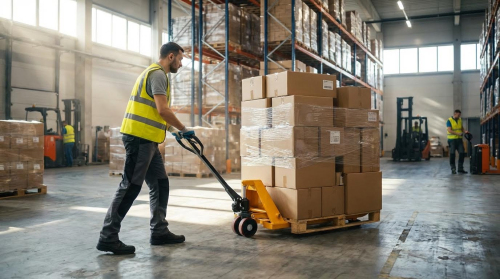
Safe pallet truck operation protects people, products, and equipment while keeping material flow efficient. This guide explains how to use a pallet truck safely in real-world warehouses, production areas, and loading docks. You will learn core operating principles, inspection routines, and engineering controls that reduce risk and downtime. The article also covers ergonomics, environment-specific truck selection, and practical steps supervisors can use to standardize safe work practices across their teams.
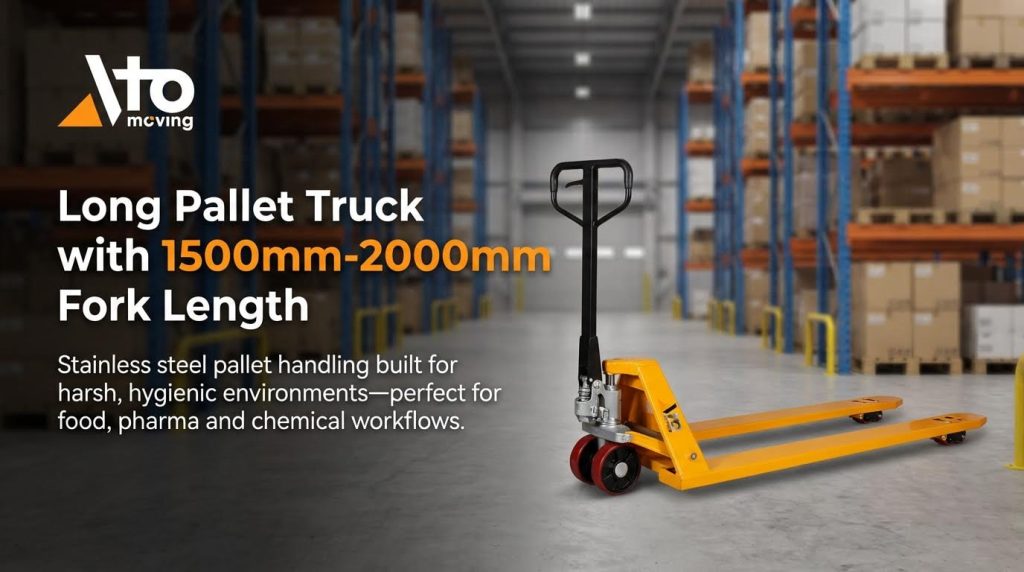
Fundamentals Of Safe Pallet Truck Operation

Manual vs. electric pallet trucks
Understanding the differences between manual and electric pallet trucks is central to learning how to use a pallet truck safely in any facility. Manual pallet trucks rely entirely on operator force for traction and a small hydraulic pump for lifting, so load weight, floor condition, and operator strength strongly affect safe use. Electric pallet trucks add powered traction and lift, which reduces physical strain but introduces new risks such as higher travel speeds, battery hazards, and the potential to move heavier loads (often up to about 5,000 lb) at low lift heights under 10 inches compared with forklifts that typically lift higher. For manual trucks, pre-use hydraulic checks are critical: operators should confirm smooth lifting, look for leaks, and, if air has entered the system after long idle periods, cycle the handle 4–6 times with the forks lowered until normal operation returns to restore proper hydraulic function. Electric pallet trucks require additional engineering and procedural controls, including daily checks of controls, brakes, horn, and emergency stop, plus safe battery charging in designated, ventilated areas with provisions for electrolyte neutralization, fire protection, and strict control of ignition sources as required for powered industrial trucks. Electric pallet truck operators must also follow end-of-shift procedures: parking in the assigned area, switching off, engaging the emergency stop, and connecting to the charger using appropriate protective equipment while verifying the charger starts correctly before reporting any anomalies to a supervisor.
Operator roles, training, and OSHA context
Clear operator roles and structured training are essential foundations for how to use a manual pallet jack safely, especially for powered models that fall under OSHA’s powered industrial truck rules. OSHA required employers to ensure that powered pallet truck operators are competent through a combination of formal instruction, hands-on training, and workplace performance evaluation, with refresher training at least every three years or sooner if unsafe behavior or incidents occur under 29 CFR 1910.178. Electric pallet jack operators require formal certification, while manual pallet jack operators are not explicitly certified by OSHA; however, best practice is to train all operators on safe operation, load limits, and emergency response to maintain a consistent safety standard. Training content should cover truck-related topics such as controls, capacity, and stability, plus workplace topics such as surface conditions, pedestrian traffic, and any hazardous atmospheres where only appropriately designated industrial trucks (e.g., EX types in flammable gas or dust areas) are allowed to prevent ignition of flammable mixtures. Supervisors play a key role by enforcing daily inspections, removing defective powered trucks from service until repaired, and ensuring that operators wear appropriate work clothing, safety footwear, and gloves as part of a broader safety culture around pallet truck use.
Engineering Controls, Inspection, And Operation
Daily inspection and hydraulic system checks
Daily inspection is the first control step in how to use a pallet truck safely and keep it in serviceable condition. Operators should scan wheels for debris, inspect forks for bends or cracks, and note any jerky handle movement for follow‑up maintenance daily visual scan. For manual trucks that have sat unused, air can enter the hydraulic circuit; lower the handle, then pump 4–6 times and release, repeating until the lift feels smooth and consistent to restore normal operation. Any visible hydraulic oil leaks, damaged seals, or forks that fail to rise evenly under a test load are grounds to tag the truck out of service until repaired. A simple structured checklist supports consistent inspection quality and documentation.
- Visual checks: frame damage, cracked welds, deformed push rods, missing fasteners.
- Hydraulic checks: smooth pumping, no bypass (creeping down), no external leaks, stable height under load.
- Rolling gear: wheels and bearings free of flat spots, cracks, or excessive play.
- Controls: handle return spring, brake (if fitted), and lowering lever function correctly.
Cleaning is part of inspection: wipe forks and frame to remove grease and dust that can hide cracks or leaks as a daily routine. Weekly and monthly lubrication and tightening tasks keep steering joints, axles, and pivot points operating smoothly, which reduces push forces and improves control.
Load rating, stability, and center of gravity
Understanding capacity, stability, and center of gravity is critical to how to use a pallet truck safely in real operations. The nameplate or markings define the maximum rated load; exceeding this limit increases stress on the hydraulic unit and frame and can cause tipping or component failure when overloading up to around 2500 kg. Loads must be centered evenly on both forks so that the combined center of gravity stays within the “stability triangle” formed by the wheels. Uneven or off‑center loading shifts the center of gravity sideways, increasing the risk of side‑tip, especially when turning or on uneven floors if the load is not centered.
- Before lifting: confirm pallet integrity, align forks fully under the pallet, and check load weight against the rating.
- During lifting: raise only enough to clear the floor; avoid “topping out” the stroke under heavy load.
- Load geometry: place heavier items at the bottom and toward the fork heel for a lower, more central center of gravity to improve stability.
- Securing the load: strap or wrap irregular or loose items so they cannot shift during travel for irregularly shaped goods.
From an engineering perspective, small changes in height and offset can significantly affect tipping moment. Keeping forks low and the load compact reduces lever arms and keeps the resultant center of gravity inside the wheelbase during cornering and braking.
Safe travel, ramps, and hazardous locations
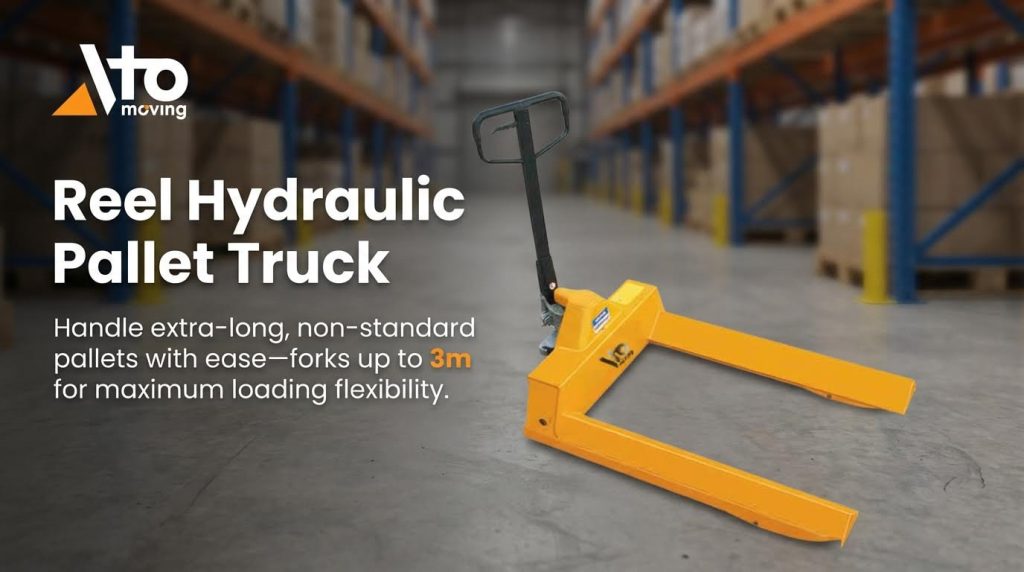
Safe travel technique is where many day‑to‑day decisions about how to use a pallet truck safely come together. On level floors, operators should push rather than pull to maintain better posture and visibility, and keep forks 2–5 cm (about 1–2 in) off the ground to avoid ground strikes while keeping the load stable during transport. Travel paths must be kept clear of spills, debris, and cords to prevent sudden stops or lateral jolts that can destabilize the truck and create slip risks. On ramps or slopes, manual trucks should descend backward so the operator can control the speed and keep the load uphill, and turning on a ramp must be avoided to reduce side‑tip risk by keeping the truck straight.
Key travel and ramp practices
- Use only even, suitable surfaces; avoid potholes, steps, and large gaps to prevent tipping and load loss.
- On outdoor or rough terrain, select pallet trucks with appropriate wheel and tire design for shock absorption to maintain stability.
- When using elevators, verify the elevator’s rated capacity can support the truck, load, and operator, and enter with the load leading while other passengers stay clear to avoid overload and crush hazards.
In hazardous locations with flammable gases, vapors, or combustible dusts, only appropriately designated powered industrial trucks may be used, such as EX‑rated units in areas with certain flammable gases or dusts according to industrial truck classifications. Battery‑charging and storage areas must also be treated as controlled zones with ventilation, spill‑neutralizing provisions, and strict controls on ignition sources to manage fumes and electrolyte. Selecting the correct truck type for the classified area and enforcing travel rules in those zones is a core engineering control for explosion and fire prevention.
Application Scenarios, Ergonomics, And Equipment Choice
Matching truck type to floor, aisle, and environment
Choosing the right pallet truck for your floor, aisle, and environment is a core part of how to use a pallet truck safely. On smooth, level indoor floors, standard manual or electric low‑lift trucks work well, provided operators keep forks low and push rather than pull to maintain control and reduce strain. Safe practice is to travel with forks about 2–5 cm (1–2 in) above the floor and to clear the route of debris or wet spots before moving. Narrow aisles and high pedestrian traffic often favor compact, highly maneuverable units and strict one‑way traffic patterns to reduce collision risk.
Outdoor yards, loading docks, and rough or broken concrete demand different choices. For uneven or exterior surfaces, trucks with larger or pneumatic-style wheels reduce shock loading and help keep the load stable on small ramps or thresholds. On ramps and slopes, operators must control direction and orientation; for manual units they should descend slopes with the operator uphill of the load, maintaining straight alignment and never turning on the ramp to avoid side‑tipping. Where slopes, confined spaces, or elevators are involved, the floor or lift must support the combined weight of truck, load, and operator, and the load should enter first so the operator can maintain an escape path. Operators should never use damaged trucks and must park with forks fully lowered in designated areas, clear of exits and traffic. In any application that may involve hazardous atmospheres, powered industrial trucks must carry the correct designation (such as EX, EE, or DY) for the specific gas, vapor, dust, or fiber present, in line with regulatory classifications for truck types and hazardous locations. Only properly approved truck types may operate where flammable gases, vapors, combustible dusts, or easily ignitable fibers are present. Matching equipment to the environment in this way reduces both incident probability and the severity of any failure.
- Smooth indoor floors: standard manual or electric trucks, focus on low fork height and clear paths.
- Rough or outdoor surfaces: larger or pneumatic-type wheels for shock absorption and stability.
- Narrow aisles: compact, tight‑turning trucks and defined travel rules.
- Slopes and ramps: straight travel, no turning, operator uphill of the load.
- Hazardous atmospheres: only trucks with the correct regulatory designation should be used.
Ergonomic load handling and TCO considerations
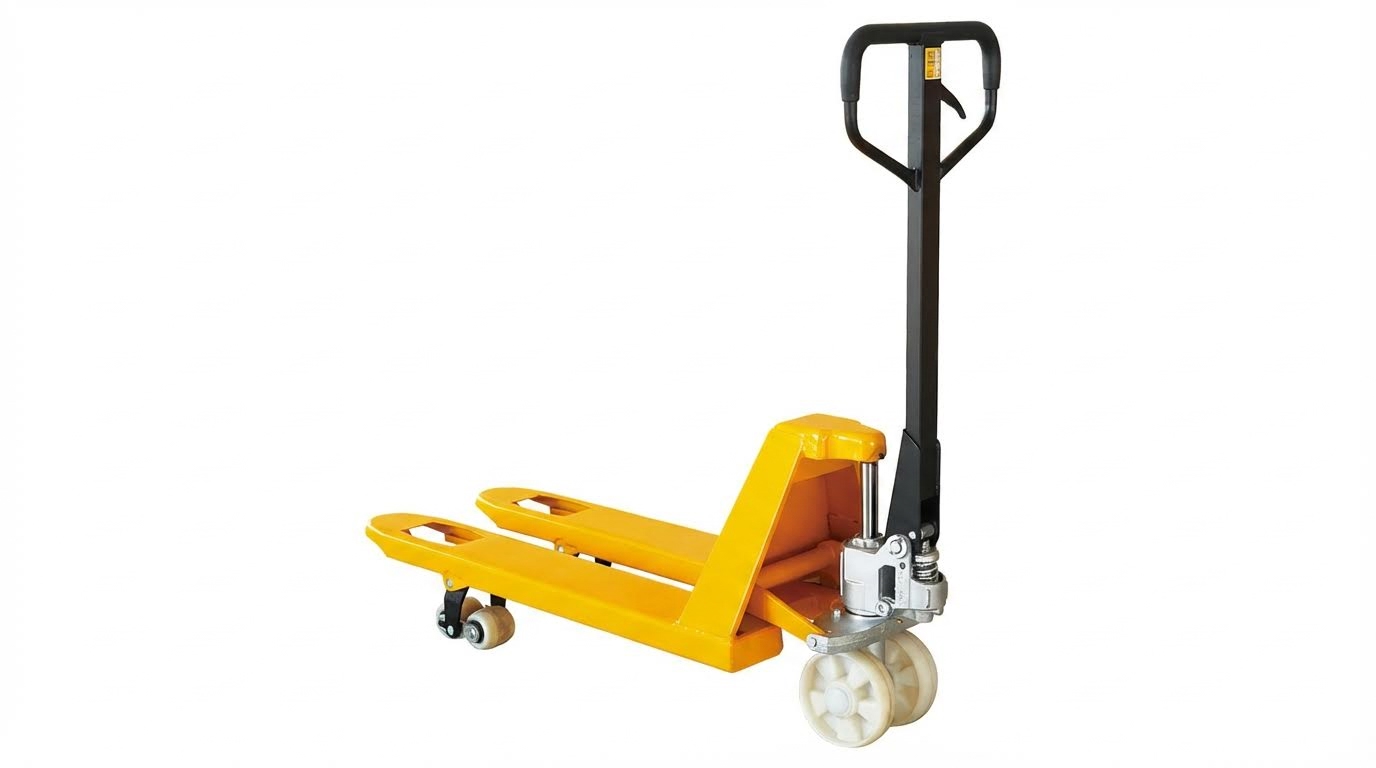
Ergonomics and total cost of ownership (TCO) are tightly linked to how to use a pallet truck safely. Poor body posture, high push–pull forces, and frequent bending increase injury risk and drive indirect costs such as lost time and turnover. In many warehouses, individual cases handled onto pallets weigh in the range of 80–100 lb, and operators often had to place the heaviest units on the bottom layer, forcing deep bending and extended reaches. Raising the bottom pallet level or using height‑adjustable equipment keeps loads closer to waist height and reduces torso bending. Some pallet trucks or add‑ons allow the load to be elevated by several inches, which helps maintain a neutral spine during case picking.
Simple engineering controls further improve ergonomics and lower life‑cycle costs. Stacking a few empty pallets on the forks or using a palletizer on top of the pallet jack can raise the working surface to a more comfortable level, reducing the need for repeated deep bending. Power equipment is generally recommended over manual handling when push–pull distances, load weights, or frequency are high, because it reduces peak forces on the shoulders and lower back. At the same time, operators should not rely on back belts; their effectiveness in preventing injuries has not been proven and they may encourage attempts to lift heavier loads than is safe. Guidance has indicated that misuse of back belts can actually increase injury risk if they give a false sense of security.
From a TCO perspective, ergonomic improvements usually pay back through lower injury rates, reduced absenteeism, and higher throughput per operator. Selecting trucks with smooth‑rolling wheels, low‑effort steering, and appropriate handle geometry reduces exertion and fatigue across a shift. Consistent inspection and maintenance—checking wheels and forks for wear, ensuring hydraulics operate smoothly, and lubricating key joints—protect the asset and limit unplanned downtime. Daily and weekly routines that include wheel cleaning, lubrication, and inspection for cracks or flat spots help keep push forces low and extend component life. When management evaluates equipment options, including these ergonomic and maintenance factors alongside purchase price gives a more accurate picture of the real cost per pallet moved.
| Ergonomic / TCO factor | Impact on safety | Impact on cost |
|---|---|---|
| Load height adjustment | Less bending and twisting, fewer back injuries | Lower injury claims and lost time |
| Smooth‑rolling wheels and good bearings | Reduced push–pull force and strain | Higher productivity, less wear on components |
| Regular inspection and lubrication | Fewer in‑service failures or sudden stops | Longer truck life, less downtime |
| Appropriate use of powered vs. manual trucks | Lower manual handling risk on heavy or frequent moves | Optimized labor use vs. energy and maintenance costs |
Key Takeaways For Safer, More Efficient Pallet Truck Use
Safe pallet truck use depends on matching engineering limits with disciplined daily practice. Capacity ratings, fork geometry, and wheelbase define how much load a truck can carry and how stable it remains during turns, ramps, and stops. When operators respect these limits, keep loads low and centered, and choose the right truck and wheel type for the floor and environment, they greatly reduce tip‑over and load‑loss risk.
Daily inspection and basic hydraulic checks prevent hidden defects from turning into sudden failures. Clean, lubricated wheels and joints also cut push forces, which protects operators from strain and keeps throughput high. In powered equipment, correct battery charging and the right truck designation for hazardous areas act as primary fire and explosion controls.
Ergonomic choices—such as raising work height, using powered trucks for frequent or heavy moves, and enforcing push‑not‑pull travel—directly lower injury rates and total cost of ownership. The best practice for operations teams is clear: standardize inspections, training, and travel rules; select trucks to fit the task and environment; and treat ergonomics as an engineering requirement, not an add‑on. When these elements align, Atomoving pallet trucks support both high safety and high productivity in every shift
Frequently Asked Questions
How do you work safely with a pallet truck?
To work safely with a pallet truck, first inspect the wheels, handle, and lifting mechanism for damage or wear. Position the forks evenly under the pallet and ensure they are fully inserted before lifting. Avoid overloading by adhering to the truck’s weight limit. Use the handle to lift the load smoothly. Pallet Truck Safety Guide.
What are the hazards of using a pallet truck?
Common hazards include injuries from pushing or pulling over uneven surfaces, loads falling from the pallet truck, and accidents involving striking or being struck by the truck. To minimize risks, always check the equipment before use and ensure the load is secure. Pallet Truck Hazards.
Should you push or pull a pallet truck?
It is generally safer to push a pallet truck rather than pull it. Pushing provides better control and visibility, reducing the risk of accidents. Always maintain a steady pace and avoid sudden movements when maneuvering the truck. Pallet Truck Safety Tips.