
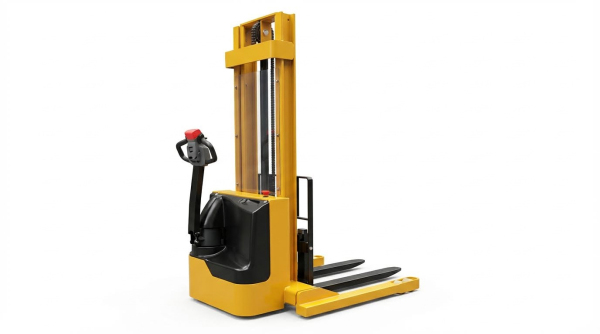
Walkie lifts sit between manual pallet jacks and full-size forklifts, giving warehouses a compact, electric option for lifting and stacking pallets. This article explains what is a walkie lift in practical engineering terms, how it works, and where it fits best in your operation. You will see how design, power systems, and safety standards translate into real-world productivity and risk reduction. Use this guide to match walkie lifts to your layout, throughput, and total cost of ownership goals.
What Is A Walkie Lift And How Does It Work?
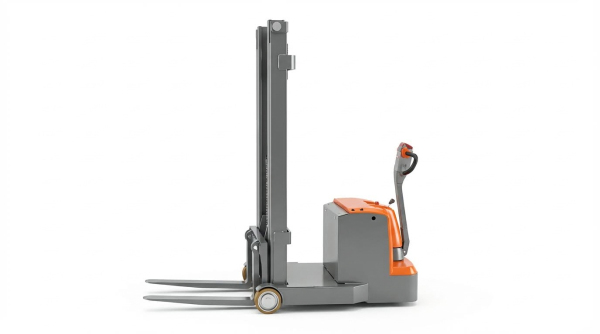
Core design and operating principles
When people ask “what is a walkie lift,” they usually mean a compact, electric-powered pallet stacker that the operator walks behind or alongside. The operator steers using a tiller arm with simple controls for drive, lift, and lower. An electric traction motor moves the truck, while a separate hydraulic power unit raises and lowers the forks. These machines are optimized for smooth, indoor floors and short to medium travel distances in tight aisles.
- Electric powertrain: A low-voltage battery (often around 24 V) feeds an AC drive motor for smooth acceleration and precise speed control.
- Hydraulic lifting system: An electric pump pressurizes hydraulic fluid to extend lift cylinders in the mast, raising the carriage and forks.
- Operator interface: The tiller arm includes throttle controls, lift/lower buttons, horn, and emergency reverse or “belly” button.
- Braking and control: Electromagnetic brakes and automatic speed reduction help maintain control when stopping or cornering.
In operation, the sequence is straightforward: the operator positions the forks at pallet entry height, drives forward until fully engaged, then lifts to the required height for transport or stacking. Compact chassis dimensions and a short turning radius let the walkie lift work in narrow aisles where larger forklifts struggle. Because the operator walks instead of riding, travel speeds stay moderate, which naturally limits impact forces and supports safer operation in busy warehouse aisles.
More on how walkie lifts differ from forklifts
Compared with sit-down forklifts, walkie lifts trade off ultimate capacity and travel speed for lower cost, smaller size, and easier use in confined spaces. They are best suited for moderate loads, frequent short runs, and stacking in racking where maneuverability matters more than high lift speed or outdoor performance.
Key specs: capacity, lift height, and dimensions
Understanding key specifications is essential when deciding what is a walkie lift that fits your application. Typical units handle light to moderate pallet loads and reach common warehouse racking heights. Exact figures vary by model, but most fall into similar performance ranges suitable for general warehousing, retail backrooms, and light manufacturing.
| Specification Category | Typical Walkie Lift Range* | Practical Engineering Notes |
|---|---|---|
| Rated capacity | About 1,000–2,500 lb | Stay below the nameplate rating, especially at maximum lift height to maintain stability. |
| Lift height | Approx. 65 mm minimum up to ~3,600+ mm; some masts can reach around 5,000 mm | Choose height based on top beam elevation plus pallet and load height, with safety clearance. |
| Mast type | Two- or three-stage | Three-stage masts offer greater reach while keeping lowered height compact. |
| Overall height | Roughly 1,650–2,300 mm (mast lowered) | Check door, mezzanine, and sprinkler clearances. |
| Overall width | About 800–950 mm | Must suit aisle width and cross-aisle turning. |
| Fork adjustability | Approx. 8–25 in between forks | Adjustable forks help handle different pallet sizes or skids. |
| Turning radius | Compact; suited for narrow aisles | Crucial for right-angle stacking and working in small staging areas. |
*Ranges are indicative, not model-specific.
- Capacity: Rated capacity assumes a centered load at the specified load center. Oversized or high-center-of-gravity loads reduce effective safe capacity.
- Lift height: Higher masts increase reach but also raise the load’s center of gravity, which reduces stability margins.
- Dimensions: Overall width and length determine minimum aisle width and turning space; small changes can make the difference between single- and double-deep access in tight layouts.
Always match capacity and lift height to your heaviest, highest-stored pallet, not the average load. This avoids overload conditions and stability risks at the top of the mast.
Spec-check tips before purchasing
Measure your heaviest pallet including wrapping, confirm racking beam heights, and map actual aisle widths under real conditions (with pallets in place). Compare these measurements to the walkie lift data sheet for capacity at height, right-angle stacking clearance, and turning radius to ensure the truck can safely operate everywhere you intend to use it.
Engineering Details, Power Options, And Safety
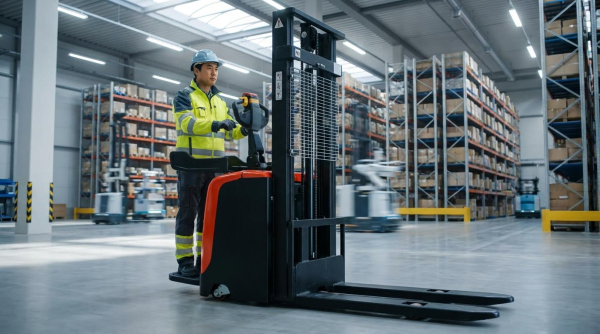
Electric drive, batteries, and charging choices
When people ask what is a walkie lift, they usually mean an electric pedestrian stacker with powered drive and lift. The drive unit uses an electric motor, often AC, to power both traction and the hydraulic pump. This gives smooth acceleration, controlled travel speed, and consistent lift performance in tight warehouse aisles. Most walkie lifts use low-voltage DC systems for safety and easier maintenance.
- Typical power system
- Electric traction motor with integrated gearbox
- Electric lift motor driving a hydraulic pump
- Controller that manages acceleration, braking, and speed limits
- Common battery options
- Lead‑acid industrial batteries for single-shift, lower-cost applications
- Lithium‑ion batteries for multi-shift, high-usage operations
- On-board or off-board chargers, depending on fleet size
Lead‑acid batteries suit predictable shifts and overnight charging, but need watering and longer charge times. Lithium‑ion options support fast and opportunity charging, which increases uptime and reduces battery maintenance. Charging strategies should match your duty cycle: light use can work with simple overnight charging, while multi-shift work benefits from scheduled top‑ups during breaks.
| Battery type | Best for | Maintenance | Charging pattern |
|---|---|---|---|
| Lead‑acid | Single shift, moderate use | Regular watering and cleaning | Full charge during off-shift |
| Lithium‑ion | Multi-shift, high throughput | Low maintenance | Fast and opportunity charging |
Deep dive: Extending battery and drive system life
To maximize drive system life, avoid repeated full‑throttle starts with heavy loads, especially on ramps. Keep tires and wheels in good condition to reduce rolling resistance and current draw. For batteries, avoid frequent deep discharges, keep terminals clean, and maintain proper charging room temperature. These practices reduce heat in motors, controllers, and batteries, extending overall system life.
Stability, masts, and braking systems
Understanding stability is central to answering what is a walkie lift from an engineering standpoint. The truck, load, and mast form a moving lever system around the drive axle and support points. The design keeps the combined center of gravity inside a defined stability triangle during normal use. As lift height increases, stability margin reduces, so speed and tilt functions are limited by design at higher elevations.
- Mast and chassis design
- Two‑stage or three‑stage telescopic masts for different lift heights
- Reinforced mast rails and cross‑members to control deflection
- Compact chassis to reduce turning radius in narrow aisles
- Stability features
- Outriggers or straddle legs (on some types) to widen the support base
- Polyurethane load and drive wheels for good grip on smooth floors
- Speed reduction when the mast is raised above a set height
Braking systems on walkie lifts are usually electric or electromagnetic, integrated with the control handle. Releasing the throttle commands regenerative or electric braking before the parking brake engages. This gives predictable stopping distances and reduces wear on mechanical components.
| Brake type | Function | When it acts |
|---|---|---|
| Service / dynamic brake | Slows the truck during travel | When operator releases or reverses the throttle |
| Parking / electromagnetic brake | Holds the truck stationary | When handle is upright or fully lowered, or power is off |
Never rely on the braking system to compensate for overloading or poor stacking. Keeping the load within the rated capacity and centered on the forks is the primary stability control.
Hidden factors that affect stability
Several factors quietly reduce stability: worn or mismatched wheels, uneven floor joints, and side slopes near dock edges. Tall or shrink‑wrapped loads can shift under braking, moving the center of gravity suddenly. Regular mast inspection for bending or loose rollers, plus checking wheel condition and floor quality, helps keep real‑world stability close to the design intent.
Safety standards, training, and risk controls
Any technical discussion of what is a walkie lift must include its regulatory and safety framework. Walkie lifts fall under powered industrial truck rules, which require formal operator training, evaluation, and periodic refreshers. Training must cover both the specific truck type and the conditions of your workplace. Written procedures should define how to inspect, operate, park, and charge the equipment.
- Key safety practices
- Pre‑shift inspections of forks, mast, controls, horn, and brakes
- Checking battery charge and cables before use
- Keeping loads within rated capacity and below eye level while traveling
- Typical built‑in safety features
- Emergency reverse or “belly” button on the tiller head
- Automatic speed reduction in tight turns or with elevated masts
- Guarded masts and clear operator sight lines
| Risk area | Common hazard | Control measure |
|---|---|---|
| Pedestrian zones | Struck‑by incidents | Defined walkways, horns at intersections, reduced speed |
| Loading and stacking | Tip‑over or falling loads | Capacity limits, level forks, correct pallet engagement |
| Charging area | Battery and electrical hazards | Ventilation, PPE, correct charging procedures |
Only trained and authorized personnel should operate walkie lifts. Untrained use significantly increases collision, tip‑over, and battery‑handling risks.
Practical training and supervision tips
Effective programs combine classroom instruction, hands‑on driving in real aisles, and documented evaluations. Supervisors should spot‑check behavior: horn use at blind corners, speed in congested areas, and correct parking with forks lowered and key off. Near‑miss reports, even for minor incidents like pallet scrapes, provide valuable data to refine routes, signage, and speed limits.
Matching Walkie Lifts To Your Warehouse Needs
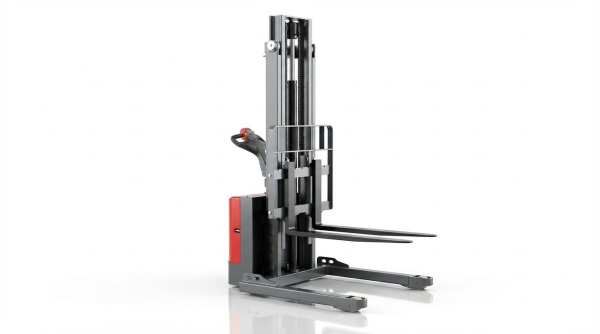
When to choose walkie lifts vs other equipment
When operations teams ask “what is a walkie lift good for compared with other options?”, the answer usually starts with space and travel distance. Walkie lifts and walkie stackers fit best in tight, indoor environments where operators move palletized loads at moderate heights and over short to medium distances. They bridge the gap between manual pallet trucks and full counterbalance forklifts.
- Choose walkie lifts instead of manual pallet jacks when:
- Daily pallet moves are high (roughly 50+ moves per day).
- Operators report fatigue or strain from pumping and pushing loads.
- There are small ramps, dock plates, or uneven joints in the floor.
- You need frequent stacking and unstacking at racking or mezzanine levels.
- Choose walkie lifts instead of sit-down forklifts when:
- Aisles are narrow and turning space is limited.
- Lifts stay indoors on smooth floors most of the time.
- Typical loads are moderate in weight and height, not extreme.
- You want lower purchase price and simpler operator licensing.
In compact warehouses, walkie lifts often deliver similar throughput to larger trucks with less cost, less training complexity, and lower risk to pedestrians.
How walkie lifts compare to other common options
| Equipment type | Best fit | Main limitations |
|---|---|---|
| Manual pallet truck | Light, infrequent moves over short, flat distances | Slow, high operator effort, no real stacking |
| Electric walkie lift / stacker | Indoor stacking, narrow aisles, moderate heights | Not ideal for rough outdoor yards or very heavy loads |
| Counterbalance forklift | Heavy loads, high lift, indoor–outdoor mixed use | Higher cost, more space needed, more stringent training |
Selection criteria, TCO, and common use cases
Answering “what is a walkie lift and is it the right choice for us?” requires a structured look at both technical fit and total cost of ownership (TCO). Start with your physical environment, then analyze throughput, ergonomics, and life-cycle costs. The goal is to choose equipment that safely meets demand without overspecifying or under-sizing.
- Key selection criteria
- Load profile: Typical pallet weight, dimensions, and whether loads are single- or double-stacked.
- Lift height requirements: Lowest and highest racking beam where pallets must be stored.
- Aisle width and turning space: Narrow aisles favor compact walkie lifts over larger trucks.
- Floor and terrain: Smooth concrete is ideal; frequent dock plates or slight ramps favor powered lifts over manual.
- Duty cycle: Shifts per day, hours of operation, and average travel distance per move.
- Power and charging access: Space, ventilation, and time windows for lead-acid or lithium-ion charging.
| Factor | Manual pallet truck | Electric walkie lift |
|---|---|---|
| Upfront cost | Very low | Moderate |
| Labor efficiency | Lower, high effort | Higher, powered drive and lift |
| Ergonomics | Higher strain risk | Reduced strain, better for frequent moves |
| Maintenance | Minimal | Battery and component care required |
| Best application | Occasional, short runs | Regular, higher-volume warehouse moves |
- TCO considerations for walkie lifts
- Higher purchase price than manual trucks but lower than forklifts.
- Labor savings from faster moves and reduced fatigue, especially at 50+ pallet moves per day.
- Battery choice (lead-acid vs lithium-ion) affects charging time, life cycle, and maintenance costs.
- Lower energy and service costs than combustion forklifts, with no exhaust or engine oil changes.
- Common use cases
- Retail backrooms and small warehouses where space is tight and stacking is frequent.
- Distribution centers needing to move and stage pallet loads in narrow aisles.
- Manufacturing plants feeding lines with components and work-in-process pallets.
- Cold storage and food facilities using electric equipment for air quality and noise control.
Simple decision checklist
- Moves per day under ~30, short distances, low budget → Start with manual pallet trucks.
- Moves per day above ~50, frequent stacking, narrow aisles → Electric walkie lifts are usually the best fit.
- Very heavy loads, high racking, outdoor yards → Consider counterbalance or reach forklifts instead.
Final Thoughts On Deploying Walkie Lifts
Walkie lifts work best when engineering limits, power choices, and safety rules all align with your real warehouse conditions. Capacity, lift height, and chassis size must match your heaviest pallets, top beam levels, and tightest aisles. If you undersize any of these, you push the truck near its stability limits and raise the risk of tip‑over or product damage.
Battery type and charging strategy also shape uptime and cost. Lead‑acid fits single-shift work with planned overnight charging. Lithium‑ion supports longer hours and fast top‑ups but needs a clear business case. If you ignore duty cycle and charging windows, even the best truck will sit idle.
Engineered stability features, braking systems, and safety devices only work as intended when operators follow training and site rules. Pre‑shift checks, correct pallet engagement, and speed control in pedestrian zones matter as much as the spec sheet. Treat near‑miss reports and wheel or mast wear as early warnings, not background noise.
The most reliable approach is simple: measure your space and loads, map your flows, size the walkie lift correctly, then enforce training and maintenance. Done this way, walkie lifts from Atomoving can deliver safe, low‑cost pallet handling for years.
,
Frequently Asked Questions
What is a Walkie Stacker?
A walkie stacker is a type of material handling equipment designed for lifting and transporting pallets. It uses legs under the forks to distribute the load weight, allowing it to lift two pallets at once. This makes it ideal for applications requiring both transportation and lifting of pallets. They are also space-efficient, needing minimal turning radius. Walkie Stacker Guide.
How High Can a Walkie Stacker Lift?
Walkie stackers can lift loads to heights of up to 6100 mm. They are commonly used in environments where loads need to be stored at significant heights and travel distances are minimal. Additionally, they serve as mobile work platforms for ergonomic positioning. Stacker Specifications.
What is the Difference Between a Walkie Stacker and a Forklift?
A walkie stacker differs from a traditional forklift primarily in its design and use case. While both are used for lifting and moving materials, walkie stackers are more compact and better suited for tight spaces. They require an operator to walk behind them, whereas forklifts have a seat for the operator. Walkie stackers are ideal for short-distance transport and stacking tasks. Forklift Comparison.