
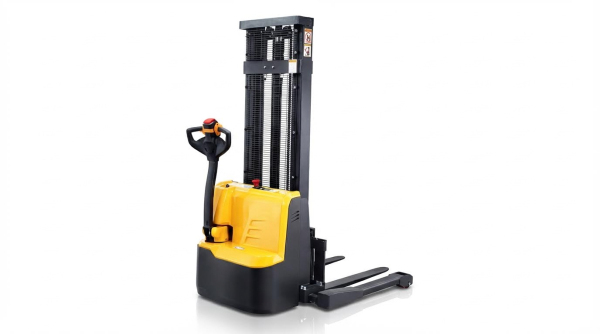
If you run a warehouse or production floor, you have probably asked yourself how much can a walkie stacker hold without risking damage or accidents. This guide explains what the rated capacity on the nameplate really means, and why factors like load center, pallet size, lift height, and floor conditions change the safe working load. You will also see how engineering limits, safety margins, and maintenance practices affect how much weight is truly safe to lift day after day. Use it as a practical reference to size new equipment and keep your current walkie stackers operating within safe, efficient limits.
What Load Capacity on a Walkie Stacker Really Means
Rated capacity vs. real usable capacity
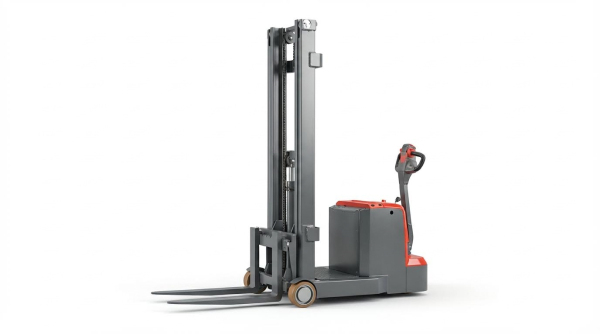
When you ask “how much can a walkie stacker hold,” the answer starts with the rated capacity on the nameplate. Typical walkie stackers are rated around 1000 kg, 1500 kg, or 2000 kg at a standard load center and a specified lift height. These capacities are defined and tested by the manufacturer for a specific configuration. In real operation, the usable capacity is often lower because of pallet size, load shape, wear, floor conditions, and how high you need to lift.
- The rated capacity assumes a uniform, compact load with its center of gravity at the standard load center.
- Dynamic effects (braking, turning, ramps) and uneven loading reduce what is actually safe to lift, similar to how rack systems are designed with safety margins and must not be pushed to the theoretical limit. Rack design practice shows that uneven load distribution and impacts greatly increase risk.
- Good engineering practice is to choose a walkie stacker with 10–20% more rated capacity than your heaviest expected load, including pallet weight, to keep daily work within a safe envelope. Guidance for stackers recommends an extra capacity margin of about 10–20%.
Maintenance also affects how much a walkie stacker can safely hold over time. Poorly maintained hydraulics, worn mast rollers, or damaged bearings reduce lifting performance and stability long before the nameplate rating is reached. Neglected hydraulic systems and mast components can cause reduced lifting capacity and safety hazards. So “how much can a walkie stacker hold” is not only a spec-sheet question; it is also a question of condition, maintenance, and how conservatively you operate.
How load center and pallet size change capacity
Load center and pallet size are critical for understanding how much can a walkie stacker hold in real life. The load center is the horizontal distance from the fork face to the load’s center of gravity. Many walkie stackers are rated at a standard 600–610 mm (about 24 in) load center. When the load center increases because of longer pallets, overhanging product, or uneven stacking, the effective capacity drops due to leverage and stability limits.
- As a practical example, if a stacker is rated 1500 kg at a 610 mm load center, increasing the load center to about 762 mm (30 in) can reduce the safe capacity to around 1200 kg. This illustrates how a modest shift in the center of gravity significantly derates capacity.
- Longer pallets or loads that sit forward on the forks move the center of gravity away from the mast. The stacker then behaves like a longer lever arm, increasing tipping moment and reducing how much weight is safe.
- To answer “how much can a walkie stacker hold” for a specific pallet, you must compare your actual load center (half the load length from the fork face, adjusted for any overhang) to the manufacturer’s capacity chart.
Why pallet and load geometry matter
For a standard pallet where the load is evenly distributed, the load center is roughly half the pallet length. If you switch from a 1000 mm pallet to a 1200 mm pallet and keep the same stacking pattern, your load center increases by about 100 mm. That extra distance multiplies the overturning moment on the walkie stacker. At higher lift heights, this effect is even more critical, because the combined center of gravity of truck plus load moves upward, shrinking the stability triangle. This is why capacity charts usually show different allowable weights for different load centers and heights, even on the same model.
Engineering Factors That Limit How Much You Can Lift
Load center, fork length, and center of gravity
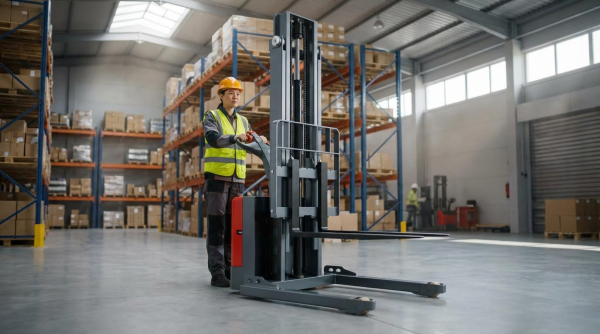
When you ask how much can a counterbalanced stacker hold, the first limiter is the load center. The rated capacity on the nameplate assumes a standard load center, typically around 600–610 mm (24 in). If the load center increases to about 760 mm (30 in), a stacker rated at 1500 kg may only safely handle about 1200 kg due to leverage and stability limits. Longer forks, deep pallets, or loads that overhang the fork tips all move the center of gravity forward and reduce real usable capacity.
- Keep heavy items tight against the fork heel, not at the tips.
- Avoid tall, top‑heavy pallets that shift the center of gravity upward and forward.
- Compare your actual load center to the capacity chart, not just the nameplate rating.
Stacker structure also has limits. Axle loading at the drive and load ends can exceed safe values if you run close to maximum capacity with long, offset loads because the wheelbase and tread define a finite stability triangle. Respecting these geometry limits is essential to keep the machine upright and controllable.
Lift height, mast type, and capacity derating
The second major factor in how much can a light duty electric stacker hold is lift height. As the mast raises, the combined center of gravity of truck plus load moves higher and often slightly forward, which reduces the safe working load at that height according to manufacturer load charts. Typical walkie stackers offer nominal lift heights from about 2.5 m to 4.5 m, with some versions reaching 5.5–6.0 m depending on configuration. These higher masts usually carry stronger derating at the top.
Mast design also matters. Single masts around 1600 mm are simple and stiff, so capacity derating is modest while dual masts in the 2500–4000 mm range and triple masts in the 4500–5500 mm range introduce more sections, chains, and rollers. That extra structure adds weight high up and increases deflection, so manufacturers reduce allowable load at full height for stability and component stress reasons. Always read the truck’s capacity plate or chart at your required lift height, not just the base rating at ground level.
Typical walkie stacker capacity and height ranges
| Rated capacity | Common mast types | Typical max height |
|---|---|---|
| 1000–1500 kg | Single / dual | 2.5–4.0 m |
| 1500–2000 kg | Dual / triple | 4.0–5.5 m depending on configuration |
Floor conditions, gradeability, and stability margins
Even if the truck and load geometry are correct, the floor and slope still limit how much can a electric platform stacker hold in practice. Walkie stackers are designed for flat, solid floors with limited gradeability; typical maximum grades are about 5% when loaded and 8% when empty which means even small ramps can significantly reduce safe capacity. Rough surfaces, expansion joints, and potholes introduce dynamic shocks that momentarily increase effective load and can destabilize a tall, heavy pallet.
Low ground clearance of around 30 mm and small polyurethane load wheels make walkie stackers sensitive to debris and uneven floors. To maintain stability margins you should:
- Stay well below rated capacity on ramps or imperfect floors.
- Reduce speed on grades, even with regenerative braking and electromagnetic service brakes because stopping distances and weight transfer increase.
- Keep aisles clear so the operator does not have to steer around obstacles with a raised, heavy load.
Good floor conditions and conservative use of the truck’s 5% loaded gradeability rating are key to preserving the designed stability margin. In real warehouses this often means treating the nameplate capacity as a theoretical maximum and applying your own reduction for slopes, joints, and surface damage.
How To Specify the Right Walkie Stacker Capacity
Step‑by‑step capacity calculation for your loads
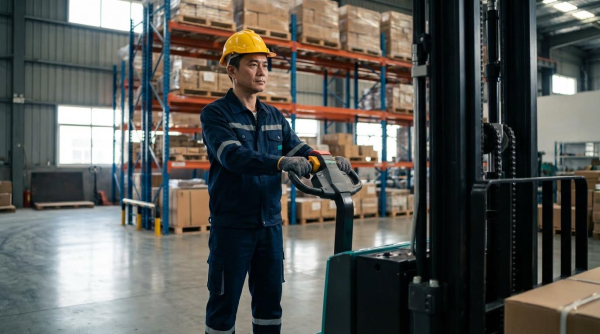
To answer “how much can a walkie stacker hold” for your application, start from the load, not the truck. Work through these steps and then compare the result to manufacturer data plates and load charts.
- Define the heaviest real load, including packaging and pallet. Weigh or estimate the worst‑case unit load, not the average. For example, if your heaviest palletized product is 1,050 kg and the pallet itself weighs 25–30 kg, round up to about 1,100 kg as the design load.
- Determine the actual load center. Measure from the fork face to the load’s center of gravity. Standard walkie stacker ratings assume about a 610 mm (24 in) load center. If your loads are longer or overhanging the forks, the load center can increase to around 762 mm (30 in), which can reduce a 1,500 kg rated capacity to roughly 1,200 kg at that longer load center due to leverage and stability limits at increased load center.
- Check required lift height and mast type. Capacity drops as lift height increases. Typical walkie stackers offer single, duplex, and triplex masts with lift heights from about 1.6 m up to 5.5 m across mast options. Use the manufacturer’s capacity chart to confirm that the truck can still handle your design load at the top storage level.
- Apply a safety margin to the calculated requirement. Once you know the maximum load and the worst‑case load center and height, add around 10–20% capacity margin to cover weight variations, uneven loading, and frequent lifts at maximum height as a recommended buffer. If your heaviest pallet including packaging is 1,200 kg, adding about 15% (180 kg) leads to a design requirement of roughly 1,380 kg, which typically means selecting a 1,500 kg rated walkie stacker.
- Match to available walkie stacker capacity classes. Common walkie stacker ratings are around 1,000 kg, 1,500 kg, and 2,000 kg across standard models. Choose the smallest rating that still exceeds your design requirement at the required load center and lift height. This gives a technical answer to how much can a walkie stacker hold in your specific use case, instead of relying only on the nameplate figure.
Worked example: choosing between 1,500 kg and 2,000 kg
Heaviest pallet (including pallet): 1,250 kg. Load center slightly above standard. Required lift height near 5.0 m. After checking the capacity chart, the 1,500 kg model is marginal at top height, so you step up to a 2,000 kg unit to maintain a safe margin at maximum lift.
Safety margins, standards, and maintenance impact
Even after you size the truck correctly, safety factors and maintenance determine how much a walkie stacker can hold over its life. You should treat the rated capacity as an upper design limit, not an everyday target.
- Safety and standards. Manufacturers already build in internal safety factors, and rack and material‑handling design commonly uses 15–25% structural margins that should not be consumed in normal use for static storage systems. For stackers, applying an operational margin of roughly 10–20% above your worst‑case load simplifies compliance with typical safety norms and internal company rules.
- Effect of maintenance on real capacity. Poor maintenance reduces practical lifting capability even if the nameplate rating stays the same. Worn hydraulic components, leaks, or low fluid levels can cause slower lifting and loss of effective capacity under load in the hydraulic system. Neglected mast chains, rollers, and bearings add friction and instability, which reduces the practical safe limit even if the truck still moves.
- Operator and inspection practices. Trained operators who respect capacity limits and perform quick pre‑shift checks help keep the real safe capacity close to the rated figure. Regular inspections of tires, brakes, and mast components, plus preventive maintenance on hydraulics and batteries, maintain stability, stopping distance, and lift performance over time as part of preventive programs.
- Link to overall system design. The answer to how much can a walkie stacker hold must also align with pallet rack capacities and floor ratings. Storage systems are usually sized with formulas that multiply load per pallet by positions per level and number of levels to set minimum rack capacity per bay for racking design. Ensuring that the stacker, racks, and floor all have compatible capacities prevents hidden overloads in the overall system.
Key Takeaways on Walkie Stacker Load Capacity
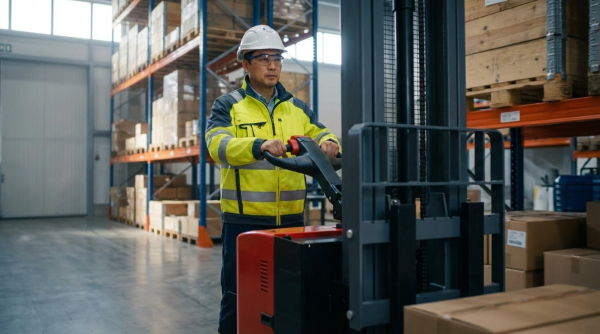
Walkie stacker load capacity is not a single fixed number. It depends on load center, lift height, floor quality, and truck condition. These factors change the combined center of gravity and the size of the stability triangle, which set the real safe limit long before structural failure.
Engineering teams should always size equipment from the load backwards. Define the heaviest pallet including packaging, measure the true load center, and check the required lift height. Then read the manufacturer’s capacity chart at that exact geometry, not just the nameplate. Add a clear 10–20% operational margin so daily work stays inside a stable, repeatable envelope.
Operations leaders must treat nameplate capacity as a ceiling. Reduce working loads on slopes, rough floors, and with tall or offset pallets. Keep heavy product tight to the fork heel and avoid top‑heavy stacks at maximum height.
Finally, link capacity planning to maintenance. Regular inspection of hydraulics, mast, wheels, and brakes keeps real capacity close to design values. When you apply these principles and choose correctly sized units from suppliers such as Atomoving, you protect staff, product, and infrastructure while keeping handling efficient and predictable.
,
Frequently Asked Questions
What is the weight capacity of a walkie stacker?
A walkie stacker’s weight capacity varies depending on the model and manufacturer, but typically ranges from 1,000 kg to 2,000 kg. These machines are designed for light to medium material handling tasks in warehouses and distribution centers.
How high can a walkie stacker lift?
Walkie stackers are ideal for lifting loads to heights of up to 6,100 mm. They are commonly used in applications where goods need to be stored at elevated levels while maintaining ergonomic handling for operators. Crown Equipment Guide.
Do you need certification to operate a walkie stacker?
Yes, OSHA requires formal instruction and hands-on evaluation for all powered industrial truck operators, including walkie stackers. Proper training ensures safety and compliance with workplace regulations. OSHA Safety Guidelines.