
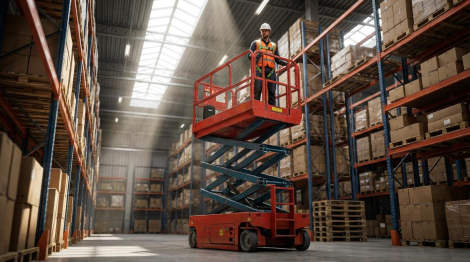
Knowing exactly when an aerial work platform training expires is critical if you manage MEWPs, scissor lifts, or boom lifts. Most operator certifications follow a three-year renewal cycle, with earlier retraining required after incidents, unsafe use, or major equipment changes when does an aerial work platform training expire. This article explains OSHA and ANSI expectations, technical recertification content, and how to build a compliant, role-based AWP training program. Use it as a practical roadmap to keep operators qualified, documentation audit-ready, and your job sites safer.
Understanding MEWP Training Expiration Rules
OSHA vs. ANSI: What The Standards Require
When facility managers ask “when does an aerial platform training expire,” they are really asking how OSHA’s legal requirements and ANSI’s consensus standards interact. OSHA focuses on ensuring operators remain competent, while ANSI defines structured MEWP training and retraining cycles. Both point employers toward periodic refresher training and additional instruction whenever conditions change or unsafe behavior appears. This combined framework drives most companies to adopt a clear, written recertification policy for scissor platform lifts.
- OSHA’s core requirement
OSHA requires employers to train and retrain powered industrial equipment operators so they can recognize hazards and take corrective actions. A “competent” operator must be able to identify predictable hazards and protect themselves and others. This competency-based approach means training effectively “expires” the moment an operator can no longer perform safely, even if a card date is still valid. Employers must monitor behavior, inspections, and incident reports to decide when refresher training is needed. - ANSI’s structured MEWP approach
ANSI A92 standards define detailed expectations for MEWP operator, supervisor, and occupant training, including equipment-specific content, emergency procedures, and workplace risk assessment. The standards promote consistent, documented training programs and emphasize that training must match the exact MEWP type and control layout in use. ANSI also supports hands-on evaluations and ongoing refreshers to keep pace with changing technology and jobsite conditions. Together, these ANSI practices help answer not only when does an aerial platform training expire, but also what content must be refreshed. - How OSHA and ANSI align in practice
In the field, most safety programs blend OSHA’s competency requirement with ANSI’s structured training model. Employers typically treat the card date as a maximum validity period, but they also require earlier retraining after incidents, unsafe acts, or major equipment changes. This hybrid approach reduces regulatory risk and supports a defensible position during audits or investigations. It also makes it easier to standardize expectations across multiple sites and contractor teams.
Key takeaway: OSHA vs. ANSI
OSHA sets the legal floor by requiring competent MEWP operators and retraining when needed. ANSI provides the practical training blueprint and typical cycles that companies adopt into their written scissor platform lift policies.
Standard 3-Year Cycle And Early Retraining Triggers
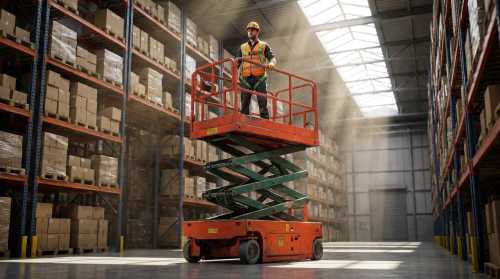
In most programs, aerial platform and MEWP operator training follows a three-year cycle. Industry guidance states that MEWP and scissor lift certifications remain valid for three years from the date of issue, after which operators must complete refresher training and a new evaluation to stay compliant. This three-year period has become the de facto answer to “when does an scissor platform lift training expire” for many employers. However, several conditions can force that expiration date to move up.
| Training Status | Typical Timing | Primary Drivers |
|---|---|---|
| Standard recertification | Every 3 years for MEWP and scissor lift operators | Keep skills current, align with evolving equipment and safety standards |
| Early retraining | As soon as a trigger occurs | Unsafe operation, incidents, new equipment, or long gaps in use that affect safe operation |
- Standard 3‑year recertification cycle
Industry-recognized guidance recommends renewing MEWP operator training every three years to keep operators aligned with current safety practices and equipment features. This same three-year validity period applies to common platforms such as scissor lifts, with employers responsible for verifying that each operator’s certification is still within date to avoid enforcement actions. Many companies build this three-year rule directly into their written scissor platform lift procedures and LMS reminders. - Early retraining triggers
Even within the three-year window, training can effectively expire if risk indicators appear. Early recertification is recommended when an operator is observed using a MEWP unsafely or violating site rules. Additional triggers include involvement in an accident or near-miss, assignment to equipment with new or significantly different technology, or a long period of non-use. In each of these scenarios, employers should treat the current training as no longer sufficient and schedule targeted refresher instruction and a new hands-on evaluation. - Compliance and risk implications
Failure to recertify operators on time, or to retrain promptly after a trigger, can expose employers to fines, penalties, and potential civil liability if an incident occurs. Regulators and investigators routinely review training records, dates, and retraining decisions after serious events. A documented three-year cycle, plus clear criteria for early retraining, gives safety teams a defensible framework and a simple answer when auditors ask when does an aerial platform training expire for each operator.
Practical scheduling tip
Many organizations schedule recertification at 30–90 days before the three-year mark and flag operators for immediate review after any incident, unsafe act, or equipment change. This keeps MEWP training current without waiting for a card date to lapse.
Technical Requirements For MEWP Recertification
Core Topics: Stability, Load, And Control Systems
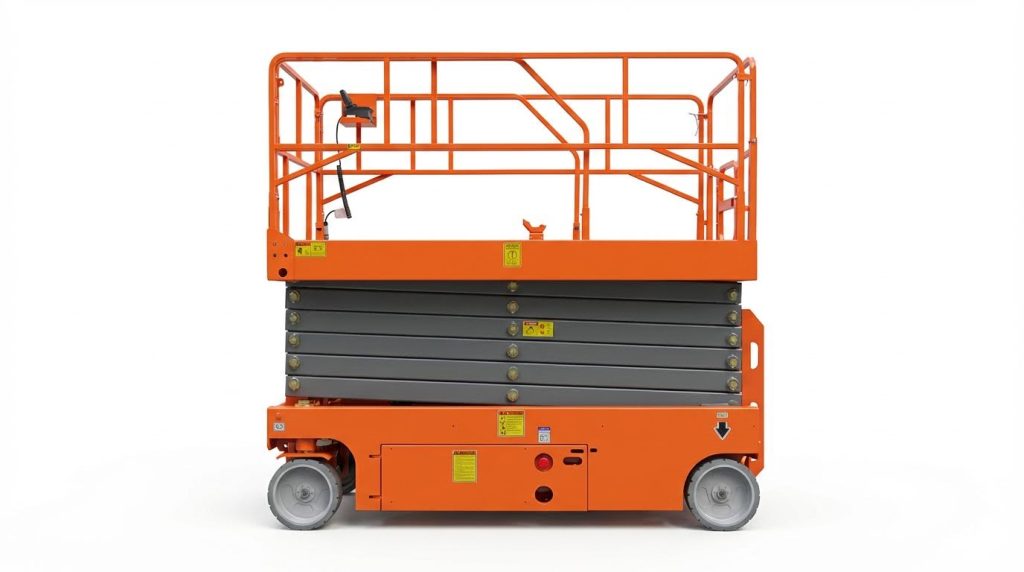
MEWP recertification must refresh operators on the fundamentals that keep the platform upright, within limits, and under control. A core requirement is a solid understanding of when does an aerial work platform training expire, because operators must know that most certifications are valid for about three years and can end sooner after unsafe operation, an incident, or a long period without use due to performance or equipment changes. Stability training should cover center of gravity, platform height, outreach, slope limits, and the impact of wind and dynamic movements on tipping risk. Load-related content must include reading and applying the data plate, calculating total platform load, and understanding how tools, materials, and occupants affect capacity and stability. Control-system topics should address pre-operation inspections, function tests of all controls and safety devices every time the MEWP is put into service, plus emergency lowering and stop functions. Daily inspections and function tests of controls and safety devices are a recurring requirement and must be reinforced in every recertification cycle.
- Stability: ground conditions, slopes, wind, and motion.
- Load: data plate limits, weight distribution, and tools.
- Controls: normal operation, emergency functions, and shutdown.
Emerging Tech: New Controls, Batteries, And Telematics
MEWP recertification must also close gaps created by new technology introduced since the last training. Early retraining is recommended whenever an operator is assigned to a machine with new or significantly different technology, such as advanced control consoles, proportional joysticks, or automated envelope control systems that change how the lift behaves. Battery technology has evolved, so recertification should address lithium-ion packs, battery management systems, charging procedures, and fire and thermal-runaway precautions, in addition to traditional lead-acid maintenance. Telematics and remote monitoring systems now provide usage logs, fault codes, and geofencing; operators and supervisors should learn how these tools support safe use, incident investigation, and proof of compliance. Because technology changes faster than the three-year cycle, many employers use tech changes as a trigger to refresh specific modules even before a full aerial work platform training expires to keep skills aligned with current equipment.
Examples of tech-focused refresher topics
- New control layouts and interlocks.
- Battery charging, storage, and emergency response.
- Using telematics data to spot unsafe practices.
Hands-On Evaluation, Documentation, And Audit Readiness
Recertification is not complete until each operator passes a documented, hands-on evaluation on the specific MEWP type they use. After any online or classroom portion, operators must demonstrate safe operation, including pre-use inspection, function testing, maneuvering, elevation, and emergency procedures; this practical check is a formal requirement in many programs to verify real-world competency. Employers should maintain organized records that show when each aerial work platform training expires, when refresher training took place, who delivered it, what topics were covered, and the results of the performance evaluation. These records are critical for audit readiness and defense after an incident, since regulators can penalize employers who fail to keep operators current on required recertification cycles and early retraining triggers including accidents or unsafe operation. A simple digital matrix or table that tracks each operator’s certification date, machine types, and next due date helps ensure no MEWP operator works with an expired qualification.
| Recertification Element | Technical Requirement |
|---|---|
| Hands-on test | Demonstrate inspection, control use, and emergency procedures on actual MEWP. |
| Documentation | Record dates, topics, trainer, and pass/fail results for each operator. |
| Audit readiness | Be able to prove no operator used a MEWP after their training expired or following a serious incident without retraining. |
Building A Compliant AWP Training Program

Role-Based Training: Operators, Supervisors, Occupants
A compliant aerial work platform (AWP) or MEWP program starts with clear role definitions and matching training content. This also answers a key compliance question: when does an aerial platform training expire, and who must be retrained on what. Operators, supervisors, and occupants each need different depth of knowledge, but all must understand their part in hazard control.
- Operator training should cover safe operation, hazard recognition, and machine-specific controls. Operators must be able to identify predictable hazards and take corrective action, which aligns with OSHA’s definition of “competent” personnel operator competency requirements. Programs should include daily pre-use inspections, function tests, and correct responses to malfunctions.
- Supervisor training needs to go beyond operation. Supervisors should learn how to select the right MEWP for the task, verify ground conditions, and check that manuals and decals are in place and readable supervisor training standards for MEWPs. They also need to track when scissor platform training expires, since operator certificates generally require renewal on a three‑year cycle.
- Occupant training should focus on fall protection, platform behavior, and emergency actions. At least one occupant must be able to operate the controls in an emergency, including lowering the platform if the operator is incapacitated occupant safety training for MEWPs. This role-based approach ensures the whole crew can respond correctly if conditions change at height.
How role-based training supports recertification
When each role has defined competencies, it is easier to decide who needs refresher training after an incident, near miss, or introduction of new equipment. That structure also supports targeted toolbox talks between the standard three‑year renewals.
Integrating HAZWOPER And High-Risk Site Requirements
On hazardous waste or high‑risk sites, a compliant AWP program must integrate HAZWOPER and site‑specific rules with MEWP training. Workers in hazardous waste operations generally need either 40‑hour initial HAZWOPER or an 8‑hour annual refresher, depending on their prior training level HAZWOPER training for aerial lift operators. These requirements sit on top of, not instead of, the normal MEWP operator, supervisor, and occupant training.
- Align renewal cycles by mapping when an scissor platform lift training expires (typically every three years for MEWP operators) against the annual 8‑hour HAZWOPER refresher requirement OSHA and ANSI recommendations on recertification. Many employers combine MEWP refresher content with one of the yearly HAZWOPER sessions to reduce downtime.
- Integrate content by adding chemical exposure, decontamination, and emergency response topics to the MEWP hazard modules. The 40‑hour HAZWOPER curriculum already covers PPE in high‑exposure environments, air monitoring, and decon procedures, which should be linked directly to lift operation near spills or venting equipment 40-hour HAZWOPER training content.
- Document and audit by keeping digital logs of both MEWP and HAZWOPER completions, including dates, modules, and evaluations. Employers are expected to schedule refreshers before expiration and can face OSHA penalties per violation if workers enter hazardous zones without current credentials employer responsibilities for HAZWOPER training.
High-risk site integration tips
Coordinate with site safety to embed MEWP scenarios into emergency drills, especially for chemical releases or confined layouts. Use these drills to confirm that operators, supervisors, and occupants all understand how their training applies when conditions deteriorate rapidly.
Final Thoughts On Staying Training-Compliant
MEWP training compliance depends on more than watching card dates. OSHA ties legality to operator competence, while ANSI adds structure, roles, and content. Together, they demand that you treat training as “expired” the moment behavior, incidents, or new technology show a gap. The three-year cycle is only the outer limit.
Engineering principles sit at the center of a strong program. Stability, load control, and proper use of safety systems prevent tip-overs and structural overload. Hands-on evaluations prove that operators can apply these concepts on real machines, not just pass a test. Daily inspections and function checks then keep each lift within design limits every shift.
On high-risk or HAZWOPER sites, you must layer chemical, decontamination, and emergency content onto the standard MEWP curriculum. Aligning renewal dates and logging both credentials closes common audit gaps.
The best practice is clear. Build a written program that defines roles, recertification intervals, and early retraining triggers. Tie every decision to documented risk indicators and equipment changes. Use simple digital tracking so no one operates after their aerial work platform training expires. This approach keeps your team safe, your records defensible, and your Atomoving equipment used as designed.
Frequently Asked Questions
When does aerial work platform training expire?
Aerial work platform training typically needs to be renewed every three years, according to ANSI recommendations. This renewal ensures operators stay updated with safety practices. Aerial Lift Training Renewal.
Does OSHA require training for aerial lifts?
Yes, OSHA requires training for all workers who operate or work with aerial lifts. This is outlined under regulation 1926.454, which mandates proper training to ensure safety. OSHA Aerial Lift Training.
What does OSHA require for aerial lift training?
OSHA requires comprehensive training for aerial lift operators, covering safe operation, potential hazards, and emergency procedures. Recertification is often needed every three years or sooner if there are changes in equipment or unsafe practices. Aerial Lift Certification Guide.