
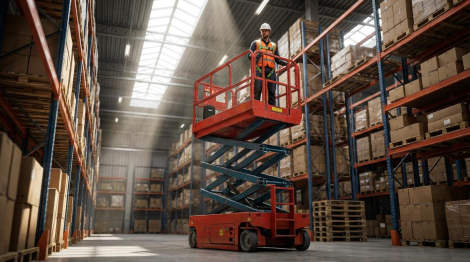
Scissor lift safety systems were engineered to keep you inside hard limits for load, tilt, and structural stress, not to annoy you with shutdowns. This guide explains how those devices actually work, what really happens mechanically and electrically when you defeat them, and why “how to bypass tilt sensor on scissor lift” is the wrong question to ask. Instead, you’ll see practical, data‑driven ways to fix nuisance trips, maintain your scissor platform lift, and use training and procedures to stay productive without gambling on tip‑overs, collapses, or regulatory trouble. Every section focuses on measurable risks, real failure modes, and safer engineering alternatives you can apply on site.
How Scissor Lift Safety Systems Really Work
Core safety devices and their functions
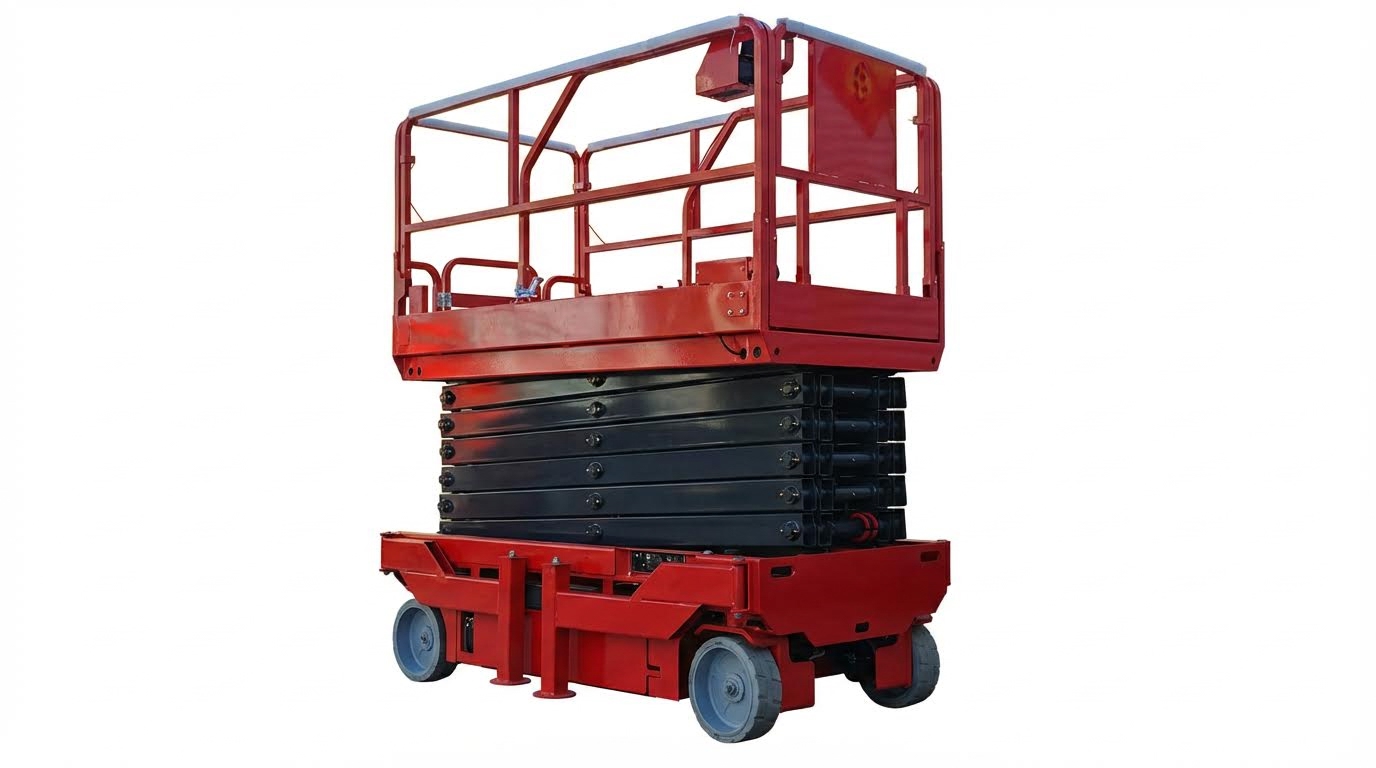
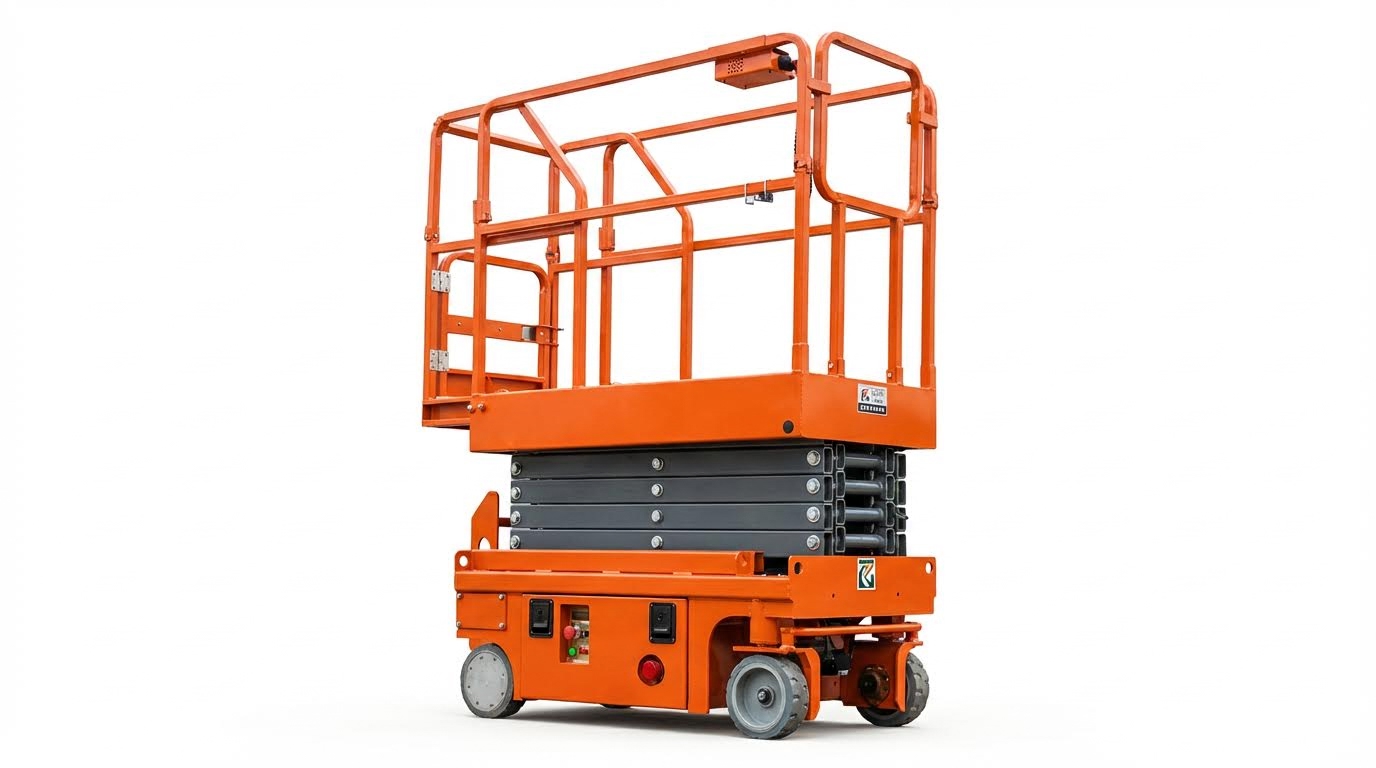
Scissor lift safety systems are layered. Each device watches one specific risk: falls, overload, tip‑over, crushing, or uncontrolled motion. Together they create a hard engineering limit that the operator cannot safely ignore.
- Guardrail and gate interlocks
- Full‑height guardrails prevent falls from the platform. Guardrails must be in place and workers must not stand on them.
- Gate or chain switches can stop lift travel if the entrance is not properly closed.
- Load‑sensing / overload protection
- Load pins, pressure sensors, or strain sensors estimate platform load.
- The control system compares live load to rated capacity; if exceeded, it blocks elevation or triggers an alarm.
- This enforces the manufacturer’s load rating and prevents structural overload or collapse. Overloading a platform can cause instability, collapse, or tipping.
- Tilt sensors and stability logic
- Inclinometers or tilt switches monitor chassis angle in longitudinal and lateral directions.
- Above a set tilt angle, the controller will block platform elevation and may require lowering before travel.
- This works with the machine’s geometric stability factor to keep the center of gravity inside the support polygon.
- Hydraulic pressure relief and holding valves
- Pressure relief valves limit maximum hydraulic pressure to protect cylinders and structure. Regular checks of relief valves are critical to prevent over‑pressure damage.
- Load‑holding / counterbalance valves prevent uncontrolled descent if a hose fails.
- These hydraulic devices are the last line of defense against sudden drops.
- Emergency stop and emergency descent
- Mushroom‑head E‑stops cut power to drive and lift circuits instantly.
- Emergency descent valves or manual pumps let workers lower a stuck platform safely after power loss.
- Control logic, interlocks, and alarms
- Electronic controllers cross‑check inputs (tilt, overload, gate, height, drive speed) and only allow safe combinations.
- Alarms warn of unsafe proximity to hazards like power lines or overhead obstructions when paired with procedures. Scissor lifts must be kept at least 10 ft from electrical power sources.
- Inspection and maintenance as a “meta‑device”
- Daily and periodic inspections ensure all safety devices actually function.
- Operators must check controls, guardrails, brakes, and structural parts before use. Pre‑operation inspections are mandatory, and defects must be repaired before use.
Engineering view: how devices tie into load and stability
From an engineering standpoint, safety devices enforce two main limits: safe working load and stability factor. Safe working load is often based on a fraction of structural capacity (for example using F = W × C with a capacity factor below 1.0 to keep stresses in a safe range). Using a conservative factor ensures the actual working load stays below the theoretical limit. The stability factor relates weight, center of gravity, applied forces, and platform geometry; control systems use tilt and load data to keep this factor in a safe band.
Why bypassing tilt and overload sensors is so dangerous
People often search for “how to bypass tilt sensor on scissor lift” when nuisance shutdowns interrupt work. From an engineering and safety perspective, defeating these devices converts built‑in safety margins into hidden, uncontrolled risk.
| Safety device | What users try to bypass | Hidden engineering risk | Real‑world consequence |
|---|---|---|---|
| Tilt sensor | Shorting or shimming the switch to ignore tilt alarms | Removes stability interlock that keeps the combined center of gravity inside the wheelbase on slopes or soft ground | High chance of tip‑over, especially at 10–29 ft where most lift falls occurred and tip‑overs caused the majority of incidents Tip‑overs accounted for about 58% of scissor lift fall incidents, mostly between 10–29 ft |
| Overload / load sensor | Unplugging, jumpering, or re‑calibrating to “fool” the system | Allows forces above the designed safe working load, increasing stress in scissor arms, pins, platform, and tires | Structural damage, sudden failure, or collapse; higher risk if workers lean or add materials after elevation |
| Hydraulic pressure relief / holding valves | Adjusting relief settings or blocking valves to “get more power” | Removes controlled pressure limit and secure load holding in case of hose failure | Uncontrolled descent, blown hoses, or cylinder failure under overload conditions |
Bypassing tilt protection ignores the fact that stability is not linear with height. A small extra tilt at full elevation can move the center of gravity past the tipping line with only a minor push, wind gust, or worker movement. Outdoor, elevated use on soft or sloped ground is especially sensitive; scissor lifts must be on firm, level surfaces and within allowed wind speeds to avoid tipping. Operating on firm, level surfaces and respecting wind limits is a core stability requirement.
Defeating overload sensors is just as risky. The platform rating already includes the weight of workers, tools, and materials plus a safety factor; pushing past that rating increases both structural stress and the overturning moment. Overloading also interacts with tilt and dynamic effects: heavy materials stacked on one side, workers leaning over guardrails, or sudden stops while driving all shift the effective center of gravity toward the edge of the support polygon.
- Why “it worked last time” is a trap
- Safety factors are not spare capacity for production; they cover unknowns like corrosion, wear, and uneven ground.
- Every bypassed job consumes fatigue life in pins, welds, and arms, making future failures more likely.
- Most serious incidents happen under “normal” conditions until one extra variable (wind, soft soil, sudden movement) pushes the system past its true limit.
- Data‑driven view of risk
- Tip‑overs and falls from height have been a leading cause of severe scissor lift injuries. Analysis of incidents showed most falls and tip‑overs occurred between 10–29 ft, with tip‑overs dominating the statistics.
- Bypassing tilt and overload sensors removes precisely the controls that exist to prevent those dominant failure modes.
If the lift keeps shutting down, what should you do instead?
Repeated tilt or overload shutdowns are engineering signals, not annoyances. Investigate root causes: verify ground level and firmness, check platform load against the rating, inspect hydraulic and structural components, and confirm sensors are calibrated and undamaged. Regular maintenance of hydraulic, electrical, and structural systems, along with solid operator training, reduces nuisance trips while keeping the safety envelope intact. Preventive maintenance on hydraulic and electrical systems is essential to avoid malfunctions and modern lifts rely on overload and tilt protection as core safety features.
Engineering Risks Of Defeating Safety Devices
Load, stability, and tip‑over mechanics
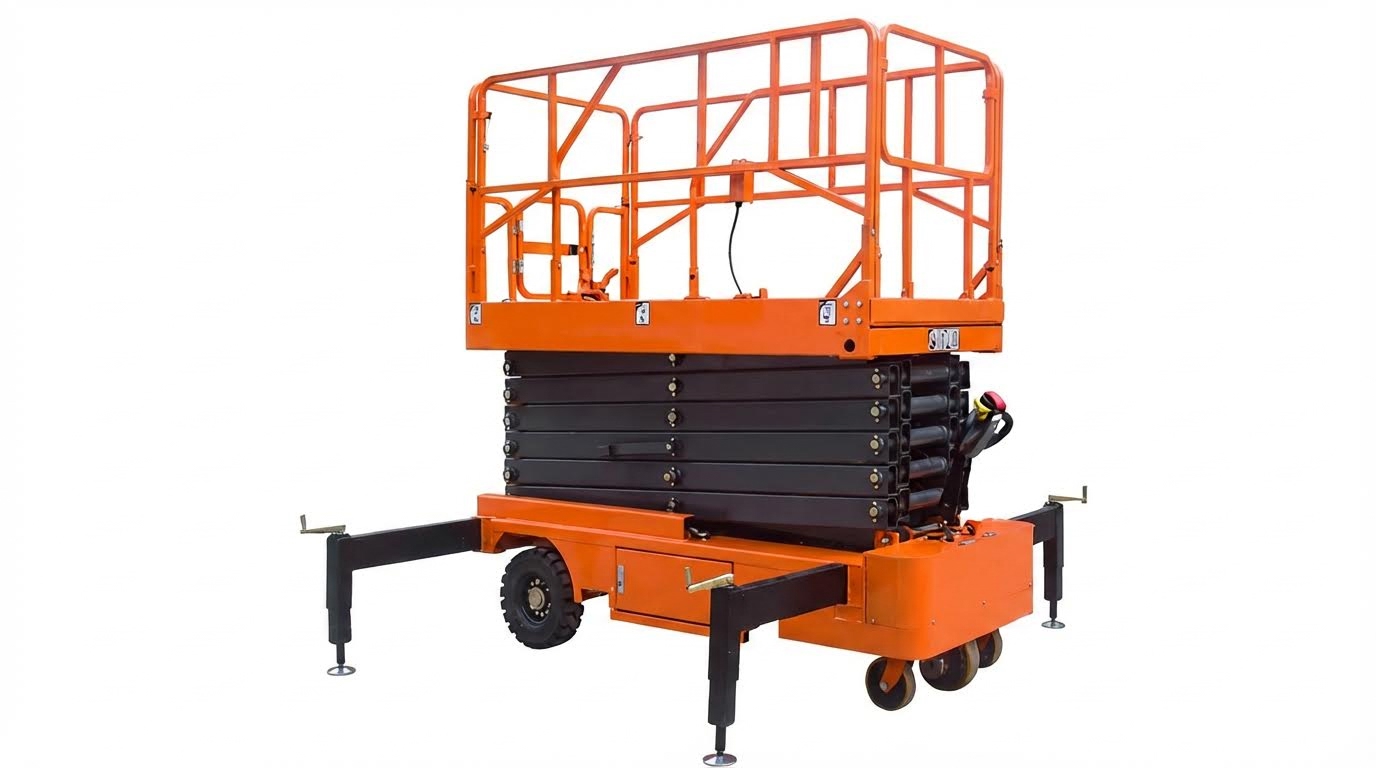
Bypassing load and tilt protection turns a scissor lift from a controlled structure into an unstable frame. The platform may still move, but you have removed the engineering limits that keep the center of gravity inside the stability envelope. This is why searching for “how to bypass tilt sensor on scissor lift” is so dangerous: you are deliberately disabling the system that prevents tip‑over.
| Engineering factor | What the safety device does | Risk when defeated |
|---|---|---|
| Platform load rating | Stops lift if rated capacity is exceeded, based on structural and stability limits. Overloading can cause instability and collapse | Hidden overload, overstressed arms and pins, sudden collapse or tip‑over at height. |
| Tilt sensor | Prevents elevation or movement on excessive slope to keep center of gravity within the wheelbase. | Lift can be raised on a slope; small side load (wind, reaching, driving) can push center of gravity past the tipping line. |
| Wind and side loads | Manufacturer limits outdoor use and wind speed to preserve stability. Outdoor use is limited to safe wind speeds | Platform behaves like a sail; with tilt protection defeated, gusts can overturn the lift. |
| Guardrails and platform discipline | Keep workers inside the designed fall‑protection envelope. Standing on guardrails is prohibited | Operators may stand or climb to “gain reach,” shifting the center of gravity and increasing overturn moment. |
| Safe working load (SWL) calculations | Use factors such as F = W × C to keep applied forces within 70–80% of structural capacity. SWL uses a capacity factor around 0.75 | When interlocks are defeated, operators can unknowingly exceed SWL, driving the structure into the failure zone. |
Stability is not a guess; it is calculated. Engineers design lifts so the combined center of gravity stays well inside the wheelbase under rated load, specified tilt, and wind. The stability factor S = (W × CG) / (F × L) shows how close you are to tipping; defeating tilt or overload devices pushes S toward 1.0, where any small disturbance can cause a rollover. Stability factor concepts are used to keep lifts upright
- Most scissor‑lift falls and tip‑overs occurred between 10–29 ft platform height, where overturn energy is already lethal. Tip‑overs accounted for the majority of falls
- Operating on soft or uneven ground further reduces the real stability margin, especially if stabilizing systems are ignored.
- Driving elevated multiplies lateral forces; if tilt or drive‑speed limits are bypassed, a sudden stop can flip the machine.
Why nuisance tilt or overload trips are a warning, not a fault
If a lift keeps tripping on tilt or overload, it is reporting that the task setup is outside its design envelope. The engineering fix is to change the setup (surface, position, equipment choice), not to defeat the device.
Electrical, hydraulic, and control system failure modes
Safety devices are integrated into the electrical, hydraulic, and control architecture as the last line of defense against predictable failures. When you bypass them, you convert manageable faults into catastrophic events. Many “annoying” shutdowns are actually early warnings of deeper technical problems.
| Subsystem | Typical failure or issue | Role of safety / interlocks | What changes if defeated |
|---|---|---|---|
| Hydraulic system | Leaks, hose bursts, low fluid, overheating. Hydraulic leaks reduce lifting capacity and increase accident risk | Pressure switches, relief valves, and flow controls limit speed, load, and pressure to safe values. | System can over‑pressurize, blow a hose or cylinder seal at height, and drop or drift unexpectedly. |
| Pressure relief valve | Stuck or mis‑set valve, contamination. Relief valves prevent overloading by diverting excess pressure | Prevents structural overload when cylinders reach end of stroke or when load spikes. | If bypassed or tampered with, a minor jam can translate directly into structural damage or sudden failure. |
| Electrical power and batteries | Low voltage, failed cells, corroded terminals. Battery failures can render lifts inoperable | Undervoltage and fault monitoring inhibit motion when power is unstable. | With interlocks jumped, contactors can chatter, controls can behave erratically, and motion can start or stop unpredictably. |
| Control panel and wiring | Stuck buttons, damaged cables, moisture ingress. Faulty control panels can cause erratic operation | Dead‑man switches, emergency stop circuits, and logic checks ensure only intentional, supervised motion. | Jumper wires or taped switches can allow unintended motion if a button sticks or a wire shorts. |
| Structural and mechanical components | Cracked arms, worn pins, deformed platforms. Scissor arms with cracks must be replaced promptly | Limit switches and load sensors restrict operation when movement is abnormal or resistance is high. | The lift may continue to cycle on damaged structure until a brittle fracture or buckling event occurs. |
- Hydraulic fluid level and contamination checks are designed to catch problems before they affect safe motion. Visual inspections for oil residue and discolored fluid are recommended
- Electrical fault diagnostics rely on accurate feedback from switches and sensors; if you hard‑wire around them, the controller “thinks” everything is safe when it is not.
- Emergency‑descent and brake‑release functions assume all other safety circuits are intact; once those are defeated, even rescue operations become higher risk.
How maintenance interacts with safety circuits
Preventive maintenance—fluid checks, cylinder inspection, arm and guardrail inspections—works together with safety interlocks to create redundancy. When you skip maintenance and defeat safety devices, you remove both layers at once, leaving only luck between you and a serious accident.
Regulatory, liability, and insurance consequences
From a regulatory standpoint, defeating safety devices is treated as a willful violation, not a minor shortcut. Investigators look specifically for evidence that interlocks, sensors, or guards were bypassed after operators searched for methods such as “how to bypass tilt sensor on scissor lift.” That shows knowledge of the hazard and deliberate disregard of controls.
| Aspect | What regulations and standards expect | Risk when safety devices are bypassed |
|---|---|---|
| Fall and tip‑over prevention | Guardrails in place, no standing on rails, work kept within easy reach, and operation on firm, level surfaces. OSHA requires guardrails and stable support surfaces | Any injury linked to a defeated device can be cited as a serious or willful violation with high penalties. |
| Load limits and SWL | Strict adherence to manufacturer load ratings and safe working load calculations. Weight must not exceed the manufacturer’s load rating | Overload‑related failures with bypassed sensors are strong evidence of negligence in civil and criminal cases. |
| Electrical approach distances | Maintain at least 10 ft clearance from power lines and energized equipment unless special controls and training are in place. Minimum distance requirements are clearly specified | Defeated limit or proximity devices can lead to contact incidents where liability extends to supervisors and employers. |
| Training and inspection | Formal operator training, pre‑use inspections, and documented maintenance. Employers must train operators and ensure inspections | If trained personnel still bypass devices, it supports findings of “knowing” non‑compliance, increasing fines and legal exposure. |
| Insurance and claims | Carriers assume equipment is used per manufacturer instructions and standards. | Evidence of tampered safety systems can lead to claim denial, subrogation, or policy cancellation after a loss. |
- Tip‑overs already account for the majority of scissor‑lift fall incidents; adding defeated safety devices makes these events more likely and less defensible. Data show 58% of scissor‑lift falls involved tip‑overs
- Where maintenance logs show unresolved faults and repeated nuisance trips, and then safety devices are found bypassed, regulators often classify this as systemic safety management failure.
- Supervisors who instruct or allow workers to defeat safety devices may face personal liability, not just company‑level penalties.
Practical takeaway for engineers and managers
Every time a safety device is bypassed, you trade a predictable, manageable delay for an unpredictable, high‑consequence risk. The defensible path is to treat frequent trips as a design, maintenance, or planning problem—and fix the system—rather than override the engineering limits that are keeping people alive.
Final Thoughts: Safety Systems Are Engineering Limits, Not Suggestions
Scissor lift safety devices are not add‑ons. They are the physical and electronic limits that keep geometry, load, and stability inside a safe box. Tilt sensors, overload protection, hydraulic valves, and control logic all work together to keep the center of gravity within the support base and stresses within design capacity. When you bypass them, the lift may still move, but you turn calculated safety margins into guesswork.
For engineering and operations teams, the right response to nuisance trips is investigation, not improvisation. Treat repeated shutdowns as hard data that the job setup, surface, loading, or maintenance program is wrong. Fix ground conditions, choose a different lift, correct wiring or hydraulics, and keep inspections tight. Train operators to understand what each alarm means and to stop work when the machine reports a limit breach.
The safest and most productive sites accept that safety systems define the operating envelope. You plan work inside that envelope instead of stretching it. When you pair well‑maintained equipment from suppliers like Atomoving with solid procedures and data‑driven troubleshooting, you protect people, control liability, and keep uptime high without gambling on a single job.
Frequently Asked Questions
Why is the tilt sensor important on a scissor lift?
The tilt sensor on a scissor lift is a critical safety feature. It detects if the equipment is operating on uneven ground, which can lead to instability and potential tipping. Operating a scissor lift with a bypassed tilt sensor is highly dangerous and violates safety standards like OSHA and ANSI.
- A tilt sensor ensures the lift remains level during operation.
- It prevents accidents by stopping operation on uneven surfaces.
- Bypassing it increases risks of injury or equipment damage.
What should you do if the tilt sensor alarm goes off?
If the tilt sensor alarm activates, immediately stop the scissor lift and assess the situation. Do not attempt to bypass the sensor. Instead:
- Check the surface for unevenness or debris.
- Reposition the lift on stable, level ground.
- Consult the operator’s manual for troubleshooting steps. OSHA Safety Guidelines.
Can modifications be made to scissor lift safety systems?
No, modifications to safety systems like the tilt sensor are prohibited unless explicitly approved by the manufacturer. Unauthorized changes can void warranties and certifications, making the equipment unsafe and non-compliant with industry regulations. Always contact the manufacturer or a certified technician for repairs or adjustments.