
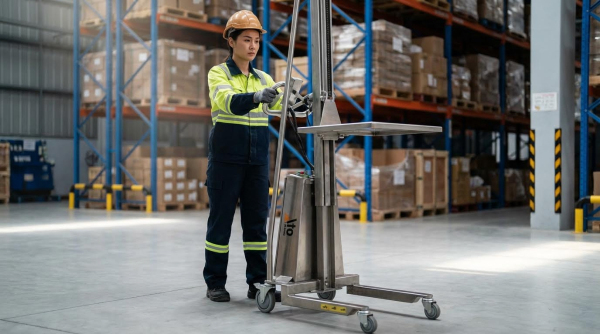
Ergonomic work positioners sat at the intersection of safety, productivity, and lean manufacturing in modern plants. This article examined how human-centred design principles, international ergonomics guidance, and task analysis informed industrial work positioner specifications and layouts. It then compared key positioner types and design features, and showed how to select and integrate them with automation, digital tools, and light duty electric stacker, manual pallet jack, and walkie pallet truck systems across the equipment lifecycle. Finally, it summarized how robust ergonomics underpinned sustainable productivity gains, lower injury rates, and more resilient operations in industrial environments.
Ergonomic Principles For Industrial Work Positioners
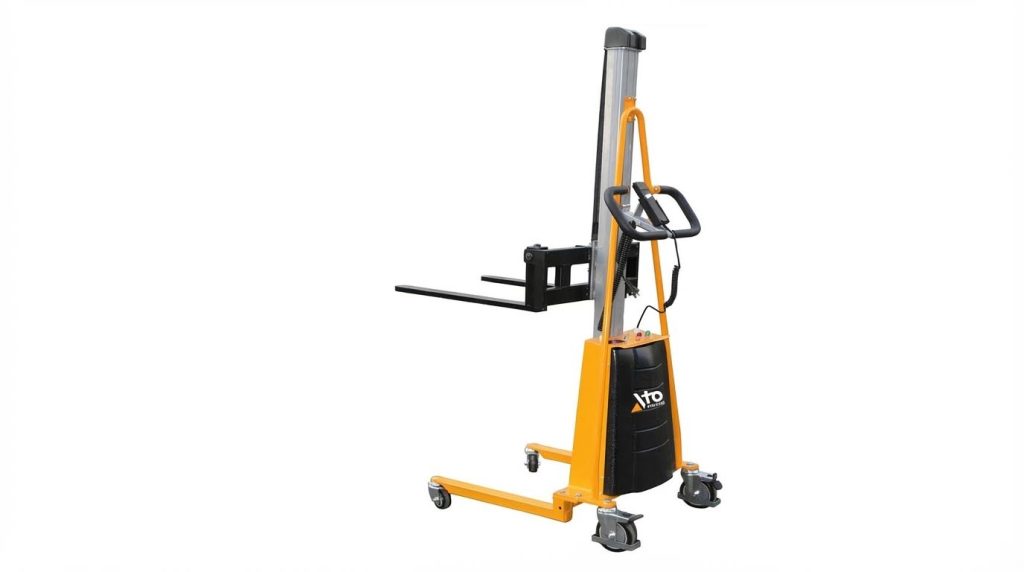
Ergonomic principles for industrial work positioners focused on fitting the task and equipment to the worker rather than forcing the worker to adapt. Sound design reduced musculoskeletal load, improved process quality, and supported lean, repeatable workflows. Effective positioners translated abstract ergonomic standards into concrete dimensions, motion ranges, and control concepts that matched real operator capabilities.
Anthropometrics, ISO 9241-5 And HFES Guidance
Industrial work positioners had to accommodate a wide anthropometric range, typically from the 5th-percentile female to the 95th-percentile male for stature and limb lengths. ISO 9241-5:1998, although withdrawn, provided foundational guidance on workstation adjustability, neutral postures, and postural variation for visual display terminal tasks, which engineers extended to industrial settings. HFES and ANSI/HFES 100 specifications addressed displays, input devices, and furniture, promoting layouts that minimized awkward joint angles and excessive reach distances. Tools such as the HFES Virtual Fit Tool enabled designers to quantify what percentage of the workforce a given set of dimensions could accommodate, supporting evidence-based decisions on adjustment ranges for lift heights, tilt angles, or control locations.
Anthropometric data informed key parameters such as vertical reach envelopes, elbow height, and comfortable handle diameters. Designers used these data to define default positions and limit positions for worktables, turntables, and manipulators. Applying these standards reduced the likelihood of extreme wrist, shoulder, or trunk postures during typical cycles.
Optimal Working Heights, Reach Zones And Postures
Ergonomic work positioners targeted working heights aligned with task type and operator body dimensions. Research from production workstation design indicated an average optimum height near 1125 mm for sit-stand work, with a functional work area between 800 mm and 1500 mm above the floor. Heights above heart level increased static shoulder loading, while low heights forced spinal flexion and increased disc pressure. Adjustable positioners allowed operators to keep the primary work zone around elbow height, with forearms roughly horizontal and wrists near neutral.
Engineers defined reach zones as primary (frequent, light tasks within forearm reach without trunk rotation), secondary (occasional tasks requiring arm extension), and tertiary (rare access requiring stepping). Work positioners that rotated, tilted, or translated workpieces into the primary zone reduced overexertion and awkward postures. Evidence from scaffolding interventions showed that relatively small changes in tool and component positioning significantly reduced wrist flexion, deviation, and task time, illustrating how optimized reach and posture improved both health and productivity.
Task Analysis For High-Risk Motions And Loads
Developing ergonomic work positioners required systematic task analysis of existing operations. Engineers observed cycles to identify high-risk motions such as repeated trunk flexion beyond 20°, sustained shoulder elevation above 60°, forceful gripping, and manual handling of heavy or unstable loads. National Safety Council data showed that overexertion and bodily reaction accounted for a substantial share of workplace accidents, particularly in warehousing and material handling, underscoring the need to eliminate manual lifting and awkward reaches. Task analysis considered frequency, duration, and load magnitude to prioritize interventions with the highest risk–benefit ratio.
Positioners then replaced or reduced manual handling by elevating, tilting, or rotating workpieces so operators could work close to the body with symmetric postures. Designers used checklists and risk assessment tools to quantify improvements in joint angles and exerted forces before and after implementation. Continuous feedback from operators closed the loop, revealing residual issues such as obstructed grab areas or poorly located controls, which could then be corrected through iterative design updates.
Types Of Work Positioners And Core Design Features
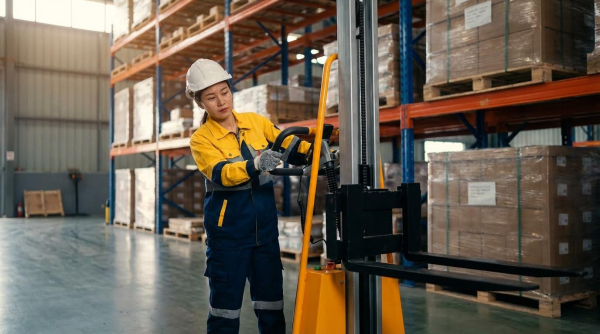
Industrial work positioners supported safer and leaner production by reducing manual handling and optimizing access to workpieces. Engineers specified devices based on motion type, load characteristics, ergonomics, and integration constraints. Core design features included controlled degrees of freedom, stable support of the center of gravity, and interfaces that enabled intuitive, low-strain operation. Proper selection reduced overexertion injuries, improved cycle times, and supported compliance with ergonomic standards.
Common Positioners: Lifts, Turntables, Balancers, AGVs
Lift tables elevated and lowered loads to ergonomic heights, typically using scissor mechanisms, hydraulic or electro-mechanical actuators. Engineers used them for pallet handling, assembly benches, and height alignment between conveyors. Turntables enabled horizontal rotation of workpieces, improving access for welding, assembly, or inspection without torso twisting. Balancers and manipulators supported partially suspended loads, allowing operators to guide heavy items with low force through vertical and horizontal ranges. Automated guided vehicles (AGVs) and mobile positioners combined transport and positioning, moving workpieces between stations while presenting them at defined orientations for robots or operators.
Each type addressed distinct motion needs: vertical lift, rotation, tilt, or multi-axis positioning. Designers often combined devices, for example a lift table with a turntable top, to achieve compound motions. Selection depended on load mass, geometry, required precision, and takt time.
Load Capacity, Center Of Gravity And Stability Design
Load capacity defined the maximum permissible mass and moment that the positioner could handle without structural or functional failure. Engineers considered not only static weight but also dynamic effects from acceleration, deceleration, and impact during loading. The center of gravity (COG) location governed tipping risk, bearing loads, and required torque for rotation or tilting. As assemblies progressed, the COG often shifted, so designers evaluated worst-case configurations, including fixtures and tooling.
Stability design involved wide base footprints, low overall COG, and appropriate anchoring or floor-mounting on level surfaces. For rotating weld positioners and turning rolls, drive systems needed sufficient torque margins to maintain constant speed under eccentric loads. Safety factors followed internal engineering rules and applicable standards, and engineers clearly labeled rated capacity to prevent overloading in daily operations.
Adjustability, Kinematics And Human–Machine Interface
Adjustability in height, reach, tilt, and rotation allowed the same positioner to accommodate different operators and tasks. ISO 9241-5 and HFES guidance emphasized support for postural changes and easy adjustment, so engineers specified quick, tool-free mechanisms where possible. Kinematic design defined the available degrees of freedom and motion envelopes, ensuring that workpieces entered optimal reach zones between roughly 800 mm and 1500 mm above the floor. Smooth, predictable motion profiles reduced unexpected forces on operators and workpieces.
The human–machine interface (HMI) included pendant controls, foot pedals, or integrated panels with clear labeling and standardized symbols. Intuitive controls reduced training time and operator error, especially in busy production environments. Designers separated frequently used controls from emergency functions and ensured visibility from typical working positions. For advanced systems, HMIs integrated with plant networks, enabling recipe-based positioning and lockouts during maintenance.
Safety Functions, Standards And Regulatory Compliance
Safety functions for work positioners included emergency stop circuits, overload protection, and interlocks that prevented hazardous motion. Designers incorporated mechanical stops, anti-drop devices, and guards around pinch and shear points. For powered systems, safety-related control parts followed functional safety principles, with performance levels or safety integrity levels determined by risk assessment. Overtravel and speed monitoring functions protected both operators and equipment.
Ergonomic guidance from ISO 9241-5 and HFES documents supported workstation layout, while machinery safety regulations and standards governed design and validation of the moving equipment. Compliance required documented risk assessments, verification of safety functions, and clear operating instructions and warnings. Regular training and periodic safety audits ensured that installed positioners continued to operate within their designed safety envelope over their lifecycle.
Selection, Integration And Lifecycle Performance
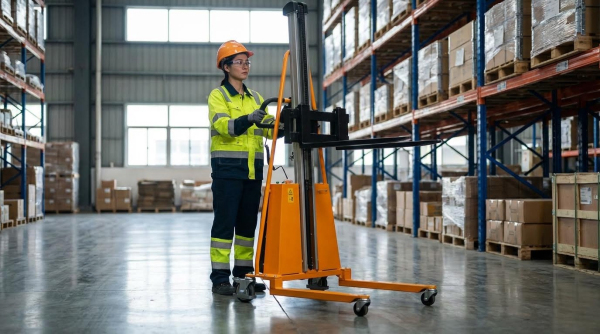
Selection, integration, and lifecycle performance determined whether work positioners actually delivered ergonomic and productivity gains in industrial environments. Engineers needed to align device capabilities with process demands, digital infrastructures, and long-term cost structures. A systematic approach reduced over-specification, underutilization, and safety risks, while supporting continuous improvement and regulatory compliance.
Matching Positioners To Processes And Workpieces
Engineers first analyzed tasks with high physical load, frequency, and precision requirements, using injury records and time–motion studies. Workpiece characteristics such as mass, envelope dimensions, center of gravity, and stiffness guided the choice between lift tables, turntables, manipulators, or multi-axis positioners. The selected device had to provide sufficient load capacity with an adequate safety factor, stable support, and controlled motion in all required axes. Interface design, including clamps, fixtures, and modular tooling, needed to secure parts while allowing quick changeover and unobstructed access for welding, assembly, or inspection. Matching range of motion and positioning accuracy to process tolerances minimized rework and reduced manual re-positioning.
Integration With Cobots, Digital Twins And Atomoving
Integrating work positioners with collaborative robots required coordinated kinematics, shared workspaces, and compatible safety architectures. Positioners had to offer deterministic motion control, standardized communication interfaces, and configurable speed and torque limits to support human–robot collaboration. Digital twins enabled virtual commissioning, where engineers validated reach, collision avoidance, and ergonomics before physical installation. They also supported throughput simulations and what-if scenarios for future product variants. When integrated with automated material handling such as walkie pallet truck systems, positioners formed part of synchronized flows, reducing manual transfers and aligning takt times across stations.
Energy Efficiency, Maintenance And Predictive Analytics
Energy-efficient positioners used right-sized drives, regenerative braking where applicable, and optimized duty cycles based on measured utilization. Engineers selected hydraulic, pneumatic, or electromechanical actuation by comparing controllability, standby losses, and maintenance effort over the expected life. Structured maintenance plans covered lubrication, structural inspections, sensor checks, and functional safety validation at defined intervals. Condition monitoring with vibration, temperature, and current measurements enabled predictive analytics, which identified wear trends in bearings, gearboxes, and motors before failures occurred. Historical data supported optimization of spare parts inventories and maintenance windows, reducing unplanned downtime and extending service life.
Total Cost Of Ownership And Retrofit Strategies
Total cost of ownership combined capital expenditure with operating energy, maintenance, training, and productivity impacts over the equipment lifetime. Engineers quantified ergonomic benefits through reduced injury rates, lower absenteeism, and shorter cycle times, converting these into monetary savings. Retrofit strategies focused on upgrading controls, adding sensors, or improving fixtures on existing positioners instead of full replacement, especially where mechanical structures remained sound. Adapters, modular tooling, and updated guarding allowed legacy units to handle new product families while meeting current safety requirements. A lifecycle-based evaluation compared phased retrofits against new installations, considering flexibility for future automation and digital integration.
Summary: Ergonomic Design For Sustainable Productivity
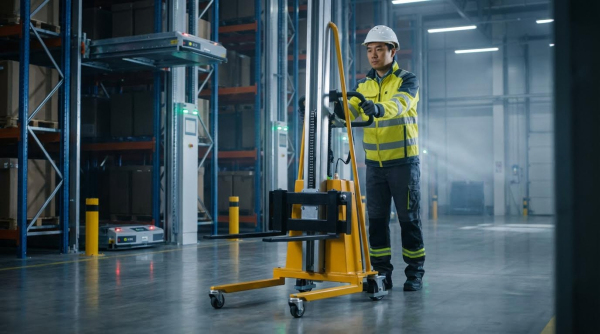
Ergonomic work positioners reduced physical strain, improved access to workpieces, and increased throughput across industrial environments. Evidence from standards such as ISO 9241-5 and ANSI/HFES 100, along with industrial guidelines, showed that adjustability to anthropometric variation, optimal working heights between roughly 0.8 m and 1.5 m, and well-defined reach zones were central to safe workstation design. Properly engineered devices maintained load capacity margins, controlled center of gravity, and offered stable kinematics, while integrated safety functions and adherence to relevant ergonomics and machinery regulations supported reliable, compliant operation. Task-based analysis of high-risk motions, including bending, twisting, and overhead work, enabled targeted use of positioners such as lift tables, turntables, balancers, and mobile platforms to remove or reduce hazardous manual handling.
Industry practice indicated that the future of work positioning lay in tighter integration with cobots, digital twins, and connected control systems. This integration enabled simulation of reach envelopes, collision risks, and utilization before installation, and supported predictive maintenance through condition monitoring and analytics. In parallel, energy-efficient drives and smarter duty-cycling reduced operating costs and environmental impact. Organizations increasingly evaluated total cost of ownership rather than purchase price alone, factoring in injury reduction, quality gains, and flexibility over the equipment lifecycle, including retrofit of legacy lines.
Practical implementation required structured selection methods, clear definition of load and motion envelopes, and early involvement of operators, safety professionals, and ergonomists. Facilities that combined technical safeguards, robust maintenance regimes, and ongoing training achieved sustained reductions in overexertion injuries and improved productivity. A balanced perspective recognized that technology alone did not guarantee better outcomes; benefits depended on correct sizing, proper integration with processes, and continuous monitoring. When engineered around human capabilities and limitations, ergonomic work positioners supported safer, leaner, and more sustainable production systems.