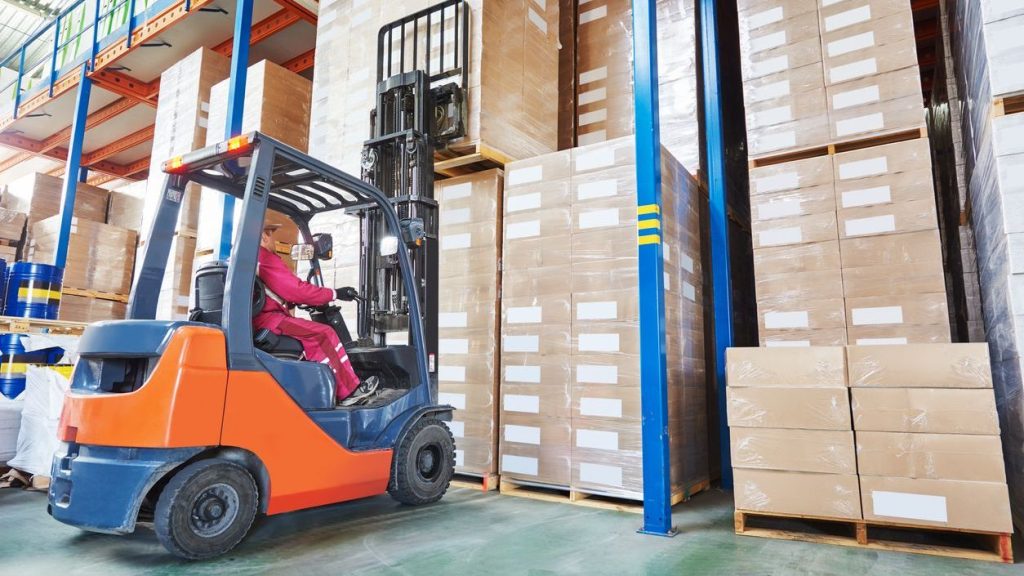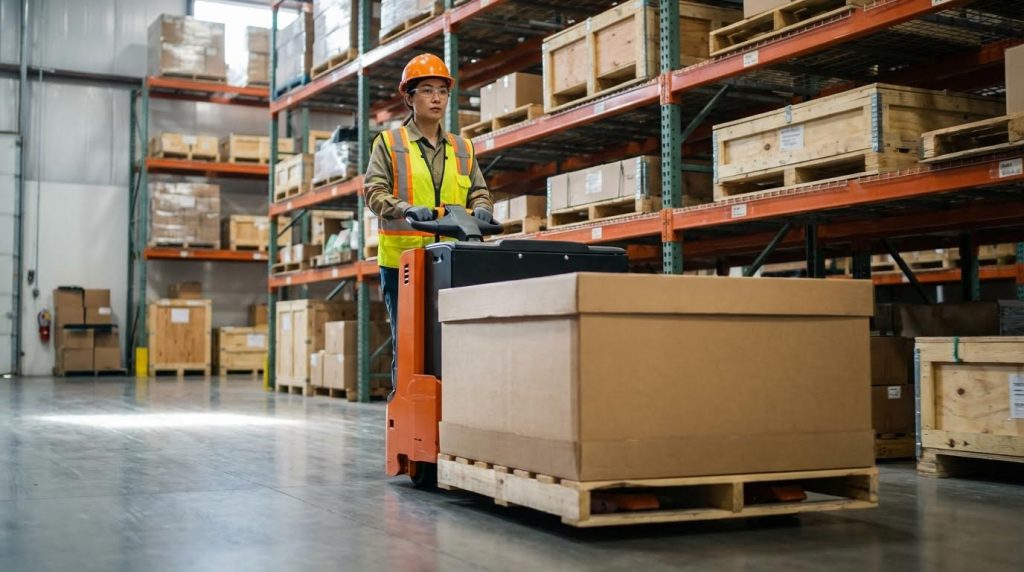
Elektrische Hubwagen heben Paletten üblicherweise 180–205 mm vom Boden ab, während Hochhubwagen und Stapler eine Hubhöhe von 1.6–5.0 m erreichen können. Dieser Leitfaden erklärt die Hubhöhe elektrischer Hubwagen , deren Auswirkungen auf die Bodenfreiheit und wie Sie die Spezifikationen an Ihre Lagerbedingungen anpassen, um ein sicheres und effizientes Handling zu gewährleisten.
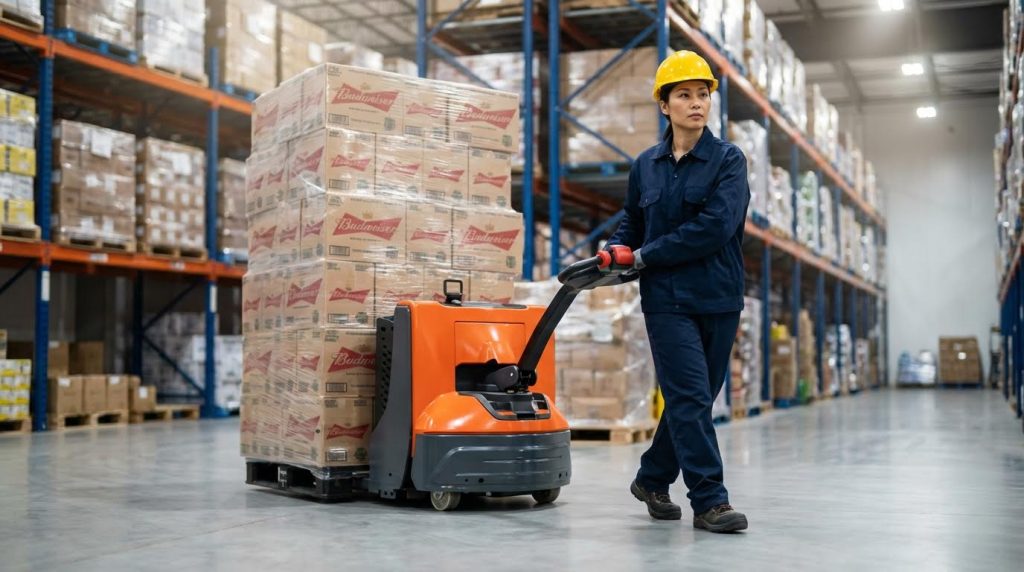
Wichtige Hubhöhen und Arbeitsbereiche erklärt
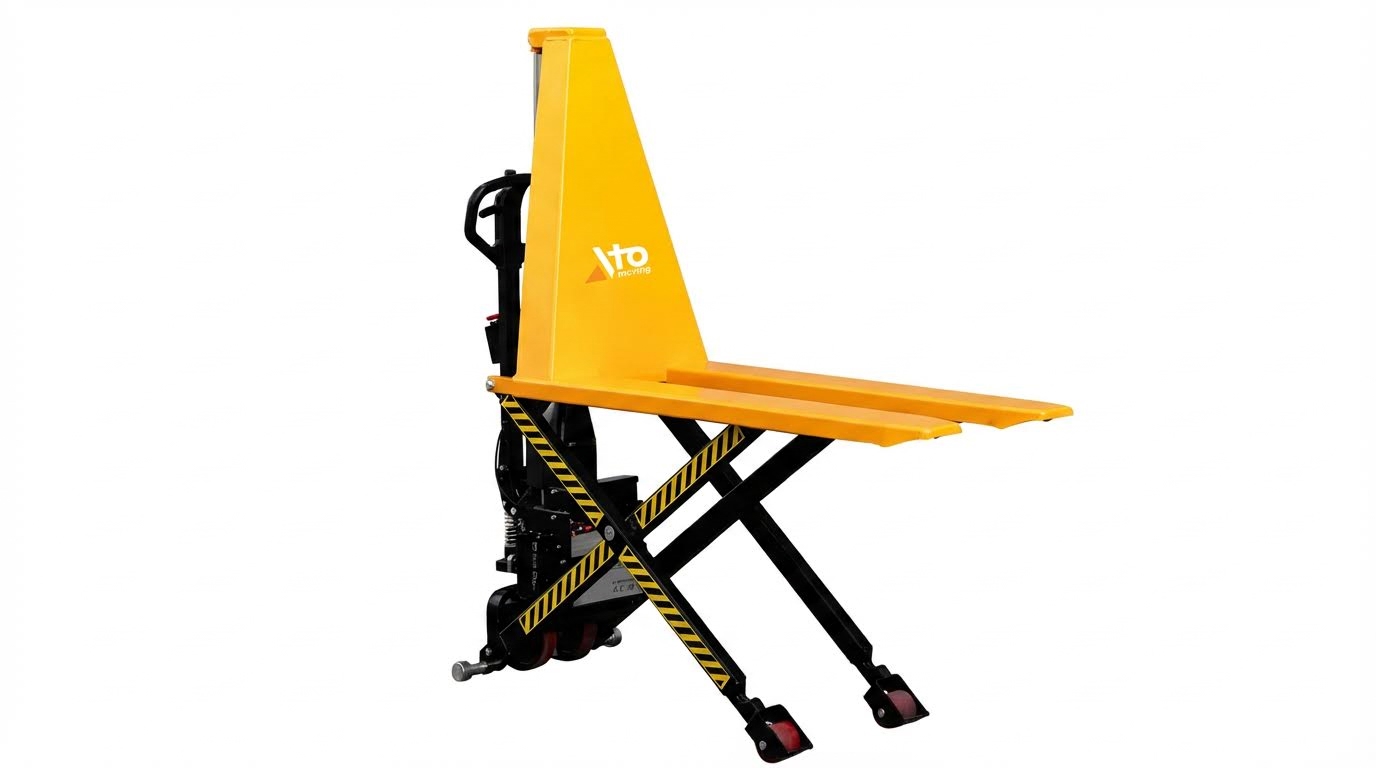
Elektrische Hubwagen lassen sich in zwei Hauptgruppen einteilen: Niederhubwagen, die Paletten lediglich vom Boden anheben, und Hochhubwagen, die bis in Regalebenen heben. Die Kenntnis ihrer Hubhöhe ermöglicht es Ihnen, die Frage „Wie hoch darf ein elektrischer Hubwagen heben?“ für Ihre spezifische Aufgabe zu beantworten und Probleme mit Bodenfreiheit oder Stabilität zu vermeiden.
Hubhöhenbereiche von elektrischen Hubwagen mit niedriger Hubhöhe
Elektrische Hubwagen mit geringer Hubhöhe heben Lasten typischerweise um 180–205 mm an – ausreichend für sicheren Transport und Arbeiten im Ladebereich. Im Folgenden sehen Sie, wie sich diese Werte in der tatsächlichen Arbeitshöhe auf Ihrem Boden niederschlagen.
| Parameter | Typischer Bereich | Betriebliche Auswirkungen |
|---|---|---|
| Gabelhöhe abgesenkt | 75 – 90 mm Referenz | Passt in Standardpaletten mit den Maßen 1200 × 1000 mm und benötigt nur minimale Bodenfreiheit. |
| Maximale Hubhöhe (Standard-Mitgänger-/Fahrer-Hubarbeitsbühne) | 180 – 205 mm Referenz / 180–200 mm Referenz | Die Antwort auf die Frage „Wie hoch hebt ein elektrischer Hubwagen?“ lautet für Standardmodelle: etwa 0.2 m über dem Boden. |
| Effektive Palettenunterseite im angehobenen Zustand | ≈110–130 mm (bei einer Paletteneinfahrtshöhe von 150 mm) | Reinigt Laderampen, kleine Rampen und Bodenfugen ohne zu schleifen. |
| Liftgeschwindigkeit | ≈40–50 mm/s unter Last Referenz | Hebt eine volle Last von der vollständig abgesenkten Position auf die maximale Höhe in etwa 4–5 Sekunden. |
| Nennkapazitätsbereich | 1,400–3,000 kg, bis zu ≈5,000 kg Schwerlast Referenz | Unterstützt typische palettierte Ladungen auf Bodenebene und an Laderampen. |
- Arbeitsdefinition – Niedrighub: Die Gabeln bleiben unter etwa 250 mm – Geeignet für den horizontalen Transport, nicht zum Stapeln.
- Typische Anwendungsfälle: Anlieferung an die Laderampen, LKW-Beladung, kurze Shuttlebusse zu den Bereitstellungsbereichen – Sie müssen lediglich den Boden und die Dockplatten freiräumen.
- Freigabemarge: Streben Sie im angehobenen Zustand eine reale Bodenfreiheit von mindestens 80–100 mm unter der Palette an – Dies gleicht Unebenheiten im Boden und kleine Rampen aus.
- Interaktion mit dem Boden: Die reduzierte Höhe von ca. 80 mm ermöglicht das Einfahren in niedrige oder leicht beschädigte Paletten – reduziert Palettenbruch und Gabelaufprall.
Wie man schnell prüft, ob eine Hubhöhe von 180–200 mm ausreicht
Messen Sie die Einfahrhöhe Ihrer Palette (vom Boden bis zur Unterseite der Palettenplattform) und das höchste Hindernis, das Sie überwinden müssen (Laderampenkante, Rampenkante, Bodenwölbung). Rechnen Sie einen Sicherheitszuschlag von mindestens 30–40 mm hinzu. Liegt die Unterkante der Palette bei maximaler Hubhöhe über dieser Summe, ist ein handelsüblicher elektrischer Hubwagen mit niedriger Hubhöhe ausreichend; andernfalls sollten Sie einen Hubwagen mit hoher Hubhöhe oder alternative Geräte in Betracht ziehen.
💡 Hinweis für den Außendiensttechniker: Auf schrägen Laderampen und abgenutztem Beton fahren die Bediener oft mit nur minimal angehobenen Gabeln, was zu wiederholten Palettenaufprallen führen kann. Schulen Sie Ihre Teams darin, beim Anfahren von Laderampen die volle Hubhöhe von 180–200 mm zu nutzen, damit die Palettenunterseite deutlich über 30–50 mm hohen Kanten oder Schlaglöchern bleibt.
Hochhub- und Staplerhöhen
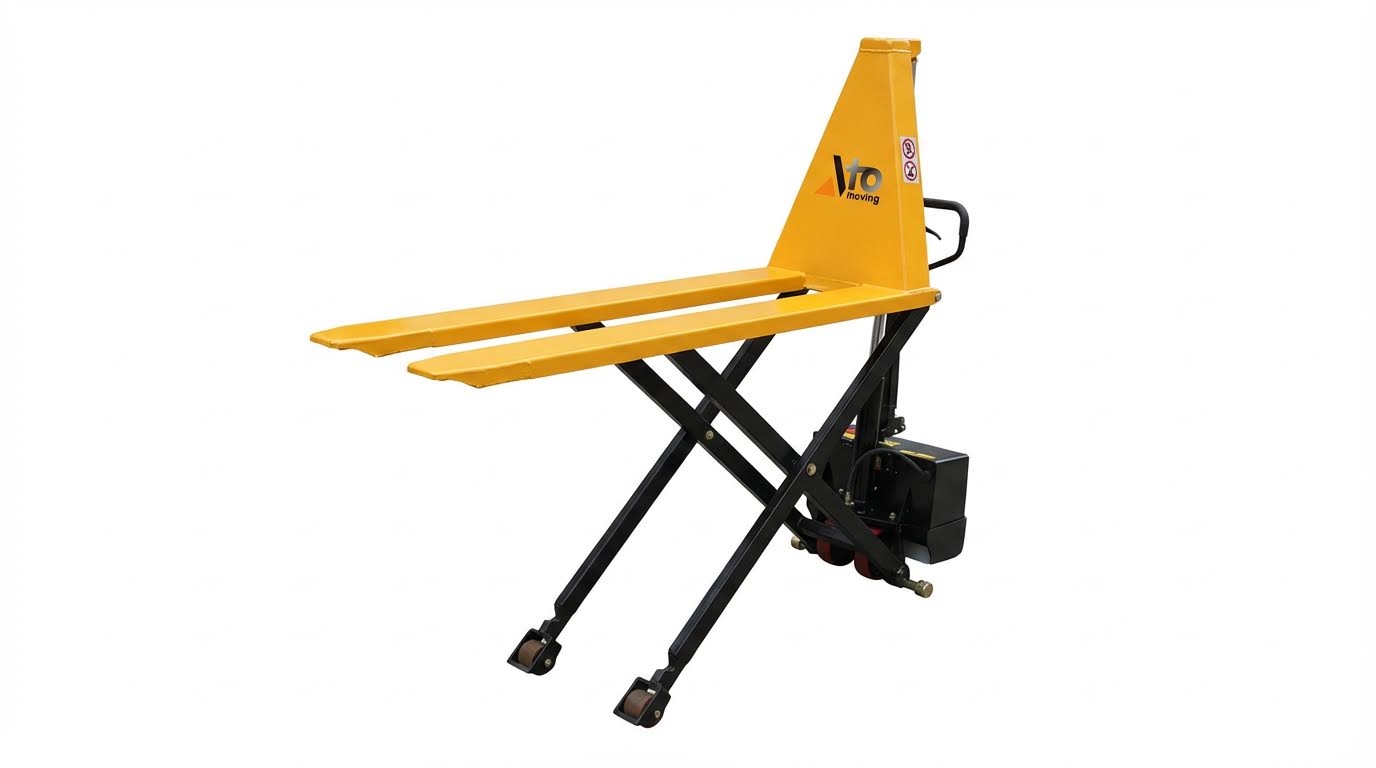
Hochhubwagen und elektrische Hubwagen im Staplerstil erweitern die Hubhöhe von wenigen hundert Millimetern auf etwa 1.6–5.0 m und ermöglichen so das Stapeln in Regalen anstatt nur Bewegungen auf Bodenebene.
| Stromquelle | Typischer Hubhöhenbereich | Beste für… |
|---|---|---|
| Hochhubwagen (Scherenhubwagen) | ≈300–400 mm und darüber für Spezialmodelle Referenz | Paletten an den Bodenstationen auf eine ergonomische Arbeitshöhe zum Kommissionieren oder Verpacken bringen. |
| Mitgänger-Stapler (niedriger Mast) | ≈1.6–2.5 m Referenz | Stapeln von 1–2 Palettenebenen in niedrigen Regalen, Zwischengeschossen oder Lagerbereichen. |
| Mitgänger-Stapler (Standardmast) | ≈3.0–4.0 m | Beschickung der ersten und zweiten Balkenebene in typischen 2.7–3.5 m breiten Regalfeldern. |
| Hochhubwagen (Hohlmast) | Bis zu ≈5.0 m Referenz | Leichte bis mittelschwere Stapelarbeiten in höhere Regale, bei denen der Einsatz von Schubmaststaplern nicht gerechtfertigt ist. |
- Die Frage „Wie hoch kann ein elektrischer Hubwagen heben?“ wird für Stapler beantwortet: Je nach Mastklasse ist mit etwa 1.6–5.0 m zu rechnen – ausreichend, um in den meisten kleinen Lagerhallen 1–4 Balkenebenen zu erreichen.
- Lastgrenzen im Verhältnis zur Höhe: Die Nennkapazität sinkt oft an der Mastspitze – Es ist möglicherweise nicht möglich, die volle Nennlast in kg sicher auf die maximale Höhe zu bringen.
- Ganginteraktion: Höhere Hebebühnen erfordern diszipliniertere Gangbreiten und Abstände – Mastschwingungen und Palettenüberhang werden in der Nähe von Regalen kritisch.
- Aufgabeneignung: Verwenden Sie Niederhubwagen für den Transport, Hochhubwagen für ergonomisches Arbeiten und Stapler für die vertikale Lagerung – Jeder hat einen eigenen Arbeitsbereich.
Schnelle Methode zur Auswahl der erforderlichen Hubhöhe des Staplers
Ermitteln Sie die gewünschte Hubhöhe des Oberträgers (z. B. 4,200 mm). Addieren Sie die Palettenhöhe (typischerweise 150–180 mm) sowie mindestens 150–200 mm Freiraum über dem Träger für die Gabelzinkeneinfahrt und die Hubarmflexibilität. In diesem Fall benötigen Sie einen Stapler mit einer Hubhöhe von mindestens ca. 4,500–4,600 mm, um komfortabel und sicher arbeiten zu können.
💡 Hinweis für den Monteur: Ab einer Höhe von ca. 3.0 m können selbst geringe Bodenneigungen oder unebene Fugen den Mast so weit neigen, dass er Regale beschädigt. Arbeiten Sie mit Hochhubwagen und Staplergeräten nur auf möglichst ebenen Gängen und vermeiden Sie deren Einsatz an Laderampen oder Übergängen mit einer Steigung von mehr als 2–3 %.
Technische Faktoren, die Auftrieb und Freiraum bestimmen
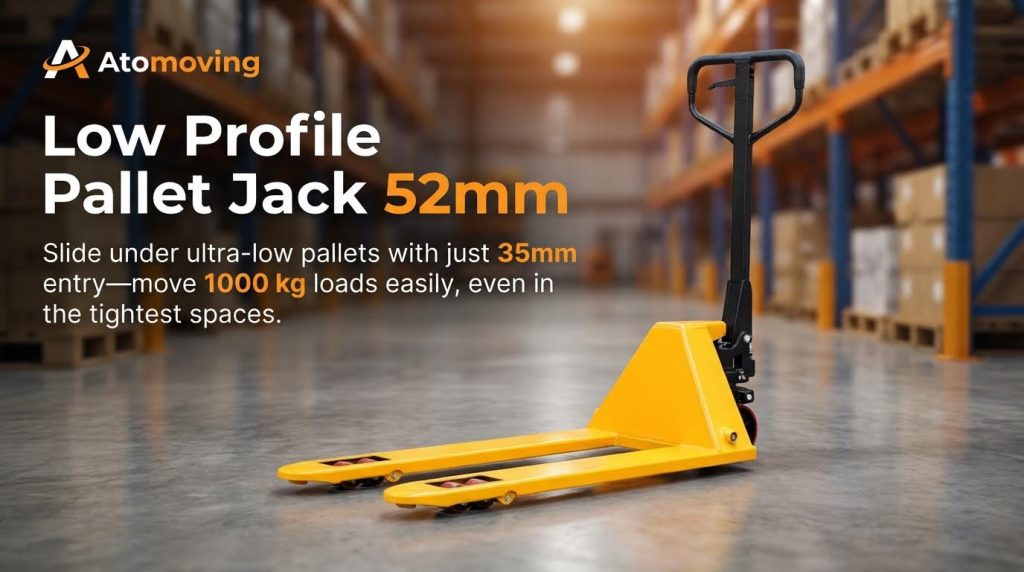
Technische Faktoren wie Gabelgeometrie, Lastschwerpunkt, Stabilität und Gangbreite bestimmen letztendlich, wie hoch ein elektrischer Hubwagen in Ihrem Betrieb sicher heben kann. Das Verständnis dieser Grenzen beugt Schäden, Umkippen und Engpässen vor.
- Gabeln und Paletten: Definieren Sie die minimale/maximale Hubhöhe und wie leicht Sie Paletten einladen können – steuert den tatsächlich nutzbaren Hubbereich.
- Achslasten und Stabilität: Begrenzen Sie die sichere Hubhöhe und die Rampennutzung – Verhindert Umkippen und Beschädigungen des Bodens.
- Gang- und Wendefläche: Beschränken Sie, wie und wo Sie die volle Hubkraft nutzen können – Vermeidet Regalbeschädigungen und Produktkollisionen.
💡 Hinweis des Außendiensttechnikers: Auf vielen Baustellen entstehen Platzprobleme durch die Anordnung der Laderampen und nicht durch den Lkw selbst. Oftmals lässt sich die Produktivität durch die Optimierung von Gängen, Laderampen und Palettenständern deutlich steigern, anstatt durch das Anstreben weniger Millimeter Hubhöhe.
Gabelgeometrie, Palettenschnittstelle und Durchbiegung
Die Geometrie der Gabel und die Palettenschnittstelle bestimmen die tatsächlichen unteren und oberen Hubgrenzen, nicht nur die im Katalog angegebene „Maximalhöhe“. Dies ist der erste Anhaltspunkt, um herauszufinden, wie hoch ein elektrischer Hubwagen im praktischen Einsatz heben kann.
Standardmäßige elektrische Hubwagen verwenden typischerweise Gabellängen von ca. 1,000–1,150 mm und Gabelbreiten von ca. 560 oder 680 mm. Die abgesenkte Gabelhöhe beträgt ca. 80–90 mm, die maximale Hubhöhe an den Gabelspitzen ca. 180–200 mm (Gabelgeometrie und Hubbereich) . Die abgesenkte Höhe von 80–90 mm ermöglicht es den Gabeln, unter Standardpaletten (1200 × 1000 mm oder 1200 × 800 mm) zu gleiten, ohne die Ladeflächen zu berühren. Die angehobene Höhe von 180–205 mm bei Niedrighubwagen reicht aus, um Unebenheiten im Boden und Laderampen beim Transport zu überwinden (typischer Niedrighubbereich).
| Parameter | Typischer Bereich | Betriebliche Auswirkungen |
|---|---|---|
| Gabelhöhe abgesenkt | 75 – 90 mm | Der Abstand muss kleiner sein als die Einfahrtsöffnung der Palette, um ein Verschleppen der Deckbretter zu vermeiden. |
| Maximale Gabelhöhe (niedriger Hub) | 180 – 205 mm | Ausreichend, um Laderampen und unebene Böden zu überbrücken, nicht zum Stapeln geeignet. |
| Gabellänge | 1,000 – 1,150 mm | Entspricht ISO/EUR-Paletten; beeinflusst Wenderadius und Ganglänge. |
| Gabelbreite über Gabeln | 560 oder 680 mm | Für eine reibungslose Einfahrt muss der Abstand der Palettenrahmen übereinstimmen. |
- Gabelkonus und Spitzendicke: Dünne, abgeschrägte Spitzen reduzieren den Aufprall beim Eindringen – Weniger Palettenschäden und einfacheres Manövrieren mit niedrigen oder abgenutzten Paletten. (Überlegungen zur Gabelkonusform).
- Gabelsteifigkeit und -durchbiegung: Ingenieure dimensionieren die Gabelstärke, um die Durchbiegung unter Volllast zu begrenzen – Hält die Ladung waagerecht, sodass die volle Bodenfreiheit von 180–205 mm erhalten bleibt. (Auslenkungsgrenzen).
- Palettendesign: Unterschiedliche Eintrittshöhen und Deckabstände beeinflussen, wie tief die Gabeln eingestochen werden müssen – Nicht standardisierte Paletten können die Angabe spezieller Gabelprofile erforderlich machen..
- Abstimmung von Laufrädern und Gabeln: Tandem-Lastrollen und korrekte Gabelaussparungen überbrücken Lücken – reduziert Hänger an gebrochenen Brettern und Dockübergängen (Rad- und Gabelpaarung).
Wie die Gabeldurchbiegung Ihre Bodenfreiheit beeinträchtigt
Bei voller Beladung können die Gabeln einige Millimeter durchhängen. Beträgt die Nennhubhöhe 190 mm und die Gabeln biegen sich um 5–10 mm durch, kann die tatsächliche Durchfahrtshöhe über einer Laderampe oder einer Dehnungsfuge unter 180 mm sinken. Dann kommt es zu Kratzern an Blechen, Hängenbleiben an Palettenfüßen und der Frage, warum der Stapler „nicht die angegebene Hubhöhe erreicht“.
💡 Hinweis des Außendiensttechnikers: Wenn Sie beim Einfahren in Laderampen ständig aufsetzen, sollten Sie nicht sofort einen Hochhubwagen einsetzen. Messen Sie zunächst die maximale Plattenhöhe und die Gabeldurchbiegung unter Last. Oftmals lässt sich das Problem durch eine kleine Änderung der Spezifikationen – Absenkhöhe, Gabelstärke oder Rollendurchmesser – beheben.
Stabilität, Achslasten und Nennlastschwerpunkte
Stabilität, Achslasten und Lastschwerpunkt bestimmen, wie hoch ein elektrischer Hubwagen heben kann, ohne umzukippen oder den Boden zu überlasten. Derselbe Hubwagen, der bei 200 mm Hubhöhe sicher ist, kann bei 400 mm Hubhöhe unsicher werden, wenn sich die Geometrie ändert.
Die Tragfähigkeit von Hubwagen mit geringer Hubhöhe liegt üblicherweise zwischen 1,400 kg und 3,000 kg, wobei Schwerlastmodelle bis zu 5,000 kg erreichen. Grundlage hierfür ist ein standardisierter Lastschwerpunkt von ca. 600 mm Abstand von der Gabelspitze (Tragfähigkeit und Lastschwerpunkt) . Eine Verlagerung des Schwerpunkts nach außen verringert die Resttragfähigkeit und erhöht die Kippgefahr. Die Stabilitätsberechnungen berücksichtigen auch die Achslasten an Antriebs- und Lasträdern beim Bremsen, in Kurven und beim Einsatz auf Rampen. Normen fordern Stabilität bei maximaler Hubhöhe und Nennlast auf Steigungen von ca. 6–10 % im beladenen Zustand (Stabilitätsgrenzen).
| Faktor | Typischer Wert/Bereich | Betriebliche Auswirkungen |
|---|---|---|
| Nennleistung | 1,400–3,000 kg (bis zu 5,000 kg Schwerlastausführung) | Bei der Berechnung wird ein Lastschwerpunkt von 600 mm angenommen; eine Überschreitung dieses Wertes verringert die sichere Hubhöhe. |
| Standard-Lastverteiler | ≈600 mm | Längere Ladungen verlagern den Schwerpunkt nach vorne, wodurch die Kippgefahr und die Achslasten steigen. |
| Beladene Steigbarkeit | 6-10% | Begrenzt die sicheren Rampenneigungen bei oder nahe der maximalen Hubhöhe. |
| Unbelastete Steigfähigkeit | Bis zu 20% | Höhere Noten werden vergeben, wenn die Gabeln leer und abgesenkt sind. |
- Lange oder versetzte Lasten: Den Schwerpunkt über 600 mm hinaus verlagern – Der LKW kann bei 80 mm Höhe aufrecht stehen bleiben, wird aber instabil, wenn man versucht, ihn höher anzuheben..
- Achslast am Antriebsrad: Erhöhungen auf Rampen und beim Bremsen – Bei Betrieb nahe der Kapazitätsgrenze können Bodenplatten oder Laderampen überlastet werden..
- Dynamische Effekte: Kurvenfahrten oder plötzliche Bremsmanöver mit angehobenen Gabeln verlagern die Last seitlich – senkt die sichere Antwort auf die Frage „Wie hoch?“, selbst wenn statische Berechnungen gut aussehen..
- Kontroll systeme: Viele elektrische Hubwagen begrenzen die Fahrgeschwindigkeit, wenn die Gabeln angehoben sind, und verhindern das Anheben bei Überlastung – Elektronik überwacht die Stabilitätsgrenzen in Echtzeit. (Sicherheit und Kontrolle).
Warum Niederhubwagen bei etwa 200 mm stoppen
Ab einer Hubhöhe von deutlich über 200 mm vergrößert sich der Hebelarm zwischen Lastschwerpunkt und Auflagefläche so weit, dass bereits kleine Unebenheiten oder Lenkbewegungen das System zum Kippen bringen können. Daher sind größere Hubhöhen (1.6–5.0 m) Hubwerken mit Hubmast, breiterem Radstand und strengerer Stabilitätskonstruktion vorbehalten und nicht einfachen Palettenhubwagen (Hochhubbereich).
💡 Hinweis für den Außendiensttechniker: Wenn Sie an geneigten Laderampen regelmäßig nahe an der maximalen Hubhöhe arbeiten, reduzieren Sie die nutzbare Hubhöhe um 20–30 % und halten Sie die Gabeln beim Fahren so tief wie möglich. Die Stabilitätsreserven verringern sich rapide, sobald der Schwerpunkt außerhalb des Raddreiecks liegt.
Gangbreite, Wendekreis und Sicherheitsabstände
Gangbreite, Wendekreis und Sicherheitsabstand entscheiden darüber, ob Sie die volle Hubhöhe des Hubwagens sicher nutzen können, ohne Regale, Pfosten oder Produkte zu beschädigen. Selbst wenn die technischen Datenblätter die maximale Hubhöhe eines elektrischen Hubwagens angeben , kann es in engen Gängen erforderlich sein, die Hubhöhe zu reduzieren.
Kompakte Mitgänger-Hubwagen erreichen oft Wendekreise von ca. 1,350–1,550 mm, während größere Aufsitz- oder Hochleistungsmodelle ca. 1,900–2,000+ mm benötigen (Wendekreisbereich) . Für elektrische Hubwagen werden in vielen Lagerhallen Gangbreiten von ca. 2.4–2.7 m verwendet, um sicheres Wenden und Be- und Entladen zu gewährleisten (Anforderungen an die Gangbreite) . Aus Sicherheitsgründen wird zusätzlich ein Freiraum von ca. 300–500 mm auf jeder Seite zwischen Last und Regalen oder Hindernissen eingeplant.
| Parameter | Typischer Wert | Betriebliche Auswirkungen |
|---|---|---|
| Wendekreis (Walkie) | ≈1,350–1,550 mm | Definiert den minimalen rechtwinkligen Stapelgang. |
| Wendekreis (Fahrer / Last) | ≈1,900–2,000+ mm | Erfordert breitere Gänge; schwieriger zu handhaben bei dichter Lagerung. |
| Typische Gangbreite für Hubwagen | 2.4–2.7 | Ermöglicht das Wenden und Fahren mit Last ohne Einrasten der Zahnstangen. |
| Seitlicher Sicherheitsabstand | 300–500 mm auf jeder Seite | Verhindert den Kontakt mit Regalen, Pfosten und Fußgängern. |
Eine nützliche Regel im Ingenieurwesen lautet: W = L + R + S, wobei W die Gangbreite, L die Ladungsbreite, R der Wendekreis des Lkw und S die gesamte Sicherheitsabstandsfläche (Formel für die Gangbreite) ist . In der Praxis kompensieren zu schmale Gänge dies, indem die Fahrer die Lasten höher als nötig heben, um sie über Hindernisse zu „schwenken“, was das Risiko erhöht.
- Schmale Gänge: Bei erhöhter Beladung eine enge Lenkung erzwingen – höheres Risiko, gegen Ständer zu stoßen oder Paletten zu verdrehen.
- Hindernisse und Dockkanten: Zusätzlicher vertikaler und horizontaler Freiraum erforderlich – Grenzwerte, bei denen Sie die volle Hubhöhe von 180–205 mm sicher nutzen können..
- Hochregallager in der Nähe: Möglicherweise ist zusätzlicher Freiraum erforderlich, um das Schlingern des Lkw und den Fahrweg des Fahrers zu ermöglichen – besonders wichtig für Hubwagen vom Typ Stapler, die 1.6–5.0 m heben. (Stabilitätsfreigabe).
- Umweltbedingungen: Kalte oder feuchte Anlagen können die Traktion und Kontrolle beeinträchtigen – Um die Sicherheit zu gewährleisten, benötigen Sie möglicherweise breitere Gänge oder niedrigere Durchgangshöhen. (Umweltaspekte).
Rechtwinklige Stapelung vs. einfache Durchgangsregale
Rechtwinklige Stapelgänge müssen es dem Stapler ermöglichen, mit Ladung um 90° zu wenden und rechtwinklig am Regal anzufahren. Durchlaufgänge benötigen lediglich die Breite für gerade Fahrten. Werden alle Dimensionierungen an die Durchlaufgangmaße angepasst, neigen die Fahrer dazu, die Ladung zu überladen und beim Wenden zu manövrieren, was unbemerkt zu mehr Schäden und Beinaheunfällen führt.
💡 Hinweis für den Außendiensttechniker: Wenn sich die Gänge nicht verbreitern lassen, ist die sicherste Lösung oft ein kompakteres Mitgänger-Gabelstapler mit kleinerem Wendekreis, nicht ein Gerät mit höherer Hubkraft. Durch die engere Geometrie können die Gabeln beim Manövrieren tief gehalten werden, was das Risiko in beengten Regalsystemen am stärksten reduziert.
Spezifizierung von elektrischen Hubwagen für Ihren Betrieb
Die Auswahl des richtigen elektrischen Hubwagens erfordert die Abstimmung von Hubhöhe, Last und Ganggeometrie auf Ihre Paletten, Laderampen, Regale und Ihren Schichtplan. Dieser Abschnitt wandelt die Frage „Wie hoch kann ein manueller Hubwagen heben?“ in eine konkrete Checkliste für Ihre Einrichtung um.
Anpassung der Hubhöhe an Paletten, Laderampen und Regalsysteme
Die richtige Hubhöhe für Paletten, Laderampen und Regale zu finden, beginnt damit, genau zu wissen, wie hoch Ihr elektrischer Hubwagen die Gabeln in jeder Zone über den Boden heben muss. Standard-Niederhubwagen heben nur 180–205 mm, während Hochhubwagen und Stapler deutlich höher heben.
Wenn Sie sich fragen, wie hoch ein elektrischer Hubwagen heben kann, hängt die Antwort vom jeweiligen Modell ab. Standardmäßige elektrische Hubwagen heben typischerweise bis zu einer Höhe von etwa 180–205 mm an den Gabelspitzen – ausreichend für den Transport, aber nicht zum Stapeln. Niedrighubwagen sind speziell für den Transport auf dem Boden konzipiert , während akkubetriebene Hubwagen für Regalarbeiten Höhen von etwa 1.6 m bis 5.0 m erreichen. Standard-Gabelstapler haben üblicherweise eine Hubhöhe von 180–200 mm.
| LKW-Typ | Typische maximale Hubhöhe | Beste für… | Betriebliche Auswirkungen |
|---|---|---|---|
| Standard-Elektrohubwagen (Mitgänger) | 180 – 205 mm | Bewegungen von Etage zu Etage, Andockplatten | Überwindet Unebenheiten und Dockplatten, kann aber nicht in Regale eingehängt werden. |
| Hochhubwagen | 300–400 mm+ | Arbeitsplatzpositionierung, begrenzte Höhenverstellung | Hebt Paletten auf ergonomische Höhe, ermöglicht aber kein mehrstufiges Stapeln. |
| Palettenhubwagen | 1.6–5.0 | Stapeln in niedrigen/mittleren Regalen | Kann bei 2–5 m Abstand gelagert werden, benötigt aber breitere, ebenere Gänge. |
Um die Anforderungen korrekt zu spezifizieren, erfassen Sie jeden Anwendungsfall: Wareneingangsrampen, Bereitstellungsbereiche, Produktionslinien und Regalsysteme. An den Rampen benötigen Sie vor allem ausreichend Hubkraft, um Rampen und Rampen zu überwinden, typischerweise im Bereich von 180–250 mm für elektrische Hubwagen bei geneigten Zufahrten. Eine Steigfähigkeit von 6–10 % unter Last ist häufig ausschlaggebend für diese Anforderung.
- Standardpaletten: 80–90 mm abgesenkte Gabelhöhe bei 180–200 mm Hub – Passt auf EUR/ISO-Paletten und gleicht typische Bodenunebenheiten aus.
- Dockplatten und Rampen: Bis zu ~250 mm effektive Hubhöhe – Verhindert das Aufsetzen an Hängen und Übergängen zu Docks.
- Erste Trägerebene-Verstrebung: 1.6–2.5 m Masthöhe – Ermöglicht das Platzieren von Paletten auf niedrigen Regalen ohne einen vollwertigen Schubmaststapler.
- Hochregallager: 3.0–5.0 m oder mehr – Üblicherweise außerhalb der Reichweite von Hubwagen; benötigt spezielle Stapler oder Schubmaststapler.
Wie Sie Ihre aktuellen Paletten und Laderampen erfassen
1) Paletteneinfahrtshöhe und Gesamthöhe der Paletten messen. 2) Dicke der Laderampe und maximalen Rampenwinkel messen. 3) Mindestens 30–50 mm Sicherheitsabstand über dem höchsten Hindernis einplanen, um die minimale Gabelstaplerhöhe zu bestimmen.
💡 Hinweis für den Außendiensttechniker: Bei der Festlegung der Hubhöhe für Laderampen ist stets die ungünstigste Kombination zu berücksichtigen: steilste Rampe, schwerste Last und am stärksten abgenutzte Rampenplatte. Ein Hubwagen, der im Neuzustand gerade so durchkommt, setzt oft auf, sobald die Räder 5–10 mm abgenutzt sind oder wenn die Bediener Rampen schräg anfahren.
Überlegungen zu Batterie, Betriebszyklus und Antriebssystem
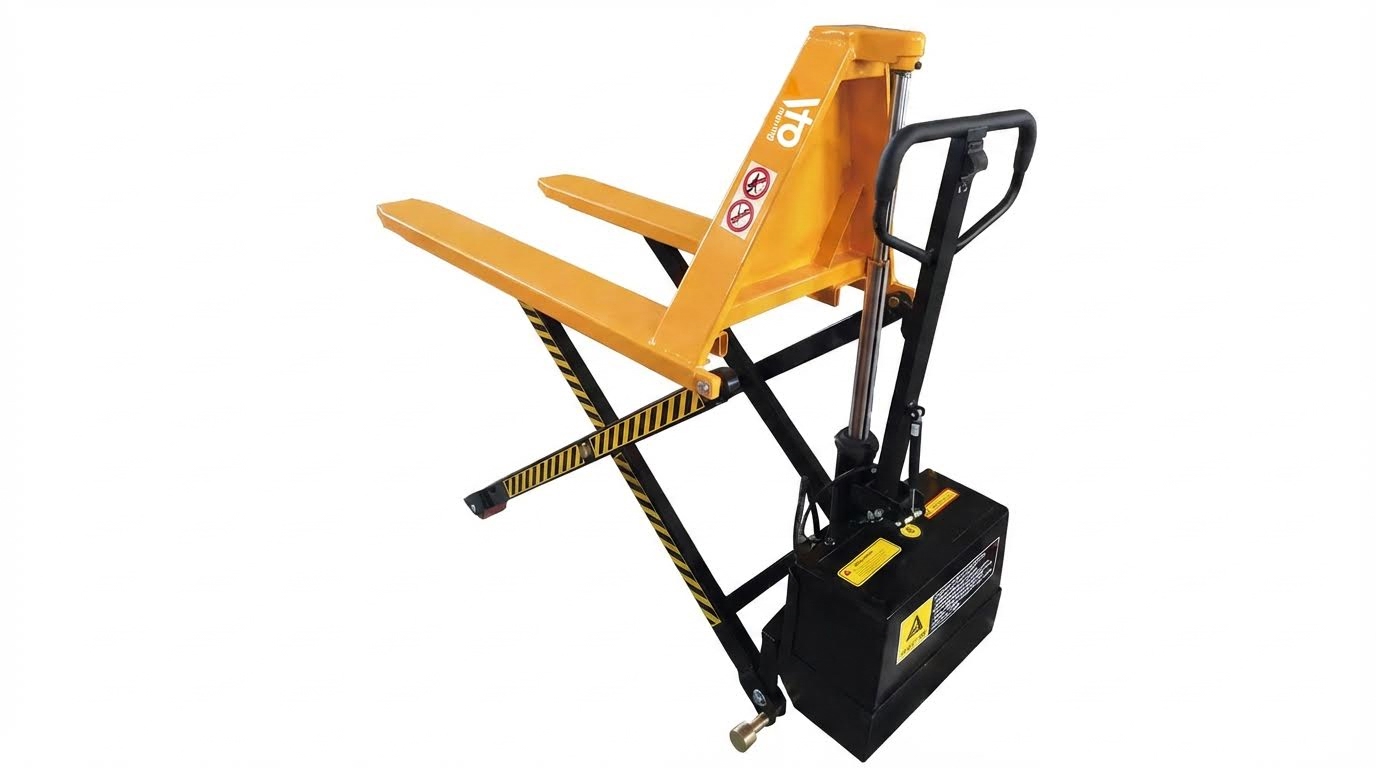
Die Auswahl von Batterie, Betriebszyklus und Antriebssystem gewährleistet, dass der Hubwagen während einer kompletten Schicht wiederholt seine Hubhöhe und seinen Fahrweg ohne Spannungseinbrüche oder Überhitzung erreicht. Unterdimensionierte Systeme erfüllen zwar die theoretischen Spezifikationen, versagen aber im realen Betrieb.
Die meisten elektrischen Hubwagen nutzen 24-V-Systeme mit einer Kapazität von 70–200 Ah, die für etwa 4–8 Stunden gemischten Betrieb pro Ladung ausreichen. Ingenieure dimensionieren die Akkus anhand des prozentualen Anteils von Fahr-, Hub-, Leerlauf- und Ladezeit . Wenn Ihre Bediener häufig bis zur maximalen Höhe heben, überwiegt der Energieverbrauch beim Hubvorgang, und Sie müssen die Kapazität erhöhen oder auf Lithium-Ionen-Akkus umsteigen.
| Parameter | Typischer Bereich | Beste für… | Betriebliche Auswirkungen |
|---|---|---|---|
| Batteriespannung | 24 V | Die meisten Mitgänger- und Fahrer-Hubwagen | Vereinfacht die Ladeinfrastruktur und deren Wartung. |
| Akku-Kapazität | 70–200 Ah | 4–8 Stunden gemischte Tätigkeit | Höhere Ah-Werte ermöglichen mehr Hubfahrten und Fahrten pro Schicht. |
| Chemie | Blei-Säure / Lithium-Ionen | Einschichtbetrieb vs. Mehrschichtbetrieb | Li-Ionen-Akkus ermöglichen das Zwischenladen und eine stabile Hubgeschwindigkeit. |
| Fahrgeschwindigkeit unter Last | 4.5–6 km / h | Walkie-Nutzung | Ausgewogenes Verhältnis zwischen Produktivität und Kontrolle in engen Gängen. |
| Reisegeschwindigkeit ohne Ladung | Bis zu 8–10 km/h | Fahrereinheiten, längere Strecken | Verkürzt die Leerfahrtzeiten zwischen den Zonen. |
Bleiakkumulatoren neigen dazu, gegen Ende der Schicht einen Spannungsabfall zu erleiden, was die Hubgeschwindigkeit verringert und die Fähigkeit, die maximale Hubhöhe konstant zu erreichen, beeinträchtigen kann. Lithium-Ionen-Akkus hingegen halten die Spannung konstanter , sodass der Stapler nahezu mit gleichbleibender Geschwindigkeit und Höhe hebt, bis das Batteriemanagementsystem zum Schutz der Zellen die Abschaltung vornimmt.
- Leichte Tätigkeit, Einschichtbetrieb: 70–120 Ah Blei-Säure – Geringere Kosten, ausreichend für gelegentliches Heben und kurze Strecken.
- Mittelschwere, gemischte Hebe- und Fahraufgaben: 150–200 Ah Blei-Säure – Unterstützt 6–8 Stunden Laufzeit bei regelmäßigen Ladepausen.
- Mehrschichtbetrieb oder hohe Hubfrequenz: Lithium-Ionen-Akku mit Zwischenladung – Gewährleistet eine gleichbleibende Aufzugsleistung über lange Betriebszeiten.
- Hohe Steigfähigkeit oder Rampen: Antriebsmotor mit höherer kW-Leistung – Hält Geschwindigkeit und Kontrolle auf Steigungen von 6–10 % unter Last aufrecht.
Antriebs- und Hubmotoren haben typischerweise eine Leistung von ca. 0.7–2.2 kW (Antrieb) bzw. 1.2–2.5 kW (Hub). Leistungsstärkere Motoren verbessern die Steigfähigkeit und Hubgeschwindigkeit , ziehen aber auch einen höheren Spitzenstrom. Steuerungssysteme begrenzen den Strom beim Beschleunigen und Anfahren des Hubs, um die Batterien zu schonen, und die Bremsenergierückgewinnung gewinnt beim Verzögern einen Teil der Energie zurück.
Schnelle Methode zur Abschätzung der benötigten Batteriegröße
1) Ermitteln Sie die durchschnittliche Anzahl der Hubvorgänge pro Stunde bis zur maximalen Höhe. 2) Schätzen Sie die durchschnittliche Fahrstrecke pro Stunde. 3) Verwenden Sie, sofern verfügbar, die vom Hersteller angegebenen Energieverbrauchswerte pro Hubvorgang und pro Zähler. 4) Berücksichtigen Sie einen Zuschlag von 20–30 % für Kühlräume, Rampen und alternde Batterien.
💡 Hinweis für den Außendiensttechniker: In Kühlhäusern sinkt die Leistung von Hydrauliköl und Batterien. Ein Stapler, der bei 20 °C problemlos 8 Stunden durchhält, kann bei 0 °C nur noch 4–5 Stunden durchhalten, und die Hubgeschwindigkeit verringert sich merklich. Bei der Spezifizierung für Kühl- oder Tiefkühllagerung sollten Sie die Angaben zu Betriebsdauer und Batteriekapazität als optimistisch betrachten und eine Nummer größer wählen oder Zwischenladungen in wärmeren Pufferzonen einplanen.

Abschließende Gedanken zur sicheren und effizienten Auswahl der Hubhöhe
Die Wahl der richtigen Hubhöhe beginnt mit klaren Fakten, nicht mit Vermutungen. Definieren Sie Ihre Palettengrößen, Einfahrtshöhen, Laderampenprofile und Regalebenen in Millimetern. Vergleichen Sie diese Werte anschließend mit der Gabelgeometrie, der Nennhubhöhe und dem Wendekreis der einzelnen Stapleroptionen.
Ingenieure müssen die im Katalog angegebene maximale Hubkraft als Grenzwert und nicht als Zielwert betrachten. Gabeldurchbiegung, Bodenneigungen und lange Lasten reduzieren die tatsächliche Hubhöhe und Stabilität. Gangbreite und Wendefläche entscheiden oft darüber, ob die Bediener die Gabeln beim Fahren niedrig halten können. Bei engen Gängen sind Kompaktstapler gegenüber Hochhubwagen vorzuziehen.
Die Arbeitsabläufe sollten in drei Bereiche unterteilt werden: horizontaler Transport, ergonomische Arbeitsplatzgestaltung und Stapeln. Verwenden Sie Hubwagen mit niedriger Hubhöhe für Transporte zwischen Etagen, Hochhubwagen für Arbeiten in Hüfthöhe und Stapler für die vertikale Lagerung. Passen Sie Akkukapazität und Motorleistung an den Arbeitszyklus an, damit der Stapler während der gesamten Schicht seine Nennhubkraft erreicht.
Die beste Vorgehensweise ist einfach: Messen Sie Ihre ungünstigsten Fälle, berücksichtigen Sie ausreichende Sicherheitsmargen und wählen Sie dann die niedrigste Hubhöhe und den kleinsten Stapler, der die Anforderungen noch erfüllt. Dieser Ansatz, unterstützt durch die speziell entwickelten Produktreihen von Atomoving, sorgt für höheren Durchsatz, weniger Schäden und größere Sicherheitsmargen im gesamten Lager.
Häufig gestellte Fragen
Wie hoch kann ein elektrischer Hubwagen heben?
Ein elektrischer Hubwagen kann Lasten je nach Modell typischerweise auf Höhen von 6 cm bis über 20 cm anheben. Diese Geräte werden häufig in Lagerhallen und Logistikzentren eingesetzt, wo häufiges Heben und Senken erforderlich ist. Weitere Informationen finden Sie in diesem Hubwagen-Leitfaden.
Was ist die minimale und maximale Hubhöhe eines elektrischen Hubwagens?
Die minimale Hubhöhe der meisten elektrischen Hubwagen liegt bei etwa 3 bis 4 cm, die maximale Hubhöhe üblicherweise zwischen 12 und 15 cm. Einige Modelle erreichen jedoch Hubhöhen von bis zu 20 cm und mehr. Prüfen Sie daher immer die technischen Daten des jeweiligen Modells, um sicherzustellen, dass es Ihren Anforderungen entspricht.