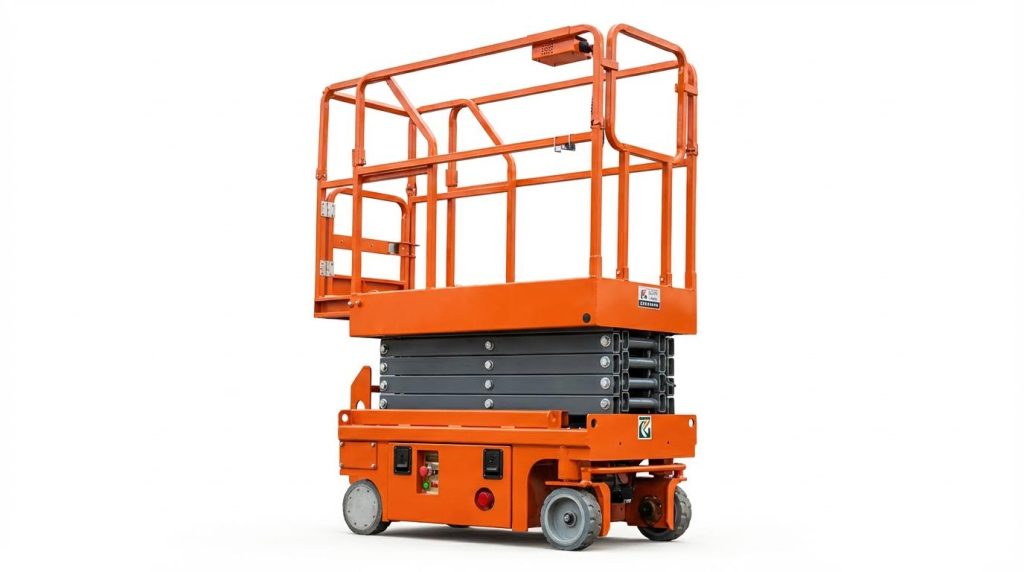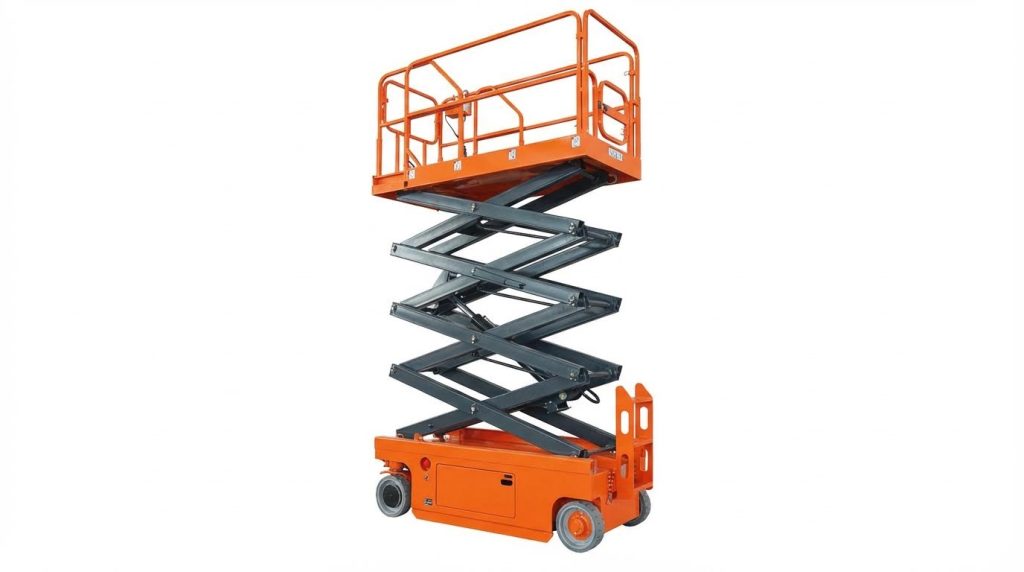
Electric scissor lifts run on compact DC battery systems, not on internal combustion engines. Understanding what are electric scissor lifts powered by means looking at battery chemistry, voltage levels, duty cycles, and how charging affects runtime and life. This guide walks through how the powertrain is laid out, the battery types and voltages you will see in the field, and the charging and maintenance practices that keep lifts productive and safe. Use it as a practical reference when choosing, operating, or standardizing power systems across your fleet.
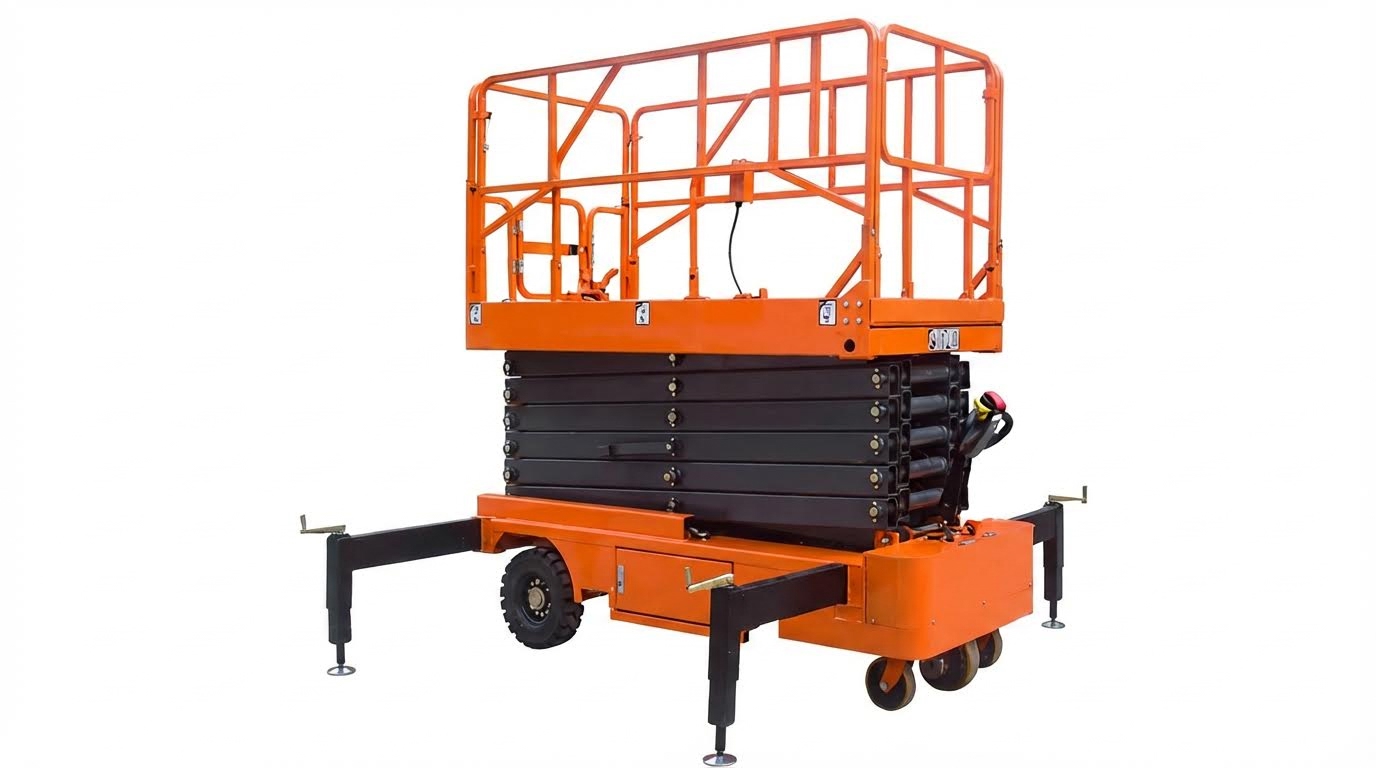
How Electric Scissor Lifts Are Powered
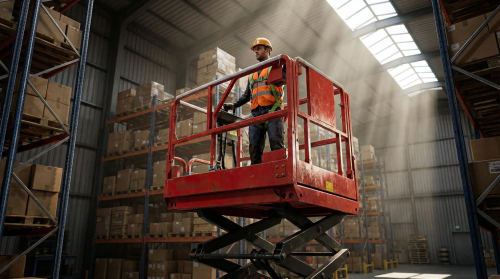
Core powertrain layout and duty cycle
To understand what are electric scissor lifts powered by, start with the basic powertrain. An electric scissor lift converts stored DC energy in the battery pack into hydraulic power that raises and lowers the platform, plus DC power for drive and control functions.
In a typical electric scissor lift, the core components are:
- Battery pack (flooded lead-acid, AGM/VRLA, or lithium iron phosphate)
- DC contactor / main disconnect and protection devices
- DC motor driving a hydraulic pump
- Hydraulic manifold, lift cylinders, and hoses
- Electric drive motors (on drive wheels) in many compact units
- Electronic control system and safety interlocks
The duty cycle of an electric scissor lift is very different from a constant-load machine. Lifts see short, high-current bursts for lifting and driving, then long periods of low current for control electronics or idling.
Typical duty cycle profile for a work shift
Across an 8–10 hour shift, a single machine might see:
- Dozens of lift cycles from ground to working height and back
- Frequent short repositioning moves at low speed
- Idle time with key on and controls live but no motion
- Overnight or off-shift charging back to 100% state of charge
This “peaky” profile is why battery internal resistance, allowable discharge current, and voltage stability matter more than just nameplate amp-hours. Lithium iron phosphate packs, for example, can support continuous discharge currents around their rated amp-hour value and pulse currents roughly double that for short periods, which suits lift-and-drive peaks. One pack is rated 135A continuous with 270A pulse for 120 seconds.
Battery chemistry also affects how the powertrain behaves over the shift:
- Flooded lead-acid / AGM / VRLA – higher voltage sag under peak load, gradual loss of lift speed as charge drops, 300–1,200 cycle life depending on depth of discharge and design. Typical lead-acid packs last 300–700 cycles at 50% DoD while VRLA can reach about 1,200 cycles.
- Lithium iron phosphate (LiFePO4) – flatter voltage curve, so lift speed stays more consistent through the discharge window. One 25.6 V pack offers over 3,000 cycles at 100% DoD and up to 6,000 cycles at 70% capacity retention, and similar LiFePO4 designs for lifts often exceed 3,500 cycles at moderate DoD. Some reach 5,000 cycles.
Because the powertrain is battery-centric, anything that lowers internal resistance and keeps temperature in the ideal band improves real-world performance. For lithium packs, this is handled by a Battery Management System (BMS) and sometimes integrated heaters for cold weather. Some LiFePO4 packs used in lifts include a heating function and remote monitoring via 4G, with CAN and RS485 communication.
Key electrical and environmental limits (LiFePO4 example)
| Parameter | Typical LiFePO4 scissor-lift pack |
|---|---|
| Nominal voltage | 25.6 V |
| Nominal capacity | 135 Ah |
| Max continuous discharge | 135 A |
| Pulse discharge | 270 A for 120 s |
| Charging voltage range | 22.4–28.8 V |
| Operating charge temp | 0 °C to 55 °C (32 °F to 131 °F) |
| Operating discharge temp | −20 °C to 55 °C (−4 °F to 131 °F) |
| Self-discharge | <3% per month |
Data from a LiFePO4 scissor-lift battery pack. Full specification reference.
Typical voltage systems in scissor lifts
From a fleet and maintenance perspective, “what are electric scissor lifts powered by” usually boils down to two questions: battery chemistry and system voltage. Most compact and mid-size electric scissor lifts use multi-battery packs configured to 24 V, 36 V, or 48 V.
The most common configurations are:
| System voltage | Typical battery arrangement | Chemistry options | Typical use case |
|---|---|---|---|
| 24 V | Two 12 V batteries in series, or four 6 V in series | Flooded lead-acid, AGM/VRLA, LiFePO4 | Small to mid-height electric scissors |
| 36 V | Six 6 V batteries in series | Lead-acid, AGM/VRLA, some lithium retrofit packs | Mid to higher working heights, heavier platforms |
| 48 V | Eight 6 V batteries in series | Lead-acid, AGM/VRLA, lithium packs | Larger platforms and higher duty cycles |
Many scissor lifts run at 24 V, 36 V, or 48 V; a 24 V system often uses two 12 V units in series, while 48 V can use eight 6 V cells. Higher system voltage reduces current for the same power level, which cuts cable heating and improves efficiency.
Lead-acid vs VRLA example data
| Parameter | VRLA example |
|---|---|
| Nominal voltage per battery | 6 V |
| Capacity | 220 Ah @ C20 |
| Cycle life | Up to 1,200 cycles at 50% DoD |
This type of 6 V VRLA unit is commonly used in strings (e.g., four in series for 24 V) to power smaller lifts. VRLA designs are maintenance-free and suitable for indoor work.
On many standard electric scissor lifts, the pack is built from four 6 V batteries for a 24 V system. Larger rough-terrain electric scissors may use eight 6 V units to reach 48 V. Most units use four 6 V batteries, while some larger models need eight.
- Why 24–48 V?
- Balances safety and performance for mobile equipment.
- Keeps current levels manageable, reducing cable size and connector heating.
- Works with widely available industrial chargers and components.
- Voltage stability under load
- Undersized or aged packs show voltage sag during lifting and driving.
- Excessive sag reduces effective runtime and may trigger low-voltage cutouts.
- Lithium systems hold voltage more flat under the same load, improving usable runtime. This is a key reason they deliver more work per charge despite similar nominal Ah.
Physical and protection characteristics (LiFePO4 example)
| Parameter | Example value |
|---|---|
| Dimensions (L × W × H) | 500 × 320 × 210 mm |
| Weight | 37 kg (≈81 lb) |
| Enclosure | Commercial-grade steel case |
| Ingress protection | IP67 (dust-tight, protected against immersion) |
| Certifications | CE, UN 38.3, UL, IEC, CB, ISO 9001 |
These figures illustrate how lithium packs are packaged for harsh jobsite conditions. IP67 and multiple certifications support outdoor and rental-fleet use.
In summary, electric scissor lifts are powered by DC battery systems—typically 24–48 V—built from lead-acid, VRLA, or increasingly LiFePO4 packs. The chosen voltage and chemistry directly affect lift speed, runtime, charger selection, and total lifecycle cost for your fleet.
“”
Specifying And Managing Power Systems In Your Fleet
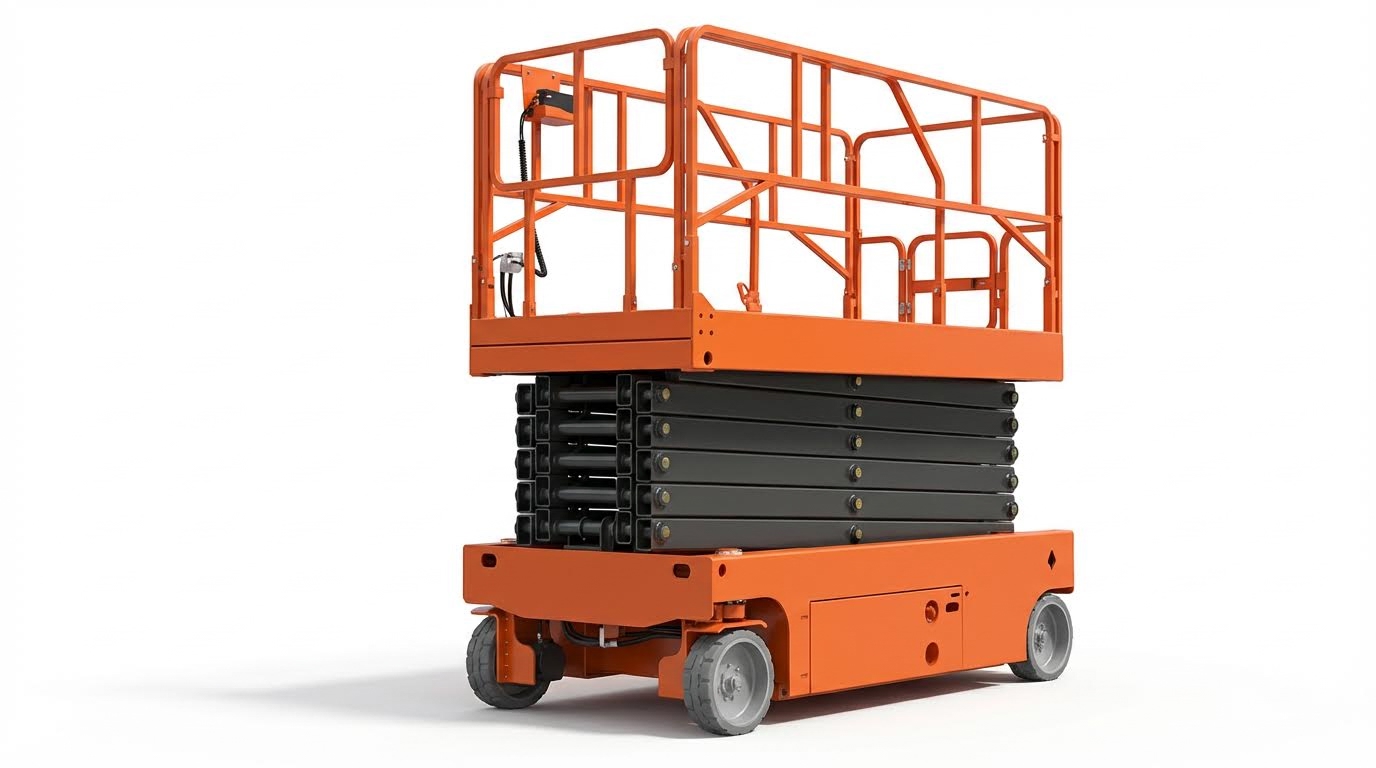
Matching battery type to application and environment
When you decide what are electric scissor lifts powered by in your fleet, you are really choosing between flooded lead-acid, AGM/VRLA, and lithium iron phosphate (LiFePO4) systems. Each chemistry fits a different duty cycle, environment, and budget. Use the matrix below to match the battery to the job, not just to the purchase price.
| Battery type | Typical system voltage | Typical capacity range | Cycle life (approx.) | Best fit applications |
|---|---|---|---|---|
| Flooded lead-acid | 24–48 V using 6 V or 12 V blocks in series Cited Text or Data | ≈200–250 Ah per 6–12 V block Cited Text or Data | ≈300–700 cycles @ 50% DoD Cited Text or Data | Low-utilization fleets, outdoor sites with good ventilation, lowest upfront cost |
| AGM / VRLA | 24–48 V, often 6 V VRLA modules in series Cited Text or Data | Example: 6 V, 220 Ah @ C20 for a motive VRLA unit Cited Text or Data | Up to ≈1,200 cycles @ 50% DoD under controlled use Cited Text or Data | Indoor work, medium duty, sites wanting “maintenance-free” operation |
| Lithium iron phosphate (LiFePO4) | Commonly 24 V packs; example nominal 25.6 V pack for lifts Cited Text or Data | Typical 24 V lift packs ≈105–200 Ah; example 135 Ah pack for scissor lifts Cited Text or Data | >3,000–3,500+ cycles, up to 6,000 at moderate DoD and favorable conditions Cited Text or Data Cited Text or Data | High-utilization, multi-shift fleets, cold climates, tight indoor spaces |
To translate this into a field decision, consider duty cycle, environment, and maintenance resources together. For many owners asking what are electric scissor lifts powered by in harsh climates or multi-shift rental use, LiFePO4 will usually give the lowest cost per operating hour despite higher purchase price.
Key selection questions before you choose a battery
Ask these questions for each machine class and job type.
- How many hours per shift and how many shifts per day will the lift run?
- Is charging available every night, or do you need fast or opportunity charging?
- Will the lift work mostly indoors, outdoors, or in mixed use?
- What are the minimum and maximum ambient temperatures on site?
- Do you have staff and procedures for electrolyte checks and ventilation, or do you need “no-touch” batteries?
- How long do you plan to keep the machine before resale or replacement?
Environmental conditions strongly influence which chemistry is practical. Flooded batteries vent gas during charging and need ventilated charging areas, while sealed VRLA reduces acid exposure risk indoors. LiFePO4 packs tolerate wide operating temperatures and can integrate heaters for cold weather, which is valuable on outdoor winter sites. Cited Text or Data
- For hot, dusty construction yards: sealed AGM/VRLA or lithium reduce corrosion and contamination risk.
- For refrigerated warehouses or cold climates: lithium with integrated heating and low self-discharge keeps lifts ready to work. Cited Text or Data
- For light, occasional use and tight budgets: flooded lead-acid can still be cost-effective if maintenance is done correctly.
Finally, check mechanical fit and weight. A 24 V, 135 Ah LiFePO4 pack built for scissor lifts can weigh about 37 kg and measure roughly 500 × 320 × 210 mm, with steel casing and IP67 sealing, which affects tray layout, center of gravity, and corrosion resistance. Cited Text or Data
Maintenance, monitoring, and lifecycle cost control
Once you decide what are electric scissor lifts powered by in your fleet, the next lever is how you maintain and monitor those systems. Good routines add years of life and stabilize runtime, directly lowering your cost per meter of lift. Maintenance needs differ sharply between flooded lead-acid, VRLA, and lithium packs.
| Battery type | Routine maintenance | Monitoring focus | Typical failure drivers |
|---|---|---|---|
| Flooded lead-acid |
|
|
|
| AGM / VRLA |
|
|
|
| Lithium iron phosphate (LiFePO4) |
|
|
|
Modern lithium packs for scissor lifts often integrate remote monitoring over 4G plus CAN and RS485 communication, so you can see state of charge, fault codes, and temperature from a fleet portal instead of a multimeter. This allows you to catch issues like high internal resistance (for example, above the ≤0.4 mΩ design value) or repeated overcurrent events up to 135 A continuous and 270 A pulse before they turn into breakdowns. Cited Text or Data
- Set fleet-wide rules for minimum state of charge at end of shift, to avoid frequent deep discharges that shorten life.
- Standardize chargers and verify they match battery chemistry and voltage to prevent chronic under- or over-charging. Cited Text or Data
- Train operators to park in ventilated areas for lead-acid charging and to inspect cords and connectors before each charge.
- Use opportunity charging mainly with lithium; avoid topping up lead-acid too frequently as it can increase corrosion.
Lifecycle cost levers you can control
Battery choice and basic discipline have the largest impact on lifecycle cost.
- Right-size chemistry to utilization: High-use fleets usually recover the higher lithium purchase price through 3–4× cycle life and faster charging, often lasting up to ten years of service. Cited Text or Data
- Control depth of discharge: Design work patterns so typical discharge stays around 50–70% for lead-acid and moderate levels for lithium to extend cycle life.
- Optimize charging windows: Flooded and VRLA often need 8 hours plus cooling; lithium can reach full charge much faster, reducing downtime and enabling smaller battery banks. Cited Text or Data
- Plan replacements over the fleet life: Lead-acid packs may need multiple replacements over a machine’s life, while a lithium pack can last roughly up to four times longer, often aligning with rental or ownership cycles. Cited Text or Data
For fleets that track costs carefully, the answer to what are electric scissor lifts powered by is no longer just “batteries.” It becomes a managed power system: the right chemistry, configured to your voltage platform, maintained with clear routines, and monitored with data so you can squeeze maximum safe runtime out of every kilowatt-hour you buy.
Final Thoughts On Choosing Scissor Lift Power Systems
Electric scissor lifts depend on how well you match battery chemistry, voltage, and charging practice to the real duty cycle. Short, high-current lift and drive peaks punish weak packs, poor cables, and mismatched chargers. A well-specified system holds voltage under load, keeps motors efficient, and avoids nuisance low-voltage cutouts that slow work and frustrate operators.
Lead-acid and VRLA still fit low to medium utilization where upfront price dominates and maintenance discipline exists. LiFePO4 suits high-use, multi-shift, or cold-climate fleets that value fast charging, flat voltage, long cycle life, and built-in BMS protection. Choosing the right system voltage, usually 24–48 V, then standardizing chargers and connectors, simplifies support across the fleet.
Operations teams should treat batteries as a managed power asset, not a consumable. Set clear rules for depth of discharge, charging windows, and inspection steps by chemistry. Use BMS or telematics data where available to catch abuse early. When you plan new purchases, look at cost per operating hour and required uptime, not just pack price.
For Atomoving lifts or any other equipment in your yard, the best practice is simple: engineer the power system to the job, then maintain it with the same care you give the lift structure and hydraulics. That approach delivers safer operation, longer life, and lower total cost.
Frequently Asked Questions
What are electric scissor lifts powered by?
Electric scissor lifts are powered by batteries, which provide a clean and environmentally friendly energy source. They do not rely on combustion engines or hydraulic fluids to operate. Hydraulic vs Electric Scissor Lifts.
- Common battery types include lead-acid and lithium-ion.
- Lithium-ion batteries are becoming increasingly popular due to their efficiency and longer lifespan.
What kind of batteries are used in electric scissor lifts?
Electric scissor lifts typically use either lead-acid or lithium-ion batteries. Lead-acid batteries are traditional and widely used, while lithium-ion batteries offer advanced performance and are gaining popularity. Battery Comparison for Scissor Lifts.