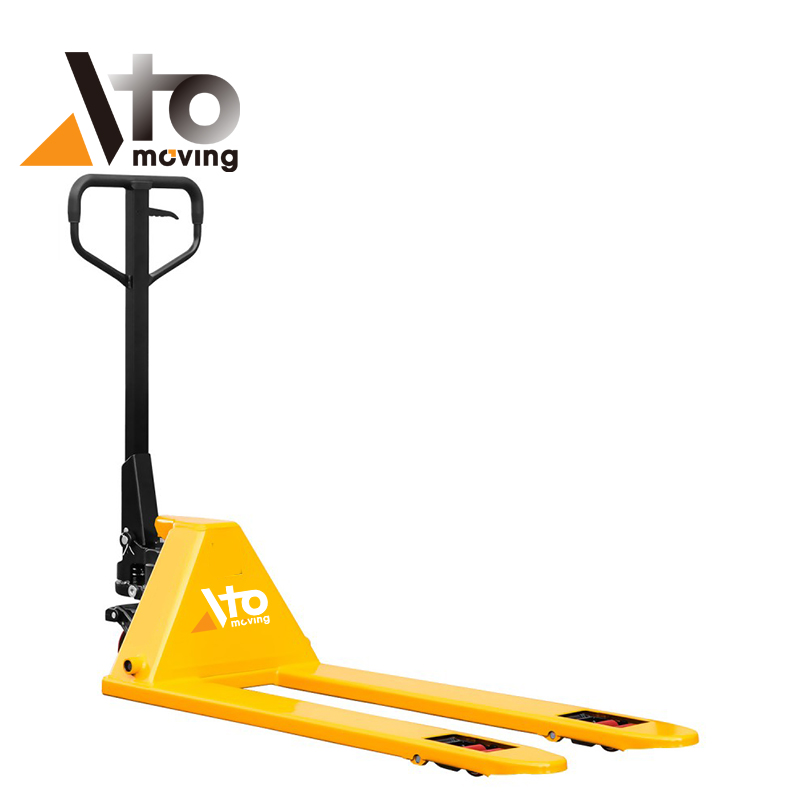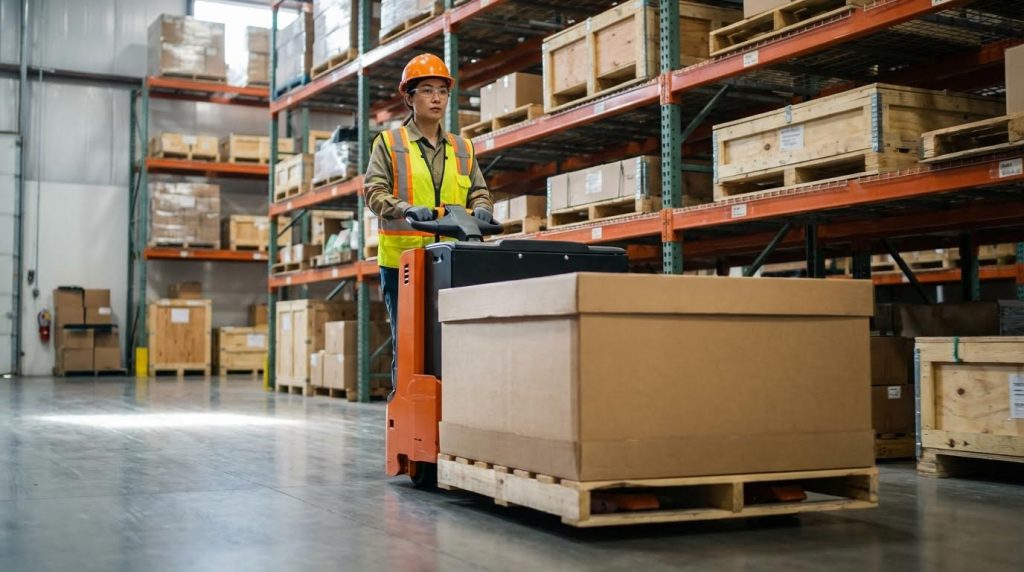
Pallet jack capacity is the maximum safe load a pallet truck can lift and move, and it directly controls how much can a pallet jack lift without risking injury, product loss, or floor damage. Undersizing the capacity slows operations and invites overloading; oversizing wastes capital and increases rolling resistance. This guide explains standard vs. heavy-duty capacity ranges, the engineering factors that set real-world limits, and how to choose the right rating for your duty cycle and future automation plans. By the end, you will know how to read nameplates, match capacity to your load profile, and keep your operation within OSHA/ISO safety expectations.
Defining Pallet Jack Capacity And Weight Limits
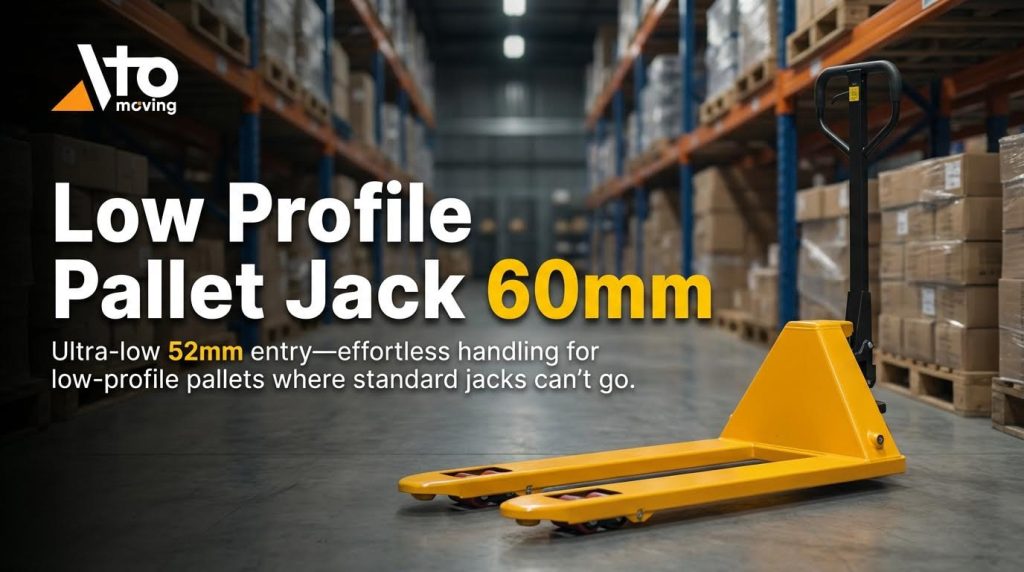
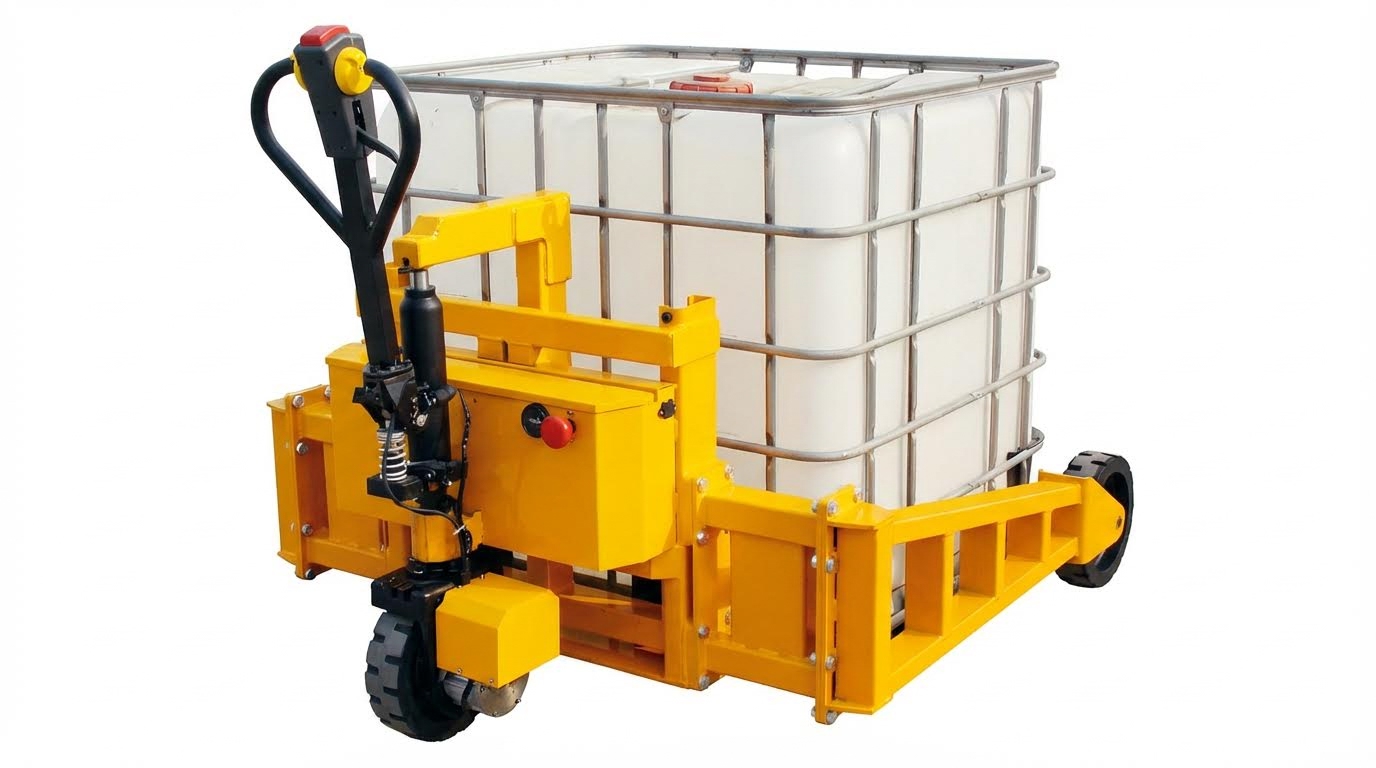
Pallet jack capacity and weight limits define the maximum load a truck can safely lift and move, and they answer the practical question “how much can a pallet jack lift” under real operating conditions.
Pallet jack capacity is not a guess; it is an engineered rating printed on the nameplate that tells you the maximum mass the truck can lift when the load is correctly positioned and supported. For supervisors, this rating is the control knob for injury risk, floor damage, and productivity, because overloading drives up fork deflection, hydraulic stress, and tipping incidents. To use capacity correctly, you must first understand the ranges for standard vs heavy‑duty units, then how manual, electric, and high‑lift designs trade lifting power for ergonomics and lift height.
💡 Field Engineer’s Note: In real warehouses, “just one more pallet layer” is how overloading starts; enforce a rule that any load taller or longer than normal gets a quick capacity check against the nameplate before moving.
Standard vs. heavy-duty capacity ranges
Standard and heavy-duty pallet jack capacity ranges separate everyday warehouse trucks from specialized units, and they directly define how much can a pallet jack lift without overstressing forks or hydraulics.
| Category | Typical Rated Capacity (kg) | Approx. Rated Capacity (lbs) | Typical Use Case | Field Impact |
|---|---|---|---|---|
| Standard manual pallet jack | 2,000–3,000 kg | ≈ 4,400–6,600 lbs (commonly 2,000–5,500 lbs) capacity reference | General warehousing, retail, light manufacturing | Covers most 1–1.5 tonne pallets with safety margin; ideal for mixed SKU operations. |
| Heavy-duty manual pallet jack | Up to 5,000 kg | Up to ≈ 11,000–15,000 lbs heavy-duty range | Steel, stone, paper rolls, dense bulk materials | Allows very dense or oversized pallets but increases push/pull force and floor loading. |
| High-spec heavy-duty manual (example) | ≈ 4,500–5,000 kg | ≈ 10,000–11,000 lbs example spec | Continuous heavy-industrial use | Requires trained operators and good floors; mis-use can quickly damage forks and wheels. |
| “Light-duty” or economy manual jack | ≈ 1,500–2,000 kg | ≈ 3,300–4,400 lbs | Shops, small storerooms, occasional use | Fine for infrequent, lighter pallets; unsafe if production later shifts to heavier SKUs. |
Standard manual pallet jacks in the 2,000–3,000 kg band are the “default” answer to how much can a pallet jack lift for most warehouses. Heavy‑duty units push that limit up to about 5,000 kg, but the trade‑off is higher operator effort, higher ground pressure on floors, and tighter safety margins if the load is off‑center or poorly wrapped.
How to read the capacity label correctly
The capacity on the nameplate assumes the load is fully supported on the forks, centered, and within the specified load center distance load center condition. Any overhang or offset reduces real safe capacity, even though the number on the plate does not change.
Manual, electric, and high-lift capacity bands
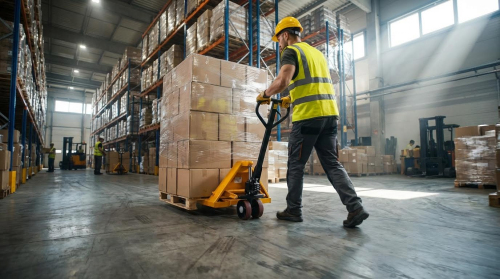
Manual, electric, and high-lift pallet jacks operate in different capacity bands because electric drive adds mass and power, while high-lift designs sacrifice capacity to maintain stability at greater lift heights.
| Pallet Jack Type | Typical Capacity Band (kg) | Approx. Capacity Band (lbs) | Primary Role | Field Impact on “how much can a pallet jack lift” |
|---|---|---|---|---|
| Manual low-lift pallet jack | 2,000–3,000 kg standard; up to 5,000 kg heavy-duty capacity bands | ≈ 4,400–6,600 lbs; up to ≈ 11,000 lbs | Short moves, loading docks, staging | Capacity is high, but human push/pull force and operator fatigue become the real constraint at the top end. |
| Electric pallet jack (walkie / rider) | Similar or slightly higher than manual, often 2,000–3,000+ kg electric range | ≈ 4,400–6,600+ lbs | High-throughput, longer travel distances | Battery power removes ergonomic limits, so you can use the full rated capacity repeatedly—if battery and wheels are maintained. |
| High-lift pallet jack (scissor-lift style) | ≈ 500–1,500 kg high-lift band | ≈ 1,100–3,300 lbs | Ergonomic work positioning, feeding lines | Lift height is prioritized over raw capacity; loads must be lighter to avoid tipping and frame overstress. |
| Electric high-lift or stacker-style units | Varies widely, often 1,000–1,500 kg in jack-like formats | ≈ 2,200–3,300 lbs | Light stacking and work positioning | Act more like small stackers; always verify nameplate because added mast height reduces allowable load. |
Manual low‑lift trucks answer how much can a pallet jack lift with the highest raw numbers, but electric models answer how much can a pallet jack lift repeatedly per hour without hurting operators. High‑lift designs deliberately reduce capacity to keep the center of gravity inside the wheelbase as the load goes up, which is why their bands drop to 500–1,500 kg.
- Manual jacks: Best when daily pallet counts are modest and floors are smooth; operator strength becomes the bottleneck, not the nameplate rating.
- Electric jacks: Best when you move 60+ pallets per shift; higher acquisition cost is offset by lower injury rates and higher picks per hour efficiency impact.
- High-lift jacks: Treated as ergonomic lift tables; capacity is secondary to getting the working height right for packing or assembly stations.
💡 Field Engineer’s Note: Many sites unknowingly overload high-lift jacks because “the same pallet is fine on a standard jack”; train teams that once you add height, your safe capacity band can drop by more than 50%.
Engineering Factors That Set Safe Lifting Capacity
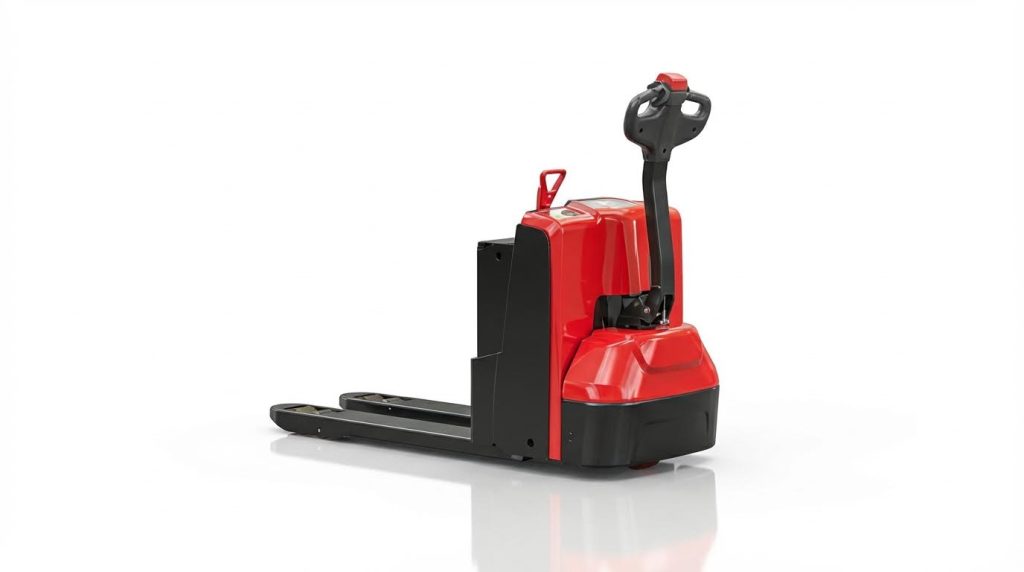
Engineering factors such as load center, fork stiffness, hydraulics, wheels, and floor conditions ultimately decide how much can a pallet jack lift safely, not just the headline capacity on the nameplate.
Engineers rate a pallet jack assuming a very specific “ideal” test condition: correct load center, straight forks, healthy hydraulics, and smooth level floor. The moment any of those change, the real safe capacity drops, sometimes by 20–40% in bad conditions, even though the printed rating stays the same.
💡 Field Engineer’s Note: When someone asks “how much can a pallet jack lift?”, I always answer: “Whatever the nameplate says, minus a safety margin for bad pallets, rough floors, and fatigue.” Engineering gives you the limit; operations decides the margin.
Load center, pallet geometry, and stability
Load center and pallet geometry control the tipping moment on the pallet jack, so any overhang or off-center stacking can reduce the true safe capacity well below the rated value, even if the weight is under the nameplate limit.
Rated capacity is calculated with the load fully supported on the forks, centered side‑to‑side, and located at a defined load center (typically near the pallet midpoint). If you push the mass further away from the wheels, you increase the overturning moment and reduce stability. This is why the same 2,000 kg load can be safe on a compact pallet but unsafe on a long, sagging one. Engineering guidance confirms that any offset, overhang, or stacked configuration reduces true safe capacity.
| Factor | Typical Condition | Effect on Safe Capacity | Field Impact |
|---|---|---|---|
| Longitudinal load center | At pallet midpoint (e.g., 600 mm on a 1,200 mm pallet) | Rated capacity is fully valid at this point | Keep heavy items near the pallet center, not at the tips, to use full rating. |
| Load overhang | Boxes extend beyond fork tips or sides | Increases tipping moment and fork deflection | Overhanging loads that are “technically underweight” can still cause tip‑over. |
| Lateral centering | Load centered between forks | Minimizes side‑to‑side instability | Off‑center stacking makes steering heavy and increases risk on turns. |
| Stacked / tall loads | High center of gravity | Reduces stability on slopes and during turning | Tall pallets must often be derated vs. squat, dense loads of the same mass. |
| Pallet stiffness | Strong vs. damaged deck boards | Weak pallets sag and shift load center | Cracked boards let forks punch through, suddenly shifting weight and causing drops. |
How engineers think about load center when rating capacity
Designers treat the palletized load as a mass at a specific distance from the pivot (load wheels). Capacity is then the maximum mass that keeps bending stress, hydraulic pressure, and tipping moment within safe limits at that distance; move the mass further out and all three go up.
💡 Field Engineer’s Note: On sloped docks, even a 2–3° incline effectively shifts the load center “downhill.” A pallet that felt fine on the flat can suddenly feel unstable when you turn across a slope.
Fork design, bending stress, and deflection
Fork design and bending stress define how much can a pallet jack lift without permanent fork bending; high-strength steel and correct section geometry keep stress below yield limits at the rated load and load center.
Pallet jack forks act like cantilever beams. They are usually built from high‑strength low‑alloy steel with yield strength above 250 MPa, and are shaped to spread bending stresses safely under rated load. Engineering sources note that section geometry and generous radii are chosen specifically to reduce stress concentrations and control deflection under load during bending tests. Excessive tip loading or off‑center pallets can exceed these bending limits even when the gross load is below the nameplate rating.
| Fork Design Aspect | Engineering Role | Risk When Misused | Field Impact |
|---|---|---|---|
| Steel yield strength (>250 MPa) | Sets maximum stress before permanent bend | Overloading causes permanent fork “smile” (sag) | Bent forks reduce entry under pallets and lower true capacity. |
| Fork thickness and height | Controls section modulus (stiffness vs. weight) | Thin or worn forks deflect more under same load | Excessive deflection can drag on floor, increasing push force and risk of snagging. |
| Tip loading | Load concentrated at fork ends | Large bending moment at the heel | Putting heavy items at the tips can exceed bending limits even under rated weight. |
| Off‑center loading | Unequal load between forks | Torsion and uneven bending | One fork may bend more, leading to crooked lifting and pallet damage. |
| Wear vs. ISO/EN limits | Minimum allowed fork thickness | Worn forks can fail below rated load | Maintenance must measure fork thickness and derate or replace as needed. |
How fork deflection affects perceived capacity
Even when stress is below yield, elastic deflection increases with load. Operators feel this as “spongy” lifting and dragging tips. If deflection becomes excessive before reaching nameplate load, the truck is functionally derated because it no longer clears floor irregularities safely.
💡 Field Engineer’s Note: If you see daylight under the middle of the forks but the tips are touching the floor under load, that truck is effectively derated. Treat it as a lower‑capacity unit until forks are replaced.
Hydraulics, wheels, and floor conditions
Hydraulics, wheels, and floor conditions set the real‑world limit on how much can a pallet jack lift and move, because hydraulic pressure, wheel load ratings, and ground contact must all stay within their design limits.
Hydraulic pumps and cylinders are sized so that system pressure stays below design limits at rated capacity; drift tests verify that the load does not slowly sink due to internal leakage at this pressure during certification. Load wheels (often polyurethane or solid rubber) each carry a portion of the load and have their own per‑wheel ratings; worn or damaged wheels increase rolling resistance and vibration, which in turn increase dynamic loads beyond static calculations. Rough floors or slopes further shift the effective load center during travel, reducing practical capacity.
| Component / Condition | Engineering Constraint | Effect on Safe Capacity | Field Impact |
|---|---|---|---|
| Hydraulic system pressure | Must remain below design limit at rated load | Leaks or weak pumps reduce lifting ability | If the jack won’t reach full height at normal strokes, treat it as under‑capacity until repaired. |
| Hydraulic drift | Load must hold without sinking | Internal leakage causes slow lowering | Drift under load is a red flag; capacity may be compromised and loads can “creep” off forks. |
| Wheel load rating | Max kg per wheel | Overloading crushes bearings and treads | Flat‑spotted or cracked wheels mean the truck may no longer support its nameplate rating safely. |
| Floor roughness | Impacts rolling resistance and shock loads | Dynamic impact can exceed static design | On broken concrete, derate capacity and reduce speed to avoid wheel and fork damage. |
| Slopes / ramps | Increase effective load on downhill wheels | Shifts load center and tipping risk | Use lower capacities on ramps; some jacks that are fine at 2,500 kg on level may be limited to much less on slopes. |
Why wheel and floor conditions change “how much you can really lift”
On a perfect test floor, only static load matters. In real warehouses, every crack or expansion joint introduces shock loading. Each bump can briefly spike forces in the wheels and forks above the static calculation, so engineers and safety managers often apply a conservative derating for rough or outdoor surfaces.
💡 Field Engineer’s Note: If operators complain that a pallet jack “feels heavier than it should” on a certain route, walk that path. You’ll usually find spalled concrete, dock plates, or slopes that are quietly eating into your safe capacity margin.
Choosing The Right Capacity For Your Operation
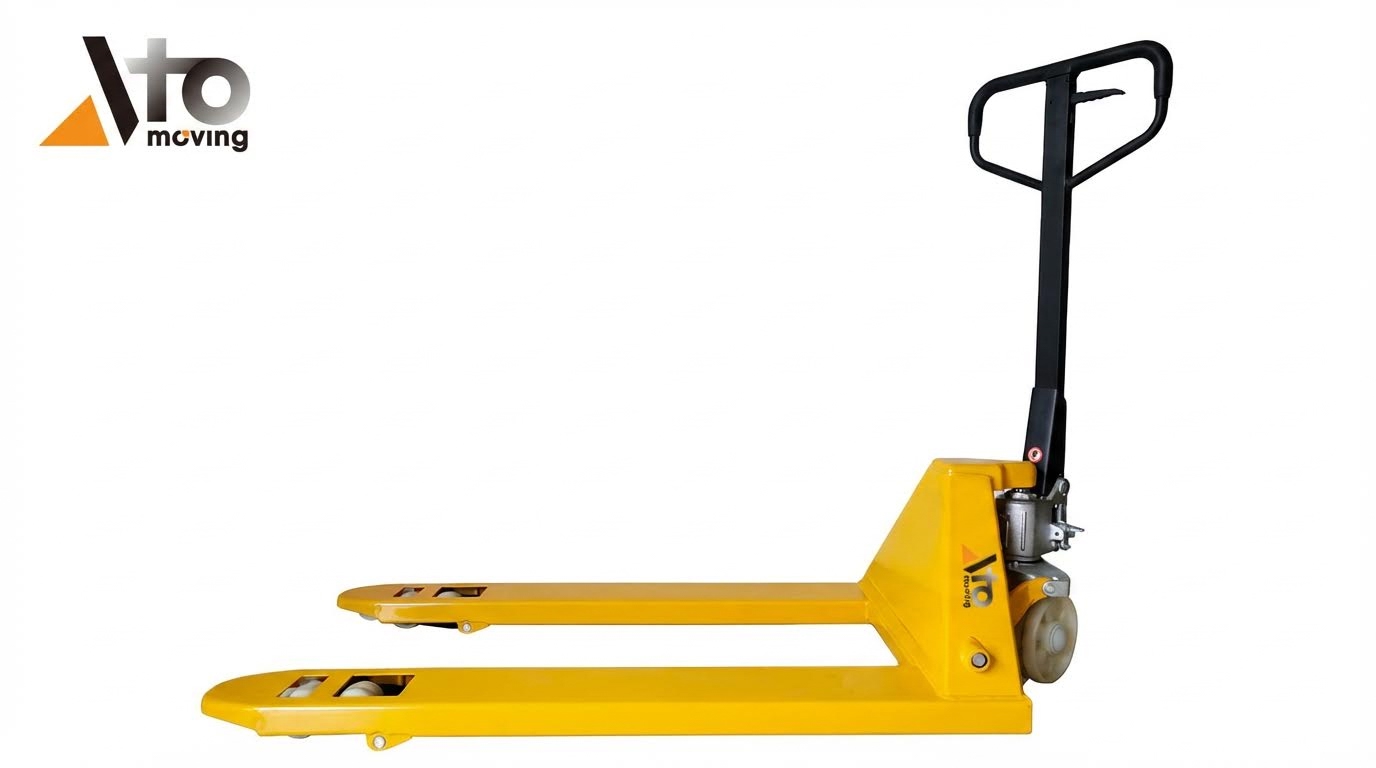
Choosing the right pallet jack capacity means sizing equipment to your real loads, travel patterns, and safety margins so operators never have to ask “how much can a pallet jack lift?” under pressure.
💡 Field Engineer’s Note: In most warehouses, capacity issues are not about the single heaviest pallet, but about repeated near‑max loads that quietly bend forks, fatigue operators, and spike injury risk over months.
Matching capacity to load profiles and duty cycles
Matching pallet jack capacity to load profiles requires looking at typical, peak, and abnormal loads plus shift frequency so the truck operates below its rating most of the time, not at the edge.
| Selection Factor | Typical Range / Example | Engineering Meaning | Field Impact |
|---|---|---|---|
| Typical pallet weight | 800–1,200 kg per pallet | Baseline load the jack will see most of the day. | Determines what “normal” feels like for push/pull force and stability. |
| Peak pallet weight | Up to 2,000–3,000 kg for standard loads | Drives minimum rated capacity required. | Must stay within nameplate rating to avoid overload incidents. |
| Standard manual capacity | ≈2,000–3,000 kg (≈4,400–6,600 lbs) rated capacity ranges | Covers most general warehouse and retail pallets. | Good fit if your heaviest pallet is ≤70–75% of this rating. |
| Heavy‑duty manual capacity | Up to about 5,000 kg (≈11,000 lbs) heavy-duty designs | Uses stronger steel and components for dense or oversized loads. | Needed for steel, stone, or dense liquid totes where standard jacks overload. |
| High‑lift pallet jack capacity | ≈500–1,500 kg (≈1,100–3,300 lbs) capacity bands | Reduced rating due to higher center of gravity and stability limits. | Safe for workbench-height handling but not for your heaviest floor loads. |
| Duty cycle – low | <60 pallets/shift, single shift decision matrix | Light utilization with long rest periods. | Manual jacks usually sufficient; focus on ergonomics for occasional heavy loads. |
| Duty cycle – medium/high | 60–180+ pallets/shift, multiple shifts throughput guidance | Frequent, repetitive moves with limited rest time. | Electric jacks reduce fatigue and keep capacity consistent over long shifts. |
| Operator push/pull limits | Governed by ergonomics and safety policy | Even within rated capacity, force can be excessive. | Heavier ratings are pointless if operators cannot move the load safely. |
When you ask “how much can a pallet jack lift,” the practical answer is: it should rarely lift more than 70–80% of its nameplate capacity in everyday use. That buffer absorbs pallet weight variation, uneven floors, and minor mis‑centering without creeping into unsafe territory.
How to profile your loads before buying
Walk your floor for a week and record: min/typical/max pallet weights, which SKUs cause complaints, and how often near‑max loads move per shift. Use the max plus 20–30% as your target capacity band.
TCO, safety compliance, and future automation
Balancing TCO, safety, and future automation means choosing pallet jack capacity that minimizes life-cycle cost while meeting safety rules today and integrating cleanly with powered or automated equipment tomorrow.
| Decision Dimension | Manual Pallet Jack | Electric Pallet Jack | Field Impact |
|---|---|---|---|
| Upfront cost | ≈$300–$600 per unit cost vs. benefit | ≈$2,000–$5,000 per unit cost vs. benefit | Manual wins on capex; electric often wins when labor is constrained or expensive. |
| Annual maintenance | ≈$150–$400/year maintenance data | ≈$300–$600/year plus ≈$120/year energy TCO figures | Electric has higher service cost but offsets it with higher throughput and fewer injuries. |
| Labor productivity | ≈15–20 loads/hour productivity comparison | ≈25–35 loads/hour productivity comparison | Electric can improve throughput by up to ~30–45% in busy operations. |
| Injury and claims | Higher musculoskeletal injuries; ≈18% more incidents vs electric injury data | Lower strain, ≈19% injury reduction after switching injury data | Right capacity plus electric drive often pays back in reduced compensation claims. |
| Overload and misuse risk | Higher temptation to exceed rating when “just one more heavy pallet” appears overloading risks | Better control and braking help, but rating can still be exceeded if underspecified | Choosing a capacity band that matches your heaviest real loads cuts misuse incidents. |
| Future automation fit | Primarily manual workflows | Closer to the controls and sensors used in AGVs/AMRs | Electric units with appropriate capacity ease future migration to automated pallet movers. |
| Best-fit usage profile | <60 pallets/day, single shift, lighter loads selection guidance | 60–180+ pallets/day, multi-shift, heavier loads selection guidance | Use throughput and peak pallet weight to choose both drive type and capacity. |
From a safety and compliance standpoint, the right answer to “how much can a pallet jack lift” is “no more than the rated capacity on the nameplate, with the load centered and fully supported.” That rating assumes proper load center and pallet fit; any overhang or partial fork engagement effectively reduces safe capacity and raises tipping and injury risks load center and stability.
- Check nameplate and manuals: Always verify the printed maximum capacity before assigning a jack to a new SKU family or heavier load range capacity ratings.
- Align capacity with safety policies: Set internal rules (e.g., 80% of rating max) and train operators to refuse loads that exceed that threshold.
- Plan for automation: If you expect AGVs or pallet-handling AMRs later, standardize today on pallet sizes and weight bands those systems can handle.
- Use telematics where possible: Load and impact data from connected trucks highlight chronic overload points and justify capacity upgrades or process changes digital tools.
Quick rule-of-thumb for capacity and TCO
If your peak pallet weight is close to 2,000 kg and you move >80 pallets per shift, step up to a 2,500–3,000 kg electric pallet jack. The extra capacity plus productivity usually offsets the higher TCO within the first year.
Final Thoughts On Pallet Jack Weight Capacity
Pallet jack capacity is not just a catalog number. It is the outcome of load center, fork strength, hydraulics, wheels, and floor conditions working together. When you respect those limits, you protect people, products, and floors while keeping throughput predictable.
Operations teams should treat the nameplate as the hard ceiling and run daily loads at roughly 70–80% of that value. This margin absorbs bad pallets, rough routes, and tall stacks without relying on luck. Engineers and supervisors must also check that load geometry matches the rating assumptions: centered mass, full fork support, and controlled lift height.
Best practice is simple. Standardize pallet sizes and weight bands. Match manual, electric, and high‑lift trucks to real duty cycles, not wishful thinking. Derate for slopes and damaged floors. Inspect forks, hydraulics, and wheels on a fixed schedule, and pull any unit that shows bending, drift, or wheel failure. Finally, align capacity rules with training and, where possible, telematics data. That way, every Atomoving pallet jack runs inside a clear engineering envelope, and your capacity decisions stay safe, defensible, and ready for future automation.
Frequently Asked Questions
How much weight can a standard pallet jack lift?
A standard pallet jack can typically lift between 3,000 and 5,500 pounds. However, the exact load capacity depends on the model and manufacturer. For more details, check out this Pallet Jack Capacity Guide.
Can a pallet jack lift a car?
No, a pallet jack is not designed to lift a car. While theoretically possible, using a pallet jack for this purpose can be dangerous and may damage both the jack and the car. For safe lifting practices, refer to Forklift vs Pallet Jack Safety.
What are the different types of pallet jacks and their load capacities?
- Low-Profile Pallet Jacks: Handle pallets with lower clearance. Typical load capacity: 3,000 to 5,500 lbs.
- Scissor Lift Pallet Jacks: Combine a pallet jack with a lift table for ergonomic handling. Typical load capacity: 2,200 to 3,300 lbs.
For more information on types and safety tips, visit Pallet Jack Types and Safety.