

Pallet truck and forklift certification proves that operators are trained, evaluated, and authorized to use powered industrial trucks safely under OSHA rules. This guide explains how to get a pallet truck and fork lift certiication, what the law requires, and how facilities can build a compliant, efficient training program that actually reduces incidents and total cost of ownership.
What Pallet Truck And Forklift Certification Covers
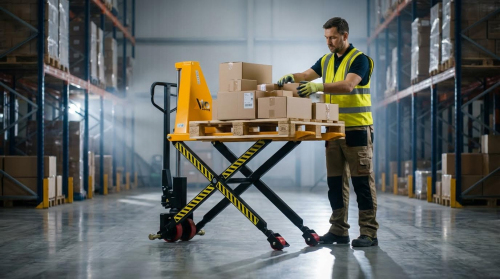
Pallet truck and forklift certification covers OSHA-compliant training, evaluation, and documentation for all powered industrial trucks, defining who can operate them, under what conditions, and how to keep operators legally qualified and physically safe.
If you are researching how to get a pallet truck and fork lift certiication, this section explains exactly which equipment is covered and the age/fitness rules you must meet before any training can be valid.
Scope: Pallet Trucks vs. Forklifts Under OSHA
OSHA treats most pallet trucks and forklifts as “powered industrial trucks,” so certification must follow the same 3-part structure: formal instruction, practical training, and performance evaluation before an employee can operate independently. OSHA training guidance
In practice, this means your certification scope must match both the truck type (pallet truck vs. counterbalance forklift, reach truck, etc.) and the actual site conditions where the truck will run.
| Equipment Type | Typical Power Source | OSHA Category / Coverage | Key Training Focus Areas | Operational Impact |
|---|---|---|---|---|
| Electric pallet truck (walkie / rider) | Battery-electric | Powered industrial truck under 29 CFR 1910.178 | Low-level load handling, tight-aisle maneuvering, pedestrian interaction, charging procedures | Covers most warehouse floor movements; critical for dock and staging safety. |
| Manual pallet jack | Human-powered | Not a powered industrial truck; usually outside OSHA PIT standard | Basic handling, ergonomics, ramp limitations, load stability | Often handled via manual handling training, not PIT certification. |
| Counterbalanced forklift (sit-down) | Internal combustion or electric | Powered industrial truck under 29 CFR 1910.178 | Stability triangle, mast operation, visibility, refueling/charging | Main vertical storage and yard work; highest risk if training is weak. |
| Reach truck / narrow-aisle truck | Battery-electric | Powered industrial truck under 29 CFR 1910.178 | High-lift stability, reach mechanisms, tight-aisle turning, racking clearance | Enables high-density storage; requires precise control to avoid rack damage. |
| Order picker | Battery-electric | Powered industrial truck under 29 CFR 1910.178 | Operator elevation, fall protection, platform controls, travel paths | Combines PIT risks with working-at-height risks; needs strict procedures. |
OSHA’s powered industrial truck rules require that training content and evaluation be tailored to the specific truck type and workplace hazards, not just generic forklift theory. OSHA truck- and workplace-related topics
- Truck classification alignment: Certification must match the class of powered industrial truck the operator will actually use – this prevents operators from using unfamiliar controls or stability characteristics.
- Workplace-specific hazards: Training must address surfaces, ramps, docks, and pedestrian traffic in your facility – this cuts collision and tip-over risk where you really operate.
- Formal + practical + evaluation: Classroom, hands-on, and performance checks are all mandatory – skipping any part leaves you non-compliant and increases incident probability.
- Employer-based certification: The employer, not the school, is responsible for final sign-off – this forces alignment between training content and on-site conditions.
How this applies if you use both pallet trucks and forklifts
If operators use both low-level electric pallet trucks and high-lift forklifts, they need training and evaluation on each type. A single generic “forklift card” is not enough under OSHA; your internal records must show which truck types were covered.
💡 Field Engineer’s Note: Many sites overlook walkie pallet trucks because they feel “low risk.” Yet most foot crush and pedestrian impact cases I have seen involved these units in congested docks. Treat them as seriously as sit-down forklifts in your certification scope.
Regulatory Standards And Age/fitness Requirements
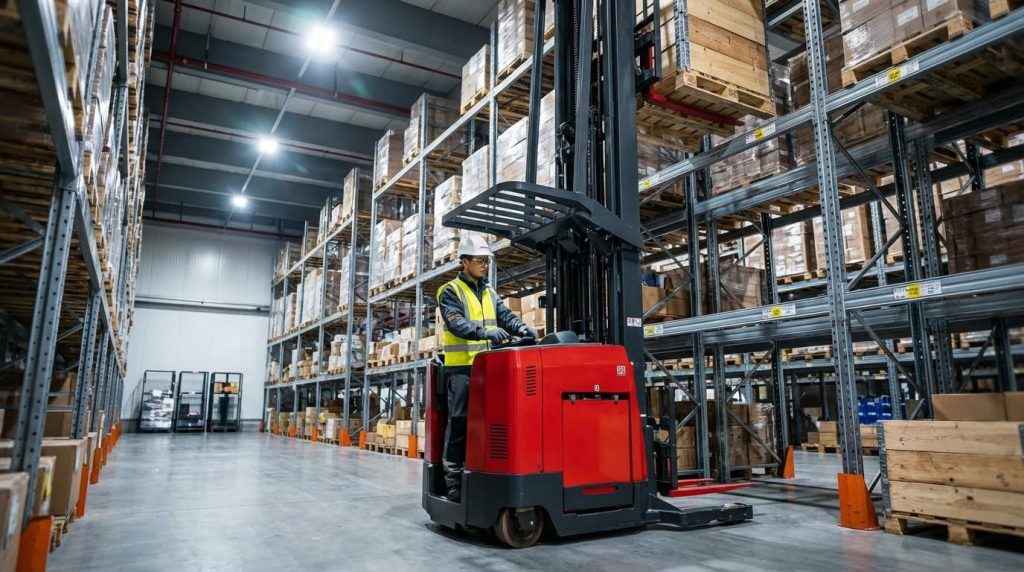
Pallet truck and forklift certification is governed by OSHA standard 29 CFR 1910.178, which requires operators to be at least 18 years old, physically and cognitively capable, fully trained, and evaluated at least every three years. Regulatory overview
Understanding these baseline rules is essential if you are mapping how to get a pallet truck and fork lift certiication that will actually stand up to audits and incident investigations.
| Requirement Type | Regulatory Basis / Expectation | Typical Criteria | Operational Impact |
|---|---|---|---|
| Core OSHA standard | 29 CFR 1910.178 – Powered industrial trucks | Training and evaluation before operation; employer certification of each operator | Sets the minimum legal framework for all PIT training programs. |
| Training structure | OSHA-mandated three-part model | Formal instruction, practical training, and performance evaluation by a qualified person | Prevents “card-only” operators who have never been tested on real trucks. OSHA training components |
| Age requirement | Child labor and OSHA expectations | Minimum 18 years old to operate powered industrial trucks | Prevents underage workers from operating high-risk equipment. Eligibility reference |
| Physical capability | Employer duty to ensure safe operation | Adequate vision, hearing, coordination, and ability to perform checks and maneuvers | Reduces incidents caused by missed signals, blind spots, or slow reactions. |
| Cognitive / language ability | Training effectiveness requirement | Ability to understand instructions, signage, and manuals (often English proficiency) | Ensures operators can apply rules under stress and read hazard warnings. Training and capability criteria |
| Supervision before full certification | OSHA training requirements | Uncertified trainees may only operate under direct supervision of a qualified trainer | Allows hands-on learning while controlling risk during the learning curve. |
| Evaluation cycle | OSHA refresher rules | Performance evaluation at least every 3 years; earlier after incidents or unsafe behavior | Keeps skills current and documents competence over time. Refresher frequency |
| State-plan variations | OSHA-approved State Plans | Some states add stricter or extra requirements | Facilities must check local rules; “federal minimum” may not be enough. State plan note |
- Age and fitness screening: Confirm operators are 18+ and medically/physically capable before investing in training – this avoids sunk cost in candidates who cannot be legally qualified.
- Documented certification: Keep records with operator name, training date, evaluation date, and trainer identity – these are the first documents auditors and investigators will ask for. OSHA record details
- Refresher triggers: Plan for extra training after accidents, near-misses, or truck/attachment changes – this turns incidents into learning events instead of repeat failures. Recertification triggers
- Cost-of-non-compliance awareness: Fines can reach USD 70,000 per violation, plus hidden downtime and damage costs – strong certification programs usually pay back through avoided incidents. Non-compliance costs
Quick checklist before enrolling an operator in training
Confirm the candidate is at least 18 years old, passes your internal fitness-to-work screen, can understand training materials and signage, and will be trained on the exact truck types and environments they will use. Then schedule formal instruction, supervised practical sessions, and a documented performance evaluation.
💡 Field Engineer’s Note: I often see facilities pass marginal candidates who struggle with depth perception or reading signage. The trucks still move, but near-miss counts spike. A 10-minute upfront fitness and comprehension check usually prevents months of corrective coaching and incident reports later.
Technical Structure Of A Compliant Training Program
A compliant pallet truck and forklift program follows a strict three-part structure: formal instruction, supervised practical training, and documented evaluation, all tailored to your truck types and site hazards under OSHA 29 CFR 1910.178 requirements. This is the real backbone of how to get a pallet truck and fork lift certiication that actually protects people and passes audits. OSHA training structure defines these elements clearly.
| Program Element | What It Includes | OSHA Role | Operational Impact |
|---|---|---|---|
| Formal Instruction | Theory, rules, stability, inspections, procedures | Mandatory content topics defined | Reduces rule violations and tip-over risk |
| Practical Training | Hands-on operation on actual or equivalent trucks | Must reflect truck type and workplace | Cuts collision, rack, and product damage |
| Performance Evaluation | Observed driving and load handling under real conditions | Required before certification and every 3 years | Filters out unsafe operators before incidents |
To stay compliant, you build each block around your exact truck models, load types, aisle widths, gradients, and traffic patterns, then lock it in with records that prove who was trained, when, and by whom. OSHA-based program structures all follow this pattern.
💡 Field Engineer’s Note: When you design the program, start from your worst credible incident (rack strike, pedestrian hit, pallet truck roll-away on ramp) and work backward. If your training does not specifically address that scenario, it is not yet compliant enough in practice.
Formal Instruction: Core Safety And Stability Topics
Formal instruction is the classroom or online theory block that teaches operators how the truck behaves, where it can fail, and which rules prevent tip-overs and collisions. This is the first visible step in how to get a pallet truck and fork lift certiication that meets OSHA’s three-part model. OSHA and industry guidance break this into truck-related topics and workplace-related topics.
| Topic Group | Key Subjects To Cover | Why It Matters | Operational Impact |
|---|---|---|---|
| Truck Types & Classification | Classes of powered trucks, differences between pallet trucks vs forklifts | Prevents operators treating all trucks the same | Reduces misuse, especially using indoor trucks outdoors |
| Controls & Instrumentation | Steering, travel direction, lift/lower, emergency stop, horn | Ensures predictable, smooth control inputs | Reduces jerky moves that break pallets or shift loads |
| Capacity & Load Center | Nameplate capacity, load center distance, derating with attachments | Core to stability and avoiding front axle overload | Prevents mast failures and front-axle overload on racks |
| Stability Principles | Stability triangle, center of gravity shift when lifting/turning | Explains why sudden turns or side slopes flip trucks | Direct reduction in tip-over incidents |
| Pre-Shift Inspection | Tyres, forks, chains, hydraulics, brakes, horn, lights | Catches failures before they occur under load | Reduces in-shift breakdowns and unplanned downtime |
| Operating Procedures | Travel with forks low, speed limits, stopping distances | Standardises safe behaviour across shifts | Improves flow through aisles without sacrificing safety |
| Load Handling | Picking, stacking, unstacking, unstable loads, damaged pallets | Reduces dropped loads and rack impacts | Fewer product write-offs and rack repairs |
| Ramps & Docks | Approach angles, travel direction with load, dock plates | Critical for pallet trucks and forklifts on gradients | Prevents roll-aways and trailer edge falls |
| Refueling/Charging | LPG bottle changes, diesel refuel, battery charging & watering | Controls fire, explosion, and acid hazards | Less charger damage and fewer battery failures |
| Workplace Hazards | Pedestrian routes, blind corners, intersections, lighting | Links truck behaviour to real site risks | Supports layout changes and traffic management |
- Use mixed formats: Blend slides, videos, and incident case studies – this keeps experienced operators engaged and exposes them to real failure modes.
- Align with your manuals: Base content on the actual truck manuals – this ensures what they learn matches the controls and limits on your floor.
- Include pallet truck specifics: Cover low-level pallet jacks and walkies, not just sit-down forklifts – these cause many foot and lower-leg injuries if ignored.
- Test for understanding: Use written or digital quizzes – this documents comprehension and highlights who needs extra coaching.
Typical Duration And Format For Formal Instruction
Most facilities bundle 2–4 hours of formal instruction per truck family. High-risk operations (cold stores, narrow-aisle, high-bay >10 m) often extend theory to half a day with more stability and incident analysis focus.
OSHA explicitly recognises lectures, videos, written materials, and interactive computer-based learning as acceptable formal instruction methods, provided they cover the required topics for the truck and workplace in question. Their guidance is the blueprint you use to build your curriculum.
💡 Field Engineer’s Note: If operators cannot sketch the “stability triangle” or explain why forks must stay low when travelling, your formal instruction is not sticking. Re-teach these concepts with a physical model or short video of real tip-overs.
Practical Skills: Equipment-Specific, Site-Specific Training
Practical training is the supervised, hands-on driving where operators apply theory on the exact pallet trucks and forklifts they will use, in the same aisles, docks, and yards. This is the second pillar of how to get a pallet truck and fork lift certiication that holds up when OSHA asks how you addressed your actual workplace hazards. OSHA and industry sources stress that this must be both equipment-specific and site-specific.
| Practical Module | Key Exercises | Best For… | Operational Impact |
|---|---|---|---|
| Basic Controls & Checks | Start/stop, direction control, horn, pre-shift inspection | New operators and cross-training | Creates consistent habits before bad ones form |
| Low-Level Travel | Driving with forks 100–200 mm off floor, straight lines, braking | All operators | Reduces pallet scraping and floor damage |
| Turning & Confined Spaces | 90° and 180° turns in aisles close to your real width | Facilities with aisles <3.0 m | Prevents rack leg strikes and column hits |
| Load Picking & Stacking | Square approach, mast tilt, lift to various heights | High-bay storage and racking | Improves put-away speed without extra damage |
| Ramps & Docks | Approaching dock plates, travelling on slopes with/without load | Sites with external yards or mezzanines | Prevents roll-back and dock-edge incidents |
| Pallet Truck Specifics | Walk-behind position, stopping distances, tight turns around people | Warehouses heavy on manual/ride-on pallet trucks | Cuts foot injuries and pallet jack runaways |
| Hazard Navigation | Simulated pedestrians, blind corners, mixed traffic | Busy warehouses and production plants | Builds real hazard scanning behaviour |
- Match truck to training: Train on the same class and configuration of truck – attachments, mast height, and power source all change handling.
- Mirror real routes: Use your actual aisles, docks, and yard paths – this exposes operators to real bottlenecks and blind spots.
- Escalate difficulty: Start with empty pallets, then partial loads, then full height – this lets operators feel stability limits safely.
- Coach in real time: The trainer walks or rides with the operator – instant feedback corrects risky habits before they stick.
- Use simulators where useful: VR and simulators are ideal for high-risk scenarios – you can practice mast failures or pedestrian hits without risking assets. Digital tools support this.
Minimum Supervision Rules For Trainees
Until fully certified, operators may only drive under direct supervision of a qualified trainer and only when such operation does not endanger themselves or others. This is a core OSHA expectation and should be written into your SOPs.
Both OSHA’s eTool and industry guidance emphasise that practical training must address truck-related items such as capacity, stability, and controls, and workplace-related items such as surface conditions, ramps, and pedestrian traffic. These lists are your checklist for designing exercises.
💡 Field Engineer’s Note: For pallet trucks, insist trainees park with forks fully lowered and never ride the forks or pump handle. Many facilities ignore this “low-risk” equipment, but most crushed-toe claims I have seen came from pallet trucks, not forklifts.
Evaluation, Documentation, And Refresher Cycles

Evaluation, documentation, and refresher cycles are how you prove each operator can drive safely today and keep them safe as trucks, layouts, and behaviours change over time. This is the final leg of how to get a pallet truck and fork lift certiication that survives regulator scrutiny and internal audits. OSHA requires a performance evaluation at least every three years, with earlier refreshers triggered by incidents or unsafe operation. Their guidance defines these triggers clearly.
| Element | OSHA Requirement | Typical Implementation | Operational Impact |
|---|---|---|---|
| Initial Evaluation | Qualified person evaluates operator’s performance | Checklist-based ride-along in real work area | Prevents certifying operators who are not yet safe |
| Certification Record | Name, training date, evaluation date, trainer/evaluator | Digital or paper file per operator | Provides instant proof during inspections or audits |
| 3-Year Re-Evaluation | At least once every 3 years | Scheduled re-check with observed driving | Resets bad habits and updates to new rules |
| Accident/Near-Miss Refresher | After incidents or unsafe operation | Targeted retraining on failed behaviours | Reduces repeat events and claim frequency |
| Change In Truck Type | Refresher when truck type changes | Short course on new controls and limits | Prevents “old truck” habits causing new failures |
| Change In Workplace | Refresher when conditions change | Briefing on new aisles, racks, gradients | Speeds up safe adaptation to layout projects |
| Telematics-Based Coaching | Not mandated, but strongly supported | Use impact/speed data to trigger coaching | Targets high-risk drivers before an accident |
- Use a structured checklist: Score behaviours such as approach speed, fork height, and pedestrian awareness – this makes evaluations consistent across trainers.
- Record everything: Keep certificates, test scores, and evaluation sheets – these are your defence against fines and liability.
- Link to incidents: After any forklift or pallet truck event, document the retraining – this shows you acted on the root cause, not just the symptom.
- Leverage telematics: Use impact and speed data to select operators for early refreshers – this is far more efficient than blanket retraining.
- Set internal cycles shorter than 3 years: Many high-risk sites use annual refreshers – this keeps skills sharp and supports a strong safety culture.
Example Certification Record Fields
A robust record usually includes: operator full name; employee ID; truck classes authorised (e.g., pallet truck, counterbalance); training completion date; evaluation date; trainer/evaluator name and signature; notes on any restrictions (e.g., no yard driving).
Both OSHA and industry sources are clear that employers, not training vendors, are responsible for certification and recordkeeping, even when they use third-party courses. Building A Certification Strategy For Your Facility
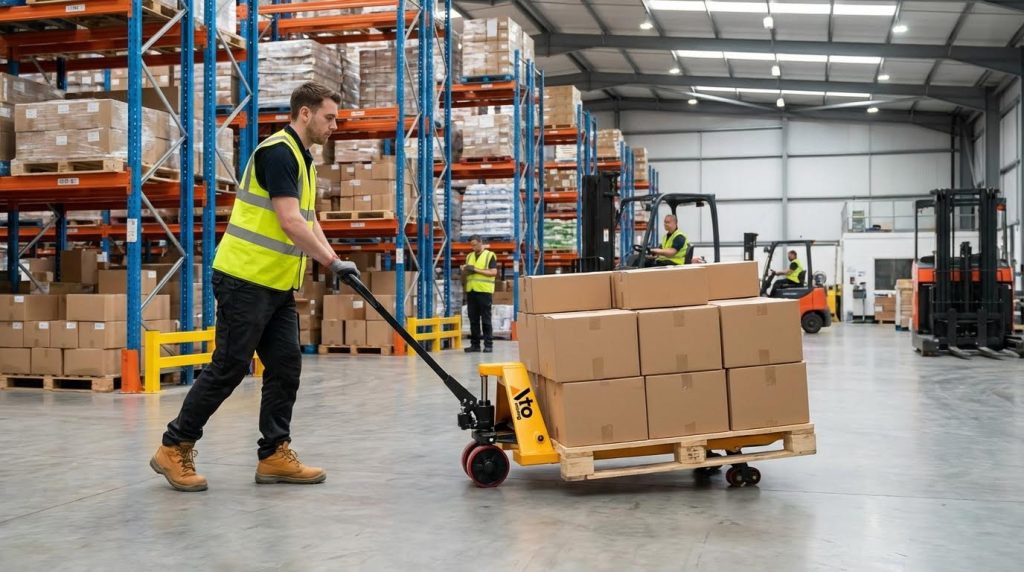
A robust certification strategy defines who trains, how you track competency, and how you prove compliance for audits and insurance. It links everyday pallet truck and forklift use to OSHA-compliant training, evaluation, and digital records. This is the practical backbone of how to get a pallet truck and fork lift certiication embedded into your site operations, not just on paper.
| Strategy Element | Key Decision | Typical Options | Operational Impact |
|---|---|---|---|
| Training ownership | Who designs and controls the program | Internal, external, or hybrid | Determines consistency across shifts, sites, and truck types. |
| Training method mix | How you deliver formal vs. practical content | Classroom/online + hands-on | Balances OSHA compliance with productivity and shift coverage. OSHA requires both formal and practical training. |
| Evaluation cycle | How often you re-check operators | Every 3 years minimum, plus triggers | Controls risk by catching bad habits early. OSHA requires evaluation at least every 3 years. |
| Technology level | How deeply you use telematics and VR | None, basic, or integrated | Shifts you from reactive (after accidents) to proactive (predicting and preventing). Telematics and VR support targeted training. |
| Recordkeeping | How you store proof of training | Paper, spreadsheets, LMS/telematics | Determines how fast you can pass an audit and prove due diligence after an incident. |
💡 Field Engineer’s Note: Treat certification like preventive maintenance. If you only react after accidents, you will always be behind on both safety and throughput.
Selecting Training Pathways And Providers
Selecting training pathways and providers means choosing how operators complete formal instruction, hands-on practice, and evaluation, while ensuring OSHA compliance and site relevance. The best mix usually blends external courses with tightly controlled in-house, site-specific training.
| Pathway / Provider Type | What It Covers | Strengths | Limitations | Best For… |
|---|---|---|---|---|
| Internal trainer (in-house) | Formal + practical + evaluation matched to your trucks and layouts | Highly site-specific; easy to align with your SOPs and shifts. | Requires qualified trainer, time, and structured materials. Must follow OSHA content rules. OSHA specifies truck- and workplace-related topics. | Large or multi-shift sites with stable staff and multiple truck types. |
| Third-party classroom provider | Formal instruction + some generic practical exercises | Turnkey content on stability, capacity, inspections, and regulations. Covers the OSHA 3-part structure. | Often weak on your exact aisle widths, dock risks, and pallet types. Needs on-site top-up. | Smaller facilities or those starting from zero, needing a baseline program fast. |
| Online / e-learning course | Formal theory: classifications, stability triangle, inspections, safe practices | Flexible timing; easy to scale; good for multi-site standardization. Typical topics include stability and inspections. | Does not satisfy OSHA alone; you still need supervised practical training and evaluation on actual equipment. | Spreading consistent theory content across many operators and locations. |
| Mobile on-site trainer (external) | Brings trainer and sometimes demo trucks to your facility | Combines expertise with your real environment; reduces travel time for staff. | Quality varies; ensure they tailor content to your trucks and hazards, not just generic slides. | Sites without internal trainers but with unique layouts or high-risk operations. |
| Hybrid (online + in-house practical) | Online theory plus site-run hands-on and evaluations | Very strong balance of standardization and site-specific risk control. | Requires internal discipline to schedule and document practical sessions properly. | Most medium–large operations wanting tight control and audit-ready documentation. |
When you define how to get a pallet truck and fork lift certiication for your team, map each operator through three steps: formal theory, supervised practice on your actual pallet trucks and forklifts, and a documented evaluation by a qualified person. OSHA requires this three-part structure for powered industrial trucks, including content on truck controls, capacity, stability, and workplace hazards such as ramps, surface conditions, and pedestrian traffic. Formal instruction, practical training, and evaluation are mandatory.
- Clarify internal vs. external roles: Decide who owns curriculum, who delivers theory, and who signs off evaluations – this prevents gaps where no one is truly accountable.
- Match training to truck types: Separate modules for pallet trucks, counterbalance forklifts, reach trucks, etc. – operators must be trained on the specific trucks they use. OSHA expects training to match truck type and workplace.
- Define eligibility rules: Enforce minimum age (18+), medical/fitness criteria, and language proficiency – this avoids certifying people who cannot safely respond to hazards. Operators must be at least 18 and physically capable.
- Lock in recertification triggers: Set automatic refreshers for accidents, near-misses, truck changes, or layout changes – this keeps skills aligned with current risks, not old conditions. Refresher training is required after incidents and every 3 years.
- Standardize documentation: Use one template for all sites with operator name, training date, evaluation date, and trainer/evaluator name – this is exactly what OSHA expects on certification records. Certification records must include these fields.
How to vet an external training provider
Ask providers to show how their curriculum aligns with OSHA truck-related and workplace-related topics, how they handle site-specific hazards, and what documentation they supply. Confirm they accept that your company, not them, is ultimately responsible for certifying operators under OSHA 29 CFR 1910.178. The employer must certify operators.
💡 Field Engineer’s Note: For mixed fleets, split training days by truck family. Trying to cover pallet trucks, reach trucks, and counterbalance units in one block usually leaves operators confused on stability limits and inspection points.
Integrating Telematics, VR, And Digital Records

Integrating telematics, VR, and digital records means using technology to simulate high-risk scenarios, capture real driving behavior, and maintain audit-ready proof of training. Done right, it turns certification from a one-time event into continuous, data-driven safety control.
| Technology | Primary Function | Key Data / Capability | Operational Impact |
|---|---|---|---|
| Virtual Reality (VR) / Simulators | Safe practice for high-risk maneuvers | Scenario performance, error types, reaction times | Lets operators experience tip-over risks, tight aisles, and dock edges without damaging assets. VR enables high-risk practice off the floor. |
| Telematics on trucks | Monitor real-world use and impacts | Impacts, speed, travel paths, pre-shift check status | Identifies hotspots (corners, docks) and drivers needing refresher training. Supports redesign of traffic routes. |
| Digital training platform / LMS | Centralize training modules and records | Module completion, test scores, certification dates | Provides instant proof of who is certified on which truck type and when they are due for refreshers. |
| Proximity / pedestrian sensors | Real-time collision avoidance | Alerts for people, trucks, or zones | Reduces near-misses and collisions, especially in blind corners and mixed pedestrian-vehicle areas. |
OSHA expects refresher training when operators show unsafe behavior, after accidents or near-misses, when evaluations indicate unsafe operation, when they change truck type, or when workplace conditions change. Each operator must also be evaluated at least once every 3 years. Telematics gives you objective data to trigger these refreshers instead of relying on memory or informal reports.
- Use telematics to target refreshers: Filter impact and speeding reports by operator, shift, and location – then assign short, focused retraining only where risk is proven. Telematics data supports targeted training.
- Link VR scenarios to real incidents: Build VR modules around actual near-misses, such as ramp edge strikes or rack impacts – this directly addresses the behaviors behind your loss history.
- Digitize certification records: Store operator name, truck type, training date, evaluation date, and trainer in one system – this matches OSHA documentation requirements and speeds up investigations. Records must list operator, dates, and trainer.
- Tie access control to certification status: Where possible, link telematics logins or access badges to current certification – expired or untrained operators simply cannot start the truck.
- Feed data into management reviews: Include incident rates, impact counts, and training completion in monthly KPIs – this keeps leadership attention on certification as a cost and risk lever, not a checkbox.
Cost of non-compliance vs. tech investment
Non-compliance with powered industrial truck training rules can lead to fines from about USD 5,000 up to 70,000 per violation, plus medical, repair, and downtime costs after an incident. Investment in compliant training and digital tools reduces incident frequency and stabilizes throughput. For most sites, basic telematics and digital records pay back quickly through fewer impacts and faster audits.
💡 Field Engineer’s Note: Start simple: impact monitoring, digital checklists, and basic VR for new hires. Once supervisors see fewer rack hits and cleaner audits, it becomes easy to justify deeper integration.
Final Thoughts On Certification, Safety, And TCO
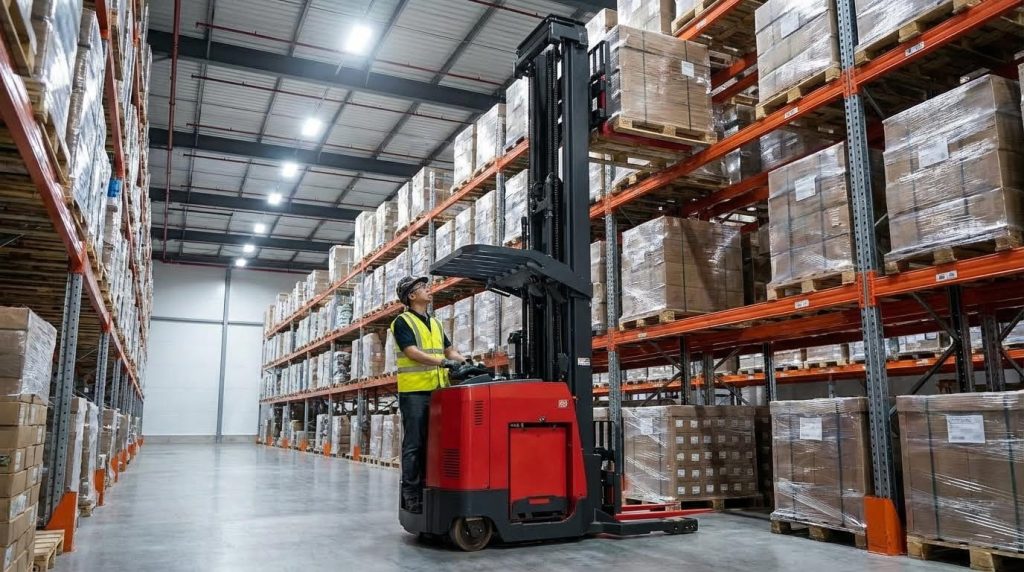
Pallet truck and forklift certification is not just a legal checkbox; it is a structured way to cut accidents, protect people, and lower lifetime operating cost per pallet moved. When you plan how to get a pallet truck and fork lift certiication, think in terms of risk, documentation, and long-term productivity.
OSHA requires that powered industrial truck operators receive formal instruction, practical training, and performance evaluation before unsupervised operation. This three-part structure applies equally to rider forklifts and powered pallet trucks, and it must be tailored to the exact truck types and workplace conditions. Training requirements and structure
| Certification Element | What It Requires | Operational Impact |
|---|---|---|
| Formal instruction | Classroom/online theory on stability, capacity, inspections, and safe operation | Reduces tip-over and overload risk by teaching limits before operators touch a truck |
| Practical training | Hands-on driving and load handling on the actual or equivalent truck | Builds muscle memory for tight aisles, ramps, docks, and local traffic patterns |
| Performance evaluation | Observed operation by a qualified person, documented by employer | Filters out unsafe habits before they reach full-speed, peak-shift operations |
| Refresher training | Triggered by incidents, unsafe behavior, changes in trucks/site, or 3‑year cycle | Continuously corrects drift in behavior and adapts skills to new risks |
| Certification record | Operator name, training date, evaluation date, trainer/evaluator identity | Provides proof during audits and incident investigations; shows due diligence |
From a Total Cost of Ownership (TCO) angle, certification is one of the cheapest controls you can implement. Untrained or poorly trained operators drive up indirect costs: product damage, racking strikes, dock door repairs, and unplanned downtime after incidents. OSHA notes that each operator’s performance must be evaluated at least once every three years, with refresher training when behavior or conditions change. Evaluation and refresher cycles
- Fewer incidents: Structured training on visibility, load handling, and ramps directly cuts collisions and tip-overs – lower medical, repair, and claim costs.
- Less product and rack damage: Operators who understand capacity, center of gravity, and truck limits damage fewer pallets and beams – less write-off and rework.
- Higher throughput: Confident, correctly trained drivers move more pallets per hour – you get more m³ of storage and kg of product moved from the same fleet.
- Regulatory protection: Complete certification records show compliance with OSHA 29 CFR 1910.178 – reduced risk of fines and stronger position after an incident.
Modern programs go beyond the minimum by adding telematics, VR, and digital records. VR and simulator tools allow practice of high-risk scenarios (blind intersections, heavy loads at 5–6 m lift height) without exposing real assets, while telematics logs impacts, speed, and inspection completion for each truck and operator. This data supports targeted refresher training and redesign of traffic routes. Technology integration and telematics
How to align certification with TCO goals
To connect “how to get a pallet truck and fork lift certiication” with cost control, design your program around measurable outcomes. Track incident rate per 100,000 pallet movements, average repair spend per truck per year, and completion rate for pre-shift inspections. Use telematics to flag high-impact operators and channels with repeated near-misses, then feed those findings into focused refresher training and layout changes. Over a 3–5 year horizon, well-run certification programs typically stabilize maintenance costs and reduce disruption from investigations and injury-related absences. Cost of non-compliance
💡 Field Engineer’s Note: When you budget for certification, add a line item for follow-up coaching based on telematics and near-miss reviews. In practice, that small ongoing spend often saves more in prevented mast, rack, and door repairs than the original training course itself.
Pallet truck and forklift certification ties legal compliance directly to real risk control and cost performance. When you align truck classification, operator fitness, and OSHA’s three-part training model, you build a system that prevents failures instead of reacting to them.
Formal instruction gives operators a clear mental model of stability, capacity, and limits. Practical, site-specific training then turns that model into safe habits in your real aisles, docks, and yards. Structured evaluations and documented refresher cycles close the loop. They catch drift in behaviour, address incidents, and keep skills matched to new layouts, truck types, and attachments.
For operations and engineering teams, the best practice is simple. Treat certification like an engineered safety control, not an HR task. Define truck-specific modules for each equipment family. Enforce age and fitness rules before training. Standardise checklists, records, and recertification triggers across all sites. Use telematics and digital records to target coaching and to prove due diligence in minutes, not days.
Teams that follow this approach see fewer injuries, less damage, and more stable throughput. Certification then becomes a core part of your Total Cost of Ownership strategy, with every trained operator protecting people, product, and equipment on every shift.
Frequently Asked Questions
How do I get my pallet jack certification?
To get your pallet jack certification, you need to complete formal training that includes both theoretical instruction and a practical operator evaluation. You must score at least 70% on the certification test, and if you don’t pass initially, you can retake it as many times as needed. The training covers essential topics like equipment operation, safety protocols, and risk awareness. Pallet Jack Training FAQs.
Do you need training to use a pallet truck?
Yes, proper training is required to operate an electric pallet truck safely. The training ensures you understand the equipment, know how to use it effectively, and are aware of potential risks. It typically includes practical skills, equipment knowledge, and safety guidelines. Electric Pallet Truck Guide.
Is a pallet truck considered a forklift?
Yes, OSHA classifies electric pallet jacks as powered industrial trucks (PITs), specifically under Class III, which includes hand and rider forklifts. This classification highlights the importance of proper certification and training for safe operation. Pallet Truck Equipment Guide.