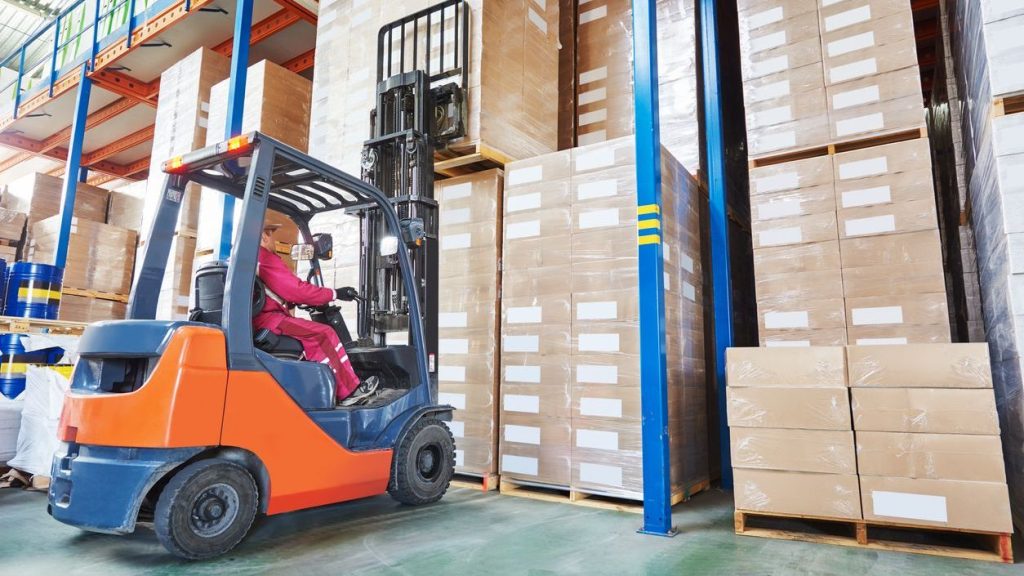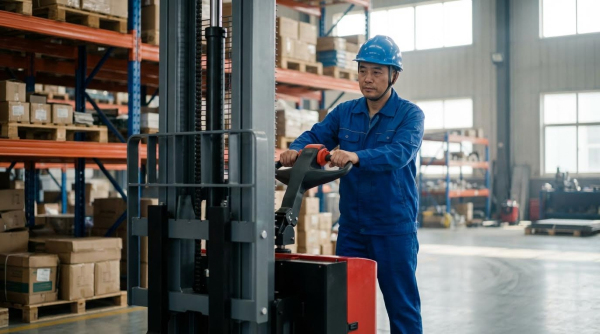
If you are asking what class is a walkie stacker, this guide explains exactly how OSHA, ANSI, and ISO classify these trucks and what that means on your floor. You will see how design limits, safety rules, and documentation requirements connect directly to everyday choices like aisle width, battery type, and operator training. Use this as a practical map to keep your walkie stackers compliant, efficient, and safe in real warehouses, not just on paper.
How Walkie Stackers Are Classified Under OSHA And ISO
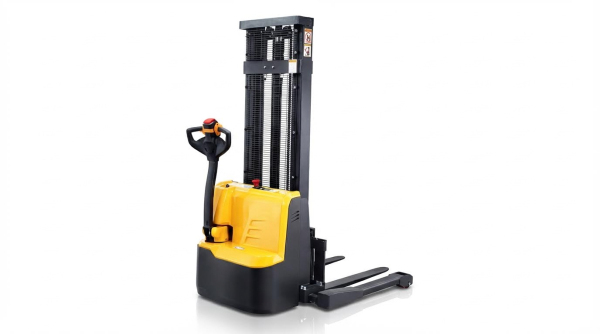
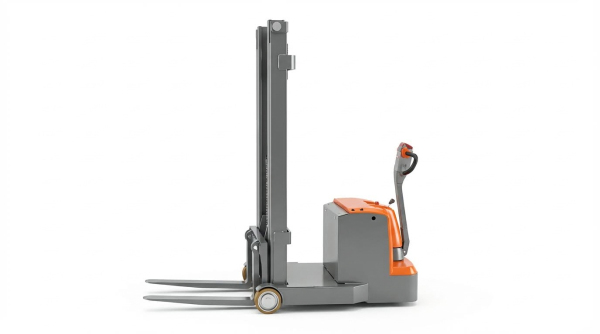
Walkie stackers are classified as electric-powered industrial trucks under OSHA and ANSI Class II/III, and as pedestrian-propelled or pedestrian-operated trucks under ISO 3691‑5. Understanding this answers “what class is a walkie stacker” for audits and equipment selection.
- OSHA/ANSI view: Powered industrial truck, electric, pedestrian-controlled – Triggers forklift-style training and inspection rules.
- ISO view: Pedestrian truck with powered lift and/or travel – Defines design and safety requirements for manufacturers and users.
- Practical impact: Same core duties as forklifts – Documented operator training, daily checks, and maintenance.
💡 Field Engineer’s Note: When a client asks “what class is a walkie stacker,” I always answer with both ANSI Class II/III and ISO pedestrian-truck language. That keeps OSHA inspectors, safety managers, and equipment spec sheets all speaking the same technical language.
OSHA definition of a powered industrial truck
Under OSHA, a walkie stacker is a powered industrial truck, so it must meet the same core rules as a forklift in 29 CFR 1910.178. OSHA focuses on how the truck is powered and used, not whether the operator rides or walks.
- Regulatory bucket: Powered industrial truck (PIT) – Walkie stackers are treated like forklifts for compliance.
- Power source: Electric, battery-powered – Falls squarely under electric-powered industrial trucks.
- Operation style: Walking operator with tiller – Still a PIT even without a seat.
OSHA guidance explicitly lists walkie-type electric pallet and stacker trucks in the powered industrial truck family. These are described as electric-powered industrial trucks for material handling in tight indoor spaces. OSHA’s training library groups them with other PITs for inspection and training purposes.
Key OSHA compliance expectations for walkie stackers
Because walkie stackers are PITs, OSHA requires:
- Formal and practical training: With evaluation and three‑year re‑certification, similar to sit‑down forklifts. Reference
- Daily pre‑shift inspections: Covering hydraulics, controls, forks, and tires as required by 1910.178(q)(7). Reference
- Site‑specific training: Especially for walking operation around pedestrians and in narrow aisles. Reference
- Inspection focus: Hydraulic hoses, mast chains, cables, stops – Prevents dropped loads and mast failures.
- Battery checks: Electrolyte level, charge, restraints – Reduces fire risk and truck runaway incidents.
- Controls and brakes: Service brake, parking brake, steering, lift/lower – Ensures the operator can always stop and hold the load.
OSHA’s own checklist for powered industrial trucks calls out these items specifically for electric-powered units, which includes walkie stackers. Source
ANSI/ITSDF B56 truck classes II and III
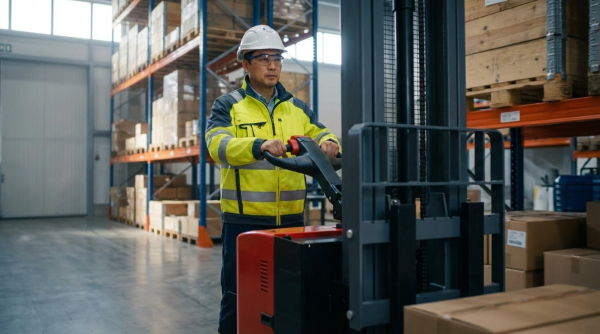
Under ANSI/ITSDF B56, the answer to “what class is a walkie stacker” is that it typically falls into Class II or Class III electric trucks, depending on configuration. Both classes cover electric pedestrian-controlled pallet and platform trucks.
Industry and training materials group walkie stackers with low-lift and high-lift powered pallet and platform trucks. These are defined as electric, often pedestrian-controlled, and designed for indoor material handling. Reference
| ANSI/ITSDF B56 Class | Typical Walkie Equipment | Key Features | Operational Impact / Best For… |
|---|---|---|---|
| Class II | Narrow-aisle electric trucks, including some walkie reach/straddle stackers | High-lift, narrow-aisle, electric, often with reach or straddle legs | Best for racking up to ~3–4 m in 2.2–2.5 m aisles in warehouses. Reference |
| Class III | Walkie pallet jacks, walkie stackers, walkie reach stackers | Pedestrian-controlled, electric, low- and high-lift pallet/platform trucks | Best for short runs, dock work, and stacking in confined spaces with walking operators. |
- Pedestrian-controlled: Operator walks behind or beside the truck using a tiller – Limits speed and kinetic energy, but not regulatory burden.
- Electric-only classes: Both II and III are electric – Matches indoor, low-emission applications.
- High- vs low-lift: Stackers are high-lift pallet trucks – Designed to put pallets into racking, not just move them at floor level.
💡 Field Engineer’s Note: For safety manuals and SOPs, I label these trucks “Electric Walkie Stacker – ANSI Class II/III PIT.” That phrasing makes it crystal clear to auditors that you know exactly what class a walkie stacker falls into and are applying forklift rules.
Why ANSI class matters in real projects
Knowing whether a truck is Class II or III helps you:
- Specify chargers and power: Electric-only means planning battery rooms and charging points.
- Write training modules: You can group all Class II/III electric walkies into one operator course.
- Plan aisles and racking: Class II/III walkies are engineered for 2.2–2.5 m aisles, unlike many counterbalanced trucks. Reference
ISO 3691‑5 rules for pedestrian trucks
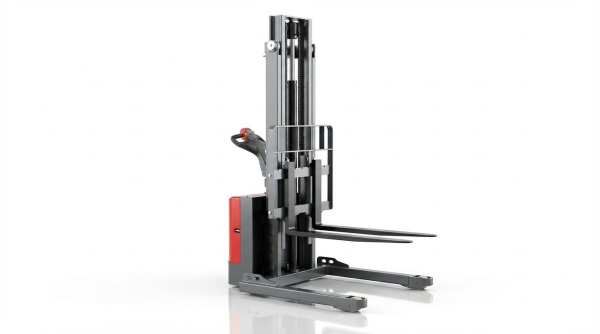
Under ISO 3691‑5, walkie stackers are pedestrian-propelled or pedestrian-operated industrial trucks with powered lifting and often powered travel, usually with capacities up to about 1,000 kg in the core standard examples. ISO focuses on design and safety requirements rather than operator training.
ISO 3691‑5:2014 defines safety requirements and verification for pedestrian-propelled trucks, including walkie pallet and stacker types. It describes low-lift and high-lift pallet trucks with manual or electric lift, and in many cases powered travel. Reference
| ISO 3691‑5 Truck Type | Typical Capacity / Lift | How a Walkie Stacker Fits | Operational Impact |
|---|---|---|---|
| Pedestrian low-lift pallet truck | Lift height ≤300 mm, capacity up to 2,300 kg | Walkie pallet jacks, not stackers | Used for floor-level moves only; not for racking. Reference |
| Pedestrian high-lift (stacker) truck | Many examples up to ~1,000 kg and lift up to 1,000 mm in the standard text | Walkie stackers with powered lift and often powered travel | Used for stacking in low to medium-height racking in tight aisles. |
| Scissor-lift pallet truck | Lift up to 1,000 mm, capacity up to 1,000 kg | Work-positioning trucks, sometimes walkie-operated | Used as ergonomic workstations, not deep stacking. |
The standard describes pedestrian-propelled trucks where the operator walks with the truck and controls it via a handle or tiller. It distinguishes between low-lift trucks (≤300 mm lift) and higher-lift designs, including scissor-lift and stacker-style units. Source
- Pedestrian focus: ISO explicitly treats these as pedestrian trucks – Aligns with the walk-behind nature of walkie stackers.
- Capacity examples: Many defined cases up to 1,000 kg – Matches light to medium-duty stacking.
- Lift height examples: Low-lift up to 300 mm, scissor up to 1,000 mm – Gives a reference envelope for design and risk assessment.
💡 Field Engineer’s Note: When you specify a walkie stacker for a new facility, call it an “ISO 3691‑5 pedestrian high-lift truck” in your engineering documents. That language signals to safety engineers and insurers that the truck’s design and guarding concept follow a recognized international standard.
Linking OSHA/ANSI classes to ISO categories in practice
For a safety file or CE/UKCA-style documentation set, you can map the same truck three ways:
- OSHA: Powered industrial truck under 1910.178 with PIT training and inspections.
- ANSI/ITSDF B56: Electric Class II or III pedestrian-controlled truck.
- ISO 3691‑5: Pedestrian high-lift or low-lift truck, depending on design.
This three-way mapping answers “what class is a walkie stacker” in language that regulators, standards bodies, and engineers all recognize.
Technical Design, Performance Limits, And Safety Requirements
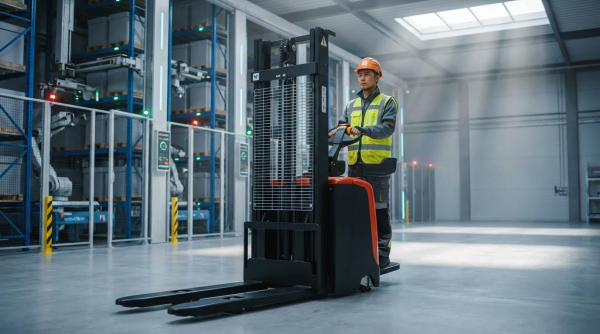
This section explains how walkie stacker design fixes their capacity, lift height, aisle width, and battery choices so you can answer “what class is a walkie stacker” in practical, engineering terms.
Because walkie stackers are pedestrian-controlled Class II/III powered industrial trucks, their outriggers, compact chassis, and electric powertrains create specific stability and safety limits you must respect in layouts and SOPs.
Outriggers, stability, and the load chart
Outriggers define how a walkie stacker carries load reactions, so they directly control stability, rated capacity, and where you can safely use the truck.
Instead of a heavy rear counterweight, walkie stackers push the load into front outriggers and load wheels, creating a low, wide base but limiting reach and rough-surface use. This is a key mechanical reason behind their lower capacities compared with counterbalanced forklifts. Source for structural design and stability limits.
| Design Aspect | Typical Walkie Stacker Behavior | Operational Impact |
|---|---|---|
| Load path | Load carried over front outriggers and load wheels | Stable on flat floors, limited ability on ramps or dock plates |
| Counterweight | Minimal; stability mainly from outrigger footprint | Lower rated capacity than counterbalanced forklifts of similar size |
| Mast and frame | Lighter, compact frame for indoor, short-distance use | Reduced fatigue margin on uneven or damaged floors |
| Under-trailer reach | Outriggers block entry under trailers | Not suitable for dock loading without staging pallets |
| Surface requirements | Designed for smooth, level floors | Struggles with gaps, slopes, and outdoor yards |
- Outrigger width: Sets lateral stability – Too narrow and side-tipping risk increases in turns.
- Load wheel position: Fixes load center geometry – Determines the rated capacity point on the forks.
- Mast height vs base length: Affects tip-over risk – Tall masts on short bases need conservative load charts.
- Floor flatness: Critical for stability – Uneven floors twist outriggers and reduce safe capacity.
- Pedestrian speed: Walking pace only – Lower kinetic energy but less margin if you overload the mast.
Manufacturers define walkie stacker capacity at specific load centers and heights, often in the 1.0–2.0 tonne range, which is lower than typical 2.0–5.0 tonne counterbalanced forklifts. Source for load capacity ranges and stability concepts.
How to read a walkie stacker load chart
The load chart shows rated capacity (kg) against lift height (m) and load center (mm). To stay within OSHA powered industrial truck rules, always verify your pallet length and actual load center against the chart before approving a task. If your load center is longer than the chart value, you must derate capacity even if the weight in kg looks acceptable.
💡 Field Engineer’s Note: On polished warehouse floors, outriggers can “skate” sideways if you turn sharply with a raised load. Keep loads as low as practical while traveling and reduce speed in turns to keep the outrigger footprint fully planted.
Capacity, lift height, and aisle width engineering
Capacity, lift height, and aisle width are tightly coupled on walkie stackers, and these constraints drive whether a Class II/III unit is suitable for your layout.
Typical walkie stackers handle roughly 1,000–2,500 kg with lift heights around 3–4 m, while needing only about 2.2–2.5 m aisle widths for right‑angle stacking, which is much tighter than most counterbalanced forklifts. Source for capacity, lift height, and aisle width ranges.
| Parameter | Typical Walkie Stacker Range | Best For… |
|---|---|---|
| Rated capacity | 1,000–2,500 kg | Light to medium pallet loads and racking up to ~4 m |
| Lift height | 3–4 m | Standard selective racking in low-bay warehouses |
| Aisle width | 2.2–2.5 m | Narrow aisles with Euro or 1,200 mm pallets |
| Travel distance per move | Short, intra‑aisle moves | High-density storage, order staging |
| Operator position | Walking, tiller-controlled | Areas with heavy pedestrian interaction and low speeds |
- Higher lift = lower capacity: Capacity drops as mast height increases – Always check the chart at your top beam level, not just at ground.
- Longer pallets increase load center: A 1,200 mm pallet pushes the center out – This can derate a 1,500 kg truck below your target load.
- Aisle width is not beam-to-beam: It is based on right-angle stacking clearance – Account for pallet overhang and operator clearance.
- Turning radius: Short chassis gives tight turns – Useful for drive-in or block stacking, but watch for outrigger strikes.
- Duty cycle: Designed for lower daily hours than sit-down forklifts – Overworking them shortens component and battery life.
Relating specs to “what class is a walkie stacker”
If you are wondering what class is a walkie stacker, these capacity and aisle specs match ANSI/ITSDF Class II or III electric powered industrial trucks. The combination of 1,000–2,500 kg capacity, 3–4 m lift, and 2.2–2.5 m aisles is typical of pedestrian-controlled high‑lift pallet and platform trucks in those classes. Source for OSHA/ANSI class context.
💡 Field Engineer’s Note: When you tighten aisles below 2.4 m, even small floor defects or pallet overhang can cause chronic rack and outrigger strikes. Always validate aisle width with a physical test truck before committing racking layouts.
Electric powertrains, batteries, and Li-ion options
Walkie stackers use compact electric powertrains with lead‑acid or lithium‑ion batteries, which shape their duty cycle, maintenance needs, and indoor safety profile.
Electric walkie stackers use smaller traction motors and hydraulic pumps with lower ampere‑hour batteries than ride‑on forklifts, reflecting their short travel distances and lighter duty cycles. Proper battery maintenance can deliver 1,500–2,000 charge cycles when managed correctly. Source for powertrain and battery life data. Compared with engine-powered forklifts, walkie stackers consume less energy per hour and produce no exhaust, making them ideal for indoor, food, and pharma environments. Source for power option comparison.
| Powertrain Element | Typical Walkie Stacker Setup | Operational Impact |
|---|---|---|
| Drive type | Electric traction motor | Quiet, zero local emissions; ideal for indoor use |
| Hydraulic system | Electric pump for lift and tilt | Lower flow and pressure than large forklifts; protects small hoses and fittings |
| Lead‑acid battery | Moderate Ah rating, 1,500–2,000 cycles with care | Requires watering, equalization, and ventilation area |
| Lithium‑ion battery | Higher usable capacity, fast opportunity charging | Supports multi‑shift use with short charge windows |
| Charging profile | Planned overnight or opportunity charging | Must match duty cycle to avoid mid‑shift slowdowns |
- Lower system voltage and power: Reduces short‑circuit risk – But still demands strict lockout/tagout during service.
- Battery mass: Acts as part of the truck’s dead weight – Critical to stability calculations in design.
- Watering and equalization (lead‑acid): Prevents sulfation – Extends life toward the 1,500–2,000 cycle range.
- Li‑ion BMS: Manages cell balance and temperature – Enables safe fast charging and deeper discharge.
- Energy vs throughput: Lower hourly energy use – You may need more units to match a large forklift’s throughput.
Battery checks that support OSHA compliance
Under OSHA powered industrial truck rules, daily inspections must include battery water levels, charge status, and restraint condition for electric walkie stackers. This aligns with guidance that operators verify electrolyte level, charge, and secure mounting before each shift. Source for OSHA checklist items.
💡 Field Engineer’s Note: In cold rooms near or below 0°C, lead‑acid batteries lose effective capacity and hydraulic oil thickens, slowing lift. For heavy cold‑storage use, spec Li‑ion packs rated for low temperatures and use appropriate hydraulic oil to keep lift speed predictable.
Applying Classification To Equipment Selection And Compliance
Walkie stacker classes under OSHA, ANSI, and ISO directly drive which unit you should buy and what you must prove during an audit. This section turns “what class is a counterbalanced stacker” into concrete selection and documentation rules.
💡 Field Engineer’s Note: When you choose a walkie stacker only on price and capacity, you usually pay later in battery swaps, damaged racking, and OSHA findings. Start with duty cycle, aisle geometry, and documentation needs, then match the truck class.
Matching walkie stackers to duty cycle and layout
Walkie stacker classification tells you where the truck can safely work, how long it can run, and which layout it fits. Here is how to translate “what class is a battery-powered stacker” into a specification that actually works in your building.
| Selection Factor | Typical Walkie Stacker Range / Rule | Operational Impact |
|---|---|---|
| Regulatory class | OSHA: Powered industrial truck; ANSI: Class II–III pedestrian-controlled high/low-lift trucks classification context | Same core training and inspection rules as forklifts; easier to justify for indoor narrow-aisle work. |
| Load capacity | ≈1,000–2,500 kg rated capacity capacity range | Best for palletized goods, unit loads, and racking up to medium heights; not for heavy steel coils or >2.5 tonne loads. |
| Lift height | Commonly 3–4 m for stacking height comparison | Suited to low and mid-level racking; very high-bay (>10 m) still needs reach or VNA trucks. |
| Aisle width | Typically 2.2–2.5 m working aisle, depending on pallet size and model aisle data | Enables higher storage density than counterbalanced forklifts that need ≈3.0–3.5 m. |
| Duty cycle | Designed for light to medium duty, shorter travel distances, and frequent starts/stops duty description | Ideal for order consolidation, dock-to-rack moves inside one building; not for long-haul yard work. |
| Powertrain | Electric, with smaller traction motors and battery packs sized for pedestrian speeds electric power info | Low noise and zero exhaust for indoor use; plan around battery charging and opportunity charging for peaks. |
| Structural concept | Load carried on front outriggers and load wheels, not a rear counterweight outrigger design | Very compact footprint, but limited under-trailer access and sensitivity to poor flooring. |
From an OSHA and ANSI standpoint, the answer to “what class is a electric platform stacker” is that it usually sits in Class II or III as a pedestrian-controlled powered industrial truck. That classification tells you it belongs in indoor, relatively flat, controlled spaces with good floors and defined aisles, not on rough yards or steep ramps.
- Clarify the job: Define pallets per hour, maximum load in kg, and peak shift length – so you do not undersize capacity or battery.
- Map the layout: Measure aisle widths in mm, turning pockets, and door clearances – to confirm a walkie pallet truck can physically turn and stack.
- Check racking heights: Match mast height to top beam plus safety clearance – to avoid operators “tip-toeing” at the last 100–200 mm.
- Confirm floor conditions: Inspect for slopes, dock plates, and damaged concrete – because outriggers and small load wheels hate potholes and >2–3% slopes.
- Align with class: Use Class II–III walkie stackers where pedestrian speeds and electric power are appropriate – to stay inside the design envelope assumed by OSHA and ISO rules.
How to quickly check if a walkie stacker fits your aisle
Take pallet length plus 200–300 mm clearance, add the truck length to the face of forks, then compare to your aisle width. If you cannot rotate 90° with at least 100 mm margin each side, you will fight every put-away.
Training, inspections, and documentation for audits
Once you know what class is a walkie stacker, you must align your training, inspection, and paperwork with powered industrial truck rules. Auditors do not care that it is “just a walkie” – they check it like any forklift.
| Compliance Element | Key Requirement For Walkie Stackers | Operational Impact / Audit Proof |
|---|---|---|
| OSHA classification | Covered under OSHA 29 CFR 1910.178 as a powered industrial truck, same regulatory umbrella as forklifts regulatory note | You must have formal operator training, evaluation, and documented authorization for each operator. |
| Operator training | Formal instruction, practical evaluation, and 3‑year recertification for powered industrial trucks training rule | Training must cover walking operation, outriggers, and narrow-aisle hazards, not just generic forklift theory. |
| Daily pre‑shift inspection | Required for all powered industrial trucks, including walkie stackers, before each shift inspection requirement | Use a checklist and keep records; auditors often ask for several weeks of inspection sheets. |
| Inspection content – structure | Check mast chains, forks, hydraulic hoses, cables, stops, and guards for damage or leaks structural checks | Red-tags and out-of-service tags show control of unsafe equipment during audits. |
| Inspection content – hydraulics | Verify hydraulic fluid level with dipstick; any leaks must be repaired by qualified personnel hydraulic checks | Prevents mast failures and drift; documentation shows you manage high‑risk components. |
| Inspection content – battery | Check electrolyte level, charge status, and restraint systems before use battery checks | Reduces breakdowns mid‑shift and acid spill risks; supports safe charging procedures. |
| Controls and brakes | Test accelerator, service brake, parking brake, steering, lift/lower, tilt, and attachments with motor on controls test | Any abnormal noise or response must trigger removal from service until fixed. |
| Safety guards and warnings | Ensure overhead guards (if fitted), finger guards, and labels are secure and legible guards and labels | Visible warnings and intact guards are quick wins during walk‑through inspections. |
| Instrumentation | Confirm hour meter and battery discharge indicator operate correctly instrument checks | Supports maintenance scheduling and proves you track usage for service intervals. |
- Document operator authorization: Keep a list or card system linking each trained person to “walkie stacker – Class II/III” – so auditors see the class match.
- Standardize checklists: Use one OSHA-based form for all powered industrial trucks – walkies, reach, and counterbalance – to avoid gaps.
- Store records centrally: File inspections, repairs, and training in one location – so you can respond to an audit request in minutes, not days.
- Include site-specific hazards: Add narrow aisles, blind corners, and pedestrian zones to your training – because walkie stackers mix closely with foot traffic.
- Align maintenance with usage: Use hour-meter data to trigger service and battery care – to keep trucks within their engineered safety envelope.
Simple audit-ready documentation pack for walkie stackers
Prepare: (1) Operator training records with dates and truck classes. (2) At least 3–6 months of daily inspection sheets. (3) Maintenance and repair logs tied to hour meter readings. (4) A one-page site-specific walkie stacker safety procedure covering aisles, speed limits, and pedestrian rules.
Final Thoughts On Walkie Stacker Classes And Compliance
Walkie stacker classes under OSHA, ANSI, and ISO do more than label equipment. They define how engineers must design layouts, set limits, and write procedures. When you treat a walkie stacker as a full powered industrial truck, you force clear thinking about capacity, stability, and training instead of assuming it is “just a pallet jack.”
Outriggers, load charts, and aisle width rules work together to keep the stability triangle intact. Electric powertrains and battery choices then lock in duty cycle and safe operating zones. If you push beyond those envelopes with steep ramps, poor floors, or oversize pallets, you move outside the assumptions behind the standards.
The best practice is simple. Classify each unit correctly, engineer the layout around its real geometry, and enforce PIT-level training and daily inspections. Use ISO pedestrian-truck language in your specifications and OSHA/ANSI language in your SOPs and records. When you do this, your walkie stackers operate where they are strongest: controlled indoor aisles, predictable loads, and documented processes. That is how operations teams keep uptime high and Atomoving equipment inside its designed safety margin, even under close audit.
Frequently Asked Questions
What class is a walkie stacker?
A walkie stacker falls under Class III of powered industrial trucks. This classification includes electric motor hand trucks or hand/rider trucks, such as low lift walkie pallets and center control models. OSHA Truck Classes.
Is a walkie stacker considered a forklift?
Yes, a walkie stacker is considered a type of forklift. It is specifically categorized under Class III, which includes electric-powered hand trucks designed for stacking and moving pallets at low heights. Industrial Truck Guide.