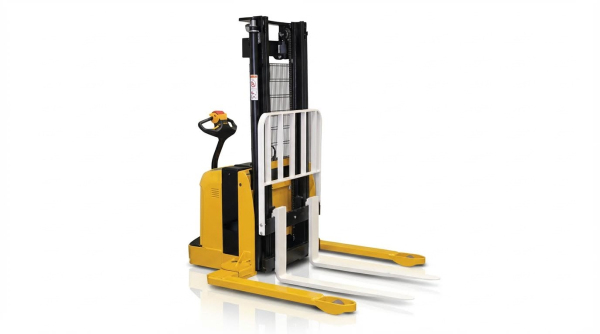
Straddle stackers can run on asphalt, but only when surface quality, slopes, wheels, and duty cycle are all engineered for outdoor use. This guide explains when asphalt is safe, when it is not, and how to specify equipment that survives real-world yards and driveways. If you are asking can straddle stacker run on asphalt for your site, use this as a checklist for surface, wheel, and battery decisions.
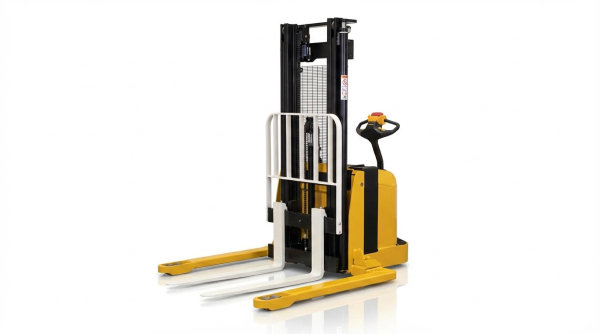
When A Straddle Stacker Can Safely Run On Asphalt
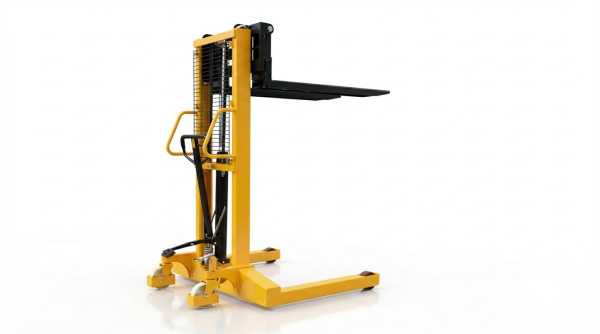
A straddle stacker can run on asphalt safely only when the surface is flat, clean, and within tight slope limits, otherwise stability, braking, and wheel life degrade rapidly. This section explains exactly when asphalt is acceptable and when it becomes a risk.
Asphalt flatness, defects, and friction limits
For the question can straddle stacker run on asphalt, the asphalt must be almost as flat and defect-free as a good warehouse floor to avoid sudden wheel drop, mast sway, and loss of traction.
| Parameter | Typical Requirement / Range | Why It Matters On Asphalt | Operational Impact |
|---|---|---|---|
| Local height deviation | ≤ 5 mm over 2 m straightedge | Limits wheel drop into depressions and patched areas | Reduces mast sway and tipping risk on outdoor routes for small load wheels |
| General flatness tolerance | ±3–5 mm per 1 m | Similar to good indoor slab; prevents rocking and instability | Allows safe stacking without excessive mast oscillation on outdoor aprons |
| Joint / patch height steps | < 2–5 mm under wheel tracks | Prevents impact loads and sudden steering inputs | Reduces risk of load shift when crossing repairs and patches |
| Surface defects | No potholes, loose aggregate, or pumping patches | Potholes and loose stone cause wheel drop and side pull | Essential for narrow straddle legs and small-diameter load wheels |
| Coefficient of friction μ (static) | 0.4–0.6 on clean, dry surface | Ensures predictable traction and braking | Supports safe ramp work and controlled stopping distances on asphalt |
| Contamination | No oil, fuel, or standing water on wheel tracks | Liquids reduce μ well below safe range | Increases stopping distance and spin risk at low speeds |
- Flatness control: Keep asphalt within ±3–5 mm per 1 m – this keeps the mast inside its designed stability envelope when travelling with raised loads.
- Repair quality: Mill and re-lay wheel tracks instead of patching – abrupt 10–20 mm steps at patches act like “curbs” for small load wheels.
- Friction monitoring: Check grip after rain or spills – wet, polished asphalt can drop below μ = 0.4 and cause sliding during braking.
- Clean wheel paths: Sweep loose aggregate and broken asphalt – stones wedge under load wheels and create shock loads into the mast and chassis.
- Route zoning: Mark approved “stacker lanes” on the asphalt – concentrating traffic on maintained strips is safer than using the whole yard.
How to check if your asphalt is flat enough
Use a 2 m straightedge or aluminium beam and a 5 mm feeler gauge along the intended wheel tracks. Measure every 1–2 m on ramps, around drains, and across patched areas. If the feeler passes under the straightedge, the deviation is too high for safe regular use.
💡 Field Engineer’s Note: On older yards I always walk the exact wheel paths, not just the driving line. Straddle legs sit wider than the drive wheel, so a shallow pothole under one leg can tilt the whole truck even when the centre path looks fine.
Slopes, ramps, and crossfall for outdoor routes
Straddle stackers can use asphalt slopes only when gradients stay in the low single digits, transitions are smooth, and crossfall is gentle enough that the truck does not “pull” sideways.
| Slope / Alignment Factor | Typical Limit / Guidance | Reason | Outdoor Operational Impact |
|---|---|---|---|
| Maximum ramp gradient – unloaded | ≈ 5–10% (1:20 to 1:10) | Beyond this, traction and braking margins shrink rapidly | Short, straight access ramps only; avoid long climbs with frequent stops for travel without load |
| Maximum ramp gradient – loaded | Low single-digit % (often ≤ 5%) | Centre of gravity shifts; risk of rollback and tip increases | Use only mild ramps for loaded travel; keep forks low and uphill |
| Indoor-style preferred slopes | ≤ 2–3% | Matches indoor design guidance for stackers | Best practice for outdoor docks and yard connections applied to asphalt |
| Crossfall (side slope) | ≤ 2% typical | Higher crossfall introduces constant lateral pull | Reduces side‑tip risk when travelling parallel to drainage fall on outdoor routes |
| Vertical curve / crest at ramp top | Smooth, large radius; no “break-over” | Sharp crests can lift drive or load wheels off the ground | Prevents chassis bottoming and loss of traction at dock thresholds |
| Turning on slopes | Strongly discouraged, especially loaded | Combines side forces with gravity | Plan routes so all turns occur on level asphalt only |
- Keep gradients modest: Treat 2–3% as the design target, even if the truck is rated higher – this preserves a safety margin for wet asphalt and minor defects.
- Control crossfall: Limit side slope to about 2% on stacker lanes – this keeps the truck from constantly “drifting” downhill and reduces steering effort.
- Smooth transitions: Use long vertical curves at ramp toes and crests – short, sharp changes can unload a drive wheel and cause sudden loss of control.
- Set directional rules: Always travel with the load uphill on any incline – this keeps the combined centre of gravity closer to the truck.
- Ban risky manoeuvres: Prohibit turning, raising, or lowering loads on slopes – side‑tipping incidents almost always involve one of these errors.
How to verify your asphalt slopes
Measure slope with a digital level or smartphone inclinometer along the exact travel line, not just along the kerb. Check separately for longitudinal gradient (up/down the ramp) and crossfall (across the lane). Record maximum values and compare them to the manufacturer’s gradient rating, then derate further for wet or contaminated conditions.
💡 Field Engineer’s Note: When I audit yards, any place where operators “feel” the truck pulling sideways on a wet day usually measures more than 2% crossfall. Fixing drainage and re‑profiling a 5–10 m strip of asphalt is cheaper than dealing with a single side‑tip accident.
Wheel, Tire, And Battery Choices For Asphalt Use
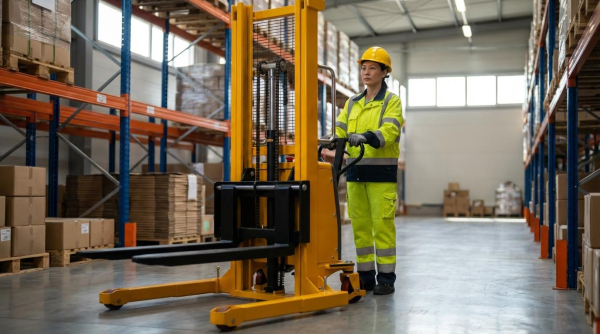
Wheel, tire, and battery choices decide how safely and efficiently a counterbalanced stacker can run on asphalt, because traction, vibration, and current draw all change versus smooth indoor concrete. If you ask “can straddle stacker run on asphalt,” this section is where the lifetime cost and safety margins are set.
Polyurethane vs. rubber wheels on asphalt
Polyurethane and rubber both can work on asphalt, but rubber is usually better for regular outdoor use because it grips and cushions better on imperfect surfaces. Polyurethane suits short, light outdoor runs on very smooth, dense asphalt.
| Wheel Material | Key Properties on Asphalt | Best Use Case | Operational Impact Outdoors |
|---|---|---|---|
| Polyurethane (PU) | Harder compound, low rolling resistance, can harden in cold, transmits more vibration on rough asphalt on outdoor surfaces | Short crossings (10–50 m) between buildings on smooth, well-compacted asphalt with minimal defects | Lower energy use, but higher vibration and shock loads; not ideal for frequent potholes or patched areas |
| Rubber | Softer, higher damping and traction, better over small defects and temperature swings on asphalt in outdoor use | Regular outdoor duty cycles, mixed indoor/outdoor routes, older asphalt with fine cracking or minor raveling | Better comfort and stability margin; slightly higher rolling resistance and energy draw compared with PU |
- Traction on wet or dusty asphalt: Rubber maintains grip better – reduces wheel spin and stopping distance when the surface is slightly contaminated.
- Temperature sensitivity: PU stiffens in cold (<0–5°C) – increases vibration and can loosen fasteners over time.
- Shock from defects: Rubber absorbs shallow potholes and patched joints better – protects mast, bearings, and the operator.
- Energy efficiency: PU rolls easier on smooth asphalt – extends battery runtime if the route is clean and flat.
How to choose PU vs. rubber if can straddle stacker run on asphalt is your main question
If 80–90% of driving is indoors and the outdoor segment is short, dense, and well-maintained, PU can be acceptable. If the stacker spends more than 20–30% of its hours outside, or the asphalt is older or patched, rubber wheels are usually the safer, lower-risk choice.
💡 Field Engineer’s Note: On cold mornings, PU drive wheels on asphalt can feel like steel rollers; vibration spikes and traction drops. If your route includes a 1–2% ramp outdoors, switching the drive wheel to rubber often eliminates early wheel chunking and nuisance traction alarms.
Solid, pneumatic, and non‑marking tire options
Solid, pneumatic, and non-marking tires all can run on asphalt, but each has a different sweet spot for load, comfort, and risk. For battery-powered stacker, you normally balance puncture resistance against shock absorption and heat build-up.
| Tire Type | Characteristics on Asphalt | Best For… | Key Limitations |
|---|---|---|---|
| Solid | Very puncture-resistant, high wear resistance, low maintenance, limited shock absorption in heavy-duty lifting | High-load, low-speed outdoor work on relatively flat, well-maintained asphalt with low debris | Transmits impacts from cracks and potholes into chassis; higher vibration and potential for micro-cracking in mast welds over time |
| Pneumatic | Air-filled, excellent shock absorption, comfortable on rough or older asphalt, but blowout risk and pressure-sensitive on uneven surfaces | Rough, cracked, or patched yards where comfort and traction outweigh the risk of punctures | Needs regular pressure checks; under-inflation spikes rolling resistance and heat, over-inflation reduces contact patch |
| Non-marking (solid or PU) | Do not leave black marks, reasonable wear resistance, usually lower heat dissipation and load capacity than black compounds in industrial use | Clean indoor floors with occasional short asphalt crossings where aesthetics and contamination control matter | Can overheat and chunk on long, hot asphalt runs at higher speeds or near rated load |
- Shock vs. durability trade-off: Pneumatic gives better ride; solid gives better uptime – choose based on how broken the asphalt really is.
- Puncture risk: Yards with scrap metal, nails, or sharp gravel favor solid tires – avoids sudden immobilization mid-ramp.
- Non-marking outdoors: Useful if the stacker regularly re-enters clean warehouses – but derate speed and distance on hot days to avoid overheating.
Matching tire type to your asphalt route
Walk the entire outdoor route. If you see many sharp aggregates, metal fragments, or cracked patches deeper than 5–10 mm, solid or foam-filled options are safer. If the asphalt is old but mostly intact, and operators complain about shock, a pneumatic drive tire with solid load wheels can be a good compromise.
💡 Field Engineer’s Note: When operators complain about “bouncing” on an asphalt ramp, managers often blame the mast. In practice, swapping only the steer/drive position to a more compliant tire compound usually cuts perceived vibration by 30–40% without touching the mast or chassis.
Load, speed, and duty-cycle impacts on wear
Load, travel speed, and duty cycle determine how fast wheels and tires wear on asphalt, because they control contact stress, heat build-up, and hysteresis losses in the tread. Outdoor asphalt usually runs hotter and rougher than indoor concrete, so margins are tighter.
| Operating Factor | Effect on Wheels/Tires | Typical Engineering Response | Operational Impact |
|---|---|---|---|
| High load (near rated capacity) | Increases contact stress and internal hysteresis, accelerates wear and operating temperature on coarse or hot asphalt under outdoor duty | Use higher load-index tires; derate allowable continuous load for long outdoor runs | Running at 90–100% of rated load all day can halve wheel life versus indoor service. |
| Higher speed (e.g., 6–8 km/h outdoors) | Amplifies heat generation and abrasion; can cause rapid tread loss in under-specified compounds on asphalt | Program lower outdoor speed limits; specify cooler-running compounds for long routes | Even a 1–2 km/h reduction can significantly extend tire life and reduce heat-related failures. |
| Heavy duty cycle (many trips/hour) | Raises average tread temperature and accelerates fatigue cracking and chunking in continuous outdoor use | Engineers calculate duty-cycle-based load index and derate tire capacity for continuous outdoor use | What looks fine on a datasheet for intermittent use may fail early in 2–3 shift yard work. |
- Surface roughness: Coarse or raveling asphalt acts like sandpaper – expect 20–40% faster wear than on smooth concrete at the same load and speed.
- Operator behavior: Sudden acceleration, sharp steering, and hard braking dramatically increase localized wear and flat-spotting on industrial tires – training pays back directly in wheel life.
- Climate: High asphalt temperatures and strong UV accelerate rubber aging and cracking in outdoor tires – expect shorter life in hot climates unless you up-spec compounds.
Simple checklist to control wear if your straddle stacker must run on asphalt
1) Log average load and trip distance outdoors. 2) Cap outdoor speed and enforce gentle steering. 3) Inspect tread and sidewalls weekly for cuts and chunking. 4) Clean loose aggregate from wheel tracks. 5) Review tire spec if you see repeated failures before 50–60% of expected life.
💡 Field Engineer’s Note: When a site moves from indoor-only to mixed indoor/asphalt use, tire and wheel costs often jump unexpectedly. The cheapest fix is usually not a heavier truck, but a better-matched tire compound plus a hard outdoor speed cap and a strict housekeeping routine on the asphalt route.
Battery sizing, charging, and thermal effects outdoors
Battery choice and sizing become more critical on asphalt because rolling resistance and temperature swings increase current draw and affect battery life. Outdoor runs that look “short” on a map often double real energy use versus polished concrete.
| Battery Aspect | Asphalt Effect | Engineering Recommendation | Operational Impact |
|---|---|---|---|
| Rolling resistance | Asphalt has higher rolling resistance than smooth concrete, especially with rubber or pneumatic tires, so current draw rises in outdoor operation | Add ampere-hour margin to the battery spec for mixed indoor/outdoor duty | Without extra capacity, operators hit low-voltage cutback early on hot days or long shifts. |
| Heat on dark asphalt | Sun-heated asphalt raises ambient and underbody temperature, which can push battery temperature above recommended limits and accelerate aging for traction batteries | Provide shade where possible, ensure adequate ventilation around the battery, and consider higher-temperature-rated chemistries or protection | Overheated batteries lose cycle life; what should last 5 years may drop to 3 if routinely cooked in yard work. |
| Cold asphalt conditions | In cold climates, asphalt cools quickly, lowering available capacity and voltage under load during outdoor use | Increase capacity margin further or use battery heating/insulation; plan for shorter outdoor runs per charge | Expect noticeable performance drop and earlier low-battery alarms when working on cold asphalt in winter. |
- Duty-cycle based sizing: Engineers often add a 10–30% Ah margin for mixed indoor/asphalt duty – this keeps voltage sag under control at the end of shift.
- Charging strategy: Opportunity charging between outdoor-heavy tasks mitigates the higher draw – especially important for lead-acid packs.
- Thermal monitoring: Simple temperature logging on the battery case during peak summer shows whether you are within manufacturer limits – cheap insurance before committing to a fleet spec.
Battery checklist when a straddle stacker must run on asphalt
1) Map daily outdoor distance in meters. 2) Add 10–30% Ah to the battery spec. 3) Verify ventilation around the battery compartment for hot climates. 4) Plan opportunity charging near outdoor loading points. 5) In cold regions, consider insulated or heated battery options for reliable voltage under load.
💡 Field Engineer’s Note: Many teams upsize the truck but forget the battery when they move work onto asphalt. If your operators keep switching to “turtle mode” by mid-shift, you usually do not have a traction problem; you have a battery sizing and heat management problem.
Specifying And Operating Straddle Stackers Outdoors

Specifying and operating a counterbalanced stacker outdoors on asphalt means matching wheels, battery, and routes to surface quality, slopes, and duty cycle so the truck stays stable, efficient, and within wear and temperature limits.
When you ask can straddle stacker run on asphalt, the correct answer is “yes, but only if you engineer the whole system.” That system includes route design, surface maintenance, wheel and tire choice, battery sizing, and operator training.
| Design / Operating Factor | Typical Engineering Target | Risk If Ignored | Operational Impact On Asphalt |
|---|---|---|---|
| Asphalt flatness on wheel tracks | ≤5 mm deviation over 2 m straightedge | Wheel drop, mast sway, loss of stability | Limits where you can safely travel and turn with loads |
| Gradient for loaded travel | Low single-digit %, usually <5% | Rollback, loss of traction, tip risk | Defines which ramps a straddle stacker may use |
| Crossfall (side slope) | Typically <2% | Lateral pull, side tipping | Controls how “pulls sideways” feel to operators |
| Wheel / tire type | Rubber or polyurethane, solid or pneumatic | Excess wear, poor grip, operator fatigue | Determines comfort, speed, and tire life outdoors |
| Cleanliness of wheel tracks | Documented sweeping and spill control | Stone wedging, cut tires, long stopping distance | Directly affects safety and wheel replacement cost |
| Battery sizing | Extra Ah margin vs indoor spec | Short runtime, voltage sag on ramps | Defines how long you can run outdoors per shift |
| Training & procedures | Outdoor-specific SOPs and limits | Unsafe speeds, slope misuse, incident risk | Makes asphalt operation repeatable and auditable |
💡 Field Engineer’s Note: When planning asphalt use, walk the full route with a 2 m straightedge and an inclinometer before you ever sign off a purchase; you will catch more real risks than from brochures alone.
Route design, cleanliness, and contamination control
Designing the outdoor route for a straddle stacker on asphalt means controlling flatness, gradients, and debris along the exact wheel tracks the truck will follow.
- Define fixed wheel tracks: Map where drive, load, and outrigger wheels will run – this is where you must enforce flatness and cleanliness.
- Check flatness with a straightedge: Keep local deviations under about 5 mm over 2 m on asphalt wheel paths – this minimizes sudden wheel drop and mast sway. Reference
- Control slopes and crossfall: Keep main travel ramps within the truck’s gradient limits (often 5–10% unloaded, lower loaded) and crossfall below about 2% – this preserves traction and lateral stability. Reference
- Eliminate sharp level changes: Repair potholes, patched areas, and sharp steps in asphalt under wheel tracks – small-diameter load wheels are very sensitive to sudden drops. Reference
- Design turning pockets on flat ground: Place turning and staging areas on the flattest asphalt – turning on slopes or over patch joints cuts your stability margin dramatically.
- Specify drainage and water control: Avoid standing water on routes – thin water films reduce friction and can hide potholes or loose aggregate.
- Set a sweeping and inspection schedule: Sweep wheel tracks frequently and inspect ramps, intersections, and dock approaches – this keeps loose stone, broken asphalt, and metal debris away from wheels. Reference
- Control oil and fuel spills: Treat leaks from trucks or dock equipment as critical – oil on asphalt can extend braking distance and cause the drive wheel to spin. Reference
- Separate pedestrian and stacker paths: Use markings or barriers where possible – routes that are predictable for people and trucks reduce conflict risk.
| Route Element | Good Practice On Asphalt | Operational Impact |
|---|---|---|
| Main travel lanes | Straight, minimal crossfall, verified flatness | Smoother ride, less mast sway, lower wear |
| Ramps | Within rated gradient, no abrupt crests | Maintains traction and under-clearance |
| Intersections | Extra sweeping, clear sight lines | Reduced collision risk and stone wedging |
| Dock approaches | Flat landing zone, no potholes | Stable handling when entering trailers |
| Storage / staging pads | On the best asphalt, away from drains | Safe parking and load handling zones |
How to practically survey an asphalt route
Walk the full planned route with a 2 m straightedge, a small digital level, and a camera. Log any spots where the straightedge rocks or gaps exceed roughly 5 mm, and where slopes exceed the truck’s limits. Photograph and mark these for repair or for routing changes before approving the path.
- Integrate indoor–outdoor transitions: Ensure thresholds between concrete and asphalt have no sharp steps – this protects small polyurethane or rubber load wheels.
- Plan for seasonal changes: Expect more loose aggregate and cracks after freeze–thaw cycles – build extra inspection into spring and after heavy rains.
Training, procedures, and safety technologies

Training and procedures for asphalt use focus on speed, slopes, visibility, and surface hazards so operators keep the stacker inside its stability and traction limits at all times.
- Teach surface-specific hazards: Cover loose aggregate, potholes, standing water, oil films, and patched asphalt – operators must recognize which defects are “no-go” for loaded travel. Reference
- Explain slope and crossfall limits: Train on the truck’s rated gradients and why they drop when loaded – this prevents attempts to climb or descend unsafe ramps. Reference
- Set outdoor speed limits: Define maximum speeds for dry, wet, and contaminated asphalt – lower speeds cut stopping distance and reduce shock loads into wheels and mast.
- Mandate low forks on slopes: Require forks and mast to stay as low as possible when on any incline – this keeps the combined centre of gravity inside the stability triangle. Reference
- Ban turning on slopes: Instruct operators never to turn while on a ramp or strong crossfall – turning on a slope over patched asphalt is a common side-tip scenario.
- Define travel rules with and without load: For example, loaded travel up or down ramps only in a specified direction and position – this standardizes safe practice across shifts.
- Include visibility and weather: Train for low sun, rain, fog, and night use – asphalt glare and water films both hide hazards and reduce grip.
- Build in pre-use checks: Require operators to visually scan the asphalt route for new potholes, spilled material, or construction changes at the start of each shift – this catches issues before they become incidents.
| Training / SOP Element | Key Content | Benefit For Asphalt Operation |
|---|---|---|
| Surface awareness | Recognizing loose stone, cracks, water, oil | Fewer surprises and wheel shocks |
| Slope handling | Max gradients, direction of travel, fork height | Maintains stability margins on ramps |
| Speed control | Posted limits, low-speed mode use | Shorter stopping, lower wear |
| Pre-use inspection | Route walk, defect and spill reporting | Early detection of dangerous changes |
| Emergency response | What to do after a near-tip or tire damage | Faster recovery, proper incident logging |
- Use speed-limiting modes: Enable low-speed or “creep” modes for ramps, dock approaches, and tight outdoor spaces – electronics can enforce discipline where habits might slip. Reference
- Specify automatic braking: Choose trucks with reliable regenerative or electric braking tuned for low-friction surfaces – this stabilizes stopping distance when asphalt is wet or dusty.
- Consider obstacle-detection sensors: Ultrasonic or lidar-based systems can slow or stop the truck when obstacles enter the path – especially useful around blind dock corners and building exits. Reference
- Upgrade lighting and signaling: Fit strong work lights, flashing beacons, and audible alerts suitable for outdoor visibility and noise – this helps pedestrians notice the truck against dark asphalt backgrounds.
- Document and enforce SOPs: Put asphalt-specific rules in writing, train to them, and audit compliance – this converts “can straddle stacker run on asphalt” from a one-time decision into a controlled, ongoing practice.
💡 Field Engineer’s Note: When incidents occur on asphalt, the root cause is often not the surface itself but missing or ignored slope and speed rules; treat outdoor SOPs as seriously as confined-space rules indoors.
Final Thoughts On Using Straddle Stackers On Asphalt
Using a straddle stacker on asphalt is safe only when you treat the yard like an engineered workspace, not just a driveway. Flatness, slope, and crossfall must sit inside tight limits so the mast stays stable, braking stays predictable, and small load wheels do not drop or snag. Wheel and tire choices then fine‑tune grip, comfort, and wear; the wrong compound on hot, rough asphalt can turn a “rated” route into a chronic failure point.
Asphalt also changes the energy picture. Higher rolling resistance, heat, and cold all push battery current and temperature harder. If you do not upsize capacity and plan charging around outdoor duty, the truck will hit voltage limits long before the shift ends. Finally, route design, cleaning, and training bind everything together. Marked wheel tracks, strict housekeeping, and clear rules on slopes and speeds let operators keep the truck inside its stability envelope every day.
The best practice is simple: decide first that a route is worth engineering, then design asphalt, wheels, battery, and SOPs as one system. If you follow that approach, a straddle stacker from Atomoving can work safely and efficiently on asphalt for years, not months.
Frequently Asked Questions
Can a straddle stacker run on asphalt?
A straddle stacker can run on asphalt, provided the surface is smooth and free of significant cracks or potholes. These machines are designed primarily for warehouse use on even surfaces like concrete, but they can operate on asphalt if necessary. However, it’s important to ensure the asphalt can support the weight of the straddle stacker and its load. Asphalt Weight Guide.
What should you check before using a straddle stacker on asphalt?
Before operating a straddle stacker on asphalt, conduct pre-operation safety checks. Inspect the equipment for damages, verify fluid levels, and confirm that all safety features are functional. Additionally, assess the asphalt surface for any uneven areas or debris that could affect the machine’s stability or cause damage. Straddle Stacker Safety Tips.
What is a straddle stacker used for?
A straddle stacker is used to maneuver pallets through tight spaces in warehouses or facilities. It allows for efficient stacking and retrieval of loads without requiring excessive space. This makes it ideal for operations where floor space is limited. Warehouse Solutions.