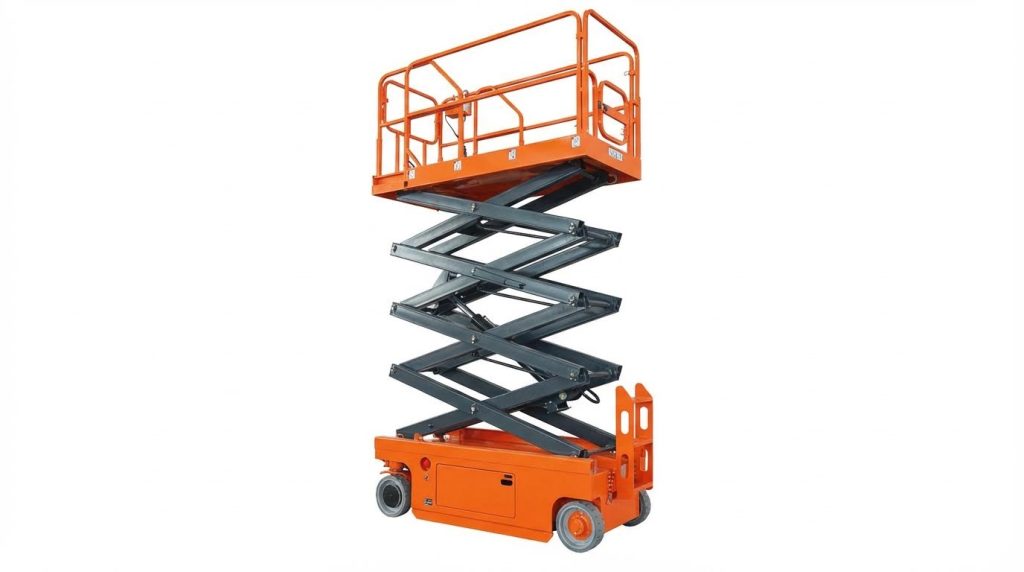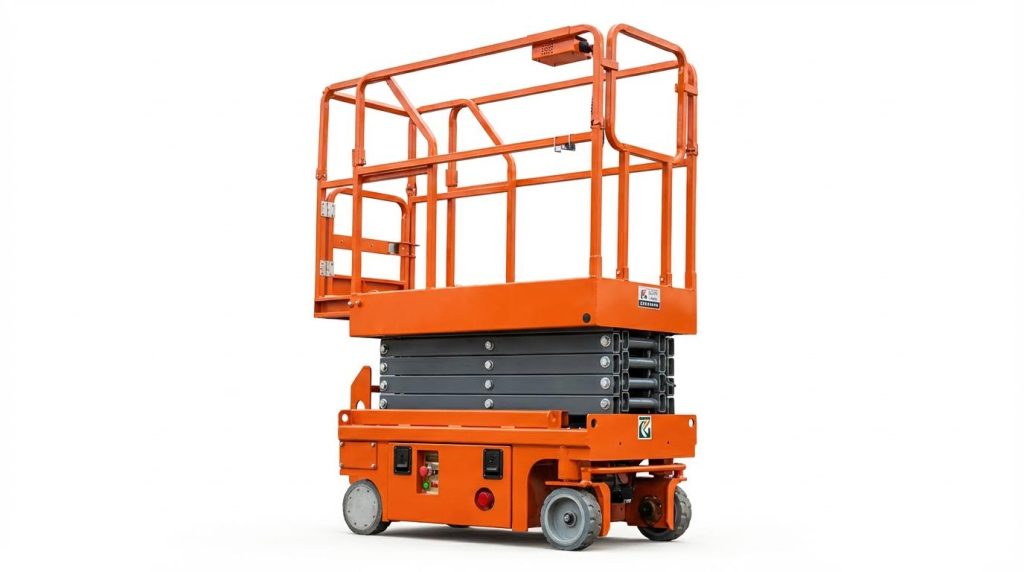
This guide explains how much a scissor lift weighs in real-world terms, why the weight matters, and how to move and use lifts safely. You will see typical weight ranges, floor and trailer limits, and practical checks you must make before a lift ever leaves the ground or the yard.
Understanding Scissor Lift Weights And Ranges
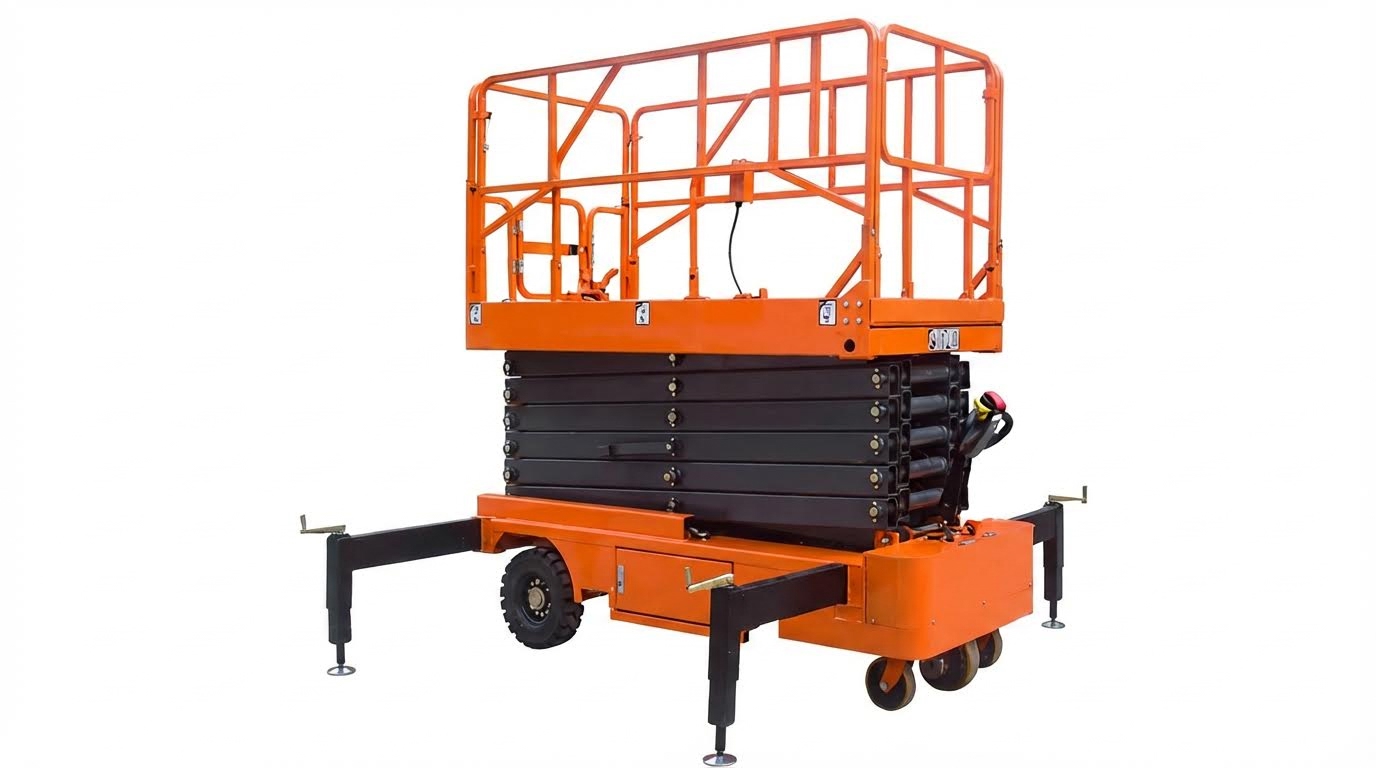
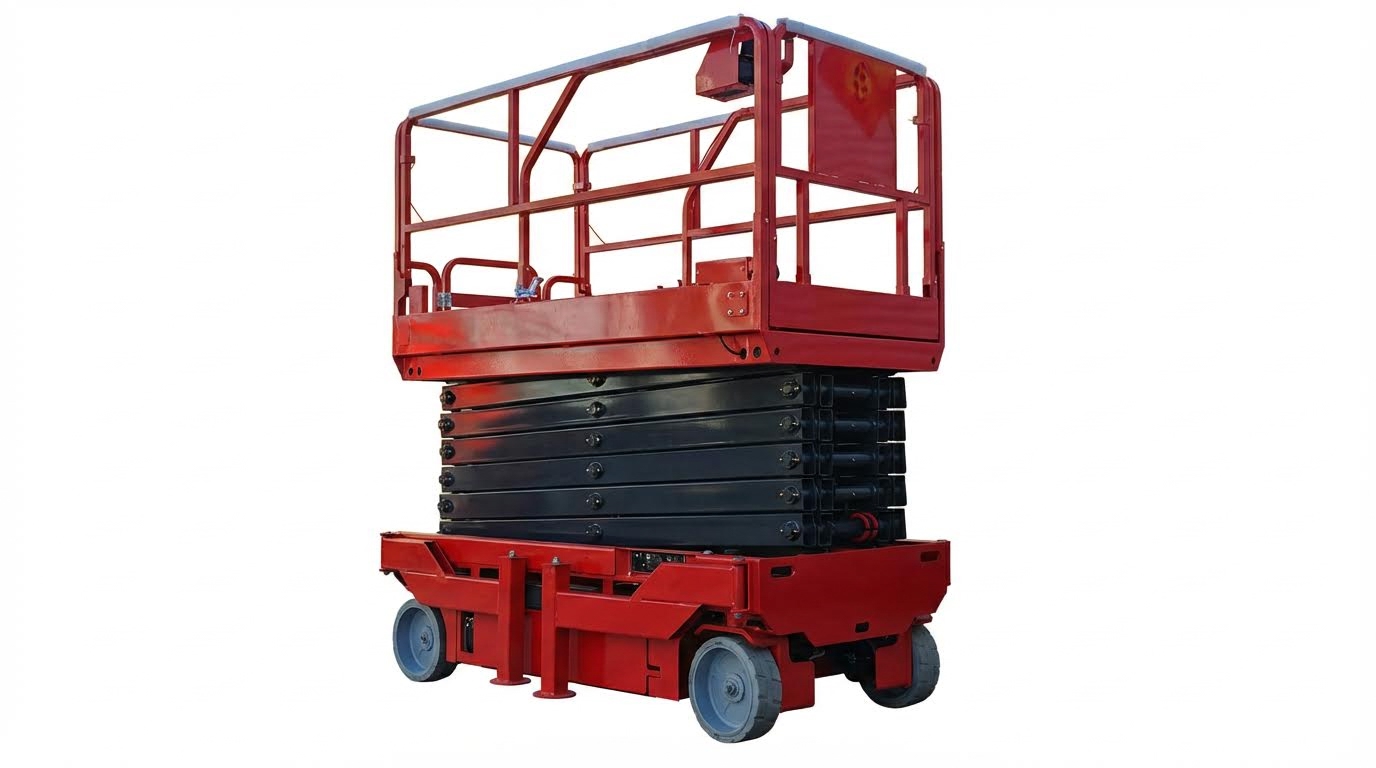
Scissor lift weight ranges are wide, and understanding them is the only safe way to answer “how much does scissor lift weigh” for transport, floor loading, and stability planning.
Typical weight ranges by lift type and height
Typical scissor lift weights run from about 680 kg for compact electric units up to roughly 6,800 kg for large rough‑terrain models, with weight climbing as platform height and capacity increase. This is the real-world backbone behind any “how much does scissor lift weigh” calculation.
| Lift Type / Use | Typical Platform Height Range | Approx. Machine Weight Range | Power Source | Operational Impact |
|---|---|---|---|---|
| Compact electric slab (indoor) | 1.8–8 m | 680–1,800 kg | Battery electric | Light enough for many warehouse slabs and small trailers; ideal for tight aisles and finished floors. Weight data |
| Standard electric slab (indoor/outdoor slab) | 8–12 m | 1,800–3,700 kg | Battery electric | Common 10–12 m units sit in this band; still manageable for most industrial floors and medium trailers. 40 ft examples |
| Rough‑terrain diesel (outdoor) | 10–18 m | 2,300–5,400+ kg | Diesel | Heavier frames, large tires, and outriggers push weight up; needs higher ground bearing capacity and heavier transport. Typical ranges |
| Large high‑reach RT (up to ~18 m working height) | 14–18 m working height | Up to ~6,800 kg | Diesel / hybrid | Near the top of the “over 15,000 lb” class; often needs low‑bed trailers and route checks for bridges and roads. Heavy unit band |
| Typical 40‑foot slab scissor lift | ≈13.8–14 m working height | 3,100–3,700 kg | Battery electric | Needs structural floor check and a properly rated trailer or tilt‑deck; often used on industrial slabs. Detailed specs |
Across all types, published ranges show small electric scissor lifts starting near 680 kg and the largest rough‑terrain units exceeding 6,800 kg, with platform heights from about 1.8 m up to roughly 18.3 m. As a rule of thumb, every jump in working height or capacity adds steel and therefore mass. Height and weight bands
- Compact indoor work: 680–1,800 kg – Often towable and acceptable on many 610 kg/m² warehouse slabs.
- Mid‑height slab work (around 12–14 m working height): 3,100–3,700 kg – Needs serious floor and trailer checks.
- Rough‑terrain construction: 2,300–6,800+ kg – Demands engineered ground prep and higher‑capacity trucks.
💡 Field Engineer’s Note: When planners ask “how much does scissor lift weigh,” I always push them to use the manufacturer’s transport weight from the nameplate, not brochure “approximate” figures, before booking trailers or signing off floor loading.
How to quickly estimate if a floor can take the lift
As a quick screen, compare the lift’s gross weight plus load to your floor rating. Many warehouses use about 610 kg/m² as a minimum; heavy 3,000–4,000 kg machines can exceed this once you factor in small tire contact patches, so you often need an engineer to check ground bearing pressure in detail. Typical floor ratings
How design, capacity, and materials drive weight
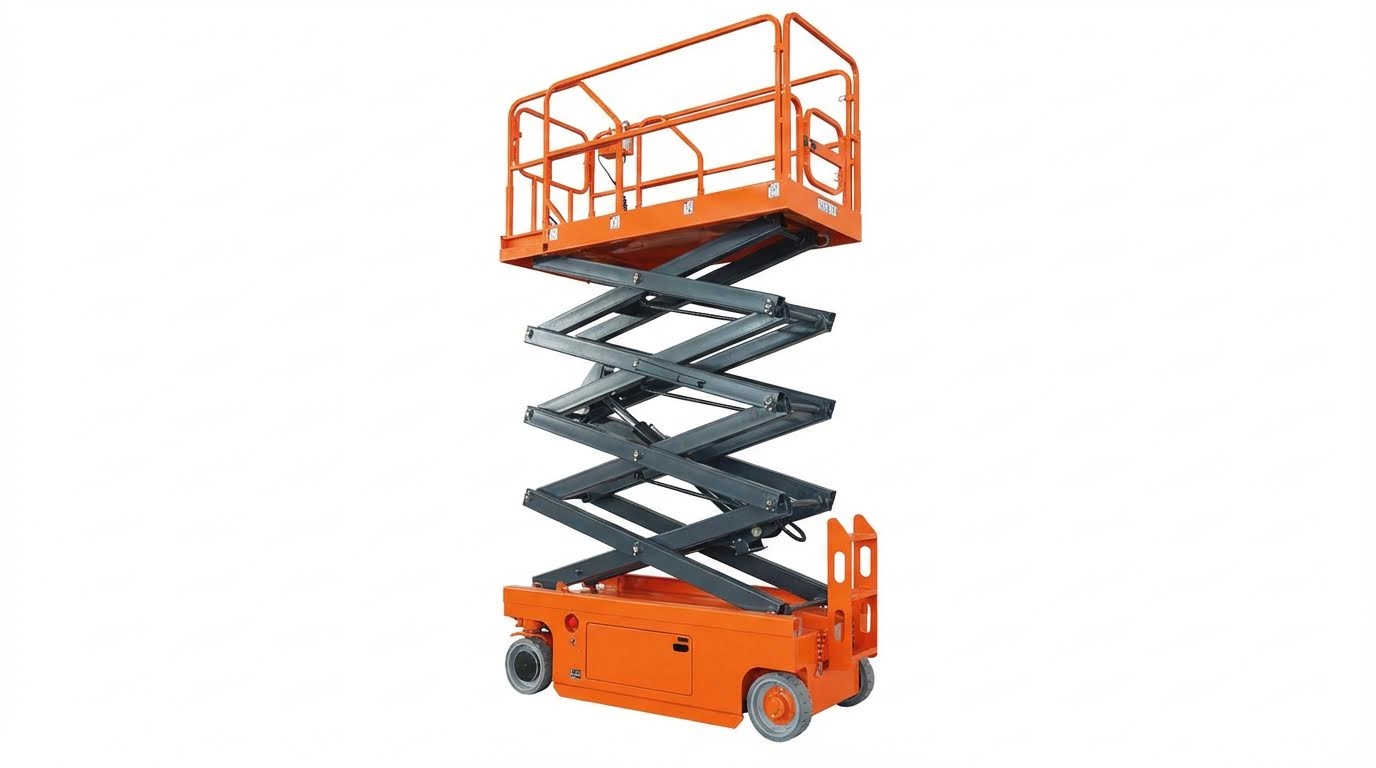
Scissor lift design, rated capacity, and material choice are the main levers that answer “how much does scissor lift weigh,” because every extra kilogram of load or reach demands more steel, larger pins, and sometimes heavier power systems.
| Design Factor | Engineering Effect | Impact on Weight | Operational Impact / Best For… |
|---|---|---|---|
| Rated platform capacity | Higher loads need thicker scissor arms, larger pins, and stronger base frames. Capacity vs structure | Moving from about 450 kg to 900 kg capacity can significantly increase the machine’s own mass. | Heavier lifts give more carrying ability but may exceed floor ratings or small‑trailer limits. |
| Platform height and reach | Taller stacks need longer, stiffer arms and wider bases to control deflection and tipping. | Weight climbs sharply beyond about 10–12 m platform height. | High‑reach models trade maneuverability and transport ease for access height. |
| Power source | Diesel units require engines, fuel tanks, exhaust, and heavier chassis; electric units use large battery packs. Electric vs diesel ranges | Electric: ≈680–1,800 kg for smaller models. Diesel RT: ≈2,300–5,400+ kg. | Electric stays lighter and better for indoor slabs; diesel suits rough ground but adds big transport and ground‑pressure penalties. |
| Material selection | Conventional structural steel vs lighter alloys or hybrid designs. Material discussion | Steel adds mass but boosts stiffness and durability; aluminum cuts weight but needs careful design. | Steel is ideal for outdoor, rough‑terrain abuse; lighter alloys help indoor units stay within elevator and slab limits. |
| Stability and base design | Manufacturers deliberately keep a heavy base to lower center of gravity and resist overturning. Stability rationale | Extra steel in the chassis, cross‑members, and outriggers can add hundreds of kilograms. | Improves stability in wind and on slopes but increases ground pressure and transport weight. |
| Options and features | Non‑marking tires, outriggers, extended guardrails, bigger batteries, and extra control systems all add components. Feature impacts | Each option may add tens of kilograms; combined, they meaningfully raise transport and floor loads. | Better usability and safety, but you must recalc trailer capacity and floor loading with all options installed. |
From an engineering point of view, scissor lifts are intentionally “overbuilt” and heavy because mass gives stability and structural strength. A heavier base frame lowers the center of gravity and lets the lift resist tipping when the platform is fully extended and loaded. Stability explanation
- Ask for certified transport weight, not just “operating weight”: – This is what matters for trucks, trailers, and structural checks.
- Include batteries, fuel, and options in your weight tally: – These are on the machine when it rolls over your slab or onto your trailer.
- Match material and power source to the job: – Lighter electric steel/aluminum hybrids for indoor slabs, heavier all‑steel diesel frames for mud and gradients.
💡 Field Engineer’s Note: When you upsize capacity or add options late in a project, re‑run your “how much does scissor lift weigh” check. I have seen last‑minute spec changes push a job from a 3,500 kg trailer class into a permit‑required heavy haul without anyone noticing until load‑out day.
Why weight ranges matter before you sign a rental or purchase order
If you know the likely band for “how much does scissor lift weigh” on your job, you can pre‑qualify floors, ramps, and transport. For example, a 3,100–3,700 kg 40‑foot slab unit needs both a 610 kg/m²‑class floor and a medium or heavy trailer, while a 680–1,800 kg compact electric unit might safely ride a light tilt‑bed and operate on many mezzanine slabs with fewer checks. 40 ft examples General ranges
Engineering Impacts Of Weight On Safety And Transport
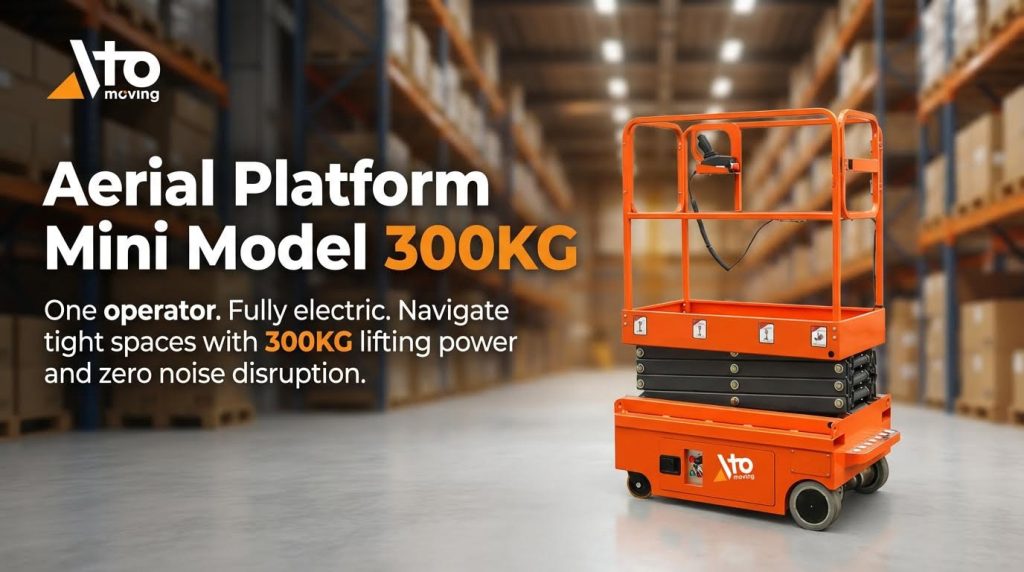
Scissor lift weight directly controls stability, floor loading, and how you legally move the machine, so “how much does scissor lift weigh” is a safety question, not just a spec-sheet detail.
Typical scissor lifts range from about 680 kg for small electric units up to more than 6,800 kg for large rough‑terrain machines. This weight stabilizes the platform but also drives ground pressure, slab design checks, and trailer selection for transport. Understanding where your lift sits in this range is the starting point for safe use and compliant logistics. Typical size and weight ranges show why every project needs a weight‑driven engineering review.
Stability, center of gravity, and ground pressure
Scissor lifts are intentionally heavy at the base to lower the center of gravity and resist tipping while elevated.
A heavy base frame and thick scissor arms keep the center of gravity low, so the machine can safely support its rated platform load at height. As capacity increases from about 450 kg to 900 kg, the structure and base must become heavier, which answers part of “how much does scissor lift weigh” in real life: enough mass to counter overturning forces. Heavier arms and cross‑members are the price of higher capacity and stability.
| Example Lift Type | Typical Machine Weight | Stability / Ground Pressure Impact | Best For… |
|---|---|---|---|
| Small electric slab lift | ≈ 680–1,800 kg (1,500–4,000 lbs) Weight range | Lower ground pressure, adequate stability indoors on flat slabs | Finished floors, warehouses, tight indoor spaces |
| 40‑foot slab scissor lift | ≈ 3,100–3,700 kg (6,834–8,157 lbs) Typical transport weight | Higher overturning resistance but higher ground bearing pressure (up to ≈135 psi worst case) | Medium‑height indoor/outdoor work with checked ground conditions |
| Large rough‑terrain diesel lift | > 5,000–6,800+ kg (11,000–15,000+ lbs) Heavy RT units | Very stable on firm ground, but can punch into weak soil or pavements | Construction sites, rough terrain, outdoors with engineered access |
Ground bearing pressure is the second half of the stability story. A 40‑foot scissor lift can produce up to about 135 psi contact pressure in worst‑case loading, so weak soils or thin pavements can rut or fail without mats or plates. Published ground bearing pressure values are critical inputs for site prep and risk assessment.
- Low center of gravity: Heavy base and chassis – Mitigates tipping when the platform is fully raised.
- Wider footprint: Longer and wider wheelbase – Improves lateral stability in wind and when driving elevated.
- Higher ground pressure: More mass over limited tire contact – Can overstress weak slabs, asphalt, or soft ground.
- Wind and reach limits: Weight and COG define allowed outdoor heights – Prevents overturning under wind loading.
💡 Field Engineer’s Note: On marginal ground, I never trust “it looks firm.” I run the ground bearing pressure against soil or pavement capacity and, if in doubt, specify timber mats or steel plates under each wheel to spread the load.
How to quickly estimate ground pressure
A simple field check is total machine weight (plus load) divided by the total contact area of the wheels or outriggers. Compare this to the allowable bearing pressure from a geotechnical report or slab design. If your calculated pressure approaches the limit, reduce load, change the machine, or add mats to increase contact area.
Floor loading, slabs, and structural checks
Scissor lift weight must be checked against floor and slab ratings, because concentrated wheel loads can exceed typical warehouse design values.
Many industrial floors were designed for around 610 kg/m² (125 lbs/ft²) of uniformly distributed load, but a scissor lift applies several thousand kilograms through small tire patches. Typical floor ratings show why even a “light” 1,800 kg electric lift can overstress mezzanines or suspended slabs if misapplied.
| Parameter | Typical Value / Range | Operational Impact |
|---|---|---|
| Warehouse floor design load | ≈ 610 kg/m² (125 lbs/ft²) UDL | Safe for pallets and racking, but not automatically safe for scissor lift point loads |
| Compact electric lift weight | ≈ 680–1,800 kg | May be acceptable on ground slabs; often too heavy for light mezzanines without checks |
| 40‑foot lift wheel load | Portion of 3,100–3,700 kg on each wheel | Requires structural engineer to verify slab thickness, reinforcement, and punching shear |
| Max ground bearing pressure (example) | ≈ 135 psi worst case | Often exceeds capacities of weak soils or thin pavements without mats |
- Check combined weight: Machine + people + tools – Structural checks must use the worst‑case gross load, not just empty weight.
- Look at wheel spacing: Short wheelbase and narrow track – Increase local stresses and risk of punching through slabs.
- Respect floor ratings: 610 kg/m² is not a guarantee – Concentrated loads can still crack or deflect slabs.
- Use mats where needed: Steel plates or timber mats – Spread wheel loads to stay within slab or soil capacity.
💡 Field Engineer’s Note: On suspended slabs I always involve a structural engineer before bringing in any lift above about 1,500–2,000 kg. A half‑day check is cheaper than repairing a cracked slab or dealing with a partial collapse.
What your engineer will typically ask for
Expect questions about exact machine weight (including batteries or fuel), maximum platform load, wheelbase and track width, tire type and footprint, lift operating envelope (static or driven while elevated), and any nearby openings or trenches. Provide the manufacturer’s data sheet and the rated floor load so they can check bending, shear, and punching.
Transport vehicles, trailers, and legal limits
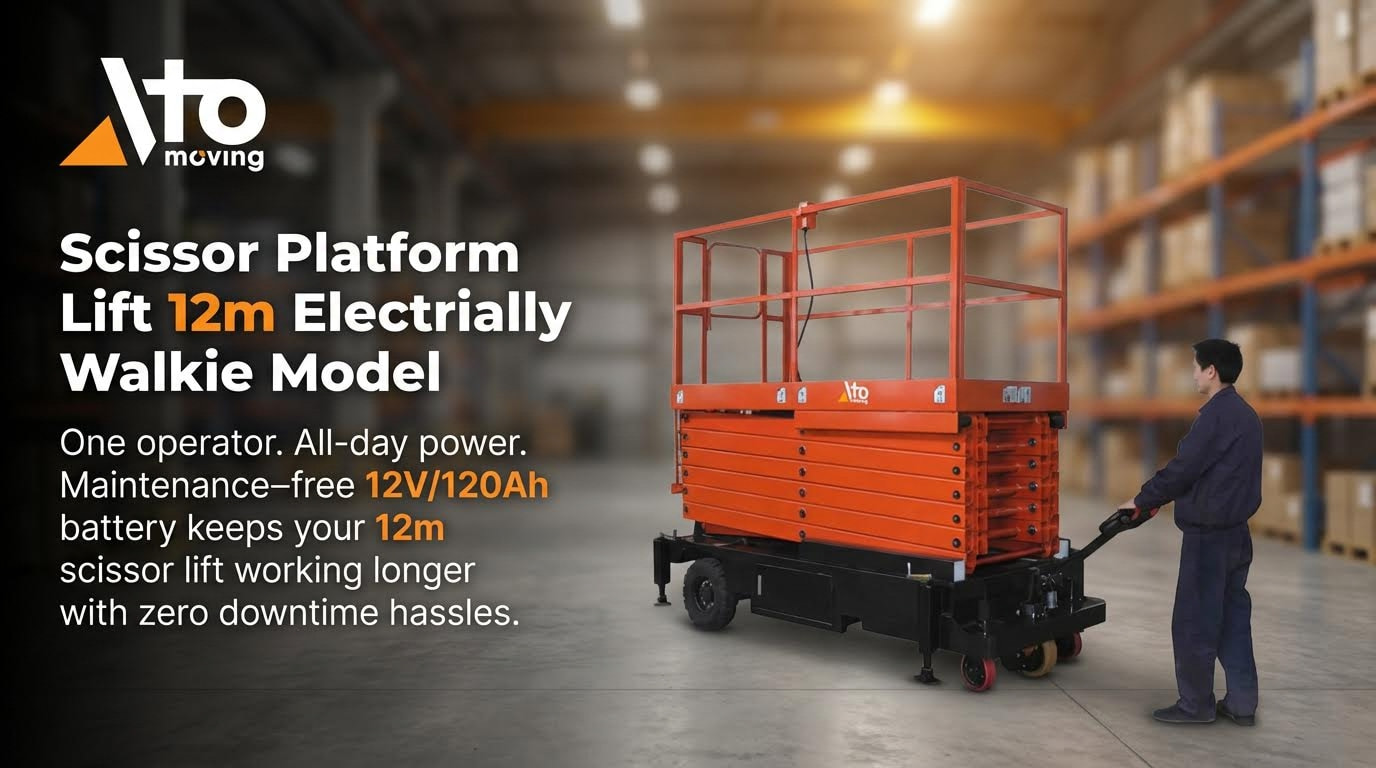
Scissor lift weight dictates what truck or trailer you can legally use, how you secure the load, and whether you need permits.
Small electric scissor lifts under about 1,360–1,500 kg (≈3,000 lbs) can often travel on light trailers behind smaller vehicles, but heavy rough‑terrain machines over 4,500–6,800 kg (10,000–15,000 lbs) need dedicated plant trailers and, in some regions, oversize or overweight permits. Weight‑based transport guidance makes clear that “how much does scissor lift weigh” is the first input into logistics planning.
| Machine Class | Typical Weight | Transport / Legal Considerations | Best For… |
|---|---|---|---|
| Compact electric slab lift | ≈ 680–1,800 kg | Often towable on plant trailer if combined weight stays within vehicle and axle ratings | Short‑distance moves between nearby sites |
| 40‑foot slab lift | ≈ 3,100–3,700 kg | Requires medium‑duty truck and suitable trailer; check bridge and road limits | Regional transport between depots and projects |
| Large rough‑terrain lift | > 4,500–6,800+ kg | May trigger special permits, route planning, and stricter tie‑down requirements | Heavy construction and infrastructure work |
Safe towing or hauling is not just about capacity; it is about control and securement. The combined weight of truck, trailer, and lift must sit under manufacturer ratings and any road or bridge limits, and tie‑downs must have working load limits above half the machine weight in each direction. Transport planning guidance emphasizes using certified transport weight from the machine plate, not estimates.
- Match trailer rating: Trailer GVWR ≥ lift weight + margin – Prevents overloading axles and brakes.
- Position center of gravity: Slightly forward of axle group – Maintains stable tongue weight and steering.
- Use proper tie‑downs: Chains/straps with WLL ≥ 50% of machine weight each way – Stops the lift shifting under braking or impact.
- Plan the route: Check bridges, gradients, and clearances – Avoids last‑minute detours and stuck loads.
- Consider insurance: Verify liability and cargo cover – Protects against damage during heavy‑equipment transport.
💡 Field Engineer’s Note: I always insist on the actual transport weight from the nameplate and options list. Accessories, fuel, and bigger battery packs can add several hundred kilograms, which is enough to push a marginal truck–trailer combination over its legal limit.
When to use a specialist towing or heavy-haul service
Once your lift weight approaches 3,000 kg or more, or if you are unsure about permits and route restrictions, a specialist towing or heavy‑haul contractor is often cheaper and safer than DIY moves. They bring rated trailers, trained drivers, securement gear, and the right insurance for high‑value equipment.
Selecting The Right Lift Weight For Your Application
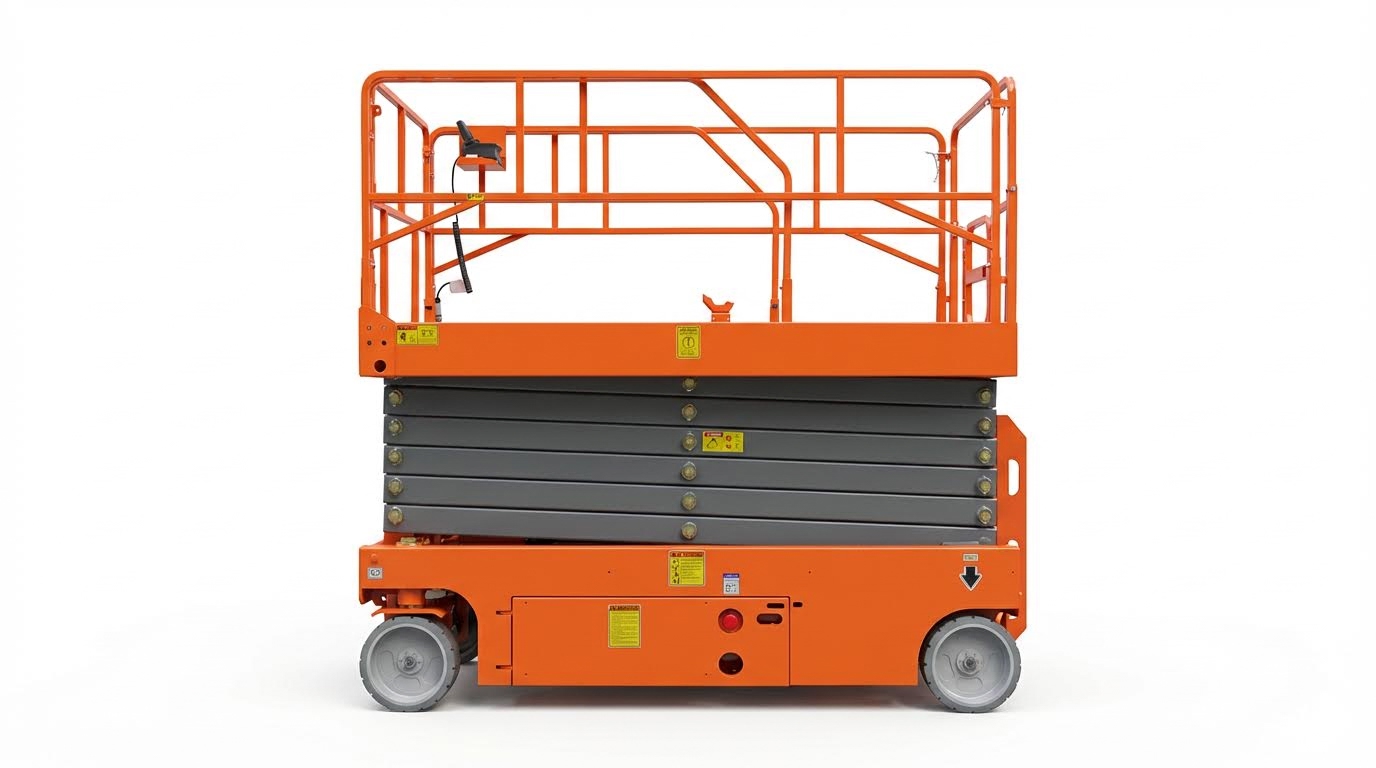
Selecting the right scissor lift weight starts from the jobsite, not the brochure. You match “how much does scissor lift weigh” to floor limits, access, and working height so transport, stability, and maneuverability all stay inside a safe envelope.
- Clarify the core question: Before asking how much does scissor lift weigh, define where it will run, how high, and what it must carry – this prevents overspecifying a heavy unit that becomes impossible to move or support safely.
- Use weight bands, not exact numbers: Small electric slab lifts are roughly 680–1,800 kg, mid-height indoor units 2,000–3,700 kg, and big rough-terrain machines 4,500–6,800 kg and above based on typical market ranges – this lets you quickly shortlist what your building, trailer, and job can realistically handle.
- Always add payload to the equation: Floor slabs, ramps, and trailers see the machine weight plus people, tools, and materials – ignoring the live load is how you crack concrete or overload axles.
💡 Field Engineer’s Note: On new sites I never sign off on a lift until I have three numbers on one sheet: certified machine transport weight, maximum platform capacity, and the lowest-rated floor or trailer load on the route. If one of those is missing, the job waits.
Indoor vs outdoor use and maneuverability
Indoor and outdoor scissor lifts live in different weight and footprint worlds. Indoors you prioritize low weight and tight turning; outdoors you often accept heavier machines for rough terrain, wind stability, and higher reach.
- Indoor – prioritize low floor loading: Many warehouse or commercial floors are designed around about 610 kg/m² (125 lbs/ft²) minimum rating for typical storage areas – lighter electric slab lifts reduce the risk of overstressing thin slabs or mezzanines.
- Outdoor – accept more mass for stability: Rough-terrain diesel units often weigh 2,268–5,443 kg or more due to larger frames and tires – this higher mass and wide wheelbase help resist wind and uneven ground.
- Tight aisles vs open yards: Compact electrics with near-zero inside turning radius are ideal in 2.5–3.0 m aisles, while big outdoor lifts need far more space to swing and reposition – oversized machines indoors waste time in multi-point turns.
- Doorways and elevators: Indoor units must fit through 2.0–2.1 m doors or into goods lifts. A typical 40 ft electric slab lift at about 2.5–2.7 m long, 1.14–1.19 m wide, and 2.5–2.6 m high (rails up) shows how quickly height becomes a constraint – folding guardrails that reduce height to around 1.9–2.0 m can be decisive.
- Working height vs footprint: A 40 ft (≈12 m platform) slab lift often weighs around 3,100–3,700 kg and still runs on relatively narrow tires for indoor slabs – this is usually the upper practical limit for many indoor projects before floor checks become critical.
- Ground bearing pressure: Heavier units concentrate more load under each wheel. Typical 40 ft slab lifts can reach about 135 psi ground bearing pressure in worst cases when fully loaded – on weak soils or paving, that demands mats or plates.
| Use Case | Typical Machine Type | Approx. Weight Range | Maneuverability Profile | Operational Impact |
|---|---|---|---|---|
| Narrow indoor aisles, racking | Compact electric slab | ≈680–1,800 kg typical range | Very tight turning, low ground pressure | Safe on most warehouse slabs; easy to push into corners and through 2.1 m doors. |
| Indoor high-bay maintenance (≈12 m) | 40 ft electric slab | ≈3,100–3,700 kg typical units | Moderate turning; needs good slab | Reach 13.8–14 m working height but may require structural engineer sign-off on floors. |
| Outdoor slabs, mild slopes | Mid-size electric/diesel | ≈2,268–5,000 kg for many RT models | Wider turning radius | Better wind stability and outdoor rating; less suitable indoors due to exhaust or mass. |
| Rough construction sites | Large rough-terrain diesel | Up to ≈6,800 kg and above for top-end units | Needs wide clear routes | Handles uneven ground and wind but demands strong ground and big transport equipment. |
How to quickly screen indoor floors for candidate lift weights
For a rough first pass, take the machine’s gross weight plus maximum rated load, then divide by the approximate contact area of the wheels or tracks. If this calculated pressure is higher than the slab rating (for many warehouses about 610 kg/m²) you either need a lighter lift, wider tires, or temporary load-spreading mats. Final approval should always sit with a structural engineer, but this simple check avoids wasting time evaluating obviously unsuitable models.
Power source, TCO, and maintenance implications
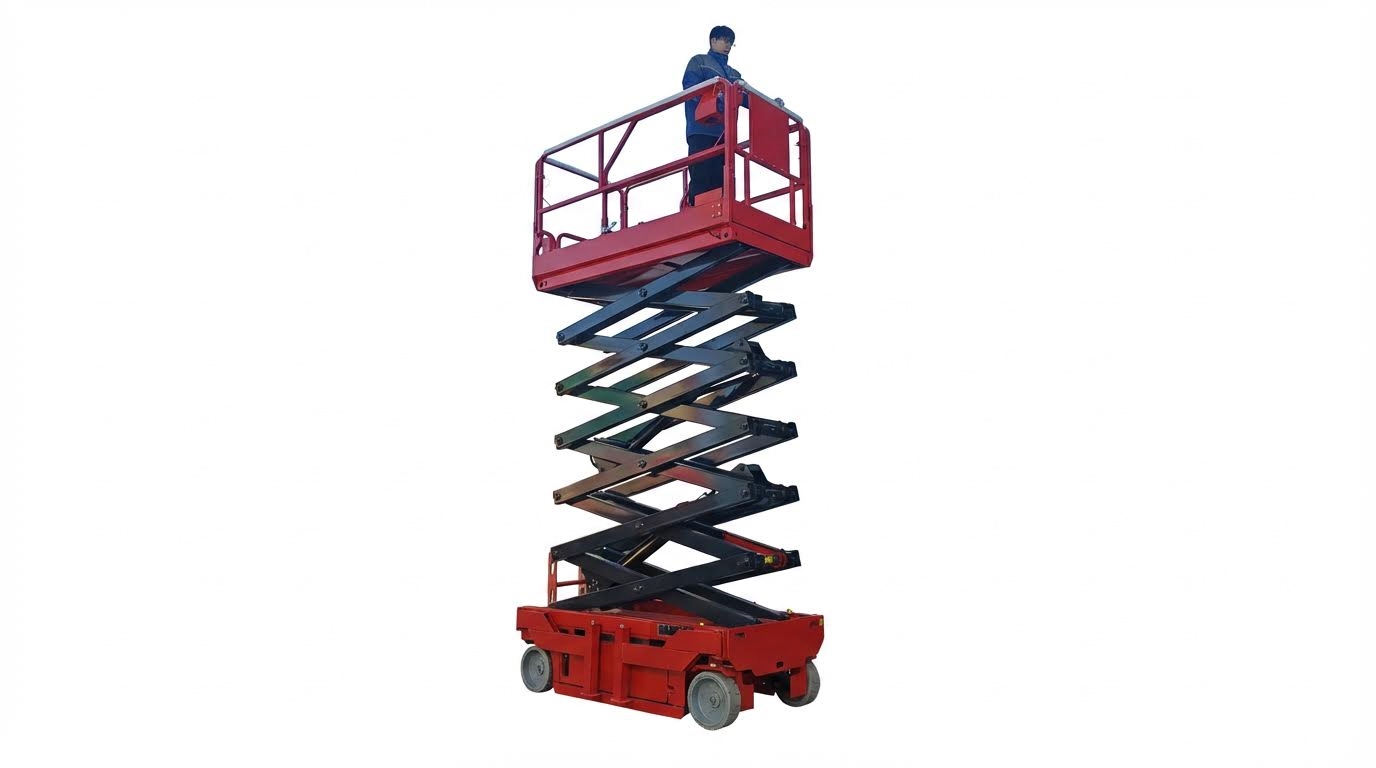
Power source drives both how much a scissor lift weighs and how much it costs to own. Electric machines are lighter and cheaper to run indoors, while diesel units add weight and operating cost but bring rough-terrain capability and longer duty cycles.
| Power Type | Typical Weight Band | Where It Excels | Key Cost / Maintenance Implications |
|---|---|---|---|
| Electric slab scissor | ≈680–4,000 kg from compact to tall indoor units depending on height | Indoor warehouses, retail, finished floors | Lower energy cost, but batteries (often 4 × 12 V traction units with 150–300 Ah each for 40 ft class) need regular charging, water checks, and periodic replacement in typical designs. |
| Diesel / rough-terrain scissor | ≈2,268–5,443 kg and higher for large models with big frames and tires | Construction sites, uneven or unpaved ground | Higher fuel and service cost (engine, emissions, hydraulics), but strong performance in wind and on grades; more transport planning due to higher weight. |
| Hybrid / high-capacity electrics | Overlaps heavy electric and light diesel ranges | Sites needing low emissions but long shifts | More complex systems raise purchase price and maintenance skill requirements, but can reduce fuel use and idling. |
- Weight vs battery system: Larger batteries and steel trays add several hundred kilograms on tall units, but allow a full shift at speeds of roughly 0.8 km/h raised and 3.2–3.4 km/h lowered in 40 ft classes – this extra mass is usually worth it for productivity.
- Weight vs fuel and service access: Diesel machines use heavier engines, tanks, and larger hydraulic reservoirs (around 30 L in many 40 ft layouts) as a typical figure – this mass increases transport cost but improves cooling and durability for continuous outdoor work.
- Total cost of ownership (TCO) trade-off: A heavier, more capable lift might cost more to move and store but can replace multiple smaller units on a large project – the right weight choice often reduces total rental days and labor hours.
- Transport and towing cost in TCO: Machines above about 4,500–5,000 kg usually need larger trucks, higher-capacity trailers, and sometimes permits or escorts, whereas compact lifts under roughly 1,360 kg are often towable with lighter vehicles in many regions – this gap strongly influences recurring logistics cost.
- Effect of options on weight and service: Non-marking tires, outriggers, heavier guardrails, and bigger battery packs all add kilograms beyond the base spec – check the “transport weight with options” line before booking trucks or checking floor loads.
💡 Field Engineer’s Note: When comparing rental quotes, I normalize them to “cost per safe working meter per day.” That means I factor in not just the rate, but also extra truck trips, floor mats, and fuel or charging infrastructure that come with heavier or less suitable machines.
Quick 5-step checklist to match lift weight and power source
- Step 1: Confirm maximum working height and indoor/outdoor split – this narrows the field to slab vs rough-terrain and sets the starting weight band.
- Step 2: Map access routes, door sizes, and tightest turning spaces – this filters out machines that are physically too large or heavy to reach the work area.
- Step 3: Obtain floor or ground bearing capacities along the entire route – this ensures the chosen weight will not crack slabs or sink into soft ground.
- Step 4: Decide on electric vs diesel based on emissions, noise, and duty cycle – this locks in the main weight and maintenance profile.
- Step 5:</ “”
Final Thoughts On Managing Scissor Lift Weight
Scissor lift weight is not just a catalog figure. It links stability, floor safety, and legal transport into one engineering problem. A heavier base and structure give stability at height, but they also raise ground pressure and axle loads. If you ignore that, you risk slab damage, soil failure, or overloaded trailers.
The safest approach is simple. Always start with certified transport weight from the nameplate, then add people, tools, and materials. Compare that gross load to floor ratings, ground bearing capacity, and trailer or truck limits. When numbers are close, bring in a structural or geotechnical engineer and use mats or plates where needed.
Operations and engineering teams should standardize this process. Use weight bands to shortlist machines, then verify each candidate against access, turning space, and route constraints. Lock in the power source and options only after checking how they change transport weight.
When in doubt, choose the lightest lift that still meets height and capacity needs, or step up to a heavier unit with full engineering sign‑off. That is how you keep people safe, protect floors and roads, and avoid last‑minute delays when your Atomoving lift arrives on site.
Frequently Asked Questions
How much does a small scissor lift weigh?
Small scissor lifts typically weigh between 1,078 kg and 1,600 kg, depending on the model and specifications. For example, a mini scissor lift with a platform height of 9 feet can weigh around 1,078 kg Mini Scissor Lift Info. Larger models, such as a 15-foot scissor lift, can weigh approximately 1,600 kg Scissor Lift Weight Guide.
What are the weight ranges for different scissor lift heights?
Scissor lift weights vary significantly based on their height and design. Here is a general breakdown:
- 19 feet: 2,580 – 2,690 lbs (1,170 – 1,220 kg)
- 26 feet: 4,190 – 7,295 lbs (1,900 – 3,310 kg)
- 32 feet: 4,975 – 5,185 lbs (2,255 – 2,355 kg)
- 40–45 feet: 7,185 – 11,684 lbs (3,260 – 5,300 kg)
These figures are approximate and can vary by manufacturer Scissor Lift Weight Ranges.