If you are asking “do you need a harness on scissor lift,” the real answer is “sometimes, and it depends on guardrails, task, and local law.” This guide explains when guardrails are enough, when a harness becomes mandatory, and how OSHA, HSE, and other regulators expect you to engineer a compliant, tip‑over‑safe fall protection system.
When A Harness Is Required On Scissor Lifts
For the question “do you need a harness on scissor lift,” the core rule is simple: if compliant guardrails fully protect you, a harness is usually not required; once that protection is compromised or risk increases, a harness becomes mandatory or strongly recommended.
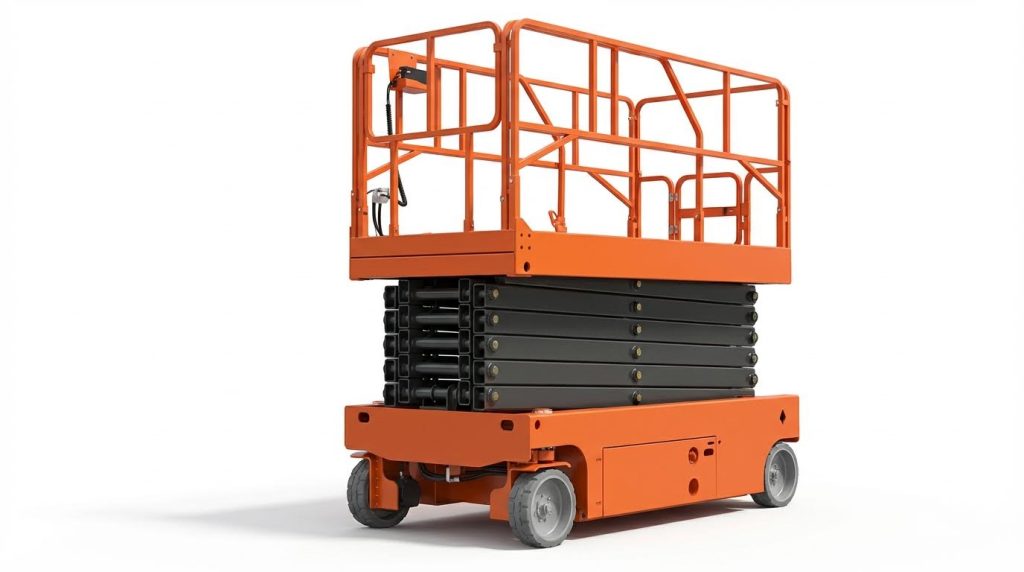
Scissor lifts are generally treated as mobile scaffolds, so the guardrail system is the first line of defense. When that system is intact and used correctly, most regulations allow work without a personal fall arrest system (PFAS). However, as soon as you remove, damage, bypass, or work beyond the guardrail envelope, you move into harness territory.
Guardrails As Primary Fall Protection
Guardrails on a scissor lift are designed to provide full-time collective protection so most users do not need a harness in normal, compliant use.
Under OSHA, scissor lifts fall under mobile scaffold rules, so the platform guardrails act as the primary fall protection when they meet height and strength requirements such as those in 29 CFR 1926.451(g). Properly installed rails protect workers without needing to clip in, provided people stay inside the platform and use it as designed. Reference guidance explains this mobile-scaffold treatment.
- Compliant rail height and strength: Rails must meet scaffold criteria – so impact from a leaning worker does not cause failure.
- Standing on the floor only: Workers must not stand on boxes or rails – raising the center of gravity increases ejection risk.
- Gates closed and latched: Access gates must stay shut when elevated – open gaps are the most common fall path.
- No climbing or leaning out: Overreaching beyond the top or mid-rail is prohibited – this defeats the guardrail envelope.
- Pre-use rail inspection: Bent, loose, or missing sections must be tagged out – one weak post can fail under side load.
European guidance for MEWPs and scissor lifts follows the same hierarchy: choose the right machine, keep the platform and guardrails structurally sound, and only add personal fall protection when residual risk remains after engineering and procedural controls. Industry safety documents emphasize thorough examination and routine inspection of MEWPs.
| Guardrail Condition / Use | Harness Needed? | Operational Impact |
|---|---|---|
| All rails intact, correct height, gates closed | Typically not required | Normal warehouse work; focus on driving and load handling efficiency. |
| Minor visible damage (bent post, loose mid-rail) | Lift should be removed from service | Do not operate; risk of sudden rail failure under side load. |
| Custom platform or added extensions with non-compliant rails | PFAS or restraint recommended/required | Engineering review needed to keep workers inside safe envelope. |
| Workers standing on objects inside platform | System is unsafe regardless of harness | Increases tip-over and ejection risk; change method, not just PPE. |
💡 Field Engineer’s Note: In real audits, most “do you need a harness on scissor lift” disputes came down to one thing: bent or modified rails that everyone had normalized. Treat any non-original rail, gate, or toe-board as suspect until a competent person signs off.
Situations That Trigger Harness Use
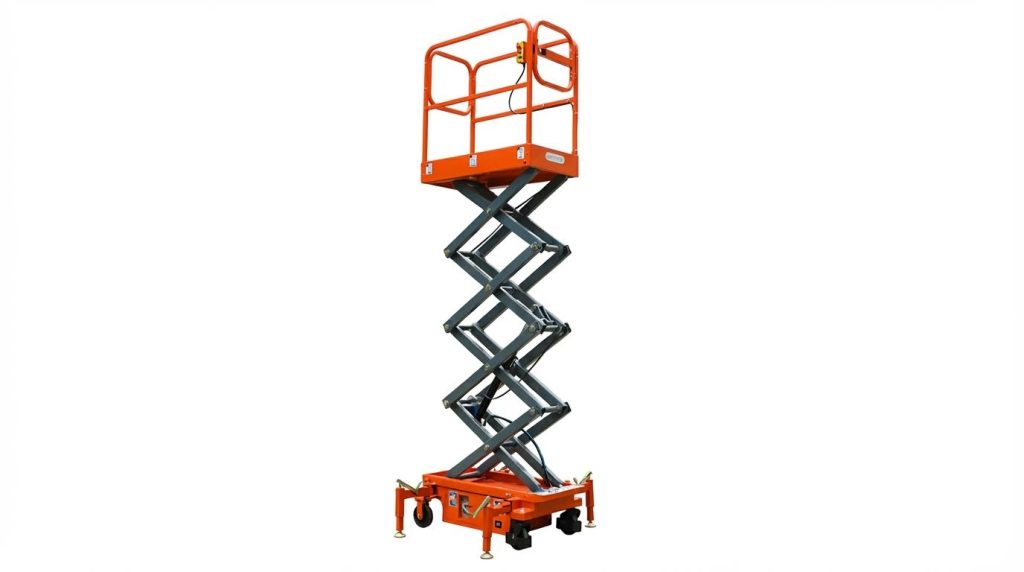
You need a harness on a scissor platform whenever guardrails no longer provide full protection or when task and site risks increase ejection potential, such as leaning out, high winds, or elevated travel.
Both North American and European guidance point to the same triggers. If rails are missing, damaged, or removed, you must add a PFAS or, more typically on scissor lifts, a work restraint system that stops the user reaching a fall edge. Technical guidance on MEWP fall protection and comparative regulatory articles highlight several common scenarios.
| Trigger Condition | Required / Recommended Control | Operational Impact |
|---|---|---|
| Guardrails missing, removed, or clearly damaged | Full PFAS or restraint plus immediate repair | Lift should be out of service until rails are restored and system verified. |
| Use of custom platforms, extensions, or non-standard configurations | Harness with restraint lanyard to keep user inside plan area | Engineering review to set maximum lanyard length and anchor location. |
| Tasks requiring leaning outside rail envelope or working with open gate | Harness and restraint; redesign task where possible | May need shorter tools, repositioning, or different MEWP type. |
| Traveling elevated over uneven ground or near live traffic | Harness and restraint strongly recommended | Controls ejection if the platform is struck or jolted. |
| Wind close to machine limit (around 12.5 m/s, 28 mph) | Harness and restraint; consider stopping work | Gusts can cause sudden platform movement and user loss of balance. |
| Manufacturer manual explicitly requires harness use | Mandatory harness and approved anchor use | OSHA and HSE expect compliance with manufacturer instructions. |
Some guidance notes that restraint systems are preferred on scissor lifts. They are set short enough (for example, around 750 mm total reach in many practical setups) so the user cannot climb or lean past the top rail. Industry documents on MEWPs describe the difference between work restraint and fall arrest, recommending restraint wherever feasible inside a carrier.
- Residual risk after other controls: If impact or fall risk remains, add fall protection – this is the final barrier in the hierarchy of controls.
- Live highway or vehicle risk: Harness use is advised when vehicles could strike the MEWP – ejection is a major concern in side impacts.
- Travel with carrier raised: Only if the MEWP is designed for this, and then often with a harness – small potholes can create large vertical acceleration.
- Uneven or unknown ground: Drum dolly plus strict ground assessment – unexpected subsidence can tilt the scissor stack quickly.
- Documented site rules: Many plants adopt “harness always” policies – this simplifies training and enforcement, even where not legally required.
How to turn “do you need a harness on scissor lift” into a quick site rule
A practical rule set many facilities used was: no harness needed when all rails are compliant, gates closed, ground is flat, wind is low, and no leaning or elevated travel occurs. The moment any of those conditions change, operators must clip into a restraint system anchored to a rated point inside the platform, and supervisors must review whether a different MEWP type or access method is safer.
💡 Field Engineer’s Note: When we investigated scissor lift near-misses, harnesses rarely failed; the problem was that no one had defined exactly when to start using them. Write a one-page trigger list, train every operator, and make “rails plus restraint” your default whenever work gets even slightly non-standard.
Comparing OSHA, HSE, And Other Regional Rules
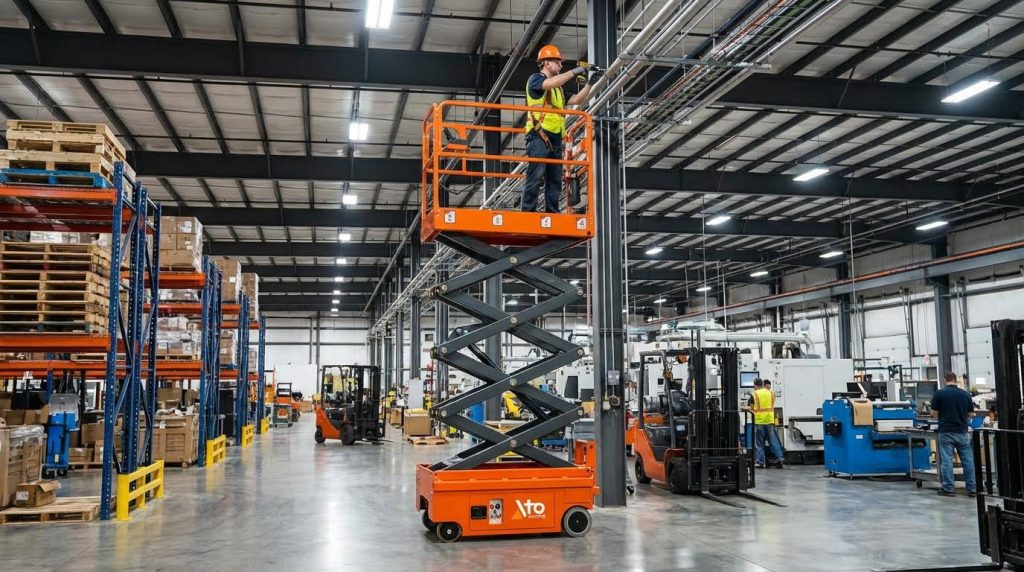
This section explains how different regulators answer “do you need a harness on scissor lift” by comparing OSHA, HSE, and other regional approaches to MEWP fall protection and risk control.
Across regions, the pattern is similar: scissor platform lifts normally rely on compliant guardrails as primary fall protection, while harnesses and lanyards are added when risk increases, guardrails are compromised, or manufacturer instructions demand extra control. Boom lifts, by contrast, almost always require personal fall protection because of their greater ejection and catapult risk.
💡 Field Engineer’s Note: When working across borders, I standardize to the strictest rule on site (often boom‑lift-style restraint on all MEWPs near traffic or uneven ground) to avoid confusion and enforcement disputes between OSHA-style and HSE-style expectations.
Scissor Lifts vs Boom Lifts In Regulations
Regulators treat scissor lifts and boom lifts differently because their fall and ejection risks are fundamentally different, which directly affects when you need a harness.
Under OSHA, scissor lifts are generally classified and managed as mobile scaffolds, so compliant guardrails are accepted as the primary fall protection method when workers stand on the platform floor and do not climb or lean out. Guardrails must meet the height and strength criteria in 29 CFR 1926.451(g) to be considered adequate, and employers must keep gates closed and repair damage before use. OSHA guardrail rules for scissor lifts
Boom lifts are regulated differently and explicitly require a body belt or full-body harness with a lanyard connected to an approved anchor point whenever the platform is occupied. This is because the rotating boom, higher outreach, and “catapult” effect create a much higher chance of ejection, even when guardrails are intact. Regulatory differences between scissor and boom lifts
| Lift Type | Typical Regulatory View | Default Fall Protection | Harness Expectation | Operational Impact |
|---|---|---|---|---|
| Scissor lift | Treated as mobile scaffold under OSHA | Guardrails meeting 29 CFR 1926.451(g) | Harness only when guardrails are compromised or risk is elevated | Often guardrail-only indoors; add restraint for high-risk tasks |
| Boom lift (MEWP with extending boom) | Separate rules explicitly requiring body belt or harness | Guardrails plus mandatory PFAS or restraint | Harness and lanyard required whenever occupied | Operators must clip in before raising or slewing the boom |
- Scissor lift – guardrail focus: Guardrails provide collective protection – workers are protected without donning PFAS in standard use.
- Boom lift – PFAS focus: Harness plus lanyard is built into normal operation – prevents ejection during sudden movement or impact.
- Mixed fleets: Operators often switch machines – clear site rules prevent boom-lift habits from being ignored on scissor platform lift near extra hazards.
How this affects “do you need a harness on scissor lift?”
Because scissor lifts are treated more like mobile scaffolds, the default answer is “no harness if guardrails are fully compliant and used correctly.” But as soon as your task looks more like a boom-lift risk profile (travel raised, exposure to traffic, high wind, overreaching), many employers and regulators expect a harness in restraint mode.
Restraint vs Fall Arrest On MEWPs
On MEWPs, the key engineering question is not only “do you need a harness on scissor lift” but “if you use one, is it restraint or fall arrest, and can the platform safely handle the loads and geometry involved?”
For scissor lifts, restraint systems are strongly preferred. A work restraint system uses a full-body harness and a short, non-energy-absorbing lanyard that physically prevents the worker from reaching beyond the guardrails. This reduces ejection risk without generating large fall-arrest forces into the relatively small scissor platform and its anchorage points. Many best-practice guides recommend limiting lanyard length to about 750 mm (≈30 in) where only restraint is allowed. Work restraint vs fall arrest on MEWPs
Fall arrest systems are designed to stop a person after they have actually fallen, using an energy-absorbing lanyard or self-retracting lifeline. OSHA-compliant PFAS must limit free fall to 1.8 m or less, keep arrest forces typically below about 8 kN, and prevent contact with lower levels. Each anchor point must support at least 22.2 kN (5,000 lbf) per user or be engineered to an equivalent safety factor. On small MEWP platforms, it is often difficult to provide this capacity without unacceptable tip-over risk, which is why many manufacturers and regulators only approve restraint on scissor lifts. PFAS design loads and anchor requirements
| System Type | Main Purpose | Typical Components | Where Used On MEWPs | Best For… |
|---|---|---|---|---|
| Work restraint | Prevent reaching a fall edge | Full-body harness + short fixed/adjustable lanyard | Common on scissor lifts and some booms | Keeping workers inside guardrails, minimizing ejection risk |
| Fall arrest | Stop a fall in progress | Harness + energy-absorbing lanyard or SRL + strong anchor | More typical on boom lifts, some special MEWPs | High-exposure tasks where a full fall is possible and clearance exists |
- Restraint first: On scissor lifts, design for restraint whenever possible – avoids high arrest forces and tipping moments.
- Anchor verification: Check that the carrier has anchor points clearly marked for restraint or arrest and rated for the number of users – prevents overload of thin deck structures.
- Height and clearance: Always calculate total fall distance if using arrest – on short scissor lifts there may be no safe clearance at all.
Why fall arrest is rarely ideal on scissor lifts
The scissor stack offers very little vertical space. A 1.8 m free fall plus deceleration, harness stretch, and body movement can easily exceed the platform height, causing the worker to hit the ground or the scissor mechanism. At the same time, the dynamic load at the anchor can create a large overturning moment on a narrow base. That is why many manufacturers and safety bodies only approve short-lanyard restraint on scissor lifts, not full fall arrest.
Regional Differences In Risk-Based Policies
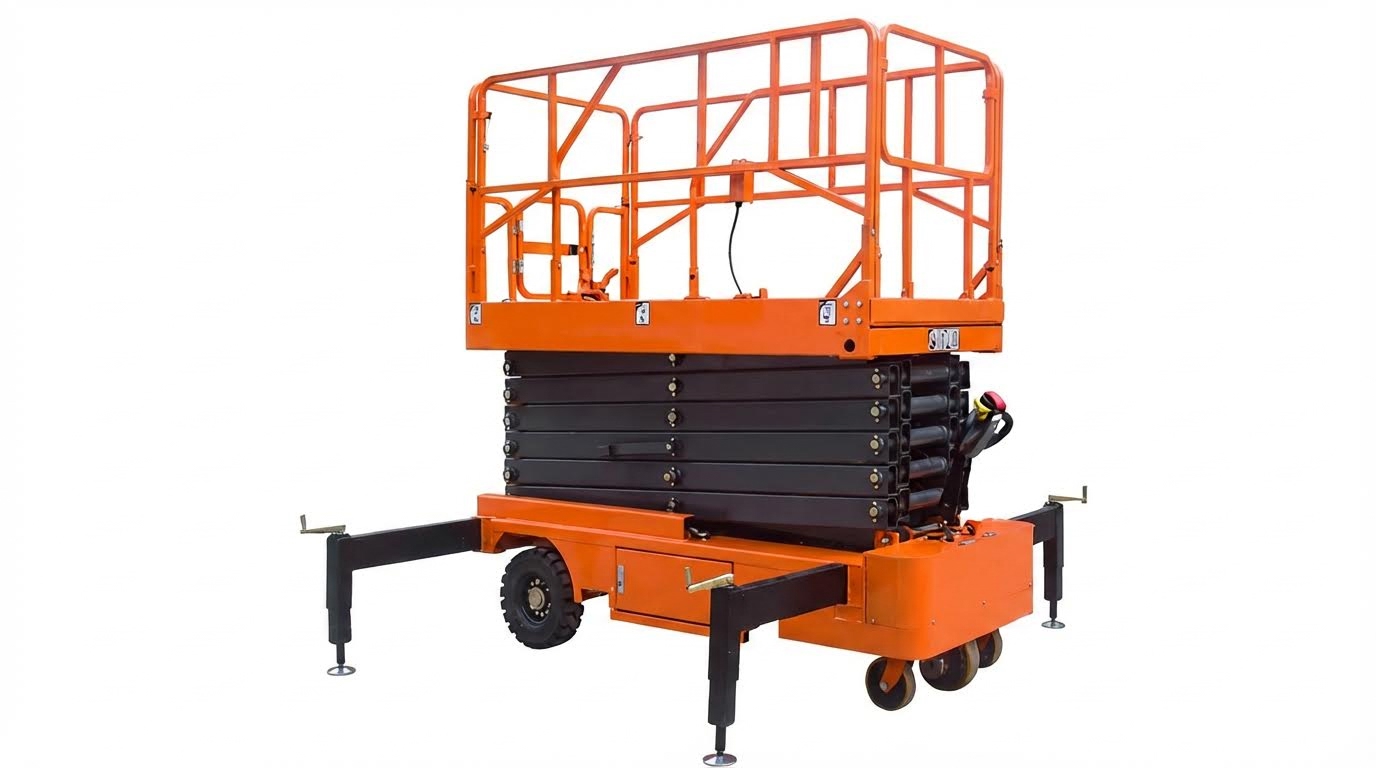
OSHA, HSE, and other regulators answer “do you need a harness on scissor lift” using slightly different frameworks, but all are moving toward risk-based decisions that consider wind, travel, and impact hazards.
OSHA’s baseline is guardrail-only protection on scissor lifts, with PFAS or restraint added when guardrails are missing, damaged, or bypassed, or when workers lean or climb beyond the rail envelope. OSHA also enforces manufacturer instructions; if a manual requires a harness for certain heights or configurations, employers must follow that as part of their legal duty to control recognized hazards. Guardrails and PFAS conditions on MEWPs
HSE-style guidance in the UK and similar jurisdictions leans heavily on formal risk assessment. It expects planners to consider residual fall and impact risk after engineering and procedural controls. If there is still a credible chance of a person falling or being ejected—for example, when working next to live highways, traveling with the carrier raised, or operating over uneven ground—then fall protection equipment such as restraint or fall arrest must be used, provided the MEWP is suitable and has appropriately rated anchor points. HSE-aligned MEWP fall protection guidance
Across regions, specific risk factors repeatedly push the answer toward “yes, you do need a harness on scissor lift,” especially in restraint mode: wind speeds approaching 12.5 m/s (≈28 mph), elevated travel, overreaching, high working heights, and heavy tool loads all increase ejection risk. Many global best-practice documents now recommend harness and restraint in such scenarios even when not strictly mandated by law. Risk factors influencing harness policies
| Region / Approach | Regulatory Basis | Default Scissor Lift Rule | When Harness Becomes Expected | Best For… |
|---|---|---|---|---|
| OSHA-style (US) | Specific standards + general duty | Guardrails adequate when compliant and used correctly | Guardrail damage, leaning/climbing, custom platforms, or manufacturer mandates | Clear minimum legal baseline, easy to audit |
| HSE-style (UK / EU-influenced) | Risk assessment and hierarchy of controls | Guardrails plus task-specific assessment | Residual risk after controls, e.g., traffic exposure, uneven ground, traveling raised | Adapting protection to complex sites and changing conditions |
| Global best practice | Industry guidance (MEWP federations, standards) | Guardrails as primary protection | Wind, elevated travel, high platforms, heavy tools, impact hazards | Harmonizing policies for multinational fleets |
- Wind and travel: Higher wind or traveling with the carrier raised increases ejection risk – many sites then require harness and restraint.
- Traffic and impact: Working beside live roads or plant traffic raises the chance of vehicle impact – harness use mitigates secondary ejection risk.
- Manufacturer rules: Manuals that specify PFAS or restraint override “guardrails-only” assumptions – non-compliance can be cited after incidents.
Practical policy for mixed OSHA/HSE environments
For multinational operations, a simple engineering-led rule works well: if any of the following apply—traveling raised, working near traffic, wind near limits, or using non-standard platforms—treat the scissor lift like a boom: full-body harness, short restraint lanyard, and verified anchor points. This harmonizes OSHA’s guardrail baseline with HSE’s risk-based expectations and greatly reduces argument over “minimum legal” vs “best practice.”
Engineering A Compliant Fall Protection System
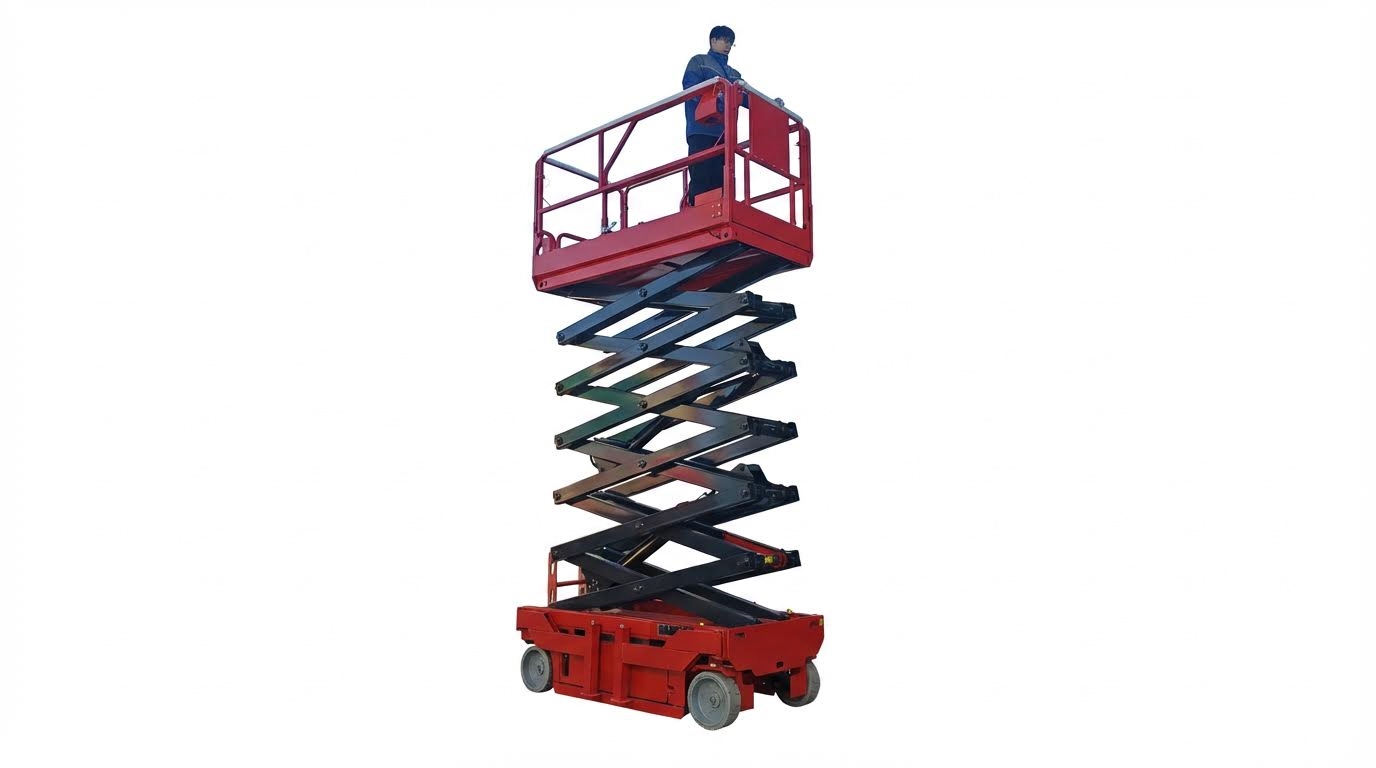
Engineering a compliant fall protection system on scissor lifts means treating guardrails as primary protection, then adding correctly sized harness, lanyard, and anchor systems when risk or regulations demand it, without increasing tip-over risk. Many readers asking “do you need a harness on scissor lift” really need a system-level answer, not just a yes/no rule.
The goal is to keep workers inside the guardrail envelope under all foreseeable conditions, limit fall forces to safe levels, and ensure the lift structure and anchorage can carry those loads without instability.
Harness, Lanyard, And Anchor Selection
Harness, lanyard, and anchor selection for scissor lifts starts with one decision: are you designing for work restraint (preferred) or full fall arrest. That choice drives hardware type, lengths, and anchor ratings.
For most “do you need a harness on scissor lift” scenarios, the safest answer is a short work-restraint system that physically prevents a worker from reaching beyond the rails, rather than a long fall-arrest lanyard that allows a drop inside or outside the scissor platform.
| Component | Key Spec / Option | Typical Values / Guidance | Operational Impact On Scissor Lifts |
|---|---|---|---|
| Harness type | Full-body, dorsal D-ring | Certified to relevant ANSI/EN standards | Distributes arrest forces over thighs, pelvis, shoulders; mandatory for any PFAS use on MEWPs according to guidance. |
| Harness fit | Adjustable leg, chest, shoulder straps | Sized to user population, snug but not restrictive | Reduces risk of ejection or “slipping out” during a jolt; improves comfort so operators actually wear it. |
| System mode | Work restraint vs fall arrest | Restraint preferred on scissor lifts | Restraint keeps worker inside guardrails and avoids large fall distances that can overload the MEWP or cause tip-over per industry guidance. |
| Lanyard for restraint | Fixed or adjustable, non‑energy‑absorbing | Short length, often around 0.7–0.8 m (≈ 30 in) overall when connected | Prevents the worker from reaching over or through guardrails; often the best answer when people ask if a harness is needed. |
| Lanyard for arrest | Energy‑absorbing or self‑retracting lifeline (SRL) | Must limit free fall to ≤1.8 m and arrest forces to ≤8 kN per PFAS guidance | Used only where there is enough vertical clearance and the MEWP and anchor are rated for fall arrest, not just restraint. |
| Anchor rating | Static strength per user | ≥22.2 kN (5,000 lbf) for fall arrest anchors as referenced | Ensures the anchor point on the platform can withstand PFAS loads without tearing out or deforming. |
| Anchor labeling | Marked for “restraint” or “fall arrest” and number of users | Per MEWP manufacturer documentation in MEWP guidance | Prevents misuse of a restraint‑only point for arrest; simplifies pre‑use checks. |
| Anchor location | Within platform footprint, away from sharp edges | Typically on the platform floor or rail posts | Reduces swing‑fall and overturning moments if a fall or violent jolt occurs per platform design guidance. |
- Define the mode first: Decide if the task and platform geometry allow pure restraint – this often answers “do you need a harness on scissor lift” as “yes, but in restraint mode, not arrest.”
- Match lanyard length to platform size: Keep total reach shorter than the distance to any open edge – so the worker physically cannot go beyond the guardrail line.
- Use only manufacturer-approved anchors: Rely on labeled, tested anchor points – this avoids overloading handrails or structural members never designed for PFAS loads.
- Plan for tools and movement: Consider how far workers must move and what tools they carry – to avoid them unclipping “just for one quick reach.”
- Integrate inspection into daily checks: Add harness and lanyard checks to pre-use MEWP inspections – so damaged PFAS never gets onto the platform.
How harness choice links to “do you need a harness on scissor lift?”
If guardrails are intact and workers stay inside them, regulations may not explicitly require a harness. But when risk factors exist (leaning out, traveling raised, traffic nearby, wind, or potential impact), guidance recommends a restraint harness and short lanyard to control ejection risk according to MEWP safety resources.
💡 Field Engineer’s Note: On tight indoor jobs, I specify very short adjustable restraint lanyards and clip points low on the platform. Long lanyards on scissor lifts invite overreach; most ejection incidents I have investigated started with “I just leaned out a bit to finish.”
PFAS Design Loads, Fall Distance, And Tip-Over Risk
PFAS design on scissor lifts must control free-fall distance and arrest forces while keeping overturning moments within what the MEWP can safely resist. A system that saves the person but flips the lift is not compliant in practice.
The key is to understand how PFAS loads travel from the worker, through the harness and lanyard, into the anchor and then into the scissor structure and chassis. That is why many authorities emphasize restraint systems and very limited free fall on scissor lifts rather than traditional “high-fall” arrest setups.
| Design Element | Typical Requirement / Guideline | Engineering Concern | Operational Impact On Scissor Lifts |
|---|---|---|---|
| Maximum free-fall distance | ≤1.8 m before energy absorption starts as referenced in PFAS guidance | Limits kinetic energy at arrest and resulting arrest forces. | Inside a scissor lift, you rarely have this much vertical clearance, so long fall-arrest lanyards are usually inappropriate. |
| Maximum arresting force | ≤8 kN on the body with energy absorber or SRL per PFAS guidance | Protects worker from internal injuries during arrest. | Higher forces also feed into the MEWP structure; limiting them helps avoid damage or instability. |
| Anchor strength | ≥22.2 kN (5,000 lbf) per attached worker for arrest anchors as referenced | Ensures anchorage survives peak PFAS loads with safety factor. | Only designated MEWP anchors should be used; other rails may buckle under this load. |
| Total fall distance | Free fall + deceleration + harness stretch + body movement per PFAS design guidance | Determines clearance needed to avoid hitting lower levels or scissor structure. | On a 10–12 m working-height scissor lift, there is often not enough internal clearance for full arrest; restraint again becomes the practical solution. |
| Anchor position vs center of gravity | Prefer anchors within plan footprint of chassis | Reduces overturning moment during a fall or violent pull. | Anchors far outboard or high on rails can act like a lever arm, increasing tip-over risk if a worker goes over the side. |
| Dynamic load path | From worker, through PFAS, into platform and scissor stack | Local yielding or buckling of platform members must be avoided. | Using only tested, labeled anchor points ensures the load path was considered in MEWP design. |
- Calculate realistic fall distance: Add free fall, deceleration, harness stretch, and worker height – then compare with the distance to any lower obstruction or ground.
- Check tip-over margins: Consider worst-case lateral pull at full platform height – especially when traveling elevated or working near edges, traffic, or overhead obstacles.
- Use restraint where clearance is small: If you cannot guarantee safe clearance for arrest, design a pure restraint system – this is often the only way to keep both worker and machine safe.
- Integrate PFAS into task planning: Include fall protection choice in lift selection, site layout, and route planning – for example, traveling raised through congested areas may justify restraint even with good guardrails.
- Link PFAS to inspection and maintenance: Treat anchors and labels like any other safety-critical component – verify during 6‑monthly thorough examinations and daily checks as recommended.
When a PFAS is justified on a scissor lift
Guidance suggests adding PFAS when residual risk remains after guardrails and safe-use measures, such as working next to live highways, traveling raised over uneven ground, or risk of vehicle impact with the MEWP according to MEWP safety documents. In these cases, a well‑designed restraint system answers the “do you need a harness on scissor lift” question with a risk‑based, engineered yes.
💡 Field Engineer’s Note: I always model “worst-case pull” as a worker fully extended over the rail, with the lanyard tight and the platform at max height. If the resulting moment arm looks marginal for the chassis width or floor conditions, we either shorten the lanyard, change the work method, or move the task to a different MEWP type.
Final Thoughts On Scissor Lift Harness Compliance
Scissor lift harness compliance is not about a single rule. It is about matching guardrail performance, task risk, and PFAS design so the worker stays inside a stable platform under real-world conditions. Guardrails provide the base layer. When they are intact, correctly used, and the work is simple and static, they usually give enough protection on their own.
Risk rises fast when you modify platforms, travel raised, work near traffic, or operate in higher winds. At that point, restraint-based harness systems become a practical engineering control, not just extra PPE. Short lanyards, rated anchors within the chassis footprint, and clear “trigger conditions” turn vague policy into predictable action on the floor.
Full fall arrest on scissor lifts needs careful design. Free-fall distance, arrest forces, and overturning moments can easily exceed what a narrow-base MEWP can tolerate. That is why restraint is the default best practice, and arrest is the rare, engineered exception.
For operations teams, the most robust approach is simple: treat guardrails as primary protection, standardize to restraint whenever work is non-routine, and follow manufacturer and Atomoving guidance on anchors and PFAS. This keeps your policy ahead of OSHA, HSE, and global expectations while keeping both lifts and people upright.
Frequently Asked Questions
Do You Need a Harness on a Scissor Lift?
In most cases, wearing a harness on a scissor lift is not mandatory unless specific job site rules or equipment limitations require it. According to industry guidelines, some scissor lifts may not be compatible with fall-arrest systems. Always check the operator’s manual for guidance on selecting the correct safety equipment. Scissor Lift Safety FAQ.
When Should Fall Protection Be Used on Scissor Lifts?
Fall protection, such as a full-body harness with a lanyard, is recommended in certain scenarios even if not required by ANSI, CSA, or OSHA standards. For example, if the scissor lift does not have guardrails or has a platform height exceeding safe limits, additional fall protection may be necessary. MEWP Fall Protection Guide.
What Are the General Safety Rules for Scissor Lifts?
- Always follow the manufacturer’s instructions for operating the scissor lift safely.
- Ensure guardrails are in place and secure before use.
- Inspect the equipment for defects or damage prior to operation.
- Use fall protection if required by site-specific regulations or equipment design.