In real operations, how many fully loaded pallets a forklift can lift safely depends on its rated capacity, load center, pallet size, and stability limits—not just how strong it looks. This guide explains how to translate the data plate, pallet weight, and multi‑pallet attachments into a clear, safe answer for “how many fully loaded pallets forklift lift” in your facility, without risking tip‑over or structural failure.
Defining Safe Pallet Capacity On A Forklift
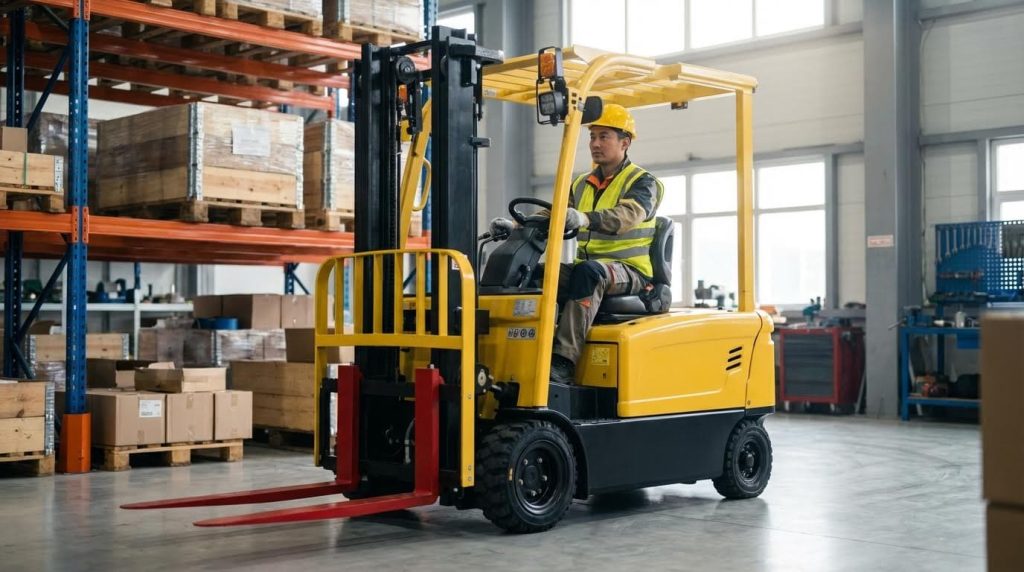
Safe pallet capacity on a forklift is defined by the truck’s rated capacity, the actual load center, and how pallet size and weight shift the combined center of gravity within the stability triangle. This is the real answer behind how many fully loaded pallets manual pallet jack lift safely in your operation.
The key is that the number of pallets is never a fixed rule. It always depends on whether the total load moment stays within the limit printed on the data plate and allowed by standards such as OSHA and ISO.
Rated capacity, load center, and data plate limits
Rated capacity is the maximum load a forklift can safely lift at a specified load center, as shown on its data plate. That rating only remains valid if you keep the load’s center of gravity at or inside the rated load center distance.
On most counterbalance forklifts up to about 13,600 kg capacity, the standard rated load center is 600 mm (24 in) from the heel of the forks. The data plate lists a capacity (mass) at this load center and at specific lift heights and mast tilts. If the actual load center moves further out, the allowable load must reduce to keep the load moment within limits. OSHA explains that the safe capacity decreases as the load center increases because the overturning moment grows faster than the truck’s stabilizing moment. OSHA defines this relationship using load center and load moment.
In simple terms, the maximum load moment is:
Maximum load moment = Rated capacity × Rated load center
For example, if a truck is rated 1,360 kg at a 600 mm load center, its maximum load moment is:
1,360 kg × 0.6 m = 816 kg·m
As long as the product of your actual load (kg) and actual load center (m) stays at or below this value, you are within the static rating. OSHA illustrates this with an example: a truck rated 3,000 lbs at 24 in has a maximum load moment of 72,000 in·lb; if the load center increases to 30 in, the allowable mass must drop to 2,400 lbs to keep the moment at 72,000 in·lb. OSHA uses this method to show how capacity derates with longer load centers.
Because of this, the data plate is your first hard limit when asking how many fully loaded pallets hydraulic pallet truck lift safely. You must treat the plate value as the absolute maximum at the rated load center, then derate as the load center increases due to pallet length, overhang, or multiple pallets on the forks.
| Data Plate Item | Typical Value / Description | Operational Impact |
|---|---|---|
| Rated capacity | e.g. 1,500 kg at 600 mm | Maximum safe mass at the rated load center and height; not a blanket “any load” rating. |
| Rated load center | Usually 600 mm for ≤13,600 kg trucks | Assumes load’s center of gravity is 600 mm from fork heel; further out requires derating. |
| Lift height / mast stage | e.g. capacity shown at 3,000 mm and 4,500 mm | Capacity usually reduces at higher lift heights; critical for high racking. |
| Mast tilt | Forward / rear tilt angles | Forward tilt pushes center of gravity outward and reduces stability. |
| Attachment info | Side‑shift, fork positioner, clamp, etc. | Attachments add weight and move the load forward, reducing net pallet capacity. |
- Always read the plate: Use the printed capacity and load center – this is the only certified basis for multi‑pallet decisions.
- Respect reduced ratings at height: Capacity at 4,500 mm can be far lower than at 3,000 mm – critical when stacking pallets high.
- Account for attachments: Side‑shifts and clamps reduce usable capacity – ignoring them can turn a “safe” move into an overload.
- Keep load tight to the carriage: Heaviest part of the load must sit against the mast – this minimizes load center and preserves capacity.
💡 Field Engineer’s Note: When we investigate tip‑overs, we almost always find the truck was within its “tonnage” but outside its rated load center. Operators trusted the big number on the side of the truck, not the smaller, more important numbers on the data plate.
Quick field formula for derated capacity
OSHA recommends a simple field formula when the load center is longer than the rating: New safe capacity ≈ (Rated load center ÷ Actual load center) × Rated capacity. For example, if a truck is rated 2,270 kg at 600 mm, but your load center is 700 mm, then: 600 ÷ 700 × 2,270 ≈ 1,948 kg. This aligns with OSHA’s example where a 5,000 lb truck at 24 in load center derates to about 4,285 lb at 28 in load center. OSHA provides this approximate calculation method.
How pallet size and weight change the true capacity
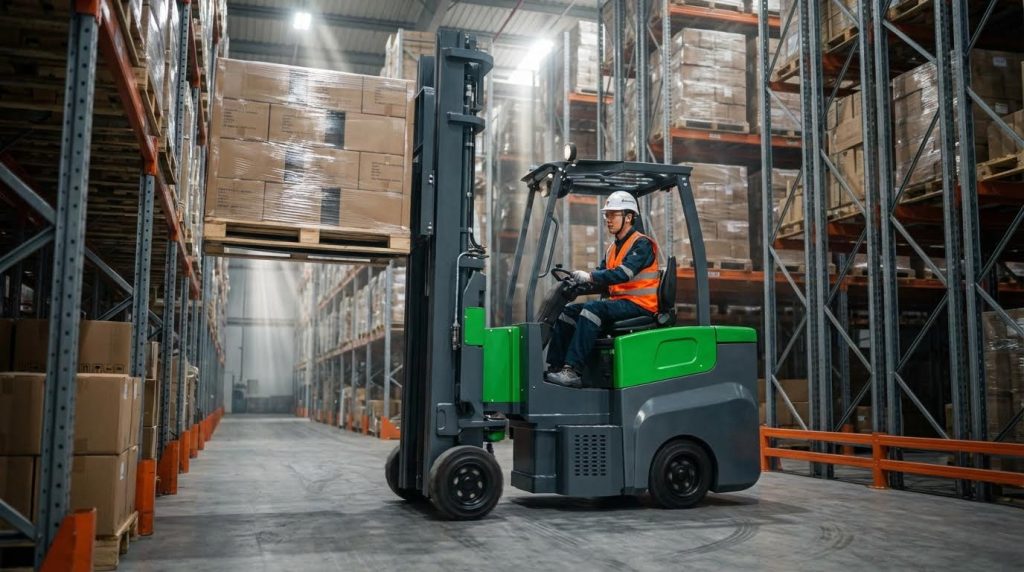
Pallet size and weight change the true safe capacity by moving the load center and increasing the load moment, which reduces how many fully loaded pallets drum dolly lift safely at once. Even if each pallet is within its own rating, the combined geometry can overload the truck.
A standard pallet (often about 1,000 mm × 1,200 mm) loaded evenly will usually place its center of gravity near mid‑length. If you handle one pallet, the load center might be close to the rated 600 mm. But if the pallet is longer, if the load overhangs, or if you pick up two pallets front‑to‑back or side‑by‑side, the combined center of gravity shifts further away from the fork heel. OSHA notes that oversized or off‑center loads can exceed the forklift’s capacity even when the mass alone appears acceptable. Their guidance stresses that off‑center, improperly distributed, or oversized loads create instability.
To see how pallet geometry affects real capacity, think in terms of load moment again. For a single pallet, the moment is:
Moment = Pallet load (kg) × Load center (m)
For two pallets front‑to‑back, the combined center of gravity might sit well beyond 600 mm, especially if you are using long forks or a multi‑pallet attachment. Even if each pallet is only half the truck’s rated mass, the longer effective load center can push the total moment beyond the maximum allowed. OSHA’s examples show that when the load center increases from 610 mm to 760 mm (24 in to 30 in), the safe load must drop from 1,360 kg to about 1,090 kg to keep the same 72,000 in·lb (≈8,139 N·m) limit. This illustrates how even modest increases in load center significantly reduce safe capacity.
| Pallet / Load Scenario | Effect on Load Center | Impact on Safe Capacity / Pallet Count |
|---|---|---|
| Standard pallet, no overhang | Center near 500–600 mm | Often close to rated capacity; may allow one fully loaded pallet if mass ≤ plate rating. |
| Long pallet (e.g. 1,600 mm length) | Center may be 800 mm from fork heel | Capacity must derate; truck might only safely lift a fraction of the nominal rating. |
| Two pallets front‑to‑back on long forks | Combined center far beyond 600 mm | Total allowed mass must drop sharply; often limited to light or half‑loaded pallets. |
| Two pallets side‑by‑side | Center may stay near 600 mm if symmetrical | More stable longitudinally, but width affects aisle clearance and lateral stability. |
| Pallet with heavy overhang on one side | Center shifts off‑center and outward | Increases both longitudinal and lateral tip‑over risk; often unsafe even if total kg is low. |
- Check pallet rating vs. truck rating: Pallet design load (kg) must not exceed both pallet and truck limits – a weak pallet can fail before the forklift does. Engineering guidance stresses rejecting cracked or warped pallets to avoid sudden collapse.
- Minimize overhang: Keep the pallet fully supported on both forks – this keeps the load center close and reduces bending in both pallet and forks.
- Distribute weight evenly: Avoid stacking heavy items on one edge or corner – this prevents off‑center centers of gravity that reduce stability.
- Measure true load center for multi‑pallet picks: Estimate where the combined center of gravity sits – if it is beyond the rated load center, derate the total mass accordingly.
Practical example: two fully loaded pallets
Imagine a truck rated 2,000 kg at 600 mm. Each pallet is 1,000 kg on a 1,200 mm long pallet. One pallet alone: center is about 600 mm, so 1,000 kg is within the 2,000 kg rating. Two pallets front‑to‑back on long forks: the combined center might move to around 900–1,000 mm, depending on spacing. The maximum moment you are allowed is 2,000 × 0.6 = 1,200 kg·m. At a 0.9 m load center, the safe total mass is 1,200 ÷ 0.9 ≈ 1,333 kg. That means you cannot safely lift two 1,000 kg pallets together, even though 2,000 kg matches the plate rating. This is why the real answer to how many fully loaded pallets semi electric order picker lift is often “one at a time” unless pallets are much lighter than the truck’s rating and the attachment and geometry are engineered for multi‑pallet work.
💡 Field Engineer’s Note: In tight warehouses, I often see operators “just try it” with two heavy pallets on long forks. The truck may lift them off the floor, but steering goes light and braking distance explodes because the front axle is almost fully unloaded at the rear. That is your warning that you already exceeded the safe load moment, even before you start moving.
Engineering Factors That Limit Multiple-Pallet Handling
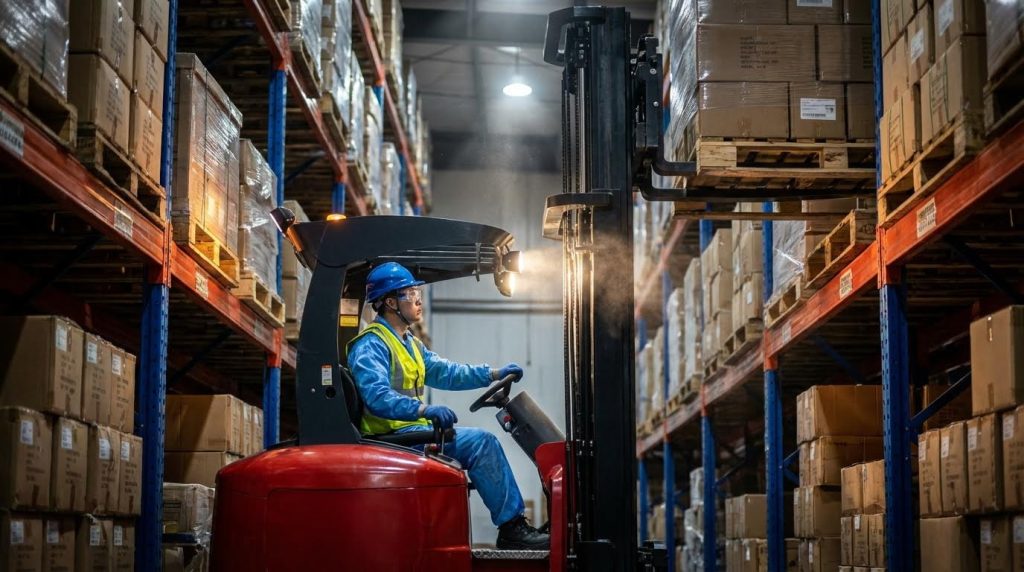
Engineering limits on how many fully loaded pallets manual pallet jack lift safely come from load moment, stability geometry, and dynamic forces, not just the truck’s printed capacity. Multi‑pallet moves always derate the true safe capacity.
When you add a second or third pallet, you push the load center forward, raise the combined center of gravity, and increase the overturning moment. That is why the same truck that handles one 1,000 kg pallet safely may be unsafe with two 800 kg pallets at full height.
💡 Field Engineer’s Note: In real warehouses, most tip‑overs in multi‑pallet work happened below full mast height but during braking or turning. The dynamic shift in center of gravity pushed the truck outside its stability triangle even though static calculations looked “OK on paper.”
Load moment, stability triangle, and tip‑over risk
Load moment and the stability triangle define the hard physics limit on how many fully loaded pallets a forklift can lift before tipping. Once the combined center of gravity moves outside that triangle, the truck goes over.
On a counterbalanced forklift, the front axle contact points and the center of the steer axle form the “stability triangle.” The truck stays upright only while the combined center of gravity of truck plus load stays inside this triangle. OSHA describes this stability triangle and tip‑over boundary.
The overturning tendency is the load moment: load weight multiplied by its horizontal distance from the front axle. For a rated capacity, that maximum allowable moment is fixed. If you push the load further forward with extra pallets, you must reduce total weight to keep the moment within that limit. OSHA’s example shows a 3,000 lb capacity at 24 in giving a 72,000 in‑lb maximum load moment.
- Stability triangle: Three suspension points form the base – all multi‑pallet handling must keep the combined center of gravity inside this footprint.
- Load moment: Weight × distance from front axle – adding pallets increases distance, so allowed weight must drop.
- Longitudinal stability: Forward tipping around the front wheels – over‑moment here causes loss of steering and nose‑down tip‑over.
- Lateral stability: Sideways shift of the center of gravity – turning with raised or offset pallets can push the line of action outside the triangle.
- Heaviest mass near mast: Place the densest pallet closest to the carriage – this shortens the effective load center and improves stability.
Why a second pallet is more dangerous than a heavier single pallet
Two pallets placed nose‑to‑tail usually move the combined center of gravity further forward than a single heavier pallet stacked low and tight to the mast. That extra distance multiplies the overturning moment even if the total mass is similar, which is why multi‑pallet handling derates capacity faster than many operators expect.
Calculating safe capacity when load center increases
Safe multi‑pallet capacity is calculated by derating the truck’s stated capacity using the increased load center distance for the combined pallets. You keep the same maximum moment but reduce the allowable weight.
Standards rate most warehouse trucks at a nominal load center, often 600 mm (24 in) for capacities up to about 13,600 kg. If you extend the load further forward with two pallets, the actual load center might increase to 800–900 mm. OSHA provides a simple field formula to estimate the new safe capacity when the load center increases: (rated load center ÷ actual load center) × stated capacity. OSHA shows this method and gives examples of derated capacity at longer load centers.
| Rated capacity example | Rated load center | Actual load center with extra pallet | Approx. safe capacity | Operational impact for how many fully loaded pallets forklift lift |
|---|---|---|---|---|
| 2,000 kg at 600 mm | 600 mm | 900 mm | (600/900) × 2,000 ≈ 1,333 kg | Two 700 kg pallets (1,400 kg total) would exceed this derated capacity – unsafe to carry both fully loaded. |
| 2,500 kg at 600 mm | 600 mm | 800 mm | (600/800) × 2,500 ≈ 1,875 kg | Safe combined load is about 1,875 kg, so three 650 kg pallets are borderline and need reduction. |
| 3,000 kg at 600 mm | 600 mm | 1,000 mm | (600/1,000) × 3,000 ≈ 1,800 kg | Even with a “3 t” truck, two 1,000 kg pallets out front can be unsafe at this reach. |
OSHA’s worked example shows a 5,000 lb (≈2,270 kg) truck at 24 in (610 mm) load center derating to 4,285 lb (≈1,943 kg) at 28 in (710 mm) using this same formula. This illustrates how a modest increase in load center significantly reduces safe weight.
- Step 1: Read rated capacity and load center from the data plate – this gives you the allowed maximum moment.
- Step 2: Measure actual load center of the multi‑pallet stack – from the fork face to the combined center of gravity.
- Step 3: Apply OSHA formula (rated LC ÷ actual LC × rated capacity) – this estimates new safe total load.
- Step 4: Compare to sum of pallet weights – reduce pallet count or weight until total is below derated capacity.
- Step 5: Add a safety margin for dynamic effects (10–20%) – because braking, bumps, and tilt increase effective moment.
How to estimate the combined load center for two pallets
For two equal pallets placed nose‑to‑tail on the forks, approximate the combined center of gravity at the midpoint between the two pallet centers. If the first pallet center is 600 mm from the fork face and the second is 1,200 mm, the combined center is around 900 mm. Use that 900 mm value as your “actual load center” in the derating formula.
Dynamic effects when traveling with stacked pallets
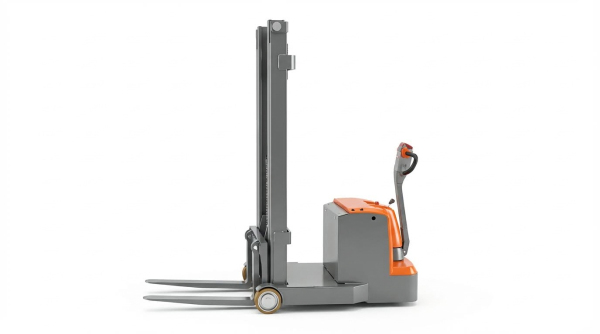
Dynamic effects from acceleration, braking, turning, and mast movement further limit how many fully loaded pallets drum dolly lift safely, even if static calculations look acceptable. Motion shifts the center of gravity and can push it outside the stability triangle.
OSHA notes that dynamic forces such as moving, braking, cornering, lifting, tilting, and lowering alter the truck’s stability. These actions shift the line of action of the combined center of gravity relative to the stability triangle. A configuration that is just inside the limit when stationary can cross the boundary during a sudden stop or sharp turn.
- Braking with multiple pallets: Forward inertia throws the load’s center of gravity toward the tips – effective load center increases, so the overturning moment spikes.
- Cornering: Centrifugal force shifts the center of gravity sideways – this attacks lateral stability and can cause side tip‑over, especially with raised or stacked pallets.
- Rough floors and dock plates: Bumps cause vertical oscillation of the load – this amplifies dynamic forces on mast, pallets, and forks.
- Raising stacked pallets: Higher load means a higher center of gravity – this reduces both longitudinal and lateral stability margins.
- Mast tilt misuse: Tilting forward with multiple pallets raised – this projects the center of gravity outward and can instantly exceed the stability triangle.
Best practice is to carry multi‑pallet loads low (typically 100–150 mm above floor) with a slight rearward tilt, as engineering guidance on pallet handling recommends. Guidance also stresses keeping the heaviest part of the load against the carriage and using controlled speeds. When you add more pallets, you must slow down further and avoid tight turns to preserve stability.
Practical travel rules for multi‑pallet handling
Keep the combined load as low as practical, avoid sudden braking, and take wide, gentle turns. Do not raise stacked pallets while turning, and never travel with the mast tilted forward. If the derated capacity is already close to the combined pallet weight, treat that configuration as “static only” for short, straight moves and avoid ramps, uneven floors, or dock plates.
Choosing Equipment And Practices For Multi‑Pallet Moves
This section explains how to choose the right forklift, attachment, and site practices so you can decide how many fully loaded pallets forklift lift safely in your operation without exceeding real stability and infrastructure limits.
When to use single, double, or multi‑pallet attachments
You choose single, double, or multi‑pallet attachments based on rated capacity at the new load center, aisle width, and the structural limits of pallets, floors, and racks.
- Single-pallet forks: Standard carriage with two forks – Best for heavy or unstable loads where you must keep the load center close and capacity high.
- Double-pallet (side-by-side) attachments: Fork positioners or dual-fork carriages – Suited for two moderate pallets where combined mass and wider load center still fit data plate limits.
- Multi-pallet (2–4 pallets) attachments: Specialized multi-fork or telescopic devices – Only for light, uniform pallets, with careful derating and very flat floors.
- Attachment derating: Any clamp, extender, or multi-pallet device adds weight and moves the load forward – This reduces the effective capacity versus the base truck rating.
- Visibility and control: More pallets increase blind spots and inertia – Requires lower travel speed and higher operator skill to keep stability inside the stability triangle.
The practical limit for how many fully loaded pallets forklift lift at once depends on load center. If the actual load center is larger than the rated load center, you must derate capacity using (rated load center ÷ actual load center) × stated capacity. OSHA shows this derating method for extended load centers. As you add pallets in front or side-by-side, the combined center of gravity shifts forward or sideways; if the resulting load moment exceeds the truck’s maximum load moment, the truck will tip. OSHA stability guidance explains that exceeding the allowable load moment moves the center of gravity outside the stability triangle and causes tipover.
| Configuration | Typical Use Case | Load Center Effect | Operational Impact |
|---|---|---|---|
| Single pallet on standard forks | Heavy or high-value loads | Close to rated load center (e.g., 500 mm) | Maximum available capacity and best stability; suitable for near-rated loads. |
| Two pallets side-by-side | Fast loading of light/medium pallets | Wider overall load; similar forward load center | Higher lateral instability and visibility issues; only safe if combined mass is well below rated capacity. |
| Two pallets front-to-back (extended forks) | Deep lane or trailer loading | Much larger forward load center | Capacity drops sharply with distance; often limited to light pallets only. |
| Three or more pallets with special attachment | Very high-throughput, uniform light goods | Large forward and/or lateral shift | Requires engineered study, strict derating, and excellent floors; not suitable for heavy pallets. |
💡 Field Engineer’s Note: In real warehouses, the limiting factor on multi-pallet moves is often floor flatness and small ramps. Even a 1–2% slope or dock plate lip can push a near-limit multi-pallet move past the stability triangle when braking or turning.
How attachment weight silently eats your capacity
Every kilogram of attachment weight sits in front of the mast and consumes part of the truck’s rated load moment. A heavy multi-pallet attachment can easily remove several hundred kilograms from the allowable pallet weight even before you extend forks or add extra pallets.
Pallet, floor, and rack strength checks before lifting
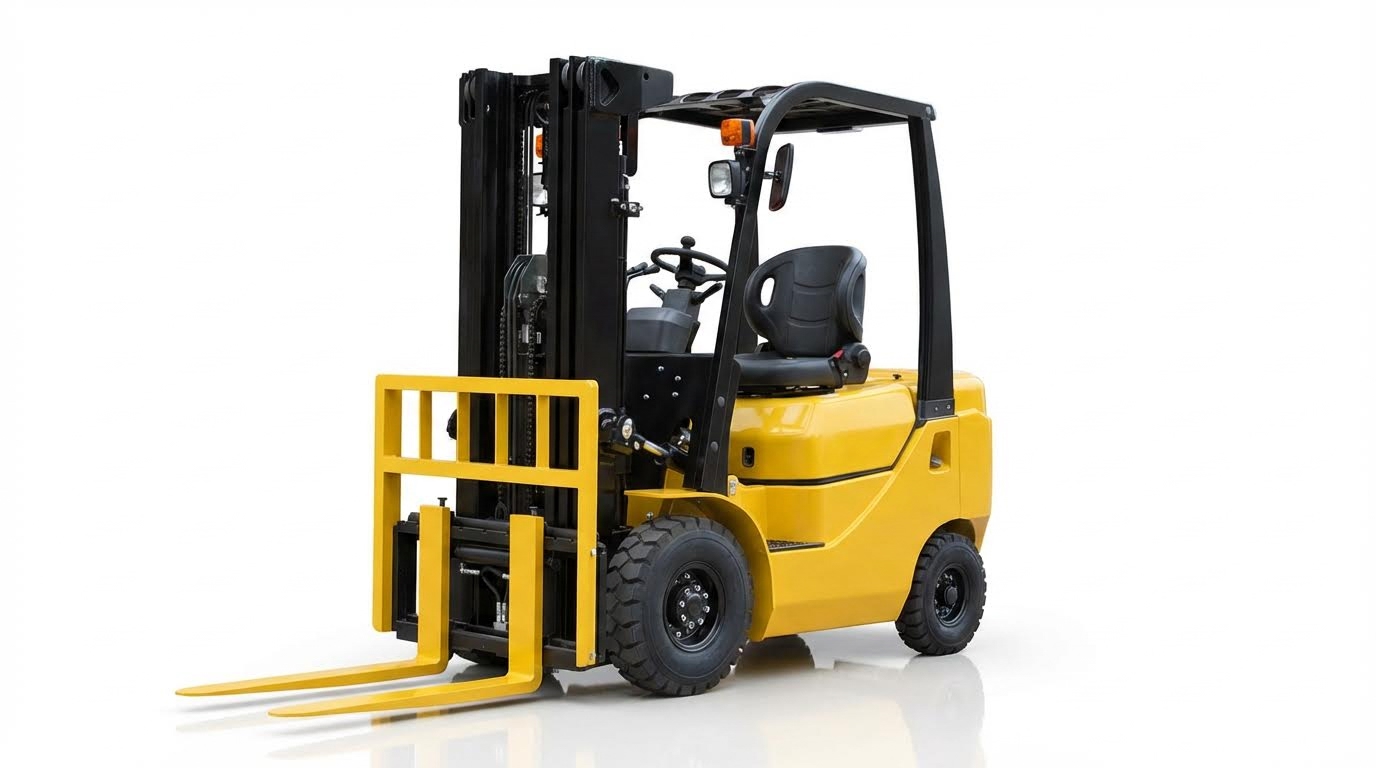
You must verify pallet integrity, floor load capacity, and rack ratings before deciding how many fully loaded pallets forklift lift together, because structural failures often occur before the forklift itself reaches its stability limit.
- Pallet condition: Reject pallets with cracked stringers, broken deck boards, decay, or warping – They can collapse suddenly under bending load.
- Load distribution: Keep the load fully supported on the pallet footprint and both forks – Avoid overhang and point loading that spike bending stresses.
- Floor capacity: Confirm slab and dockboards can carry the combined mass of truck plus multiple pallets – Prevents slab cracking and dockboard failure.
- Rack capacity: Check posted rack ratings against total pallet mass per level and per bay – Stops beam or upright buckling when storing multiple heavy pallets.
- Pre-lift assessment: Inspect packaging, wrapping, and strapping – Weak unit loads can shear or slide when you brake or turn with more than one pallet.
Engineering guidance stresses that pallets must provide sufficient bending strength and stiffness for the intended load and fork spacing, and that damaged pallets with cracked members or visible warping should be removed from service because they reduce capacity and may fail without warning. Engineering best-practice guidance highlights pallet strength, damage criteria, and the need for even load distribution across deck boards and both forks. The same source notes that floors, dockboards, and bridge plates must support the combined weight of the forklift and load, with engineers checking slab-on-grade capacity against concentrated wheel loads and ensuring dockboards have rated capacities above imposed axle loads. Racking systems also require inspection for bent uprights, damaged bracing, and correct beam engagement, with posted capacities matching the heaviest palletized loads.
| Element | What to Check | Failure Mode if Ignored | Best For… |
|---|---|---|---|
| Pallet | Cracked stringers, broken boards, warping, decay | Sudden pallet collapse under forks | Deciding if a pallet is safe for double-pallet handling. |
| Floor / Dock | Posted load limits, visible cracking, dockboard rating and locking | Slab cracking, dockboard bending or breakage | Planning routes for multi-pallet runs with heavy forklifts. |
| Rack | Beam capacity labels, bent uprights, missing safety clips | Beam deflection or upright buckling under stacked pallets | Choosing which levels can safely hold multiple heavy pallets. |
| Unit load | Stretch wrap, straps, interlocked layers, overhang | Load shift or collapse during braking/turning | Judging whether a pallet can travel safely in a multi-pallet move. |
Quick pre-lift checklist before multi-pallet moves
- Step 1: Confirm forklift data plate rating with attachment installed – Ensures you know the true derated capacity.
- Step 2: Inspect all pallets for structural damage – Removes weak links before they fail under combined load.
- Step 3: Verify floor, dock, and rack limits along the route – Prevents overloading infrastructure.
- Step 4: Estimate total pallet mass and effective load center – Checks that total load moment stays below the truck’s maximum.
- Step 5: Plan a low-speed route with minimal ramps and tight turns – Reduces dynamic instability with multiple pallets.
💡 Field Engineer’s Note: In many incident investigations, the forklift was technically within its rated capacity, but a marginal pallet or under-rated dockboard failed first. Treat pallets, racks, and docks as part of the lifting system, not background scenery.
Final Thoughts On Multi‑Pallet Forklift Safety And Productivity
Safe multi‑pallet handling is not about how strong the truck looks. It depends on hard limits set by load moment, load center, and the stability triangle. Every extra pallet pushes the center of gravity forward or sideways. That change cuts real capacity long before you hit the “tonnage” painted on the counterweight.
Operations teams must start with the data plate, then derate for attachments, pallet geometry, and longer load centers. Engineers should treat pallets, floors, docks, and racks as parts of one lifting system. The system only stays safe if each element carries its share without overload or damage.
In practice, this means you often move one fully loaded pallet at a time, unless pallets are light and geometry is verified. When you do run multi‑pallet moves, keep loads low, travel slowly, avoid sharp turns, and keep the heaviest pallet tight to the mast. Build simple rules into site procedures and training, and enforce them.
The best outcome is clear: use engineering calculations to set pallet limits, then lock those limits into daily practice. That approach protects people, product, and equipment while letting Atomoving solutions deliver higher throughput without trading away safety.
Frequently Asked Questions
How many fully loaded pallets can a forklift lift?
The number of fully loaded pallets a forklift can lift depends on the forklift’s rated capacity and the weight of each pallet. Most forklifts have a rated capacity ranging from 3,000 lbs to over 158,000 lbs Forklift Weight Capacity Guide. For example, a forklift with a 3,000 kg (6,613 lbs) capacity can typically lift one or two fully loaded pallets, assuming each pallet weighs around 1,000-1,500 kg (2,204-3,306 lbs).
- Electric reach trucks can handle 3,000–4,500 lbs.
- Internal combustion forklifts can lift between 3,000 lbs and 158,500 lbs.
What is the maximum weight a forklift can safely lift?
The maximum weight a forklift can safely lift is specified on its nameplate, which indicates the manufacturer’s guidelines. For instance, a forklift might have a capacity of 4,500 lbs with certain attachments OSHA Forklift Guidelines. Exceeding this capacity can lead to serious hazards like tip-over. Always check the nameplate or consult the manufacturer’s manual for exact figures.