This guide explains how to change a fuel filter on a diesel forklift safely, using shop-proven procedures and simple checks. You will learn why filters matter, what tools and PPE you need, and each step from draining to priming and final leak checks. The focus is on preventing fires, spills, hard-start faults, and injector damage while keeping your diesel forklift reliable and compliant on site.
Why Diesel Forklift Fuel Filters Matter
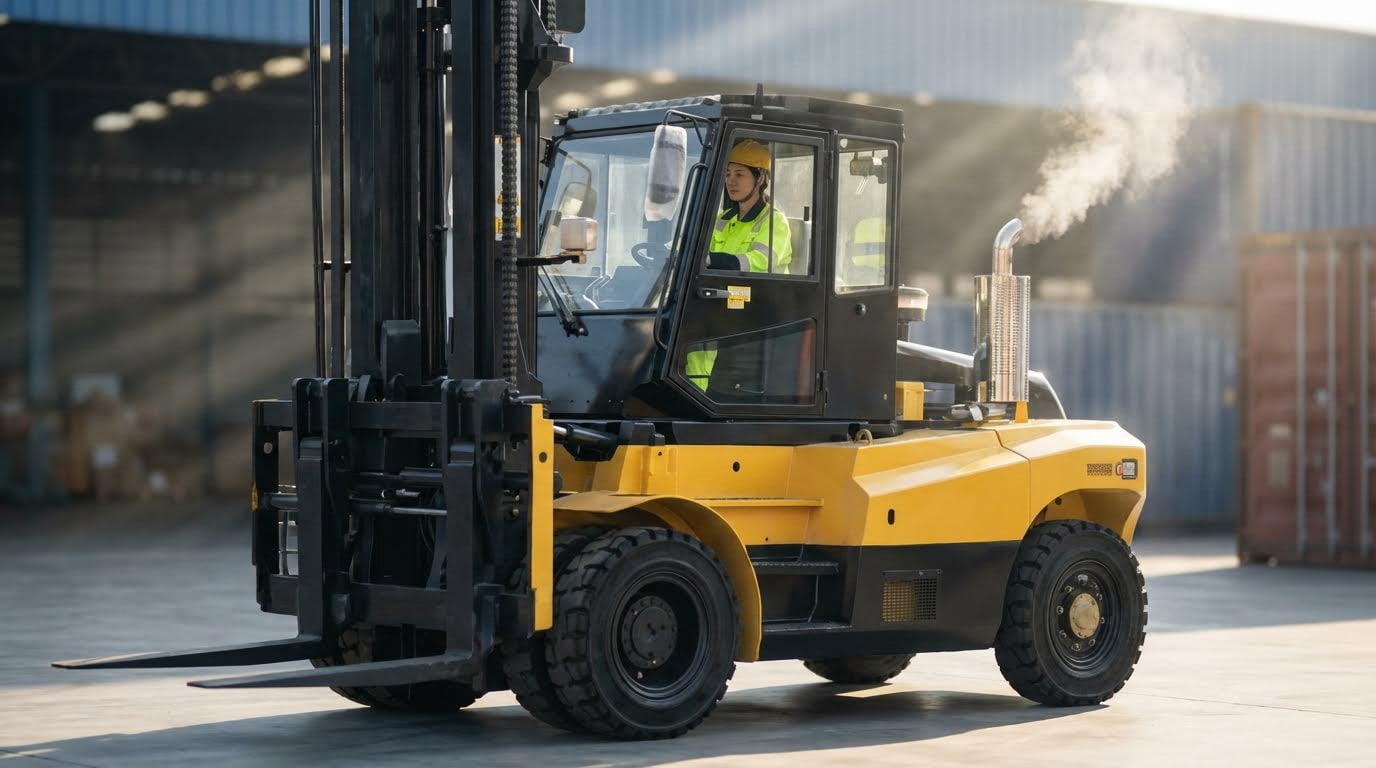
Diesel forklift fuel filters matter because they protect the high‑pressure injection system from dirt, rust, and water, preventing power loss, breakdowns, and expensive injector damage. Understanding this is the first step in learning how to change fuel filter on diesel forklift safely and correctly.
Diesel engines rely on very fine injector clearances and high fuel pressures. Even particles of a few microns can score components and distort spray patterns, so clean fuel is not optional, it is critical for reliability and emissions. A clogged or neglected filter restricts flow, causing hard starting, stalling, and increased exhaust smoke as combustion quality falls. Regular filter changes keep the engine within design performance, reduce unplanned downtime, and extend service life. They also help the truck meet site emission targets by supporting complete combustion and lower particulate output.
| Fuel Filter Benefit | What It Does Technically | Operational Impact On Forklift |
|---|---|---|
| Protects injectors | Removes dirt, rust and water before fuel reaches precision nozzles fuel filter function | Fewer injector failures; more consistent lifting power under load. |
| Maintains fuel flow | Prevents blockage that would restrict fuel delivery to the pump and rail clogged filter effects | Reduces engine stalling when climbing ramps or lifting near capacity. |
| Improves combustion | Ensures steady, clean fuel for complete burn in each cycle fuel efficiency | Lower fuel consumption per pallet moved; cleaner exhaust in warehouses. |
| Reduces emissions | Avoids incomplete combustion that raises particulates and CO emissions impact | Helps comply with site air‑quality rules, especially indoors or near docks. |
| Prevents unplanned downtime | Stops progressive restriction that leads to sudden no‑start conditions neglect consequences | Keeps trucks available during peak shifts; fewer emergency service calls. |
Most manufacturers specified replacement intervals in the range of 16,000–40,000 km equivalent operating distance, adjusted for fuel quality and dust levels replacement intervals. For forklifts, that often translates into a set number of operating hours, but the principle is the same: do not wait for symptoms. Difficulty starting, loss of power under acceleration, rising fuel use, or pump noise are all late‑stage warning signs that the filter is overdue and the system is already stressed signs of a bad filter.
- Clean fuel supply: Removes solids and water before injection – prevents abrasive wear and corrosion inside the pump and rail.
- Stable engine power: Maintains required flow at all speeds – avoids sluggish lifting and travel when the truck is hot or under load.
- Lower lifecycle cost: Sacrificial filter takes the damage – much cheaper to replace than injectors or high‑pressure pumps.
- Predictable maintenance: Scheduled changes – lets you plan downtime instead of reacting to breakdowns.
💡 Field Engineer’s Note: On fleets that run many short cycles, I often see filters neglected because the truck “still feels strong.” By the time operators complain, restriction is severe and the pump is running hotter than it should. Treat fuel filters as time‑based components, not symptom‑based.
How this section helps with how to change fuel filter on diesel forklift
Before you touch a spanner, you must know why the filter is there and what failure symptoms look like. That way, when you change the filter you can read the debris, understand root causes, and decide if further fuel‑system checks are needed.
Role Of The Fuel Filter In Diesel Injection
The fuel filter’s role in diesel injection is to deliver clean, air‑free diesel at stable pressure to the injection system, so every nozzle can meter and atomize fuel correctly. Without effective filtration, even a perfect “how to change fuel filter on diesel forklift” procedure will not prevent progressive injector damage if the filter is undersized, overdue, or bypassed.
Modern diesel forklifts use high‑pressure injection with very fine tolerances. The filter removes dirt, rust, and other impurities before fuel reaches these precision parts filter function. It also helps separate water, which would otherwise cause corrosion and poor lubrication inside the pump. By maintaining a clear flow path, the filter supports correct injection timing and spray pattern, which directly control torque, fuel use, and smoke. When the element clogs, pressure drop increases, the pump works harder, and the engine may starve for fuel at higher loads, leading to stalling or misfire stalling problems.
| Function In Injection System | What The Filter Is Doing | What You See On The Truck |
|---|---|---|
| Particle removal | Traps hard particles before the pump and injectors | Smoother idle; fewer misfires; consistent lift speed at rated load. |
| Water control | Separates and stores water away from fuel path | Less corrosion; fewer cold‑start issues and injector sticking. |
| Flow stabilization | Maintains design flow area through clean media | Normal acceleration and travel speed, even up ramps or on gradients. |
| System protection | Acts as sacrificial barrier for the entire fuel circuit | Longer pump and injector life; reduced need for major overhauls. |
During a filter change you are briefly opening the closed fuel circuit. That is why good practice includes relieving pressure, catching drained fuel, and then bleeding or priming the system to remove trapped air change steps. Air pockets in a high‑pressure diesel system cause rough running or no‑start conditions until they are purged. Understanding this interaction helps you diagnose whether a post‑service no‑start is due to air, remaining contamination, or an unrelated fault.
- Before the pump: Filter protects the low‑pressure side – reduces wear on transfer and high‑pressure pumps.
- Before the rail/injectors: Filter ensures clean supply – keeps spray patterns sharp and combustion efficient.
- During priming: Filter housing becomes an air trap – must be properly bled to restore normal operation.
💡 Field Engineer’s Note: In cold warehouses, diesel thickens and any restriction across a dirty filter becomes more severe. A truck that ran “OK” in summer can suddenly stall under load in winter. If you see seasonal hard‑starting, check filter condition and water content first.
Link to the practical change procedure
When you later follow the detailed steps on how to change fuel filter on diesel forklift, remember that every action—draining, swapping, priming—is about keeping this injection system supplied with clean, bubble‑free fuel at the right pressure.
Primary, Secondary Filters And Water Separators
Primary and secondary fuel filters, plus water separators, work together as a staged defense system that removes larger debris, fine particles, and water before diesel reaches the injectors. Knowing which unit does what is essential when planning how to change fuel filter on diesel forklift and deciding which elements to replace or drain.
Many diesel systems use at least two filtration stages. The primary filter, often mounted near the tank or along the frame, captures larger particles and a significant share of water. The secondary filter, usually closer to the engine, provides finer filtration and protects the injection components from very small contaminants filter types. Dedicated water separators focus on removing and storing water, sometimes with a clear bowl or drain so you can empty collected water without changing the element. This staged approach spreads the load, so one cheap, coarse element takes most of the dirt, leaving the fine element to deal with what gets through. It also allows operators to perform quick water drains between full filter changes when contamination is high.
| Component | Typical Role | What You Do During Service | Best For… |
|---|---|---|---|
| Primary fuel filter | Coarse filtration and initial water removal before lift pump | Inspect bowl, drain water, replace element at scheduled interval | Protecting the whole system from tank rust and large debris. |
| Secondary fuel filter | Fine filtration just before high‑pressure pump/injectors | Replace element carefully, bleed air, verify no leaks | Maximizing injector life and stable engine performance. |
| Water separator | Dedicated water removal and storage | Drain collected water regularly; inspect for recurring contamination | Sites with humid climate, old tanks, or frequent fuel deliveries. |
Technically, the micron rating of the primary filter is higher (coarser), while the secondary is lower (finer). While specific values depend on OEM design, the concept is that the primary takes the bulk contamination load so the secondary does not clog prematurely. Water separators often sit at the lowest point in the system to take advantage of diesel’s lower density compared to water. Many separators and primary filters include drain plugs or cocks that allow controlled draining into a pan before you remove the element, reducing spills and fire risk draining the fuel system.
- Primary filter/water separator: First line of defense – keeps tank sludge and bulk water out of the fine filter.
- Secondary filter: Final polish before injection – captures the smallest particles that cause precision wear.
- Clear bowls and drains: Visual and manual control – let you manage water without full disassembly.
- Staged service plan: Different intervals – you may drain water weekly but change elements by hours or distance.
💡 Field Engineer’s Note: When I open a secondary filter and find heavy rust or sludge, I know the primary or separator is not doing its job, or service intervals are wrong. Always compare contamination levels between stages; it tells you where in the system the fuel is getting dirty.
How this guides real-world filter changes
When you plan how to change fuel filter on diesel forklift, confirm if your truck has both primary and secondary filters plus a water separator. You may need to service more than one unit in the same job to truly restore clean fuel supply.
Safety, Tools And Pre-Work Preparation
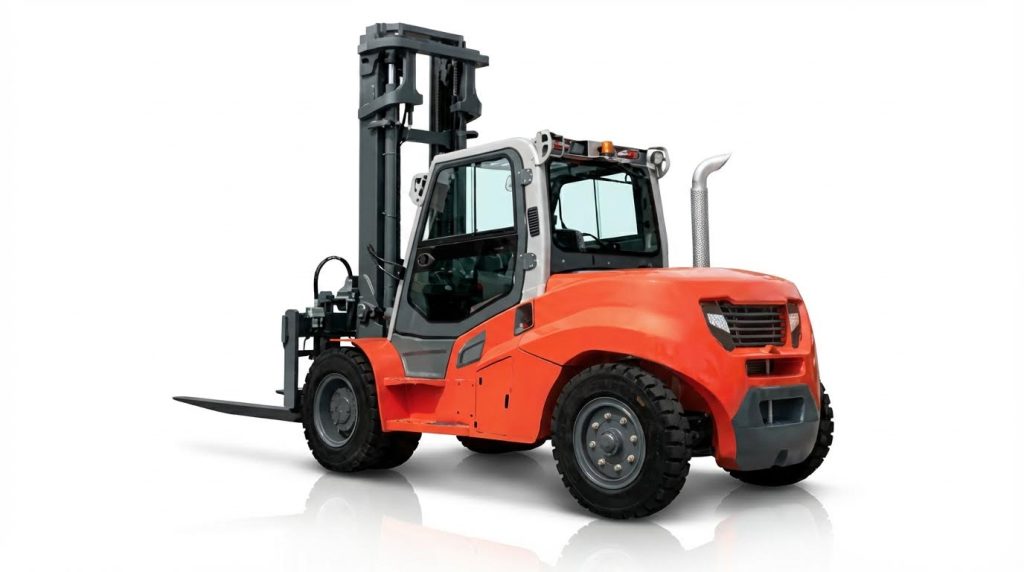
This section explains how to change fuel filter on diesel forklift safely by locking out energy, controlling fire risk, using the right PPE, and preparing tools and data before you touch the fuel system.
Most incidents during fuel filter changes come from poor preparation, not the filter itself. Lock the truck out, control vapours and ignition sources, then lay out tools, spill kits and documentation before you crack a single fitting.
Lockout, Ventilation And Fire Safety Controls
Lockout, ventilation and fire controls prevent fuel vapour ignition and unexpected truck movement while you work on the diesel fuel system.
- Secure the truck: Park on level ground with the parking brake fully applied – Prevents roll-away while you work under the counterweight or mast. Parking on level ground with brake set is a core safety step.
- Engine lockout: Turn key off, remove it, and apply a lockout/tag if your site requires – Stops anyone starting the engine while lines are open.
- Hydraulic neutral: Lower forks to floor, tilt mast forward, controls to neutral – Removes stored energy and improves stability.
- Ventilation: Work outdoors or in a well‑ventilated bay – Disperses diesel vapours and reduces inhalation and explosion risk. Working away from ignition sources and with good airflow is a key safety precaution.
- No ignition sources: Ban smoking, open flames, grinding and welding nearby – Prevents vapour ignition when you open the filter housing.
- Fire extinguisher: Keep a suitable extinguisher within 5 m – Gives immediate response if fuel contacts a hot surface or electrical source. Keeping an extinguisher nearby was recommended for fuel filter changes.
- Fuel pressure relief: Follow OEM procedure to relieve pressure before loosening any fittings – Reduces atomised spray and splash risk. Relieving fuel system pressure is a standard step before filter removal.
Where to position the forklift during a filter change
Choose a flat, hard surface with at least 1.5 m clear space on both sides of the engine compartment. Avoid pits or drains where spilled diesel could run, and keep clear access to exits and fire equipment.
💡 Field Engineer’s Note: In tight workshops, exhaust fans alone are not enough. Diesel vapours can pool at floor level around pits and drains. Use low‑level extraction or simple floor fans to sweep vapours away from where you kneel to open the filter housing.
PPE, Spill Control And Environmental Compliance
PPE, spill control and waste handling protect technicians from skin/eye exposure and keep diesel and used filters out of drains and soil.
- Eye protection: Wear safety glasses or goggles – Stops splash injuries when you crack the drain plug or lines. Safety glasses are specified for fuel filter replacement.
- Hand protection: Use chemical‑resistant gloves – Prevents dermatitis from repeated diesel contact. Gloves are recommended to avoid contact with diesel fuel.
- Workwear: Wear long sleeves and non‑melting fabric – Reduces skin exposure and improves fire resistance. Appropriate clothing is listed as a basic precaution.
- Spill pan: Place a low drain pan under the filter housing – Catches the expected 0.2–1.0 L of diesel when you drain the bowl. Using a drain pan under the housing drain plug is standard practice.
- Absorbent pads or granules: Stage absorbent material around the work area – Allows fast clean‑up of drips from disconnected lines. Absorbent materials are recommended for managing fuel spills.
- Waste containers: Use a labelled, sealed container for the old filter and soaked rags – Prepares them for disposal as hazardous waste under local rules. Proper disposal of fuel‑soaked materials is required by regulations.
- Drain protection: Cover nearby floor drains before you start – Prevents even small spills from entering the sewer system.
Environmental checklist before opening the fuel system
Confirm spill kit present and in date, drains covered, waste container ready, and local hazardous‑waste contractor or collection point identified. Never start a diesel forklift filter change if you have nowhere legal to send the waste fuel and filters.
💡 Field Engineer’s Note: Many workshops underestimate how much fuel sits in a large spin‑on or bowl‑type filter. Always assume at least 0.5 L will come out. If your spill pan only holds 1–2 L and is already half full from other work, you are one bump away from a floor‑wide spill and an environmental report.
Required Tools, Torque Data And OEM References
Having the correct tools, torque values and OEM information ready makes how to change fuel filter on diesel forklift faster, prevents damaged fittings, and keeps the warranty intact.
| Item | Typical Use | Operational Impact |
|---|---|---|
| Open/box spanners and socket set | Loosen clamps, housing bolts and line fittings | Prevents rounding fittings when disconnecting fuel lines. Correct tools avoid fitting damage during disconnection. |
| Torque wrench (small range) | Torque housing bolts and banjo bolts to OEM spec | Prevents leaks and stripped threads when tightening the new filter and lines. Bolts should be tightened to specified torque. |
| Drain pan (≥5 L capacity) | Collect fuel from housing drain and filter | Allows full, controlled draining of the housing before filter removal. |
| Screwdrivers / hose pick tools | Ease hoses off barbs without tearing | Reduces risk of splitting older fuel hoses during removal. |
| OEM service manual or data sheet | Provides torque data, priming sequence, and filter type | Ensures you follow the correct procedure for that model and maintain warranty. |
| Replacement fuel filter (OEM‑approved) | New primary/secondary cartridge or spin‑on | Correct micron rating protects injectors and pump from contaminants. Primary and secondary filters provide staged filtration. |
| Clean diesel fuel in small container | Lubricate O‑rings and pre‑wet seals | Helps the new filter seal correctly and avoid O‑ring damage. Light diesel coat on O‑ring is recommended. |
- Torque data: Always take torque values from the truck’s service manual or OEM data plate – Prevents overtightening small M6–M10 fasteners on housings and banjo bolts. Housing bolts should be tightened to the specified torque.
- Filter identification: Confirm primary vs secondary and any water separator function before removal – Ensures you replace the correct element in multi‑stage systems. Diesel systems may use primary, secondary and water separator units.
- Priming method: Check whether the truck uses a hand primer, automatic pump or ignition‑cycle priming – Determines how you bleed air after the new filter is installed. Cycling the ignition to prime is one common method.
Documentation to have on hand before you start
Print or open the OEM service procedure for fuel filter replacement, the parts diagram showing the fuel circuit, and the maintenance schedule. This ensures your work aligns with recommended replacement intervals and correct priming and leak‑check steps.
💡 Field Engineer’s Note: On older fleets, torque values and even priming steps are often missing from the truck. I keep a digital library of OEM PDFs on a tablet. Five minutes spent pulling the right data before the job regularly saves 30 minutes of rework chasing tiny leaks or no‑start complaints afterward.
Step-By-Step Fuel Filter Change Procedure
This section explains how to change fuel filter on diesel forklift in a safe, repeatable way that protects injectors, prevents leaks, and minimizes downtime. Follow each step in order and always cross-check with the truck’s service manual.
- Goal: Replace the fuel filter without introducing air or dirt – Prevents hard starting and injector wear.
- Method: Work “clean to dirty” (new parts last) – Reduces contamination risk.
- Reference: Always confirm locations, torque and priming method in the OEM manual – Ensures warranty and safety compliance.
💡 Field Engineer’s Note: Plan the job when the tank is under half full. A nearly full tank increases static head pressure at the filter, so you get more uncontrolled fuel flow when lines are opened.
Locating And Identifying The Fuel Filter Assembly
This step helps you quickly find the diesel fuel filter assembly so you do not disconnect the wrong component or damage the injection system.
- Typical Locations: Engine bay, chassis rail, or near the fuel tank – Reduces fuel line length and suction losses.
- Visual ID: Cylindrical canister with fuel lines, sometimes clear bowl or drain – Makes water and dirt visible for inspection.
- Label Check: Look for “fuel filter,” “primary,” “secondary,” or water symbol – Prevents confusion with hydraulic or oil filters.
- Line Tracing: Trace from tank outlet forward to the engine – Confirms you are on the correct fuel circuit.
The fuel filter on most diesel forklifts is a cylindrical component with connected fuel lines and sometimes a transparent bowl or a drain/relief feature. It may be engine-mounted, frame-mounted or located near the tank. Confirm primary vs secondary vs water separator using the parts diagram.
How to confirm you have the correct filter
Match the part number on the canister or head with the parts list. Where the print is worn, use the truck serial number and engine model to cross-check the correct primary/secondary filter in the parts catalogue before loosening anything.
Draining The Filter Housing And Managing Spilled Fuel
This step removes fuel and water from the housing in a controlled way so you avoid uncontrolled spills, skin contact, and fire hazards.
- Containment: Place a low, stable drain pan under the housing – Catches several hundred millilitres of fuel safely.
- Drain Point: Use the drain plug or petcock at the lowest point – Lets water and sludge exit first.
- Flow Control: Open the drain slowly – Prevents splash and static spray.
- Waste Handling: Transfer drained fuel to an approved waste container – Meets environmental rules.
Most diesel forklift filter housings have a drain plug or valve at the bottom. Position a drain pan beneath, then open the plug carefully to let fuel and water flow out. Keep absorbent pads ready around the work area to capture drips.
💡 Field Engineer’s Note: If the truck worked in rain or cold storage, expect significant water in the bowl. Drain until clean diesel appears; if you still see cloudy fuel, plan a tank drain and water check to prevent repeat filter clogging.
What to do with drained diesel
Do not pour drained diesel into the tank. Store it in a marked waste fuel container and dispose of it through your site’s hazardous waste contractor according to local regulations.
Disconnecting Fuel Lines Without Damaging Fittings
This step explains how to disconnect fuel lines cleanly so you avoid cracked fittings, stripped threads, and air leaks that cause hard starting.
- Tool Choice: Use correct-size spanners on hex fittings or proper hose clamp tools – Prevents rounding and crushing.
- Line Support: Support the opposite fitting with a backup wrench – Stops twisting of pipes and brackets.
- Clamp Release: Loosen clamps just enough to slide hoses off – Reduces hose damage.
- Contamination Control: Cap or plug open lines – Keeps dirt and insects out of the system.
To disconnect the lines, loosen the clamps or fittings with a wrench and carefully pull the lines free. Use absorbent material directly under the joints to catch any residual fuel and immediately wipe spills from painted surfaces to avoid softening paint.
💡 Field Engineer’s Note: On older trucks, plastic barbs and nylon lines become brittle. Warm the area slightly with ambient air (not open flame) and twist hoses gently to break the seal before pulling, otherwise barbs snap and you inherit a bigger repair.
How to plug open fuel lines
Use clean plastic caps, purpose-made fuel line plugs, or short clean bolts wrapped in fuel-safe tape inserted into hoses. Avoid rags stuffed into lines; fibres can migrate downstream and block injectors.
Removing The Old Filter And Inspecting Contaminants
This step covers safe removal of the old element and shows you how to “read” the filter for early warning signs of fuel system problems.
- Step 1: Confirm lines and wiring are free – Prevents stretching harnesses when the filter drops.
- Step 2: Use the correct wrench or strap to loosen the canister or housing bolts – Avoids cracking the head casting.
- Step 3: Lower the filter vertically into the drain pan – Reduces spillage over the engine.
- Step 4: Cut or open the element (if allowed) to inspect media – Reveals rust, sludge or microbial growth.
According to service guidance, you should loosen the bolts securing the filter housing and remove the old filter, then inspect it for debris, water or contaminants. Heavy rust particles indicate tank corrosion, while black slime suggests microbial growth from water in the fuel.
| Observed Contaminant | Likely Cause | Operational Impact |
|---|---|---|
| Red/brown rust flakes | Corroded steel tank or lines | Ongoing injector wear and repeat filter blockage if tank not treated |
| Black sludge/gel | Diesel bug (microbial growth in water layer) | Random stalling and rapid filter clogging |
| Fine dust/sand | Poor fuel handling at site | Accelerated pump and injector wear |
| Large water volume | Condensation or contaminated deliveries | Hard starting, misfire, corrosion in high-pressure components |
💡 Field Engineer’s Note: Photograph unusual contamination and attach it to the maintenance record. It helps justify upstream fixes like tank cleaning or supplier changes when you show repeated evidence over several services.
When to escalate findings
If the filter is heavily loaded well before the normal interval, or water volume is more than a few percent of the bowl, schedule a tank inspection, check breathers, and consider sampling fuel for lab analysis.
Installing And Torquing The New Fuel Filter
This step ensures the new filter seals correctly and is tightened to the right torque so you avoid leaks, housing damage, and air ingress.
- Step 1: Verify part number and orientation arrows – Prevents reversed flow and bypassing.
- Step 2: Lightly oil the O-ring with clean diesel – Reduces friction and prevents seal twist.
- Step 3: Spin or insert until the seal contacts, then tighten to spec – Ensures uniform gasket compression.
- Step 4: Refit any water sensor or heater connectors – Restores full functionality.
Service instructions recommend coating the new filter O-ring with clean diesel, installing it into the housing and tightening bolts to the specified torque. Over-tightening can distort the head or crush the gasket; under-tightening leads to seepage and air draw on the suction side.
| Action | Typical Practice | Operational Impact |
|---|---|---|
| O-ring lubrication | Thin film of clean diesel fuel | Prevents gasket tearing and eases future removal |
| Tightening method | Hand-tight plus angle, or torque per OEM | Maintains seal without damaging threads |
| Pre-filling (if allowed) | Fill with clean, filtered diesel on outlet side | Reduces cranking time and air in system |
💡 Field Engineer’s Note: Many modern high-pressure systems do not want pre-filled filters because unfiltered fuel can enter the clean side. Follow the OEM manual strictly here; if in doubt, install dry and rely on the priming procedure.
About torque values
Torque values vary widely between designs. Never guess. Use the service manual or data plate, and apply torque with a calibrated wrench on housing bolts or central spigots where specified.
Reconnecting Lines, Priming And Leak Checking
This step restores the fuel circuit, removes air, and confirms there are no leaks before you put the forklift back into service.
- Step 1: Reconnect all hoses and fittings in their original positions – Prevents cross-connection.
- Step 2: Tighten clamps and nuts evenly – Ensures a leak-free seal under suction and pressure.
- Step 3: Use the manual primer or key-on electric pump to fill the filter – Pushes air back to the tank.
- Step 4: Visually check all joints for wetness – Detects weeps before they become drips.
After installing the new filter, reconnect the fuel lines securely and tighten clamps to prevent leaks. Then prime: turn the key to “On” without starting and cycle it several times so the electric pump fills the system. Check around the housing and line joints for any sign of seepage.
| Check Point | What To Look For | Best For… |
|---|---|---|
| Filter head | Dry around O-ring area | Confirm correct torque and seal condition |
| Hose barbs/unions | No wetness or bubbles during priming | Detect air ingress on suction side |
| Water sensor plug | No fuel wicking along wiring | Prevent hidden leaks into harness |
💡 Field Engineer’s Note: If you see tiny bubbles in a clear line during priming, stop and re-check every suction-side joint. Air leaks often do not show as fuel leaks but will cause hard starting and random stalling later.
Manual vs electric priming
Some forklifts use a hand primer on the filter head; others rely on an in-tank or inline electric pump. Never crank the engine for long periods to “self-prime”; you risk overheating the starter and draining the battery.
Post-Change Start-Up, Fault Checks And Documentation
This final step verifies engine performance after the filter change and records the work so you can track intervals and recurring issues.
- Step 1: Start the engine and let it idle – Confirms the system is bled and stable.
- Step 2: Listen and observe for 3–5 minutes – Catches misfire, rough idle or new noises.
- Step 3: Re-check all joints for leaks under running conditions – Verifies seals under vibration.
- Step 4: Record date, hours, parts used and observations – Builds a history for predictive maintenance.
Guidance on how to change fuel filter on diesel forklift recommends that after priming you start the forklift and, if it does not start immediately, repeat the priming process. Monitor for unusual sounds, poor response to throttle, or warning lights. If performance issues persist, check for air leaks or a weak pump.
- Hour Meter Entry: Log truck hours at replacement – Helps set practical change intervals for your site conditions.
- Contamination Notes: Record any rust, water or sludge found – Supports decisions on tank cleaning or fuel supplier changes.
- Next Due: Note the next planned change hours/km based on OEM guidance – Maintains consistent fuel system protection.
💡 Field Engineer’s Note: If you repeatedly see starting problems soon after filter changes, standardize your priming method across technicians and inspect the suction side for hairline cracks; the fault is often technique or a tiny air leak, not the filter itself.
Linking this job to wider maintenance
Combine fuel filter changes with checks of air filters, tank breathers and water drains. Treating the fuel system as one chain reduces unplanned downtime and keeps injection components running within design tolerances for longer life.

Final Thoughts On Safe, Efficient Filter Changes
Safe diesel forklift fuel filter changes depend on three linked elements: clean fuel, controlled hazards, and disciplined technique. Correct filtration protects high-pressure injectors from tiny particles and water, so trucks start easily, pull strongly, and stay within emission limits. Staged primary, secondary, and separator units only work when you service each part on time and read contamination to spot tank and fuel issues early.
Safety controls turn a messy task into a low-risk job. Lockout, ventilation, and fire protection stop small leaks becoming fires. PPE, spill pans, and waste handling keep fuel off skin and out of drains, which protects technicians and site compliance. The right tools, torque data, and OEM references prevent cracked housings, stripped threads, and air leaks that cause repeat call-backs.
A structured procedure then ties everything together. Drain and contain first, disconnect without damage, inspect the old element, install the new filter to spec, prime correctly, and verify for leaks under idle. Log hours, findings, and next due dates so the fleet follows time-based changes, not operator complaints. For Atomoving or any mixed fleet, standardize this method across sites. You will cut downtime, protect injection hardware, and keep every diesel forklift safe, reliable, and ready for work.
Frequently Asked Questions
How do you change the fuel filter on a diesel forklift?
Changing the fuel filter on a diesel forklift is a straightforward process, but it requires attention to detail. Start by turning off the forklift and letting the engine cool. Locate the fuel filter, which is typically found near the fuel tank or along the fuel line. Use a wrench to carefully remove the housing cap and take out the old filter.
- Ensure you have a suitable replacement filter that meets the manufacturer’s specifications.
- Before installing the new filter, apply a small amount of clean diesel fuel to the gasket to ensure a proper seal.
- Reassemble the housing and tighten the cap securely, but avoid over-tightening.
- Finally, bleed the fuel system to remove any trapped air, following the equipment manual’s instructions.
Always refer to the specific maintenance guidelines in your forklift’s manual. For more detailed steps, check this forklift maintenance guide.
What safety precautions should be taken when changing a fuel filter on a diesel forklift?
Safety is critical when performing maintenance on diesel forklifts. Always start by ensuring the forklift is turned off and has cooled down to prevent burns or injuries. Work in a well-ventilated area to avoid inhaling harmful fumes. Use appropriate personal protective equipment (PPE), such as gloves and safety glasses, to protect yourself from diesel spills and debris.
- Place a drip tray under the filter housing to catch any spilled fuel.
- Dispose of the used filter and fuel properly according to local environmental regulations.
- Double-check that all components are tightened correctly before restarting the engine.
For additional safety tips, see this forklift safety resource.