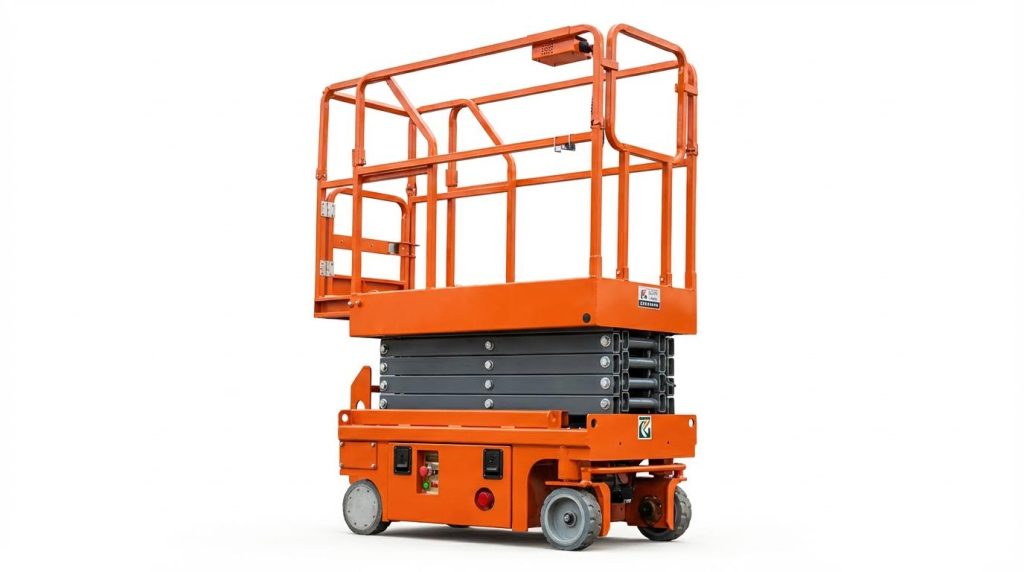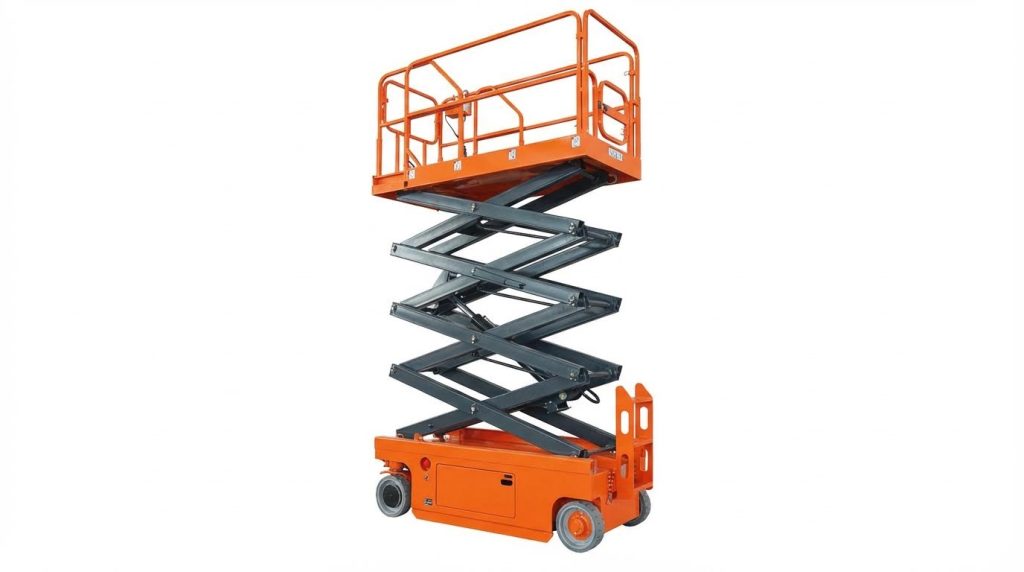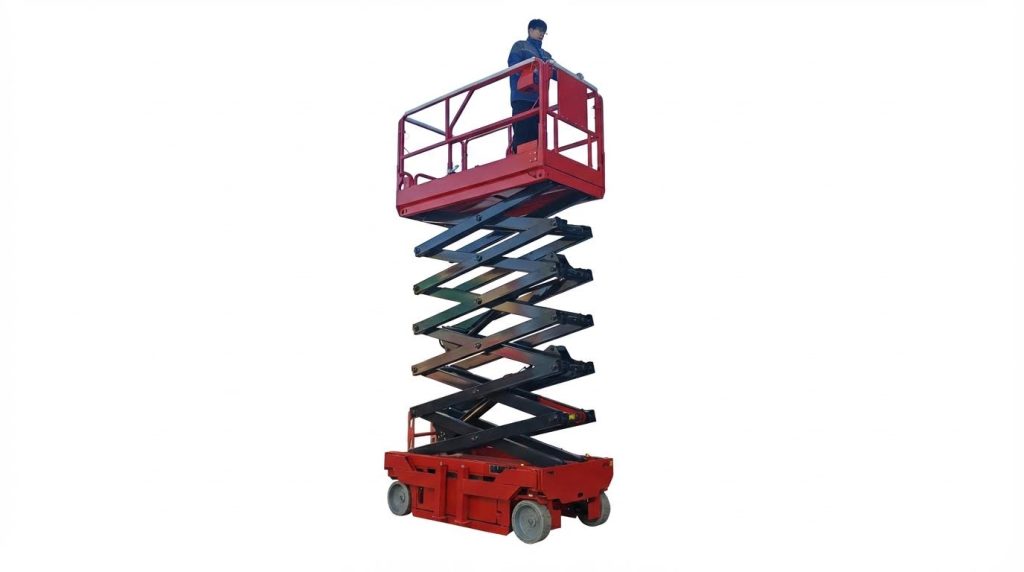
Scissor lifts rely on guardrails as primary fall protection, so whether you need a harness depends on regulations, site policy, and task risk. This guide compares OSHA, HSE, EN and global rules so safety managers can set clear, defensible MEWP harness policies. You will see where a harness is mandatory, where guardrails alone are acceptable, and how engineering factors like wind, travel and platform motion change the answer to “do you need a harness on scissor lift.”
When Scissor Lifts Do And Don’t Require A Harness
Scissor lifts usually rely on guardrails as the only required fall protection, but you may still need a harness when risk factors or company policy demand extra control. Understanding when “guardrails only” is acceptable is the core of answering “do you need a harness on scissor lift” for your site.
Under OSHA, the default rule is simple: intact guardrails on a scissor platform satisfy fall protection, and a harness is not automatically required. However, several practical triggers make a harness and short restraint lanyard a smart or mandatory addition.
- Guardrails complete and in good condition: OSHA accepts them as primary fall protection – no harness required by regulation in normal use.
- Damaged or missing guardrails: Work should stop until repaired – a harness is not a substitute for a broken rail.
- Tasks forcing you to lean or reach outside rails: A restraint harness becomes critical – it keeps your center of mass inside the platform.
- Traveling while elevated over uneven surfaces: Harness plus short lanyard are strongly advised – they mitigate ejection from sudden stops or bumps.
- Employer / manufacturer policy: Many procedures require harnesses on all MEWPs – their rule can be stricter than OSHA and still enforceable on site.
💡 Field Engineer’s Note: In real jobs, the “no harness needed on scissors” line disappears fast once you drive elevated, handle long materials, or work outdoors in gusty wind. If you see operators bracing themselves against the rails, you are already in harness-and-restraint territory.
How OSHA Treats Guardrails Versus Harnesses
OSHA treats guardrails as the primary fall protection on scissor platform lift, while harnesses are secondary controls used when the guardrail system or work method cannot reliably keep you inside the platform.
For Group A MEWPs such as scissor lifts, guardrails are the designed fall protection system. OSHA requires that scissor lifts have guardrails installed and that workers verify they are present and intact before use. Workers must stand only on the work platform and keep tasks within easy reach to avoid leaning away from the lift, which would defeat the guardrail envelope. OSHA guidance emphasizes that guardrails are the primary fall protection system on scissor lifts.
In contrast, harnesses and lanyards act as personal fall protection when the risk profile increases. Where guardrails are damaged, missing, or tasks require leaning or reaching outside the rail envelope, a full-body harness with a suitable anchor becomes necessary as secondary protection. Industry guidance clarifies that Group A platforms rely on guardrails first, with harnesses used when the guardrail system alone cannot control ejection risk.
- Guardrails as engineering control: Fixed, passive barrier – no user action needed once installed.
- Harness as PPE: Relies on user fit and correct anchorage – last line of defense when motion or reach risks increase.
- Restraint vs arrest: On scissor lifts, short restraint lanyards are preferred – there is rarely enough clear fall distance for full arrest systems inside the scissor stack.
Why OSHA still focuses so heavily on guardrails
Guardrails remove most fall risk without relying on training, memory, or perfect behavior. They also avoid high arrest forces on the body and on the platform structure. That is why OSHA’s scissor-lift guidance starts with “guardrails present and used correctly” rather than “everyone in a harness.”
Why Boom Lifts Always Need Harnesses, But Scissors Often Don’t
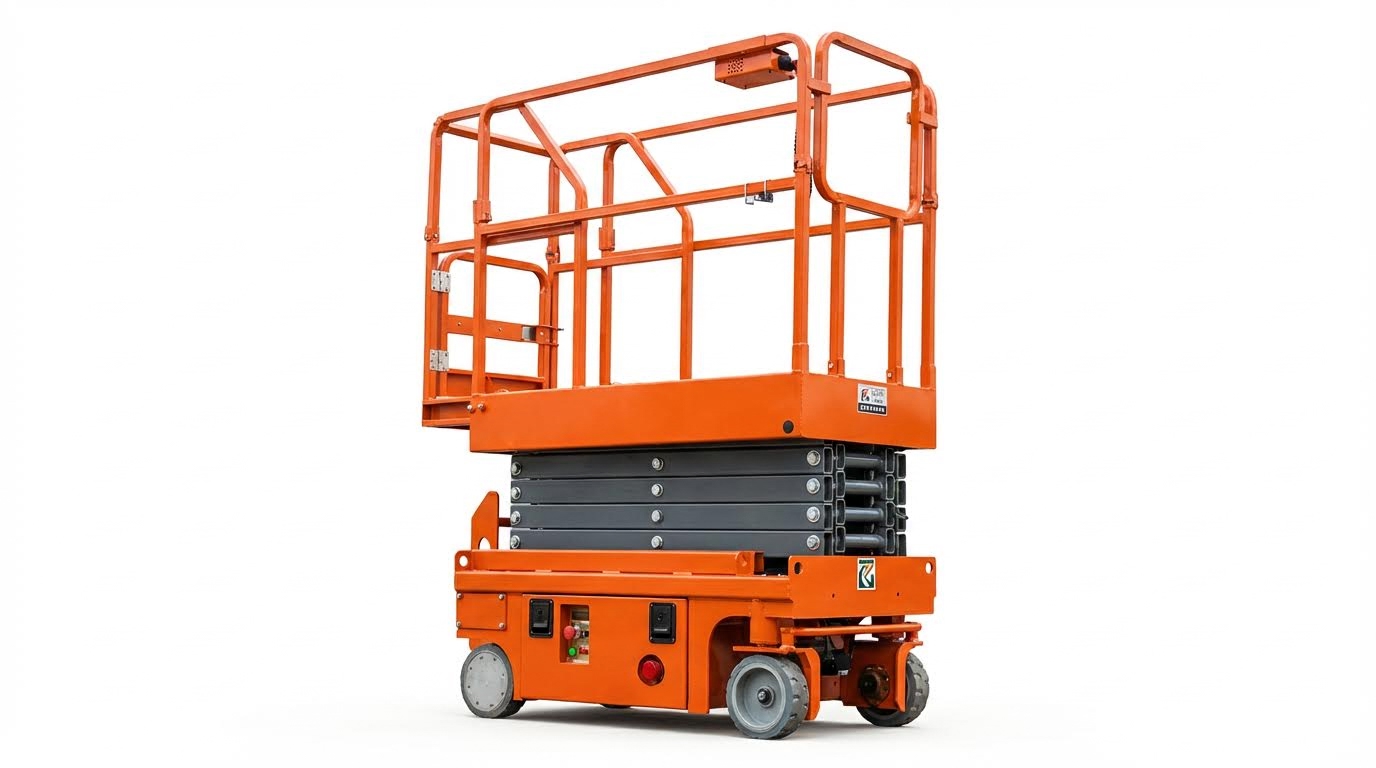
Boom lifts always require a harness because their platform can move and swing well beyond the chassis footprint, while scissor lifts move almost straight up and down within the guardrail envelope.
On boom-supported MEWPs (Group B), every person in the platform must wear personal fall protection at all times. Standards such as ANSI A92.5 and CSA B354.4, and OSHA 29 CFR 1926.453(b)(2)(v), require occupants to wear a full-body harness with a lanyard attached to a designated anchorage point on the boom or basket. Since 1998, OSHA has required full-body harnesses instead of body belts, with each anchor point designed for about 2,273 kg static load per user. Technical guidance explains that each anchorage point is intended for one person only, limiting harnessed users to the number of rated anchors.
The reason is physics. A boom lift can telescope, rotate, and articulate, creating large horizontal and vertical accelerations if the chassis stops suddenly or the boom is slewed. That motion can eject a worker from the basket even if they never climb the rails. The harness and lanyard keep the worker tied into the basket through that motion.
Scissor lifts, by contrast, are Group A vertical MEWPs. Their platforms travel mostly straight up and down above the chassis with limited outreach. With complete guardrails, the risk of being thrown outside the platform is significantly lower in normal, slow, vertical motion. OSHA therefore accepts guardrails as sufficient fall protection on scissor lifts in standard indoor work, provided operators do not stand on rails, use ladders or planks on the platform, or drive unsafely while elevated. OSHA interpretations also prohibit using ladders or other devices on the platform to gain extra height.
- Boom lift platform motion: Can swing, rotate, and bounce – high ejection risk even with guardrails.
- Scissor lift motion: Mostly vertical, inside rail footprint – lower ejection risk when used on level, clear floors.
- Harness rule on booms: Always required, full-body harness plus lanyard – regulatory mandate, not optional.
- Harness rule on scissors: Typically not required by OSHA if rails are intact – but often required by company policy or specific risk assessment.
💡 Field Engineer’s Note: Treat any scissor lift like a boom the moment you combine elevation with speed, slope, or long, awkward loads. If the platform can jerk or the operator can be pulled toward the rails, a short restraint lanyard is cheap insurance against a life-changing fall.
Engineering Risk Factors That Drive Harness Decisions
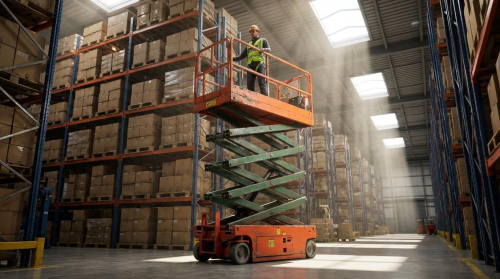
Engineering risk factors like motion, wind, surface quality, and working height often answer “do you need a harness on scissor platform” more accurately than the regulation alone. This section turns abstract rules into concrete, mechanical triggers for harness use.
Regulators often say guardrails are enough on scissor lifts, but physics sometimes says otherwise. When platform dynamics or site conditions raise ejection or tip risk, a short fall-restraint harness becomes a practical control, even if not strictly mandated.
Platform Motion, Travel And Ejection Risk
Platform motion, travel, and ejection risk explain why a scissor lift can be “legal without a harness” yet still need one in real work. The key is how inertia, reach, and loading interact with the guardrail envelope.
OSHA treats guardrails as the primary fall protection on scissor lifts, and they are the only fall protection explicitly required, provided the rails are in place and intact. Guardrails must be installed and used correctly. But the moment platform dynamics can throw a worker against or over those rails, the engineering case for a harness changes.
| Risk Factor | What Changes Physically | Harness Implication | Operational Impact |
|---|---|---|---|
| Driving while elevated | Inertial forces increase during starts, stops, and turns. | Short restraint lanyard often advisable, even if rules allow guardrail-only. | Reduces chance of being pitched toward the rail when the unit suddenly stops or hits a bump. |
| Uneven or obstructed travel surface | Wheel drop or bump creates vertical and lateral shocks. | Harness and restraint strongly recommended if elevated travel cannot be avoided. | Mitigates ejection when crossing minor depressions, debris, or joints that were missed in inspection. |
| High platform height | Greater leverage on the base; more sway and oscillation. | Harness becomes more valuable as height and sway increase. | Improves security when working at the top of the machine’s rated height. |
| Overreaching and leaning | Worker’s center of mass moves outside the guardrail footprint. | Restraint lanyard should be adjusted to prevent reaching beyond rails. | Encourages repositioning the lift instead of “fishing” for reach. |
| Handling large or awkward materials | Load shifts suddenly; worker may lose balance. | Harness recommended when handling large panels, ducts, or frames. | Reduces risk of being pulled toward or over the rail when a load twists. |
OSHA allows scissor lifts to be driven while elevated if the surface is clear of obstacles, holes, depressions, ramps, and other hazards, and if the operator has a clear view of travel. Elevated driving is permitted only under controlled conditions. In practice, many sites never achieve “perfect” floors, so elevated travel introduces real ejection risk.
On boom lifts, regulators remove the doubt: every occupant must wear a full-body harness with a restraint or arrest lanyard connected to an approved anchor at all times. Personal fall protection is mandatory on boom platforms because their outreach and slewing motion create much higher ejection energy than vertical scissor motion.
For scissor lifts, when you ask “do you need a harness on scissor platform lift” for a specific task, the honest engineering answer is: if you must drive elevated, work at full height, handle big components, or encourage any leaning, a short fall-restraint system is a low-cost control for a high-consequence event.
Restraint vs. arrest on scissor lifts
Restraint systems are preferred on scissor lifts because the available fall distance inside the scissor stack is limited. Short, adjustable lanyards (often around 750 mm) are used to keep workers inside the guardrail envelope. Full fall arrest rarely makes sense unless the system is engineered for adequate clearance below.
💡 Field Engineer’s Note: If your operators routinely “creep” the lift along a wall at partial height, treat that as boom-lift-level ejection risk. A 0.5 m wheel drop into a trench at 6–8 m platform height can throw a worker hard into the rail; a tight restraint lanyard is cheap insurance.
Wind, Surface Conditions And Stability Margins
Wind, surface conditions, and stability margins decide when a scissor lift is close enough to its tipping limits that a harness becomes a sensible secondary control. Guardrails prevent a fall; they do not prevent a tip.
Scissor lifts are designed for firm, level surfaces and controlled environmental conditions. OSHA stresses that they must be used on stable, level ground away from drop-offs, holes, slopes, bumps, and debris, and that outdoor use is generally limited to wind speeds below about 12.5 m/s (28 mph). Surface quality and wind are primary stability controls.
| Condition | Engineering Effect | Harness Decision | Best For… |
|---|---|---|---|
| Wind approaching 12–13 m/s (≈28 mph) | Increased overturning moment and platform sway. | Stop work or lower platform; if work continues near limits, harness with restraint is strongly advised. | Outdoor jobs where gusts can hit the platform side-on. |
| Ice, snow, or standing water on deck | Reduced friction underfoot; slip risk toward guardrails. | Harness recommended even on low platforms due to slip-ejection risk. | Cold-storage loading bays and winter shutdown work. |
| Soft or settling ground | Uneven leg support; progressive tilt during operation. | Better control is to relocate; if used, harness cannot stop a tip but can prevent ejection during a sudden lean. | Construction sites with compacted fill or trenches nearby. |
| Use on ramps or slopes | Center of gravity shifts off the geometric center; reduced stability margin. | Most manuals prohibit this; harness does not “fix” non-compliant setup. | Only use if manufacturer explicitly allows and angle is within spec. |
| High platform with heavy tools/materials | Higher combined center of mass and more sway. | Harness with restraint recommended as height and payload increase. | Mechanical, ducting, and façade work at 8–12 m platform height. |
Environmental limits are not only about comfort. Operators are instructed to evaluate wind above about 11 m/s (25 mph), ice, snow, and severe weather, and to cease operations under such conditions. For B2B fleets, that means a clear cut-off in site rules, not a “use your judgment” grey zone.
Surfaces matter just as much. Scissor lifts are designed for firm, level surfaces only, and should not be used on inclines unless the manufacturer specifically permits it. Wheel chocks are recommended where slight inclines are unavoidable, but they do not restore full stability margins at height.
How this feeds back into “do you need a harness on scissor lift”
If wind, surface, or loading conditions are eating into your stability margin, your first control is always to lower, relocate, or stop. A harness cannot prevent a tip, but if you are working near the edge of acceptable conditions and cannot avoid elevated work, using a short restraint harness reduces the chance of ejection from sudden sway or slips.
💡 Field Engineer’s Note: On exposed roofs, I treat anything above roughly 7–8 m platform height plus noticeable gusting as a “harness plus restraint only” zone, even if the manual still allows operation. Wind-driven sway plus a worker carrying sheet material is exactly how people end up over the rails.
Practical Policy And Final Recommendations For B2B Fleets
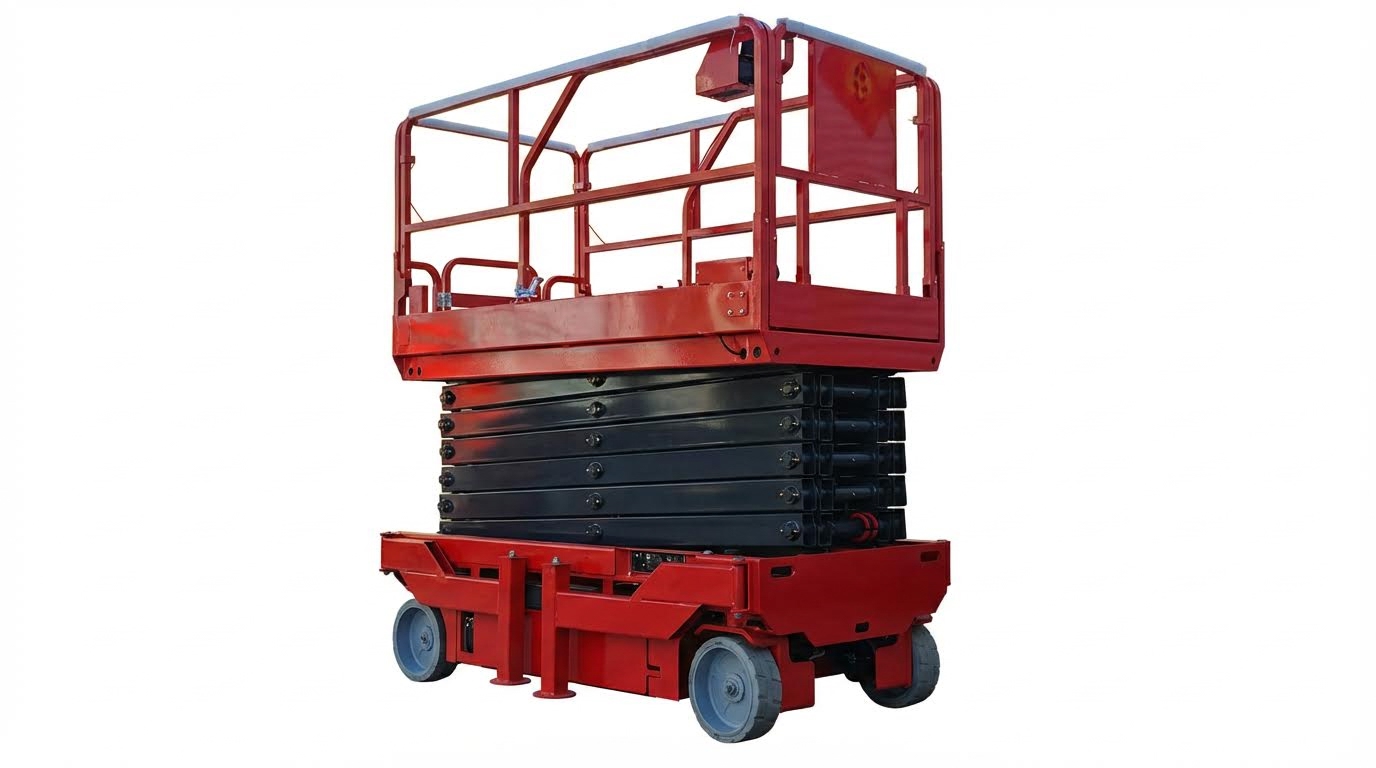
B2B fleets should treat harness use on scissor lifts as a structured risk-control decision, not a guess, and document one clear global policy that local sites can tighten but never weaken.
This section turns “do you need a harness on scissor lift” from a vague safety question into a repeatable fleet policy you can defend to auditors, insurers, and regulators.
Build A Clear Decision Policy For Harness Use On Scissor Lifts
A written, visual decision policy ensures every supervisor answers “do you need a harness on scissor lift” the same way on every site.
Use a simple risk-based matrix that starts from the legal minimum (guardrails only) and then adds harnesses when engineering risk factors increase.
| Scenario | Harness Required? | Fall Protection Type | Key Triggers | Operational Impact |
|---|---|---|---|---|
| Indoor, level slab, standard work inside guardrails | Normally No | Guardrails only | Firm, level floor; no travel while elevated; no overreaching | Fastest setup; focus on operator training and housekeeping |
| Outdoor work with wind below 10–12 m/s (≈28 mph) | Often Yes | Harness + restraint lanyard | Wind, sway, handling sheet goods or large parts | Reduces ejection risk from gusts and “sail effect” loads |
| Travel while elevated on smooth, level surface | Often Yes | Harness + short restraint | Inertial forces from starts/stops and turning | Mitigates “catapult” effect if wheels hit small defects |
| Work requiring leaning or reaching beyond rail line | Yes | Harness + restraint, task redesign | Body centre of gravity moves outside guardrail envelope | May force change to tooling, position, or MEWP type |
| Damaged or incomplete guardrails pending repair | Do Not Use | Lift removed from service | Missing top/mid-rail, broken gates | Lock-out/tag-out until guardrail system is restored |
- Baseline rule: Guardrails are the primary fall protection on scissor lifts – this aligns with OSHA’s treatment of guardrails as the required system. OSHA scissor lift guidance
- Risk escalation: Add harness + restraint when wind, travel, reach, or platform motion increase ejection risk – this mirrors global best practice for MEWPs. Global harness analysis
- Non‑negotiables: Never allow ladders, planks, or boxes on the platform to gain extra height – this is explicitly prohibited and defeats guardrail design. OSHA interpretation on devices
💡 Field Engineer’s Note: If a job routinely “needs” workers to lean outside the guardrails, the real fix is usually a different MEWP (e.g., a boom) or a repositioned lift, not “more PPE.” Harnesses are last-line protection, not a substitute for bad geometry.
How to document your decision logic
Turn the matrix into a one-page flowchart: start with “Are guardrails complete?” then branch by indoor/outdoor, travel elevated, and wind. Require supervisors to sign off when authorizing elevated travel or outdoor work near the wind limit.
Standardize Fleet Rules For Different MEWP Types
Fleet-wide rules must separate boom lifts from scissor lifts, because boom ejection risk is higher and most standards already require harnesses on booms.
Write one page that answers “what we do on this fleet” by MEWP group, not by site or supervisor preference.
| MEWP Type | Regulatory Baseline | Fleet Policy Recommendation | Fall Protection Setup | Best For… |
|---|---|---|---|---|
| Scissor lifts (Group A, vertical only) | Guardrails are primary fall protection; harness not automatically required if rails are intact and work stays inside them. OSHA eTool | Guardrails only indoors on level slabs; harness + restraint outdoors, during elevated travel, or when handling large components. | Full-body harness to EN 361 or equivalent; short adjustable restraint lanyard if anchors provided. Harness standards | Repetitive indoor tasks, racking, MEP installation on flat slabs. |
| Boom lifts (Group B, articulating/telescopic) | Harnesses are mandatory in most jurisdictions for all occupants. Safety bulletin MEWP fall protection | Zero‑exception rule: no harness, no work. Standardize this globally to avoid confusion. | Full-body harness; restraint or arrest lanyard sized per manufacturer; connect only to rated anchors. | Outreach over obstacles, facade work, pipe racks, and where lateral movement is needed. |
| Specialty / rough‑terrain scissors | Often used outdoors where wind and uneven surfaces raise risk; still treated as Group A but with more instability factors. OSHA guidance | Default to harness + restraint whenever platform is elevated outdoors. | Harness + short restraint; consider SRLs only if explicitly approved and anchor ratings are known. | Construction sites, yards, and unfinished slabs with more surface variation. |
- One global rule for booms: All occupants wear a harness, always – this mirrors ANSI/CSA and OSHA interpretations. Boom lift harness requirements
- Risk‑based rule for scissors: Start from guardrails; add harnesses via your matrix when motion, wind, or reach increase ejection risk – simple enough for toolbox talks.
- Anchor discipline: Never clip to guardrails or improvised points; only use rated MEWP anchors sized to ≈2,270 kg static per user where specified. Anchor load guidance
Why restraint beats arrest on scissor lifts
Scissor stacks rarely have enough clear fall distance for safe arrest. A short, adjustable restraint lanyard keeps the worker inside the guardrails, which is safer and avoids high arrest forces on the structure. Restraint vs arrest
Integrate Harness Policy With Training, Permits And Supervision
A harness rule only works in the field if it is wired into training, permits, and daily supervision, not just written in a manual.
Align your answer to “do you need a harness on scissor lift” with how you authorize work and coach operators.
- Operator training: Teach that guardrails are primary fall protection and when site rules escalate to harness use – reduces confusion between scissors and booms. OSHA training expectations
- Task‑based permits: Add a checkbox on work permits: “Scissor lift – harness required? Yes/No (justify using matrix).” – forces supervisors to think about wind, travel, and reach.
- Pre‑use checks: Require operators to inspect guardrails, anchors, and lanyard length as part of daily checks – ties equipment condition to your fall-protection logic. Inspection guidance
- Wind and weather rules: Stop or reassess outdoor work as wind approaches 12–13 m/s (≈28 mph), or in lightning, heavy rain, ice, or snow – conditions where even a harness cannot fix stability issues. Environmental limits
- Driving elevated: Only allow elevated travel when the route is firm, level, smooth, and clear of holes, ramps, and debris, and when a spotter is used where needed – pair this with mandatory harness + short restraint. Elevated driving conditions
💡 Field Engineer’s Note: The most effective change I have seen is printing the harness decision matrix on the MEWP familiarization card. Operators then know, at the machine, when the company expects a harness even if the law does not spell it out.
Link harness policy to incident investigation
After any near miss or fall-from-height event, review whether the task matched your matrix and whether the harness rule (if applicable) was followed. Use this to tighten triggers, not just blame operators.
Global Consistency With Local Flexibility
Multinational fleets should define a single global minimum standard for harness use, then allow local sites to be stricter where OSHA, HSE, EN, or Asian rules demand it.
This avoids one country running “bare minimum” while another over-specifies PPE with no engineering basis.
- Set a global floor: Globally, treat boom lifts as “always harnessed” and scissor lifts as “guardrails plus risk‑based harness escalation.” – this keeps your core message identical in every language.
- Map to local law: Have each country safety lead map your global rule to OSHA, EN 361/363, GB 6095, IS 3521 or similar – ensures legal compliance without rewriting fleet policy. Global regulations overview
- Allow upward variation only: Sites may add stricter triggers (for example, “all outdoor scissors require harnesses”), but may not relax the global minimum – protects you in audits and cross-border investigations.
- Unify language: Standardize terms like “restraint” vs “arrest,” “Group A/B,” and “anchor point” across training – reduces translation errors and mixed messages.
Template: One-sentence policy for leadership sign‑off
“In our fleet, guardrails are the primary fall protection on scissor lifts; we require full-body harnesses with restraint lanyards whenever wind, platform travel, reach beyond the rail envelope, or outdoor instability increase ejection risk, and we require harnesses at all times on boom-type MEWPs.”
Practical Policy And Final Recommendations For B2B Fleets
Across all regions, the core engineering message is consistent. Guardrails provide the primary fall protection on scissor lifts, while harnesses control residual ejection risk when motion, wind, reach, or surface conditions push the platform closer to its limits. Boom lifts, with their large outreach and dynamic motion, always need harnesses because the physics of slewing and telescoping create high horizontal accelerations that guardrails alone cannot manage.
For B2B fleets, the practical answer to “do you need a harness on a scissor lift” is: start from guardrails, then add a short restraint harness whenever you drive elevated, work outdoors, handle big components, or see operators leaning on the rails. A clear, visual decision matrix lets supervisors apply this rule the same way on every site and every shift.
Build one global policy that treats scissor-lift harness use as a risk-based escalation, and boom-lift harness use as non‑negotiable. Tie that policy into operator training, permits, pre‑use checks, and incident reviews. This approach respects OSHA, HSE, EN and Asia–Pacific rules, but more importantly, it respects the engineering reality of how MEWPs fail and how workers actually fall. For fleets using Atomoving and similar equipment, this is the most defensible and practical safety strategy.
Frequently Asked Questions
Do You Need a Harness on a Scissor Lift?
In most cases, wearing a harness is not mandatory when operating a scissor lift, provided the equipment has proper guardrails and safety features. However, site-specific rules or manufacturer guidelines may require fall protection in certain situations. Always refer to the operator’s manual for specific instructions. IPAF Fall Protection Guidelines.
What Are the OSHA Requirements for Scissor Lifts?
OSHA does not explicitly require a harness for scissor lift operators if the equipment has guardrails that meet safety standards. However, additional fall protection may be necessary depending on the job site’s risk assessment or local regulations. For more details, consult OSHA’s official guidelines on aerial lifts. EWPA FAQ Document.
When Should You Wear a Harness?
A harness should be worn if the scissor lift lacks adequate guardrails, if there is a risk of falling over six feet, or if the job site mandates it for added safety. Some manufacturers recommend using a full-body harness with an approved anchorage point, even if not legally required. JLG Safety Recommendations.