Walkie stackers and forklifts fulfilled overlapping material-handling roles but differed sharply in design, capacity, and regulatory treatment. This guide framed the decision as an engineering problem, using measurable criteria rather than preference or habit. It examined core design and operating principles, then linked those characteristics to capacity, space constraints, and application engineering. Finally, it evaluated lifecycle cost, safety, and maintenance implications to support a defensible, data-driven equipment selection.
Across the full outline, the article compared load and height ratings, aisle width and maneuverability, indoor versus outdoor suitability, and alignment with SKU mix and throughput targets. It also addressed capital and operating cost structures, OSHA-driven training and licensing requirements, safety systems, and preventive maintenance regimes for electric and internal-combustion fleets. The closing section synthesized these factors into a structured decision framework for choosing between a walkie stacker and a forklift for a given facility and duty cycle.
Core Design Differences And Operating Principles
Core design differences between walkie stackers and forklifts drove distinct operating envelopes, safety profiles, and cost structures. Engineers evaluated architecture, counterbalance strategy, and powertrain when selecting between the two. These design choices directly influenced maneuverability, lift performance, and duty cycle suitability. Understanding these fundamentals helped align equipment with facility constraints and throughput requirements.
Walkie Stackers: Architecture And Control Layout
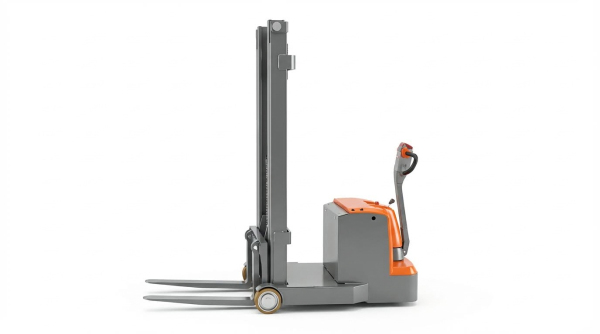
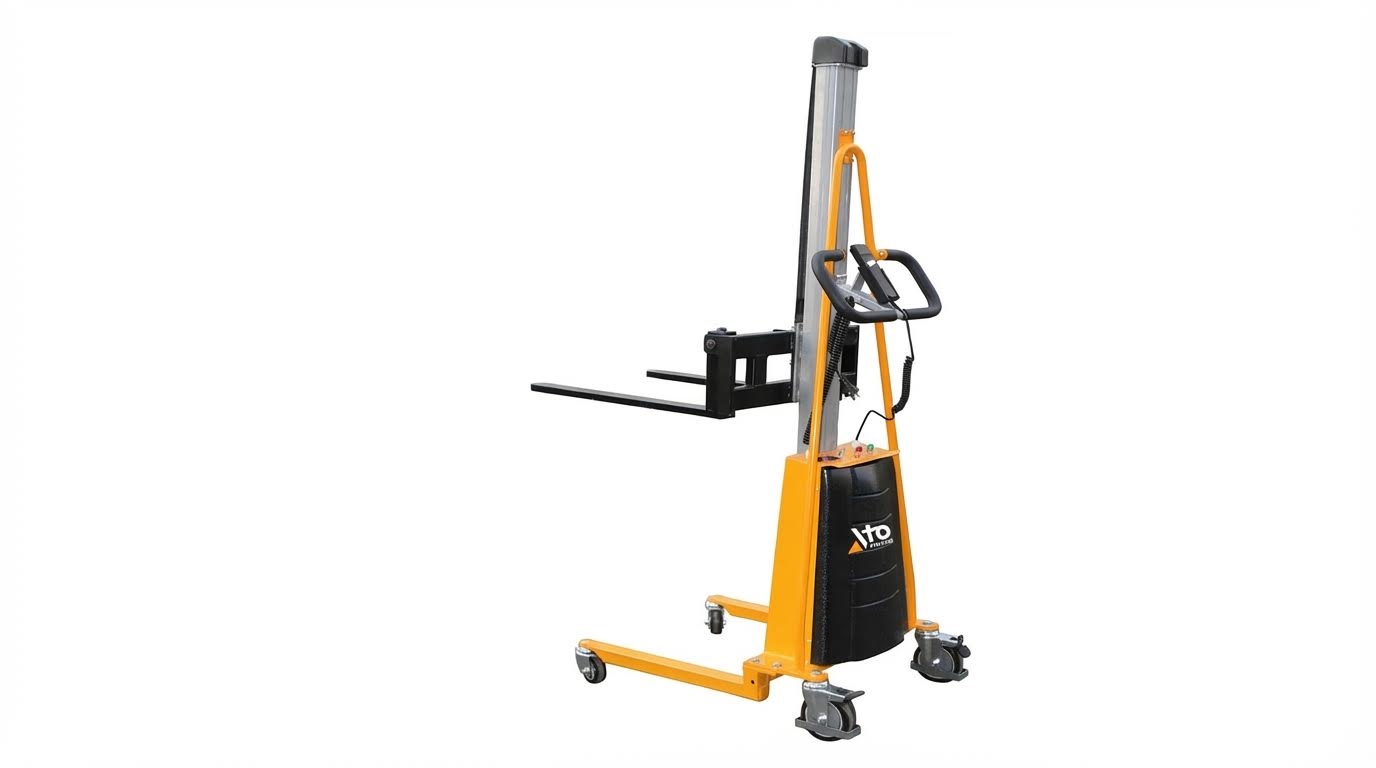
Walkie pallet stackers used a compact, walk-behind architecture with an electric drive and integrated mast. The operator walked behind or alongside, controlling travel and lift through a tiller arm with ergonomic hand grips, thumb or rocker switches, and dead-man controls. This layout limited travel speed to walking pace, improving visibility and reducing impact energy during incidents. The chassis typically housed the traction motor, hydraulic power unit, and battery pack, with a narrow profile optimized for tight aisles. Steering occurred through the tiller arm, with electronic steering assist on higher-spec models to reduce operator effort. Control logic often incorporated creep-speed modes and automatic braking when the tiller moved to the full-up or full-down position, enhancing pedestrian safety.
Counterbalance And Mast Design In Forklifts
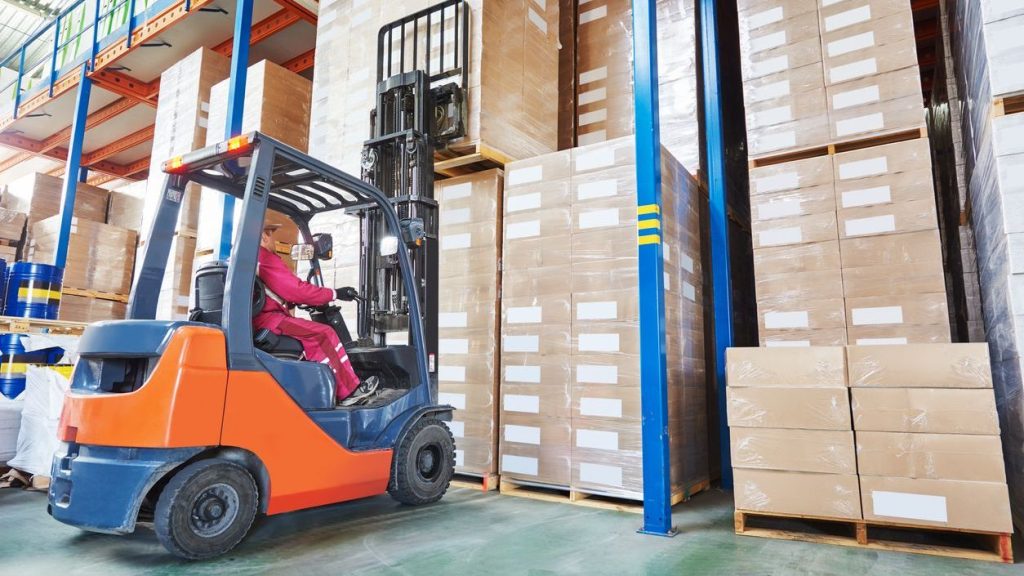
Forklifts used a seated or stand-on operator position with a rear counterweight to balance forward loads on the forks. The counterweight mass and wheelbase geometry defined the truck’s stability triangle and governed rated capacity at specified load centers. Masts on forklifts supported higher lift heights than walkie stackers, with duplex, triplex, or quad configurations and free-lift sections for low-overhead entry. Side-shift and tilt functions allowed precise load placement and improved load stability, especially at height. The operator compartment included steering wheel, hydraulic levers or joysticks, and pedals, enabling faster travel and lift cycles than walk-behind units. This design supported heavier loads and higher racks but required stricter stability management and operator training.
Drive Systems, Tires, And Stability Considerations
Walkie stackers typically used a single driven wheel at the front of the chassis with load wheels under the forks, optimized for smooth indoor floors. Their short wheelbase and low center of gravity favored maneuverability but limited stability at high lift heights and on uneven surfaces. Forklifts used dual drive wheels or drive axles and larger steer wheels, with configurations ranging from cushion tires for indoor concrete to pneumatic tires for outdoor yards. The broader footprint and counterweight improved longitudinal stability but increased turning radius compared to walkie units. Engineers evaluated static and dynamic stability, including braking under load, cornering forces, and mast deflection, when specifying equipment. Stability calculations considered load center distance, mast height, and gradient limits to avoid tip-over and loss-of-load events.
Electric Vs. IC Powertrains And Duty Cycles
Walkie stackers operated almost exclusively with electric powertrains, using lead-acid or increasingly lithium-ion batteries sized for light to medium-duty shifts. Their duty cycles involved intermittent operation, short travel distances, and frequent starts and stops in confined indoor spaces. Forklifts offered both electric and internal combustion (IC) options, with IC engines using LPG, diesel, or gasoline for high-duty, multi-shift, and outdoor applications. Electric forklifts provided lower noise, zero point-of-use emissions, and reduced maintenance, making them suitable for indoor warehouses with high utilization. IC forklifts delivered higher continuous power, rapid refueling, and better performance on ramps and rough surfaces, at the cost of emissions and higher ventilation requirements. Engineering selection balanced energy density, charging or refueling infrastructure, shift patterns, and thermal loads to match the powertrain to operational duty cycles.
Capacity, Space, And Application Engineering
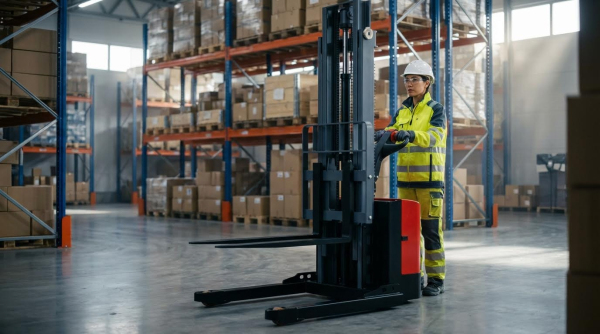
Engineering selection between walkie stackers and forklifts depended on quantifiable capacity, space, and duty requirements. Designers evaluated load mass, lift height, cycle frequency, and travel distances before specifying equipment. Facility layout, aisle geometry, and racking configuration then constrained maneuverability and turning envelopes. Finally, SKU mix and throughput targets determined whether a walkie stacker’s lighter, slower profile or a forklift’s higher performance better supported the material flow.
Load, Height, And Duty Rating Comparisons
Walkie stackers typically handled light to medium loads, around 900–1,800 kg, with lift heights near 3 m. This range suited palletized goods in low to mid-level racking or floor stacking. Forklifts supported significantly higher ratings, from roughly 1,500 kg up to 22,000 kg for specialized models, and reached 9 m or more in high-bay systems. Engineers therefore matched walkie stackers to low-mass, low-height tasks and reserved forklifts for heavy loads, tall racking, and attachments such as clamps or booms. Duty cycle mattered as well; walkie stackers fitted intermittent or moderate use, while multi-shift, high-cycle operations favored forklifts with higher thermal and structural margins.
Aisle Width, Turning Radius, And Layout Impacts
Walkie stackers offered compact chassis dimensions and short wheelbases, which reduced required aisle width. They operated effectively in narrow aisles and confined staging zones, often where a seated counterbalance truck could not turn. Forklifts, particularly counterbalance stacker types, required wider aisles due to longer overall length and larger turning radii. Layout engineers therefore sized rack spacing and cross-aisles based on the critical equipment envelope, including load overhang and steering clearance. Choosing walkie stackers enabled denser storage and higher space utilization but constrained lift height and capacity. Selecting forklifts demanded more floor area yet supported broader task flexibility and faster pallet handling.
Indoor, Outdoor, And Rough-Terrain Use Cases
Most walkie stackers used electric power and smooth, small-diameter wheels, which optimized them for flat, indoor concrete floors. They performed poorly on gradients, uneven pavements, or outdoor yards, where limited ground clearance and smaller tires reduced stability and traction. Forklifts, especially models with pneumatic or solid pneumatic tires and internal combustion engines, handled outdoor and rough-terrain conditions more effectively. Engineers considered surface flatness, ramps, dock approaches, and yard conditions when selecting platforms. For mixed indoor–outdoor duty, electric or IC forklifts with appropriate tires offered a robust compromise, while walkie stackers remained the preferred choice for strictly indoor, climate-controlled environments.
Matching Equipment To SKU, Flow, And Throughput
SKU characteristics, including average pallet weight, dimensions, and fragility, strongly influenced equipment choice. Walkie stackers aligned well with lighter consumer goods, retail replenishment, and backroom stock where operators walked short distances between picks. Forklifts matched heavier industrial components, bulk materials, and high-bay storage requiring frequent vertical movements. Throughput targets and process design were also decisive; high-volume cross-docks and manufacturing lines benefited from forklifts’ higher travel speeds and faster lift cycles. In contrast, operations emphasizing safety, fine positioning, and short, frequent moves often favored walkie stackers. Engineers balanced these factors with labor availability and ergonomics to build a right-sized, mixed fleet where necessary.
Lifecycle Cost, Safety, And Maintenance Factors
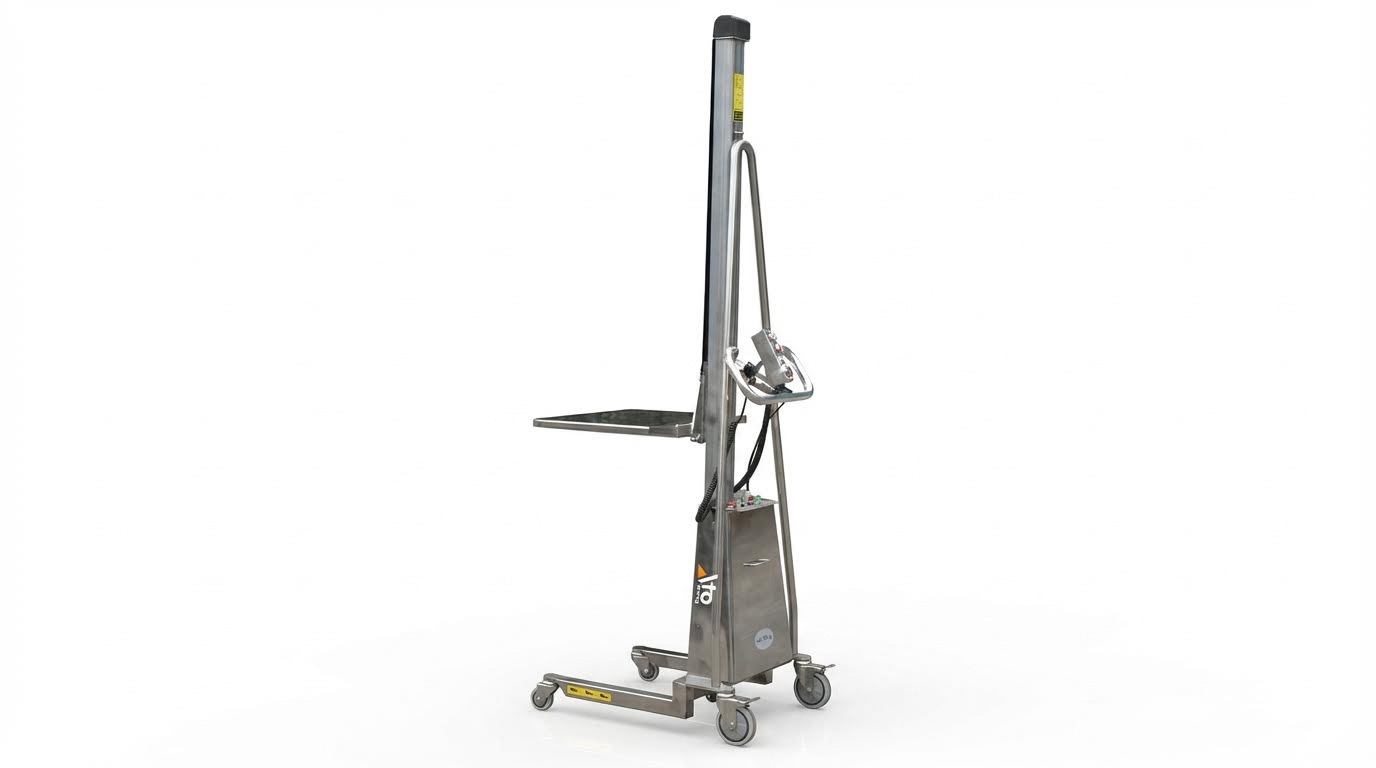
Lifecycle engineering for walkie stackers and forklifts required more than comparing purchase price. Asset selection had to balance capital cost, operating cost, safety risk, and maintainability over 5–10 years. Engineers evaluated utilization hours, environment, and load profiles to predict failure modes and maintenance burden. A structured comparison helped align equipment choice with safety regulations and budget constraints.
Capex, Opex, And Total Cost Of Ownership
Walkie stackers had lower capital expenditure because of simpler frames, smaller motors, and reduced lift height. Their operating expenditure stayed low due to electric drive, modest battery sizes, and limited wear on driveline components. Typical walkie stacker load ratings of 900–1 800 kg and lift heights near 3 m constrained use to light and medium duty. Forklifts, rated from about 1 500 kg up to 20 000 kg and beyond, justified higher capex with broader application coverage. Internal combustion forklifts incurred fuel, exhaust after-treatment, and more intensive service costs, raising total cost of ownership at high hours. Electric forklifts sat between walkies and IC units in TCO, trading higher battery and charger cost for lower energy and maintenance cost. Engineers often modelled TCO using annual hours, energy price, maintenance intervals, and residual value to decide whether a walkie fleet or a smaller forklift fleet minimized cost per pallet moved.
Training, Licensing, And OSHA Compliance
Forklifts fell under powered industrial truck regulations, so operators required formal training and certification. In the United States, OSHA required evaluation and re-certification at least every three years, plus retraining after incidents or near misses. Training covered pre-operational inspections, load charts, stability triangle concepts, and site-specific traffic rules. Walkie stackers, although simpler, still qualified as powered industrial trucks when powered, so employers had to train operators on hazards and safe operation. However, walkie stackers usually required shorter familiarization because speeds were low and operators remained on foot. Compliance programs integrated classroom instruction, hands-on evaluation, and documented checklists for both equipment types. Engineering and safety teams also defined standard operating procedures, PPE requirements, and pedestrian routes to maintain OSHA-aligned practices.
Safety Systems, Speed Limits, And Collision Risk
Walkie stackers operated at walking speed, which inherently reduced kinetic energy and collision severity. Their design placed the operator behind or beside the chassis, improving visibility and pedestrian awareness. Many walkies integrated belly buttons, automatic braking, and load-sensing interlocks that stopped travel when the tiller was raised or lowered excessively. Forklifts introduced higher collision risk because of higher speeds, seated operation, and larger blind zones from masts and loads. Safety engineering for forklifts relied on seat belts, overhead guards, audible alarms, lights, and strict site speed limits. Modern fleets added telematics, impact sensors, and access control to log events and enforce driver accountability. Facility layout also mattered: segregated forklift aisles, marked pedestrian crossings, and mirrors at intersections reduced incident probability for both technologies. Comparing safety performance, walkies offered an advantage in dense pedestrian zones, whereas forklifts demanded stricter controls and supervision.
Preventive Maintenance, Batteries, And Uptime
Walkie stackers used relatively simple electric powertrains, so preventive maintenance centered on batteries, wheels, and hydraulic components. Daily checks included visual inspection, brake function tests, horn and light checks, and battery state-of-charge verification. Weekly or monthly tasks focused on lubricating mast components, inspecting chains, and checking for hydraulic leaks or
Summary: Choosing Between Walkie Stacker And Forklift
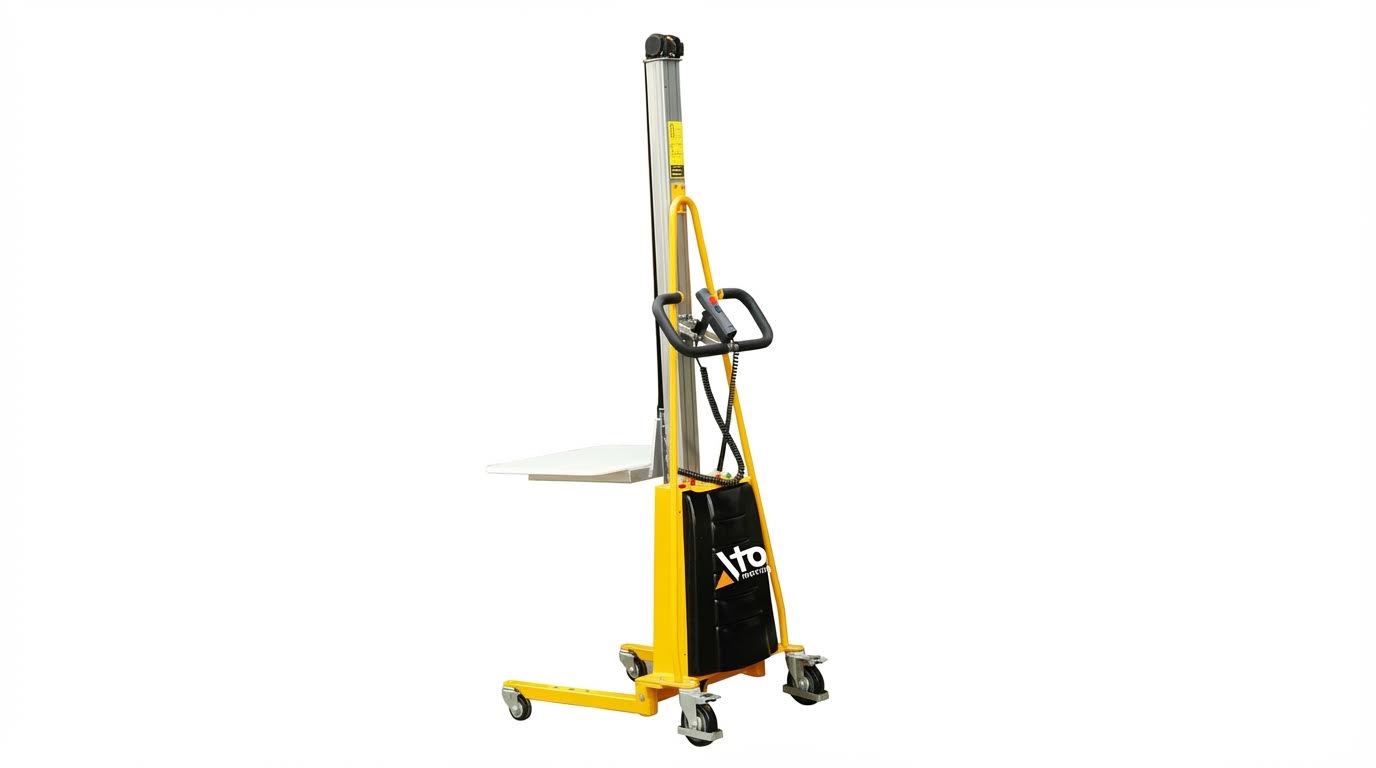
Engineering-based selection between a walkie stacker and a forklift depended on quantifiable constraints: load, height, aisle width, environment, and duty cycle. Walkie stackers offered a compact, electric, low-speed solution for light to medium loads, typically 900–1,800 kg and lift heights near 3 m. Forklifts covered a much wider envelope, from roughly 1,500 kg up to 20,000 kg or more and lift heights beyond 9 m, at the cost of higher purchase price, operating expense, and training requirements. Facilities with narrow aisles, short load transfer distances, and predominantly indoor operation usually achieved lower total cost of ownership with walk-behind stackers.
From a safety and compliance perspective, walkie stackers benefited from walking-speed operation, better operator proximity to pedestrians, and simpler controls, although structured training and daily inspections still remained essential. Forklifts required formal operator certification, strict adherence to OSHA powered industrial truck rules, and disciplined traffic management to control higher kinetic energy and collision risk. Lifecycle engineering considered not only energy use and maintenance intervals but also battery management, tire selection, and standardized preventive maintenance schedules aligned with operating hours.
Looking ahead, both platforms continued to integrate advanced safety and telemetry features, including speed-limiting by zone, impact sensing, and connected maintenance monitoring. Electric powertrains expanded into higher-capacity forklifts, narrowing the emissions and indoor-air-quality gap with walkie stackers. In practice, many operations deployed a mixed fleet: walkie stackers for dense storage and point-of-use handling, and forklifts for dock work, heavy or high lifts, and outdoor tasks. A balanced decision treated the choice as an engineering optimization problem, using measured load spectra, layout data, and throughput targets rather than rule-of-thumb preferences.