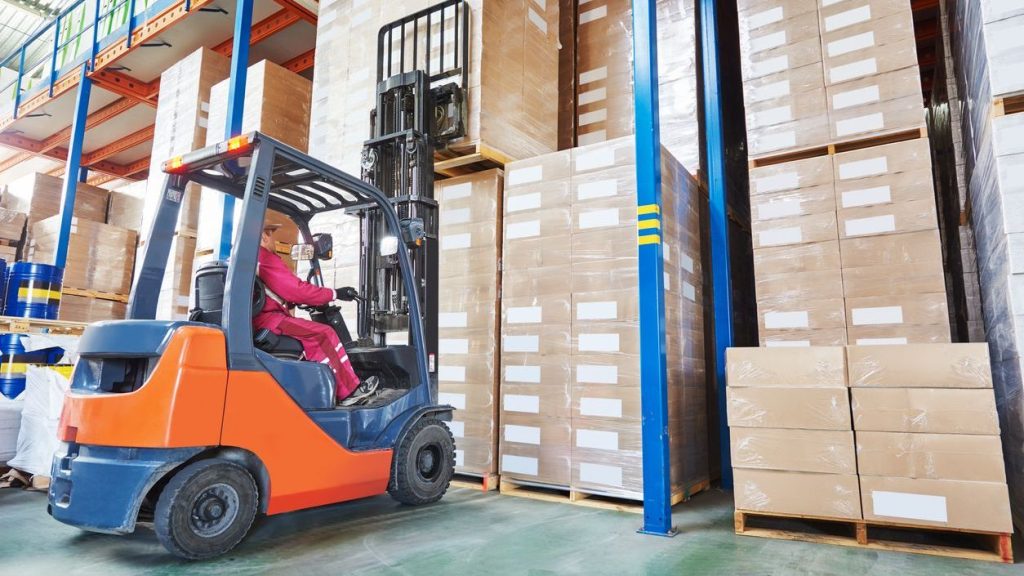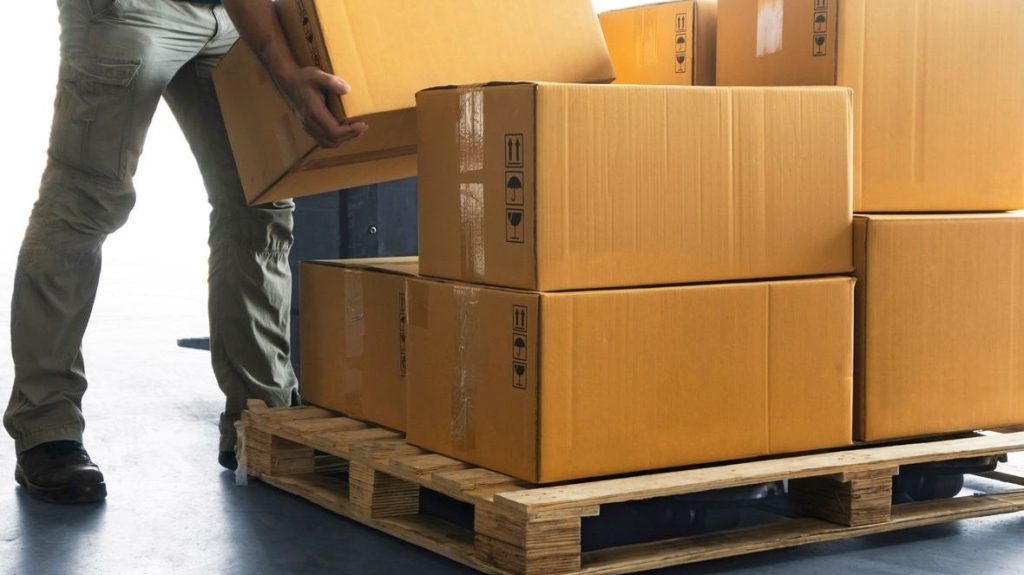
Walkie stackers had evolved into a highly segmented equipment family that covered manual, semi-electric, and fully electric designs, as well as fork-over, straddle, reach, and counterbalance configurations. Industrial users needed to match load capacity, lift height, and aisle geometry with duty class and application type, from rack or bulk storage to ergonomic work positioning in narrow aisles or special environments. At the same time, safety, regulatory compliance, and structured maintenance programs determined lifecycle performance, reliability, and total cost of ownership for these machines. This article outlined the core walkie stacker types, key specification ranges, and practical selection guidelines to support technically sound decisions in warehouses, factories, and distribution centers.
Core Walkie Stacker Types And Configurations
Core walkie stacker configurations determined how effectively a facility handled palletized loads, skid handling, and vertical storage. Engineers and warehouse managers selected between manual, semi-electric, and fully electric drives, combined with fork geometry and counterbalance concepts. Duty class and operator interface then aligned the machine with cycle frequency, load spectrum, and aisle geometry. Understanding these building blocks allowed structured specification instead of trial-and-error equipment purchases.
Manual, Semi-Electric, And Fully Electric
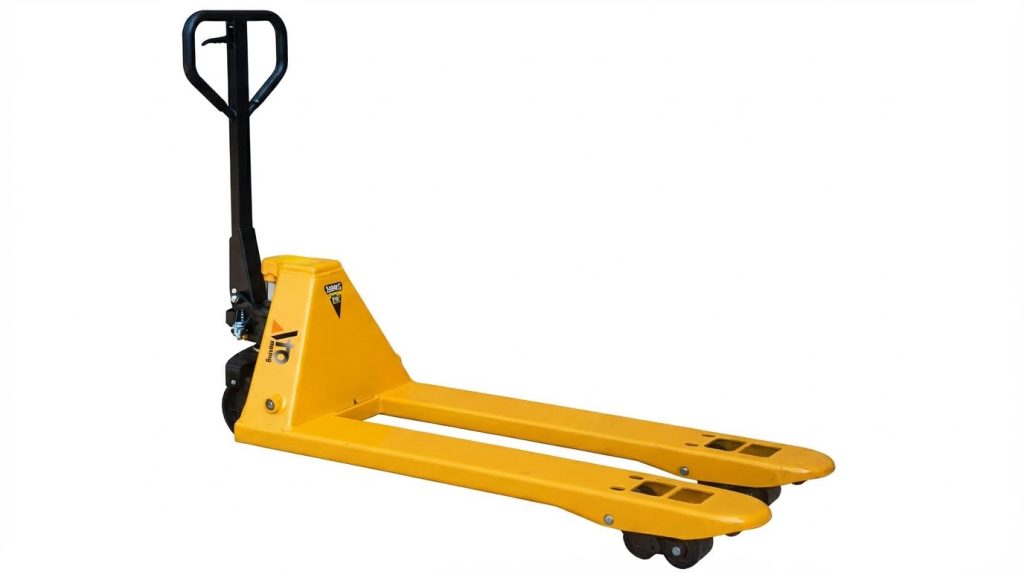
Manual walkie stackers used a hand-pumped hydraulic circuit and operator push or pull for travel. Typical rated capacities ranged from 200 kg for light counterbalanced units up to about 1 000 kg for heavy push straddle designs. Semi-electric stackers combined electric lift with manual travel, which reduced ergonomic strain during lifting while keeping capital cost low. Fully electric pedestrian stackers used traction and lift motors with onboard batteries, enabling capacities up to 1 800 kg and lift heights above 5 000 mm in Crown and Jungheinrich ranges. Facilities usually applied manual units for low-frequency handling, semi-electric for intermittent vertical moves, and fully electric for multi-shift warehouse operations.
Fork-Over, Straddle, Reach, And Counterbalance
Fork-over stackers placed the forks directly over fixed outriggers, requiring use with open-bottom pallets or skids. These designs, such as Crown WF or Jungheinrich EMC fork-over units, suited rack and bulk storage where pallet base geometry matched the outrigger spacing. Straddle stackers used adjustable legs that straddled the pallet, allowing engagement of closed-bottom pallets and higher capacities up to about 1 800 kg. Reach stackers added a pantograph or moving mast, extending the load into deeper racking while keeping the truck compact in narrow aisles. Counterbalance stackers removed front outriggers and relied on rear counterweight, which improved access to machinery, docks, or block-stacked loads but increased truck mass and turning radius.
Duty Classes: Light, Medium, And Heavy Duty
Duty class reflected the interaction of capacity, lift height, and expected operating hours per shift. Light-duty walk-behind stackers, such as 2 200 lbs (approximately 1 000 kg) manual or light electric units, operated in low-cycle environments like small workshops or maintenance stores. Medium-duty machines handled 1 500–3 000 lbs (roughly 700–1 400 kg) with higher lift heights and more robust masts, suitable for regular warehouse picking and put-away. Heavy-duty walkie stackers, including SH and SHR series or 2 000–4 000 lbs electric models, used reinforced chassis, higher-spec hydraulics, and industrial drive units for multi-shift use. Class selection strongly influenced component life, maintenance intervals, and acceptable thermal loading on motors and hydraulic systems.
Walkie, Walkie-Rider, And Automated Variants
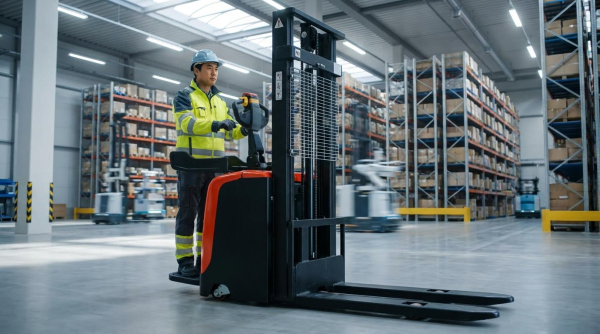
Walkie stackers required the operator to walk behind or alongside, using a tiller arm for steering and control. These units excelled in short travel distances, dense storage, and applications where speeds remained low for safety. Walkie-rider or platform stackers, such as ET platform models, incorporated a fold-down or fixed platform so operators could ride during horizontal travel, improving throughput on longer runs. Automated walkie stackers, including AGV-style or semi-automated Jungheinrich variants, integrated navigation, sensors, and control logic to move pallets with minimal human intervention. Facilities often deployed automated units on repetitive, fixed routes while retaining manual walkies for exception handling, mixed-load tasks, and congested zones.
Capacity, Lift Height, And Application Matching
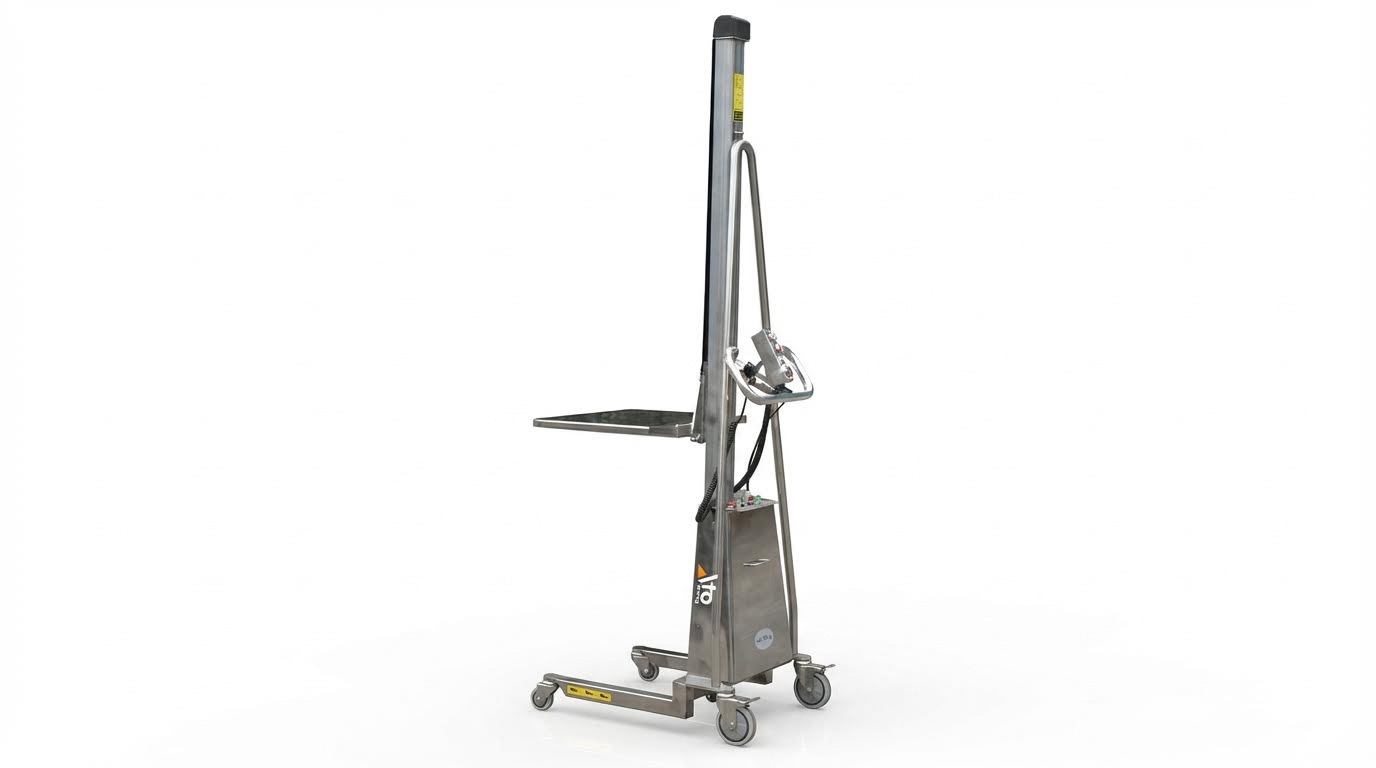
Capacity, lift height, and application profile determined whether a walkie stacker operated safely and productively. Engineers matched these three parameters to pallet type, racking geometry, and travel pattern in the facility. Manufacturers specified rated capacities at defined load centers and maximum lift heights, which set hard design limits. Proper selection reduced tip-over risk, component fatigue, and unplanned downtime.
Load Capacity Ranges And Stability Limits
Walkie stacker capacities typically ranged from about 200 kg for light-duty counterbalanced units to 2 000 kg for heavy-duty double pallet designs. Crown walkie stackers historically covered 900 kg on compact M Series units up to 1 800 kg on SH and SHC heavy-duty models. Jungheinrich walkie and stand-on stackers operated in the 1 000 kg to 2 000 kg band, while industrial suppliers offered Big Joe and Presto units up to approximately 1 800 kg to 2 000 kg. These ratings assumed a standard load center, often 600 mm, with the load fully engaged on both forks.
Stability limits depended on the combined center of gravity of truck and load relative to the stability triangle or polygon. Overloading, long pallets, or high stacking heights shifted the resultant center of gravity outward and reduced residual capacity. Uneven loading, single-fork lifting, or loosely stacked goods further degraded stability and violated safe-use guidelines. Engineers therefore selected a nominal capacity with margin above the heaviest pallet, then enforced strict loading practices to maintain the design stability envelope.
Lift Heights, Mast Designs, And Aisle Constraints
Lift height requirements followed the top beam elevation plus clearance for pallet thickness and handling. Crown walkie stackers historically supported lift heights from about 2 600 mm on double pallet units up to 6 100 mm on high-reach configurations. Jungheinrich models reached approximately 4 800 mm to 6 000 mm, equivalent to about 19 feet, enabling high-bay storage. Mast designs included simplex for low lift, duplex or triplex for medium to high lift with better collapsed height, and reach mechanisms for deeper racking.
Aisle constraints drove the choice between fork-over, straddle, reach, and counterbalance geometries. Fork-over masts required open-bottom pallets but allowed compact chassis lengths. Straddle stackers used outriggers that increased overall width but improved lateral stability in narrow aisles. Reach and counterbalance designs enabled handling closed-bottom pallets and deeper racking but required slightly wider aisles and higher truck mass. Engineers balanced collapsed mast height, free lift, and turning radius against racking layout and building clearances.
Rack Storage, Bulk Storage, And Work Positioning
Rack storage applications favored walkie stackers with precise lift control, adequate residual capacity at top beam, and good mast visibility. Fork-over or straddle stackers handled standard pallet rack, while reach and counterbalance units addressed deeper or obstructed front beams. Bulk storage on the floor required less lift height but often higher throughput and short travel distances, aligning with compact walkie or walkie-rider platforms. Double pallet stackers, such as 2 000 kg DT-type units, improved cube utilization and productivity in bulk lanes.
Walkie stackers also functioned as mobile work platforms and ergonomic positioners. In these roles, operators raised loads to comfortable working heights rather than maximum racking elevations. This demanded smooth, low-speed lift, fine positioning, and stable operation at mid-heights. Capacity requirements were lower, but duty cycling and precise vertical control became more critical. Selection therefore considered not only peak lift height but also the most frequently used working window.
Special Environments: Narrow Aisles And Stainless
Narrow aisle environments required short overall length, tight turning radius, and stable operation with limited lateral clearance. Walk-behind stackers with straddle legs and high-visibility masts supported rack storage in these confined spaces, as documented for Crown SH and SHR
Safety, Compliance, And Lifecycle Performance
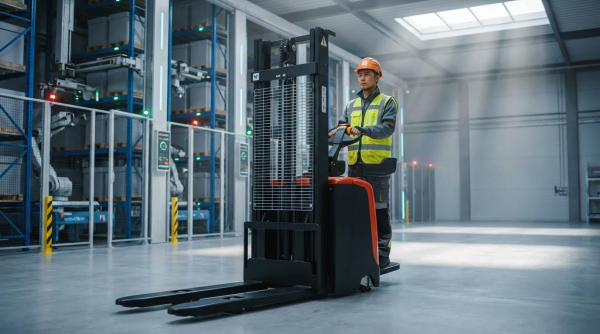
Safety, regulatory compliance, and lifecycle performance defined the real value of walkie stackers in industrial facilities. Beyond capacity and lift height, operators and maintenance teams needed structured procedures to prevent incidents and unplanned downtime. Modern walkie, walkie-rider, and automated stackers relied on disciplined training, inspection, and component care to achieve design life and retain residual value. A systematic approach to safety and lifecycle management also supported compliance with regional occupational safety regulations and internal corporate standards.
Operator Training And Safe Use Protocols
Walkie stackers required operation only by personnel who had completed formal training and certification under applicable occupational safety regulations. Training covered driving skills, load management, route planning, and emergency procedures, including how to respond to hydraulic or electrical faults. Operators wore appropriate personal protective equipment such as safety helmets and safety shoes, and followed site traffic rules with defined pedestrian zones and speed limits. Safe use protocols specified low starting speeds, avoidance of sudden acceleration or braking, and prohibition of sharp turns with elevated loads. Procedures also required forks at the lowest position when unloaded and typically 300–400 mm above the floor when traveling with a load, unless site rules specified otherwise. On slopes above approximately 7°, operators drove forward uphill and reversed downhill with the load, while avoiding turning or braking on the incline to maintain stability.
Pre-Operation Inspection And Maintenance
Structured pre-operation checks reduced the risk of in-service failures. Before each shift, operators inspected forks for cracks or deformation, masts and chains for damage or abnormal wear, and hydraulic cylinders and hoses for leaks. They checked tires or rollers for flat spots and excessive wear, verified brake function, steering response, horn, emergency stop, and safety interlocks. Battery charge status, discharge indicators, and hydraulic oil levels were confirmed against the manufacturer’s specifications, for example 5–6 L depending on mast height for typical electric stackers. Any abnormal finding triggered documentation and removal of the stacker from service until a qualified technician completed repairs. Routine maintenance followed a tiered schedule: daily cleaning and fastener checks, weekly brake and electrolyte inspection, monthly verification of structural and electrical condition, and quarterly in-depth checks of motors, contactors, and hydraulic components.
Battery, Hydraulic, And Brake System Care
Battery systems determined both runtime and lifecycle cost for electric walkie stackers. Facilities used chargers matched to the battery voltage and capacity and avoided opportunity charging practices that exceeded manufacturer limits, to prevent accelerated sulfation or lithium degradation. Charging protocols required switching off the charger before disconnecting plugs and storing the charger off the floor to minimize mechanical damage. Hydraulic system care included maintaining oil at specified levels for the installed mast height and using the recommended viscosity class to ensure stable lifting speed and component life. Technicians inspected hoses, seals, and lift cylinders for sweating or leaks and replaced damaged parts promptly to avoid sudden loss of lift capacity. Brake systems, including service brakes and parking brakes, underwent regular checks for lining wear, clearance, and response distance, since degraded braking significantly increased collision and tip-over risk in confined warehouse aisles.
Total Cost Of Ownership And Upgrade Paths
Total cost of ownership (TCO) for walkie stackers combined acquisition cost, energy consumption, maintenance, downtime, and residual value at end of life. Light-duty manual or semi-electric units offered low purchase cost but higher operator effort and limited throughput, while heavy-duty electric walkie or walkie-rider stackers with higher capacities up to about 1,800 kg and lift heights above 5,000 mm reduced labor but required structured battery and component care. Planned maintenance contracts and standardized spare parts inventories lowered unplanned downtime and extended service life, improving TCO. Facilities evaluated upgrade paths such as transitioning from manual or basic electric walkies to reach or counterbalance walkie stackers when rack heights increased or aisle widths changed. In high-volume or repetitive routes, automated stackers provided
Summary And Practical Selection Guidelines
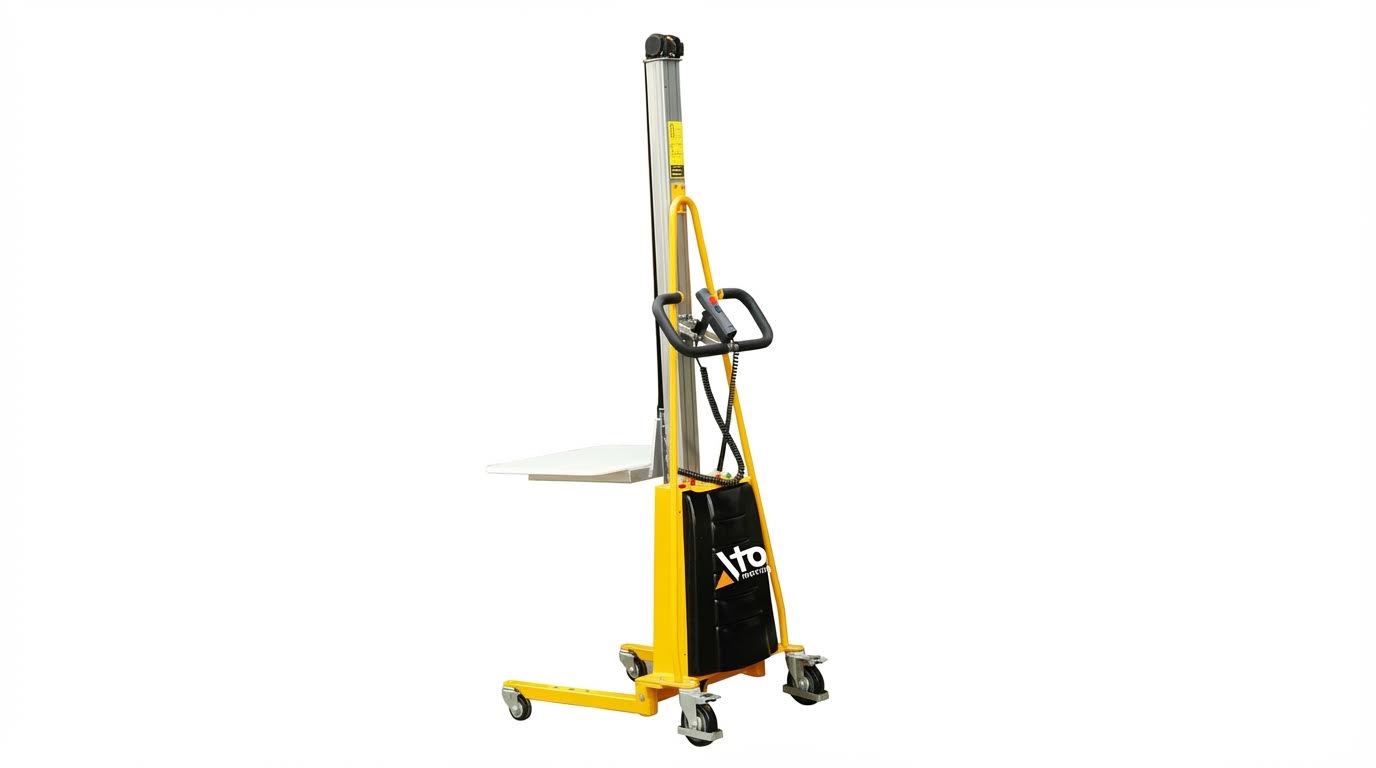
Walkie stacker selection in industrial facilities required a structured comparison of type, capacity, and environment. Manual, semi-electric, and fully electric units covered a spectrum from low-cost occasional use to intensive multi-shift operation. Fork-over, straddle, reach, and counterbalance architectures addressed different pallet styles, rack interfaces, and clearance constraints. Duty class, from light to heavy, aligned with load cycles, typical payload, and required lift heights.
From a technical perspective, capacity and lift height pairing dominated the initial specification. Typical walkie stackers handled approximately 200 kg to 2 000 kg and lifted up to about 6 100 mm, while some models in pounds-based markets reached roughly 4 400 lbs and 236 inches. Engineers needed to consider stability limits, especially for high masts, narrow aisles, and elevated transport. Application mapping distinguished rack storage, bulk floor storage, and work-positioning roles, and flagged special environments such as corrosive areas that required stainless-steel or sealed designs.
Implementation planning included power-train choice, battery management, and service strategy. Facilities with short runs and intermittent use could justify manual or light-duty electric stackers, while high-throughput warehouses benefited from heavy-duty electric or walkie-rider units. Lifecycle performance depended on disciplined operator training, daily inspections, and scheduled maintenance for batteries, hydraulics, and brakes. Future trends pointed toward automated walkie stackers and higher integration with warehouse management systems, but these still relied on the same core principles of correct classification, conservative load ratings, and environment-appropriate design. A balanced selection process combined quantitative criteria—capacity, lift, aisle width, duty cycle—with qualitative factors such as ergonomics, control layout, and maintainability to ensure safe, cost-effective operation over the equipment’s service life.