Mobile elevated work platforms (MEWPs) provided controlled, repeatable access to work-at-height across construction, maintenance, utilities, and industrial facilities. This article examined core MEWP types and operating principles, from self-propelled units to vehicle-mounted platforms, boom lifts, scissor lifts, and specialty compact machines. It then analyzed key design features that governed performance, including structural configuration, stability, actuation technologies, running gear, and integrated safety and control systems. Finally, it discussed how to select appropriate MEWPs, manage lifecycle cost and maintenance, and leverage digital tools and telematics, concluding with strategic implications for operators, owners, and fleet managers.
Core MEWP Types And Operating Principles
Core MEWP types differed in mobility, reach geometry, and duty profile, but all provided temporary access at height. Their operating principles combined an elevating structure, a powered actuation system, and a guarded work platform controlled from the basket or chassis. Understanding these distinctions allowed engineers and fleet managers to match platform type to task, terrain, and regulatory constraints while managing risk and lifecycle cost.
Self-Propelled Vs. Vehicle-Mounted Platforms
Self-propelled MEWPs carried their own drive system and steering, so operators repositioned the machine without external vehicles. They typically used battery-electric or diesel powertrains and integrated traction systems for indoor warehouses or rough construction sites. Vehicle-mounted platforms attached to vans, chassis trucks, or heavy trucks, with the carrier providing road mobility and sometimes additional stability. Van-mounted units favored compact, urban work with limited or no outriggers, while higher-reaching truck-mounted units relied on stabilizers to control overturning moments. Selection between the two types depended on duty cycle, road travel requirements, outreach, and set-up time constraints.
Boom Lifts: Telescopic And Articulating Designs
Boom lifts used one or more arms to provide combined vertical and horizontal reach. Telescopic booms extended linearly using nested sections driven by hydraulic cylinders or chains, which delivered long horizontal outreach and high platform heights. Articulating booms used multiple hinged sections, allowing the platform to “up-and-over” obstacles such as pipe racks, façades, or tree canopies. Engineers evaluated boom geometry, platform capacity, and working envelope diagrams to ensure safe operation within load and outreach limits. Stabilizers or carefully engineered chassis counterweights controlled tipping risk, especially at maximum outreach and wind loading.
Scissor Lifts And Vertical Mast Platforms
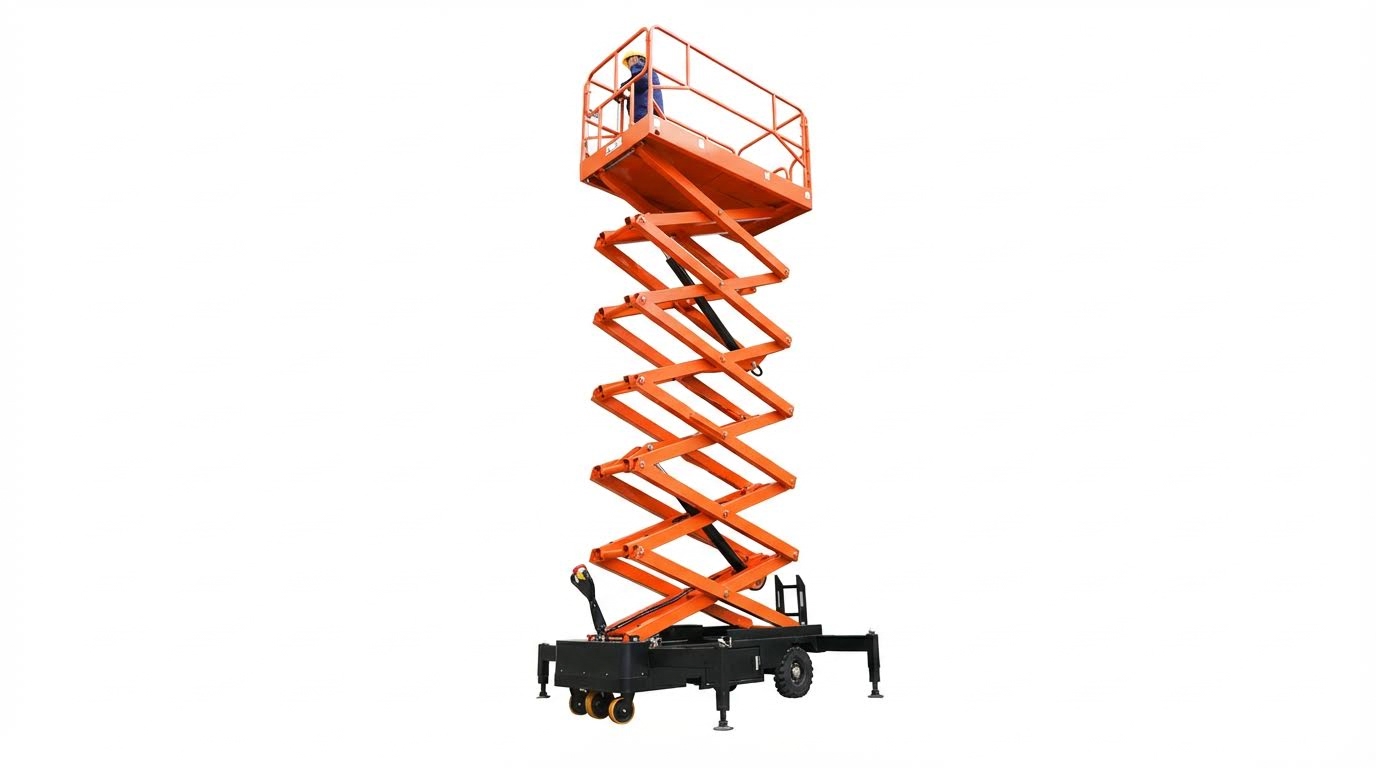
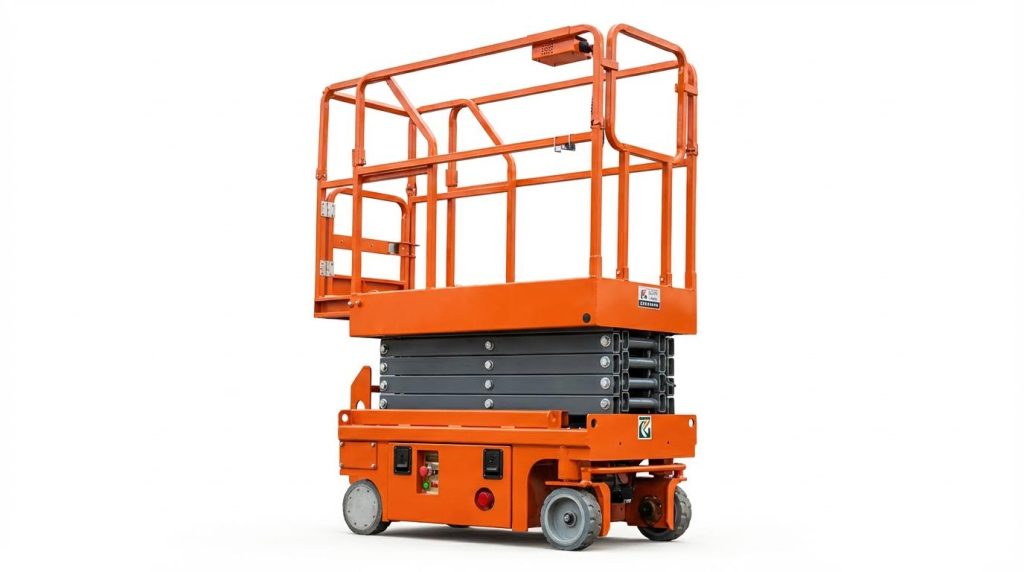
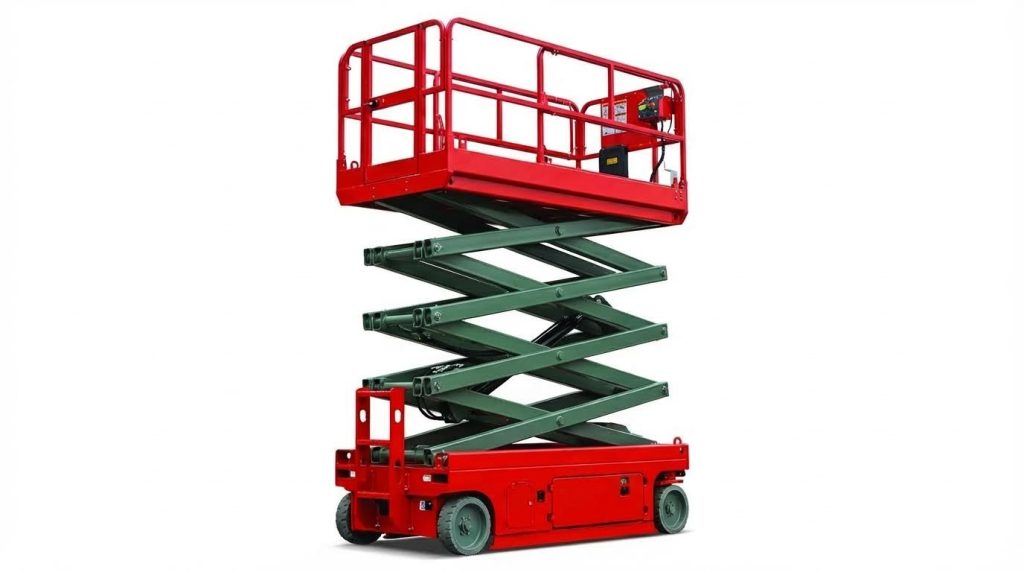
Scissor lifts elevated the platform vertically using a pantograph linkage that expanded under hydraulic or electric actuation. This configuration provided a large, stable work deck with relatively high load capacity, suited to slab work such as warehouse maintenance or interior construction. Travel was usually restricted to level, firm surfaces, and the working envelope was essentially a vertical column. Vertical mast platforms used a single telescoping mast with a compact base, often with electric drive and narrow chassis widths. They offered lower capacities than scissor lifts but excelled in tight aisles, indoor facilities, and applications requiring minimal floor loading.
Specialty Units: Cherry Pickers And Compact AWPs
Cherry pickers historically described lightweight, truck-mounted boom platforms used for tasks like tree trimming and streetlight maintenance. They prioritized road mobility, quick set-up, and moderate working heights rather than extreme outreach or heavy payloads. Compact AWPs included small self-propelled mast lifts and micro-scissors designed to pass through standard doors and operate on finished floors. These units often used electric drives, non-marking tires, and low overall mass to reduce building impact. Specialty MEWPs filled application gaps where standard booms or scissors were oversized, improving productivity while maintaining compliance with work-at-height regulations.
Key Design Features And Performance Characteristics
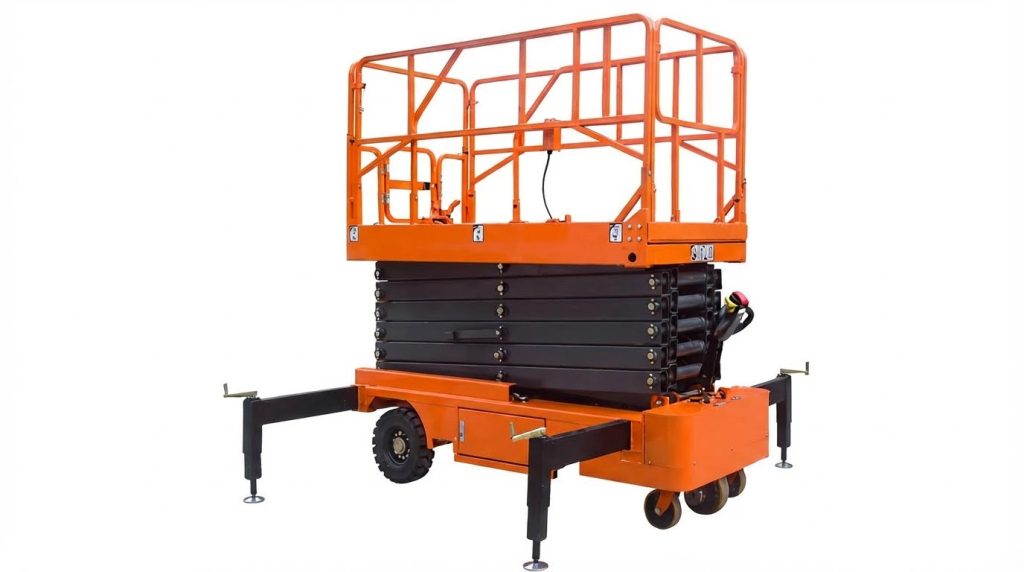
Key design features governed how a MEWP performed, how safely it operated, and how long it remained in service. Engineers balanced structural capacity, drive and actuation choices, terrain interface, and safety architectures against regulatory constraints and lifecycle cost. Understanding these design levers helped users specify the right platform and operate it within certified limits. The following sections outlined the main technical aspects that defined MEWP performance envelopes.
Structural Design, Stability, And Load Ratings
The structural design of MEWPs relied on welded steel or high-strength alloy frames, booms, and platforms sized for defined load cases. Engineers calculated allowable platform capacity as a combination of personnel, tools, and materials, expressed in kilograms and limited by global stability and local member strength. Stability analysis considered centre-of-gravity position, boom angle, outreach, chassis width, and outrigger configuration where fitted. Standards required that machines resisted overturning with defined safety factors under maximum rated load, specified wind speeds, and slope limits, typically around 5% when elevated. Load charts and capacity decals documented these constraints and operators had to treat them as hard limits. Exceeding rated loads or outreach reduced stability margins sharply and increased tip-over risk, particularly on uneven or compliant surfaces such as soil or hot asphalt.
Hydraulic And Electric Actuation Systems
Hydraulic systems provided primary lifting and slewing power in most MEWPs through pumps, valves, cylinders, and rotary actuators. Designers sized pumps and orifice areas to achieve controlled lift speeds while limiting pressure peaks that could overload structures. Proper hose routing, bend radii, and protection reduced leak and burst risks, which otherwise could cause uncontrolled descent or loss of manoeuvrability. Electric actuation, including electric drive motors and electrohydraulic pumps, had gained share, especially in lighter AWPs and indoor units. Battery-electric systems reduced local emissions and noise and supported precise, closed-loop control. In both architectures, engineers integrated proportional valves and electronic controllers to smooth acceleration and deceleration, improving platform stability. Maintenance history showed that fluid cleanliness, correct viscosity for ambient temperature, and periodic seal replacement were critical to preserving response and extending component life.
Chassis, Tires, Tracks, And Terrain Capability
The chassis established the machine’s footprint, ground clearance, and load distribution, which directly affected terrain capability. Compact indoor scissor lifts typically used narrow, rigid frames with non-marking solid tires optimized for flat concrete floors. Rough-terrain boom lifts and truck-mounted platforms employed wider track widths, reinforced frames, and higher clearances to handle ruts and gradients within specified slope limits. Tire selection influenced both stability and traction; engineers specified size, ply rating, and compound to match maximum axle loads and ground conditions. Mismatched or underspecified tires degraded stability margins and violated compliance with manufacturer ratings. On soft or irregular ground, tracked undercarriages or high-flotation tires reduced ground pressure and improved mobility, at the cost of higher complexity and maintenance. Daily inspections of tire condition, tread depth, and inflation, together with debris removal from undercarriages, preserved designed terrain performance and reduced tip and slip incidents.
Safety Systems, Sensors, And Control Architectures
Modern MEWPs relied on layered safety systems that combined mechanical design with electronic sensing and control logic. Tilt sensors monitored chassis inclination and triggered alarms or motion cut-outs when operators approached certified slope limits. Load-sensing systems measured platform load via pressure transducers or load cells and prevented elevation or outreach beyond rated capacity. Emergency stop circuits, descent controls, and redundant lowering paths ensured that operators could return to ground in fault conditions. Control architectures used distributed electronic control units linked to joysticks, limit switches, and safety interlocks; designers implemented fail-safe defaults so that detected faults drove the system to a safe state. Visual and audible alarms, together with mandatory decals and capacity charts, supported human decision-making. Integration with telematics platforms enabled remote monitoring of fault codes, sensor status, and misuse events, allowing fleet managers to intervene early and maintain compliance with evolving safety standards.
Selection, Lifecycle Costs, And Maintenance Strategy
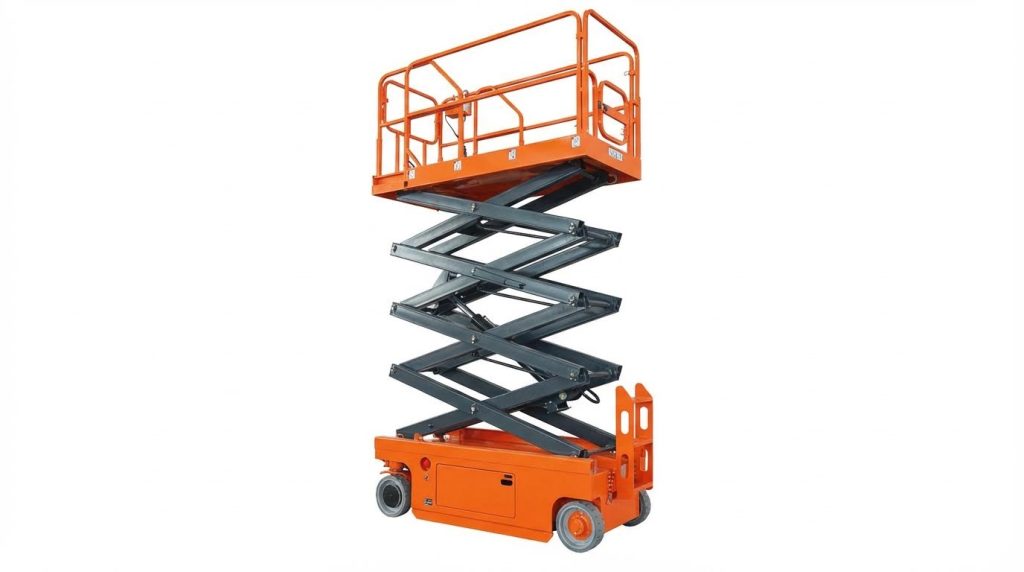
Selection of a MEWP affected safety, productivity, and total lifecycle cost. Engineers evaluated platform type, reach, and duty cycle against task requirements and site constraints. A structured approach reduced oversizing, underutilization, and maintenance overhead. Lifecycle planning integrated acquisition, operation, maintenance, and end-of-life decisions into a single cost framework.
Matching MEWP Types To Industrial Applications
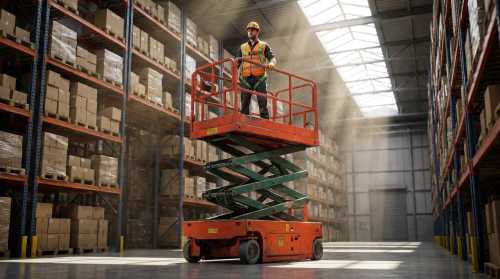
Application analysis started with required working height, horizontal outreach, and access geometry. Telescopic boom lifts suited long, straight outreach on open construction or utility sites, while articulating booms allowed operators to reach over obstacles such as pipe racks or façades. Scissor lifts and vertical mast platforms provided high vertical capacity and larger platforms for indoor fit-out, warehouse maintenance, and process plant work where floor loading allowed. Vehicle-mounted AWPs, including van- and truck-mounted units, offered rapid deployment for utilities, street lighting, and tree care, with reach and stabilizer configuration sized to road conditions and typical task duration. Compact AWPs and cherry pickers fit constrained urban sites, low floor load structures, and short-duration tasks where transportability and setup time dominated selection criteria.
Safety Compliance, Training, And Operating Limits
Safety compliance relied on aligning equipment choice and operation with MEWP standards and local regulations. Operators completed certified training that covered machine-specific controls, load charts, grade limits, and emergency procedures, and refresher training maintained competence. Pre-use inspections checked hydraulic leaks, structural damage, tire condition, stabilizer deployment, and safety devices such as tilt and load sensors, emergency stops, and alarms. Operating limits, including maximum platform load, allowable wind speed, and slope restrictions, were respected to prevent tip-overs and structural overload. Work planning accounted for ground bearing capacity, overhead power lines, weather forecasts, and rescue arrangements, with communication protocols and PPE, including harnesses and lanyards, defined in the job method statement.
Preventive Maintenance Of Hydraulics And Structures
Preventive maintenance strategies focused on hydraulic, structural, and mechanical subsystems that governed reliability and safety. Hydraulic systems required routine inspection of hoses, cylinders, pumps, and valves for leaks, abrasion, and abnormal noise, with fluid level and cleanliness monitored against manufacturer specifications. In hot or humid conditions, technicians checked fluid oxidation, cleaned coolers, and protected electrical enclosures from moisture to avoid overheating and corrosion-related failures. Structural inspections verified welds, boom sections, scissor linkages, platforms, and guardrails for cracks, deformation, or corrosion, ensuring rated load capacity remained valid. Maintenance schedules combined daily visual checks by operators with periodic detailed examinations by qualified technicians, documented for regulatory compliance and residual value protection.
Digital Tools, Telematics, And Predictive Analytics
Digital tools and telematics enhanced MEWP fleet management and safety performance. Mobile applications provided operators with digital manuals, pre-use checklists, and control tutorials via QR codes, reducing misuse and improving inspection quality. Telematics systems monitored engine hours, battery state, hydraulic temperatures, fault codes, and geographic location, enabling condition-based servicing instead of purely calendar-based intervals. Fleet managers used analytics to identify high-idle machines, underutilized units, and recurring fault patterns, optimizing deployment and maintenance resources. Advanced platforms integrated weather data, safety alerts, and electronic work records, supporting predictive maintenance models that reduced unplanned downtime and extended component life while maintaining regulatory audit trails.
Summary And Strategic Implications For MEWP Users
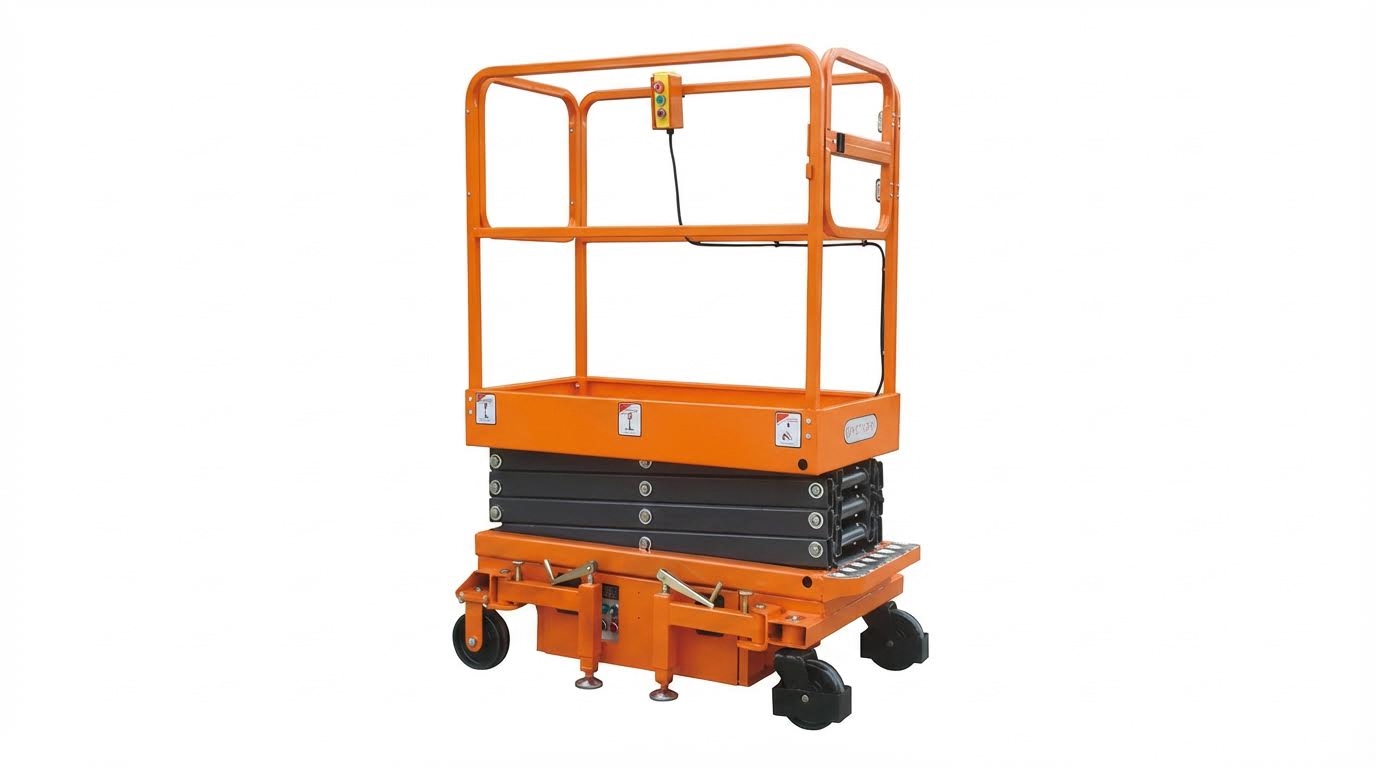
Mobile elevated work platforms had evolved into highly specialized, high-value assets that supported construction, utilities, maintenance, and emergency operations. Core MEWP families, including self-propelled units, vehicle-mounted platforms, boom lifts, scissor lifts, and cherry pickers, offered distinct envelopes of reach, mobility, and load capacity. Their design integrated structural frames, hydraulic and electric actuation, terrain-appropriate chassis systems, and layered safety architectures with sensors and interlocks. Effective use depended on correct type selection, rigorous operator training, and disciplined maintenance of hydraulic, electrical, and structural systems.
For asset owners, lifecycle economics increasingly hinged on preventive maintenance and data-driven fleet management. Scheduled inspections of booms, platforms, guardrails, tires, and safety devices reduced unplanned downtime and extended service life. Regulatory frameworks and standards required certified training, documented pre-use checks, and adherence to manufacturer limits on load, outreach, and slope. Digital tools and telematics platforms already delivered real-time health monitoring, fault alerts, and electronic checklists, enabling earlier detection of issues and tighter compliance control.
Looking ahead, users needed to plan for deeper electrification, stricter emissions and noise limits, and tighter work-at-height safety expectations. Integration of predictive analytics, condition monitoring of hydraulics and structures, and connected training ecosystems would further shift MEWP management from reactive repair to proactive reliability engineering. Strategically, organizations that aligned MEWP type selection, operator competence, and maintenance strategy with their specific risk profile and duty cycles would achieve lower total cost of ownership, higher availability, and improved safety performance, while remaining adaptable to evolving standards and technologies.