Electric forklift control systems combined traction, lift, steering, and safety logic into tightly integrated electronic architectures. Modern machines used keypads, PIN access, and safety switches with auxiliary unlocking to manage who could operate the truck and how it responded to faults or emergencies. At the same time, speed management relied on programmable inverters, sensors, and speed limiters, including multi-stage overspeed alerts and zone-based limits, to balance productivity with safety. This article examined core control architectures, unlocking and interlock concepts, and practical speed adjustment and troubleshooting methods, concluding with implementation guidance for compliant, reliable forklift control strategies.
Core Architectures Of Electric Forklift Controls
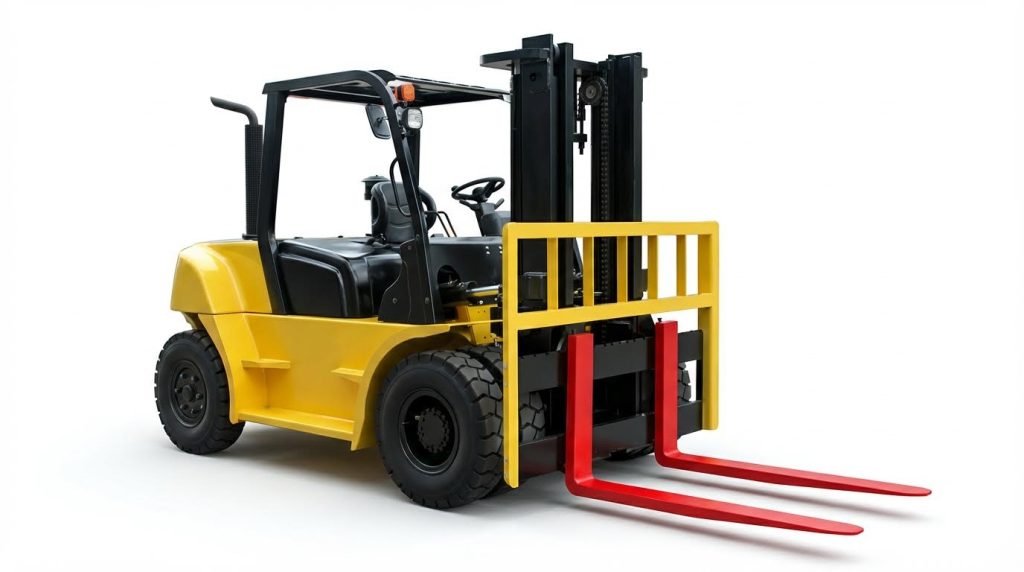
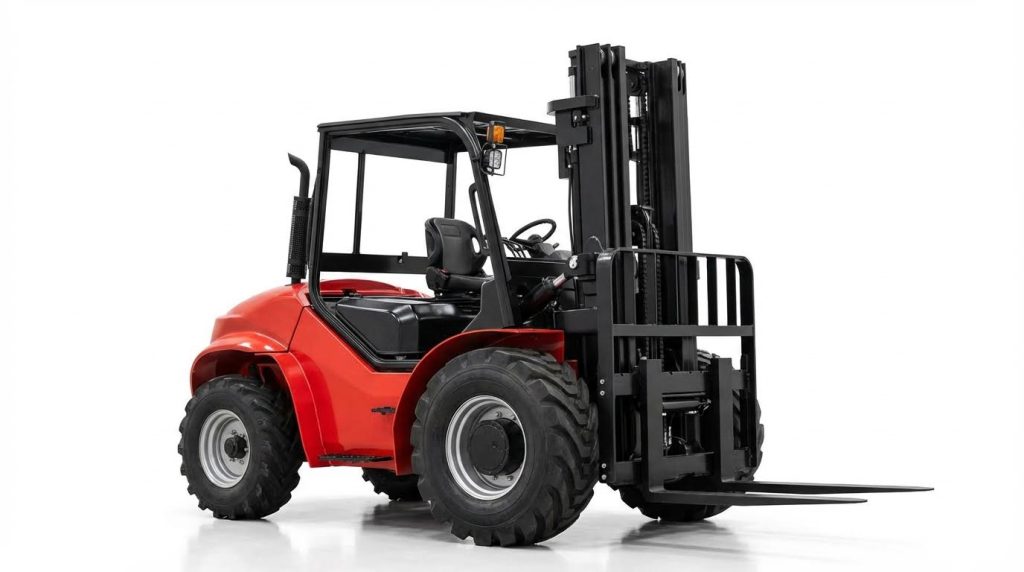
Electric forklift control architectures used modular subsystems for drive, lift, steering, access control, and safety interlocks. Designers structured these subsystems around a central vehicle controller that coordinated torque demand, hydraulic actuation, and braking. Modern machines integrated diagnostics, parameter programming, and speed management into the same architecture. Understanding these building blocks allowed engineers to specify safe, maintainable, and upgradeable fleets.
Drive, Lift, And Steering Control Fundamentals
The traction drive system converted operator demand at the accelerator into motor torque via an inverter or controller. The controller limited torque based on speed, load, and configured parameters such as maximum speed and acceleration ramps. Lift functions typically used electro-hydraulic valves, with proportional solenoids regulating flow for lift, tilt, and auxiliary circuits. Steering on electric forklifts often relied on electric steering pumps or steer-by-wire actuators, with angle sensors feeding back to the controller for steering rate and cutback logic.
Control architectures separated power and control circuits to simplify diagnostics and improve safety. The main contactor and pre-charge circuits handled battery connection and inrush control, while low-voltage logic governed enable signals and interlocks. Feedback from current sensors, temperature sensors, and speed sensors allowed closed-loop regulation of traction and lift performance. This structure also supported features such as creep speed, ramp hold, and automatic braking on slopes.
Keypads, PIN Access, And Operator Authorization
Keypad and PIN systems replaced or supplemented mechanical keys to control operator access. For example, the Weidemann Hoftrac 1190e required a PIN entry on the keypad before unlocking and starting the vehicle. LED indicators showed keypad status: one LED illuminated when the keypad was ready, and another confirmed correct PIN entry, while an incorrect PIN left the confirmation LED off and blocked starting. Users configured PINs through a fleet or equipment management portal; if no PIN was configured, the vehicle could be started without a code.
Keypads typically used dedicated buttons for confirmation and cancellation, allowing operators to correct entry errors before validation. In more advanced forklift models, the same keypad granted access to programming or diagnostic menus using defined button sequences and timing windows. For instance, holding specific buttons while turning the key ON and then entering sequences such as 3‑1‑2‑3 or 2‑3‑4‑1 within 10 seconds allowed access to adjustment or diagnostic menus. This architecture supported tiered authorization, where basic operators used only start/stop functions and technicians accessed configuration and fault logs.
Safety Switches And Auxiliary Unlocking Logic
Safety switches on doors and guards ensured that hazardous movements stopped when access points opened. In coded safety switches such as CET‑AR‑AH types, the auxiliary unlocking feature allowed mechanical release of the actuator, but this function was not classified as a safety function. The machine manufacturer had to select appropriate unlocking mechanisms, such as anti‑panic or emergency unlocking, based on risk assessment and relevant product standards. Auxiliary unlocking served mainly for service and rescue situations rather than routine operation.
Key-based auxiliary unlocking could be retrofitted, but standards required that it not be used to lock the switch during maintenance to avoid unintended re‑locking. Correct use involved unscrewing a security screw and rotating the unlocking element about 180° with a tool in the indicated direction, or turning a key where fitted. After use, the device had to return to its original position and be sealed, for example with sealing lacquer, and then tested. Activation typically disconnected a monitoring output and could place other outputs in an undefined state, so control systems needed logic that detected this status and prevented automatic restart until the door was cycled.
Integration With Inverters, Encoders, And Sensors
Electric forklift control architectures tightly integrated traction inverters, encoders, and position and speed sensors. The inverter received torque or speed references from the vehicle controller and used feedback from encoders or sensorless estimators to regulate motor speed. Parameter sets defined control modes, such as sensorless vector control or vector control with encoder, and required accurate motor nameplate data and auto‑tuning results for stable operation. Incorrect motor parameters or gain settings for speed and flux regulators could cause speed fluctuations, poor torque response, or protective derating.
Reference limits for minimum and maximum speed, as well as scaling of analog or digital references, determined how operator commands translated into motor behavior. Digital outputs and relay functions mapped conditions such as overspeed, torque saturation, or diagnostic thresholds to specific terminals, following programmable logic like “N > Nx and Nt > Nx” in encoder-based modes. Encoders required correct signal phasing and wiring; reversed phases or inverted encoder signals could reduce speed and trigger torque limitation. Robust integration also considered environmental factors, such as dust on wheel sensors
Unlocking Systems, Safety Interlocks, And Compliance
Unlocking systems in electric forklifts formed a critical interface between personnel access, machine isolation, and functional safety. Designers had to separate convenience functions, such as auxiliary unlocking, from safety-related interlocks that complied with EN ISO 13849 and IEC 62061. Modern architectures combined coded safety switches, door interlocks, and electronic authorization to prevent hazardous movements during access. Correct classification of each unlocking function determined the required performance level, validation effort, and documentation.
Auxiliary Unlocking Versus Safety Unlocking Functions
Auxiliary unlocking on safety switches, such as CET-AR-AH type devices, provided a non-safety, last-resort means of mechanically releasing a guard. Standards treated this function as non-safety because it bypassed normal interlocking and did not guarantee safe stop or hazard removal. The machine manufacturer had to implement dedicated safety unlocking, for example anti-panic or emergency release, based on a documented risk assessment and applicable product standards. Designers had to ensure that auxiliary unlocking did not become a de facto safety function in procedures, training, or signage.
Auxiliary unlocking typically required tools, for example a screwdriver to rotate an internal cam about 180° after removing a security screw. This design reduced the likelihood of inadvertent operation and signaled a maintenance or fault condition rather than normal access. When activated, monitoring outputs such as OUT changed state or became undefined, so the control system had to detect this and prevent restart. After resetting auxiliary unlocking to its original sealed position, operators had to open and close the protective door once more to re-establish valid interlock status.
Key-Based, Anti-Panic, And Emergency Unlocking Design
Key-based auxiliary unlocking options allowed later retrofit and gave maintenance staff controlled access to trapped persons or jammed doors. However, standards required that such keys did not serve as lockout devices to keep a switch locked during maintenance, since that could unintentionally enable the locking mechanism. Safety unlocking for personnel escape used anti-panic or emergency release mechanisms that operators could actuate from inside the hazard zone without tools or special knowledge. These devices formed part of the safety function and therefore required suitable performance levels and fault monitoring.
On vehicles, electronic authorization complemented mechanical unlocking concepts. For example, PIN-based keypads on machines like the Hoftrac 1190e controlled start enable by requiring a valid PIN before traction became possible. LEDs indicated keypad readiness and correct or incorrect PIN entry, integrating access control into the functional safety concept. Forklift keypads also supported access to adjustment and diagnostic menus through defined button sequences, so designers had to segregate these functions from safety-related stop, start, and interlock channels.
Commissioning, Testing, And Maintenance Of Unlock Devices
Commissioning of auxiliary and safety unlocking devices required systematic verification during every mounting or re-mounting of the switch. Installers had to check that the unlocking mechanism operated smoothly without tensile stress on the actuator, which could block mechanical release. Procedures mandated functional tests after installation: actuate the auxiliary unlocking, verify output behavior, then reset, open, and close the guard and confirm normal operation. Any sealing, for example with sealing lacquer, had to occur only after a successful test.
Maintenance plans included regular inspection intervals for unlocking devices, aligned with the overall safety-related parts of the control system. Technicians checked for damage, contamination, or misalignment that could render the unlocking inoperable during an emergency. For key-based auxiliary unlocking, maintenance staff verified that the key turned freely and that the device returned fully to its initial position after use. Documentation of these tests supported compliance with machinery regulations and provided traceability for audits and incident investigations.
Failure Modes, Diagnostics, And Standards Alignment
Typical failure modes for unlocking systems included blocked actuators, stripped screws, damaged cams, and wiring faults in monitoring outputs. Incorrect installation, such as mounting with permanent tensile load on the actuator tongue, increased the probability of mechanical jamming at the moment of unlocking. Diagnostic strategies relied on monitoring outputs like OUT and OUT D, which indicated auxiliary unlocking activation or undefined states that the safety PLC had to interpret as a demand to stop or inhibit restart. Periodic proof testing reduced the likelihood of dangerous undetected failures and supported the claimed performance level.
Standards alignment required mapping each unlocking function to the correct safety category and documenting the safety function, including input, logic, and output chain. Auxiliary unlocking stayed explicitly outside safety functions but still had to comply with mechanical integrity and usability requirements. Safety unlocking, anti-panic, and emergency release mechanisms followed
Speed Adjustment, Limiting, And Troubleshooting
Electric forklift speed management balanced safety, productivity, and component life. OEMs delivered trucks with preset speed values that often did not match site-specific risk profiles or throughput targets. Engineers therefore evaluated both control parameters and operating context before modifying speed. Effective practice combined fixed limits, zone-based control, and structured diagnostics for speed-related faults.
Preset Speeds, Site Policies, And Risk-Based Limits
Forklifts left the factory with default maximum speeds defined by model, powertrain, and stability testing. Sites frequently reduced these presets after incidents or near misses, especially in mixed traffic areas with pedestrians. Typical target limits in shared spaces were about 8 km/h to 10 km/h, equivalent to roughly 5 mph, while outdoor yards sometimes allowed higher values. Risk-based limits considered aisle width, visibility, floor condition, load height, and pedestrian density rather than speed alone. Safety managers translated formal risk assessments into written speed policies and programmed controller limits, ensuring consistency with training, signage, and enforcement. This approach avoided arbitrary reductions that could unnecessarily degrade productivity or operator comfort, especially in cold outdoor environments where longer exposure times mattered.
Electronic Speed Limiters And Multi-Stage Overspeed Alerts
Electronic speed limiters used wheel speed sensors or drive motor feedback to compare actual speed against configured thresholds. When the forklift exceeded a preset alarm speed, the controller issued an “overspeed attention” warning and simultaneously reduced the throttle command to cap speed at the defined value. Advanced systems implemented multi-stage alerts: a first stage around 8 km/h triggered strobe lights, a second stage near 10 km/h added an audible alarm, and a third stage at about 12 km/h combined strobes with a voice prompt such as “Overspeed, please be cautious.” Integration with electronic or mechanical throttle controllers ensured the limiter enforced speed rather than only warning the operator. Engineers tuned thresholds to site rules and validated that limiting did not compromise stopping distance or stability during emergency maneuvers.
Zone Speed Control, Reverse Limits, And Telematics
Zone speed control divided facilities into areas with distinct speed caps, for example 10 km/h in general factory spaces and 5 km/h in workshops or pedestrian crossings. Implementations used floor markings combined with beacons, RFID, or geofencing so that onboard controllers automatically adjusted the maximum speed when a forklift entered a defined zone. Reverse speed limiting applied stricter caps when travelling backwards, improving control in narrow aisles and congested docks. Reverse assistance systems broadcasted a clear “Caution! Vehicle reversing” voice alert to warn nearby workers in parallel with beacon lights. Telematics platforms logged speed profiles, overspeed events, and zone violations, enabling supervisors to identify high-risk behaviors and optimize limits. These data-driven adjustments improved compliance while avoiding blanket restrictions that unnecessarily reduced throughput.
Diagnosing Speed Fluctuations And Programming Errors
When speed adjustment did not respond as expected, technicians first verified that the truck was not in a special program mode that intentionally restricted speed or ramped it over time. Very low ambient temperatures could keep motors and drives cold, delaying speed increase until components warmed. Dust accumulation on speed sensors inside wheel covers caused erratic readings and required cleaning of the housing and sensor faces. For inverter-controlled drives, loose power or control wiring produced speed fluctuations; locking out power and tightening all terminals, including internal inverter connections, was essential. Incorrect parameterization of vector control modes (for example P202 set to sensorless or encoder vector) demanded checking motor data (P400–P406), auto-tuning results (P409–P413), and speed and flux regulator gains (P161, P162, P175, P176). Technicians also confirmed minimum and maximum speed references (P133, P134) and analog reference scaling (P234–P247) matched the application and motor nameplate. If these checks failed, a hardware fault in sensors, potentiometers, or the inverter was likely and required formal repair procedures.
Summary And Practical Guidance For Forklift Controls
Electric forklift control architectures combined drive, lift, steering, access control, and safety interlocks into tightly integrated systems. Safety switches with auxiliary unlocking, keypads with PIN access, and inverter–encoder feedback loops formed the backbone of safe operation and authorization. Speed management relied on preset limits, electronic speed limiters, zone control, and diagnostic functions to balance throughput with risk reduction. Across all subsystems, commissioning quality, parameter discipline, and periodic verification determined real-world safety performance more than hardware choice.
From an industry perspective, trend lines pointed toward deeper digitalization and connectivity. Telematics platforms logged access, overspeed events, and impacts, while geo‑based speed zoning and programmable keypads enforced site rules without relying solely on operator behavior. Standards for functional safety and interlocking required clear separation between true safety functions and auxiliary features, such as non-safety auxiliary unlocking on interlock switches. Future developments would likely tighten integration between truck controllers, speed limiters, and cloud analytics, enabling predictive maintenance on unlocking devices, sensors, and inverters.
For practical implementation, engineers should start with a formal risk assessment that drives choices for emergency unlocking, anti‑panic hardware, and speed policies in pedestrian areas. Commissioning procedures must include verification of every unlocking path, keypad logic, and speed parameter set, with documented tests after each mounting or software change. Maintenance plans should schedule regular checks of auxiliary unlocking operation, sensor cleanliness, wiring integrity, and inverter parameter consistency, supported by clear troubleshooting workflows. A balanced approach treats electronic controls as enablers, not substitutes, for training, visibility management, and disciplined configuration control across the forklift fleet.