Electric forklift battery strategy depended on chemistry, charging method, and operating pattern. This article examined key battery types and charging fundamentals, including state of charge, depth of discharge, and how standard, fast, and opportunity charging affected cycle life. It then reviewed typical charging times and performance trade-offs for lead-acid, lithium-ion, and TPPL batteries, linking charge rates and charger sizing to runtime and fleet uptime. Finally, it outlined safe, efficient charging procedures, from temperature control and station design to smart chargers and BMS-based predictive maintenance, before consolidating these insights into practical optimization strategies for industrial fleets.
Key Battery Types And Charging Fundamentals
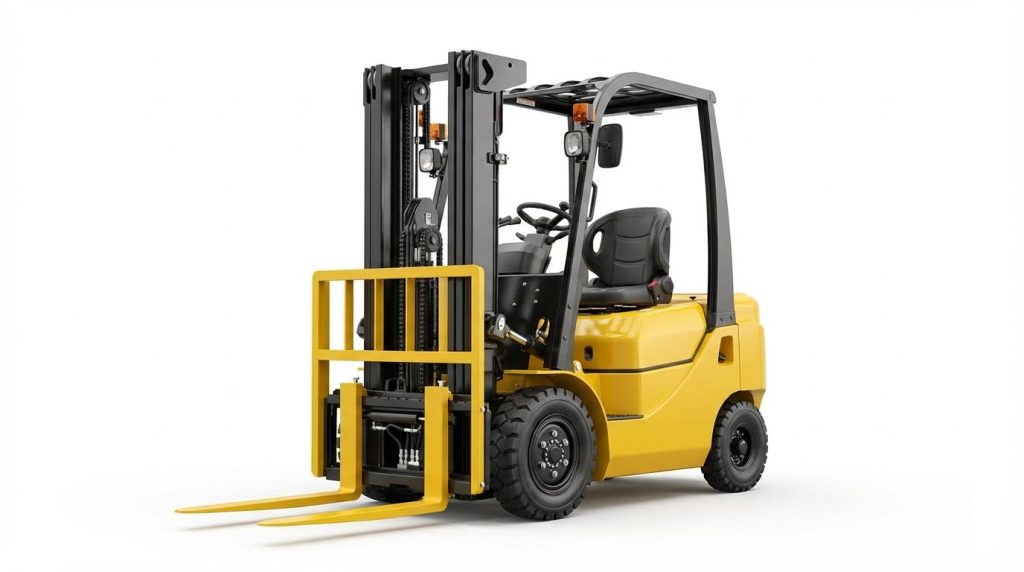
Electric forklift fleets relied on two primary chemistries: flooded or valve-regulated lead-acid and lithium-ion, often LiFePO4. Each chemistry imposed different constraints on charging time, cooling needs, and safe depth of discharge. Understanding state of charge (SOC), depth of discharge (DOD), and C‑rate helped engineers balance runtime, cycle life, and infrastructure cost. Standard, fast, and opportunity charging strategies evolved to match single-shift and multi-shift duty cycles while controlling temperature and avoiding sulfation or lithium plating.
Lead-Acid vs. Lithium-Ion Forklift Batteries
Lead-acid forklift batteries required long, uninterrupted full charges, typically 8–10 hours, followed by about 8 hours of cooldown. Their electrochemistry tolerated deeper discharges but suffered from sulfation if operators repeatedly performed partial charges or left batteries partially discharged. Lithium-ion, especially LiFePO4, accepted partial-state and opportunity charging without memory effect and reached 80% SOC in roughly 1–2 hours. Lithium packs integrated battery management systems (BMS) that controlled current, monitored cell temperatures, and prevented overcharge or over-discharge. In practice, lead-acid suited overnight charging and battery change-out rooms, while lithium supported multi-shift, charger-on-break operation with higher uptime and reduced maintenance.
State of Charge, Depth of Discharge, And Cycle Life
State of charge represented remaining capacity as a percentage, while depth of discharge indicated how much of the nominal capacity operators had removed. Lead-acid batteries achieved their rated 2,000 charge cycles only when users limited DOD to about 70–80% and avoided chronic over-discharge below 20–30% SOC. Lithium-ion systems preferred partial-depth discharges, typically 30–50% DOD, and maintained long life when operators kept SOC between roughly 20% and 80% during daily use. Charge strategy also affected cycle life; opportunity charging at moderate C‑rates extended total usable cycles by reducing deep discharge events. Accurate SOC estimation from the BMS or truck display was critical for scheduling charges before voltage sag caused downtime or irreversible damage.
Standard, Fast, And Opportunity Charging Compared
Standard charging used moderate current, around 0.5C, and completed a 0–100% cycle in about 2 hours for lithium, but 8–10 hours for lead-acid due to gassing and absorption phases. Fast charging increased current up to 1C or even 1.5C on certified systems, cutting charge time to roughly 1–2 hours but raising heat generation and reducing cycle life compared with standard profiles. Opportunity charging applied lower C‑rates, near 0.3C, during breaks or shift changes to top up from 30–50% SOC, which reduced deep cycles and could raise total cycle count to around 4,500 for optimized lithium packs. Lead-acid opportunity charging required careful equalization and thermal management to avoid sulfation and overheating, whereas lithium packs with robust BMS handled frequent micro-cycles with minimal degradation. Fleet engineers selected among these modes based on shift structure, available electrical capacity, and acceptable trade-offs between charger investment, battery life, and truck availability.
Typical Charging Times And Performance Trade-Offs

Charging time directly constrained forklift availability and shaped fleet sizing decisions. Engineers balanced chemistry limits, charger power, and thermal behavior against runtime requirements. Lead-acid, lithium-ion, and TPPL chemistries delivered very different charge profiles, so selecting the wrong strategy often locked operations into unnecessary battery inventory or downtime. Understanding these trade-offs enabled data-driven choices on charger infrastructure, shift patterns, and safety controls.
Lead-Acid: Full Charge, Cooldown, And Equalization
Industrial lead-acid forklift batteries typically required 8–10 hours for a full 0–100% charge using conventional chargers. After charging, they needed an additional 8-hour cooldown period to allow gassing to subside and electrolyte temperature to normalize. This profile suited single-shift or multi-battery operations, where trucks swapped packs between shifts. Weekly equalization charges, usually 6–8 hours at elevated voltage, mitigated sulfation and cell imbalance but extended out-of-service time. Frequent partial charges shortened service life because lead-acid chemistry favored full, uninterrupted cycles to about 80% depth of discharge. Overcharging or charging while hot increased hydrogen evolution, electrolyte loss, and plate corrosion, which reduced usable cycles below the typical 2,000 charge-discharge events.
Lithium-Ion And TPPL: Fast And Opportunity Charging
Lithium-ion LiFePO4 forklift batteries supported much shorter charge windows and frequent opportunity charging. Typical systems reached 80% state of charge in 1–2 hours and 100% in 2–4 hours without a cooldown requirement because they did not gas and used sealed construction. TPPL lead batteries bridged the gap between flooded lead-acid and lithium; they often charged from 40% to 80% in about 1 hour and reached full charge in roughly 1.5–5 hours, depending on duty cycle and charger power. Lithium packs tolerated multiple micro-charges per day during breaks without memory effect, which allowed multi-shift operations to avoid battery swaps. This flexibility reduced the number of batteries per truck but required correctly sized chargers and electrical infrastructure to support higher average power draw. However, aggressive fast charging at high current increased thermal stress and could reduce cycle life if not managed by a robust Battery Management System.
Charge Rates (C-Rate), Runtime, And Fleet Uptime
C-rate described charge or discharge current relative to battery capacity, and it strongly influenced both charge time and life. Standard lithium forklift charging at about 0.5C often delivered a 0–100% charge in roughly 2 hours and supported more than 3,000 cycles, assuming good thermal control. Fast charging at 1C cut charge time to about 1 hour but typically reduced cycle life to around 2,200 cycles due to elevated temperatures and higher reaction rates. Lower-power opportunity chargers at about 0.3C required roughly 3.3 hours for a full cycle yet could extend life to about 4,500 cycles, which benefited fleets prioritizing longevity over minimum turnaround time. Real-world practice usually targeted partial windows, such as 30–80% SOC, to keep batteries within their most efficient range and maintain runtime across shifts. Fleet uptime optimization therefore involved matching C-rate to shift length, break structure, and acceptable replacement interval, rather than simply minimizing charge time.
Impact Of Charger Sizing And Voltage Matching
Charger sizing and voltage matching directly affected safety, charging efficiency, and asset life. A charger needed to match the battery’s nominal voltage and be rated for an appropriate current relative to capacity, typically expressed as a fraction of C. Undersized chargers extended charge time, which could push charging into peak-tariff periods and reduce forklift availability. Oversized or mismatched chargers risked overcurrent, overheating, and excessive gassing in lead-acid batteries, or accelerated degradation and thermal runaway risk in lithium systems if the BMS failed. Standards-compliant fast chargers, including UL-certified high-voltage units, often delivered up to 1–1.5C initially, then tapered to about 0.2C after 80% SOC to control temperature and cell balance. Proper voltage matching also ensured that equalization or absorption phases occurred at correct setpoints, preventing chronic undercharge or overcharge. For multi-truck fleets, engineers typically modeled charger quantity, rating, and diversity factor to guarantee that all batteries reached target SOC between shifts without overloading facility power distribution.
Safe, Efficient Charging Procedures And Conditions

Safe, efficient charging procedures protected operators, extended battery life, and stabilized fleet uptime. This section focused on thermal management, compliant charging infrastructure, correct handling of connections and watering, and the role of smart electronics. It linked practical steps such as temperature control and PPE with system-level tools like BMS and predictive analytics. Together, these practices reduced incidents, avoided premature battery failure, and improved total cost of ownership.
Temperature Control, Cooling, And Thermal Limits
Temperature strongly influenced charge acceptance, internal resistance, and degradation rates. Lithium forklift batteries operated best between roughly 15 °C and 30 °C during charging, with many manufacturers specifying 0–45 °C as absolute limits. Charging lithium cells below 0 °C risked lithium plating and rapid capacity loss within tens of cycles, while charging above about 40–45 °C accelerated SEI growth and resistance. Lead-acid batteries tolerated wider temperatures but still benefited from charging near 25 °C to limit gassing and water loss. Modern LiFePO4 systems used 0.3–0.5C rates to keep pack temperature below about 45 °C, often with forced air or liquid cooling during 1C fast charging. In cold warehouses, BMS-controlled heaters or thermal pads pre-warmed packs to at least about 10 °C before high-current charging.
Charging Station Design And OSHA-Level Safety
Charging areas required good ventilation, acid-resistant floors, and clear no-smoking signage to control hydrogen and spill risks. Facilities installed dry chemical, CO2, or foam fire extinguishers, eyewash stations with at least 15-minute flow, and often drench showers for large installations. Layouts protected chargers and cables from truck impact and provided clear access aisles, emergency phones, and spill neutralization materials such as soda ash. Operators wore face shields, goggles, rubber gloves, and aprons when working around exposed lead-acid batteries. Good practice kept stations clean and dry, with labeled chargers, voltage and Ah ratings displayed, and procedures aligned with OSHA and local electrical codes. Lithium packs reduced gassing concerns but still required ventilation for heat removal and compliance.
Connection Sequence, Venting, And Watering Steps
Correct connection procedures reduced arcing, reversed polarity, and short-circuit hazards. Operators first switched chargers off and unplugged them from mains before connecting clamps. They attached the positive terminal connection first, then the negative, and reversed the order when disconnecting after charge completion. For flooded lead-acid batteries, vent caps remained in place but unobstructed, and battery covers stayed open during charging to dissipate heat and hydrogen. Technicians checked electrolyte and water levels before charging but added distilled or de-ionized water only after charge and cooldown to avoid overflow. They recorded specific gravity, voltage, and water additions in service logs, and used lifting beams or dedicated handling gear to reinstall heavy batteries safely. Jewelry and loose metallic tools stayed away from uncovered terminals to prevent accidental shorts.
Smart Chargers, BMS, And Predictive Maintenance
Smart chargers and Battery Management Systems (BMS) controlled voltage, current, and timing to prevent overcharge and over-discharge. For lithium packs, the BMS monitored individual cell voltages, temperatures, and internal resistance, balancing cells and enforcing cutoffs at 100% state of charge or unsafe conditions. Advanced systems implemented opportunity-charging profiles, tapering current above about 80% SOC and adjusting C-rate based on pack temperature and historical usage. For lead-acid, programmable chargers managed bulk, absorption, and equalize phases, and limited current when sealed vents or high temperatures were detected. Fleet managers used logged data on cycle count, depth of discharge, and temperature excursions to drive predictive maintenance, scheduling replacements before failures. Integrated battery–charger platforms reduced human error, optimized charge windows between shifts, and extended usable cycle life while maintaining safety margins.
Summary: Optimizing Forklift Battery Charging Strategies

Optimized forklift battery charging balanced chemistry limits, charger capability, and shift patterns. Lead-acid batteries operated best with full 8–10 hour conventional charges, weekly equalization, and 8-hour cooldowns, while avoiding deep discharges below about 20–30% state of charge. Lithium-ion, particularly LiFePO4, supported partial-state operation between roughly 20–80% state of charge, frequent opportunity charging, and 2–4 hour full-charge windows without cooldown, enabling higher uptime in multi-shift fleets.
Industry practice increasingly favored partial-depth discharges, controlled charge rates between about 0.3C and 0.5C, and temperature-managed environments around 15–30°C. Fast charging at 1C or higher reduced charge time but shortened cycle life and demanded robust thermal management and certified chargers. Correct charger sizing and voltage matching, combined with smart chargers or battery management systems, reduced overcharge, overheating, and sulfation or lithium plating risks.
Practically, facilities needed dedicated, ventilated charging areas with fire protection, acid neutralization capability, eyewash, and clear no-smoking controls to meet OSHA-level expectations. Operators followed strict connection sequences, checked electrolyte and water levels on lead-acid units, and relied on BMS protections on lithium packs. Forward-looking fleets moved toward integrated battery–charger systems with data logging and predictive maintenance, using real-time temperature, current, and cycle data to schedule opportunity charges and extend service life. Overall, charging strategy evolved from single-parameter “charge overnight” approaches to multi-variable optimization that considered chemistry, temperature, charge rate, runtime targets, and safety compliance.