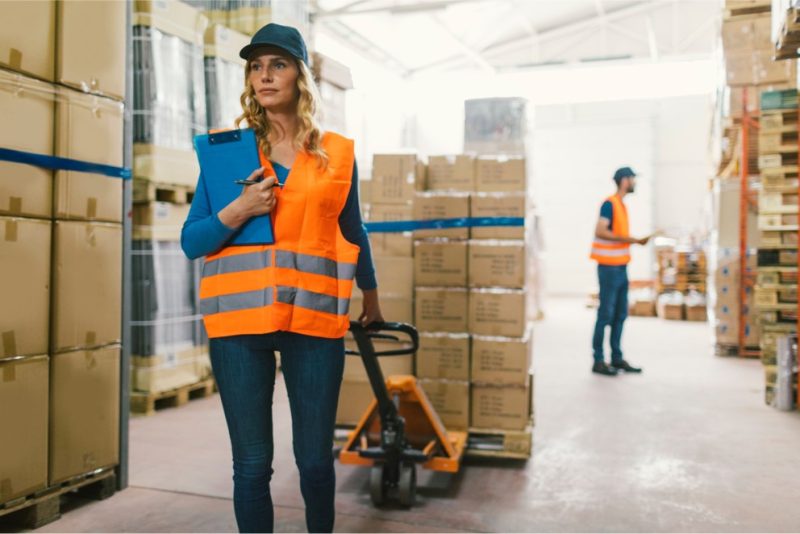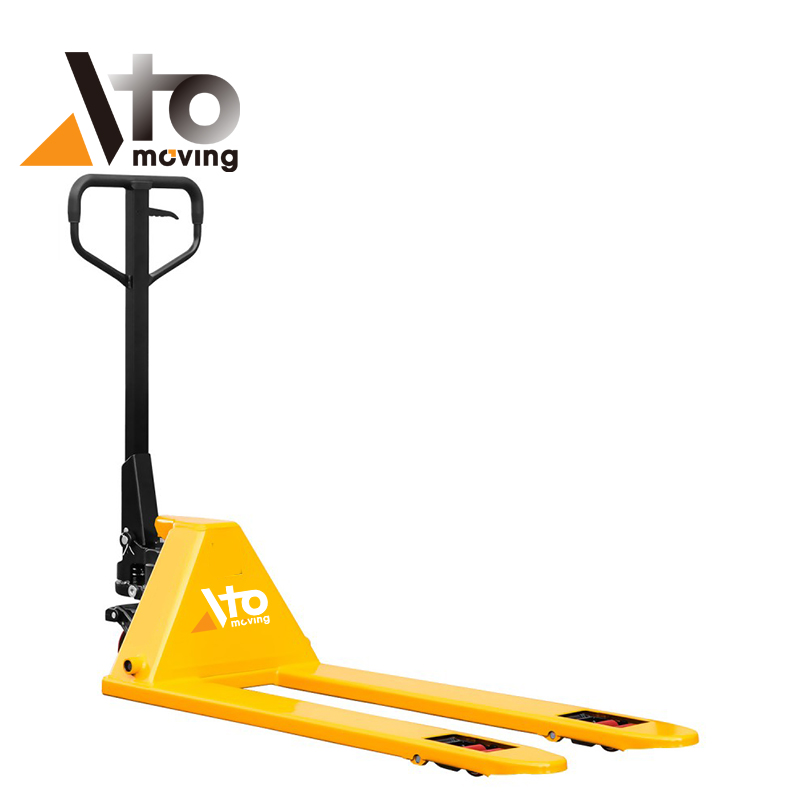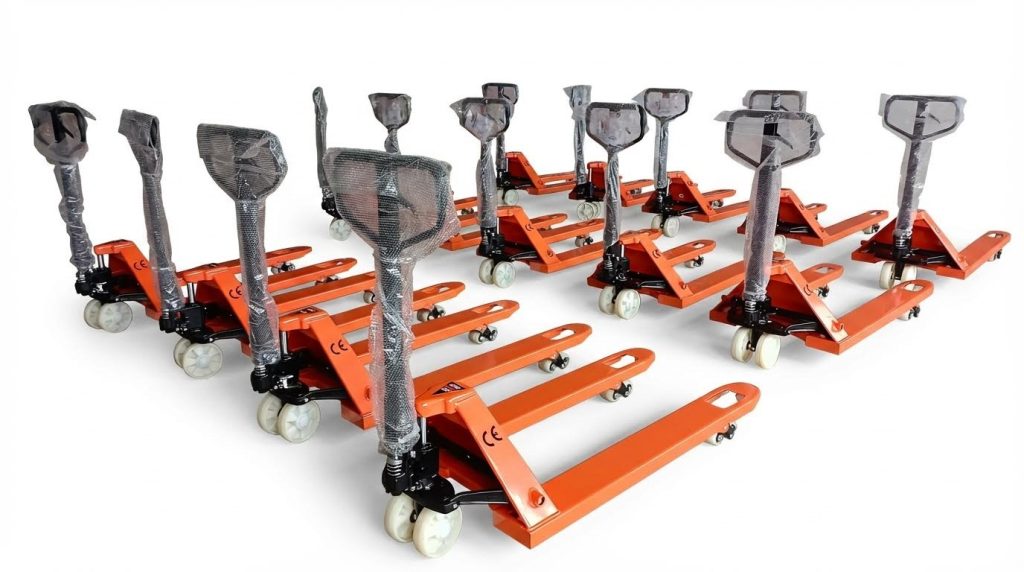
Pallet jack geometry and mass directly constrained how efficiently facilities moved standardized and non-standard loads. This guide examined standard, low-profile, narrow, and extra-narrow formats, with capacities from 500 kg to 5500 kg and detailed fork envelopes, lift ranges, and unit weights. It then linked these physical parameters to engineering selection criteria such as pallet standards, floor conditions, turning radii, ergonomics, and special environments. Finally, it connected weight and dimensional choices to lifecycle cost, safety margins, maintenance regimes, and automation integration, before distilling practical sizing rules for modern warehouses and production plants.
Key Pallet Jack Sizes, Capacities, And Weights
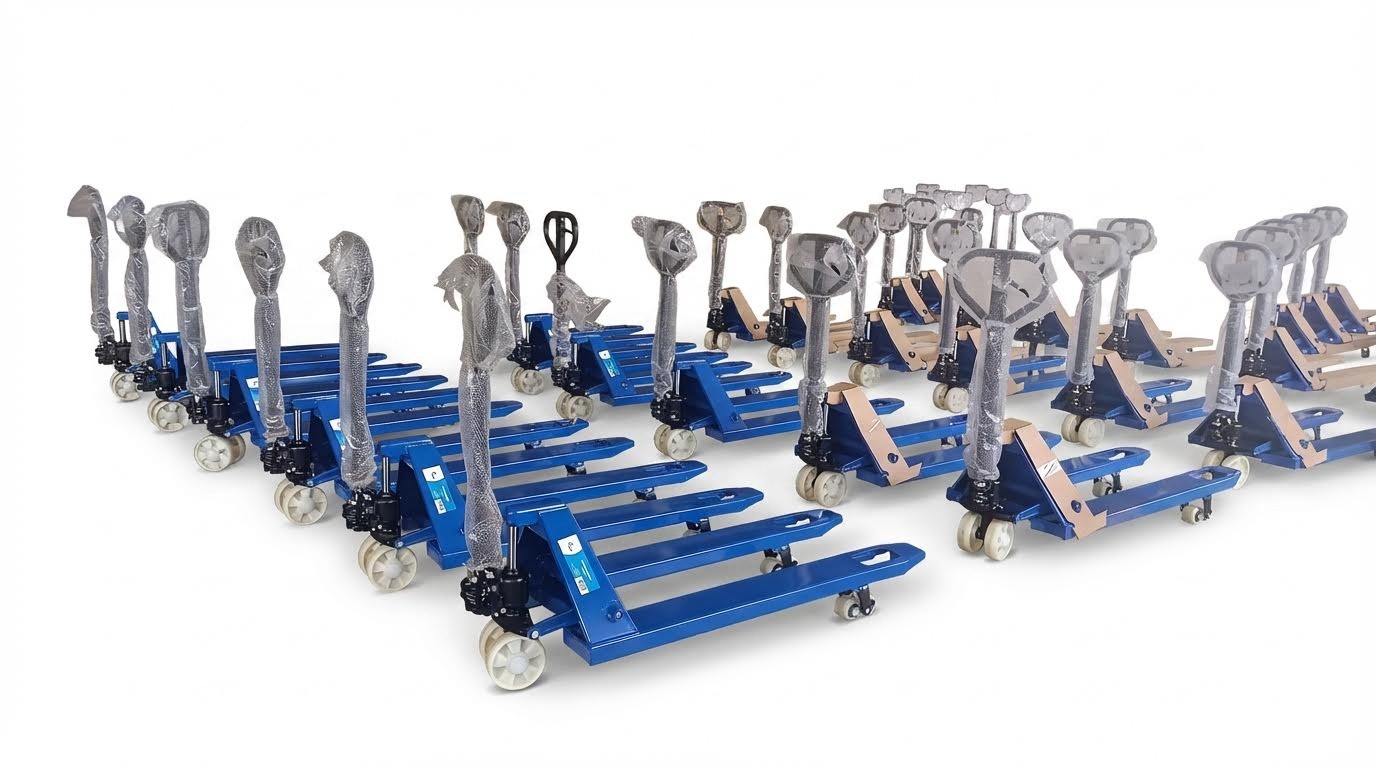
Pallet jack sizing strongly influenced load stability, pallet compatibility, and maneuverability in modern facilities. Engineers compared fork geometry, lift range, and unit mass to match handling equipment to standardized pallets and constrained aisles. Typical hand, low-profile, and narrow variants covered capacities from 500 kg to 5500 kg with fork lengths near 1150 mm to 1220 mm. Understanding these families of dimensions allowed consistent specification across global fleets.
Standard Hand Pallet Jack Dimensions
Standard hand pallet jacks historically targeted EUR and ISO pallet footprints with medium lift ranges. Typical fork lengths clustered around 1150 mm, as shown by Unirack and Mitaco units with 1150 mm forks. Overall fork widths usually ranged between 520 mm and 685 mm, covering narrow Euro and wider CHEP-style pallets. Lowered fork heights stayed near 75 mm to 85 mm, with maximum heights around 185 mm to 195 mm, sufficient for ground clearance without excessive lift. Rated capacities for standard models commonly reached 2500 kg or 5,500 lb, balancing structural robustness with manageable unit weight between roughly 70 kg and 85 kg. Steering wheel diameters around 180 mm and compact load rollers supported smooth entry into closed pallets while keeping approach angles low. These dimensions formed the baseline reference when comparing low-profile or narrow variants.
Low-Profile And Ultra-Low Models
Low-profile pallet jacks served applications with non-standard, low-clearance pallets or skids. CUBLiFT low-profile models operated with minimum fork heights down to 55 mm, compared with 75 mm on typical units. Ultra-low variants lowered to about 1.5 in (≈38 mm) and raised to 6.75 in (≈171 mm), while still carrying up to 5500 kg. Fork lengths remained near 1150 mm to 1200 mm, so operators could interchange them with standard bays without reconfiguring racking. Maximum lift heights around 165 mm to 200 mm provided just enough clearance to traverse uneven floors or dock plates. Engineers had to verify pallet entrance openings and deck-board thickness to justify these geometries. Custom options extended fork lengths up to 2000 mm for long loads, but such configurations required stricter deflection checks and reinforced fork sections. Turning radii near 1265 mm or 1335 mm helped maintain maneuverability despite extended forks.
Narrow And Extra-Narrow Pallet Jack Formats
Narrow and extra-narrow pallet jacks addressed tight aisles, half-pallets, and special process equipment. Typical narrow units, such as the Mitaco MPT25520, used an overall fork width of 520 mm with individual fork widths around 160 mm. CUBLiFT narrow designs offered fork widths of 460 mm, 520 mm, 550 mm, or 685 mm, covering capacities from 500 kg up to 5500 kg. Extra-narrow models with fork footprints near 12 in × 24 in targeted compact loads and work cells, with capacities between 500 kg and 1500 kg. These formats reduced turning envelopes and allowed operation in high-density storage or machinery clearances that standard 685 mm jacks could not enter. Designers balanced narrow width against tipping risk by specifying dual-load wheels, thicker fork plates near 3.8 mm, and conservative capacity ratings. Scale-integrated narrow jacks with 460 mm forks and 1160 mm to 1220 mm lengths supported in-process weighing without separate floor scales.
Typical Unit Weights And Structural Design
Unit weight varied with capacity, fork geometry, and material specification. Light narrow or extra-narrow pallet jacks weighed about 80 lb to 130 lb, which improved manual maneuvering and reduced ergonomic strain. Standard steel jacks, such as Unirack models around 85 kg and Beacon BPM5 units between 184 lb and 423 lb, used solid forks and chrome-plated pump pistons to resist bending and corrosion. Stainless steel versions, designed for corrosive or hygienic environments, typically carried higher mass due to thicker sections and full stainless hydraulic components. Heavy-duty low-profile units rated up to 3500 kg or 5000 kg required reinforced fork webs, additional entry and exit rollers, and sometimes double fork rollers to control deflection. Engineers considered unit weight alongside floor loading and ramp gradients, since heavier trucks increased point loads and rolling resistance
Engineering Selection Criteria For Size And Mass

Engineering teams selected pallet jack size and mass by translating load, pallet, and layout requirements into dimensional constraints. They balanced fork geometry, capacity, wheel material, and turning radius against safety factors and standards. This section outlined a structured way to convert real facility data into fork lengths, widths, lift ranges, and unit weights. It focused on quantifiable parameters that engineers could verify against supplier datasheets or internal specifications.
Matching Fork Geometry To Pallet Standards
Fork geometry had to match the dominant pallet standard and loading pattern in the facility. Typical euro and standard pallets worked with fork lengths around 1150 mm to 1220 mm and overall fork widths between 520 mm and 685 mm, as seen in Unirack, Mitaco, and CUBLiFT data. Engineers checked fork lowered height against pallet entry height; low-profile units with 55 mm to 75 mm minimum height suited thin or damaged pallets. They also evaluated fork inside spacing and individual fork width, such as Mitaco’s 160 mm fork width and 520 mm overall width, to ensure adequate support under stringers and deck boards. For mixed fleets, they often selected a “worst-case” geometry that still engaged narrower euro pallets without colliding with block pallets or slip sheets.
Capacity, Wheel Materials, And Floor Conditions
Nominal capacity selection followed maximum load mass plus a safety margin, referencing catalog values from 1000 kg to 5500 kg and up to 5500 lb. Heavy-duty low-profile units reached 3500 kg and ultra-low designs reported capacities up to 5500 kg. Engineers matched wheel material to floor hardness, cleanliness, and desired rolling resistance; polyurethane wheels offered good durability on rough or slick floors, while nylon wheels supported higher point loads but transmitted more vibration. They assessed concentrated wheel loads against slab design and joint details, especially for high-capacity stainless steel models with 5000 kg ratings. Where floors had embedded rails, ramps, or dock transitions, they specified larger steering wheel diameters and dual-load rollers to reduce impact and maintain stability.
Turning Radius, Aisle Width, And Ergonomics
Turning radius values, such as 1265 mm and 1335 mm reported for several CUBLiFT models, guided minimum aisle width calculations. Engineers modeled the jack and load envelope, using overall fork length (for example 1150 mm or 1220 mm) and handle swing to confirm 90° and 180° turns in racking aisles. Narrow and extra-narrow jacks with fork widths down to 460 mm or 12 in by 24 in footprints enabled operation in tight spaces but required careful stability checks for tall or offset loads. Ergonomic factors included handle height, steering effort, and rolling resistance; designs with long handles, power steering, and spring-loaded loop handles reduced operator force. Facilities with high cycle counts often favored slightly heavier but smoother-rolling units, accepting higher unit mass to decrease operator fatigue and injury risk.
Customization Ranges And Special Environments
Manufacturers offered broad customization ranges, including fork lengths up to 2000 mm, width options from 460 mm to 685 mm, and adjustable height windows such as 55 mm to 165 mm or 80 mm to 220 mm. Engineers in food, pharmaceutical, or corrosive environments specified stainless steel frames and components, aligning with models rated 2000 kg to 5000 kg that used corrosion-resistant finishes. For confined production cells or AGV interfaces, extra-narrow formats with 12 in by 24 in forks and capacities from 500 kg to 1500 kg allowed precise interaction with specialized pallets or fixtures. In high-humidity or washdown areas, they combined stainless construction with sealed bearings and rust protection practices already recommended for manual and electric jacks. Custom turning radii, wheel compounds, and integrated scales or sensors supported alignment with automation strategies and traceability requirements.
Impact On Lifecycle Cost, Safety, And Automation
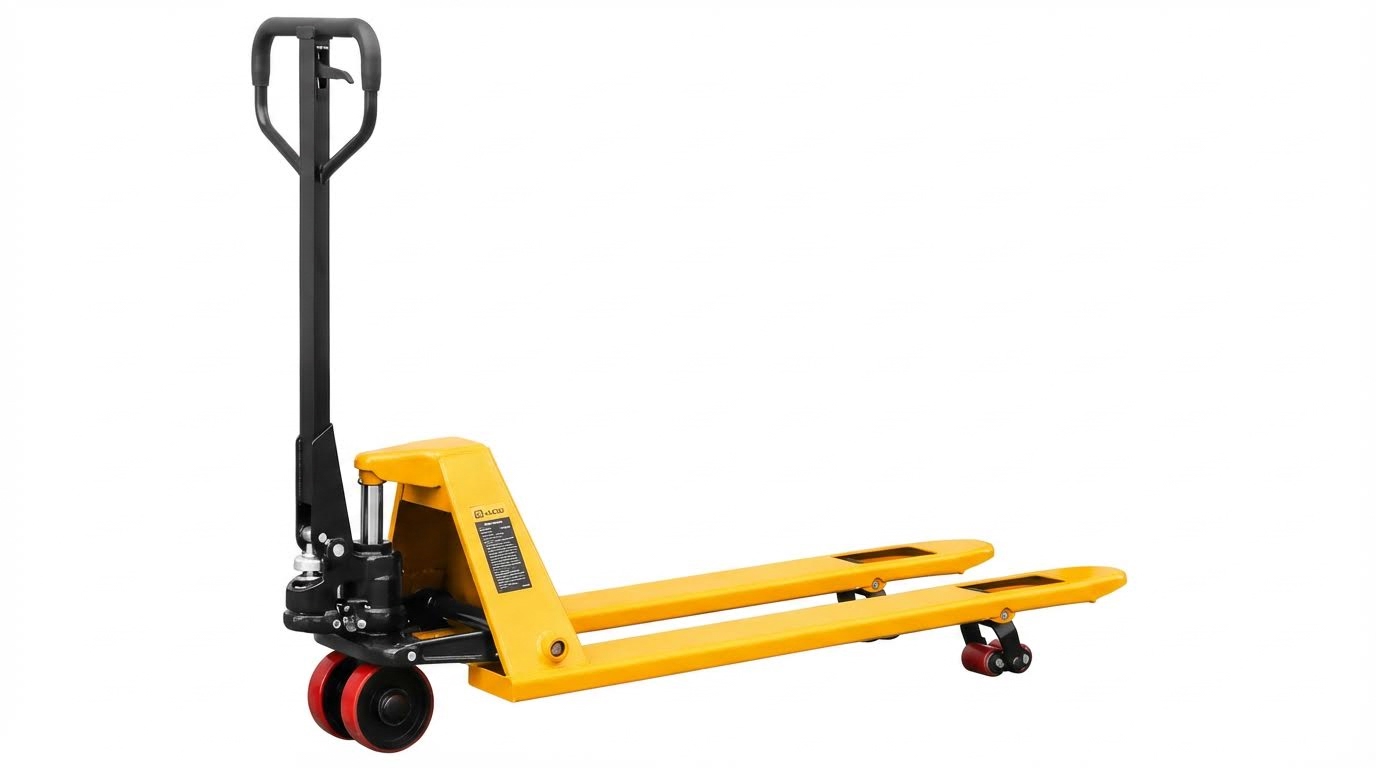
Pallet jack geometry and mass strongly influenced lifecycle cost, residual safety, and integration with automated systems. Low‑profile and narrow designs allowed facilities to handle non-standard pallets, but higher capacities up to 5500 kg increased structural demands and inspection needs. Facilities that standardized around a few dimensional families, such as 1150 mm forks and 520–685 mm widths, typically reduced spare-part inventories and training complexity. Automation projects, including cobots and AGVs, depended on predictable fork envelopes, turning radii around 1265–1335 mm, and tightly controlled deflection under load.
Load Stability, Deflection, And Safety Margins
Load stability depended on the relationship between fork length, width, and pallet footprint. For example, 1150 mm long forks with 520–685 mm overall width supported standard Euro and ISO pallets with minimal overhang, which limited tipping moments. Ultra-low designs with minimum fork heights down to 55 mm or 1.5 inches needed particular attention to fork thickness and steel plate sections, often around 3.8 mm, to control elastic deflection under 2500–5500 kg loads. Engineers typically specified safety factors above the rated capacity, then verified that deflection did not compromise entry/exit clearance or wheel contact. Additional nose and entry rollers, as used on several Beacon and CUBLiFT models, improved stability when crossing pallet deck boards and reduced impact loads on forks and bearings.
Maintenance Intervals Tied To Size And Weight
Lifecycle maintenance frequency scaled with both rated capacity and actual duty cycles. Higher-capacity units, such as 3500–5500 kg low-profile or narrow jacks, imposed greater stresses on forks, pivot joints, and wheels, which justified more frequent inspections for bending, cracks, and bearing wear. Daily visual checks focused on fork straightness, wheel damage, and jerky handle motion, while weekly routines included lubrication of pivot joints, tightening of fork bolts, and functional load tests to detect sinking due to hydraulic seal wear. Monthly programs cleaned under-fork areas and axles, applied corrosion inhibitors, and inspected pump rods for rust streaks, which indicated impending seal failure. Electric narrow jacks added battery checks, terminal cleaning, and temperature-controlled storage, with battery condition directly affecting lifecycle cost through replacement intervals.
Digital Twins And Data-Driven Fleet Sizing
Facilities increasingly modeled pallet jack fleets using digital twins that combined dimensional data, capacities, and maintenance histories. Accurate parameters, such as exact fork lengths from 1150 mm to 2000 mm, width options from 460 mm to 685 mm, and turning radii around 1265 mm, allowed engineers to simulate aisle layouts, ramp gradients, and pallet mixes. Load and failure data from inspections, including fork deflection trends and wheel bearing failures, fed into these models to optimize preventive maintenance intervals and spare-part holdings. Energy consumption and battery degradation profiles for electric narrow jacks were also integrated to forecast replacement cycles and charging infrastructure needs. This data-driven approach reduced over-specifying high-capacity units where 1000–2500 kg models sufficed, thereby lowering acquisition cost and average unit weight without sacrificing safety.
Integrating Narrow Jacks With Cobots And AGVs
Narrow and extra-narrow pallet jacks, with fork widths down to 460 mm or even 12 inches, suited collaborative workflows with cobots and AGVs in constrained aisles. Consistent geometry, such as 1160–1220 mm fork lengths and defined lift ranges from 80–220 mm, enabled robotic systems to plan precise engagement paths and lifting sequences. Electric narrow jacks with lithium-ion batteries and onboard electronics integrated more easily via wireless communication, supporting task assignment and health monitoring from fleet management systems. Dual-load wheels, power steering, and long handles reduced human push forces, which improved cobot–human interaction safety in shared spaces. When engineers aligned jack dimensions, turning radii, and lift envelopes with AGV pallet interfaces, they minimized transfer errors and improved overall system throughput.
Summary: Practical Pallet Jack Sizing Conclusions
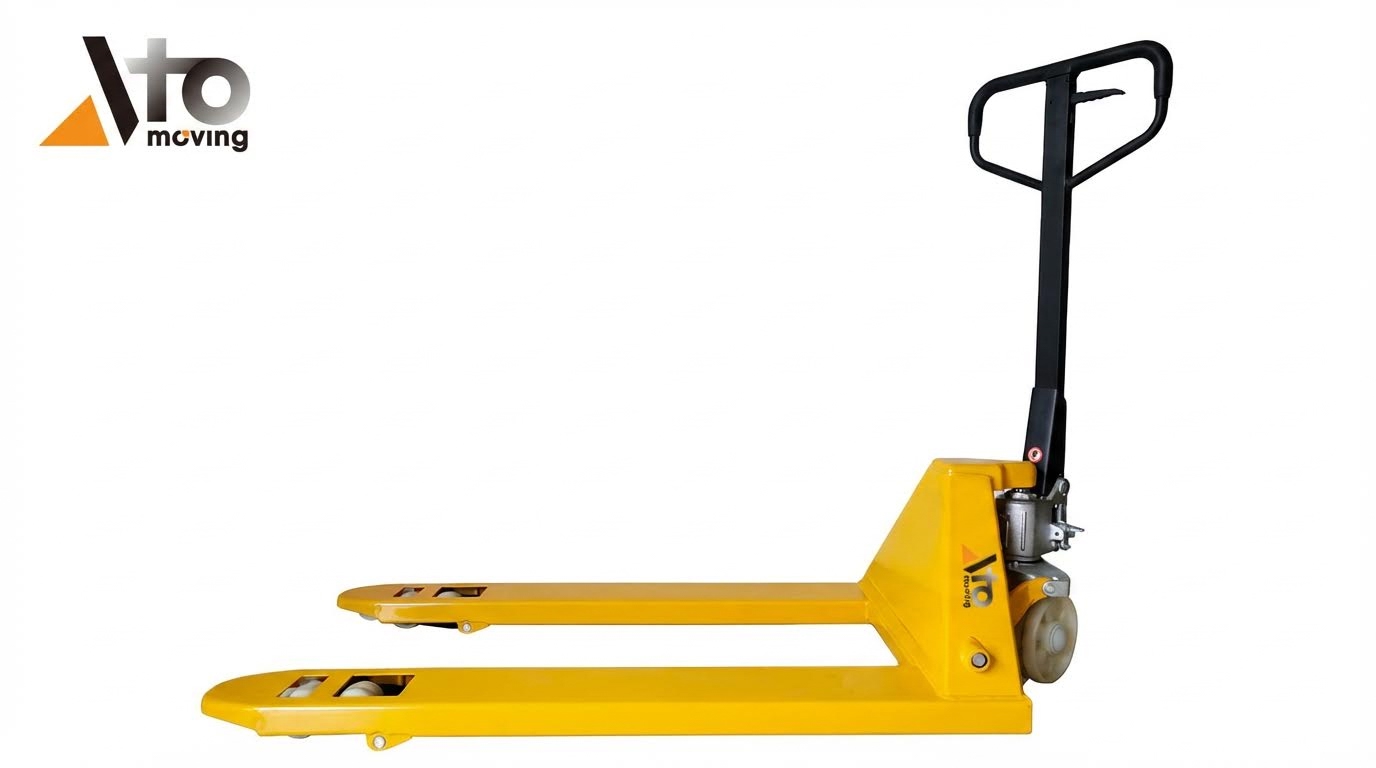
Engineering teams benefited from treating pallet jack dimensions and weight as tightly specified design variables, not catalogue afterthoughts. Standard hand jacks typically offered fork lengths around 1150 mm, overall widths between 520 mm and 685 mm, lift ranges from roughly 75 mm to 200 mm, and capacities near 2500 kg. Low-profile and ultra-low variants extended this envelope, reaching minimum fork heights down to about 55 mm or 1.5 inches and maximum capacities up to 5500 kg, while narrow and extra-narrow models reduced fork widths to about 460 mm or even 12 inches for constrained aisles. Unit weights ranged from about 70 kg to over 190 kg, with heavier frames and thicker steel plates supporting higher capacities and harsher duty cycles.
These dimensional choices had direct implications for lifecycle cost, safety, and automation readiness. Correct fork geometry relative to pallet standards reduced impact loads, nose-wheel abuse, and fork bending, which lowered maintenance frequency and replacement risk. Wheel material selection, turning radius, and overall mass influenced rolling resistance, operator fatigue, and compatibility with AGVs or cobots. Facilities that specified jacks with adequate safety margins, documented maintenance intervals, and standardized geometries across fleets simplified digital twin modeling and data-driven fleet sizing.
In practice, decision-makers benefited from a structured selection workflow. They defined pallet formats, maximum load mass, and minimum rack clearances first, then chose fork length, width, and lift range accordingly. Next, they matched wheel materials and turning radius to floor flatness and aisle width, and only then optimized capacity classes and frame mass for durability and ergonomics. Modern manufacturing allowed customized fork lengths up to about 2000 mm, tailored height ranges, and stainless-steel or scale-equipped variants for corrosive or metrological environments. A balanced approach combined standardized core dimensions for interoperability with targeted customizations where safety, hygiene, or automation demanded tighter engineering control.