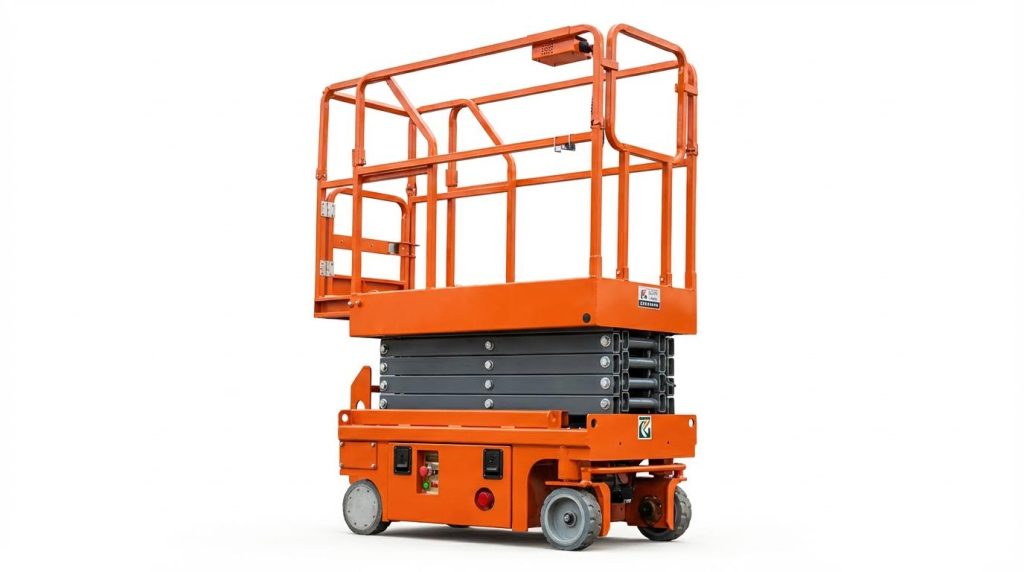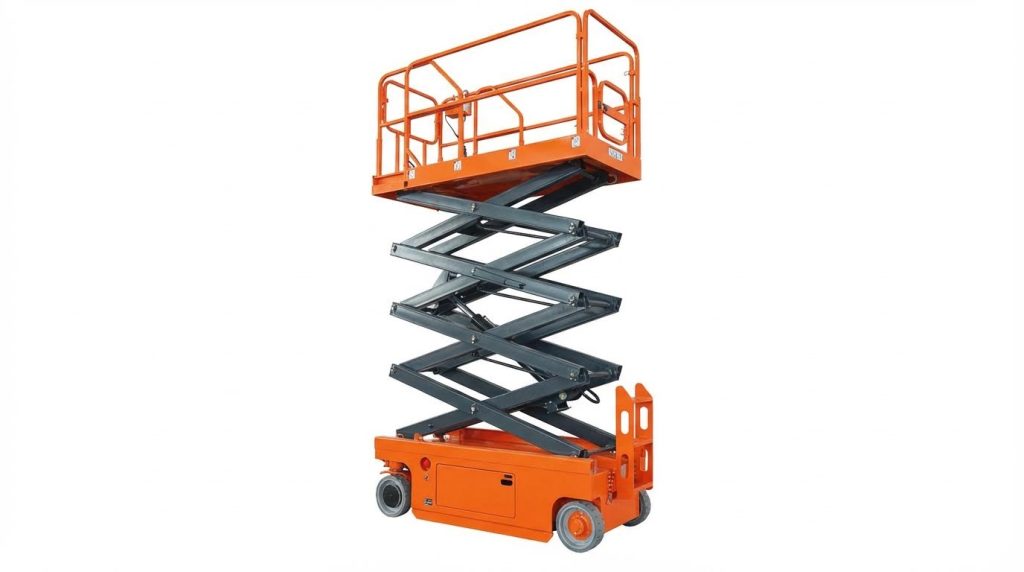
Scissor lift productivity depended heavily on battery selection, charging strategy, and maintenance discipline. The complete article examined how lead-acid, AGM, and lithium chemistries affected runtime, duty cycles, and performance under different temperatures and load profiles. It then detailed realistic charge times, charger types, and safety controls, including smart chargers, ventilation, and thermal management. Finally, it outlined practical best practices to maximize battery life and uptime, and concluded with concise guidelines that fleet managers and technicians could apply in daily operations.
Battery Types And Runtime Expectations

Scissor lift battery selection directly affected runtime, maintenance workload, and lifecycle cost. Fleet managers compared lead-acid, AGM, and lithium options by chemistry, usable capacity, and charging flexibility. Understanding how temperature, duty cycle, and pack sizing interacted allowed engineers to predict shift coverage reliably and avoid mid-shift failures.
Lead-Acid, AGM, And Lithium Chemistries
Conventional flooded lead-acid batteries powered a large share of slab scissor lifts. They delivered robust current at relatively low cost but required periodic watering, terminal cleaning, and equalization charging. AGM (Absorbent Glass Mat) variants used immobilized electrolyte, which eliminated watering and reduced spill and gas risks, while improving cycle life versus flooded cells. Lithium, often lithium iron phosphate (LiFePO4), offered much faster charging, higher usable depth of discharge, and up to roughly three times the cycle life of lead-acid, at a higher initial cost but lower total cost of ownership. Lithium packs integrated a Battery Management System (BMS) that controlled charge, discharge, and temperature limits, reducing operator error but requiring chemistry-specific chargers.
Typical Daily Runtime And Duty Cycles
Manufacturers designed electric scissor lifts to operate for a full workday on a proper overnight charge under nominal duty cycles. Typical patterns included intermittent lifting, short drive movements, and extended idle time with control electronics powered. Lead-acid and AGM batteries delivered longest runtime when operators avoided deep discharges below roughly 20 % remaining capacity. Lithium packs tolerated deeper cycling and frequent partial charges while still covering demanding multi-shift applications when paired with fast chargers. Actual runtime depended on platform load, drive distance, floor conditions, and accessory loads such as lighting or onboard tools.
Temperature Effects On Capacity And Performance
Ambient temperature had a strong influence on available capacity and voltage behavior. Data from aerial lift suppliers showed that a fully charged lead-acid battery at about 27 °C retained only about 65 % of its effective capacity at 0 °C and about 40 % at −18 °C. High temperatures accelerated degradation, increased water consumption in flooded cells, and raised gassing rates during charge. Operators improved performance in cold environments by using battery heaters or keeping machines in heated storage, while fans and good ventilation reduced heat buildup in hot climates. Lithium batteries maintained capacity better at low temperatures than lead-acid but still required operation within specified temperature windows to protect the BMS and cells.
Sizing Batteries For Your Application
Correct battery sizing started from a realistic energy budget for a typical shift. Engineers estimated total ampere-hours by considering lift cycles, drive distance, gradient, and auxiliary loads, then applied efficiency factors for the power electronics and hydraulic system. Lead-acid and AGM packs were usually sized so that a full shift consumed no more than about 70–80 % of rated capacity to preserve cycle life. Lithium systems could be sized closer to actual energy demand because a higher fraction of their nominal capacity was usable without accelerating wear. When replacing batteries, technicians matched voltage, ampere-hour rating, and physical mass, because lead-acid packs also contributed to counterweighting and stability compliance for the lift.
Charging Times, Methods, And Safety Controls
Charging strategy directly affected scissor lift availability, lifecycle cost, and safety performance. Engineers evaluated charge times, charger topology, and control features together with battery chemistry. Proper matching of charger, battery, and duty cycle reduced downtime and mitigated thermal and gassing hazards. This section focused on quantitative charge-time estimation and the control measures that constrained risk in daily fleet operation.
Standard And Fast Charge Time Calculations
Conventional lead-acid scissor lift batteries typically required 6–8 hours for a full charge from a deep discharge. This range reflected charger current limits, battery capacity, and charge efficiency. Engineers used a simple relation: time (h) = (capacity × fraction to charge) ÷ (current × efficiency). For example, charging a 600 Ah pack from 30% to 95% with an 80 A charger and 0.9 efficiency required about 5.4 hours. Lithium packs followed the same formula but supported higher charge currents, so a 24 V, 200 Ah LiFePO4 pack charged from 20% to 100% with a 40 A charger in roughly 5–6 hours. High-capacity 48 V, 600 Ah lithium systems with 100 A fast chargers still needed about 6–7 hours due to current tapering near full charge.
OEM Smart Chargers And Auto Shut-Off Systems
Modern scissor lifts integrated OEM smart chargers tuned to the installed battery type. These chargers controlled multi-stage profiles, typically bulk, absorption, and float for lead-acid, and constant-current/constant-voltage for lithium. Hy-Brid Lifts units, for example, used smart chargers that did not initiate charging below about 7 V DC and terminated around 14.8 V DC per 12 V string, restarting when voltage dropped below about 12.7 V DC. Other manufacturers implemented charge protection systems that stopped charging automatically when batteries reached full charge, which reduced overcharge, thermal stress, and gassing. Lithium packs relied on an internal Battery Management System that blocked overvoltage and overcurrent conditions, but still required chargers designed specifically for LiFePO4 chemistry and voltage windows.
Ventilation, Hydrogen Gas, And Fire Risk Controls
Flooded lead-acid batteries released hydrogen and oxygen during the final charge stages. Operators therefore charged lifts in dedicated, well-ventilated areas away from ignition sources and flammable materials. Safety procedures included prohibiting external booster chargers, verifying correct AC input voltage, and following manufacturer-approved charger and battery combinations. Overcharging increased gassing rates and could lead to electrolyte loss, case deformation, or in extreme cases fire. Automatic shut-off chargers and clearly visible state-of-charge indicators helped prevent prolonged charging after full. Lithium packs reduced hydrogen risk but still required ventilation for any off-gassing from protection circuitry and to comply with general electrical equipment fire codes.
Cooling Periods And Thermal Management
Battery temperature strongly influenced charge acceptance, internal resistance, and service life. Operators monitored battery temperature during charging and stopped the process if temperature exceeded the recommended band, allowing the pack to cool before resuming. Lead-acid batteries benefited from charging in a cool, well-ventilated space and from cooling periods before heavy discharge, because hot plates accelerated corrosion and shortened life. In cold environments, heaters improved charge efficiency, while in hot climates fans reduced case temperature and moderated gassing. LiFePO4 batteries tolerated heat better and generated less during charging, yet still achieved longer cycle life when charged in moderate temperatures with adequate airflow and occasional rest periods after high-rate fast charging.
Practices To Maximize Battery Life And Uptime
Depth Of Discharge And Opportunity Charging
Depth of discharge strongly influenced scissor lift battery life and daily uptime. Lead-acid packs typically achieved best life when operators recharged at 20–30% remaining capacity, avoiding repeated deep discharges below this range. Frequent opportunity charging during short breaks raised electrolyte temperatures, increased gassing, and accelerated plate degradation in flooded lead-acid batteries. LiFePO4 batteries tolerated partial charges and deeper discharges better, but still delivered longest cycle life when operators recharged around 20–30% state of charge. Fleet managers benefited from enforcing minimum cut-out thresholds using onboard battery indicators or telematics to prevent over-discharge events. This approach stabilized daily runtime and reduced unplanned battery replacements.
Watering, Cleaning, And Equalization For Lead-Acid
Flooded lead-acid batteries required disciplined watering and cleaning routines to maintain capacity. Technicians inspected electrolyte levels at least weekly, adding distilled water to the split ring after charging, or before charging if plates were exposed. Underfilling created hot spots and plate exposure, while overfilling caused overflow and acid loss during charge, both of which reduced runtime. Monthly cleaning of terminals and tops with a baking-soda solution and application of a protective coating limited corrosion and surface leakage currents. Equalization charges, typically applied weekly or as specified by the manufacturer, balanced cell voltages, reduced sulfation, and helped recover lost capacity. These practices routinely extended service life toward the upper end of the typical two to three year window for well-maintained industrial lead-acid batteries.
LiFePO4 BMS, Calibration, And Charger Matching
LiFePO4 scissor lift batteries relied on an integrated Battery Management System to control charge, discharge, and cell balancing. The BMS prevented overcharge, over-discharge, and over-temperature operation, but only when paired with a charger designed for LiFePO4 voltage profiles and current limits. Using generic lead-acid chargers risked incomplete charging, nuisance BMS cut-offs, or long-term imbalance between cells. Occasional full charge cycles to near 100% state of charge helped the BMS recalibrate state-of-charge estimation and maintain accurate fuel-gauge readings. Operators monitored BMS alarms and data logs, addressing repeated high-temperature or current-limit events that indicated undersized packs or aggressive duty cycles. Correct charger matching and BMS calibration allowed LiFePO4 packs to reach their expected multi-thousand-cycle life.
Predictive Maintenance And Digital Monitoring
Predictive maintenance and digital monitoring tools significantly improved battery uptime and lifecycle cost. Telematics systems tracked key parameters such as depth of discharge, charge time, temperature, and daily amp-hour throughput for each lift. Fleet managers used this data to identify underperforming batteries, incorrect charging behavior, or units consistently operating in extreme temperatures. Trend analysis of voltage sag under load and charge acceptance allowed early detection of sulfation, cell imbalance, or failing connections before operators experienced mid-shift failures. Integration with maintenance management systems automated work orders for watering, cleaning, and capacity tests based on actual usage rather than fixed calendars. This data-driven approach aligned battery replacements with true end-of-life, reduced unexpected downtime, and optimized inventory of replacement packs and chargers.
Summary Of Key Battery And Charging Guidelines
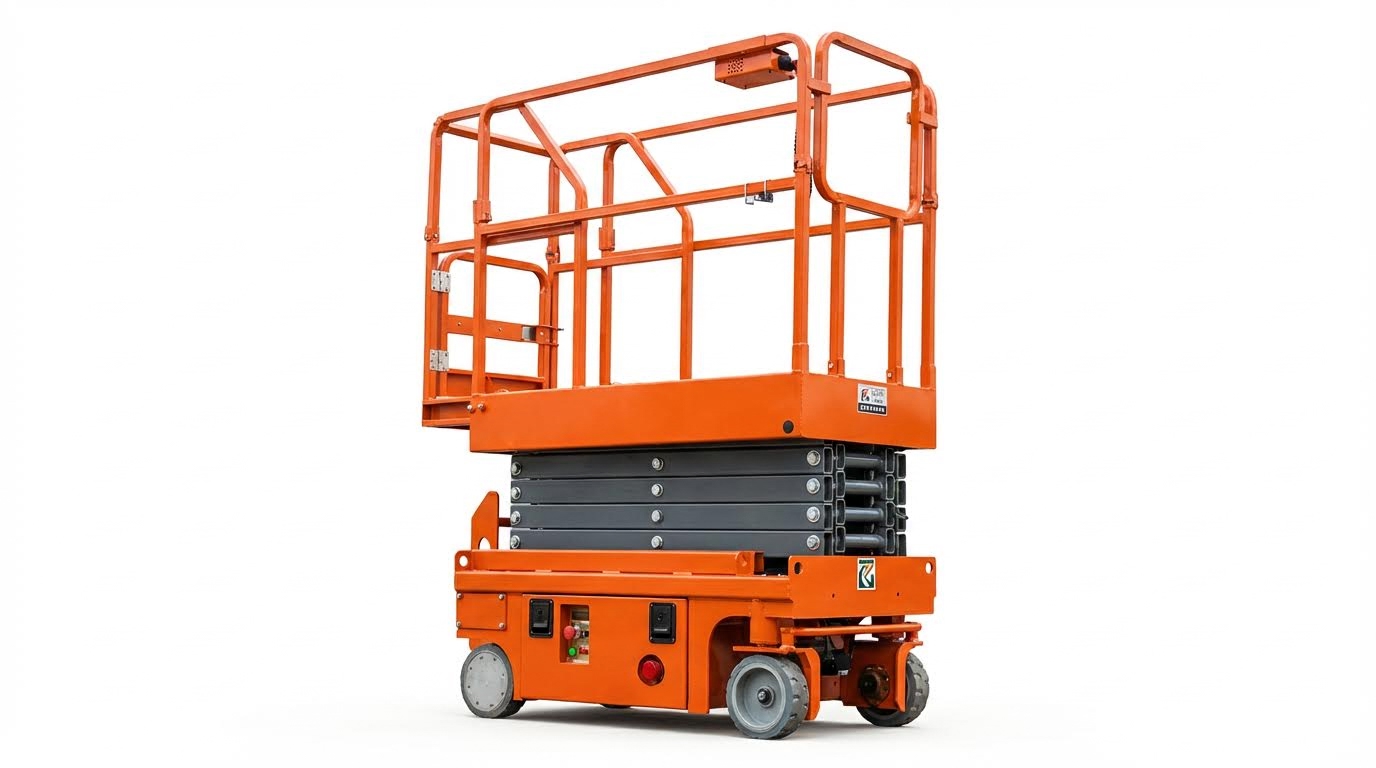
Scissor lift battery performance depended on chemistry, sizing, and operating environment. Lead-acid and AGM batteries required disciplined charging, correct watering, and regular cleaning to reach two to three years of service. Lithium and LiFePO4 options delivered shorter charge times, higher cycle life, and lower maintenance, but demanded chemistry-specific chargers and correct Battery Management System (BMS) configuration. Across all chemistries, operators achieved the best results by integrating charging and maintenance into daily and weekly routines rather than treating batteries as “fit and forget” components.
For runtime and life, keeping depth of discharge near 70–80% and recharging around 20–30% state of charge proved effective. Lead-acid batteries benefited from full charge cycles, weekly equalization (where specified), and strict avoidance of short opportunity charges that caused overheating and electrolyte imbalance. Charging typically took 6–8 hours for flooded lead-acid packs, while comparable lithium systems charged from 20% to 80% in roughly 2.5 hours when correctly sized. Smart OEM chargers with automatic shut-off, voltage thresholds, and charge protection reduced overcharge risk and improved safety.
Safe charging required a dedicated, well-ventilated area, correct AC supply, and strict prohibition of external boosters or non-approved chargers. Hydrogen evolution from lead-acid cells mandated separation from ignition sources and flammable materials, plus regular inspection of vent caps and electrolyte levels using distilled water. Temperature management was critical; battery capacity dropped sharply below 0 °C, while high ambient temperatures accelerated degradation, so heaters or fans often paid for themselves in uptime. Allowing batteries to cool after charging, and before heavy discharge, further protected service life.
Looking ahead, fleets increasingly adopted lithium and AGM packs, integrated telematics, and predictive maintenance analytics. These tools enabled remote monitoring of state of charge, temperature, and charge events, supporting condition-based interventions instead of reactive replacement. Implementing these guidelines required coordination between operators, fleet managers, and safety staff, along with training on PPE, test equipment, and OEM procedures. As chemistries and chargers evolved, the core engineering trade-off remained stable: balancing energy density, charge speed, cost, and safety through disciplined, data-driven battery management.