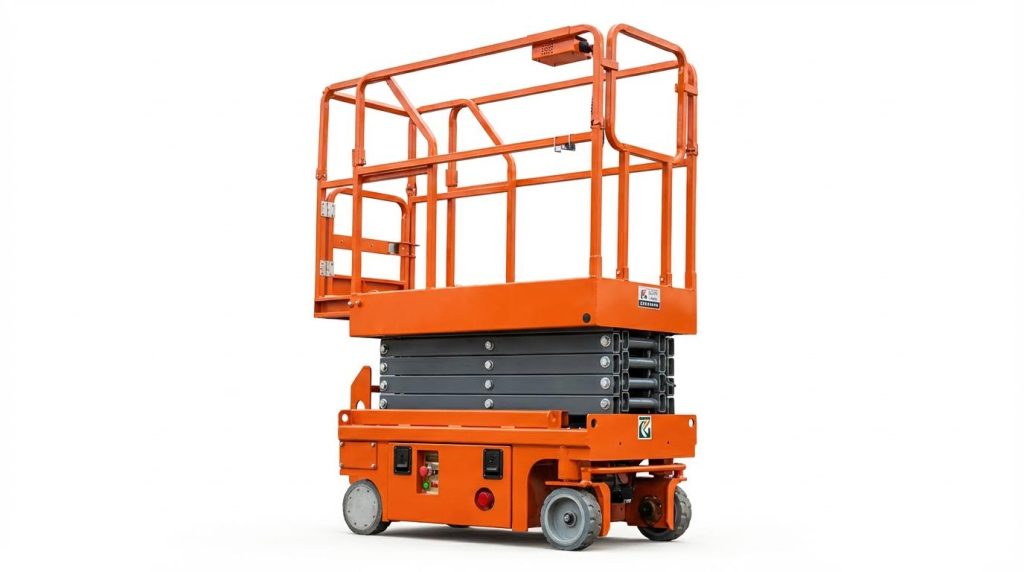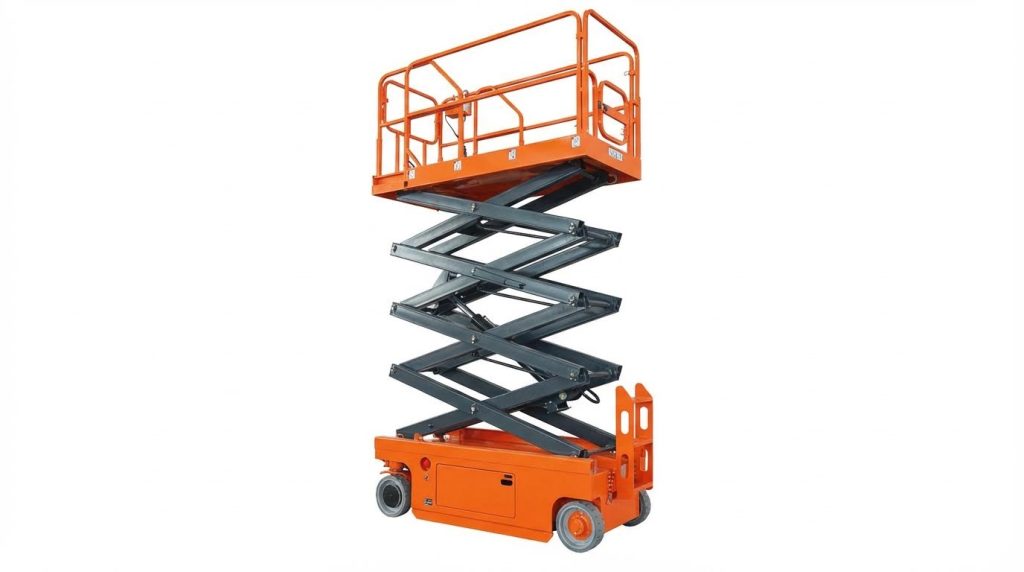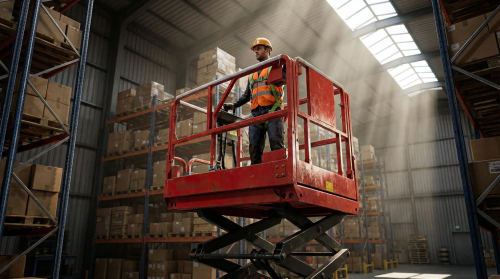
Scissor lift fall protection depended on a precise combination of engineered guardrails, personal fall protection, and operator behavior. This article examined how OSHA classified scissor lifts as mobile scaffolds, when guardrails alone met legal requirements, and when a full-body harness or other fall protection became mandatory.
It then explored the engineering details behind compliant guardrail systems and Personal Fall Arrest Systems (PFAS), including anchor design, harness and lanyard selection, and component compatibility. The discussion continued with structured inspection regimes, training and documentation requirements, and the role of telematics and predictive maintenance in preventing incidents. Finally, it provided concise, practice-oriented guidance that safety managers, engineers, and fleet owners could apply to keep lift operations compliant and reduce fall risk in real-world jobsites.
OSHA Rules For Scissor Lift Fall Protection
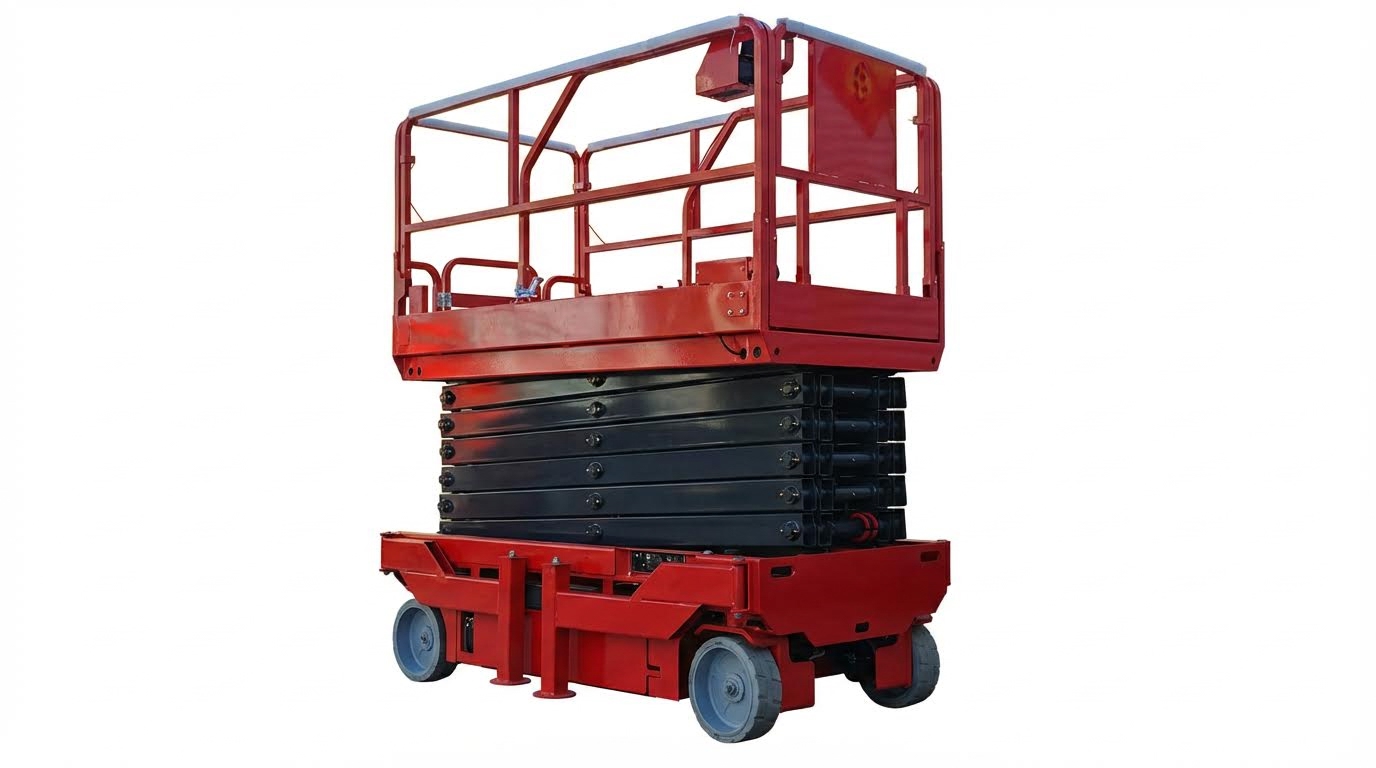
OSHA classified scissor lifts as mobile scaffolds, not aerial lifts, under the general industry and construction frameworks. This distinction drove which regulatory parts applied and how employers structured fall protection programs. Guardrails remained the primary means of fall protection, but harness use became mandatory in defined conditions. Understanding the interaction between OSHA rules, ANSI guidance, and employer policies allowed safety managers to build defensible, practical procedures.
Scissor Lifts As Mobile Scaffolds, Not Aerial Lifts
OSHA did not regulate scissor lifts under 29 CFR 1910.67, which covered vehicle-mounted elevating and rotating aerial devices. Instead, scissor lifts fell under the scaffold provisions and the General Duty Clause, Section 5(a)(1) of the OSH Act. OSHA interpreted scissor lifts as mobile scaffolds because the platform moved vertically without an extensible or articulating boom. This classification meant employers referenced scaffold fall protection rules and applicable ANSI A92 standards rather than aerial lift tie-off mandates. Safety programs therefore emphasized compliant guardrail systems, platform integrity, and safe use practices over default harness requirements.
When Guardrails Alone Meet OSHA Requirements
Guardrails met OSHA fall protection requirements when they fully enclosed exposed sides and ends of the lift platform. Top rails needed a height of 1.07 m ± 0.08 m above the working surface, with midrails located approximately midway or supplemented by a parapet at least 0.53 m high. OSHA required the top edge of the guardrail system to withstand a 890 N outward or downward force without failure. When these conditions were met and workers stayed within the platform, OSHA did not require a personal fall arrest system. In typical warehouse or maintenance tasks, a properly designed and maintained guardrail system alone satisfied federal fall protection obligations.
When A Full-Body Harness Becomes Mandatory
A full-body harness became mandatory when guardrails were absent, damaged, removed, or otherwise failed to provide continuous protection. A harness was also required when workers left the safety of the platform while elevated, such as stepping to a roof, structure, or custom platform without compliant rails. Where manufacturers specified tie-off in the operator’s manual or decals, employers had to enforce harness use as part of following manufacturer instructions. In these cases, a Personal Fall Arrest System needed an anchorage rated at least 22.2 kN per worker, a full-body harness, and a connecting device limiting free fall to 1.8 m or less. Employer policies and some local regulations further extended mandatory harness use in high-risk tasks, electrical proximity, or rescue operations.
Interpreting OSHA, ANSI, And Employer Policies
OSHA provided the minimum legal baseline, while ANSI A92 standards offered more detailed engineering and operational guidance. ANSI A92.3 and A92.6 required elevating platforms to include guardrail systems and described design, testing, and safe-use criteria. Employers often adopted ANSI provisions and manufacturer recommendations into internal policies, creating requirements that exceeded OSHA but improved risk control. Safety managers needed to reconcile three layers: OSHA enforcement letters and standards, ANSI consensus documents, and site-specific rules. The practical approach was to treat guardrails as primary protection, require harnesses when guardrails were compromised or workers exited the platform, and follow any stricter manufacturer or company mandates as the controlling rule.
Engineering Guardrail And PFAS Systems For Lifts

Engineering guardrail and Personal Fall Arrest Systems (PFAS) for scissor lifts required alignment with OSHA, ANSI, and fire-service guidance. Designers treated scissor lifts as mobile scaffolds, so guardrails acted as the primary fall protection, with PFAS layered on when risks exceeded what rails could manage. Structural engineers, safety professionals, and manufacturers coordinated to ensure guardrails, anchors, and harness systems worked as an integrated system, not as independent components. The objective was to control fall risk through engineered barriers first, then through personal systems sized and rated for realistic loads and use cases.
Guardrail Height, Strength, And Structural Design
OSHA required top-rail heights of 1.07 metres, plus or minus 0.08 metres, measured above the working platform. Midrails had to sit approximately midway between the platform and the top rail, unless a parapet of at least 0.53 metres already provided equivalent protection. Guardrail systems for scissor lifts needed to withstand a 0.89 kilonewton load applied outward at the top edge without failure or excessive permanent deformation. Fire-service guidance specified similar concepts, with top rails, midrails, and toeboards designed to resist defined lateral and vertical loads, so the system could contain dynamic worker movement, tools, and minor impacts. Engineers checked posts, welds, and fasteners for buckling and fatigue, especially at hinge points and gate locations, and verified that removable sections or gates did not reduce overall strength or create unprotected openings. Design reviews also considered deflection limits to prevent workers from reaching outside the envelope when leaning on rails.
Design And Rating Of Anchors For PFAS And Restraint
Anchorage design depended on the intended fall protection strategy: travel restraint, fall restriction, or full fall arrest. OSHA PFAS guidance required each anchor point to support at least 22.2 kilonewtons per attached worker, while fire-service bulletins differentiated between 2 kilonewton anchors for restraint and 8 kilonewton anchors for fall-restricting or fall-arrest systems. Scissor and aerial lift structures were often not originally designed to absorb fall-arrest loads, so manufacturers either provided dedicated engineered anchor points or prohibited fall-arrest tie-off entirely. Engineers evaluated boom sections, platform structures, and chassis tie-in points using load-path analysis and finite element checks to avoid local yielding or instability under worst-case arrest forces. Clear marking on the lift identified anchor rating and intended use class, so operators did not misuse restraint anchors for arrest applications.
Selecting Harnesses, Lanyards, And SRLs For Lifts
Full-body harness selection focused on distributing arrest forces across thighs, pelvis, chest, and shoulders while remaining compatible with other PPE such as self-contained breathing apparatus or turnout gear. Harnesses used on scissor lifts typically formed part of either travel-restraint or PFAS configurations, with dorsal D-rings as the primary attachment point. Lanyard choice depended on platform height and available clearance; shock-absorbing lanyards and self-retracting lifelines (SRLs) had to limit free fall to 1.8 metres or less and keep total arrest forces below 8 kilonewtons. For firefighters and utility workers, shorter restraint lanyards or SRLs with quick-activating braking reduced swing and edge exposure in confined baskets. Procurement teams referenced ANSI and NFPA equipment standards and ensured harnesses and connectors carried appropriate markings, service-life limits, and inspection criteria. They also standardized connectors to minimize the risk of mis-matched hardware in mixed fleets.
Component Compatibility And System Integration
Effective fall protection on scissor lifts required all components to work as a single engineered system. Incompatible connectors, improvised anchorages, or mixing of hardware from different rating classes could reduce overall capacity below regulatory requirements. Safety engineers verified that harness D-rings, hooks, carabiners, and anchor eyes matched in size, locking method, and strength rating, and that energy absorbers and SRLs did not exceed the structural limits of the lift. Integration also included operational aspects: guardrails, gates, and anchor locations had to support safe tie-off without encouraging workers to climb, sit, or lean dangerously outside the platform. Documentation from manufacturers, ANSI/SAIA A92 guidance, and internal employer policies established which combinations were
Inspection, Training, And Predictive Safety Programs
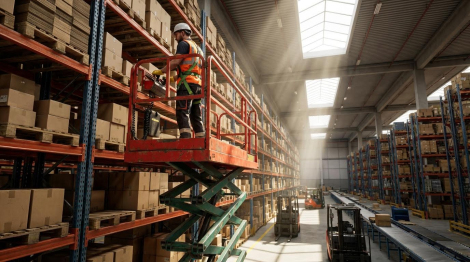
Inspection, training, and predictive safety programs formed the backbone of effective scissor lift risk control. Structured inspection regimes identified mechanical and structural issues before they produced incidents. Competent training and documentation ensured operators understood both OSHA and ANSI requirements and manufacturer limits. Emerging telematics and digital tools enabled data-driven maintenance and safety decisions instead of reactive fixes.
Daily, Monthly, And Annual Lift Safety Inspections
Daily inspections focused on operational readiness and obvious hazards. Operators checked for hydraulic leaks, correct fluid levels, visible structural damage, and proper operation of controls, brakes, and steering. Guardrails, gates, emergency stops, alarms, and interlocks required verification before elevating the platform. If any component was damaged, missing, or malfunctioning, the lift stayed out of service until repair and reinspection.
Monthly inspections went deeper into structural and electrical integrity. Technicians examined scissor arms, welds, pins, centering links, and chassis for cracks, corrosion, or deformation. Electrical wiring, connectors, and control boxes were checked for insulation damage and loose terminations. Battery condition, including electrolyte level, terminal corrosion, and charge retention, was documented to support planned replacement intervals. These checks extended service life and supported regulatory compliance.
Annual inspections required a qualified person or service provider. They typically included load testing to the rated capacity, verification of platform leveling and stability systems, and a full review of safety devices. Inspectors cross-checked the machine against OSHA expectations and relevant ANSI A92 provisions. Comprehensive reports documented deficiencies, corrective actions, and any modifications, forming a defensible compliance record during audits or investigations.
Inspection Protocols For Harnesses And Fall Gear
Fall protection hardware required systematic pre-use and periodic inspections. Before each use, workers inspected full-body harnesses for cuts, frayed stitching, UV degradation, chemical damage, and hardware deformation or corrosion. Buckles, D-rings, and adjustment points had to move freely and lock securely. Any doubt about integrity triggered immediate removal from service and tagging for evaluation or disposal.
Lanyards, self-retracting lifelines (SRLs), and connectors received similar scrutiny. Inspectors looked for kinks, broken fibers, crushed sections, or deployed shock absorbers, as well as damaged housings or sluggish retraction in SRLs. Anchor points on lifts or adjacent structures needed clear rating markings and evidence of engineering to required capacities, typically 22.2 kN (5,000 pounds-force) per attached worker or as part of a designed system. Documentation of inspection dates, findings, and serial numbers helped manage service life and traceability.
Where travel-restraint or fall-restricting systems were used, anchor ratings and system geometry were checked to ensure movement limits and maximum arrest distances met applicable guidance. Compatibility checks confirmed that hooks, rings, and lifeline terminations engaged correctly without side loading or accidental rollout risk. These protocols reduced the chance that a nominally “present” fall system failed under load.
Operator Training, Documentation, And Refresher Plans
Employers bore responsibility for comprehensive scissor lift and fall protection training. Programs covered equipment controls, safe operating envelopes, stability limits, and emergency descent procedures. Fall protection modules addressed when guardrails were sufficient, when harnesses became mandatory, and how to select and use PFAS, restraint, or restricting systems. Training also included hazard recognition, such as overhead power lines, unstable ground, and unprotected edges near the lift.
Written records documented initial and refresher training, including dates, topics, instructor qualifications, and operator evaluations. Refresher sessions occurred after incidents, near-misses, observed unsafe behavior, or significant equipment or standard changes. Scenario-based exercises, such as simulated platform entrapment or fall-arrest rescue planning, improved retention. Aligning content with OSHA expectations and ANSI guidance helped demonstrate due diligence under the general duty clause.
Supervisors reinforced training through field observations and toolbox talks. They verified pre-use inspections, correct harness use where required, and adherence to site-specific rules. Feedback loops from incident investigations fed directly into updated training modules, closing gaps revealed by real operations.
Digital Twins, Telematics, And Predictive Maintenance
Telematics and digital tools transformed lift safety from reactive to predictive. Embedded sensors tracked usage hours, lift cycles, battery charge histories, and fault codes. Fleet managers analyzed this data to schedule maintenance just before failure likelihood increased, reducing unplanned downtime. Location tracking and ge
Summary: Practical Guidance For Safe Lift Operations
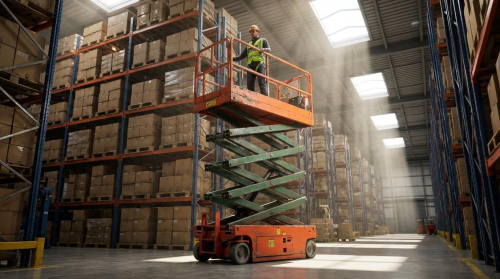
Scissor lift fall protection relied on a hierarchy: engineered guardrails as primary protection, with personal fall protection used when guardrails or work practices no longer controlled risk. Under OSHA, scissor lifts were treated as mobile scaffolds, so compliant guardrail systems typically satisfied fall protection requirements, provided top rails stood 1.07 m high (±75 mm), midrails were correctly placed, and the system resisted at least 890 N (≈200 lbf) outward load. However, once guardrails were missing, modified, or workers climbed, leaned out, or exited the platform at height, a properly designed PFAS, restraint, or restricting system became essential. Employers had to align OSHA’s general duty clause, ANSI/CSA/ULC guidance, and their own policies into a clear, written rule set for operators.
From an engineering perspective, safety depended on designing guardrails, anchors, and PFAS as a single system. Guardrails required adequate section modulus, weld quality, and post anchorage to resist code loads with a reasonable safety factor. Anchor points for travel restraint typically needed ≥2 kN capacity, while fall-restricting and fall-arrest anchors required ≥8 kN or 22.2 kN (≈5,000 lbf) per worker, depending on jurisdiction and standard. Harnesses, lanyards, and self-retracting lifelines had to match the application, limit free fall and arrest forces, and remain compatible with aerial device structures that often were not designed for arrest loads. Mis-matched components or improvised anchorages remained a recurrent root cause of incidents.
Operationally, robust inspection and training programs were as critical as structural design. Daily, monthly, and annual inspections of lifts, guardrails, anchors, and PPE identified damage, corrosion, hydraulic leaks, and non-compliant modifications before they caused accidents. Structured operator training, documented competency, and scheduled refreshers ensured workers understood when guardrails were sufficient, when harnesses were mandatory, and how to maintain safe clearances from power lines and other hazards. Emerging tools such as telematics, advanced battery monitoring, and digital twins allowed fleets to move from reactive repairs to predictive maintenance, reducing downtime and improving safety performance.
For practical implementation, organizations benefited from standardizing equipment, codifying decision trees for harness use, and consulting manufacturers or engineers when adding or rating anchors. Future trends pointed toward smarter lifts with integrated sensors, better diagnostics, and clearer tie-off provisions, but the fundamentals remained unchanged: maintain compliant guardrails, use engineered and rated PFAS where required, inspect and document rigorously, and train operators to recognize and control fall hazards. A balanced approach that combined regulation, sound engineering, and disciplined field practice provided the most reliable path to safe scissor lift operations.