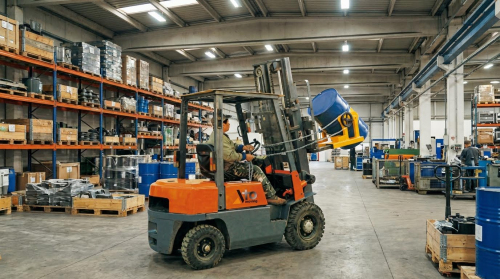
Forklifts underpinned global material handling, with over 4.8 million units in active use across warehouses, factories, ports, and construction sites. Rapid market growth, led by Asia-Pacific and Europe, coincided with a marked shift toward electric, hybrid, and hydrogen powertrains and the emergence of autonomous, AI-enabled fleets.
This article examined how these technology shifts interacted with sector-specific applications, from e‑commerce intralogistics to rough-terrain operations, and how engineering decisions on classes, capacities, and power sources shaped fleet performance. It also analyzed the role of safety systems, operator training, and structured maintenance in controlling lifecycle cost, and concluded with a forward-looking view on how regulation, sustainability goals, and digital tools such as twins would redefine forklift utilization strategies.
Market Dynamics And Technology Shifts In Forklift Use
The global forklift sector experienced sustained expansion, driven by logistics automation, e‑commerce growth, and warehouse densification. Market value projections varied by methodology, but all indicated robust mid‑single to low‑double‑digit compound annual growth rates to the early 2030s. Electric platforms, below‑5‑ton capacities, and industrial counterbalance trucks dominated new investments. At the same time, OEMs reallocated capital toward low‑emission and automated product lines to align with regulatory and customer requirements.
Growth Trends, Regional Demand, And Key OEMs
Global forklift unit sales reached more than 1.6 million units in 2024, an increase of about 10.3% versus 2022. Installed base estimates exceeded 4.8 million active units, indicating a large retrofit and replacement opportunity. Warehouses and distribution centers accounted for roughly 60% of deployments when combined, reflecting the 32% utilization increase linked to e‑commerce between 2021 and 2024. Factories, ports, and transport hubs formed the next largest application clusters, each with distinct duty cycles and environment constraints.
Asia‑Pacific held approximately 49% of the global market, supported by industrialization and automation in China, India, and Southeast Asia. Europe contributed about 28% and showed the fastest forecast growth, underpinned by strict emissions rules and brownfield facility upgrades. North America represented roughly 23%, with the United States alone accounting for about 22–25% of global unit sales and over 340,000 new units in 2024. Smaller but growing markets included Brazil and GCC countries, where manufacturing expansion and large construction programs increased demand.
Market concentration remained high, with the top five manufacturers controlling over 60% of global share. Toyota Industries Corporation led with about 25% share and over 350,000 units produced annually, followed by Kion Group at roughly 18% and more than 250,000 units. Other significant OEMs included Hyster‑Yale, Jungheinrich, Crown, Mitsubishi‑Nichiyu, Hangcha, Clark, Anhui Heli, and UniCarriers. These OEMs invested over USD 2.8 billion between 2022 and 2025 into electrification, hydrogen technologies, and automation platforms, influencing product roadmaps and total cost of ownership benchmarks.
Electric, Hybrid, And Hydrogen Powertrain Adoption
By 2024, electric forklifts accounted for about 63% of global unit sales, overtaking internal combustion (IC) variants in most indoor and light‑to‑medium duty applications. Electric motor rider trucks represented more than 34% of all sales, while narrow‑aisle and hand or hand‑rider electric units contributed around 15% and 12% respectively. Below 5‑ton capacity electric counterbalance trucks became the dominant configuration in warehouses, retail logistics, and manufacturing intralogistics. Lithium‑ion technology displaced lead‑acid batteries in new designs due to roughly 40% higher energy efficiency and reduced maintenance.
IC forklifts still held about 37% market share, remaining critical in heavy‑duty, outdoor, and rough‑terrain operations. Diesel and LPG units provided high continuous power, tolerance to harsh conditions, and quick refueling, which suited ports, construction, and mining. However, environmental regulations in Europe and North America reduced diesel fleet shares by about 22% between 2020 and 2024. Hybrid forklifts, combining IC engines with electric drives or energy recovery systems, reached about 5% of demand, targeting operators needing long shifts with limited charging infrastructure.
Hydrogen fuel cell forklifts emerged as a strategic alternative where rapid refueling and high uptime were critical, such as ports and large distribution centers. Over 30,000 fuel‑cell units were in operation globally by 2024, supported by pilots like the Nagoya Port Authority and European logistics providers. Hydrogen systems delivered zero on‑site emissions and fast refueling times comparable to diesel, but required dedicated fueling infrastructure and robust safety engineering. As green hydrogen production scaled and costs declined, more OEMs introduced fuel‑cell options for standard counterbalance platforms.
Autonomous And AI-Enabled Forklift Deployments
Autonomous and semi‑autonomous forklifts transitioned from pilot projects to early mainstream deployment. By 2024, AI‑guided forklifts represented about 7% of global installations, with projections exceeding 150
Forklift Applications By Industry And Operating Environment
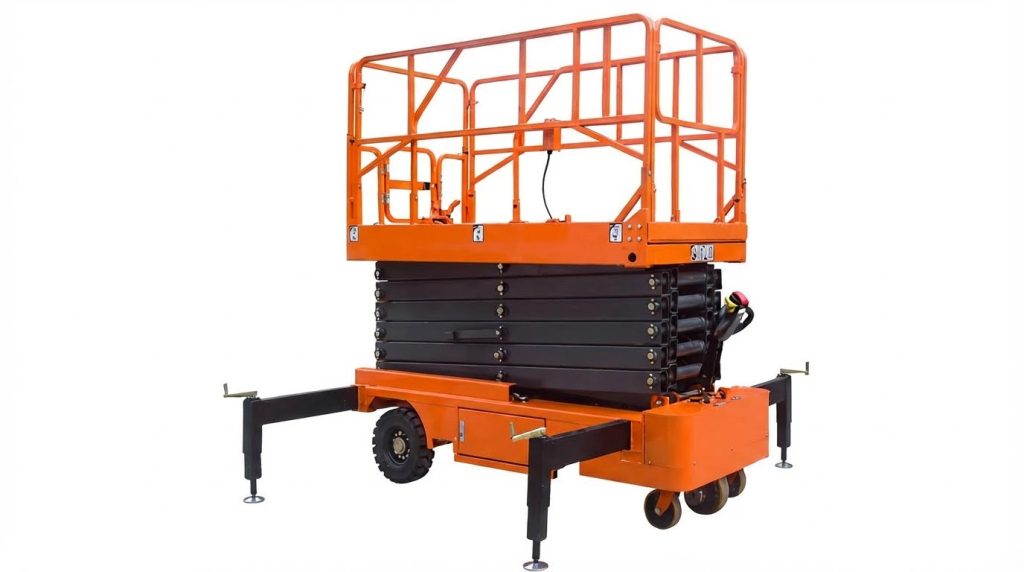
Forklift utilization patterns differed strongly by industry, driven by load profile, duty cycle, and environment. Warehouses and distribution centers operated the largest installed base, followed by factories and port-centric logistics. Rough-terrain, construction, and agricultural sites required specialized chassis and powertrains for low-traction, uneven ground. Understanding these application segments allowed engineers to specify classes, capacities, and energy systems that matched risk, throughput, and cost targets.
Warehousing, E‑Commerce, And Distribution Centers
Warehouses and distribution centers accounted for approximately 42% of global forklift deployments, or about 1.9 million active units. E‑commerce growth increased forklift utilization in warehouses by roughly 32% between 2021 and 2024, with higher picks per hour and extended shifts. Electric motor rider trucks, narrow-aisle trucks, and Class III pallet jacks dominated these environments due to zero local emissions, low noise, and suitability for racking-intensive layouts. Typical capacities stayed below 5 tonnes, with high-cycle lithium-ion trucks favored for multi-shift operations because of fast opportunity charging and stable voltage.
Modern fulfillment centers increasingly combined manned forklifts with autonomous units for repetitive horizontal transport. Narrow-aisle trucks operated in aisles below 2.0 m, enabling higher storage density but demanding precise guidance and stability control. Floors required tight flatness tolerances to prevent mast sway at high lift heights above 10 m. Integration with warehouse management systems (WMS) and real-time location systems improved slotting, travel minimization, and collision avoidance, especially in mixed traffic with pedestrians and AMRs.
Factory Intralogistics And Production Support
Factories represented roughly 33% of forklift demand, with more than 540,000 forklifts in active use worldwide. In manufacturing, forklifts supported inbound raw materials, work-in-progress (WIP) flow between processes, and outbound finished goods staging. Counterbalance trucks handled palletized loads, while tow tractors and tuggers supported milk-run logistics to assembly lines. Load weights often stayed in the 1.5–3.5 tonne range, but heavy industries such as metals and automotive stamping required higher-capacity units and specialized attachments.
Indoor air quality regulations and lean manufacturing practices drove strong adoption of electric counterbalance and automated guided forklifts in factories. Electric trucks reduced exhaust exposure, lowered vibration, and simplified integration with energy monitoring systems. Hydrogen fuel cell forklifts started to appear in high-throughput plants with centralized refueling, where rapid refuel times offset higher infrastructure cost. Safety engineering focused on clearly segregated forklift aisles, visual management, and standardized work for loading, unloading, and line feeding.
Ports, Airports, And Rail Terminals
Ports utilized about 11% of the global forklift population, while airports accounted for roughly 3% and rail or transport hubs around 6%. These environments required robust forklifts capable of operating outdoors, on uneven paving, and under variable weather conditions. Internal combustion (IC) and high-capacity electric counterbalance trucks handled palletized cargo, breakbulk, and unit load devices, with capacities often ranging from 3 to above 8 tonnes. At container terminals, forklifts complemented reach stackers and straddle carriers for ancillary cargo handling and maintenance tasks.
Environmental regulations at seaports and airports accelerated a shift from diesel to electric and hydrogen fuel cell forklifts. For example, the Nagoya Port Authority deployed hydrogen forklifts to reduce local emissions and noise near residential zones. Ground support operations at airports increasingly used electric forklifts for baggage build-up and catering logistics inside terminals and hangars. In rail yards, forklifts supported wagon loading, pallet transshipment, and maintenance depots, where high maneuverability between tracks and tight clearances was critical.
Construction, Mining, Agriculture, And Rough Terrain
Rough terrain forklifts held about 9% of the global forklift market and served construction, mining, and agricultural sectors. These machines featured high ground clearance, large pneumatic tires, and reinforced masts to operate on loose soil, gravel, and unfinished surfaces. Typical lifting capacities ranged from 2 to above 5 tonnes, with extended load centers for handling pallets of bricks, blocks, timber, or bulk bags. Internal combustion powertrains, often diesel, historically dominated due to high torque
Engineering Considerations For Fleet Design And Operation
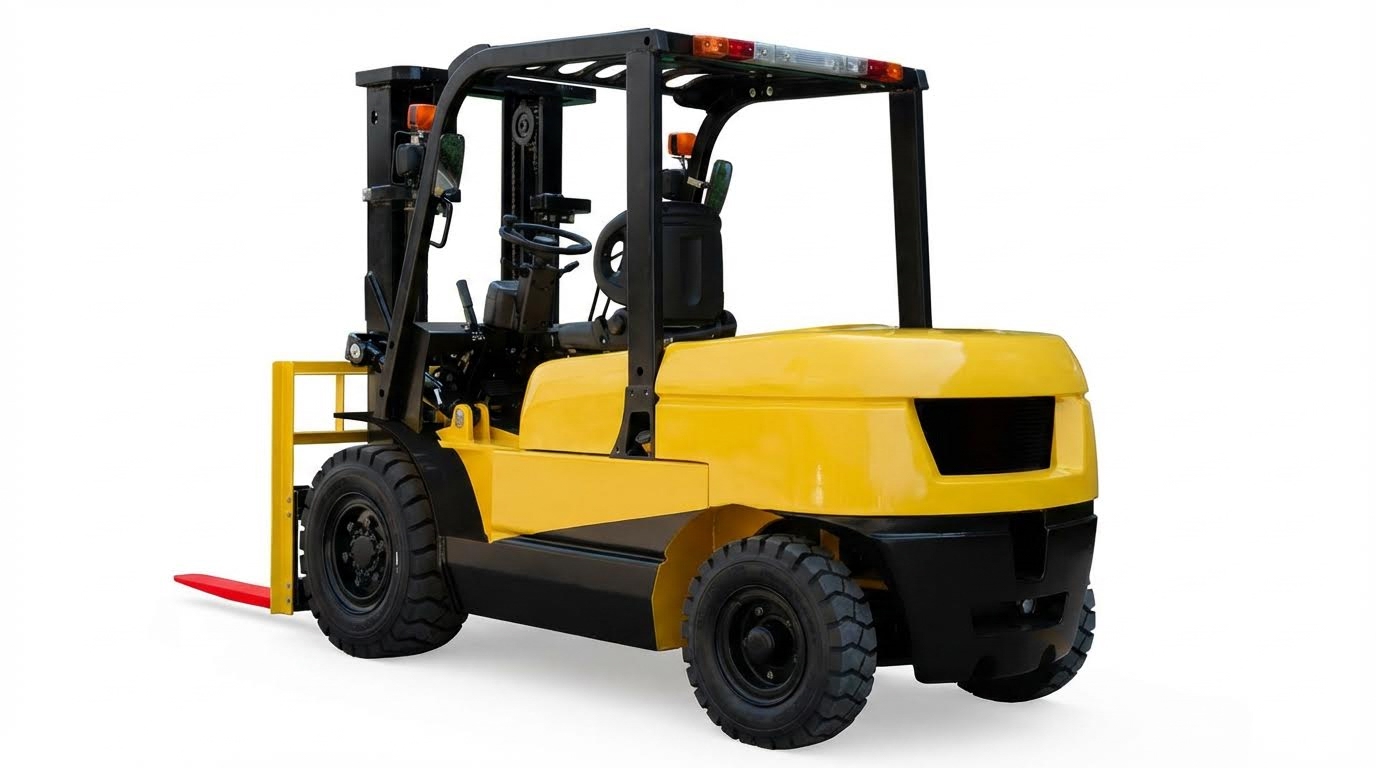
Engineering a forklift fleet required a structured approach that linked equipment selection, infrastructure, safety, and lifecycle economics. Decisions on truck classes, capacities, and power sources directly influenced throughput, energy demand, and regulatory compliance. Facility layout and aisle geometry constrained truck type, while emerging digital twin tools enabled simulation of traffic flows and congestion. Robust safety systems, operator training, and disciplined maintenance programs then sustained performance over years of intensive duty.
Selecting Classes, Capacities, And Power Sources
Fleet design started with mapping load profiles: mass, dimensions, center of gravity, and lift heights. Below 5 tonne capacities dominated globally, but heavy industries still required higher-rated counterbalance trucks. Engineers matched these requirements to forklift classes, with industrial counterbalance units holding over 74% market share in 2025. Class III electric pallet and walkie trucks grew quickly in e-commerce and retail due to short-haul, high-cycle use.
Powertrain choice depended on duty cycle, ventilation, and sustainability targets. Electric trucks led new sales, driven by zero local emissions and tightening diesel restrictions in Europe and North America. Lithium-ion batteries delivered roughly 40% higher energy efficiency than lead-acid and supported fast or opportunity charging. Internal combustion and rough terrain models remained essential outdoors, in ports, construction, and agriculture, where long shifts and uneven ground demanded high torque and rapid refueling.
Hydrogen fuel cell forklifts emerged where high utilization and centralized refueling infrastructure justified investment. Over 30,000 units were in operation by 2024, mainly in ports and large logistics hubs. Hybrid architectures combining IC engines and electric drives covered transitional use cases, holding around 5% of demand. Engineers evaluated total cost of ownership, factoring energy prices, maintenance intervals, and expected regulatory changes over a 5–10 year planning horizon.
Layout, Aisle Design, And Digital Twin Optimization
Forklift performance depended strongly on warehouse and yard geometry. Narrow aisle electric trucks, representing about 15% of sales, enabled racking with aisle widths near pallet length plus limited clearance. Standard counterbalance trucks required wider aisles to account for rear-wheel steering and tail swing. Engineers balanced storage density against travel distance, ensuring adequate turning radii at intersections and dock approaches. Clear segregation of pedestrian and vehicle routes reduced conflict points.
Digital twin models increasingly supported these layout decisions. Engineers imported CAD layouts and populated them with parametric forklift models, each with acceleration, speed, and turning constraints. Simulation tools then predicted queue lengths at docks, congestion in cross-aisles, and utilization of different truck types. This allowed comparison between, for example, more narrow aisle trucks with higher racking and fewer but higher-capacity counterbalance units. Scenario analysis incorporated growth in e-commerce volumes, which had raised warehouse forklift utilization by over 30% between 2021 and 2024.
Digital twins also supported charging and refueling infrastructure planning. For electric fleets, engineers located charging points to minimize deadhead travel and avoid peak grid loads. For hydrogen or LPG, they modeled tank access, ventilation, and emergency egress. As autonomous forklifts expanded to roughly 7% of installations, layout models had to incorporate sensor line-of-sight, fixed reflectors, and safe passing zones for mixed manual–robot traffic.
Safety Systems, Training, And Standards Compliance
Safety engineering for forklift fleets aligned equipment capabilities with regulatory frameworks and site-specific hazards. OSHA and comparable authorities required operator certification and mandated recertification every three years. Operators needed to be certified for the exact truck classes they used. Daily pre-shift inspections were compulsory, covering both visual and operational checks, including forks, mast chains, hydraulic hoses, seat belts, and warning devices. These inspections reduced the likelihood of mechanical failures during high-risk maneuvers.
On-board safety systems evolved rapidly. Proximity detection and pedestrian alert systems, such as AI-based collision avoidance launched in 2025, used sensors to warn operators or automatically limit speed. Speed zoning integrated with warehouse management systems enforced lower speeds near docks, picking zones, and crossings. Load weighing and mast angle sensors helped prevent overloads and high-lift instability. Engineers specified redundant alarms: visual beacons, audible horns, and, in some cases, projected light patterns on the floor to mark travel paths.
Training programs emphasized that forklifts behaved differently from cars due to rear steering, elevated centers of gravity, and obstructed visibility. Best practice required keeping loads low during travel, using spotters when visibility
Summary And Future Directions In Forklift Utilization
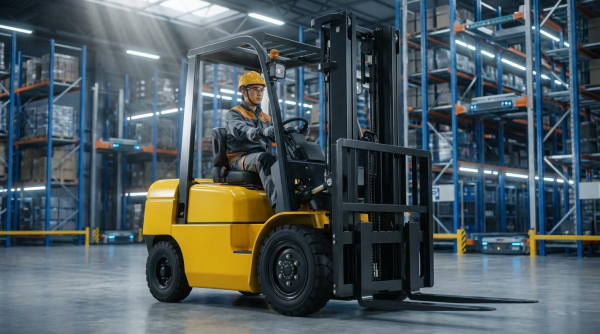
Global forklift utilization expanded rapidly across warehousing, factories, ports, and construction, driven by e‑commerce growth and logistics automation. Market data indicated strong unit growth, rising penetration of electric trucks, and increasing deployment of autonomous and hydrogen fuel cell platforms. At the same time, OSHA-style safety requirements and mandatory pre‑shift inspections remained central to risk control, while structured maintenance regimes over daily to 500‑hour intervals protected availability and residual value. Together, these trends reshaped how operators specified classes, capacities, and powertrains for diverse operating environments.
Future forklift fleets will likely be predominantly electric below 5 tonnes, supported by lithium‑ion and fuel cell technologies that improve energy efficiency by roughly 40% compared with legacy lead‑acid systems. Autonomous and AI‑assisted trucks, already at about 7% of installations, will probably integrate more advanced perception, collision‑avoidance, and traffic‑management software, tightly coupled with warehouse order picker management and digital twin systems. Regulatory pressure on diesel and high‑emission IC trucks will continue to accelerate replacements, especially in Europe and North America, reinforcing demand for zero‑emission solutions in indoor and mixed‑use sites.
Practically, operators planning new or replacement fleets should adopt a data‑driven approach that combines duty‑cycle analysis, aisle and racking simulations, and lifecycle cost models including energy, maintenance, and downtime. Safety engineering must remain embedded, from PPE and operator certification to advanced proximity detection and standardized pre‑shift checklists aligned with OSHA or equivalent regulations. Over the next decade, forklift technology will evolve from standalone material handling assets into connected, sensor‑rich nodes within cyber‑physical logistics networks, but success will still depend on disciplined maintenance, robust training, and careful matching of equipment capabilities to real operating conditions.