
Pallet jack braking systems determined how safely loads moved, stopped, and parked in warehouses and industrial facilities. This article examined core brake types, including mechanical, hydraulic, electric, and parking functions, and linked them to stopping-distance and torque calculations. It also explored inspection practices, troubleshooting methods, and predictive maintenance approaches based on standards such as FEM 4.004. Together, these sections provided a practical framework for designing, sizing, and maintaining safe, reliable pallet jack braking systems across manual and powered equipment.
Core Types Of Pallet Jack Braking Systems
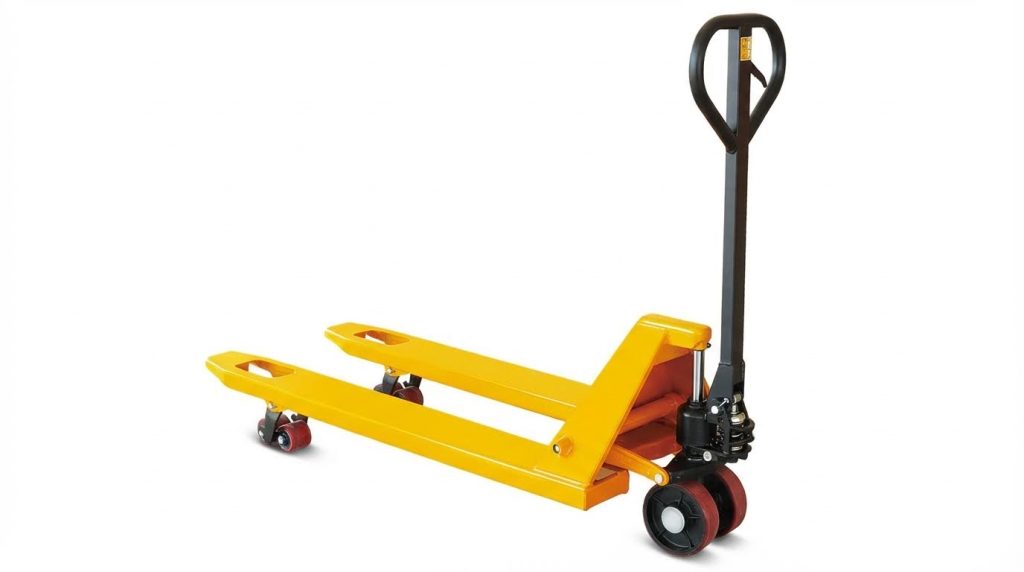
Pallet jack braking architectures evolved from simple mechanical linkages to integrated electro‑hydraulic systems. Designers selected concepts based on load capacity, travel speed, duty cycle, and regulatory safety targets. Understanding the core brake types helped engineers match stopping performance with operator ergonomics and maintenance complexity. The following subsections outlined the dominant braking principles used in manual pallet jacks and powered pallet jacks.
Mechanical Hand Brakes On Manual Pallet Jacks
Mechanical hand brakes on manual pallet jacks typically acted on the steer wheels through a cable or rod linkage. The operator applied force via a lever or handle trigger, which clamped friction pads or a band brake onto a drum or wheel tread. Designers sized the lever ratio and cable routing so operators could hold a fully rated load on moderate slopes without excessive hand force. These brakes primarily provided parking and low‑speed control rather than high‑energy service braking. Regular checks of cable tension, pad thickness, and return springs were essential to prevent reduced braking torque or brake drag.
Hydraulic And Friction Braking Principles
Hydraulic braking systems on pallet trucks used pressurized fluid to transmit pedal or handle input to friction elements at the wheels. The master cylinder converted mechanical stroke into hydraulic pressure, which actuated wheel cylinders and pressed pads or shoes against a rotating drum or disc. Trapped air, low oil level, or internal leakage reduced effective pressure and produced long, spongy strokes or sinking pedals. Technicians restored performance by bleeding the system, correcting free stroke, and maintaining the correct fluid level at the fill port. Friction interfaces required clean, oil‑free surfaces and controlled pad‑to‑hub gaps to achieve stable coefficients of friction and predictable deceleration.
Electric And Regenerative Brakes On Powered Units
Powered pallet jacks combined electric braking with mechanical or hydraulic friction brakes to achieve safe stopping under all conditions. The traction motor operated in generator mode during deceleration, converting kinetic energy into electrical energy and returning it to the battery or dissipating it in resistors. Control electronics modulated this regenerative torque to avoid wheel lock and maintain directional stability, especially with unladen trucks at low normal force. At low speeds or during fault conditions, friction brakes provided the final hold and redundant stopping capability. Regular inspection of electrical wiring, coils, and control logic was critical, because short circuits or actuator failures directly affected braking availability.
Parking And Emergency Braking Functions
Parking brakes on pallet jacks were designed to hold the truck and load stationary on specified gradients without continuous operator input. They typically acted through positive mechanical locking or spring‑applied, power‑released mechanisms on powered units. Emergency braking functions, in contrast, aimed to stop motion rapidly when operators activated a pedal, tiller switch, or emergency reverse device. Standards required these systems to operate reliably even if primary service brakes degraded, so designers implemented fail‑safe principles and independent actuation paths. Routine testing on level ground, including park‑brake stall checks and functional verification of emergency controls, ensured that holding torque and response times remained within specification over the equipment’s life.
Design, Sizing, And Performance Requirements

Brake design for pallet jacks had to satisfy safety, productivity, and regulatory expectations. Engineers balanced compact packaging with reliable stopping on smooth industrial floors, ramps, and loading docks. Correct sizing of torque, friction interfaces, and thermal capacity reduced failures and extended service life. Performance requirements depended on truck mass, load, travel speed, and duty cycle.
Calculating Stopping Distance And Brake Torque
Brake sizing started from the worst credible operating case. Engineers defined maximum gross mass, target speed, allowable stopping distance, and maximum slope angle. From these parameters, they computed required deceleration and corresponding braking force at the wheels. Multiplying this force by wheel radius gave minimum brake torque per wheel or per brake unit. Designers added safety factors to account for friction coefficient variation, contamination, and wear. For electric pallet trucks, they also considered the contribution of regenerative braking and ensured mechanical brakes alone still met emergency stopping requirements.
Brake Pad, Hub, And Wheel Interface Design
The pad–hub–wheel interface determined friction stability and wear behavior. Engineers selected lining materials with stable friction coefficients over the expected temperature range and floor conditions. They specified surface roughness and hardness for hubs and wheels to prevent glazing and uneven contact. Contact geometry, such as drum, disk, or band arrangements, influenced pressure distribution and self-energizing effects. Designers limited contact pressure to avoid excessive wear while maintaining enough normal force for reliable torque transmission. Corrosion protection and sealing around the interface reduced contamination from oil, moisture, and dust. For manually operated units, simple mechanical linkages transferred handle forces to the friction interface with minimal hysteresis.
Managing Heat, Wear, And Fade In Brakes
Each braking event converted kinetic and potential energy into heat at the friction surfaces. Engineers estimated energy per stop and duty cycles to size brake mass and surface area. They selected materials with adequate thermal conductivity and specific heat to limit temperature rise. Designs promoted convective cooling through exposed surfaces and airflow paths around hubs and wheels. To control fade, they chose friction materials with low sensitivity to temperature and avoided resins that degraded near operating limits. Wear predictions relied on empirical wear coefficients and expected cycle counts, feeding into maintenance intervals. Designers made pads, shoes, and wheels replaceable with straightforward tools, supporting field service and minimizing downtime.
Integrating Brakes With Slopes And Floor Conditions
Braking performance changed significantly on ramps and varied floor finishes. Engineers calculated required holding and stopping forces on specified maximum gradients, including wet or low-friction surfaces. For parking brakes, they ensured sufficient static torque to hold the rated load on the steepest allowed ramp without creep. Floor conditions such as polished concrete, epoxy coatings, or embedded rails influenced available friction between wheels and ground. Wheel tread materials and hardness were matched to these surfaces to optimize grip while limiting wear and noise. Control strategies on electric units limited speed on slopes and prevented unintended roll-back. Design documentation defined allowable floor conditions and slope limits to align with risk assessments and regulatory guidance.
Inspection, Troubleshooting, And Predictive Care

Brake inspection and troubleshooting determined whether a pallet jack remained safe under real operating loads. Structured routines combined quick weekly checks with formal annual inspections and condition-based maintenance. Effective programs reduced unplanned downtime, extended component life, and ensured compliance with safety regulations. Predictive tools increasingly supported these activities by turning raw sensor data into actionable maintenance decisions.
Weekly Checks And Annual FEM 4.004 Inspections
Weekly checks focused on fast, repeatable tasks that operators could perform during pre-use or shift-start routines. These checks included visual inspection of wheels, forks, linkages, and brake components, as well as functional tests of service and parking brakes. Operators verified that the brake engaged smoothly, held the truck on level ground, and released without drag or abnormal noise. Electric units required additional checks of emergency reverse controls and interlocks, with any defect triggering immediate decommissioning until repair.
Annual inspections according to FEM 4.004 provided a deeper, legally mandated assessment of safety-related components. Qualified personnel examined structural welds, axles, brake hubs, pads, cylinders, hydraulic lines, and electrical brake circuits against the standard’s criteria. They documented wear limits, clearances, and measured performance such as braking torque and stopping behavior under defined test conditions. Findings from the FEM inspection fed into maintenance planning, including scheduled replacements of high-stress parts like load rollers and steering wheels.
Adjusting Gaps, Free Stroke, And Linkage Geometry
Correct adjustment of brake gaps and free stroke ensured predictable pedal or lever feel and stable braking performance. Excessive clearance between friction plate and hub typically produced long pedal travel, delayed engagement, or braking deviation between wheels. Technicians restored proper function by adjusting linkages and screws until the pedal free stroke met specification and both sides developed balanced force. They also verified that the brake fully released, since overly tight adjustment could cause drag, heat buildup, and accelerated lining wear.
Linkage geometry influenced mechanical advantage and sensitivity, especially in handbrake-equipped pallet jacks. Worn pivots, elongated holes, or bent levers changed effective lever ratios and introduced hysteresis into the system. Maintenance teams inspected joints for play, corrosion, and misalignment, then replaced pins or bushings where necessary. After mechanical repair, they repeated static and dynamic brake tests to confirm that the pallet jack tracked straight and stopped within the required distance.
Bleeding Air And Managing Hydraulic Brake Fluids
Air in hydraulic circuits reduced effective pressure and caused soft, sinking, or inconsistent brake pedals. Technicians bled the system starting at the master cylinder and progressing to the wheel cylinders, following the sequence from the closest sub-cylinder outward. One person operated the pedal while another cycled the vent screws, allowing fluid and entrained air to escape until only clean fluid emerged. If the pedal still behaved abnormally, they checked for leaks, blocked compensation ports, or worn seals in the master cylinder.
Fluid condition management complemented bleeding procedures. Low fluid levels or contaminated oil lowered braking efficiency and damaged seals over time. Maintenance routines therefore included verifying fluid height at the specified reference, topping up with compatible hydraulic oil, and performing periodic full oil changes. During changes, technicians drained the system into a collection container, inspected sealing rings, reassembled components, and then bled the circuit again to restore consistent hydraulic response.
AI Diagnostics, Digital Twins, And Lifecycle Cost
Advanced fleets increasingly used sensors and analytics to predict brake maintenance needs before failures occurred. Embedded sensors captured parameters such as brake application frequency, temperature peaks, stopping distance trends, and actuator currents on powered pallet jacks. AI models analyzed this data to flag patterns associated with pad wear, drag, hydraulic degradation, or electrical faults. This approach allowed maintenance teams to schedule interventions during planned downtime rather than after an incident or breakdown.
Digital twin models further improved decision-making by simulating brake behavior under variable loads, slopes, and duty cycles. Engineers calibrated these models with field data to estimate remaining lining thickness, fluid life, and component fatigue. Lifecycle cost analysis then compared different brake materials, inspection intervals, and operating policies, quantifying trade-offs between upfront component cost and long-term reliability. As a result, operators could justify investments in higher-spec brakes or enhanced monitoring when total cost of ownership favored reduced failures and extended service life.
Summary And Key Takeaways For Safe Brake Design

Pallet jack braking systems required a disciplined engineering approach that balanced stopping performance, controllability, and durability. Designers combined mechanical, hydraulic, and electric or regenerative concepts to match manual and powered units with their duty cycles and rated capacities. Stopping distance, brake torque, heat dissipation, and wheel–floor interaction all constrained the final design envelope. Regulatory expectations, including periodic inspections aligned with FEM 4.004 for material handling equipment, further shaped technical decisions and documentation.
Safe brake design relied on correctly sized friction interfaces, stable hydraulic or mechanical transmission of force, and robust thermal margins under repeated stops. Engineers needed to consider ramps, low-friction floors, and worst-case loaded conditions when defining brake factors and testing protocols. In operation, weekly visual and functional checks, combined with at least annual expert inspections, reduced the likelihood of hidden defects or degraded performance. Correct adjustment of gaps, free stroke, and linkages, together with proper bleeding and oil management, preserved predictable pedal or lever feel.
Industry practice moved toward integrating sensors, onboard diagnostics, and in some cases AI-based analytics or digital twins to track brake temperature, actuation profiles, and wear states over the full lifecycle. These tools enabled condition-based maintenance instead of purely interval-based servicing, which reduced unplanned downtime and improved safety margins. Future pallet truck platforms would likely treat braking as a monitored subsystem, with logged performance data supporting compliance, residual value assessment, and fleet optimization.
Practically, engineers and operators should align design, maintenance, and inspection procedures with real usage patterns, load spectra, and site conditions. A balanced view recognized that even advanced brake technologies still depended on correct setup, conservative assumptions in calculations, rigorous testing, and disciplined field care. When those elements worked together, walkie pallet truck braking systems delivered reliable stopping performance, stable handling, and long, predictable service life.