Whether a pallet truck is classed as lifting equipment under LOLER depends mainly on its lift height and risk profile. Across the full article, we will clarify how UK law separated duties between LOLER and PUWER, and how the 300 mm threshold affected the answer to “is a pallet truck classed as lifting equipment”. We will then compare low‑lift and high‑lift pallet trucks in real operations, examine inspection and competent person requirements, and finish with a practical compliance and lifecycle strategy for pallet truck fleets.
Legal Definitions: Pallet Trucks, LOLER And PUWER

Engineers and safety managers often ask whether a pallet truck is classed as lifting equipment, especially when defining LOLER and PUWER duties. In UK law, the answer depends on how high the truck can raise the load and the associated risk profile. Understanding the legal definitions helps align design choices, maintenance regimes, and inspection intervals with regulatory expectations. This section clarifies how the law treated pallet trucks, how LOLER and PUWER interact, and why the 300 mm threshold matters for compliance.
What Counts As “Lifting Equipment” Under LOLER
LOLER defined lifting equipment as any work equipment that lifted or lowered loads and included its attachments. In practice, regulators focused on equipment that raised loads to heights where a fall could cause serious injury. Historically, that clearly included cranes, forklifts, hoists, and high-lift pallet trucks. The key question for engineers was always functional, not nominal: did the equipment undertake a lifting operation with a significant drop potential. For the query “is a pallet truck classed as lifting equipment,” the decisive factor became the lift height rather than the simple presence of a hydraulic circuit or forks. When a pallet truck elevated loads well above ground level, regulators treated it as lifting equipment and applied LOLER in full.
PUWER Duties For All Types Of Pallet Trucks
PUWER applied to all work equipment, so every pallet truck, regardless of lift height, fell under PUWER. Under PUWER, employers had to ensure that pallet trucks were suitable for the task, properly maintained, and safe throughout their lifecycle. This included routine inspections, defect reporting systems, and isolation of unsafe equipment. The regulations also required adequate operator training and clear marking of safe working loads. For low-lift pallet trucks that did not meet LOLER’s practical lifting threshold, PUWER provided the primary legal framework. Engineers therefore needed PUWER-compliant risk assessments even when a pallet truck was not classed as lifting equipment under LOLER.
The 300mm Threshold And HSE’s Updated Position
The 300 mm threshold became the practical dividing line for whether a pallet truck was classed as lifting equipment under LOLER. HSE’s 2018 change to paragraph 28(c) of the Approved Code of Practice clarified that hand pallet trucks lifting 300 mm or less remained under PUWER only. Once a pallet truck could raise the load above roughly 300 mm, regulators treated it as lifting equipment, and LOLER thorough examination duties applied. This reflected the higher consequence of a load fall at increased heights, especially in racking aisles or on gradients. For SEO-focused queries such as “is a pallet truck classed as lifting equipment,” the accurate legal position was: low-lift designs up to 300 mm fell under PUWER alone, while high-lift designs exceeding 300 mm triggered LOLER as well as PUWER.
Low-Lift Vs High-Lift Pallet Trucks In Practice
Understanding low-lift and high-lift pallet trucks in real workplaces helped answer whether a pallet truck was classed as lifting equipment under LOLER. The dividing line in practice depended on design, achievable lift height, and the associated risk profile. Engineers and safety managers used these factors to decide if LOLER, PUWER, or both applied. This section translated the legal definitions into operational decisions on the warehouse floor.
Typical Designs, Lift Heights And Use Cases
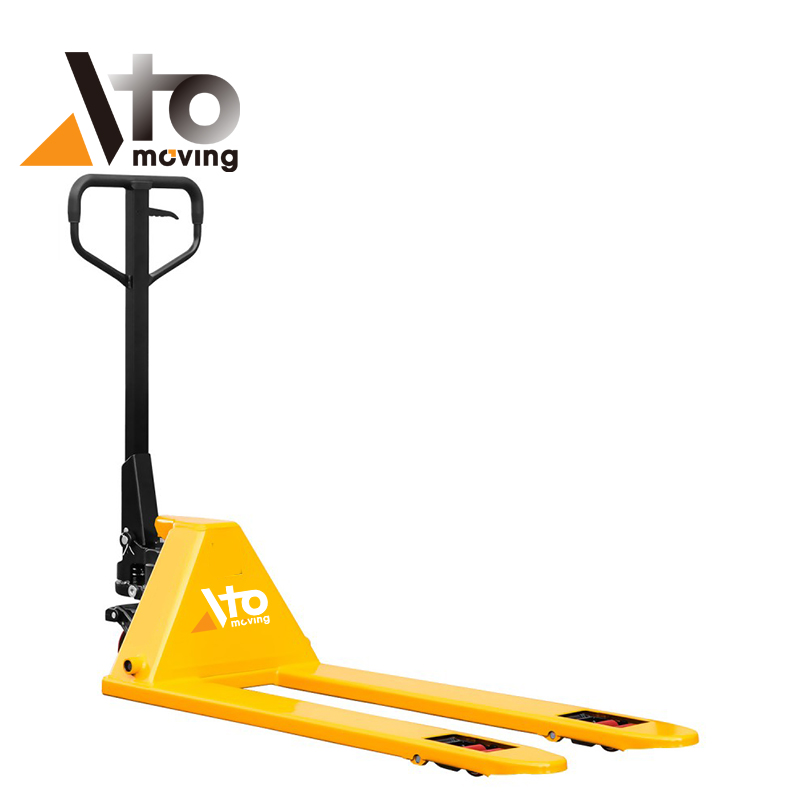
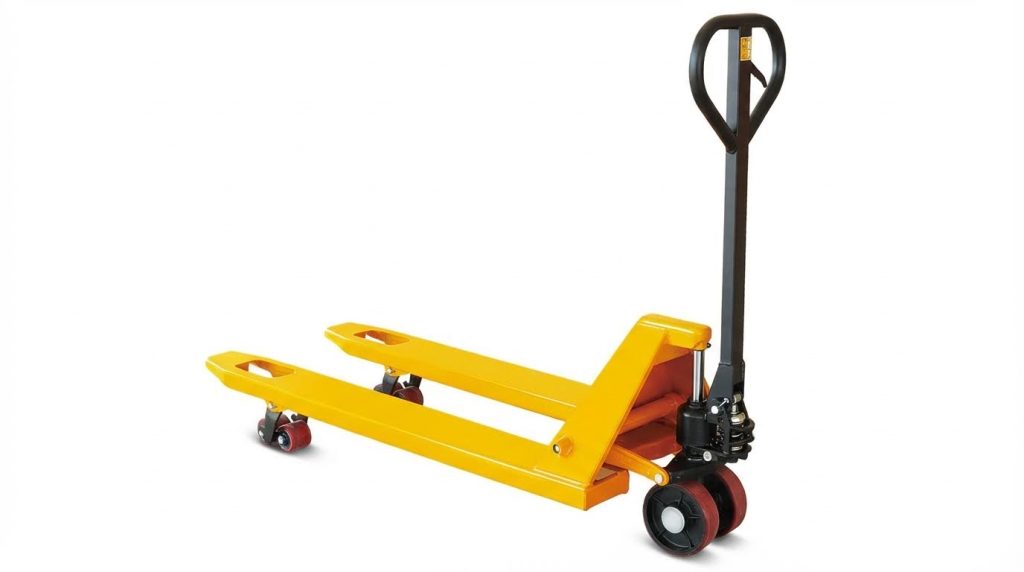
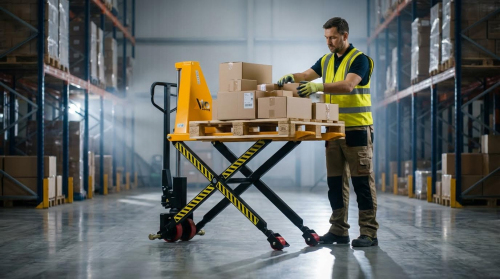
Low-lift pallet trucks usually had short-stroke hydraulic units and fixed-length forks. They typically raised the load just enough for ground clearance, usually up to about 200–300 mm. Their primary function was horizontal transport over short distances on flat floors. High-lift pallet trucks incorporated longer-stroke hydraulics, scissor mechanisms, or mast structures. These machines lifted pallets well above 300 mm, sometimes to ergonomic working height or to interface with racking or machinery. In practice, low-lift units supported order picking, staging, and trailer unloading at floor level. High-lift units supported feeding production lines, work positioning, or stacking where a dropped load could cause significant injury.
Risk Profiles: Load Stability, Operator Safety, Environment
The risk profile changed significantly once a pallet lifted above low-clearance heights. Low-lift pallet trucks mainly presented crush and trapping risks at foot and ankle level, plus musculoskeletal strain from pulling and pushing. Load stability remained high because the centre of gravity stayed close to the floor. High-lift pallet trucks introduced overturning and falling-load risks because the load centre moved higher above the support polygon. Dynamic effects from braking, cornering, or uneven floors increased the likelihood of instability. Environmental factors such as gradients, dock plates, expansion joints, and wet or contaminated floors amplified these risks. When assessing whether a pallet truck was classed as lifting equipment, practitioners considered not only lift height but also these stability and environment factors, because they influenced whether a failure could result in serious injury.
When A Pallet Truck Clearly Falls Under LOLER
A pallet truck clearly fell under LOLER once it could regularly lift loads above 300 mm and the lift formed part of the work activity. This aligned with the updated HSE position and the L113 guidance, which treated high-lift pallet trucks as lifting equipment. Typical examples included scissor-lift pallet trucks used as adjustable work platforms and high-lift models feeding conveyors or machinery in production cells. In these cases, the lifting function was integral, and a dropped pallet could strike the operator at torso height or higher. That risk level triggered duties for thorough examination by a competent person at defined intervals. Engineers documented the rated capacity, maximum lift height, and duty cycle to justify classification under LOLER and to set examination periods.
Grey Areas, Attachments And Mixed-Use Scenarios
Grey areas arose where low-lift pallet trucks operated close to the 300 mm threshold or used attachments. For example, a standard pallet truck fitted with a drum clamp or reel cradle might still lift below 300 mm, yet the changed load geometry could increase the consequence of a failure. Mixed-use scenarios also created ambiguity, such as a pallet truck occasionally used on dock levellers or ramps where effective fall heights increased. In these cases, safety professionals revisited the question “is a pallet truck classed as lifting equipment?” by focusing on foreseeable worst-case outcomes rather than nominal design intent. Where the risk profile resembled that of high-lift equipment, organisations often chose to apply LOLER-style thorough examinations voluntarily, even if PUWER alone technically applied. This conservative approach simplified compliance strategies and supported a consistent inspection regime across the fleet.
Inspection, Maintenance And Competent Person Duties
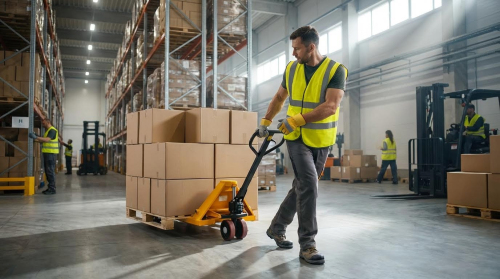
Inspection and maintenance duties answered the practical side of the question “is a pallet truck classed as lifting equipment.” Once a pallet truck exceeded the LOLER threshold, the inspection regime changed from simple PUWER checks to formal thorough examinations. Competent person responsibilities, record keeping, and component-level inspections all needed clear definition. This section explained how duty holders structured compliant regimes for both low-lift and high-lift pallet trucks.
LOLER Thorough Examinations For High-Lift Trucks
High-lift pallet trucks that raised loads above 300 mm sat within LOLER’s scope. Duty holders therefore arranged thorough examinations by a competent person at intervals not exceeding 12 months, or shorter where risk justified. Examinations covered structural integrity of forks and chassis, mast or scissor mechanisms, and the complete lifting system including chains, linkages, and hydraulics. The competent person also reviewed rated capacity markings, operating controls, parking devices, and any overload or height limiting features. Where defects involved an existing or foreseeable risk of serious injury, the competent person issued a written report with timescales and notified the employer and, where required, the enforcing authority.
PUWER And FEM 4.004 Periodic Inspection Regimes
All pallet trucks, regardless of lift height, fell under PUWER, which required that work equipment remained safe throughout its life. For low-lift trucks not classed as lifting equipment under LOLER, duty holders typically aligned their inspection regime with FEM 4.004 guidance. This standard recommended at least annual inspections, with shorter intervals for intensive, multi-shift, or harsh-environment use. Inspections checked steering, brakes where fitted, wheels, rollers, controls, hydraulic function, and general structural condition. Findings fed into preventive maintenance plans, ensuring defects were rectified before they compromised safety or caused unplanned downtime.
Structurally Critical Points: Forks, Chassis, Hydraulics
Whether a pallet truck was classed as lifting equipment or not, inspectors focused on structurally critical points. Forks required checks for permanent deformation, cracks at the heel, tip damage, and wear that reduced section thickness below acceptable limits. The chassis and load-bearing welds were examined for corrosion, distortion, impact damage, and any modification that changed load paths. Hydraulic systems demanded inspection of cylinders, seals, hoses, and connections for leaks, scoring, or corrosion, together with functional tests for smooth lifting and controlled lowering. For high-lift designs, additional attention went to stabilisers, outriggers, and any mast or scissor structure supporting elevated loads.
Training, Responsible Persons And Record Keeping
Clear allocation of responsibilities supported compliance with both LOLER and PUWER. Organisations usually appointed a Responsible Person to maintain an inventory of pallet trucks, classify which units were classed as lifting equipment, and schedule examinations and inspections. Operators received task-specific training covering load charts, stability limits, pre-use checks, and actions on discovering defects. Records of LOLER thorough examinations, PUWER inspections, maintenance, and defect rectification were retained for statutory periods and made readily accessible. This documentation demonstrated that the employer had assessed whether each pallet truck was classed as lifting equipment and had implemented an appropriate inspection and maintenance strategy.
Summary: Compliance, Safety And Lifecycle Strategy
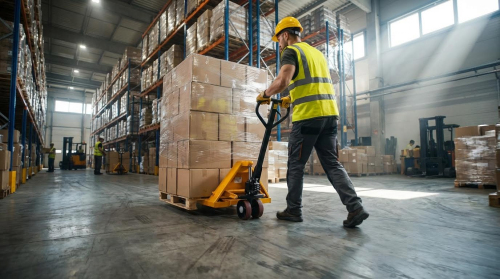
In the UK, the answer to “is a pallet truck classed as lifting equipment” depends primarily on lift height, but compliance in practice must integrate LOLER, PUWER and FEM 4.004 regimes into a single lifecycle strategy. Low-lift pallet trucks that raise loads to 300 mm or less sat under PUWER, while high-lift units that raise forks above 300 mm met the LOLER definition of lifting equipment following the 2018 clarification in L113. From a technical risk perspective, this distinction aligned with the higher consequence of load drop or instability at greater heights, which justified thorough examination by a competent person under LOLER in addition to PUWER’s general work equipment duties.
For operators and owners, the practical implication was a tiered compliance model. All pallet trucks required PUWER-based risk assessment, routine in-house checks and at least annual FEM 4.004 inspections focusing on forks, chassis, wheels and hydraulics. High-lift pallet trucks additionally required LOLER thorough examinations at intervals set by risk assessment, often 12 months, targeting structural integrity, overload protection and safe working load marking. Appointing a Responsible Person in each department helped coordinate procurement notification, inspection scheduling, defect closure and record keeping.
Over the full asset lifecycle, the most robust strategy combined correct classification against the 300 mm threshold, environment-specific inspection intervals, and structured operator training on stability, rated capacity and emergency actions. Future trends pointed toward closer integration of telematics, digital inspection records and condition-based maintenance, but the core regulatory logic remained stable: classify the truck correctly, match the examination regime to the real lifting risk, and maintain traceable evidence that the equipment stayed safe for use.