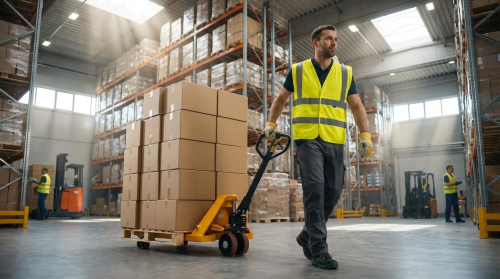
Safe travel with loaded pallets on forklifts and pallet trucks depends on disciplined inspection routines, correct load positioning, and controlled driving techniques. This article outlines pre-use equipment and work area checks, best practices for load stability while traveling, and traffic management rules that answer how should a lift operator travel with a full pallet. It also links these practices to compliance obligations, highlighting how structured inspections, operator training, and engineered controls reduce incidents and regulatory risk. Together, these sections provide a practical framework that safety managers and lift operators can apply in warehouses, manufacturing plants, and logistics hubs.
Pre-Use Equipment And Work Area Checks
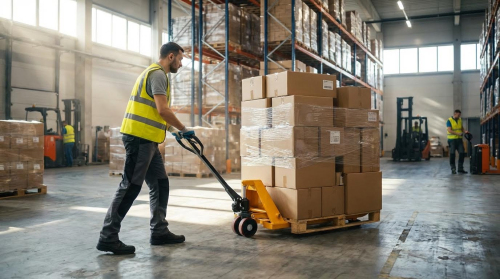
Pre-use checks set the foundation for how a lift operator should travel with a full pallet. Thorough inspections of forklifts, pallet trucks, and travel routes reduce mechanical failures and stability incidents. Verifying floor conditions and load characteristics before moving prevents tipping, loss of control, and product damage. These checks also support compliance with occupational safety regulations and internal audit requirements.
Daily Forklift And Pallet Truck Inspection Points
Operators should complete a documented pre-shift inspection before traveling with any loaded pallet. For forklifts, this includes checking brakes, steering, horn, safety lights, seat belt, parking brake, and direction controls for proper function. The mast, carriage, and forks must be inspected for cracks, wear, bends, or misalignment, and forks should lock securely in position. Hydraulic systems require checks for leaks, damaged hoses, and smooth lift and tilt operation without jerks or abnormal noises.
Fluid levels, such as engine oil, coolant, fuel, and hydraulic fluid, must stay within manufacturer limits to avoid overheating or loss of hydraulic power during travel. Tires or wheels should be examined for cuts, flat spots, low pressure, or embedded debris that could reduce grip on ramps or wet floors. For pallet trucks, operators should inspect fork blades for bends or cracks, wheels and rollers for damage or debris, and the frame for distortion. The hydraulic pump, handle, and release valve must operate smoothly so the load can be lifted and lowered in a controlled manner.
Any defect that affects steering, braking, lifting, or structural integrity requires immediate lockout of the equipment until repair. Employers should maintain inspection records and follow a preventive maintenance schedule based on operating hours and environment. These routines ensure the truck can safely carry its rated capacity when the operator travels with a full pallet.
Assessing Floors, Ramps, And Traffic Routes
Before moving a full pallet, operators should visually scan planned travel routes from pick-up to destination. Floors must be clean, dry, and free of loose objects, packaging, or broken pallets that could catch the forks or wheels. Cracks, potholes, dock plates, and transitions between surfaces should be noted, because sudden level changes can destabilize a raised load. Any oil, water, or chemical spills must be removed or cordoned off, as reduced friction increases stopping distance and steering effort.
Ramps and inclines require special attention. Operators should verify that ramp surfaces are intact, well anchored, and capable of supporting combined truck and load mass. Grades greater than approximately 5% demand stricter procedures: loaded forklifts should keep the load uphill, while unloaded units travel with forks downhill. Turning on ramps or traveling with elevated loads on inclines should be avoided to prevent lateral tip-over.
Traffic routes should support adequate width for the truck, load overhang, and clearance for counterweight swing. Overhead clearances at doors, mezzanines, sprinklers, and conveyors must exceed the maximum travel height of the load and mast. Fixed mirrors at intersections, marked pedestrian walkways, and defined right-of-way rules reduce collision risk. A well-assessed route allows the operator to maintain low fork height and steady speed, which is critical when traveling with a full pallet.
Verifying Load Weight, Stability, And Pallet Condition
Before lifting, operators should confirm that the load mass does not exceed the rated capacity shown on the forklift or pallet truck data plate. Where exact weight is uncertain, weighing scale pallet trucks, floor scales, or weigh beams provide objective values. Capacity must account for load center distance, especially for long or high-stacked pallets, because increasing the load center reduces the allowable weight. Overloading or misjudging weight directly compromises stability during travel and braking.
Load stability is equally important. Pallets should have evenly distributed weight, with heavier items placed at the bottom and lighter items on top. Stacks must be wrapped, banded, or otherwise secured so that no cartons or components can shift when the truck accelerates, decelerates, or turns. Protruding items, damaged packaging, or unrestrained tall stacks increase the risk of product falling when the operator encounters bumps or must stop quickly.
The pallet itself must be inspected for broken deck boards, cracked stringers, missing blocks, or exposed nails. Defective pallets can fail when forks lift or when the truck travels over rough surfaces, causing sudden loss of support for the load. Operators should ensure forks can fully enter the pallet openings without striking blocks or boards, enabling correct fork spread and full insertion later in the process. By verifying weight, stability, and pallet integrity before moving, the operator creates the conditions required to travel safely with a full pallet at low fork height and controlled speed.
Load Positioning And Stability While Traveling
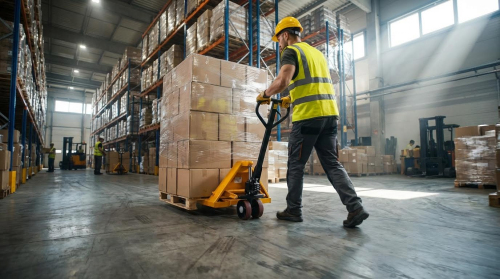
Load positioning governed how a lift operator should travel with a full pallet in both warehouses and yards. Correct fork spacing, mast tilt, and travel height directly controlled truck stability and stopping distance. Operators also had to adapt technique on grades and ramps while respecting rated capacity and visibility limits. The following subsections detailed practical rules that reduced tip-over risk and pallet damage.
Centering, Fork Spread, And Full Fork Insertion
A lift operator should travel with a full pallet only after centering the load on the forks. The load center had to align with the truck’s rated load center, usually 500 mm for standard pallets, to avoid forward tipping. Operators spread the forks as wide as pallet openings allowed while keeping them equidistant from the pallet centerline. This wider base reduced side-to-side rocking and improved resistance to lateral forces during turns.
Forks needed full insertion under the pallet before lifting or traveling. As a rule, forks should extend at least two-thirds of the pallet length, and preferably fully through, to prevent slippage during braking or on uneven floors. Partial engagement increased the risk of broken deck boards and sudden loss of the load. Operators also kept fork blades level during entry and exit to avoid gouging stringers and destabilizing stacked goods.
Before traveling, operators visually checked that no boards were cracked, that the pallet sat flat, and that no load overhang interfered with fork tips. Shrink wrap or strapping had to secure stacked goods so that inertia during braking did not shift cartons. These positioning fundamentals applied equally to manual pallet jack and pallet trucks, whether manual or electric, and formed the base of safe travel with full pallets.
Correct Mast Tilt And Travel Height For Loads
Once the forks engaged and the pallet lifted clear, operators adjusted mast tilt and travel height for maximum stability. The mast should tilt slightly backward so the load leaned toward the truck, keeping the combined center of gravity inside the stability triangle. Excessive rear tilt, however, could raise the load’s center of mass and increase the risk of striking overhead structures or guard rails.
Travel height played a critical role in how a lift operator should travel with a full pallet. Best practice kept forks low, typically 100 mm to 150 mm above the floor, just high enough to clear minor surface defects and thresholds. Lowering the load reduced overturning moments during emergency maneuvers or sudden stops. Operators avoided traveling with elevated loads because height amplified sway and made tip-overs more likely on uneven surfaces.
Before moving, the operator lifted the pallet vertically until it cleared the rack or adjacent loads, then tilted back slightly and lowered to travel height. This sequence prevented catching on beams or packaging. During travel, frequent micro-adjustments of tilt were avoided to prevent load shift. Approaching the destination, operators decreased speed first, then raised the load only after the truck stopped, maintaining separation between travel and lift functions.
Grade, Ramp, And Incline Travel With Loads
Traveling on grades required stricter rules than level floors because gravity shifted the combined center of gravity toward the downhill side. Forklift operators drove with the loaded end pointed uphill at all times on slopes exceeding approximately 5% grade. This configuration kept the load pressed toward the mast and reduced the risk of the pallet sliding off the forks. Operators avoided turning on ramps and waited until reaching level ground before changing direction.
Forks stayed low on inclines, again around 100 mm to 150 mm above the surface, to limit instability and prevent contact with the ramp. Loads were never raised or stacked while the truck stood on a slope because mast movement could move the center of gravity outside the stability triangle. For hydraulic pallet truck, operators positioned themselves uphill of the load so the pallet truck did not run toward them if control was lost.
Speed on ramps remained significantly below walking pace, accounting for longer stopping distances with heavy pallets. Operators scanned for wet patches, oil, or loose debris that could reduce traction. Crossing transitions between dock plates and floors happened square-on to avoid twisting forces on forks and pallet boards. Where possible, route planning minimized the use of steep ramps, especially with near-capacity or high-stacked loads.
Limits For Capacity, Stacking, And Visibility
Safe travel with a full pallet depended on respecting the truck’s rated capacity and load center as shown on the data plate. Operators never exceeded these limits, even if the truck appeared capable of lifting more, because hydraulic capability did not guarantee stability. Any load with a center of gravity shifted forward or upward effectively reduced rated capacity, requiring de-rating according to manufacturer guidance or site rules.
Stacking height affected both stability and visibility. Higher stacks raised the center of gravity and increased overturning risk during cornering or over floor defects. Operators limited stack height so that the load remained within guarding height and did not compromise forward visibility. If the pallet stack blocked the view, traveling in reverse with the load trailing became the preferred method, provided the operator’s line of sight remained clear.
Visibility governed speed and route selection. Operators slowed in congested aisles, near intersections, and at blind corners, using horns, lights, or spotters where required by site procedures. They maintained clear overhead clearance before lifting or entering trailers and racks, checking for sprinklers, lighting, and door tracks. When visibility, capacity, or stacking requirements could not be met safely, the correct action was to break down the load, use a different attachment, or select alternative equipment rather than compromise travel safety.
Safe Operating Practices And Traffic Management
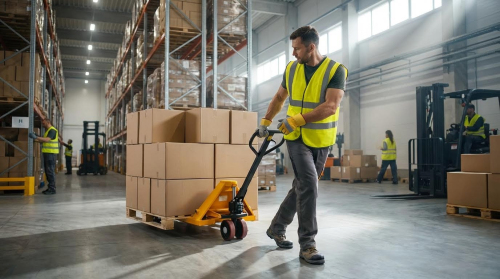
Safe operating practices define how a lift operator should travel with a full pallet in live warehouse traffic. They link truck capability, operator behavior, and site rules into one system. Effective traffic management reduces collision risk, protects pedestrians, and preserves equipment and product. The following subsections describe the core travel rules that apply to forklifts and pallet trucks handling loaded pallets.
Speed Control, Corners, And Pedestrian Safety
Speed must match load weight, floor condition, aisle width, and pedestrian density. Operators should keep travel speed at or below a fast walking pace inside warehouses and slower in congested areas. Facilities should set posted speed limits for aisles, crossings, and loading docks, and enforce them through supervision and telematics. When approaching corners, intersections, or rack ends, operators must reduce speed, sound the horn, and keep forks low, typically 0.10–0.15 m above the floor.
Rear-end swing of forklifts increases collision risk at turns, so operators must allow extra clearance from racking, columns, and pedestrians. Sudden braking with a full pallet can cause load shift or loss, so deceleration should be progressive. Pedestrians should use marked walkways, but operators still have the primary duty to yield and maintain a safe separation distance. High-visibility clothing, flashing beacons, and audible alarms improve detection of moving trucks, especially in low-light or high-rack environments.
Forward Vs. Reverse Travel And Line Of Sight
Operators should always travel in the direction that provides the best line of sight to the path and pedestrians. With a low, stable load that does not obstruct view, forward travel is preferred because steering response and obstacle judgment are more intuitive. When a full pallet blocks forward vision, the operator should travel in reverse, keeping the load upgrade on slopes and continuously looking in the travel direction. Mirrors, cameras, and proximity sensors support visibility but never replace direct observation.
Before entering intersections, doorways, or crossing railroad tracks, operators must check both sides and overhead clearance. They should cross tracks or floor transitions at a slight angle to reduce shock to the load and wheels. On grades greater than approximately 5%, loaded trucks should keep the load facing uphill, whether traveling forward or in reverse, to prevent runaways and tipovers. Unloaded trucks should keep forks pointed downhill, still maintaining low fork height and clear sight lines.
Parking, Shutdown, And Elevated Load Controls
Parking procedures are critical whenever a lift operator stops traveling with a full pallet, even briefly. Trucks must be parked only in approved areas away from doors, fire exits, and pedestrian walkways. The operator should bring the truck to a complete stop, lower the load or forks fully to the floor, and neutralize all hydraulic controls. For forklifts, the mast should be slightly tilted forward so fork tips contact the floor, eliminating trip and impact hazards.
After positioning, the parking brake must be applied, the direction selector set to neutral, and the power switch turned off. Operators should remove the key or access card to prevent unauthorized use. On inclines, wheels must be chocked and the fuel or power source isolated according to site rules. No truck should be left unattended with an elevated load; the operator must remain at the controls whenever a pallet is raised, and lifting or lowering should only occur when the truck is stationary.
PPE, Training, And Use Of Sensors And Telematics
Personal protective equipment supports safe travel but does not replace correct driving technique. Operators should wear safety shoes with slip-resistant soles, hard hats where overhead loads exist, and high-visibility garments in mixed traffic zones. Seat belts are mandatory on forklifts to keep operators within the protective zone during impacts or tipovers. Gloves can improve grip on controls but must not compromise tactile feedback.
Formal operator training and certification should cover speed control, ramp travel, load handling, and emergency procedures. Refresher training is necessary after incidents, near misses, or process changes to maintain high competency. Sensors, cameras, and 360-degree vision systems help detect pedestrians and obstacles in blind spots and tight aisles. Telematics and fleet management software can log speed violations, harsh braking, and impacts, enabling data-driven improvements to traffic rules and operator coaching. Together, engineering controls, PPE, and disciplined training define how a lift operator should travel with a full pallet safely and consistently.
Summary Of Key Travel Rules And Compliance Impacts
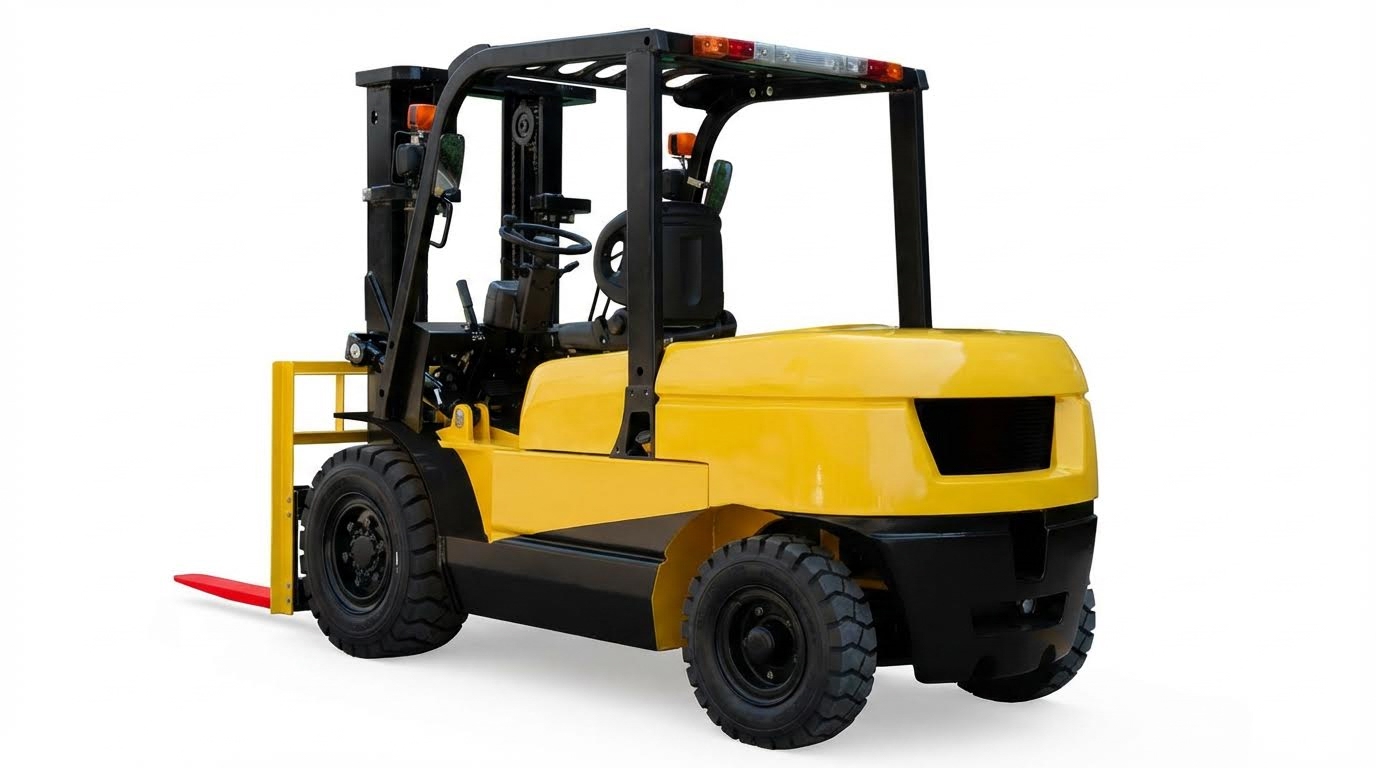
Lift operators traveling with a full pallet must apply consistent rules that integrate load stability, controlled travel, and regulatory compliance. The core principle is simple: keep the truck stable, the load contained, and people protected, while documenting that equipment and practices meet legal requirements.
From a technical standpoint, operators should always travel with the pallet centered on fully inserted forks, mast slightly tilted back, and forks kept low, typically 100–150 mm above the floor. Speed must match conditions, including floor friction, gradient, congestion, and visibility, with strict limits defined for aisles, docks, and intersections. When a full pallet blocks the forward view, the operator should travel in reverse and look in the direction of travel, using horns, lights, and where fitted, cameras or sensors to maintain situational awareness. On grades steeper than 5%, loaded trucks should keep the load pointed uphill and avoid turning or elevating the pallet on the incline.
Compliance impacts extend beyond individual behavior. Regulations such as OSHA requirements and jurisdictional lifting-device rules had already mandated daily pre-use inspections, documented capacity verification, and defect lockout procedures. Employers must maintain records of load-handling examinations, ensure trucks display accurate rated capacities, and schedule maintenance at defined hour intervals. Failing to enforce rules on overloading, speed, pedestrian separation, and inspection documentation exposes organizations to legal penalties and incident liability.
Industry trends pointed toward greater use of telematics, sensors, and fleet management software to monitor how a lift operator should travel with a full pallet in real time. These systems logged speed, impacts, travel paths, and overload events, helping safety teams close gaps between written procedures and actual practice. Future implementations will likely combine advanced driver-assistance features with tighter integration of digital inspection records and training histories. However, technology can only support, not replace, fundamentals: trained and certified operators, well-marked routes, clean and maintained floors, and a culture that refuses to stretch capacity limits or bypass shutdown rules.