Safe Handling Of 55-Gallon Drums: Lifting Aids, Lifters, And Ergonomics
Handling heavy drums safely requires more than physical strength. It demands a structured approach that combines risk assessment, manual aids, hydraulic lifters, and forklift attachments to control forces on the body and the load. This article explains how to lift 55 gallon drum safely by understanding drum weights, stability, and ergonomic limits, then matching those risks with lever bars, clamps, tongs, drum stacker, drum palletizer, and specialized lifters. It concludes with a practical framework for selecting safe, ergonomic drum handling systems that reduce injuries, comply with OSHA and ISO guidelines, and improve throughput in industrial environments.
Risk Assessment And Manual Handling Limits
Understanding how to lift a 55 gallon drum safely starts with a structured risk assessment. Engineers and safety managers must quantify drum weights, geometry, and task frequency before deciding between manual handling and mechanical aids. This section explains stability and center-of-gravity effects, defines when manual pushing or rolling remains acceptable, and links typical injury modes to OSHA and ISO ergonomic limits.
Drum Weights, Centers Of Gravity, And Stability
A standard 55 gallon (≈210 liter) drum typically weighs 18–25 kg empty and up to 300 kg when full, depending on contents. The center of gravity sits near the drum’s mid-height for homogeneous liquids, but can shift with sloshing or partial fill levels. This shift reduces stability during tipping, cornering, or abrupt stops and increases overturn risk. Engineers should treat a full 55 gallon drum as a tall, narrow, top-unstable cylinder when planning how to lift a 55 gallon drum or move it across uneven floors. Stability improves when the drum remains vertical, supported at the chime or by a cradle, and when acceleration and deceleration are controlled. Risk assessments should document drum mass, height (≈850–900 mm), diameter (≈560–600 mm), and any internal baffles or liners that affect liquid motion.
When Manual Pushing, Rolling, Or Lever Bars Are Acceptable
Manual pushing or rolling of a 55 gallon drum is only acceptable when forces remain within ergonomic limits and surfaces are smooth, clean, and level. Rolling on the drum’s rim requires far less force than dead lifting, but still demands control to avoid runaways on slopes. Lever bars designed for drums can reposition a full drum on a pallet or floor using roughly 20 kg of input force, which keeps peak spinal compression below common guideline thresholds for short-duration tasks. These bars should only rotate or nudge drums, not lift them clear of pallets or stack them. Facilities should define clear rules: no manual tilting above ankle height, no freehand catching of tipping drums, and mandatory use of mechanical lifters for vertical lifting and transport over distance.
Common Injury Modes And OSHA/ISO Ergonomic Guidelines
Typical injuries when workers decide how to lift a 55 gallon drum without aids include lumbar strains, hernias, shoulder tendonitis, and crush injuries to feet and hands. Sudden loss of balance during tipping or arresting a rolling drum can exceed safe joint loading, even if the static drum weight appears manageable. OSHA materials handling guidance and ISO ergonomics standards, such as ISO 11228 series, recommended limiting manual lifting of single loads to roughly 25 kg under ideal conditions, far below a full 55 gallon drum’s mass. Push and pull forces should also stay within recommended initial and sustained force thresholds, often in the 200–300 N range for average workers on good floors. Risk assessments should compare measured or estimated push forces for drum handling tasks against these limits, then justify mechanical aids like drum stacker, barrel lifter, or drum palletizer wherever values exceed guidelines or tasks are repetitive.
Manual Aids: Lever Bars, Clamps, Tongs, And Stackers
Manual aids play a critical role in how to lift 55 gallon drum safely without exceeding ergonomic limits. They convert high drum weights into manageable operator forces, reduce contact with pinch points, and improve positional control on floors and pallets. Correct selection and maintenance of lever bars, clamps, tongs, and manual stackers determine both injury risk and drum damage rates in chemical, food, and waste-handling facilities.
Drum Lever Bars For Positioning On Floors And Pallets
Drum lever bars helped operators reposition full 55 gallon drums on pallets or smooth floors using limited input force. Typical stainless steel models used 304-grade material for corrosion resistance in washdown or outdoor environments. A bar length near 1.2 m delivered enough leverage so the operator applied roughly 20 kg of force to shift a full drum instead of pushing directly on the shell. The bar engaged the drum chime or upper lip, allowing controlled rolling, edging, or rotation to expose safety labels. Facilities used lever bars only for fine positioning, not for lifting drums completely off pallets, to avoid tip-over or uncontrolled drop. As part of a safe how to lift 55 gallon drum strategy, procedures kept hands off the drum edges and required stable footing during bar use.
Vertical And Horizontal Drum Clamps And Tongs
Drum clamps and tongs provided a secure mechanical interface between the lifting device and the 55 gallon drum. Vertical drum clamps for steel or plastic barrels typically offered rated loads from 0.3 t to 0.75 t with alloy steel construction and opening ranges up to about 610 mm. Horizontal drum tongs handled similar capacities, often around 500 kg, and allowed lifting of drums lying on their sides for loading into racks or process lines. Correct how to lift 55 gallon drum practice required matching clamp capacity to drum mass with a safety factor, checking that the drum chime or ring was intact, and lifting vertically without side pulling. Operators applied light mechanical lubricant to pivot points every 10–15 days, inspected springs and pins for wear, and avoided shock loading or collisions to maintain clamp integrity and prevent accidental release.
manual Drum Stackers: Design, Capacity, And Use Cases
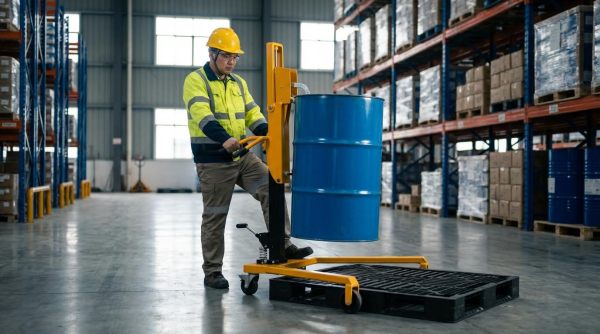
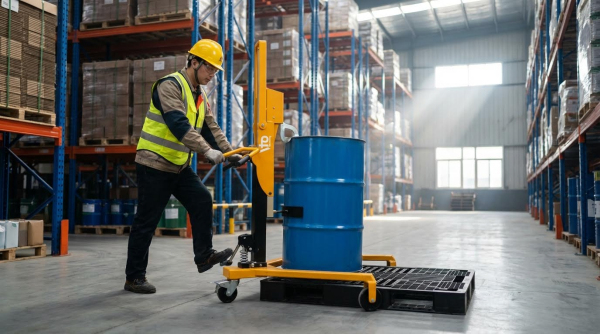
Manual drum stackers combined a wheeled chassis, hydraulic pump, and gripping head to lift and stack 55 gallon drums without powered drives. Typical units used high-strength steel frames, manual hydraulic pumps, and adjustable clamps or chain locks to secure steel or plastic drums of about 200 liters. Capacities usually reached 350 kg with lifting heights between roughly 1.6 m and 3.0 m, enabling placement on racks or double-stacked pallets. Swivel casters with brakes allowed precise positioning in narrow aisles while preventing unintended movement during lifting. For facilities planning how to lift 55 gallon drum repeatedly, manual stackers reduced direct manual lifting, lowered back and shoulder loading, and allowed single-operator handling in chemical plants, oil storage, and recycling operations where electrical equipment was restricted.
Inspection, Lubrication, And Preventive Maintenance
Consistent inspection and lubrication determined the long-term safety of manual drum aids used for lifting and positioning 55 gallon drums. Daily checks focused on visible deformation, cracked welds, worn chains, elongated links, damaged lifting rings, and loose fasteners on lever bars, clamps, tongs, and stackers. Maintenance teams applied suitable lubricants to pivot joints, bearings, and clamp mechanisms roughly every 10–15 days, while keeping gripping surfaces clean to maintain friction and prevent slip. Hydraulic stackers required periodic inspection of cylinders, seals, and hoses for leaks, along with verification of overload protection and brake function. Documented preventive maintenance supported compliance with OSHA and ISO ergonomic and lifting guidelines and ensured that how to lift 55 gallon drum procedures remained reliable, with predictable equipment behavior and minimized unplanned downtime.
Hydraulic Lifters, Palletizers, And Forklift Attachments
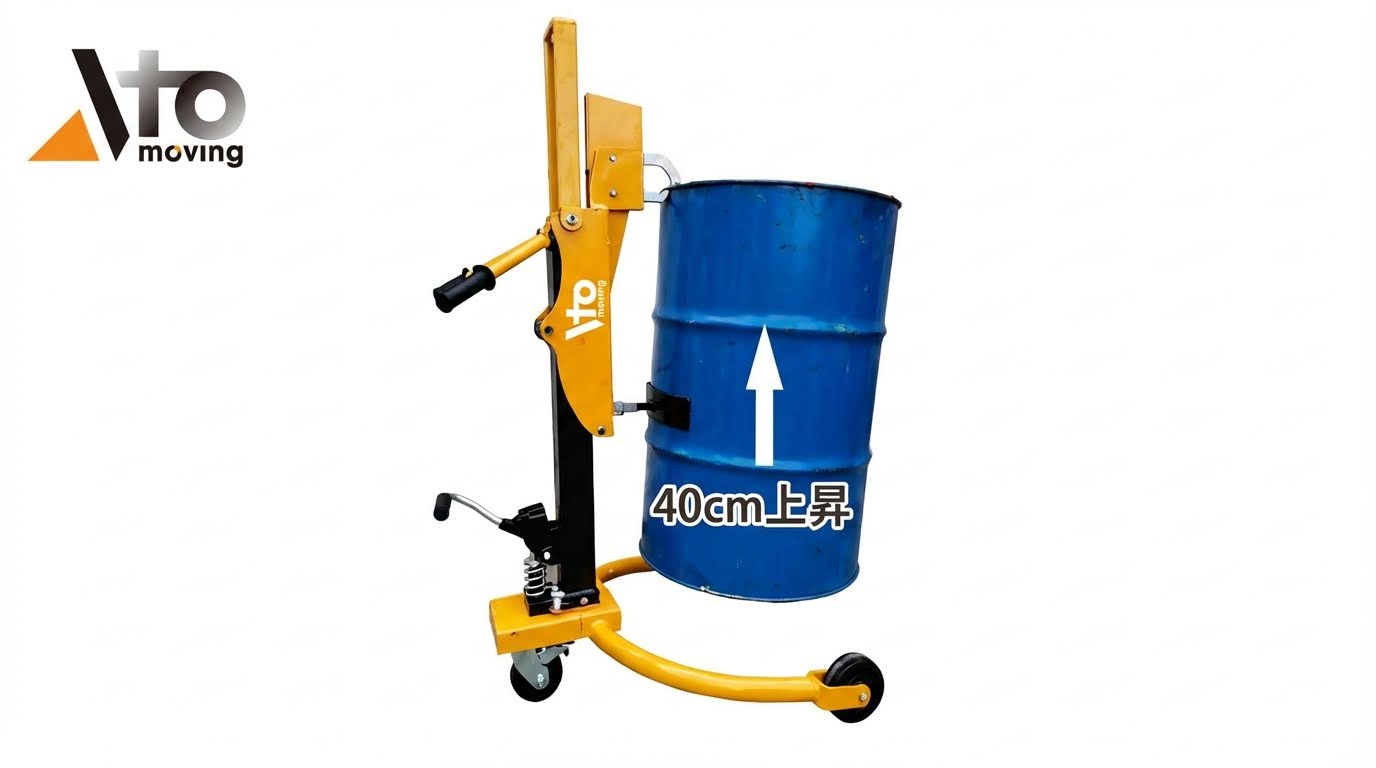
Hydraulic lifters, drum palletizers, and forklift attachments form the core engineered solutions for how to lift 55 gallon drum safely and repeatedly. These systems convert hazardous manual handling into controlled, mechanical lifting with defined capacities, geometries, and safety factors. Engineers should match each technology to drum type, process flow, and ergonomic targets while maintaining compliance with OSHA and relevant ISO material-handling and ergonomics standards.
Hydraulic Manual Drum Lifters And Rotators
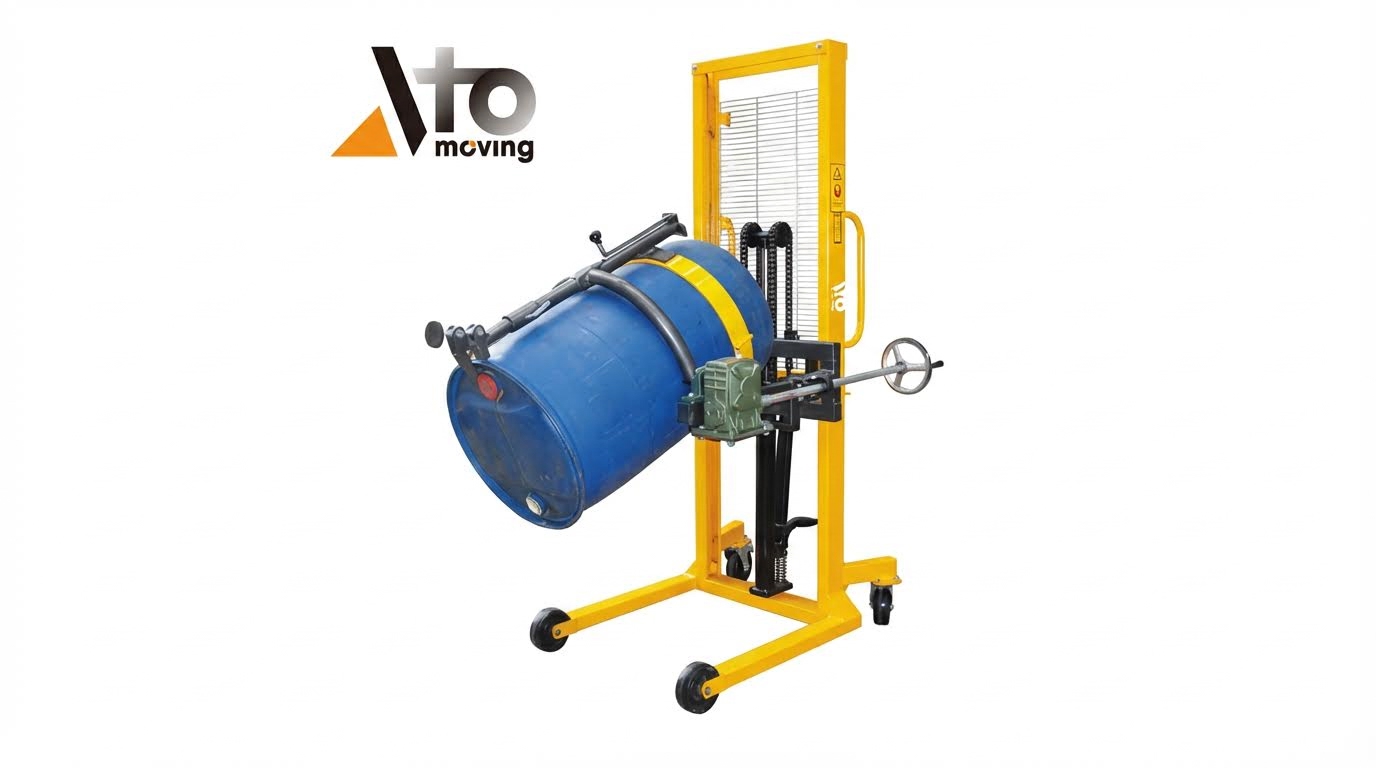
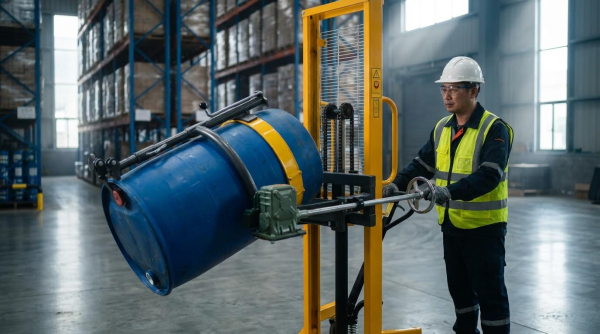
Hydraulic manual drum lifters use a hand pump, cylinder, and linkage to raise 55-gallon drums typically rated between 300 kg and 600 kg. Operators apply modest input force at the pump handle while the hydraulic circuit multiplies this effort, which directly addresses how to lift 55 gallon drum without exceeding manual push–pull limits. Common designs include beak-style chime grabs, strap cradles for damaged rims, and four-point cradles for sensitive contents that must not deform. Rotator variants add a geared or hydraulic tilting head, allowing controlled dispensing through 130-degree or full 360-degree rotation while maintaining drum centerline inside the stability polygon of the base. Engineering selection should consider drum material, rim condition, floor flatness, turning radius, and required lift height, along with safety features such as overload valves, wheel brakes, and controlled descent.
Drum Palletizers And Ergonomic Drum Handlers
Drum palletizers are dedicated devices for transferring 30 to 55-gallon drums between floor and pallet positions with minimal operator effort. They typically grip the drum at the rim or shell using mechanical jaws or clamps, then lift via manual hydraulic or powered actuators to heights around 450 mm for pallet placement. This approach to how to lift 55 gallon drum keeps the operator outside the crush zone and eliminates bending, twisting, and high spinal compressive loads. Ergonomic drum handlers integrate features such as adjustable leg width, low rolling resistance wheels, and auto-lock gripping heads to reduce required push forces and prevent accidental release. In high-throughput environments, semi-automatic or robotic palletizers maintain consistent cycle times, reduce dropped-drum risk, and improve line balance, provided guarding and interlocks comply with machinery safety standards.
Forklift Drum Attachments And Integration Considerations
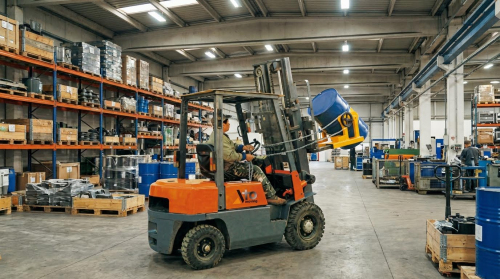
Forklift drum attachments convert existing trucks into dedicated drum handlers, improving flexibility when planning how to lift 55 gallon drum across a site. Typical beak or jaw attachments clamp the drum chime automatically when the operator approaches and lifts, with working load limits from about 350 kg to 1000 kg per drum. Side-mounted or carriage-mounted rotators add 130-degree to 360-degree rotation for controlled dumping into hoppers or reactors, often using belly straps and eccentric locks to prevent slip. Integration requires verifying that attachment plus drum mass stays within the forklift’s de-rated capacity at the new load center, as specified on an updated data plate. Engineers must also address visibility, turning clearance, and floor bearing pressures, and ensure operators receive specific training on clamp positioning, travel speed with elevated loads, and exclusion zones around suspended drums.
Emerging Tech: Sensors, Digital Twins, And Predictive Care
Emerging technologies enhance how to lift 55 gallon drum by adding intelligence to hydraulic lifters, palletizers, and forklift attachments. Load cells and angle sensors can monitor clamp force, drum mass, and tilt angle in real time, preventing overloads and unsafe pour positions. Embedded accelerometers and wheel sensors track impact events and travel profiles, feeding condition-based maintenance algorithms that predict wear on hydraulic seals, casters, and pivot pins. Digital twins of drum-handling cells model pallet patterns, approach paths, and ergonomic metrics, allowing engineers to optimize layouts and verify that push–pull forces and reach distances remain within OSHA and ISO ergonomic limits before hardware installation. Networked systems can log each lift, support traceability for hazardous materials, and interface with plant MES systems, while still requiring robust cybersecurity and clear lockout–tagout procedures for safe servicing.
Summary: Selecting Safe, Ergonomic Drum Handling Systems
Facilities that search for how to lift 55 gallon drum safely should treat selection as an engineering and ergonomics decision, not just a purchasing task. Standard 55-gallon drums typically weighed 200 kg or more when full, so manual lifting never complied with modern ergonomic limits. Instead, engineered aids such as lever bars, clamps, drum stacker, hydraulic lifters, palletizers, and forklift attachments distributed forces, controlled drum stability, and reduced peak spinal loads.
From a technical standpoint, the key selection criteria included drum type (steel, plastic, fiber), filled mass, handling orientation (vertical, horizontal, tilting), and required lift height. Manual lever bars and tongs worked for short moves and fine positioning when forces stayed below roughly 20 kg input. Manual stackers with hydraulic pumps handled repetitive stacking up to about 350 kg and 3 m while remaining non-powered. Hydraulic lifters, drum palletizers, and forklift attachments covered higher throughputs, frequent tilting or pouring, and integration with pallets and racking. Load ratings, clamp geometry, and compatibility with 200 L / 55-gallon drum diameters around 560 mm remained critical.
Industry trends moved toward ergonomic drum handlers with better casters, auto-lock clamps, overload protection, and sensor-ready designs. Predictive maintenance, digital twins, and condition monitoring of hydraulics and structural components reduced unplanned downtime and supported compliance with OSHA and ISO ergonomic guidance. Practically, facilities benefited from mapping all drum flows first, then standardizing on a small set of devices that covered 90% of use cases with clear operating envelopes and inspection routines.
In balancing technology evolution, the most resilient strategies combined simple, low-maintenance manual aids with higher-end hydraulic or powered systems where risk, frequency, or load justified the investment. This layered approach allowed operators to lift and move 55-gallon drums with controlled forces, repeatable stability, and traceable safety margins while keeping lifecycle costs predictable. For instance, a forklift drum grabber or a barrel lifter could significantly enhance safety and efficiency in high-demand environments.