Whether a pallet truck is classed as lifting equipment depends on how high it raises the load and how it is used in the workplace. This article explains how regulators define pallet trucks and when they fall under lifting-equipment rules, then maps those definitions to OSHA, PUWER, and LOLER obligations. It also explores the engineering, safety, and maintenance responsibilities that follow from that classification, including inspection regimes and operator duties. Finally, it summarises practical compliance strategies so safety managers, engineers, and facility operators can control risk while staying aligned with current regulatory expectations for pallet trucks and related equipment.
Defining Pallet Trucks And Lifting Equipment Status
When safety managers ask “is a pallet truck classed as lifting equipment,” they usually face mixed guidance from regulations and practice. Correct classification affects which standards apply, what inspections are mandatory, and how duties are allocated between employers, engineers, and operators. This section defines pallet trucks, explains when they fall under lifting equipment rules, and contrasts them with other powered industrial trucks to remove ambiguity and reduce compliance risk.
Types Of Pallet Trucks And Typical Use Cases
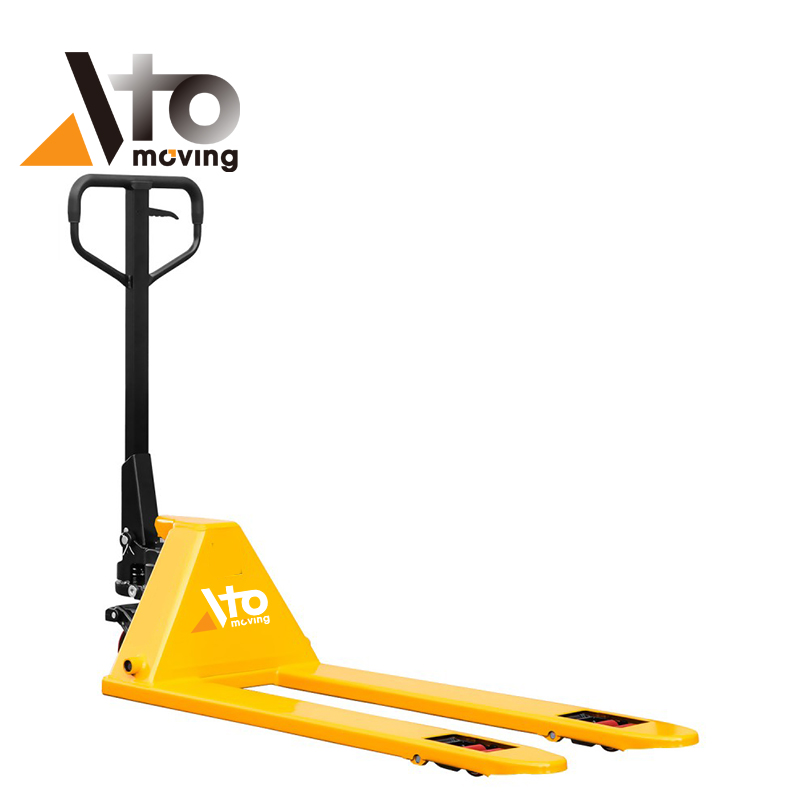
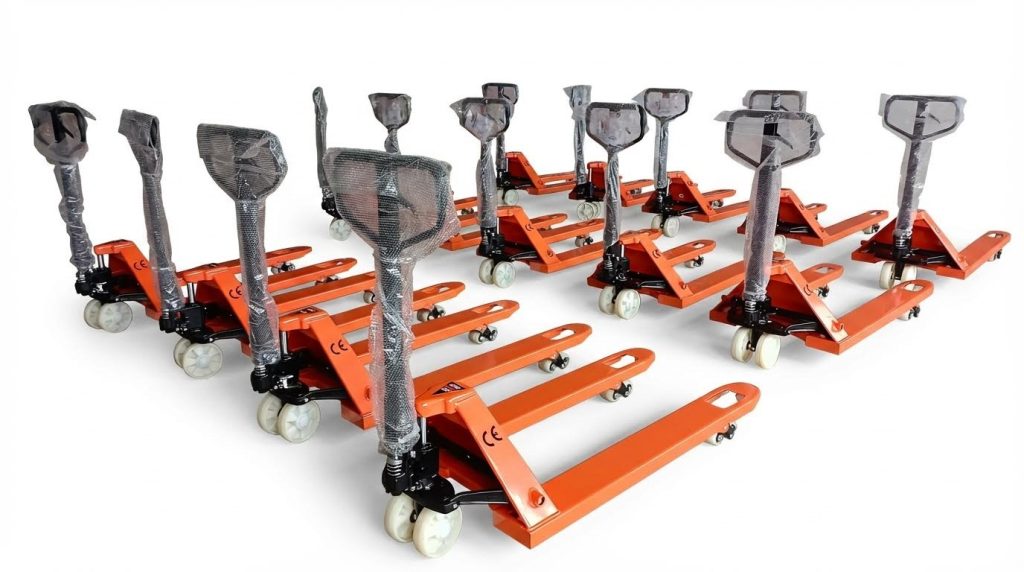
Pallet trucks existed as low-lift devices for horizontal transport of palletised loads. Manual pallet trucks used a drawbar and small hydraulic pump to raise loads typically 100–200 mm above the floor for travel. Powered pallet trucks used electric traction and lift, with walk-behind, stand-on, or rider configurations for higher throughput. Engineers specified them for warehouses, retail back-of-house, cross-docks, and manufacturing lines where loads stayed close to floor level. Electric pallet stackers bridged the gap between pallet trucks and forklifts by adding higher lift heights for racking, but still shared similar fork geometry and pallet interfaces. Typical payloads ranged from 1 000 kg to 3 000 kg, with duty cycles defined by shift length, aisle length, and floor gradients.
When A Pallet Truck Becomes “Lifting Equipment”
Regulators generally regarded a pallet truck as lifting equipment when it lifted a load clear of the supporting surface for more than simple short-range transport. Under lifting-equipment style definitions, any work equipment used for lifting or lowering a load, including its attachments, fell in-scope. Low-lift pallet trucks that raised loads only enough to roll, without stacking or tiering, often sat at the borderline in guidance. However, pallet trucks with mast structures, elevated operator platforms, or stacking functions clearly met lifting-equipment criteria once they raised loads to racking or mezzanine levels. From a risk-engineering viewpoint, once a dropped load could cause crush injury or structural impact at height, designers and owners needed to treat the truck as lifting equipment for inspection, maintenance, and competency controls.
Differences From Forklifts And Other PITs
Forklifts and other powered industrial trucks used counterweight or straddle configurations to lift loads to substantial heights, often above 3 m. They typically incorporated masts, tilt mechanisms, and higher travel speeds, which created different stability envelopes and tip-over risks. Pallet trucks, by contrast, usually operated at lower speeds with the load carried much closer to the ground, which reduced kinetic and potential energy during incidents. Rider pallet trucks still fell under powered industrial truck rules, but their primary function remained horizontal movement, not vertical stacking. This functional distinction influenced how engineers selected equipment for tasks, which training modules applied, and how facilities separated traffic routes. However, once a pallet truck design approached stacker or reach-truck geometry, its risk profile converged with conventional forklifts, and operators needed equivalent procedural controls.
Common Misconceptions In Classification
A frequent misconception was that a hand pallet truck never counted as lifting equipment because it lifted only a short distance. In reality, the decisive factor was the lifting function and associated risk, not the exact lift height. Another misconception held that only counterbalanced forklifts triggered powered industrial truck regulations, leaving powered pallet trucks outside formal training and inspection regimes. Regulatory text and enforcement history contradicted this view by explicitly including pallet trucks in PIT definitions. Some duty holders also assumed that if a pallet truck carried, rather than stacked, it did not require structured inspection or capacity marking. That belief ignored the potential for overload, hydraulic failure, and crush injuries even at low lift. Clarifying these points helped safety professionals answer “is a pallet truck classed as lifting equipment” in a defensible, risk-based way aligned with prevailing standards.
Regulatory Framework: OSHA, PUWER, And LOLER
Understanding whether a pallet truck is classed as lifting equipment requires linking its use to the correct regulatory framework. In practice, employers must align OSHA powered industrial truck rules with UK-style PUWER and LOLER obligations when loads lift off the floor. This section explains how regulations apply when a pallet truck only transports loads and when it functions as lifting equipment. Clear classification reduces enforcement risk and supports defensible safety management systems.
OSHA PIT Rules For Manual And Powered Pallet Trucks
Under OSHA, a powered pallet truck is a powered industrial truck covered by 29 CFR 1910.178. This standard defined design, maintenance, operation, and operator training requirements for general industry. Construction sites referenced 29 CFR 1926.602(d), which pointed back to 1910.178(l) for training content. OSHA treated electric pallet trucks, rider pallet trucks, and walkie pallet jacks as PITs when they moved loads on level surfaces.
Manual pallet trucks did not fall under 1910.178, but employers still had duties under the General Duty Clause. They had to control recognized hazards such as overloading, poor floor conditions, and pedestrian impact risk. For powered pallet trucks, OSHA required formal instruction, practical training, and evaluation at least every three years. Refresher training became mandatory after incidents, unsafe operation, truck type changes, or significant workplace changes.
Lifting Equipment Rules When Loads Are Raised
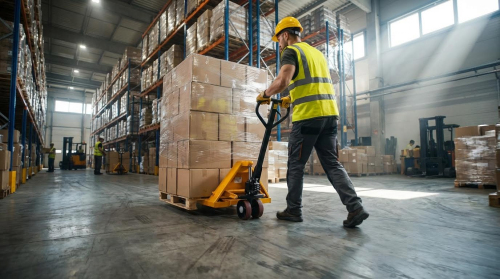
From a lifting-equipment perspective, the key question was whether the pallet truck lifted the load off the supporting surface. A pallet truck that only raised a pallet just clear of the floor for short-distance transport usually sat outside full lifting-equipment regimes. However, high-lift pallet trucks and pallet stackers that raised loads to storage or working height met the definition of lifting equipment. They lifted or lowered loads and therefore triggered additional duties.
In a PUWER and LOLER context, once a pallet truck elevated a load to a height where a drop could cause injury, it was treated as lifting equipment. That classification required formal risk assessment, suitability checks, and planned thorough examinations by a competent person. Engineers had to verify rated capacity, stability, and mechanical integrity of the lifting system, including hydraulic components and chains. Documentation of these examinations became critical evidence of compliance when incidents occurred.
State Plan Variations And Local Requirements
In the United States, OSHA-approved State Plans had to be at least as effective as federal OSHA, but they could be stricter. States such as California and Washington published additional rules for industrial trucks and pallet trucks. California required written operating rules, shift-start inspections, and strong emphasis on seat belt and restraint use where fitted. Washington explicitly prohibited removing operator restraints and reinforced daily inspection expectations.
Engineers and safety managers had to check state-level codes, fire regulations, and in some cases municipal ordinances. For example, local rules could address carbon monoxide exposure from internal combustion trucks or traffic management in congested warehouses. Territories such as Puerto Rico adopted federal OSHA standards, while other territories followed Department of Labor guidance. When asking “is a pallet truck classed as lifting equipment” in a given state, practitioners had to read federal PIT rules together with state-specific interpretations.
Documentation, Labelling, And Capacity Marking
Regardless of classification, regulators expected clear documentation and legible markings on pallet trucks. OSHA required accurate nameplates and capacity markings on powered industrial trucks, especially after any modification. Employers had to obtain manufacturer approval before altering capacity or configuration and then update the rating plate. For lifting-equipment-class pallet trucks and stackers, LOLER-style regimes required records of thorough examinations and defect reports.
Safe use also depended on visible maximum load, load center, and in some cases maximum lift height. Engineers needed to ensure labels remained readable after repainting, corrosion, or repairs. Maintenance logs, daily or shift inspection checklists, and training records supported compliance during audits or investigations. When a pallet truck was classed as lifting equipment, these records demonstrated that the lifting function received the same control level as cranes, hoists, or forklifts.
Engineering, Safety, And Maintenance Responsibilities

Engineering, safety, and maintenance responsibilities determine whether a pallet truck operates as safe lifting equipment or only as low-level transport. These responsibilities influence how regulators view the question “is a pallet truck classed as lifting equipment” in real workplaces. Sound design choices, structured training, and disciplined maintenance together control risk when loads are lifted or kept just clear of the floor. Digital monitoring now supports these duties with traceable data and predictive insights.
Design And Selection Criteria For Pallet Trucks
Design and selection start with intended duty, environment, and whether the pallet truck will function as lifting equipment. If the truck regularly raises loads clear of the ground, specifiers should treat it under lifting-equipment principles, not only as a transport aid. Key criteria include rated capacity, fork length, minimum and maximum fork height, and stability under dynamic loading. Engineers should check that the truck’s capacity at its highest intended lift matches the heaviest pallet, including packaging and any load shift allowance.
Corrosion resistance, floor conditions, and temperature ranges also affect selection. Stainless or galvanized designs suit corrosive or washdown environments, while low-temperature hydraulics and seals suit cold stores. Braking performance, steering geometry, and wheel material must match gradients, surface roughness, and expected traffic density. Where the answer to “is a pallet truck classed as lifting equipment” is yes, engineers should also consider redundancy in critical components and ease of inspection of forks, linkages, and hydraulic circuits.
Operator Training, PPE, And Safe Use Practices
Operator training must align with powered industrial truck rules and, where loads are raised, with lifting-equipment risk controls. Training programs should cover truck-specific controls, stability limits, rated capacity, and the difference between low-level load movement and genuine lifting operations. Operators should understand that a hydraulic pallet truck becomes lifting equipment once it lifts a load off the supporting surface, even if the lift height is modest. This understanding shapes how they approach risk, especially around pedestrians and obstacles.
Safe use practices include pre-use checks, controlled speed, and keeping forks low during travel to maintain stability. Operators should approach pallets squarely, fully support the load, and avoid side pulls or sharp turns with elevated loads. PPE typically includes safety footwear with toe protection, high-visibility clothing in shared traffic routes, and gloves where handling pallets or battery components. Supervisors should reinforce that misuse, such as riding on the truck or using it as a jack for non-palletized items, breaches both training and regulatory intent.
Inspection, Preventive Maintenance, And Repairs
Inspection and preventive maintenance support the classification of a pallet truck as safe lifting equipment when it elevates loads. Daily or pre-shift checks should cover forks for cracks or deformation, wheels and axles for damage, hydraulic systems for leaks, and control responsiveness. For powered units, operators should check battery charge, connectors, horn function, and emergency stop devices. Any defect affecting steering, braking, or lifting integrity should trigger immediate removal from service.
Planned maintenance intervals should follow manufacturer guidance and reflect duty cycle and environment. Typical tasks include lubricating pivot points, verifying hydraulic oil levels, tightening fasteners, and checking wear on wheels and brake components. Maintenance records help demonstrate that the employer treated the manual pallet jack as lifting equipment when it routinely raised loads. Only competent technicians should carry out repairs that affect structural integrity, hydraulic performance, or electrical safety. After major repair or component replacement, a functional test with a controlled load should verify lifting and lowering performance before return to service.
Digital Tools, Telematics, And Predictive Upkeep
Digital tools and telematics increasingly support engineering and safety responsibilities for pallet trucks, especially where they act as lifting equipment. On powered trucks, sensors can log key parameters such as operating hours, lift cycles, overload events, and impact forces. This data allows maintenance teams to move from fixed-interval servicing to condition-based or predictive maintenance. High shock loads or frequent overload alarms can trigger targeted inspections of forks, mast structures on stackers, and chassis welds.
Digital checklists on tablets or handheld devices standardize pre-use inspections and create time-stamped, auditable records. These records help demonstrate that the employer considered the question “is a pallet truck classed as lifting equipment” and implemented appropriate inspection rigor. Integration with maintenance management systems streamlines work orders, spare-parts planning, and technician scheduling. Over time, analytics can highlight high-risk operating patterns, informing redesign of traffic routes, racking layouts, or training content to reduce lifting-related incidents.
Summary: Compliance, Risk Control, And Best Practice

Whether a user asks “is a pallet truck classed as lifting equipment” or not, the compliance answer depends on how the truck operates and how it is used. When a pallet truck only raises a pallet just clear of the floor for short‑distance transport, regulators typically treat it primarily as a powered industrial truck under OSHA 29 CFR 1910.178. Once the same equipment lifts a load to a height where a drop could create a significant risk, or where the device clearly performs a lifting and lowering function, it falls within lifting equipment definitions used in frameworks such as PUWER and LOLER. Duty holders must therefore classify each application based on lift height, environment, and load risk, then apply the stricter set of rules that fits the scenario.
From an engineering and safety perspective, best practice is to treat pallet trucks as both transport and lifting assets whenever they elevate loads above ground level. That approach drives structured operator training, documented pre‑use checks, and clear capacity marking, together with periodic thorough examinations where local lifting rules require them. Digital inspection tools, telematics, and condition monitoring already supported more consistent daily checks and predictive maintenance, reducing unplanned failures and unsafe operation. Over the next decade, tighter integration of sensor data, geo‑fencing, and access control will likely make it easier to enforce speed limits, load limits, and no‑go zones automatically.
For operators and employers, practical implementation means building a single risk‑based management system that covers PIT rules and lifting equipment rules in one procedure set. That system should define classification criteria, inspection intervals, maintenance standards, and training content for every pallet truck type on site. It should also track state‑plan variations in the United States and any additional regional duties on examinations or documentation. By aligning engineering design choices, safe‑use procedures, and regulatory interpretation, organisations can answer “is a manual pallet jack classed as lifting equipment” in a consistent way, minimise ambiguity during audits, and maintain a balanced, future‑proof compliance posture as technology and standards evolve.