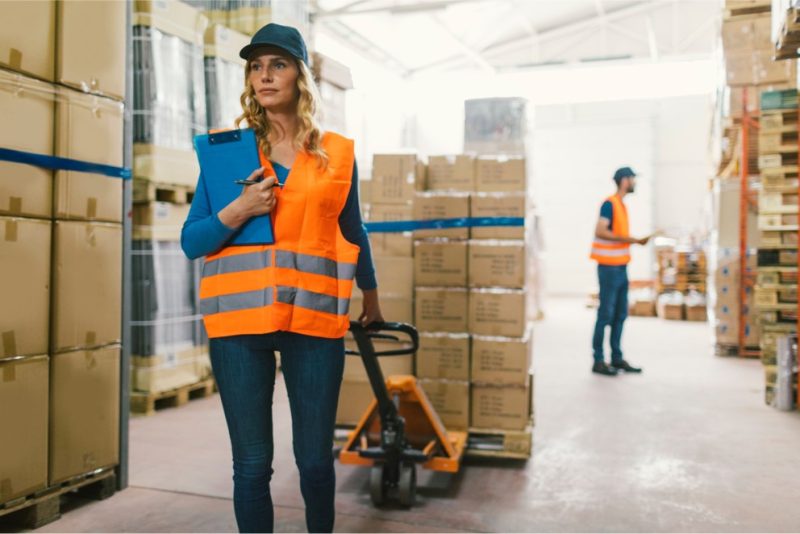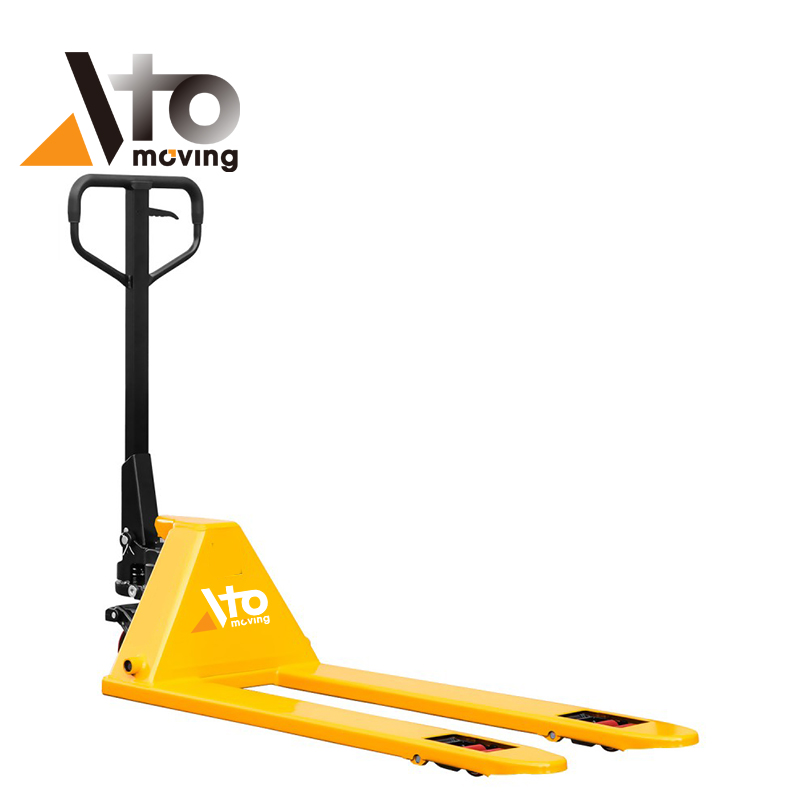
Understanding how high does a pallet jack lift is critical for safe warehouse and industrial operations. This article explains standard pallet jack lift heights, key dimensions, and the engineering limits that govern safe raising ranges. It also covers how to select and maintain equipment for specific target heights, from fork geometry to hydraulic integrity and digital maintenance strategies. Finally, it summarizes best-practice limits so operators can move loads efficiently without exceeding safe lift envelopes.
Key Pallet Jack Dimensions And Lift Ranges
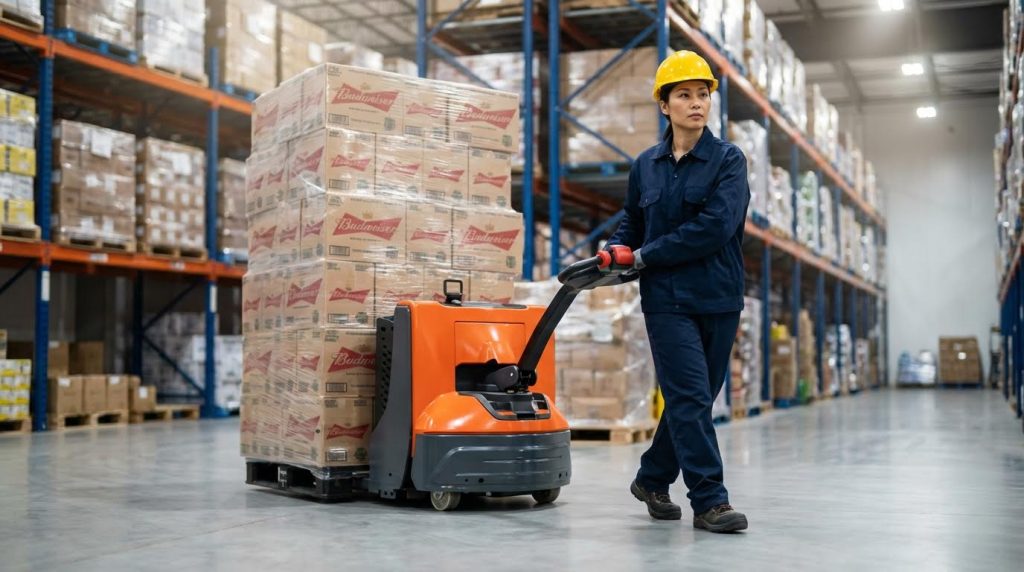
Engineers evaluating how high does a pallet jack lift must consider the full geometry of the truck, not just the stroke of the hydraulic unit. Key dimensions such as fork height range, fork length and width, wheel layout, and steering geometry all influence clearance, stability, and maneuverability. Understanding these parameters allows accurate selection for specific pallet standards, aisle widths, and floor conditions while keeping stresses within design limits.
Typical Minimum And Maximum Fork Heights
Standard manual pallet jacks typically start with a minimum fork height of 75–85 mm. This low profile lets the forks enter under common wooden pallets with deck boards as low as 90 mm above the floor. Maximum fork height for standard units usually falls between 180 mm and 200 mm, which corresponds to roughly 2–8 inches of total lift from floor level. In practice, operators only need about 25–30 mm of clearance between the pallet and floor to roll the load without dragging. Higher lift ranges increase bending moments in the forks and pump linkages, so manufacturers limit stroke to maintain stiffness and long-term seal life. When comparing how high does a pallet jack lift across models, engineers should verify both the nominal maximum fork height and the usable lift above a loaded pallet’s bottom deck.
Common Fork Lengths, Widths, And Clearances
Fork length for standard hand pallet jacks typically measures 1 150 mm or 1 200 mm. These lengths match ISO and EUR pallet footprints and allow full support of the stringers without excessive overhang. Overall fork width usually ranges from 540–550 mm for narrow models up to about 680–685 mm for wider variants. The distance between individual forks must align with pallet openings to avoid contact with deck boards instead of stringers. Ground clearance under a raised pallet is commonly 25–40 mm, which balances rolling resistance and stability. Excessive clearance would raise the center of gravity and reduce lateral stability during turns. Engineers specifying equipment should map fork spacing and tip geometry to the dominant pallet standard on site to avoid partial engagement and point loading of boards.
Wheel Sizes, Steering Arc, And Turning Radius
Typical steering wheel diameters on manual pallet jacks are about 180 mm. Load wheels under the fork tips commonly measure around 80 mm in diameter. Larger steering wheels reduce rolling resistance and help traverse minor floor irregularities, while smaller load wheels keep fork profiles low for tight pallet entry. Standard designs often achieve steering arcs up to approximately 195°, enabling nearly on-the-spot pivoting in narrow aisles. Turning radii can be as small as 1 250–1 300 mm depending on fork length and handle geometry. These kinematic limits interact with lift height: as forks rise, the combined center of gravity shifts, so designers tune wheelbase, wheel spacing, and steering angles to maintain stability within the 2–8 inch lift envelope. When assessing how high does a manual pallet jack lift for a given site, engineers should also confirm that the turning radius matches aisle width and loading pattern.
Customization Options For Nonstandard Loads
Nonstandard loads such as half-pallets, long tooling crates, or low-clearance skids often require customized pallet jack dimensions. Manufacturers can supply shortened forks, for example 800–1 000 mm, to improve maneuverability with compact pallets or in lift-gate trucks. Extended forks beyond 1 200 mm allow support of double pallets or long containers but increase bending stresses and turning radius, which may limit safe lift height under full capacity. Custom overall fork widths outside the 540–685 mm range can match atypical pallet stringer spacing or narrow stillages. Special low-profile designs with minimum fork heights below 75–80 mm serve ultra-low entry skids, though these may trade off maximum lift height and load capacity. Engineers should validate that any dimensional customization still maintains adequate fork section modulus, wheel load distribution, and hydraulic pressure margins so the truck can lift to its specified height without excessive deflection or instability.
Engineering Limits On Safe Lift Height
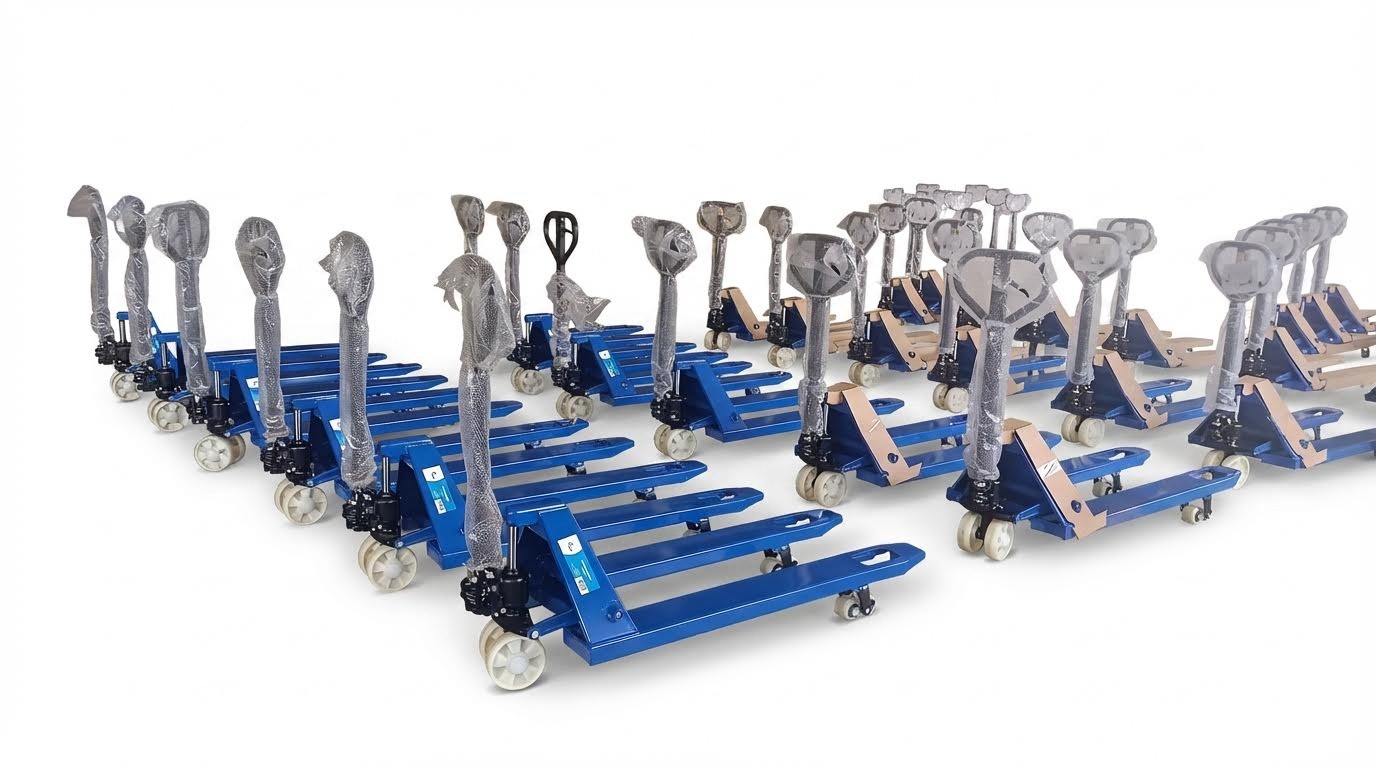
Engineering constraints defined how high a pallet jack lifts and why standard designs stayed within a narrow range. Designers optimized these tools for horizontal transport, not vertical stacking, so lift height remained intentionally low. Structural limits, hydraulic geometry, wheel layout, and stability envelopes worked together to keep typical lift ranges around 50–200 mm, or roughly 2–8 inches. Understanding these limits helped engineers and operators avoid misuse and select suitable equipment for higher-lift tasks.
Why Pallet Jacks Lift Only 2–8 Inches
Standard manual pallet jacks historically lifted loads roughly 2–3 inches above the floor, with total fork height often between 80 mm and 200 mm. That range provided enough clearance to answer the practical question “how high does a pallet jack lift” for most warehouse workflows. The geometry of the linkage and small hydraulic cylinder favored short strokes, which reduced cost and improved reliability. Higher lift would have required longer cylinders, taller chassis, and more robust frames, increasing weight and complexity. Low lift also kept the center of gravity close to the floor, which reduced tip-over risk during cornering and braking.
Load Capacity, Fork Deflection, And Stability
Typical pallet jacks carried rated loads between about 1 360 kg and 3 000 kg, with some heavy-duty models reaching 5 000 kg. At these loads, engineers had to control fork deflection to keep the pallet stable and maintain the specified lift height. Steel fork sections and sheet thicknesses, often in the 3.75–6 mm range after coating, balanced stiffness against weight. If the forks deflected excessively under a 2 500 kg load, the effective clearance could drop below the intended 2–3 inches, causing ground contact and increased rolling resistance. Stability analysis treated the load, forks, and wheels as a lever system; keeping lift height low minimized overturning moments about the front wheels and reduced the chance of tipping when the operator turned or stopped abruptly.
Floor Conditions, Ramps, And Uneven Surfaces
Engineers also based safe lift limits on assumed floor quality. Smooth, level industrial floors allowed reliable operation with only 25–50 mm of under-pallet clearance. On rough or damaged concrete, that same clearance could disappear as wheels rode over spalled areas or embedded rails. On ramps, the effective vertical height of the load relative to the downhill wheel increased, shifting the center of gravity and reducing the stability margin. For this reason, guidance consistently advised operators to avoid steep ramps and heavily uneven surfaces, even though wheel diameters around 80 mm for load wheels and 180 mm for steering wheels improved obstacle traversal. Designers accepted that pallet jacks were not all-terrain devices and set lift heights accordingly.
Applicable Safety Standards And Compliance
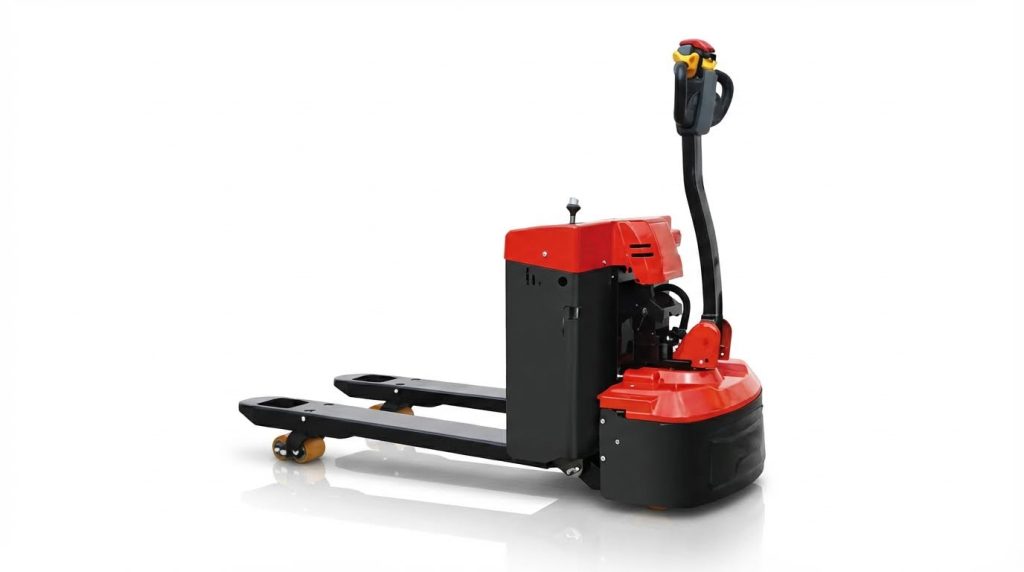
Safety standards and regulations also constrained how high a manual pallet jack lifted. Industrial truck and pallet truck standards required verification of rated capacity, stability, and braking performance at maximum lift height. Testing protocols evaluated tip resistance with loads at the design lift, so increasing height would have forced heavier frames or reduced rated capacity. Standards emphasized that pallet jacks were not substitutes for forklifts or counterbalanced stacker, which operated under different design rules for elevated loads. Compliance documentation and nameplates therefore specified maximum lift height, minimum fork height, and rated load, allowing safety managers to match equipment to tasks and avoid using low-lift pallet jacks for high-bay storage or stacking operations. Additionally, for heavier loads, options like the walkie pallet truck provide enhanced capabilities.
Selecting And Maintaining Jacks For Target Heights
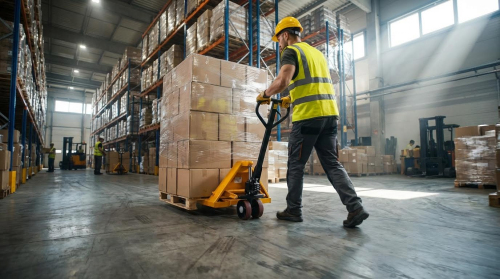
Engineers who ask “how high does a manual pallet jack lift” usually work backward from required clearances and pallet interfaces. Selecting and maintaining the right jack for target heights means aligning fork travel, wheel configuration, and hydraulic health with pallet standards and racking geometry. This section explains how to match specified lift ranges, preserve actual lift performance over time, and use advanced inspection methods to keep forks consistently within the 2–8 inch operating band.
Matching Lift Height To Pallets And Racking
When determining how high does a pallet jack lift for a given facility, start with pallet geometry and under-clearance. Standard manual jacks typically offer minimum fork heights around 80–85 mm and maximum fork heights around 190–200 mm, which translated to roughly 2–8 inches. That range provided about 25–40 mm of under-fork clearance beneath typical pallets during travel, which limited drag and floor damage. Engineers should verify that the minimum fork height is at least 5–10 mm lower than the lowest pallet entry height in the fleet. The maximum lift height must exceed the pallet’s bottom deck thickness plus desired ground clearance, but it should still keep the load center well below any racking beam to avoid impact during extraction. For low-profile or custom pallets with reduced entry heights, specify low profile pallet jack with minimum fork heights near 50–60 mm and proportionally lower maximum heights, rather than forcing standard units into marginal clearances. Where racking beams, dock plates, or conveyors introduce additional level changes, calculate the worst-case required fork rise and select jacks with at least 10–15% extra lift margin to compensate for wear, tire flattening, and hydraulic losses over time.
Wheel Materials And Their Effect On Lift
Wheel material and diameter strongly influence how high does a pallet jack lift under real operating conditions, even when the nominal hydraulic stroke remains constant. Standard steering wheels often measure about 180 mm in diameter, while load wheels near the fork tips measure around 80 mm. Harder materials such as nylon deform less under load, so the effective fork height stays close to the rated 80–85 mm minimum and 190–200 mm maximum. Softer materials such as rubber compress more under heavy loads, which can reduce practical ground clearance by several millimetres and increase rolling resistance. Polyurethane wheels provide an intermediate solution with good load capacity, reduced noise, and moderate compression, making them suitable for smooth concrete floors. On rough or damaged floors, larger-diameter wheels reduce the relative impact of surface irregularities and help maintain consistent lift height over joints and thresholds. When specifying jacks for tight clearances under conveyors or low pallets, engineers should account for wheel compression at full rated load and confirm that even in worst-case conditions, forks still provide at least 25 mm of clearance during travel.
Hydraulic System Integrity And Seal Health
The hydraulic unit determines whether a pallet jack still reaches its catalog lift height after years of use. Standard designs used chrome-plated piston rods and high-quality seals to achieve stable lifting up to roughly 200 mm without drift. As seals aged or suffered contamination, internal leakage increased, causing forks to stall below their nominal maximum height or to sink gradually under load. Oil loss through external leaks also reduced available stroke and changed the answer to “how high does a pallet jack lift” in day-to-day operation. Engineers should specify jacks with overload protection valves to prevent pressure spikes that accelerate seal wear and rod scoring. Routine checks must include wiping the piston rod to look for oil films or rust streaks, which indicated seal damage or plating failure. Maintaining correct hydraulic oil type and level is essential; incompatible fluids can swell seals and increase friction, shortening stroke. When a jack no longer reaches its specified lift range or shows measurable sink over a 10–15 minute period at rated load, technicians should schedule seal replacement or pump overhaul rather than compensating by over-pumping or overloading.
Inspection, Predictive Maintenance, And Digital Twins
Consistent answers to “how high does a pallet jack lift” over the service life depend on structured inspection and data-driven maintenance. Basic monthly inspections should measure minimum and maximum fork heights under no load and under a representative load, comparing results to original specifications of roughly 80–85 mm minimum and 190–200 mm maximum for standard units. Technicians should check forks with a straightedge to detect permanent bending, which reduces effective lift and can cause uneven pallet support. Predictive maintenance programs can log lift cycles, maximum loads, and hydraulic temperature to estimate seal fatigue and schedule pre-emptive rebuilds before lift loss occurs. Digital twin approaches model each jack’s geometry, wheel wear, and hydraulic performance, allowing planners to simulate how floor damage or new pallet types will affect required lift margins. Integrating simple sensors, such as stroke encoders or pressure switches, enables automatic alerts when a jack fails to achieve full lift or requires excessive pump strokes. Over time, this data helps refine procurement specifications, ensuring that future jacks deliver the exact 2–8 inch lift band or any custom range required for specialized pallets, docks, or racking systems.
Summary: Safe Lift Heights And Best Practices
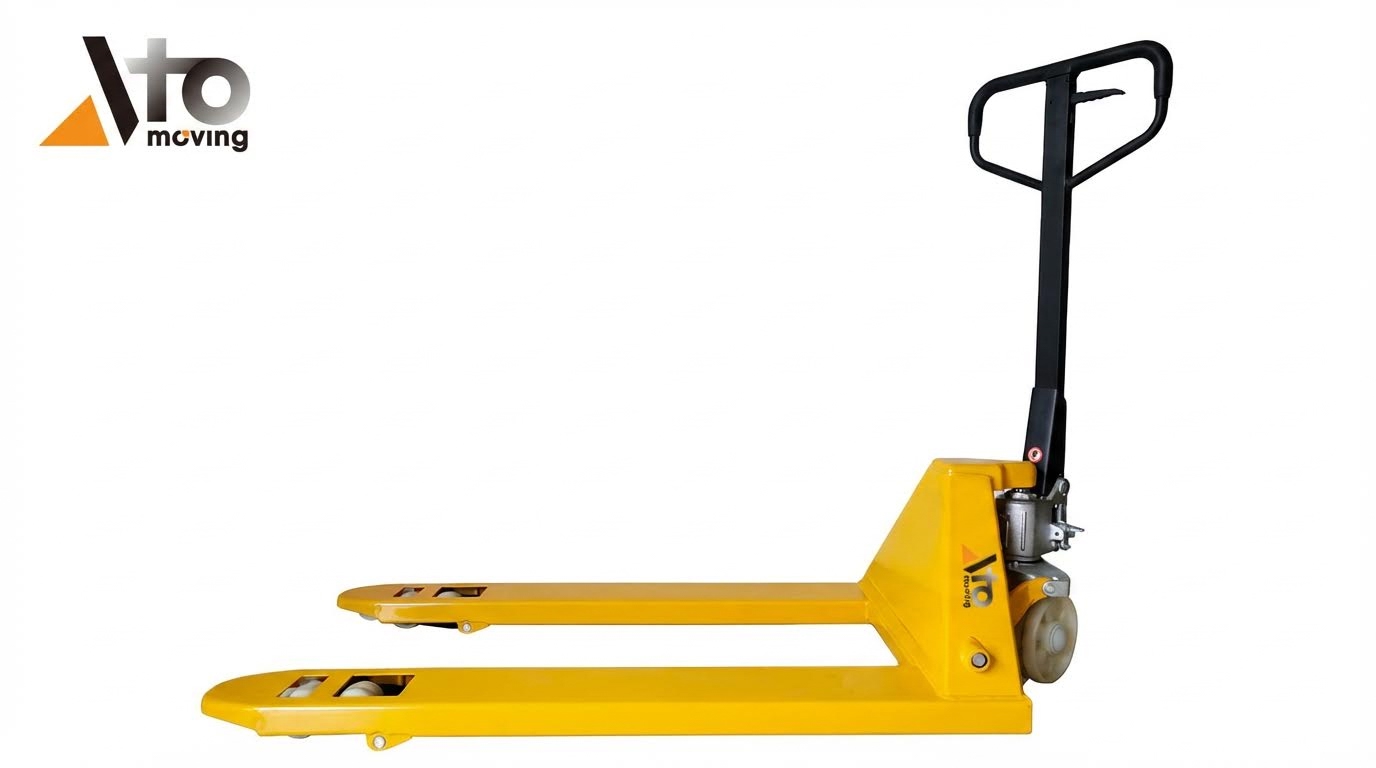
Understanding how high does a pallet jack lift is central to safe material handling strategy. Standard manual pallet jacks typically raise forks about 50–200 mm above the floor, with practical working lift in the 2–8 inch range. This limited vertical travel kept loads stable, minimized fork deflection, and supported capacities from roughly 1 360 kg to 5 000 kg. Engineers and safety managers should treat pallet jacks strictly as horizontal transport devices, not as substitutes for stacking equipment.
From an engineering perspective, safe lift height depends on three linked factors: rated capacity, structural stiffness, and floor conditions. Operating near maximum height on uneven floors, ramps, or damaged concrete increased tipping risk and wheel point loads. Best practice kept pallets just high enough for 25–50 mm of ground clearance, with the load centered over the front wheels and kept as low as possible during travel. Operators should avoid sharp steering at full lift, sudden stops, and side pulls, because these actions shifted the center of gravity toward the stability limits.
Future practice in facilities engineering pointed toward tighter integration of maintenance data, digital twins, and inspection analytics. Monitoring fork deflection, hydraulic seal leakage, and wheel wear trends helped maintain consistent lift heights over the equipment life cycle. When specifying new units, engineers should match minimum and maximum fork heights to pallet designs, floor flatness, and racking interfaces, while selecting wheel materials that limit rolling resistance yet maintain grip. A balanced approach accepts the inherent low-lift design of pallet jacks, uses them within their 2–8 inch envelope, and assigns higher vertical work to dedicated lifting equipment like lift stackers or walkie pallet trucks to maintain both productivity and safety.