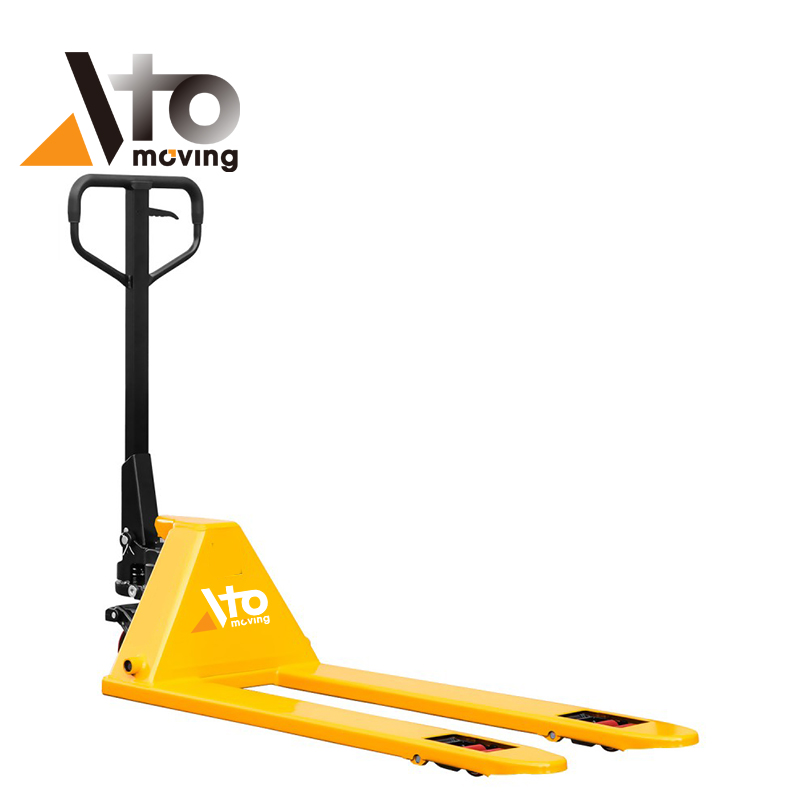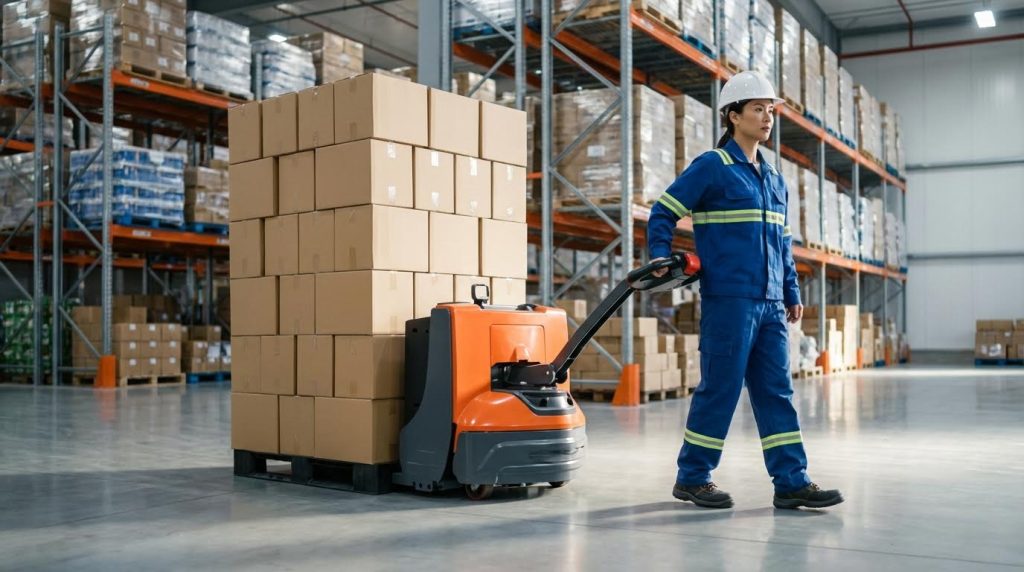
Safe handling of pallet jacks requires a structured approach that covers inspection, lifting technique, movement control, truck interface, and storage. This article explains how to lift a pallet jack and its loads ergonomically, how to move them across docks and ramps, and how to load trailers within weight and stability limits. It also details storage, maintenance, and lifecycle strategies that keep equipment reliable and compliant. Together, these sections provide a practical reference for engineers, supervisors, and operators designing or improving hydraulic pallet truck programs in industrial facilities.
Core Safety Principles For Pallet Jack Use
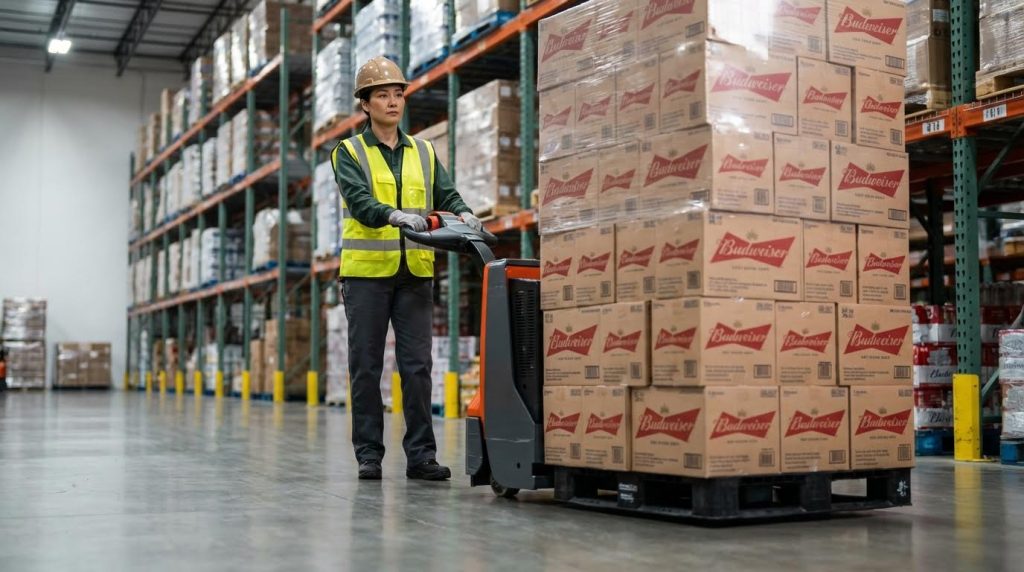
Safe pallet jack operation starts long before the first pump of the handle. Understanding how to lift a manual pallet jack correctly, how to position loads, and how to move through docks and trailers reduces strain injuries and collision risks. Core safety principles combine mechanical condition checks, ergonomic posture, load stability, and traffic management. These foundations apply to both manual and electric units in warehouses, cold storage, and loading docks.
Pre‑use inspection and condition checks
Before deciding how to lift a pallet jack with a load, verify that the equipment is mechanically sound. Inspect forks for cracks, bent tips, or worn heel sections that could concentrate stress and fail under rated load. Check wheels and rollers for flat spots, embedded debris, and loose axles, because damaged wheels increase push–pull force and reduce directional control. Operate the handle and release lever through their full travel and confirm the hydraulic system lifts and lowers smoothly without jerks or drift. Examine the pallet itself for broken deck boards, split stringers, or protruding nails that could collapse under heavy unit loads. Finally, clear the travel path of ruts, bumps, and debris, since poor floor conditions magnify forces on the frame and the operator’s hands, arms, and back.
Ergonomic body mechanics and posture
Ergonomics strongly influences how to lift a pallet jack safely and how to avoid musculoskeletal disorders. Keep the load and the jack handle as close to the body as practical to reduce spinal moment arms. Use a wide stance, bend at the hips and knees, and drive with the legs rather than flexing the lower back when initiating movement or breaking inertia. Avoid repeatedly bending to low pallet layers by raising the working height with extra empty pallets or height‑adjustable low profile pallet jack that lift the deck approximately 200–250 millimetres. When handling empty pallets by hand, tip from a corner with a wide stance and use the free hand braced on the thigh to share the load through the legs. Back belts should not replace sound technique, because evidence did not prove that belts reduced back‑injury risk and they could encourage overexertion.
Load ratings, stability, and center of gravity
Understanding load ratings is essential before deciding how to lift a pallet jack loaded near capacity. Never exceed the nameplate capacity, which typically ranged from 1,000 kilograms to 2,000 kilograms for manual units. Place the heaviest cases on the bottom tier and toward the fork heels so the combined center of gravity stays low and between the load wheels. Maintain even left–right distribution to prevent torsional twisting of forks and sideways tipping when crossing uneven floors or dock plates. Raise the pallet only high enough to clear the floor, usually less than 100 millimetres, because unnecessary lift height raises the center of gravity and reduces stability margins. During truck loading, confirm that total palletized weight and axle group loads remain within legal limits, while keeping the cargo center of gravity near the trailer’s longitudinal center.
Pedestrian, dock, and trailer interface hazards
Safe practice for how to lift a pallet jack and move it through shared spaces must consider other workers and interfaces. At pedestrian crossings and pick aisles, operate at walking speed, maintain clear sightlines around tall loads, and use verbal or audible warnings when emerging from blind corners. At docks, verify that dock plates or levelers are rated for the combined mass of pallet jack, operator, and load, and that they sit flush to prevent impact loads on wheels. Before entering a trailer, chock wheels, apply dock locks if available, and confirm floor integrity, especially in older wooden decks that could fail under concentrated wheel loads. Inside trailers, avoid sudden direction changes or hard stops that could shift the load and pull the operator off balance. Maintain at least one pallet length of clearance from open dock edges and never park or store a loaded pallet jack where it could roll toward an unprotected drop.
Lifting, Moving, And Truck Loading Procedures
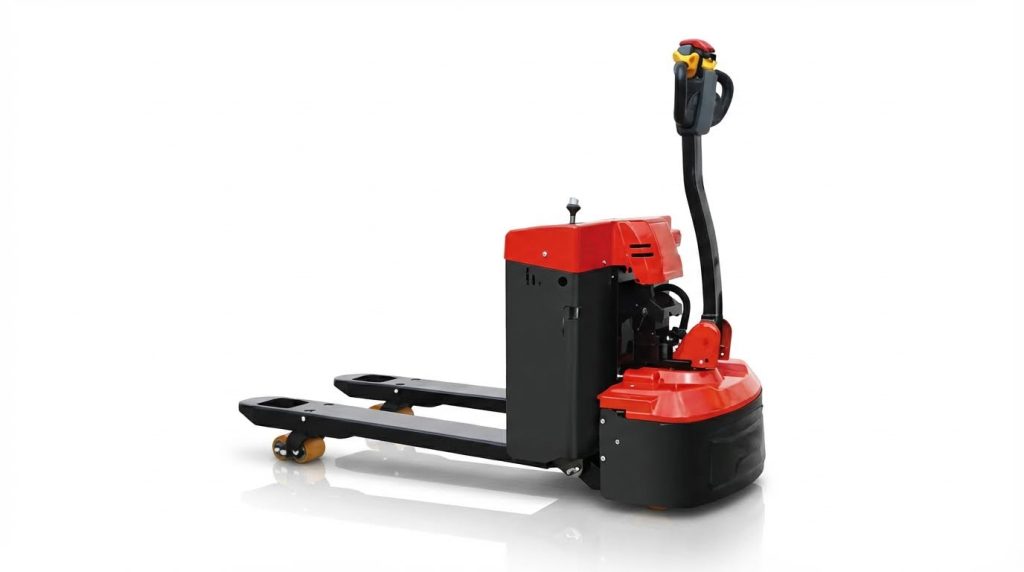
Safe pallet movement depends on disciplined lifting technique, controlled travel, and well‑planned truck loading. Operators who understand how to lift a manual pallet jack correctly, manage gradients, and balance loads reduce strain injuries and prevent freight damage.
Positioning forks, engaging, and lifting a pallet
Start by verifying that both the pallet and the hydraulic pallet truck are rated for the planned load. Approach the pallet squarely so the forks align with the entry openings and remain parallel. Lower the forks fully before entry to avoid striking deck boards or stringers. Then push or pull the jack so the forks extend almost to the far end of the pallet, supporting at least 90% of its length.
Center the forks laterally to keep the combined center of gravity on the jack’s longitudinal axis. When learning how to lift a pallet jack load, raise the forks only until there is 2–5 cm ground clearance under the lowest point of the pallet. Excess lift height raises the center of gravity and reduces lateral stability. Use smooth, full‑stroke pumps on a manual unit, or feather the lift control on an electric unit, avoiding abrupt motions that can crack brittle pallets or shift stacked cartons.
Moving loads on docks, ramps, and rough floors
Before moving, scan the travel path for ruts, floor joints, dock plates, and debris that could arrest a wheel. On flat docks with good floors, operators usually push rather than pull to keep the load ahead and maintain better visibility. Keep speed walking‑pace or slower, with the handle in a comfortable, low‑force steering angle. Maintain at least 1 m clearance to pedestrians and fixed obstacles.
On ramps, control direction relative to the slope and mass. With a loaded jack, position the load upgrade whenever feasible so gravity acts through the load into the jack, not into the operator. Move slowly, with both hands on the handle, and never ride the forks or the load. On rough or damaged floors, cross bumps and dock plates at a shallow angle and low speed to limit shock loads into the pallet and truck suspension. If wheel flat spots or excessive steering force appear, remove the jack from service and report it for maintenance.
Getting a pallet jack and load into a truck safely
Truck loading starts with verifying trailer position, wheel chocks, and dock locks or key control. Inspect the trailer floor for rot, broken boards, or concentrated load risks, especially near the rear. Confirm dock leveler or dock plate capacity exceeds the combined mass of jack plus maximum load. The plate should sit with at least 80 mm overlap on both dock and trailer to resist roll‑off.
When you move a loaded pallet jack into a truck, keep the operator on the dock side until the jack is fully on the leveler, then walk in with the handle under control. Maintain the load’s centerline near the trailer center to avoid side‑to‑side imbalance. On tail‑lift operations, verify lift platform rating, position the load centrally, and keep bystanders clear of the lift envelope. Never exceed the pallet jack or lift platform capacity to “squeeze in” an extra pallet.
Load layout, weight distribution, and securement
Proper internal trailer layout complements correct technique for how to lift a pallet jack and position loads. Place the heaviest pallets on the floor and as low as possible, typically against the bulkhead or front wall. Distribute weight longitudinally to keep axle group loads within legal limits and transversely to prevent roll instability. Follow facility standards or engineered load plans for pallet count, orientation, and aisle spacing.
Use side‑by‑side, turned, or pinwheeled patterns to maximize floor usage while preserving access for the pallet jack. Maintain tight contact between pallets to minimize in‑transit shifting, but avoid crushing packaging. Where voids remain, apply load bars, shoring beams, or dunnage to block movement. For road transport, securement must meet applicable regulations; tie‑down working load limits should equal at least 50% of cargo weight. After loading, perform a final walk‑through to confirm even distribution, adequate clearances, and that every pallet sits level and fully supported before closing the trailer.
Storage, Maintenance, And Lifecycle Management
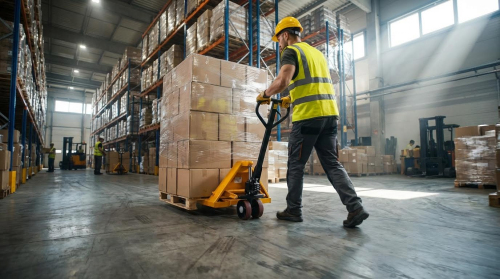
Effective storage and maintenance practices directly influence how to lift a pallet jack safely and with minimal effort. A well-maintained unit tracks straight, lifts smoothly, and reduces the manual force required at the handle. Structured lifecycle management also lowers downtime, standardizes performance across a fleet, and supports compliance with occupational safety regulations.
Routine cleaning, lubrication, and adjustments
Routine cleaning keeps contaminants away from wheels, axles, and the hydraulic linkage, which reduces push and pull forces when you lift a pallet jack under load. Technicians should remove dirt from fork tips, steer wheels, and load rollers to prevent flat spots and high rolling resistance. Lubricate pivot points, wheel bearings, and the lift linkage using manufacturer-specified greases or oils at defined intervals. After lubrication, verify that the handle pumps smoothly and that the lift stroke raises the forks evenly on both sides. Adjust the lowering valve and control linkage so the forks descend in a controlled manner without sudden drops, which protects operators and palletized loads. Check all fasteners on the chassis, handle base, and push rods, tightening to specified torque values to maintain structural integrity during lifting and transport.
Battery care, charging, and energy efficiency
For electric pallet jacks, battery condition strongly affects how to lift a pallet jack efficiently and avoid sudden loss of lift capacity. Operators should charge batteries according to the recommended profile, avoiding full deep discharges that shorten service life and reduce run time. Clean battery terminals and connectors regularly, removing corrosion that increases resistance and causes voltage drops during lifting cycles. Verify electrolyte levels on flooded lead–acid batteries and top up with deionized water as required while following lockout and PPE requirements. Store units in cool, dry areas to limit thermal stress on batteries and power electronics, which preserves lifting performance over the lifecycle. Use high-efficiency chargers and programmed charge windows to reduce energy consumption and align with facility peak-demand strategies.
Safe storage locations and fleet organization
Designated storage zones help operators access pallet jacks quickly and reduce unnecessary manual handling when deciding how to lift a pallet jack into position for work. Facilities should mark parking areas away from pedestrian pinch points, dock edges, and emergency exits, using floor striping and signage. Store units with forks fully lowered to the floor to prevent trip hazards and unintended rolling, and position handles in the upright or locked position. Separate manual and powered units and organize by capacity and fork length so operators select equipment that matches load weight and pallet geometry. Implement a simple identification system, such as unique ID numbers and color-coded tags, to link each jack to its inspection status and maintenance history. This organization supports rapid fault reporting and minimizes the risk of using a unit with compromised lifting or braking performance.
Digital tracking and predictive maintenance tools
Digital tracking systems allow engineers to correlate how to lift a pallet jack safely with actual usage data, such as lift cycles, travel distance, and load profiles. Barcode or RFID tags on each jack can link to a computerized maintenance management system that stores inspection results, repair history, and upcoming service tasks. Telematics or low-cost sensors can monitor parameters such as handle force, lift pressure, and battery state of charge, enabling early detection of rising rolling resistance or hydraulic leakage. Predictive analytics can then flag units for proactive service before wheels develop flat spots or lift mechanisms fail under load. These tools also support lifecycle cost analysis, helping managers decide when to overhaul or retire equipment based on objective condition rather than age alone. Over time, data-driven maintenance improves fleet availability, reduces manual effort during lifting, and enhances overall warehouse safety performance.
Summary And Practical Implementation Guidance
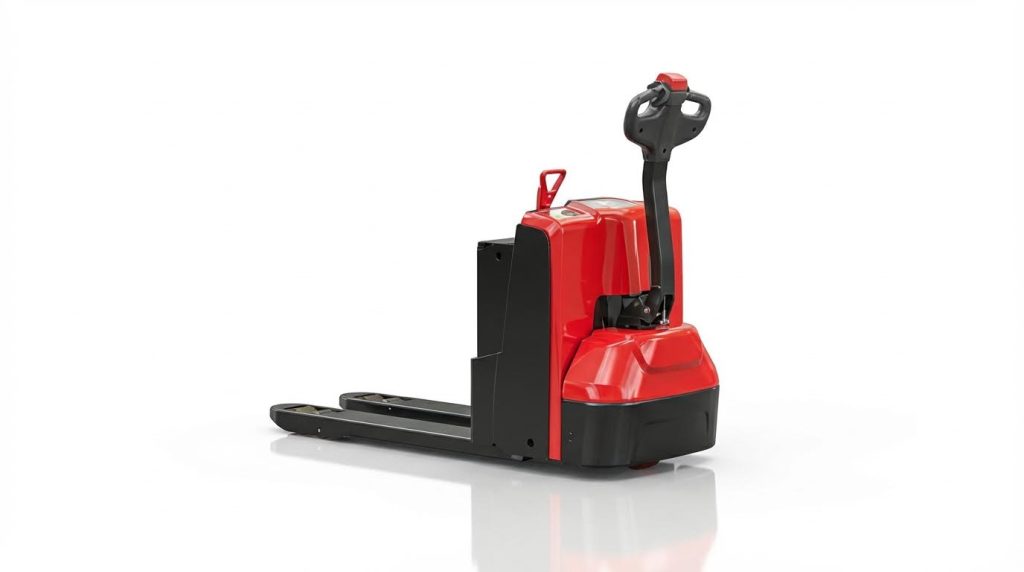
Safe pallet jack operation depended on consistent technique, disciplined inspection, and structured loading practices. Facilities that standardized how to lift a pallet jack, move loads, and interface with trucks reduced injuries and unplanned downtime. The key was to integrate ergonomic methods, equipment limits, and trailer constraints into one coherent procedure.
From a technical standpoint, operators needed to treat pre-use checks, fork positioning, and controlled lifting height as mandatory steps, not suggestions. Loads had to remain within the pallet jack’s rated capacity, with the center of gravity low and centered between the forks. Trailer loading plans had to respect axle weight limits, pallet patterns, and the 50% securement rule to maintain stability in transit. Routine cleaning, lubrication, and battery care kept hydraulic and drive forces low, which reduced hand-arm stress and whole-body shock on rough floors.
In practice, companies achieved the best results by converting these concepts into short, visual work instructions posted at docks and in aisles. Training needed to emphasize leg-driven lifting, wide stance, and keeping the manual pallet jack handle under control during starts, stops, and turns. Supervisors could use digital tracking and maintenance logs to detect abuse patterns, missed inspections, or repeated overloading events. A balanced approach combined hydraulic pallet truck for lighter, short-distance moves with powered units for heavier or high-frequency tasks, always backed by documented procedures and periodic refresher training. Additionally, integrating tools like a pallet weighing scales ensured accurate load management.