Handling a 1‑ton pallet off a truck demands a structured approach that considers equipment limits, site constraints, and regulatory safety rules. This article explains how to lift a 1 ton pallet off a truck using appropriate manual, electric, and overhead lifting solutions while respecting load capacity and stability requirements. You will see how to define the lifting scenario, select suitable equipment, and engineer a safe, step‑by‑step method that fits docks, ramps, and uneven yards. The final section consolidates these insights into a concise, practical selection guide for real‑world loading and unloading operations.
Defining The 1‑Ton Pallet Lifting Scenario
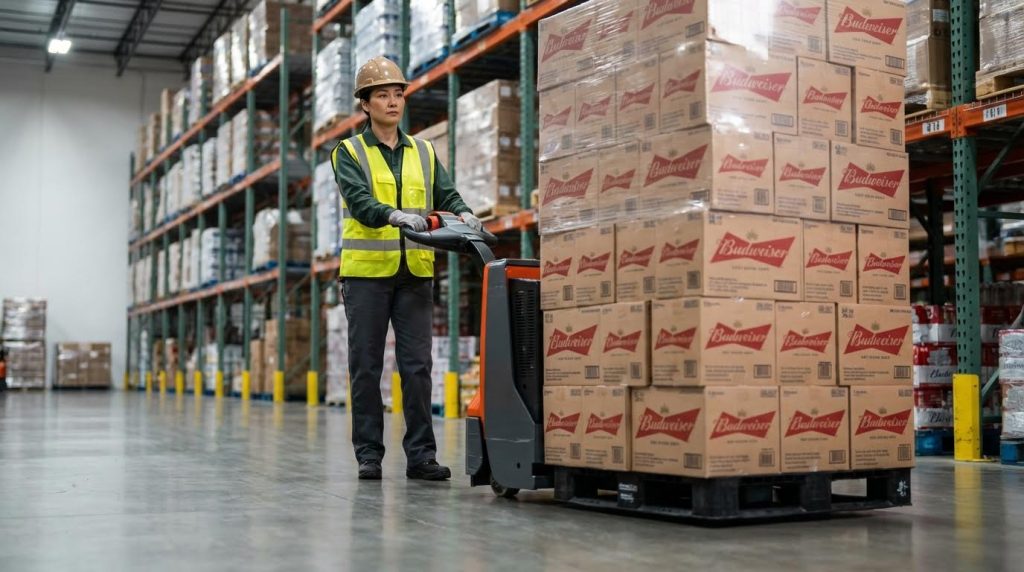
Understanding how to lift a 1 ton pallet off a truck starts with defining the operating scenario precisely. Engineers and safety managers must consider truck geometry, dock layout, pallet construction, and regulatory limits before choosing equipment. This section frames the boundary conditions so later selection and method statements remain realistic, compliant, and repeatable in daily operations.
Typical Truck, Dock, And Site Constraints
A 1‑ton pallet usually arrives on a curtain‑sider, box truck, or flatbed with deck heights between 1.0 m and 1.3 m. Dock levellers, dock plates, or yard ramps must bridge the gap between truck bed and floor while staying within rated working load limits above 1 000 kg. Clear working aisles of at least 2.0 m typically allow pallet jacks or electric pallet trucks to turn, given turning radii around 1 250 mm. Engineers must verify floor bearing capacity, especially near dock edges and truck liftgates, to prevent concrete spalling or deck deformation under concentrated wheel loads. Overhead obstructions, such as canopies or low beams, can restrict mast height if a stacker or forklift performs the transfer. Lighting, weather exposure, and traffic patterns also influence safe routes when deciding how to lift a 1 ton pallet off a truck.
Load Characteristics And Pallet Types
A 1‑ton pallet equates to approximately 1 000 kg, which sits within the rated capacity of most hand pallet trucks but near the upper limit of light manual stackers. The load may be dense and compact, like steel billets, or tall and compressible, like bagged product, which changes the center of gravity and tipping risk. Common Euro pallets measure 1 200 mm by 800 mm and pair well with fork lengths around 1 150 mm and fork spans near 550 mm, giving adequate fork overhang without striking the truck headboard. Block pallets allow four‑way entry, which simplifies fork positioning inside a truck with limited maneuvering room. Operators must ensure the load is evenly distributed on the pallet, with no overhang that could interfere with truck walls, dock edges, or adjacent freight during lifting and extraction. Wrapping, banding, or corner posts may be required to stabilize tall or irregular loads before any movement.
Regulatory And Safety Framework Overview
When planning how to lift a 1 ton pallet off a truck, engineers must align procedures with applicable occupational safety regulations and load‑handling standards. Rules typically required that only trained and authorized personnel operate pallet jacks, stackers, forklifts, or crane systems. Equipment used at or near 1 000 kg must display a legible rated capacity plate; operators may not exceed this value under any circumstance. Pre‑use inspections of forks, wheels, hydraulic systems, and braking or parking devices help reduce incidents, since historical data showed that improper equipment condition contributed to a significant portion of warehouse injuries. Safe systems of work also addressed route planning, keeping the load close to the ground during travel, and controlling speed on docks and ramps. Personal protective equipment, such as safety footwear, gloves, and high‑visibility garments, formed part of the baseline controls for truck offloading areas.
Selecting Suitable Equipment For 1‑Ton Pallets

Choosing how to lift a 1 ton pallet off a truck depended on matching equipment capacity, lift height, and site constraints. Engineers evaluated manual, electric, and crane-based solutions against the 1000 kg load, truck bed height, and available maneuvering space. Correct selection reduced manual handling, improved throughput, and lowered incident rates on docks and yards.
Manual Pallet Jacks And Stackers: Limits And Uses
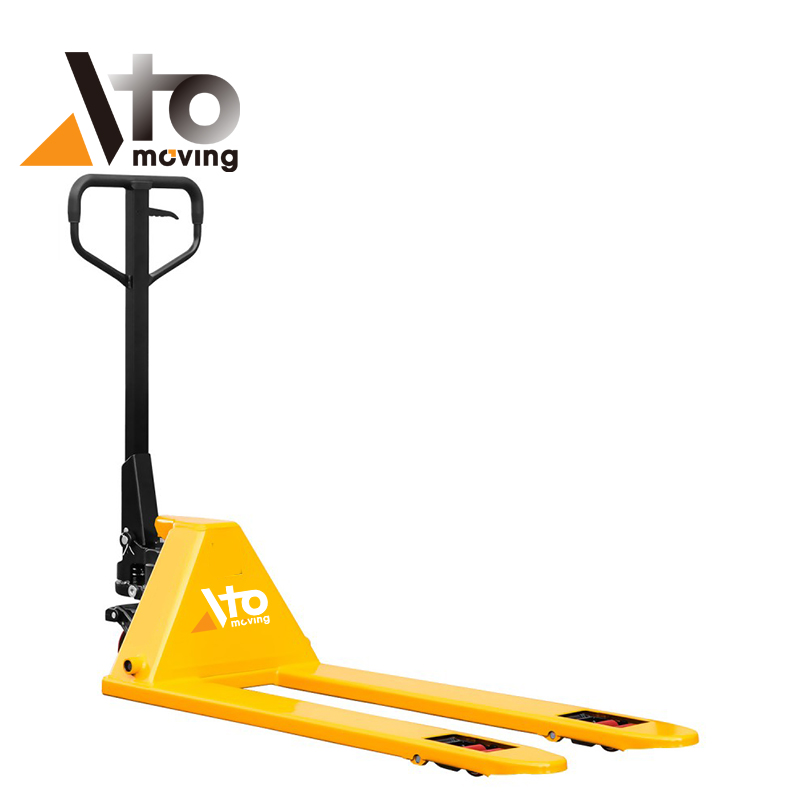
Manual pallet jacks with rated capacities around 1000 kg to 2500 kg could safely lift a 1 ton pallet off a truck when the truck bed height was low and access was level. Typical fork lengths near 1150 mm and widths around 550 mm suited Euro pallets and ensured stable support under the load. Tandem polyurethane rollers under each fork distributed the 1000 kg evenly, improving rolling resistance and stability on smooth floors. Manual stackers with hydraulic foot or hand pumps and lift heights up to about 1600 mm allowed vertical transfer from truck bed to low racks, but required flat, firm ground and adequate headroom. These devices worked best where operators could push rather than pull, travel distances were short, and the route had minimal slopes. For heavier use, engineers checked frame stiffness, wheel material, and turning radius, which could be near 1265 mm, to confirm that tight loading bays remained navigable without excessive operator strain.
Electric Pallet Trucks And Stackers: When To Upgrade
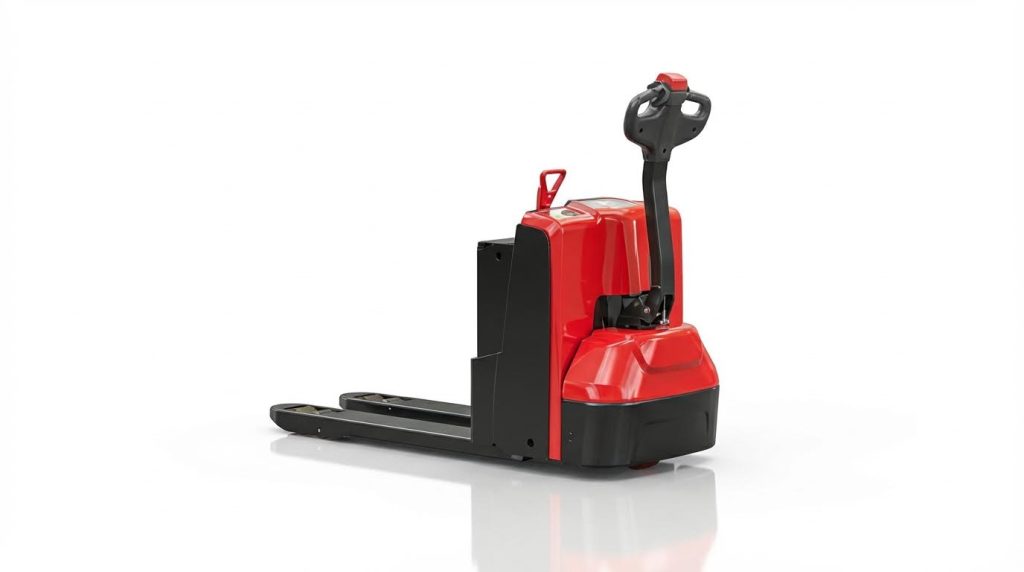
Electric pallet trucks and stackers became the preferred option to lift a 1 ton pallet off a truck when shifts were long, load cycles were frequent, or ramps and docks were involved. Battery-powered pallet trucks could operate for up to about 8 hours per charge, with charging times near 2–3 hours, supporting continuous dock operations. Typical travel speeds between 0–2.8 miles per hour unloaded and about 0–2.5 miles per hour loaded allowed controlled movement of 1000 kg pallets while keeping dynamic forces manageable. Electromechanical brakes that engaged when the tiller was fully upright or fully lowered added a fail-safe layer during truck-to-dock transfers, particularly near edges. Electric stackers combined powered travel with mast lifting, using restrictor and pressure-limiting valves to keep hydraulic loads within the rated working load limit. Engineers specified ergonomic tiller heads, reliable foot brakes, and protective steel mesh guards to protect operators while preserving visibility in congested loading areas.
Crane Pallet Lifters And Slings For Overhead Lifts
Crane pallet lifters provided a solution for lifting a 1 ton pallet off a truck when side access was blocked or ground conditions prevented wheeled equipment. Self-levelling crane pallet lifters used gas-spring balancing systems that engaged once at least 20% of the working load limit was applied, automatically shifting to the correct center of gravity for a 1000 kg pallet. Adjustable fork widths, typically around 350–900 mm, and effective height ranges near 1300–2000 mm let one device handle different pallet formats and truck heights. Hook height adjustment, for example from about 1420–1920 mm, allowed alignment with various overhead cranes or hoists. Upward-tilting tines when unloaded reduced the risk of accidental pallet slip during rigging. High-visibility finishes and maintenance-free mechanisms improved safety and uptime in busy yards. When specifying slings instead of fork-type lifters, engineers verified sling angle, rated capacity, and pallet rigidity so that compressive forces did not crush packaging or destabilize the 1 ton load.
Comparing Options: Cost, Throughput, And Footprint
Manual pallet jacks and stackers offered the lowest capital cost and minimal maintenance, especially with rugged steel chassis, powder-coated surfaces, and non-marking polyurethane wheels. However, their throughput for lifting a 1 ton pallet off a truck was limited by operator strength, walking speed, and the need to avoid long ramps or rough surfaces. Electric pallet trucks and stackers increased cycle rates significantly, supporting intensive warehouse shifts and busy docks, but required investment in batteries, chargers, and periodic electrical maintenance. Their footprint remained compact, which suited tight truck wells and confined aisles. Crane pallet lifters and slings shifted cost toward overhead crane infrastructure, yet they removed dependence on floor conditions and allowed vertical extraction of pallets from curtain-side or flatbed trucks. When comparing options, engineers balanced equipment capacity, expected lift cycles per hour, turning radius, and available storage space. They also considered lifecycle costs, such as wheel replacement, battery renewal, and corrosion resistance, including stainless steel construction where chemicals or food-grade environments demanded higher durability.
Engineering A Safe Lifting Method Step By Step
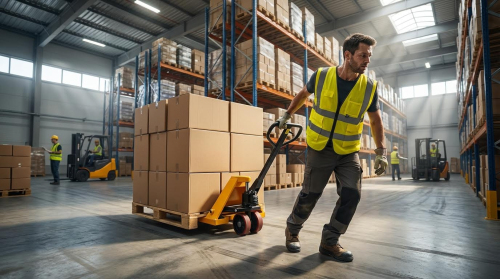
Engineering how to lift a 1 ton pallet off a truck safely requires a structured method. Each step must control risk from equipment failure, unstable loads, and site constraints. The following subsections break this into inspection, positioning, travel on challenging surfaces, and ongoing maintenance supported by digital tools.
Pre‑Use Inspection, Training, And PPE Requirements
Before lifting a 1‑ton pallet off a truck, verify the equipment rating. The nameplate capacity must be ≥1000 kg at the specified load center. Check forks for cracks, bending, or tip damage, and confirm fork length (for example 1150 mm) suits the pallet. Inspect wheels or rollers for flat spots, embedded debris, and secure axles, especially tandem polyurethane rollers that distribute 1000 kg more evenly.
Test the hydraulic system on pallet jacks or stackers for smooth, leak‑free operation using both hand and foot pumps where fitted. On electric pallet trucks or stackers, confirm emergency stop, main power switch, electromechanical brakes, and any protective mesh guards function correctly. Perform a short no‑load and light‑load pre‑test to check lift, lower, and travel performance. Only trained and authorized operators should perform the lift, with documented instruction on limits, ramp procedures, and emergency response.
Operators should wear safety footwear with toe protection, gloves with good grip, and high‑visibility garments in truck bays. Eye protection is advisable when shrink wrap, banding, or overhead lifting accessories are involved. Training should cover ergonomic techniques such as pushing instead of pulling where possible and using leg strength when stabilizing loads. A brief pre‑task toolbox talk helps align spotters and operators on hand signals and exclusion zones around the truck and dock edge.
Positioning, Fork Engagement, And Load Stability
Position the pallet truck, stacker, or forklift square to the pallet at the truck bed. Ensure adequate clearance from side walls, curtains, and dock edges before engaging the forks. Align fork spacing to suit the pallet opening; for Euro‑style pallets, a fork span near 550 mm typically provides good support. Insert forks fully so the heel is close to the pallet’s opposite stringer, preventing tip‑over due to short engagement.
Keep forks level and at the correct height to avoid racking the pallet or striking deck boards. For overhead crane pallet lifters, adjust fork width within the rated range, for example 350–900 mm, and confirm the automatic balancing system has engaged above 20% of the working load limit. Tines should tilt slightly upward when unloaded to reduce the risk of accidental slip during initial pick. Once the 1‑ton pallet is raised, keep the load as low as practicable, typically 50–150 mm above the deck or truck bed for transport.
Stabilize the load before moving away from the truck. Check that goods do not overhang forks and that the center of gravity sits between the fork tines. Use stretch wrap or straps if the load stack appears top‑heavy or contains loose items. If the pallet or load appears damaged or deflected, set it down, re‑stack or re‑palletize, and reassess whether the pallet is structurally sound for a 1000 kg lift.
Operating On Ramps, Docks, And Uneven Surfaces
Lifting a 1‑ton pallet off a truck often involves dock plates, short ramps, or height transitions. Verify the dock plate or bridge capacity exceeds 1000 kg plus equipment weight, and secure it per manufacturer instructions. Approach transitions slowly to limit dynamic loading on forks, rollers, and pallet boards. Maintain the load uphill from the operator on manual equipment, and avoid turning on any slope.
On ramps, descend backward with manual pallet trucks so the operator maintains control and visibility. With electric pallet trucks or stackers, follow the manufacturer’s ramp rating and procedures, keeping forks 100–200 mm above the surface to avoid ground contact. Reduce travel speed, particularly when travel speed ratings reach 1–1.1 m/s under load. Increase stopping distances because a 1‑ton pallet generates significant momentum, especially on smooth floors.
On uneven or outdoor surfaces, use equipment with appropriate wheels, such as large polyurethane or pneumatic tires, to prevent point loading and sudden stops. Avoid gaps, potholes, and drain grates that could trap rollers or destabilize the load. At dock edges, enforce exclusion zones and install physical barriers or wheel chocks for trucks to prevent creep. If surface irregularities or slopes exceed the equipment’s stated limits, transfer the pallet to suitable equipment or re‑engineer the route instead of forcing the move.
Maintenance, Lifecycle, And Digital Safety Tools
Safe methods for lifting a 1‑ton pallet off a truck depend on well‑maintained equipment. Implement a preventive maintenance schedule that includes hydraulic seal checks, lubrication of pivot points, and inspection of reinforced steel chassis welds. Replace worn non‑marking polyurethane wheels and tandem rollers before flat spots or cracks appear, since defects greatly increase rolling resistance and shock loads. For electric pallet trucks and stackers, monitor battery health, charge cycles, and cable integrity to avoid voltage drops during lifts.
Corrosion control, such as powder spray finishes or stainless steel construction in aggressive environments, extends service life and preserves structural capacity. Record inspection and repair history for each unit and remove any equipment from service immediately if cracks, oil leaks, or brake faults appear. Define a lifecycle replacement policy based on operating hours, dock throughput, and incident statistics rather than waiting for major failures. Integrating digital tools such as inspection apps, QR‑coded checklists, and telematics helps track overload events, impacts, and usage patterns.
Digital training modules and micro‑learning refreshers reinforce correct techniques for how to lift a 1 ton pallet off a truck. Sensors and limiters can restrict travel speed or lift height when operators handle heavy loads near dock edges. Analytics from these systems support continuous improvement, allowing safety teams to refine routes, update procedures, and target additional training where near‑miss data indicates elevated risk.
Summary And Practical Equipment Selection Guide

Safe planning for how to lift a 1 ton pallet off a truck depended on matching equipment capability, site constraints, and operator competence. Manual pallet jacks and stackers handled 1000 kg loads when their rated capacity, fork length around 1150 mm, and width near 550 mm suited the pallet and truck bed geometry. Electric pallet trucks and stackers increased throughput on busy docks, with battery runtimes up to 8 hours and controlled travel speeds near 1–1.1 m/s, but still required correct fork positioning, low travel height, and trained operators. Crane pallet lifters with self-levelling and adjustable forks between roughly 350–900 mm offered a controlled solution for overhead unloading when dock access or ground gradients limited wheeled equipment.
For a typical rigid truck at a level dock, the most practical method to lift a 1 ton pallet off a truck used a pallet jack or stacker rated ≥1000 kg, with tandem polyurethane rollers and non-marking wheels for stable rolling on concrete. Operators inspected hydraulics, forks, and wheels, verified that the pallet load was evenly distributed, then inserted forks fully through the pallet before lifting only enough to clear the deck, usually 50–150 mm. On uneven yards, ramps, or where truck floors sat above dock level, an electric stacker or a crane pallet lifter with an effective height range around 1300–2000 mm and upward-tilting tines offered better control and reduced manual handling.
Future practice in lifting 1 ton pallets off trucks increasingly integrated digital tools, such as capacity monitoring, maintenance reminders, and access control linked to operator training records. However, the core engineering principles remained constant: respect the working load limit, maintain a low center of gravity, keep the load stable and centered, and select equipment whose footprint, turning radius, and braking system matched the truck, dock, and route conditions. When in doubt, facilities engineers specified higher-capacity or powered equipment and formalized procedures, rather than operating a pallet jack or stacker at the edge of its limits.