Safely loading an electric pallet jack into a truck requires careful planning, correct ramp or liftgate use, and disciplined operating technique. This article explains how to lift an electric pallet jack into a truck using ramps, liftgates, and dockboards while controlling grades, clearances, and stability. You will see how to assess docks and trailers, secure ramps and trailers, manage inclines with and without loads, and integrate inspection and predictive maintenance. The goal is to reduce tipovers, runaways, and edge falls while maintaining efficient loading operations in docks, yards, and trailers.
Planning Safe Truck Loading Operations
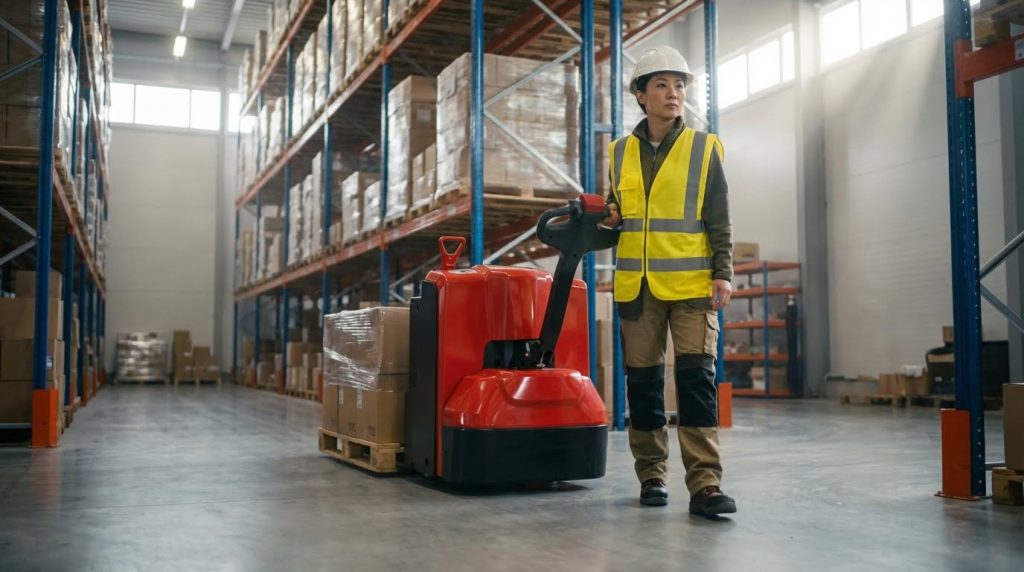
Planning safe truck loading operations establishes the foundation for how to lift an electric pallet jack into a truck without incidents. Supervisors should define the route, verify equipment capability, and confirm that all dock and yard interfaces support the expected axle loads. Effective planning also coordinates people, traffic, and trailer control measures so the electric pallet jack operates on stable, predictable surfaces. This upfront work reduces the probability of tipovers, runaways, or structural failures during loading.
Assessing Dock, Yard, and Trailer Conditions
Before moving an electric pallet jack toward a truck, operators should survey the dock, yard, and trailer conditions. The dock surface must be clean, dry, and free from oil, water, or loose debris that could reduce traction. Yard gradients should stay within manufacturer limits for powered pallet jacks, with no unexpected potholes or broken pavement along the approach path. Inside the trailer, operators should inspect the floor for rot, cracks, loose boards, or localized deflection under load, because concentrated wheel loads from pallet jacks can exceed 20 kN at contact points. Lighting levels at the dock and inside the trailer should allow clear visibility of edges, obstructions, and any height differences between dock, dockboard, and trailer bed. Where conditions fall outside policy or equipment ratings, supervisors should block access and implement corrective measures before loading continues.
Verifying Jack Capacity, Load, and Stability
Safe planning requires matching the electric pallet jack’s rated capacity with the actual pallet load and the truck loading configuration. Operators should read the nameplate and confirm that the combined mass of pallet, product, and any attachments does not exceed the rated capacity at the specified load center, typically 600 mm. Loads should sit fully on the forks with both blades inserted completely under the pallet to prevent nose-diving when crossing dockboards or trailer thresholds. The center of gravity must stay low and centered between the forks, with heavier items placed at the bottom to reduce overturning moments when starting, stopping, or negotiating small slopes. When planning how to lift an electric pallet jack into a truck using ramps or liftgates, supervisors must also account for dynamic effects, including grade resistance on inclines and the reduced stability margin near trailer edges.
Lockout, Chocking, and Trailer Securement Checks
Before an electric pallet jack enters a trailer, the truck or semi-trailer must be immobilized. Operators or yard personnel should verify that the parking brake is applied and that wheel chocks or dock locking devices engage the trailer in accordance with local regulations and site procedures. Dockboards, bridge plates, or liftgates must be rated for the combined mass of the jack, operator, and maximum load, and must lock positively to prevent shifting under repeated crossings. Visual checks should confirm that locking pins, lip supports, and safety chains are in place and that the working surface lies flush with both the dock and the trailer deck to avoid step changes. Only after these securement checks are complete should operators proceed with moving the electric pallet jack toward the truck, maintaining straight travel paths and avoiding turns on any inclined interface.
Coordinating Operators, Spotters, and Traffic Flow
Planning how to lift an electric pallet jack into a truck also involves coordinating people and traffic around the dock. Supervisors should assign a trained operator to the pallet jack and, where sightlines are restricted by high loads or trailer geometry, designate a spotter with a clear view of ramp edges and trailer thresholds. Communication methods, such as standardized hand signals or radios, should be defined before movement starts so the operator can respond immediately to stop commands. Traffic management plans should separate pedestrian walkways from jack travel paths and restrict concurrent forklift or truck movements in the same loading lane to prevent conflicts. By sequencing truck arrivals, trailer positioning, and pallet jack movements, the team maintains controlled, predictable flows that significantly reduce collision, edge-fall, and pinch-point risks during loading.
Using Ramps to Load Electric Pallet Jacks
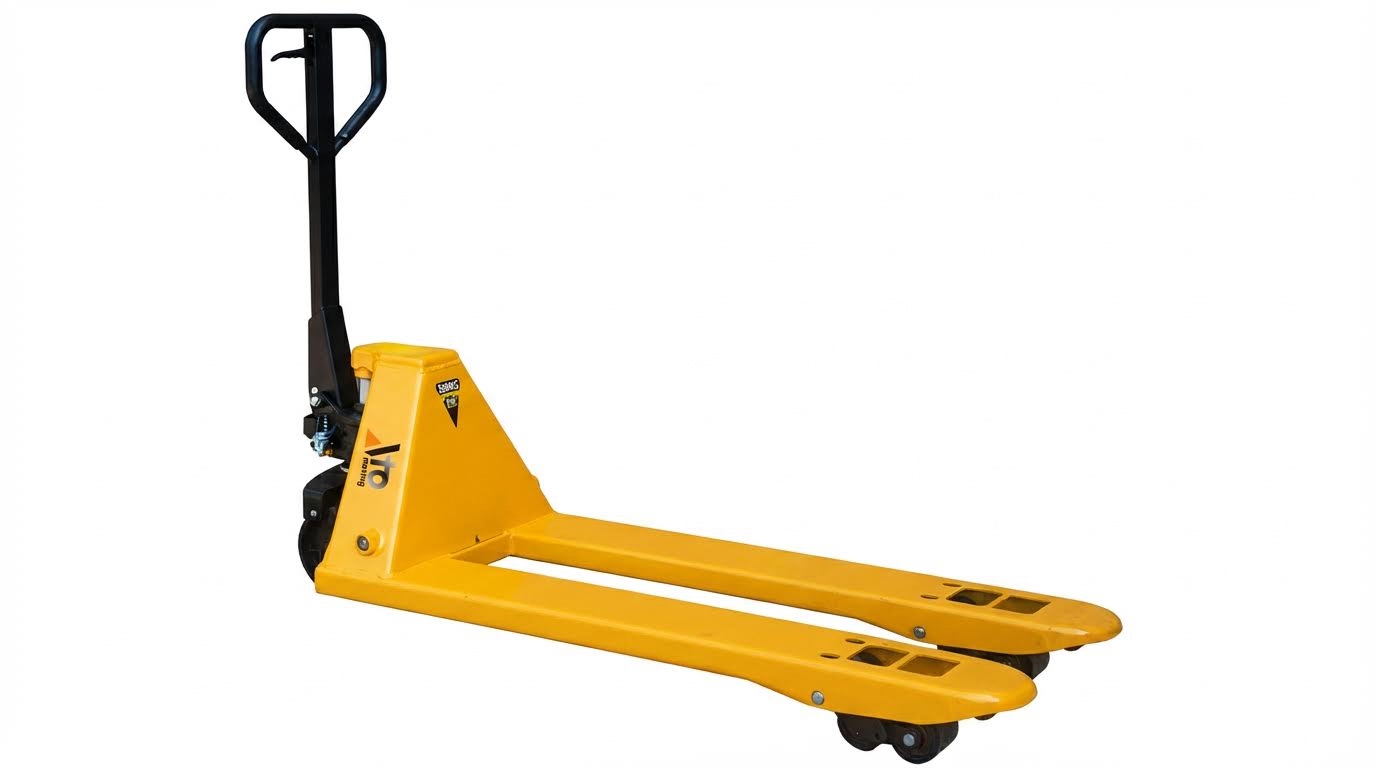
Using ramps correctly is critical when planning how to lift an electric pallet jack into a truck. The ramp must support the combined mass of the jack, operator, and load while maintaining traction and geometric compatibility with the truck or dock. Operators should understand ramp design, ramp securement, travel techniques on grades, and specific controls for preventing tipovers and runaways. These elements work together to keep the electric pallet jack stable from the dock or yard up into the trailer.
Ramp Design: Slope, Width, and Surface Requirements
Ramp slope directly affects control forces and stopping distance. For powered pallet jacks, a gradient near 10% or less typically allowed stable operation, while steeper slopes rapidly increased rollback and runaway risk. The ramp must be wide enough to provide at least 150–200 millimetres lateral clearance per side of the jack, including handle swing, so the operator can maintain lineal travel without edging. Surfaces should be rigid, non-deformable, and have high-friction finishes such as serrated steel, textured aluminum, or coarse anti-slip coatings. Operators should keep the ramp clean and dry, removing water, oil, dust, and loose debris before loading to prevent wheel slip when lifting an electric pallet jack into a truck.
Securing Portable Ramps and Bridge Plates
Portable ramps and bridge plates must resist shifting as the pallet jack transitions between ground, ramp, and truck bed. Operators should use mechanical anchorage such as locking pins, drop-in pockets, or hooks engaging the truck or dock structure. Chains or safety straps can provide secondary restraint, but they should not replace positive mechanical engagement. Before driving the jack onto the ramp, the operator should verify that side curbs or bull rails are correctly aligned and that the lip fully overlaps the truck or dock edge according to the manufacturer’s minimum engagement length. A short functional test with no load, moving slowly onto and off the ramp, helps confirm that the ramp remains stable before performing full loading operations.
Traveling on Inclines With and Without Loads
Travel technique on ramps changes depending on whether the electric pallet jack carries a load. With a load, the load should stay uphill at all times to keep the center of gravity toward the ramp and reduce forward tip risk. When moving upgrade with a load, the operator should travel forward with forks and load pointing up the ramp, walking to the side for visibility and escape space. When moving downgrade with a load, the operator should travel in reverse, still keeping the load uphill, and turn their head to watch the direction of travel. Without a load, the forks should point downgrade on the ramp to reduce rearward overturn potential; this usually means walking reverse upgrade and forward downgrade while maintaining straight alignment and constant, controllable speed.
Preventing Tipovers, Runaways, and Edge Falls
Tipovers and runaways on ramps typically occurred when operators turned on the slope, exceeded rated ramp gradients, or lost traction near edges. The operator should always travel straight up or straight down the ramp and complete turns on level surfaces before entering the incline. Side curbs, guardrails, or bull rails along ramp edges reduce the chance of wheel drop-off, but operators must still maintain a safe lateral clearance from edges and avoid sudden steering inputs. Speed should remain low, with the control handle in a position that allows quick access to brakes and emergency reverse functions. If traction feels marginal, or the load feels unstable, the operator should stop on level ground, lower the forks, and reassess the method for how to lift an electric pallet jack into a truck, potentially reducing load mass, improving surface conditions, or adding a spotter for ramp supervision.
Liftgate and Dockboard Loading Procedures

Liftgate and dockboard procedures defined how to lift an electric pallet jack into a truck without overloading structures or losing control. Operators evaluated lifting capacity, geometry, and anchorage before driving the jack onto any elevated platform. They then positioned the electric pallet jack to keep the load uphill, the operator clear of pinch points, and the center of gravity inside the support polygon. Modern facilities also integrated sensors and predictive maintenance to detect overloads, misalignment, and structural fatigue before incidents occurred.
Evaluating Liftgate Ratings and Platform Geometry
Operators first confirmed that the liftgate rated capacity exceeded the combined mass of the electric pallet jack, operator, and load. They checked manufacturer plates for static and dynamic ratings, then applied a safety margin of at least 25%. Platform geometry also mattered. The usable deck width needed to exceed jack width by at least 150 millimetres on each side to allow steering corrections without wheel overhang. Deck length had to support the jack with both drive and load wheels fully on the platform during travel and at truck-floor level. Operators avoided steep breakover angles between ground, liftgate, and trailer floor because abrupt transitions shifted the load and increased tipover risk.
Positioning the Pallet Jack on Liftgates Safely
Safe positioning explained a critical part of how to lift an electric pallet jack into a truck using a liftgate. Operators approached the platform straight on, at low speed, with forks lowered and the load uphill toward the truck. They kept the jack centered on the liftgate, maintaining at least 75 millimetres clearance from all edges to reduce fall hazards. When loaded, they oriented the pallet so the heaviest side faced the truck, keeping the combined center of gravity toward the truck side hinges. Operators stood to the side of the controls, never on the outer edge of the platform, and used a spotter when visibility was restricted. They did not turn or pivot sharply while the gate moved, because lateral accelerations could shift the load outside the support area.
Dockboard Selection, Inspection, and Anchorage
Dockboards and dock plates bridged the gap between the truck bed and dock, so selection and anchorage directly affected how to lift an electric pallet jack into a truck safely. The dockboard capacity needed to exceed the gross mass of jack plus load, multiplied by a dynamic factor, typically 1.5, to account for impact and braking. Operators inspected the surface for cracks, bent lips, worn anti-slip textures, and contamination by water or oil. They checked side curbs or bull rails, which helped prevent wheel roll-off at edges. Proper anchorage used locking legs, pins, or mechanical dock locks that engaged the trailer to prevent separation under load. Before driving onto the dockboard, operators verified that the slope complied with internal limits, typically less than 10%, and that the transition between dock, board, and trailer floor did not create sharp steps.
Integrating Sensors and Predictive Maintenance
Sensors and predictive maintenance tools improved control over how to lift an electric pallet jack into a truck using liftgates and dockboards. Load sensors on liftgates measured platform forces and triggered alarms or lockouts when operators approached rated capacity. Position sensors monitored platform levelness and prevented travel if the deck tilted beyond set limits, reducing roll-off and tipover risk. Embedded strain gauges in dockboards and hinge pins recorded stress cycles, feeding data into maintenance systems that predicted fatigue failure before cracks formed. Facilities combined these inputs with inspection records to schedule replacement of pins, cylinders, and weldments based on actual usage rather than fixed intervals. Integrating these technologies reduced unplanned downtime and helped safety teams verify that structural components remained within design margins during repeated loading operations.
Summary: Key Safety Lessons and Best Practices
Loading an electric pallet jack into a truck required a systematic approach that combined route planning, ramp or lift system selection, and strict equipment checks. Operators who understood how to lift an electric pallet jack into a truck safely always started with capacity verification, trailer securement, and a detailed inspection of docks, dockboards, ramps, and liftgates. They then controlled travel speed, fork height, and jack orientation, especially on inclines, to maintain stability and avoid tipovers or runaways.
From an engineering standpoint, the critical lessons centered on keeping loads within rated capacity, maintaining a low center of gravity, and ensuring that loads stayed uphill on slopes. Ramps and liftgates had to match or exceed the combined mass of jack and load, while their geometry, surface friction, and anchorage limited slip and deflection. Safe travel patterns avoided turning on ramps, kept the truck edge well protected, and relied on spotters when visibility dropped or clearances tightened.
Industry practice increasingly integrated sensors, interlocks, and predictive maintenance to monitor wheel wear, hydraulic performance, battery status, and structural fatigue in ramps and dockboards. These technologies supported data-driven inspections and reduced unplanned failures during truck loading. Future systems would likely link dock controls, restraints, and pallet jack diagnostics into one connected platform that locked out unsafe operations automatically.
For practical implementation, facilities needed written procedures that covered planning, ramp and liftgate setup, incline travel techniques, and post-use parking and isolation. Training programs had to align with relevant occupational safety regulations and emphasize hands-on practice under supervision. A balanced view recognized that while technology improved detection and control, operator competence, conservative loading decisions, and disciplined inspections remained the primary safeguards when lifting an electric pallet jack into a truck.